- 1
Katla is safe on a guided tour: guides inspect the cave daily and cancel when conditions turn.
- 2
Minimum ages run from 6 to 12 depending on the tour, and the walk is easy to moderate over 1 to 2 km of uneven ground.
- 3
Bring stiff ankle-high boots and waterproofs; crampons and helmets come with the tour, and soft sneakers can get you turned away.
Some Katla Ice Cave tours are not suitable for people with claustrophobia, a fear of the dark, heart problems, limited mobility, or young children under 6 or 8, and the listings do not say how the rough Super Jeep ride suits pregnant travelers. Read each tour's suitability list before booking and pick the one that matches your group; if you are pregnant or have a joint or mobility restriction, contact the tour operator in advance to confirm you can join.
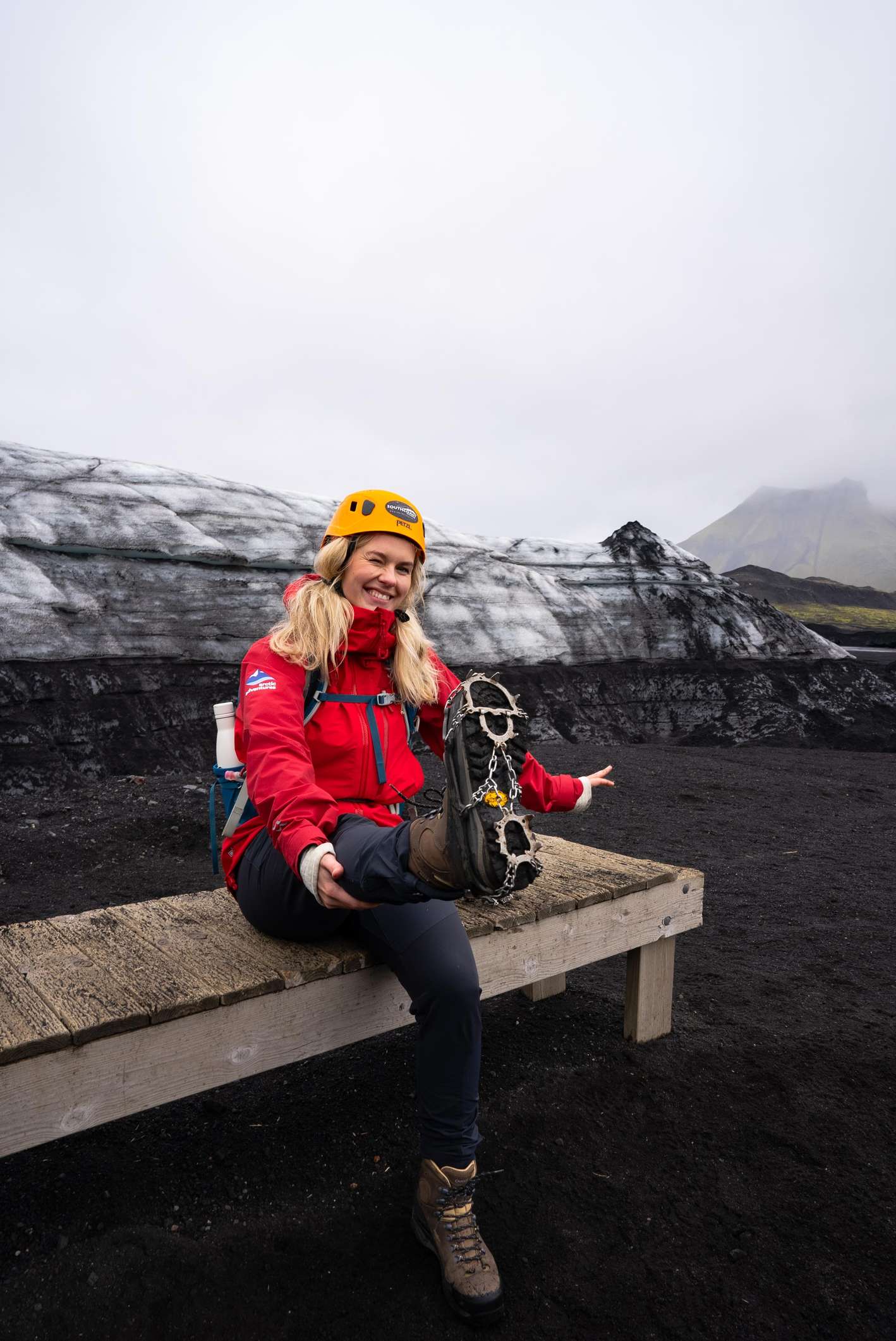
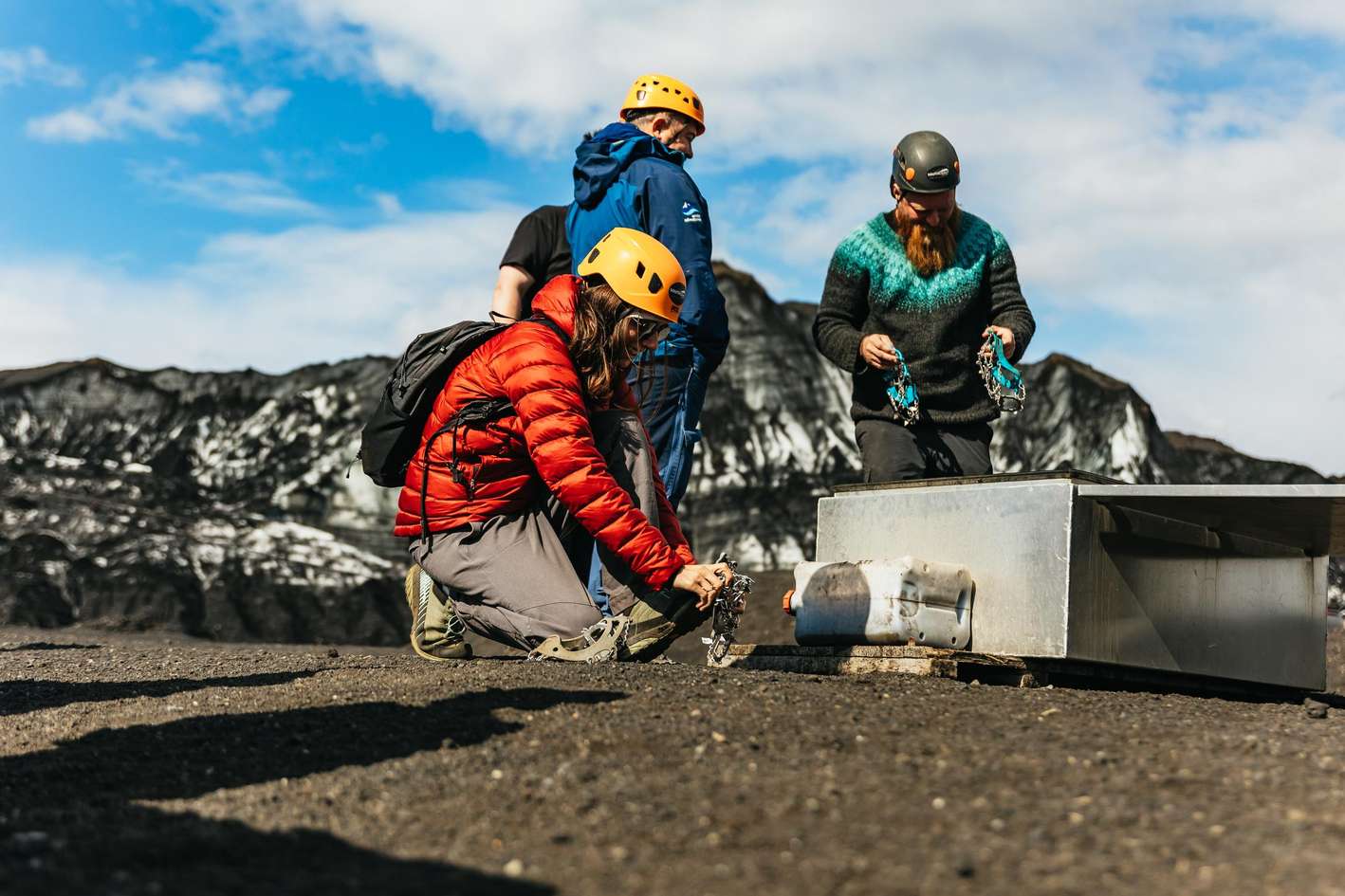
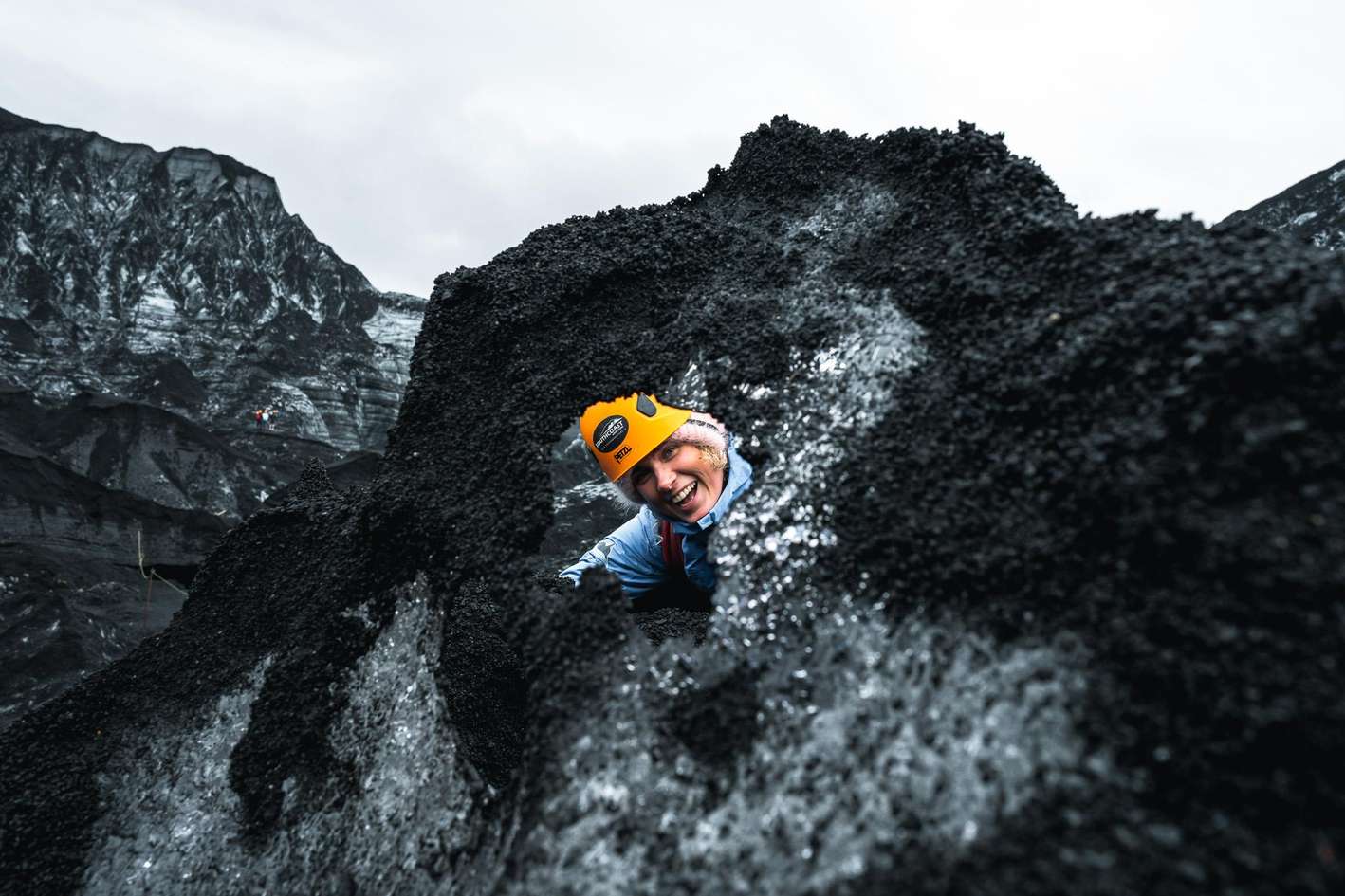
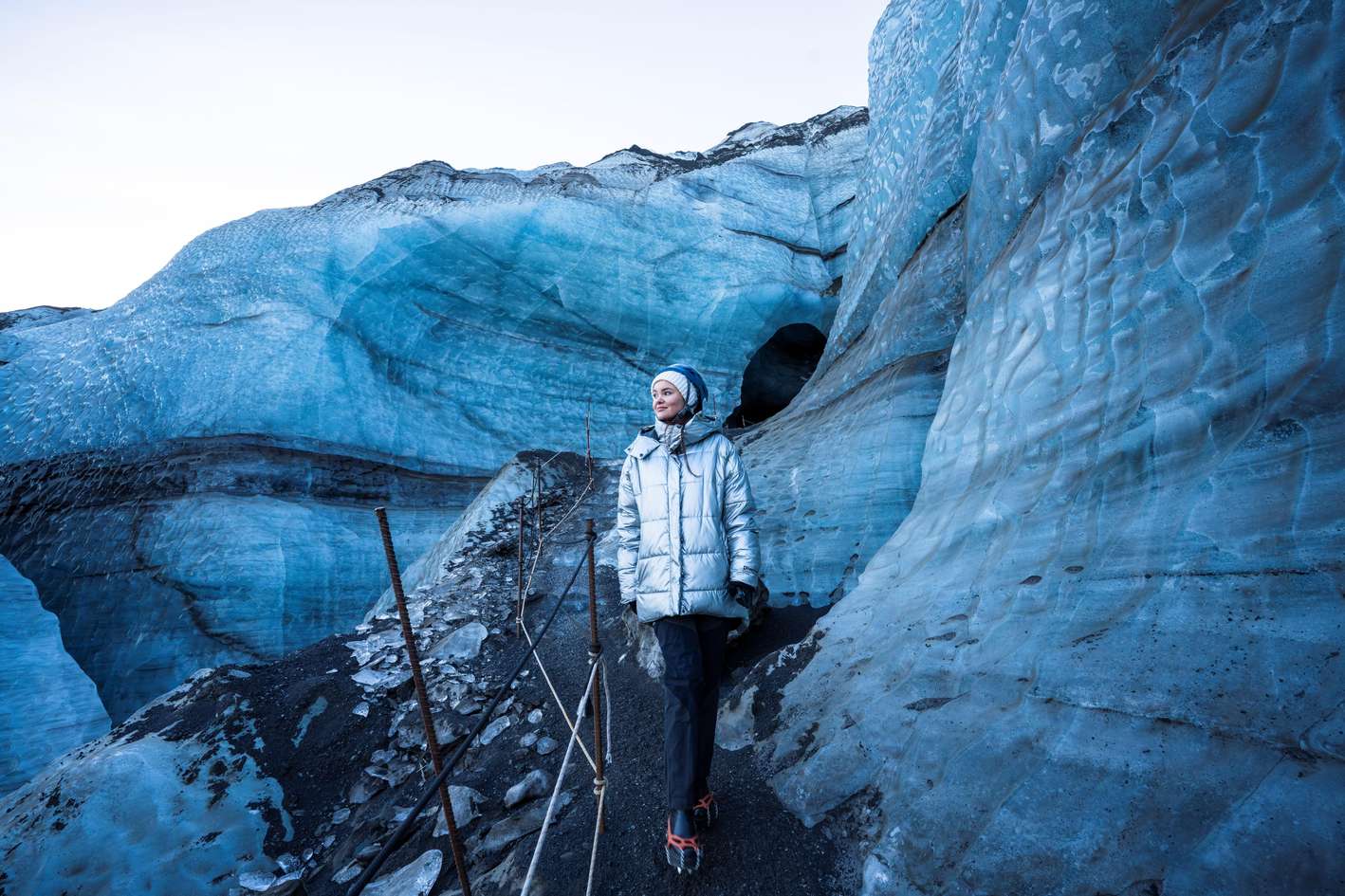
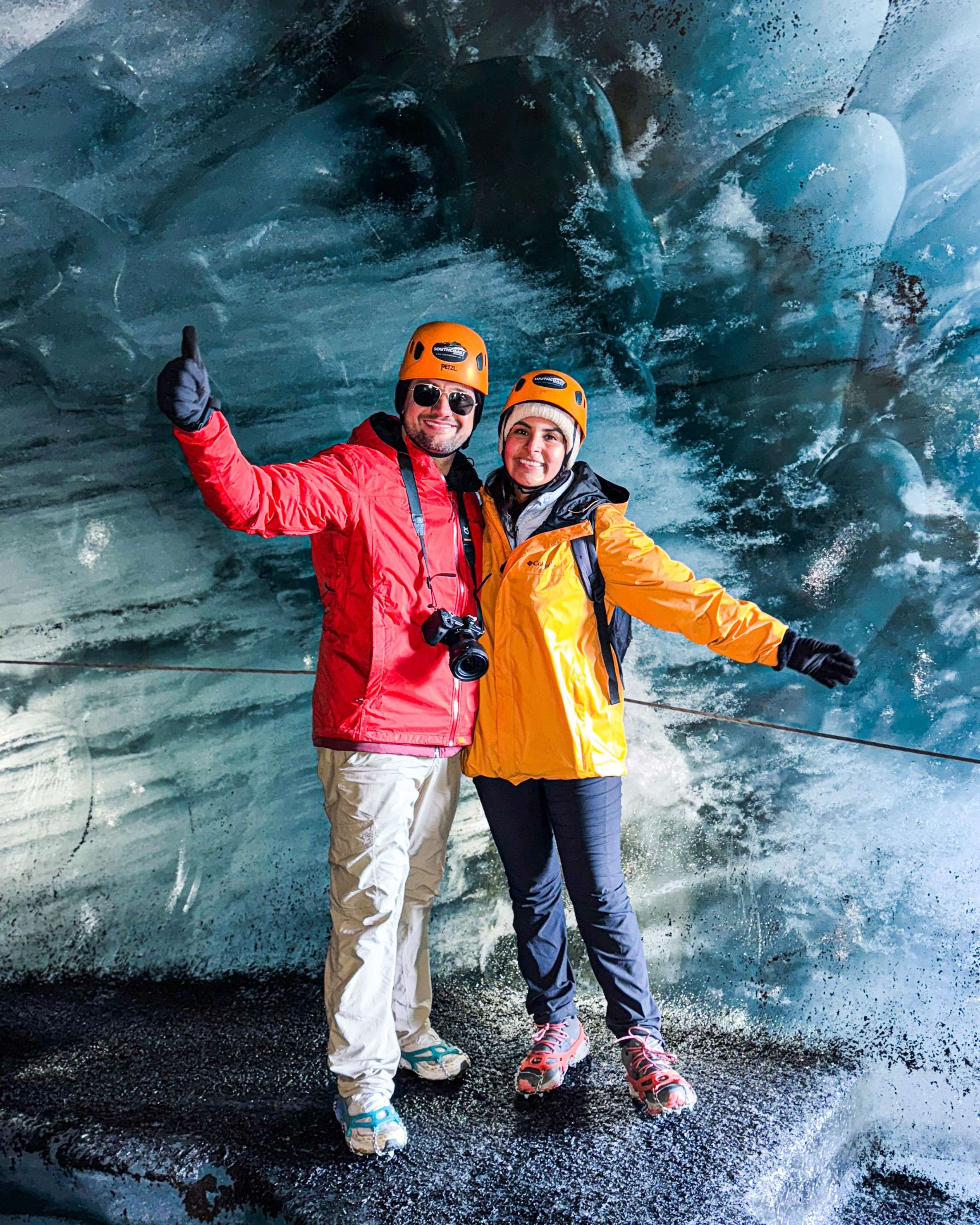
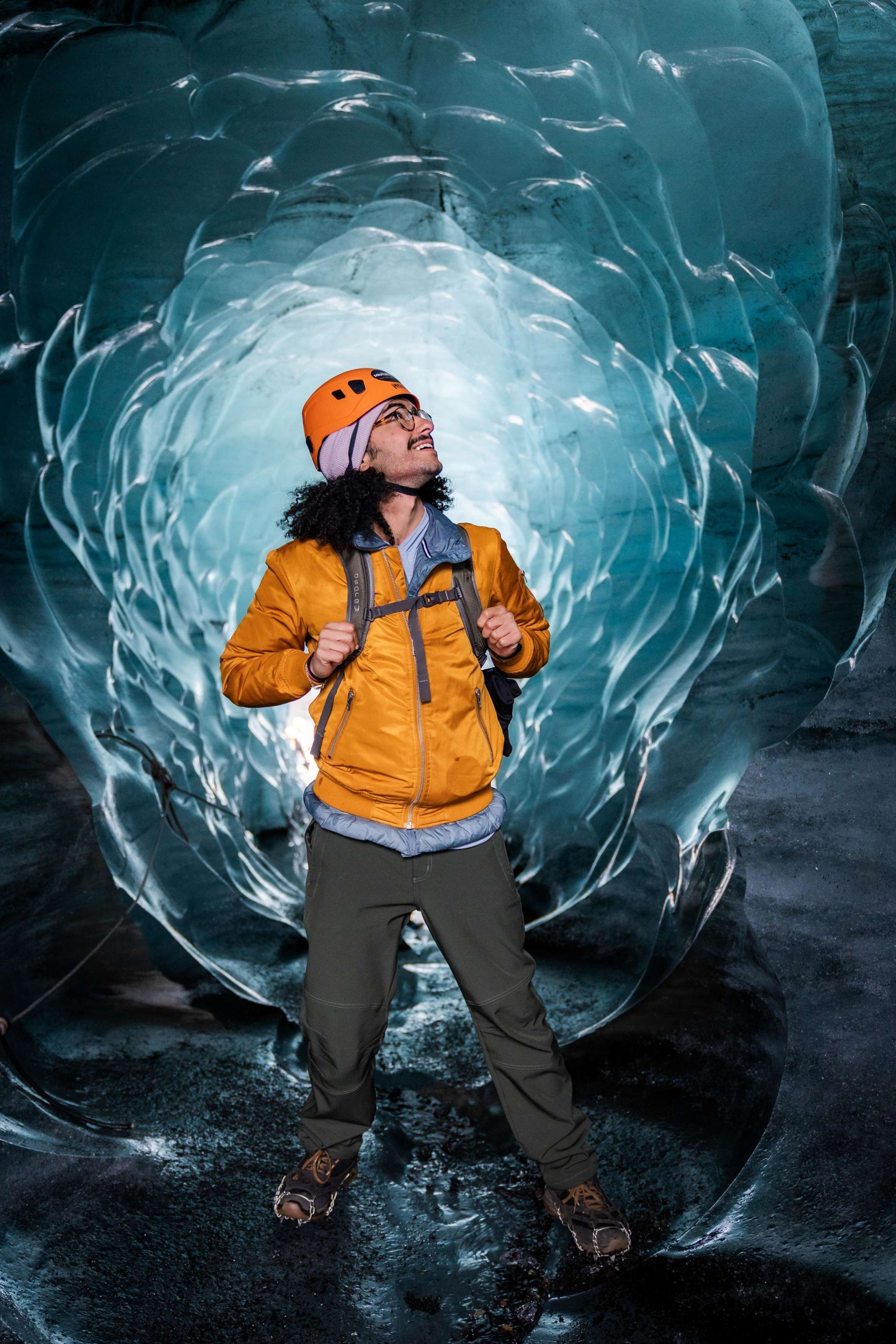
Safe Katla Ice Cave tours in photos
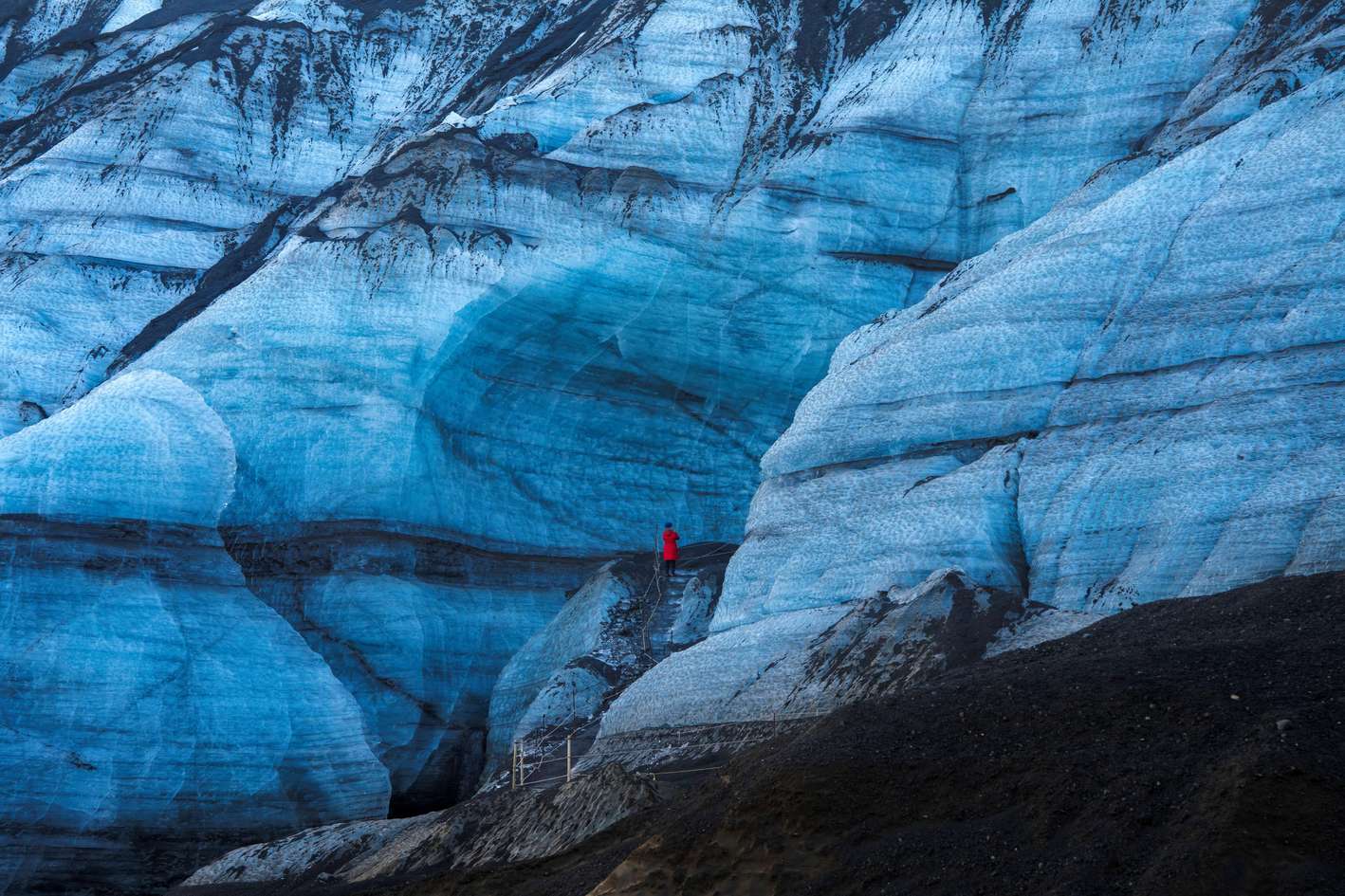
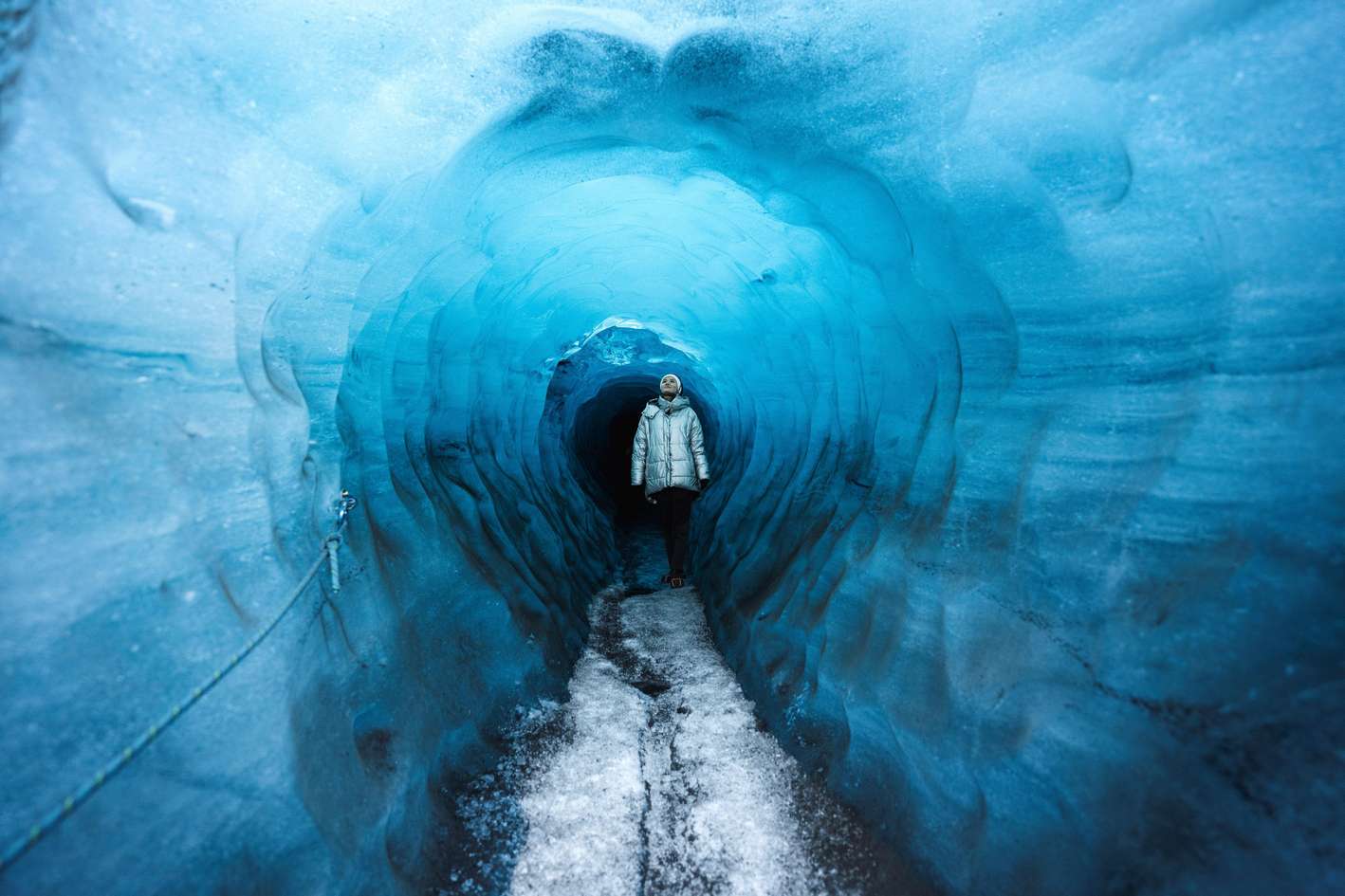
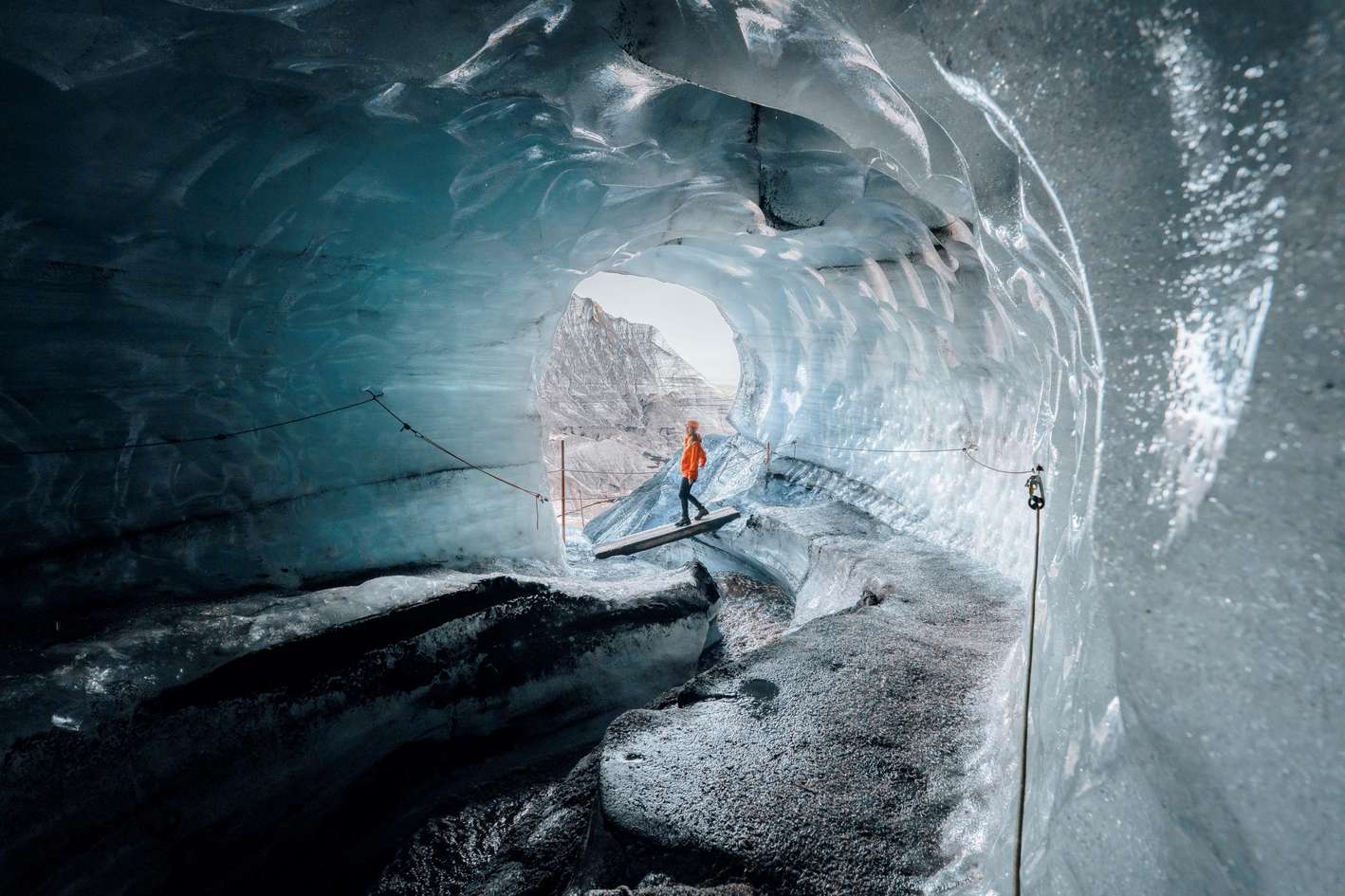
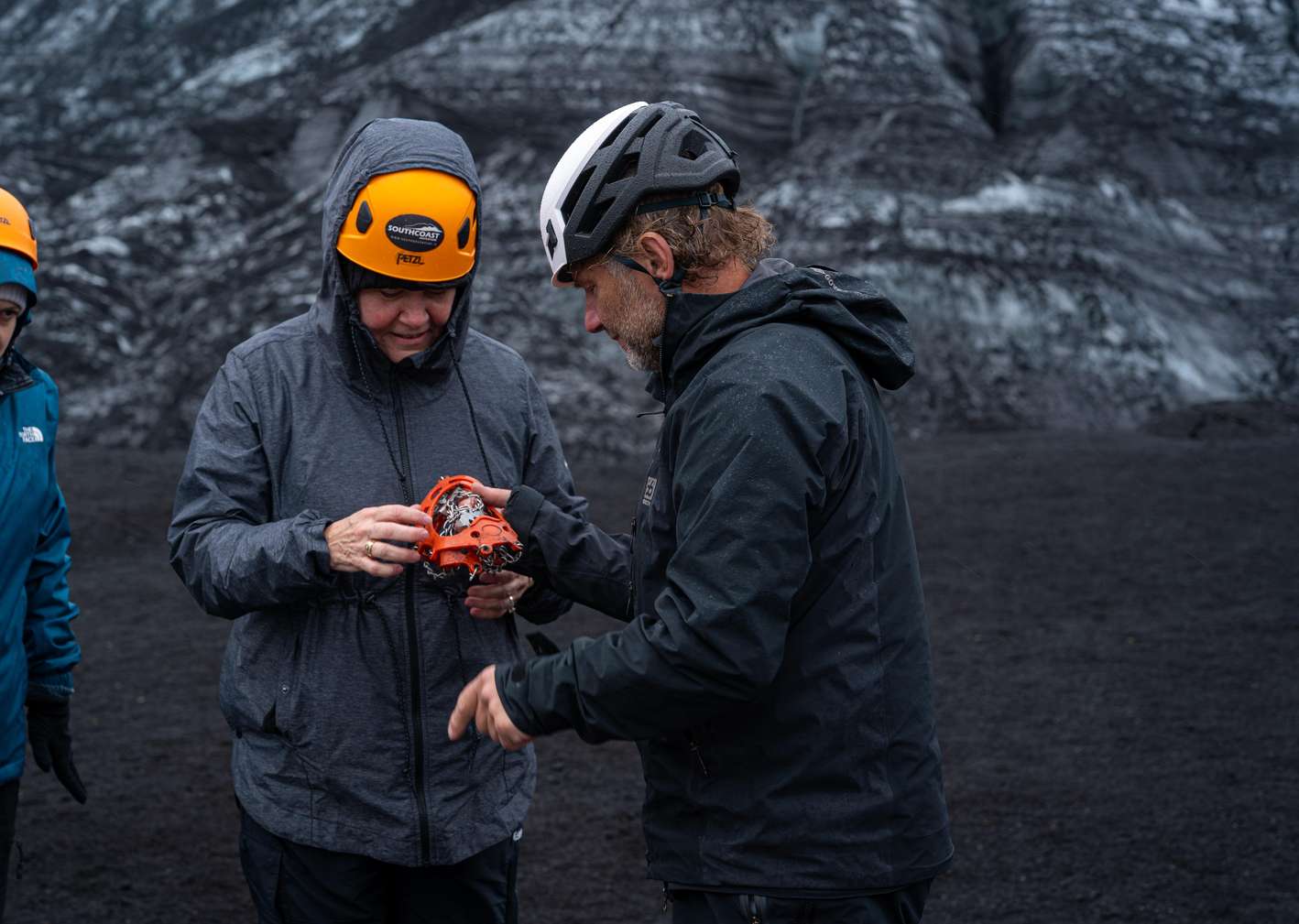
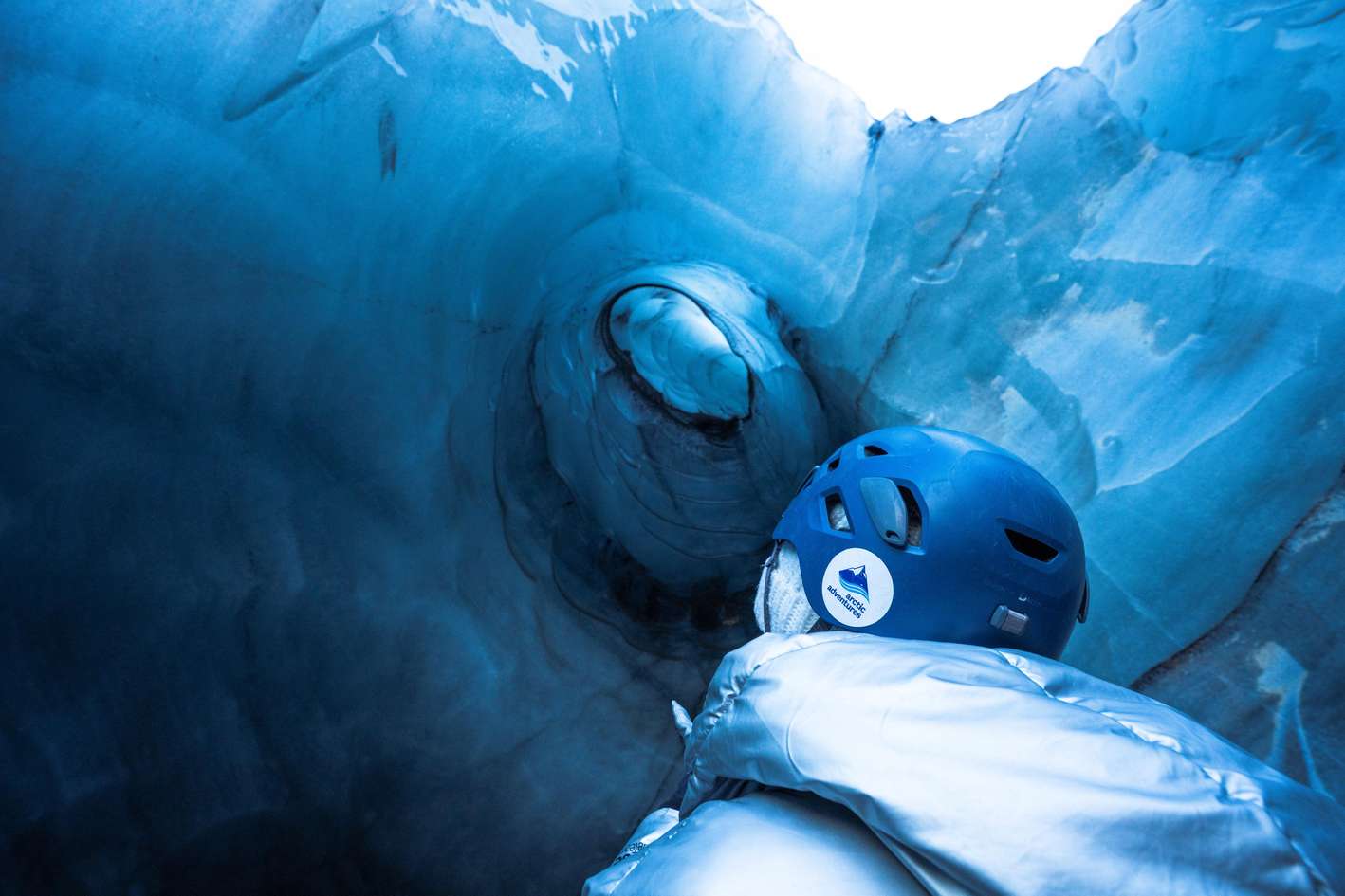
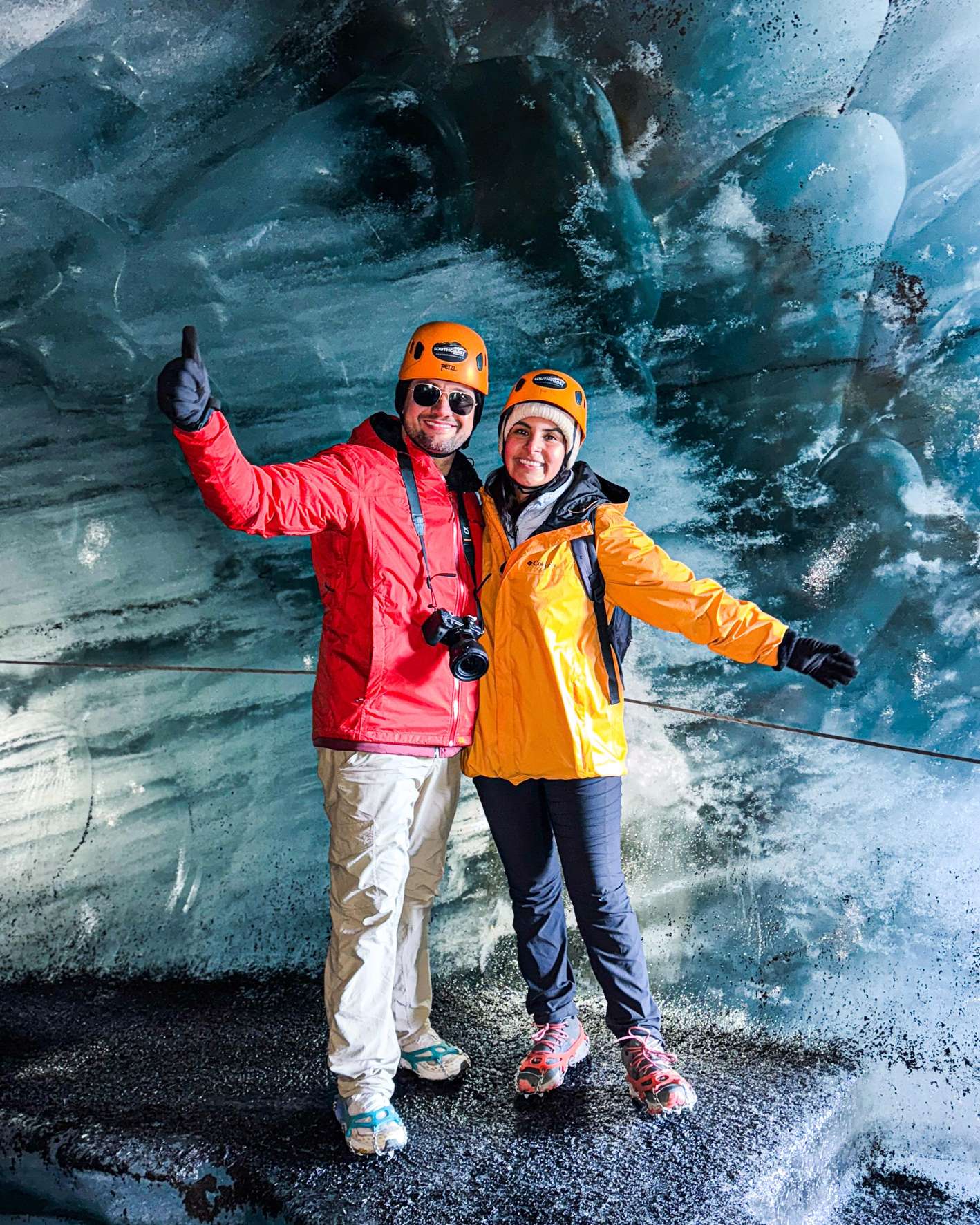
Is Katla Ice Cave safe? Glacier stability, the volcano, and how guides manage the risk
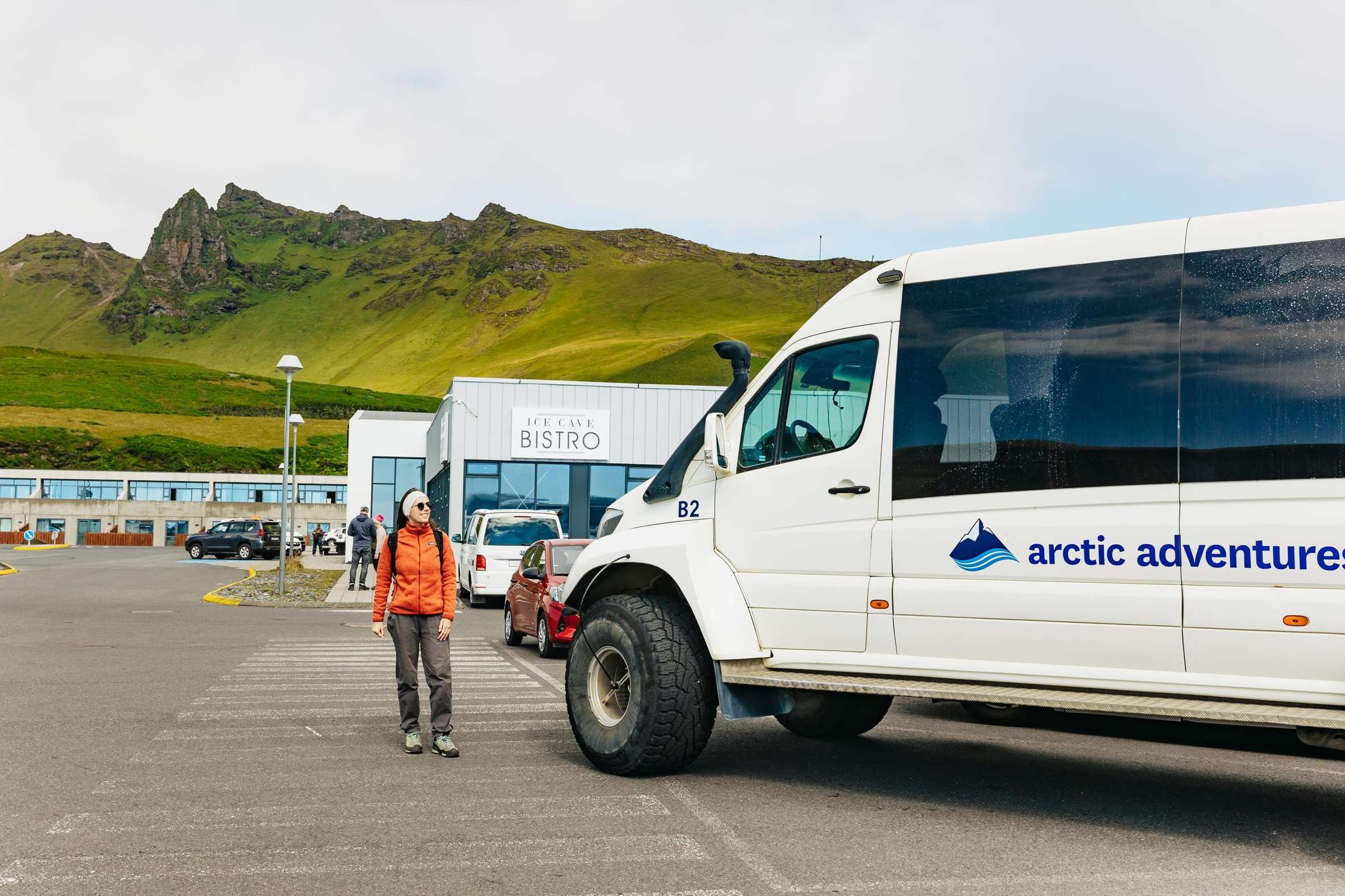
arrive at Vik 20 minutes before departure
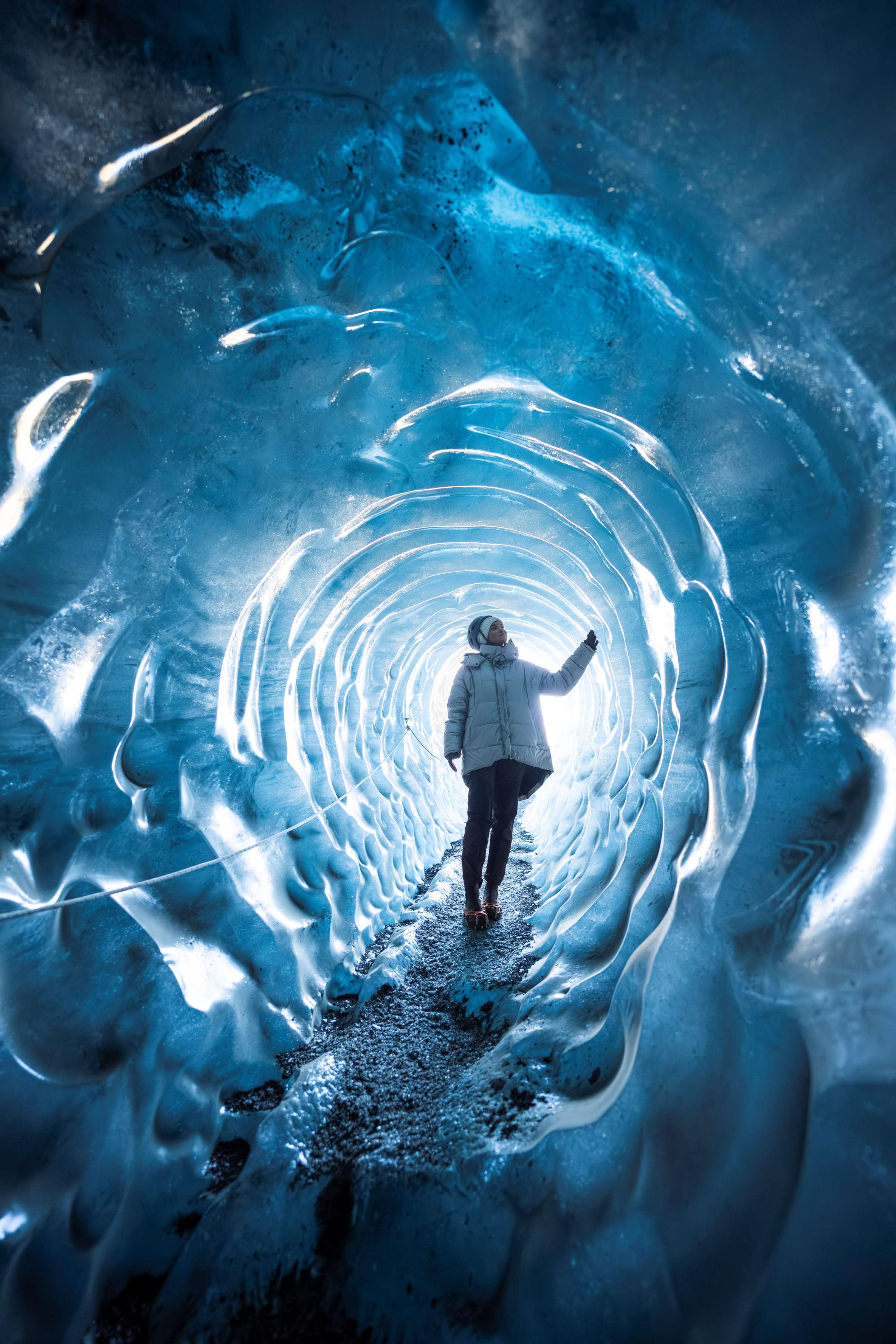
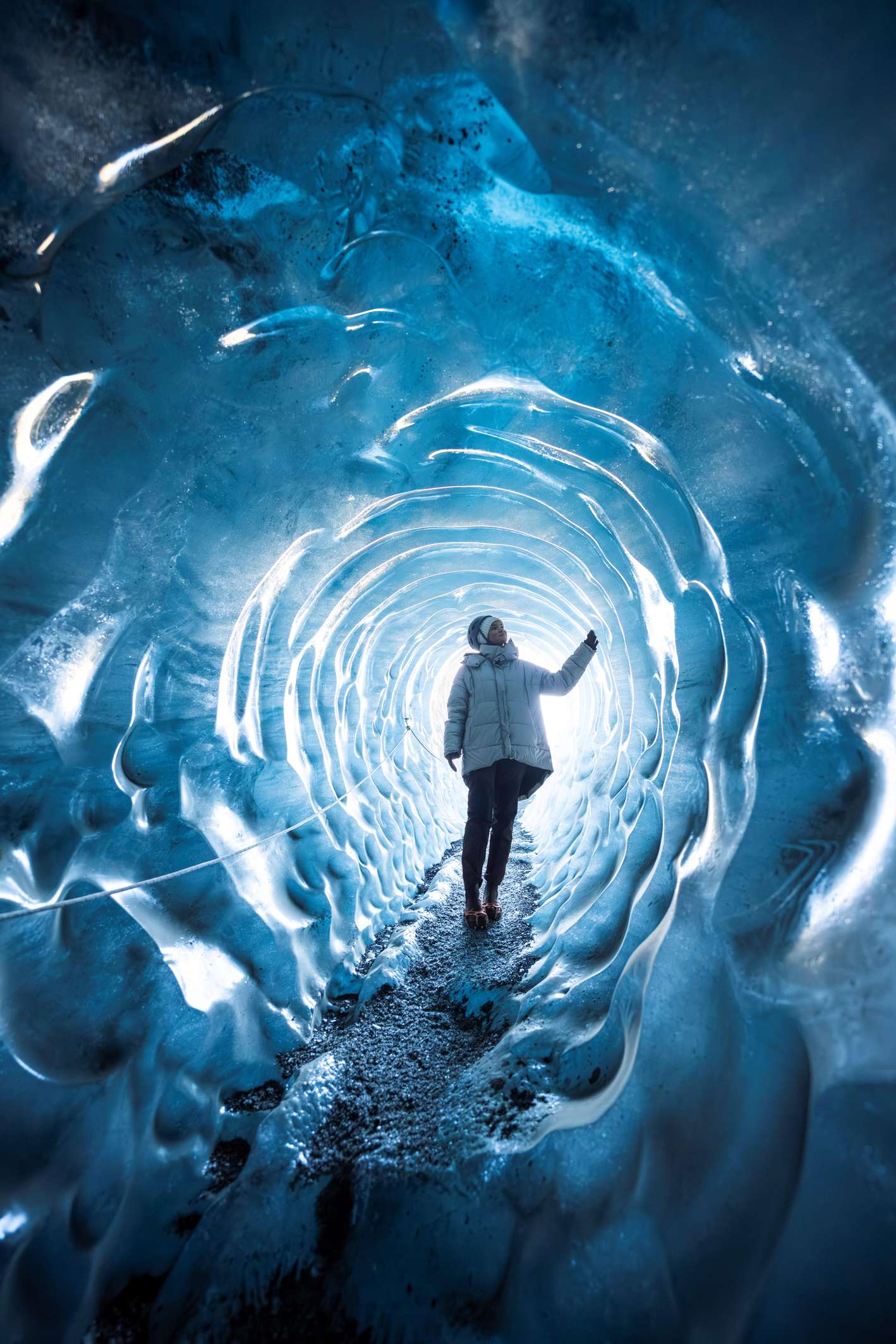
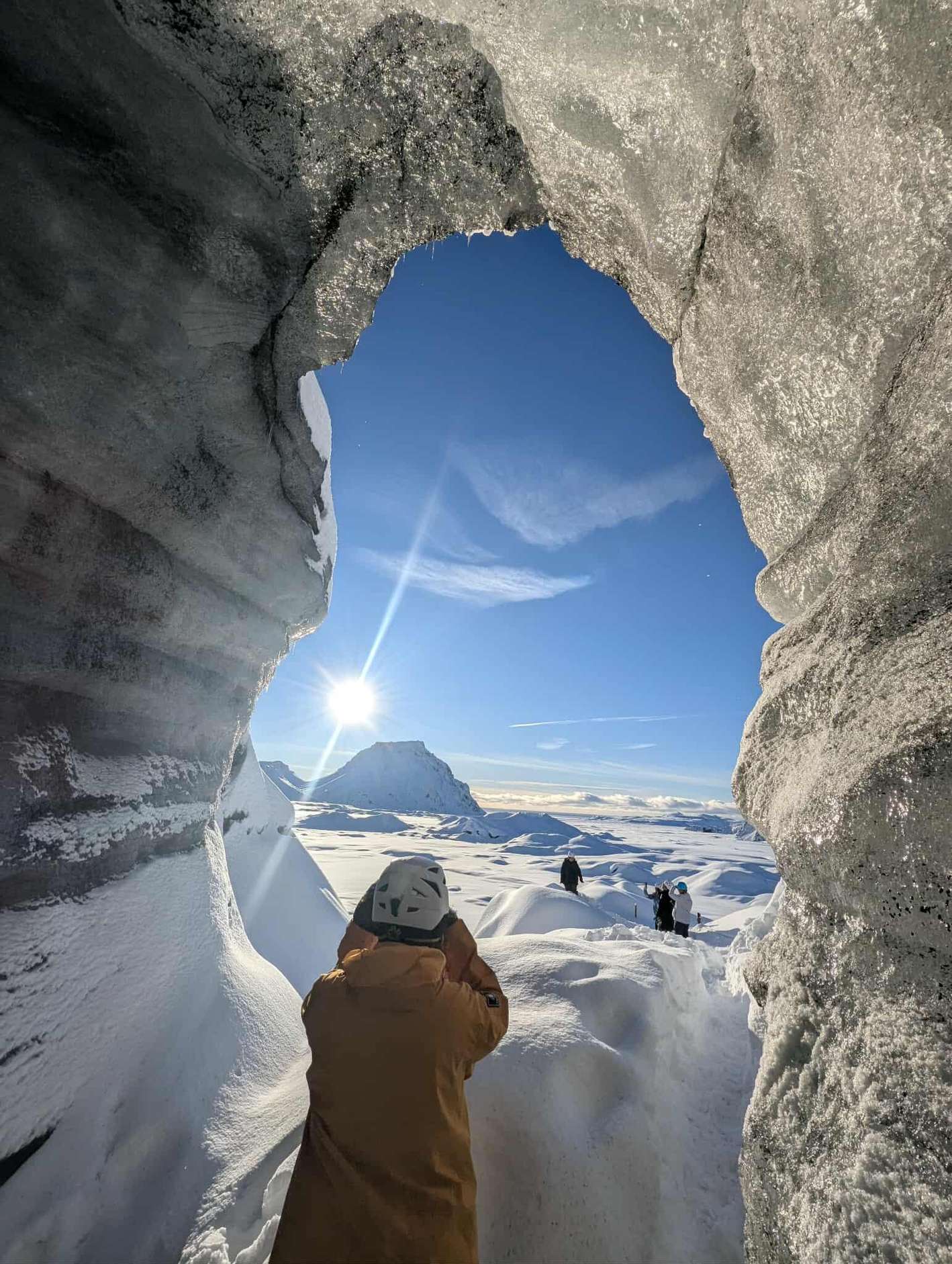
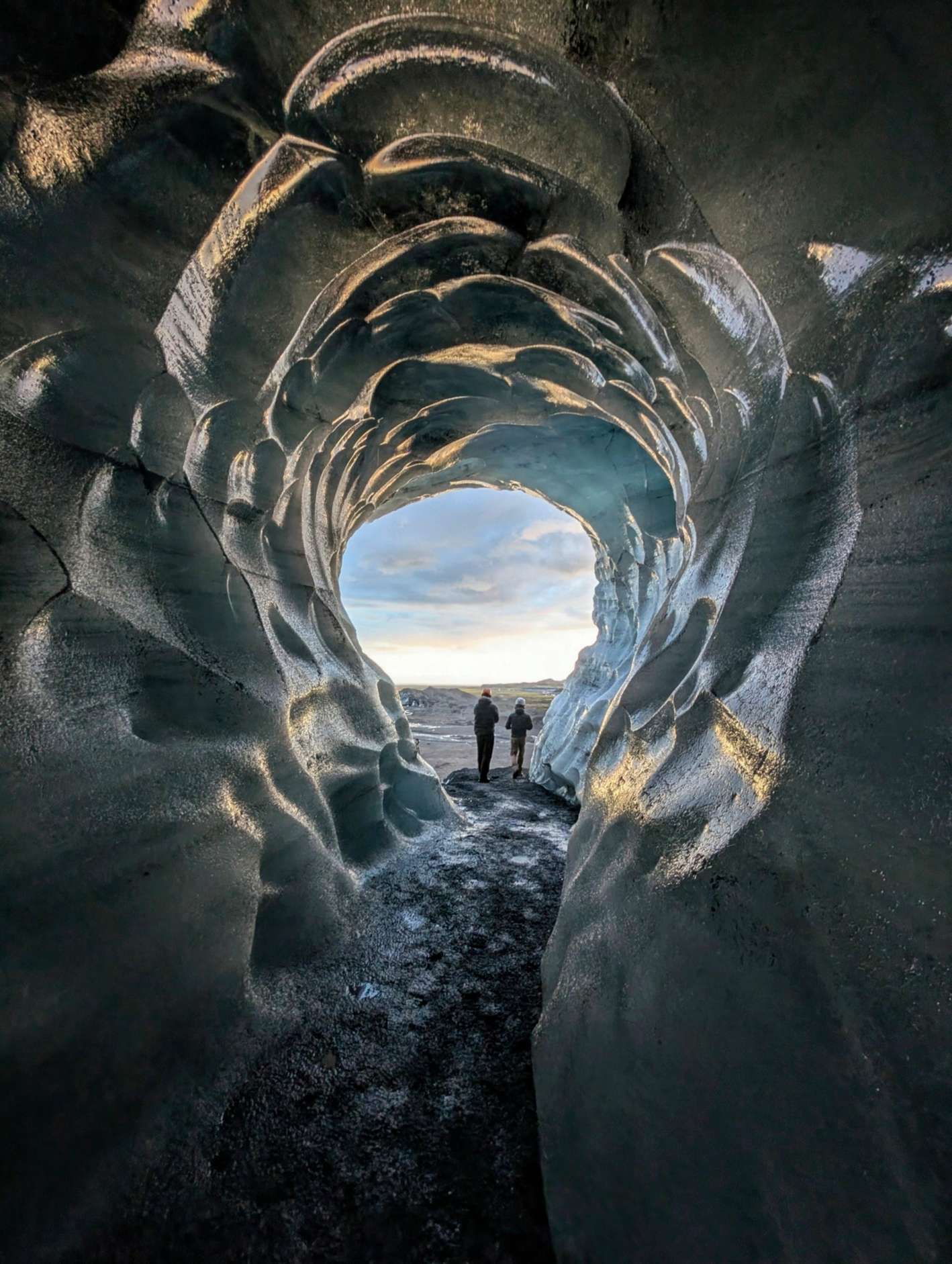
The first thing a glacier guide will tell you about Katla: the cave you walk into today is not the cave photographed last month.
Meltwater, temperature and the slow movement of Kötlujökull reshape its entrances and passages, sometimes from week to week. One regular described it as an enclosed tunnel in spring and an open dome by autumn.
Guides treat that change as the whole job: they judge conditions every morning and take groups to the safe, open spots available that day, which may not be the same chamber yesterday's tour saw.
Summer does not close Katla. This is one of the few natural ice caves in Iceland that runs guided visits year-round, because its thick roof and steady structure hold up where thinner seasonal caves flood or fail.
Warm spells and heavy rain can still shut access for a day, and the guide's answer is to cancel.
And the volcano? Katla sits under Mýrdalsjökull, and the Icelandic Meteorological Office watches it around the clock with seismic sensors that trigger automatic warnings if activity stirs. Tours are called off when there are signs the volcano is waking, long before anyone stands near the ice.
The three beliefs that trip people up before they book are worth naming outright.
Meltwater and glacier movement reshape entrances, walls and passages constantly, so every visit meets a new formation
Guided Katla tours run all year, with guides choosing the safe areas available on the day
Katla is monitored 24/7 with automatic warnings, and tours are canceled when signs point to unrest
Read that and the picture is clear: the risk is real, and it is managed by people who inspect the ice every single day and walk away when the day says no.
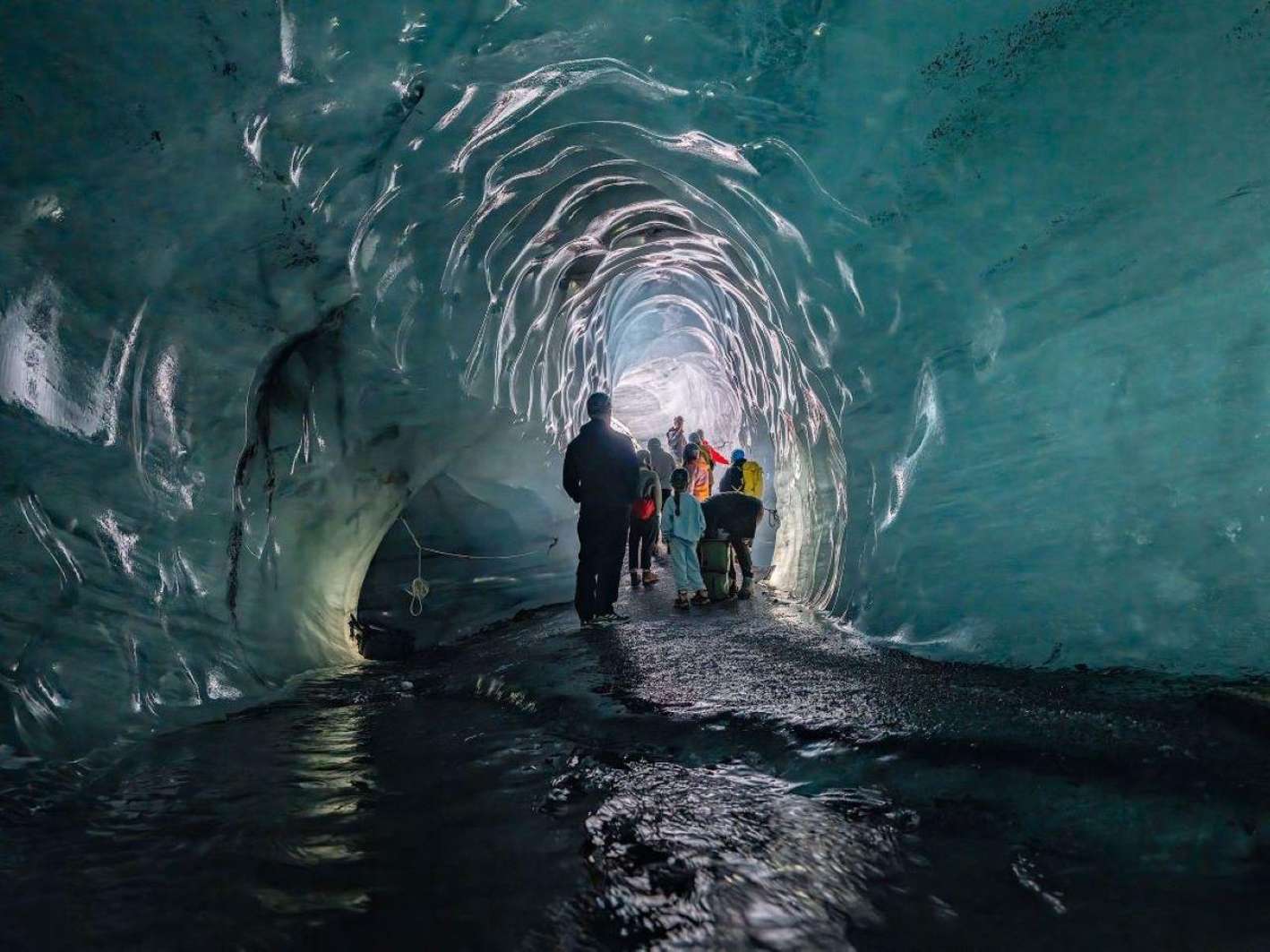
Can you visit Katla Ice Cave without a guide?
The road simply stops. Past Vík, black sand and shallow streams take over, and no rental car, however capable it looks, is permitted or able to make the crossing to the glacier edge.
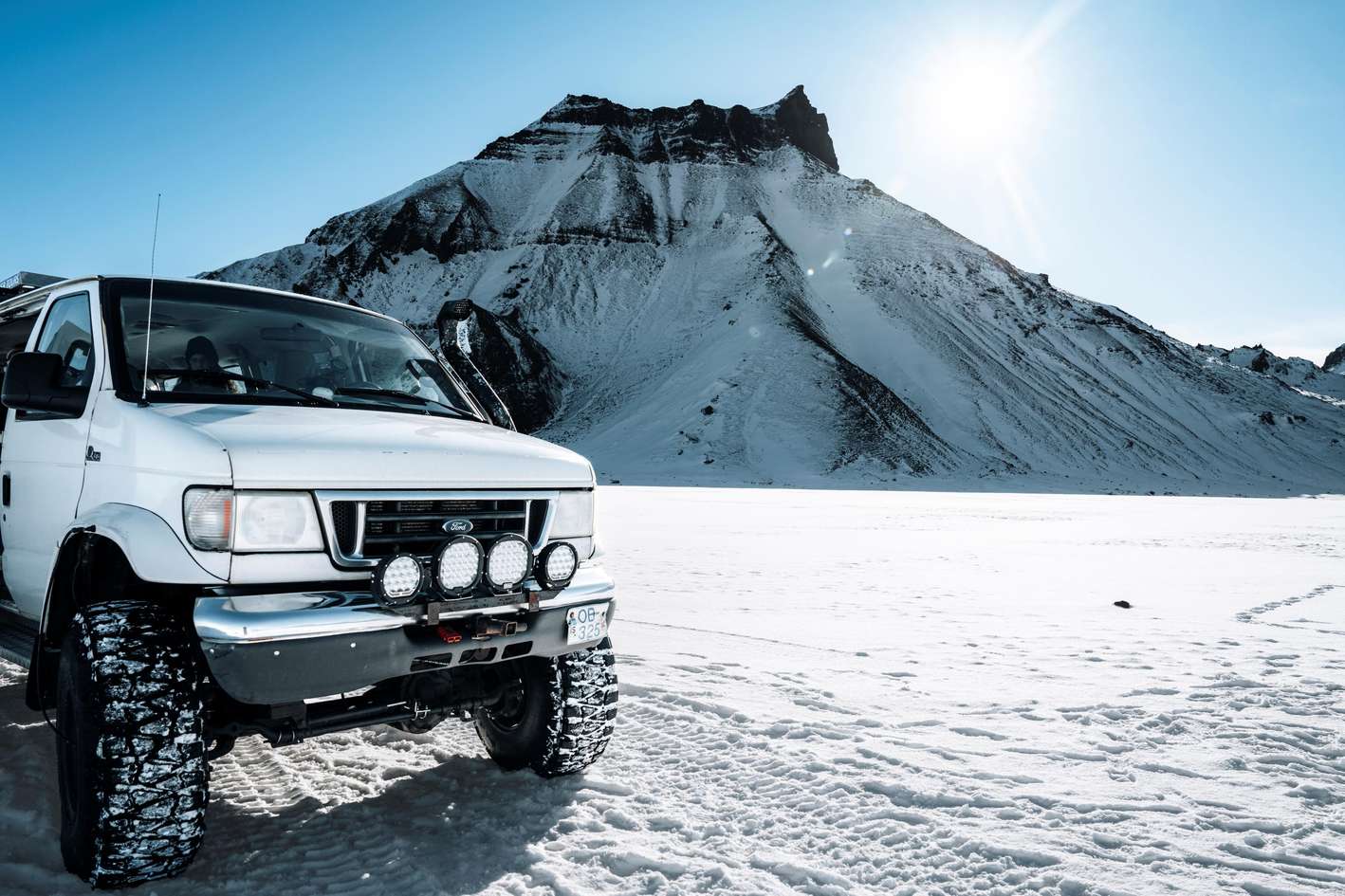
The heavy, high-clearance super jeeps that do this run are operated only by tour companies. That is the first lock on the door.
The second lock is the glacier itself. Kötlujökull is active ice: crevasses hide under snow bridges, meltwater carves channels and hollows that deepen as the surface shifts, and floods near the glacier edge can arrive with little warning. Walking onto this terrain unguided has ended in fatal collapses.
So the answer to going alone is short: you cannot, legally or safely. A certified glacier guide is the only door into Katla, and every tour on this stretch of coast runs it that way.
The gear, the route and the judgment call all sit with someone who reads this glacier every day, which is exactly what you want under a moving ceiling of ice.
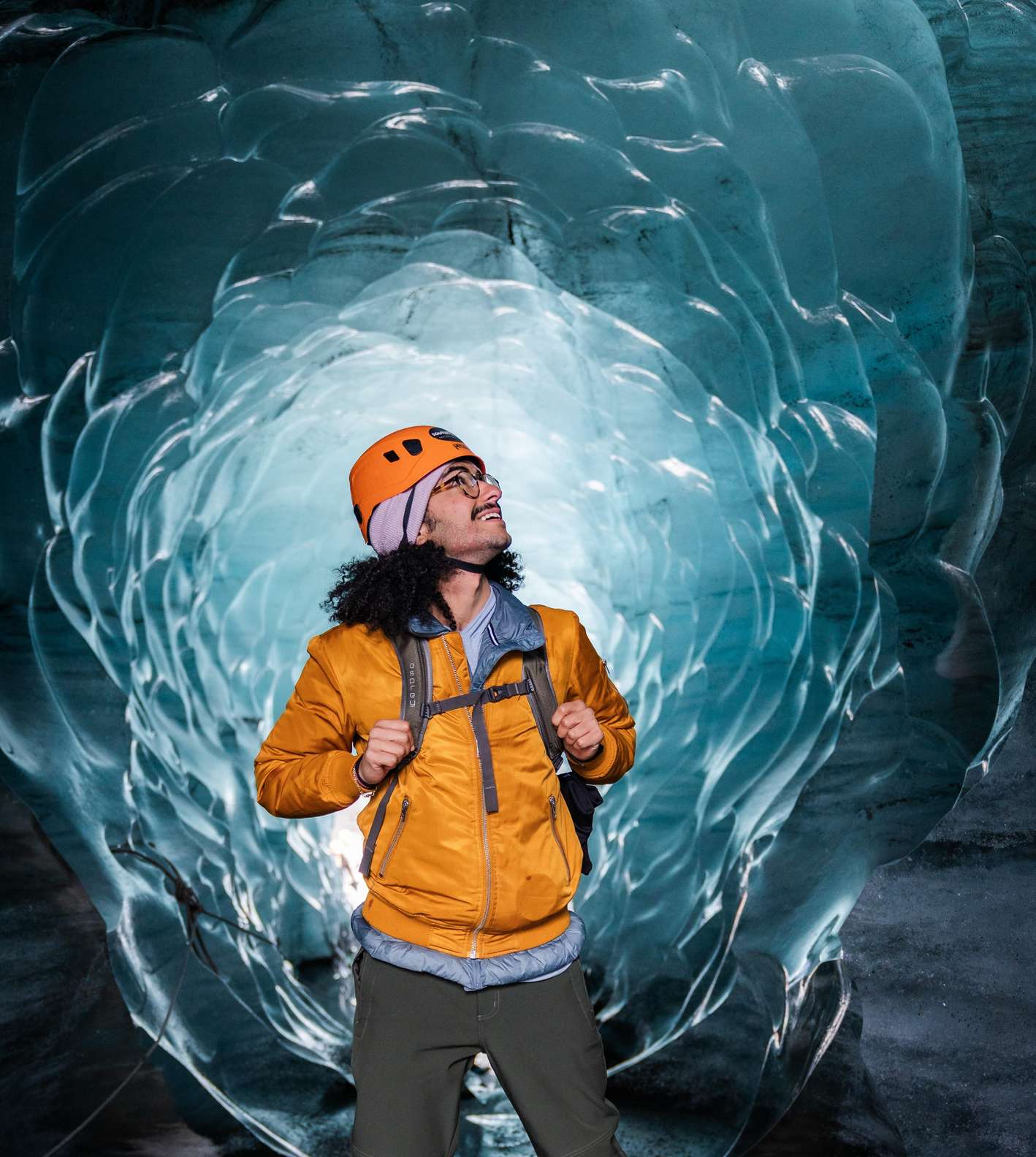
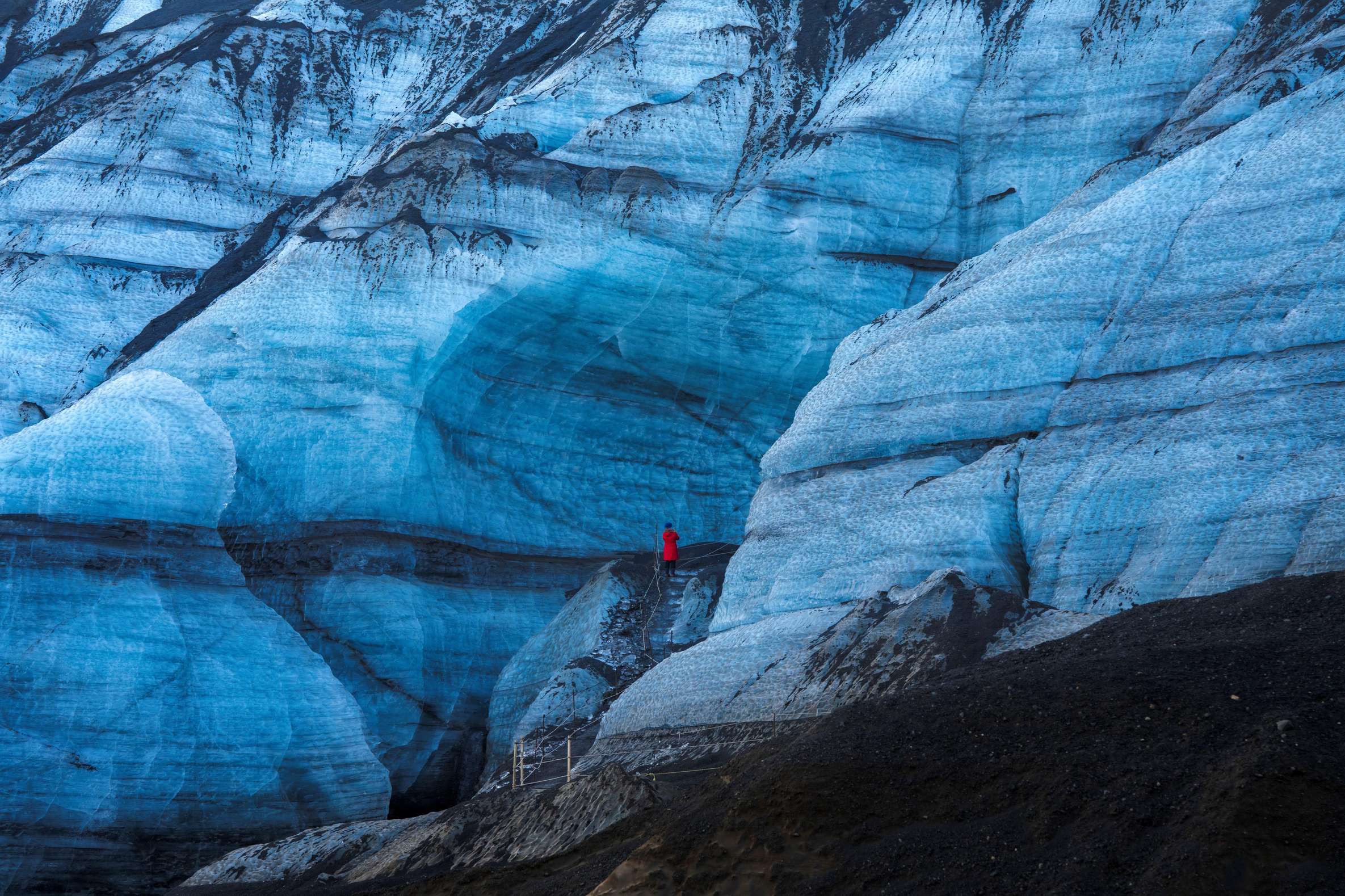
Minimum ages, tour difficulty and health limits on a Katla ice cave visit
Ages are the first thing to check, because operators set their own limits and the limits differ. Across the Katla tours, minimum ages run from 6 up to 12 years: some shared tours take children from 6, others draw the line at 8, and a few extended departures ask for 10 or 12.
Difficulty is usually rated easy to moderate, with fair fitness enough for a walk of a kilometre or two on uneven, icy ground.
Health advisories matter just as much as age. Several Katla tours are not suitable for limited mobility, and at least one excludes travelers with heart problems and wheelchair users. One recent visitor's advice for anyone with bad knees, ankles or a back: book the shortest departure and tell the guide early.
If your group spans ages or walking speeds, the From Vik: Katla Ice Cave Small-Group Tour is the easy fit, a 3-hour outing with a local guide and helmets and crampons included, and departures spread across the day so you can pick a slot that suits the slowest walker.
The table below lines up the three Vík departures on exactly the numbers a cautious planner checks first.
Three Vík departures side by side
| Small-group tour from Vík | FastTrack 3-hour tour | Extended 4-hour tour | |
|---|---|---|---|
| Minimum age | 8 years | 6 years | 10 to 12 years |
| Difficulty | Easy, uneven ground | Easy, short walk | Moderate, longer time on the ice |
| Health notes | Not for limited mobility, heart problems or wheelchair users | Not for people prone to motion sickness | Most time out on the glacier |
- Minimum age
- 8 years
- Difficulty
- Easy, uneven ground
- Health notes
- Not for limited mobility, heart problems or wheelchair users
- Minimum age
- 6 years
- Difficulty
- Easy, short walk
- Health notes
- Not for people prone to motion sickness
- Minimum age
- 10 to 12 years
- Difficulty
- Moderate, longer time on the ice
- Health notes
- Most time out on the glacier
Match the row to your group and the booking mostly makes itself: youngest children point you at the FastTrack, slower walkers at the small-group tour, and keen ice-lovers at the extended version.
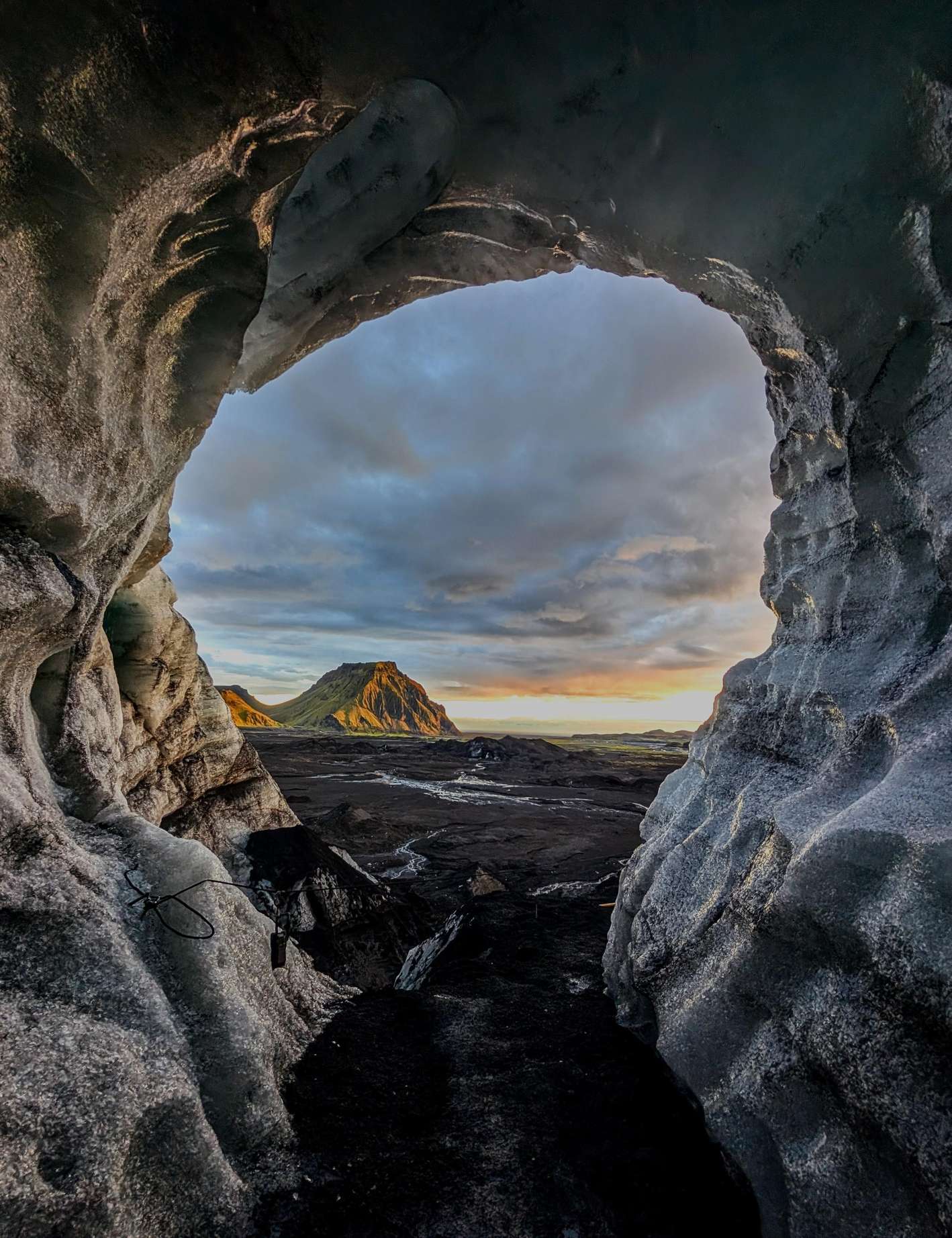
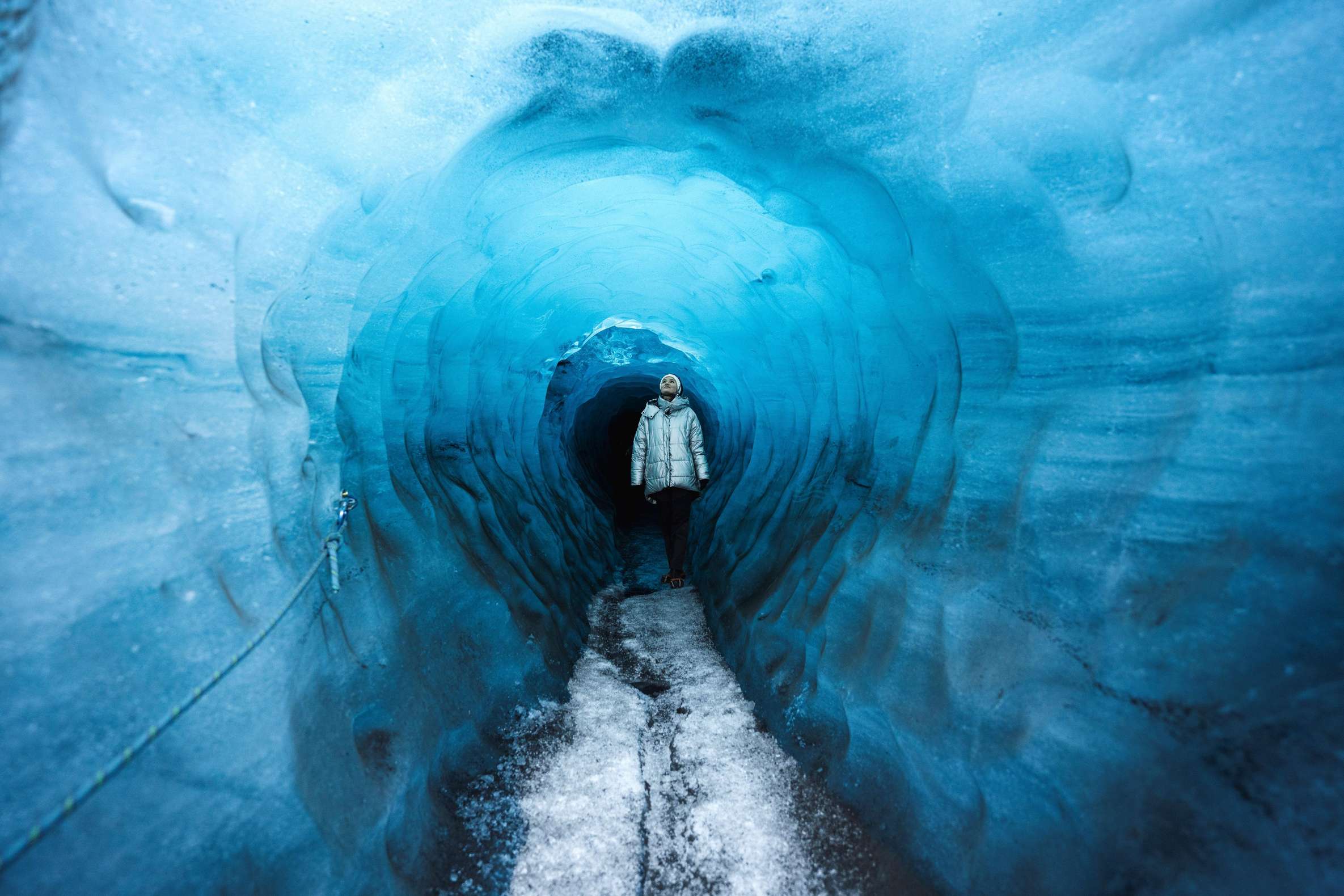
Safety gear on the glacier - what's provided and what boots you must bring
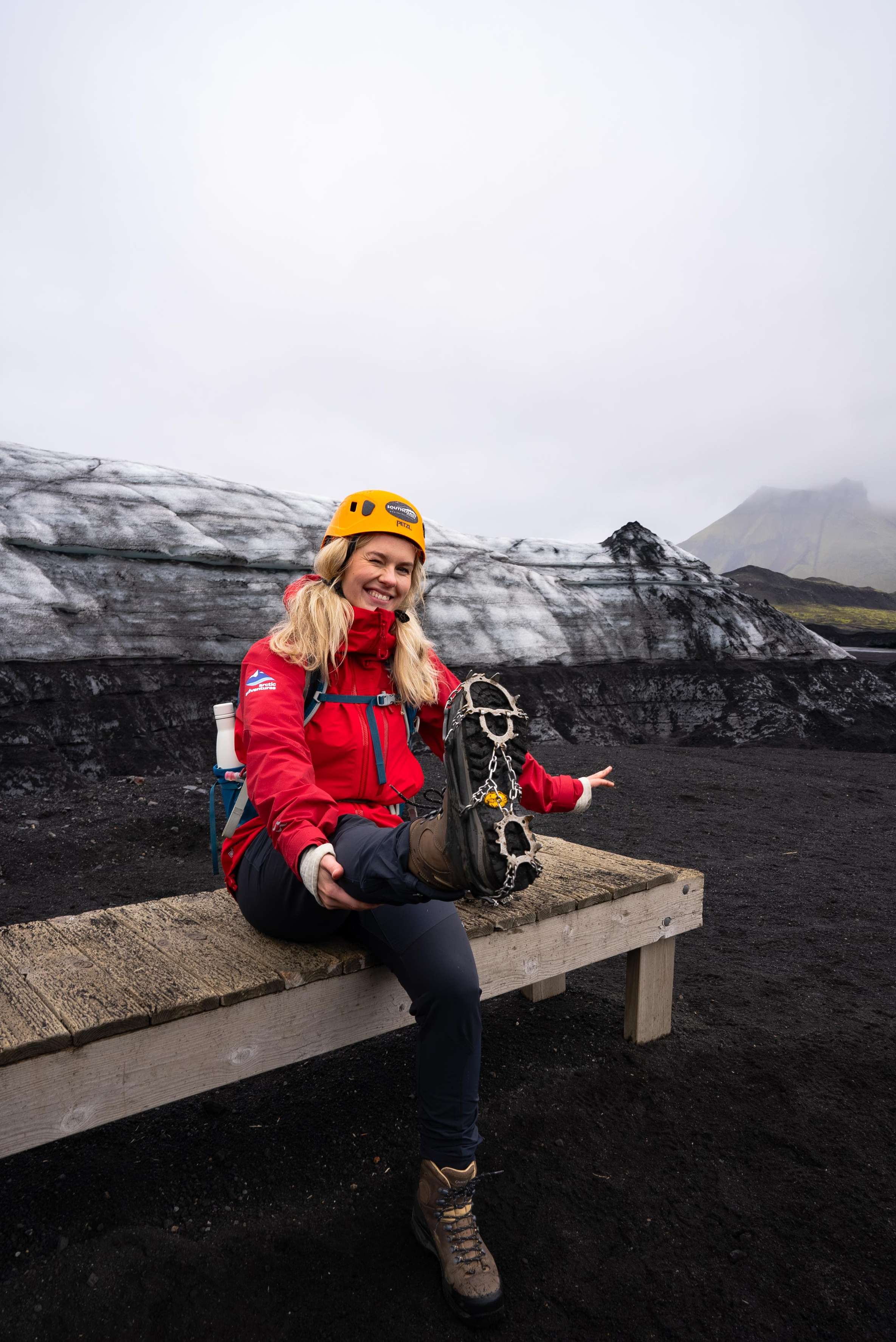
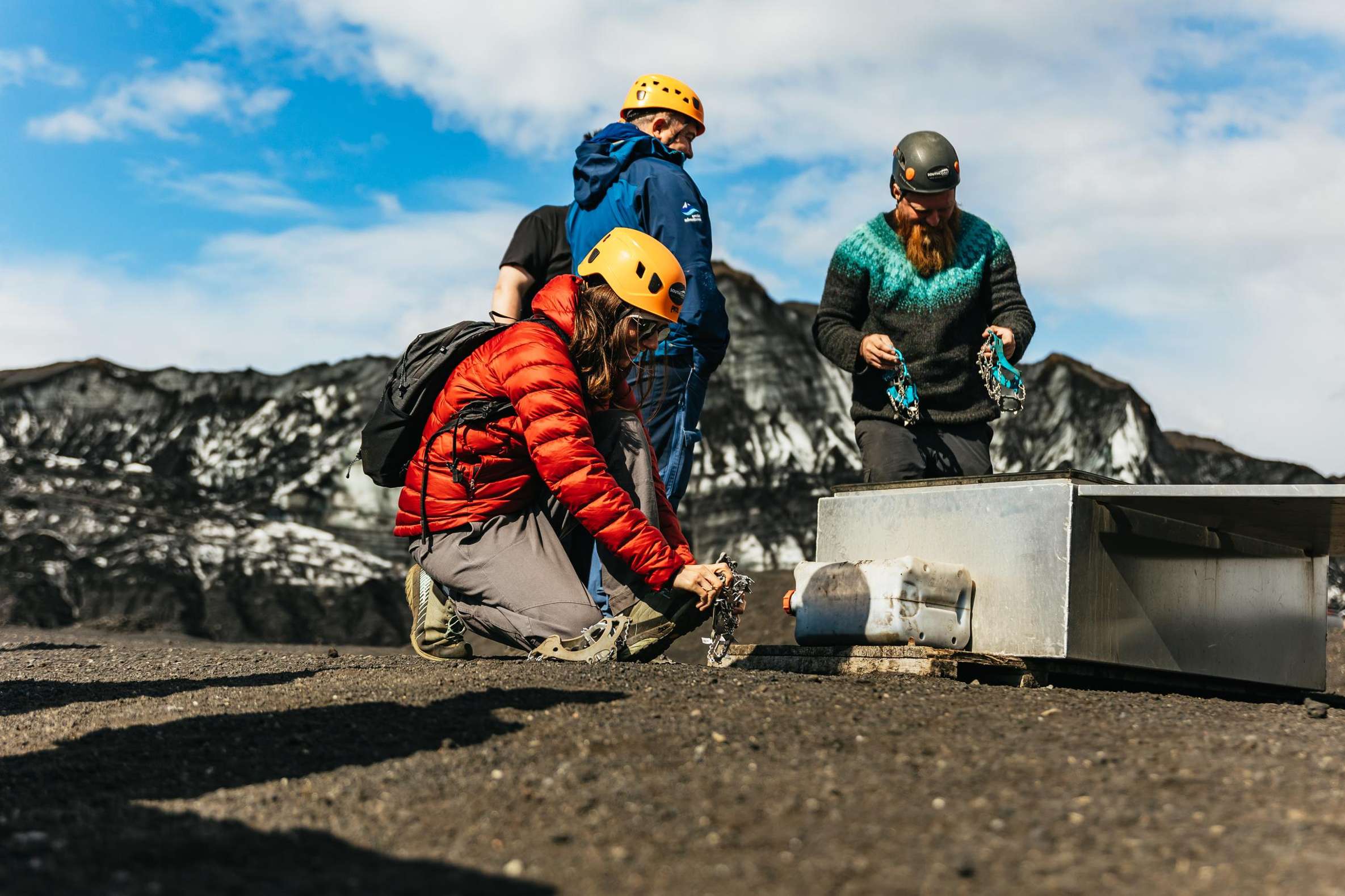
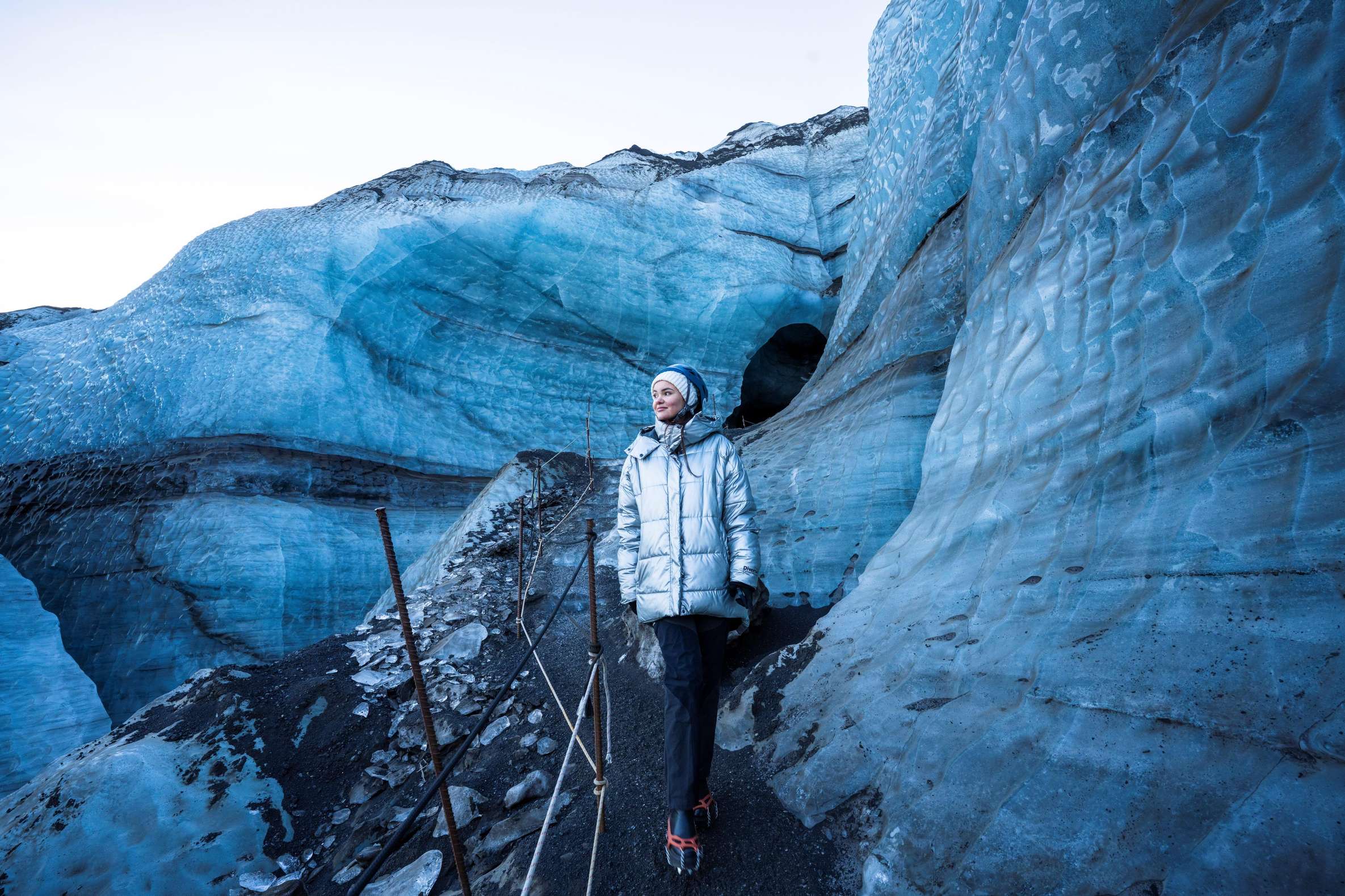
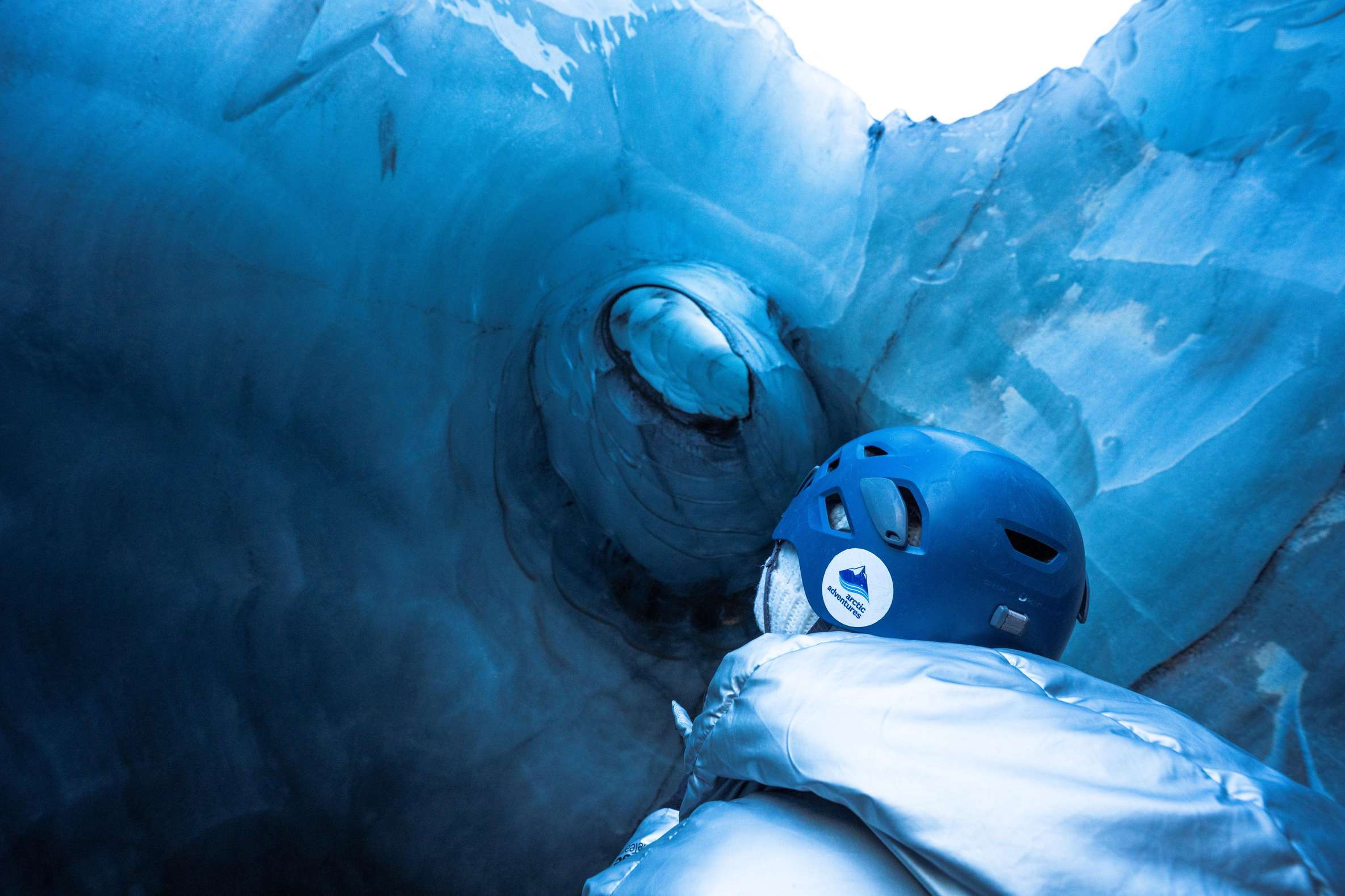
Gear-up happens at the glacier edge, and it is simpler than most first-timers expect. Guides strap glacier crampons onto your boots, hand you a helmet, and issue a headlamp for the darker sections. All of it comes with the tour, so nobody needs to own mountaineering equipment to stand inside a glacier.
The one thing tours do not supply is the boot. Crampons strap over rigid, ankle-high boots with a firm sole, and they will not grip soft sneakers, running shoes or fashion footwear.
Arrive in trainers and you can be turned away at the gear check, a poor end to a long drive. If your boots are wrong, rentals with reinforced ankle support exist at the glacier location and at Sólheimajökull nearby.
Clothing is the rest of the story. Meltwater drips from cave roofs, so a waterproof jacket and trousers over warm layers is the standard kit everyone wears.
Before you pack, here is the full kit split the way the glacier edge will hand it to you.
- Glacier crampons (provided)Guides provide and fit strap-on crampons at the glacier edge to secure footing on slick, sloping ice and uneven moraine.
- Safety helmet (provided)Supplied by tour operators to protect against low-hanging ice, falling rocks, and uneven overhead surfaces inside the cave.
- Headlamp (provided by operators)Provided on tours where natural daylight inside the cave chambers is limited, keeping your hands free while walking.
- Hiking boots with ankle supportRequired sturdy footwear with stiff soles; standard crampons strap tightly around ankle-height boots and slip off soft sneakers.
- Waterproof outer shellWaterproof jacket and trousers are essential to stay dry from melting ice, cave ceiling drips, and sudden coastal rain.
- Thermal base and mid-layersGlacial temperatures and cold winds require synthetic or wool base layers topped by a fleece or lightweight down jacket.
- Gloves and thin beanieKeep hands warm on ice and cold terrain; choose a low-profile beanie without a pompom so your safety helmet fits comfortably.
Read that list against your bag the night before. Everything on the provided side goes on at the glacier edge; everything on the bring side is what the day actually tests.
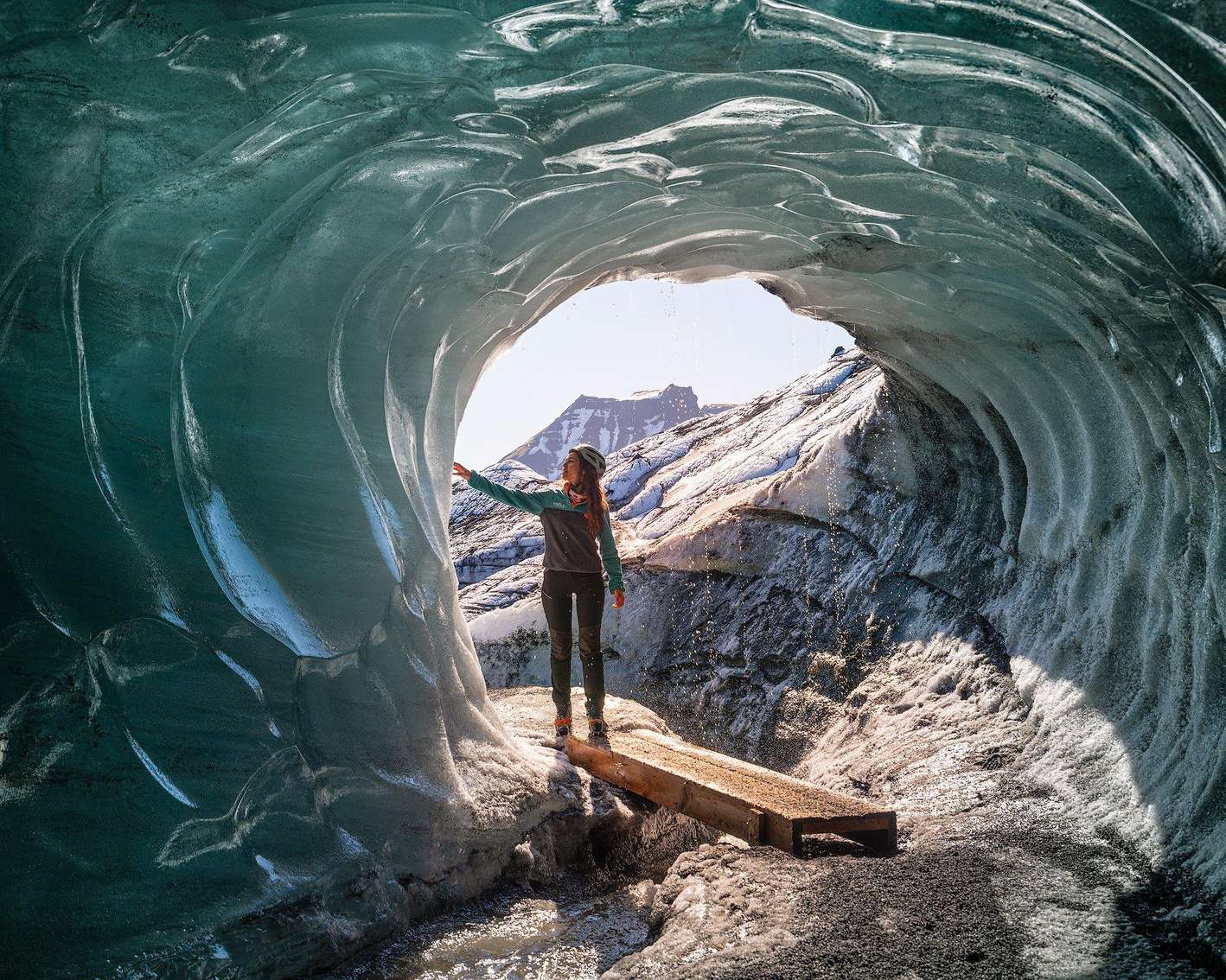
How difficult is the Katla Ice Cave walk? Distance, terrain and fitness needed
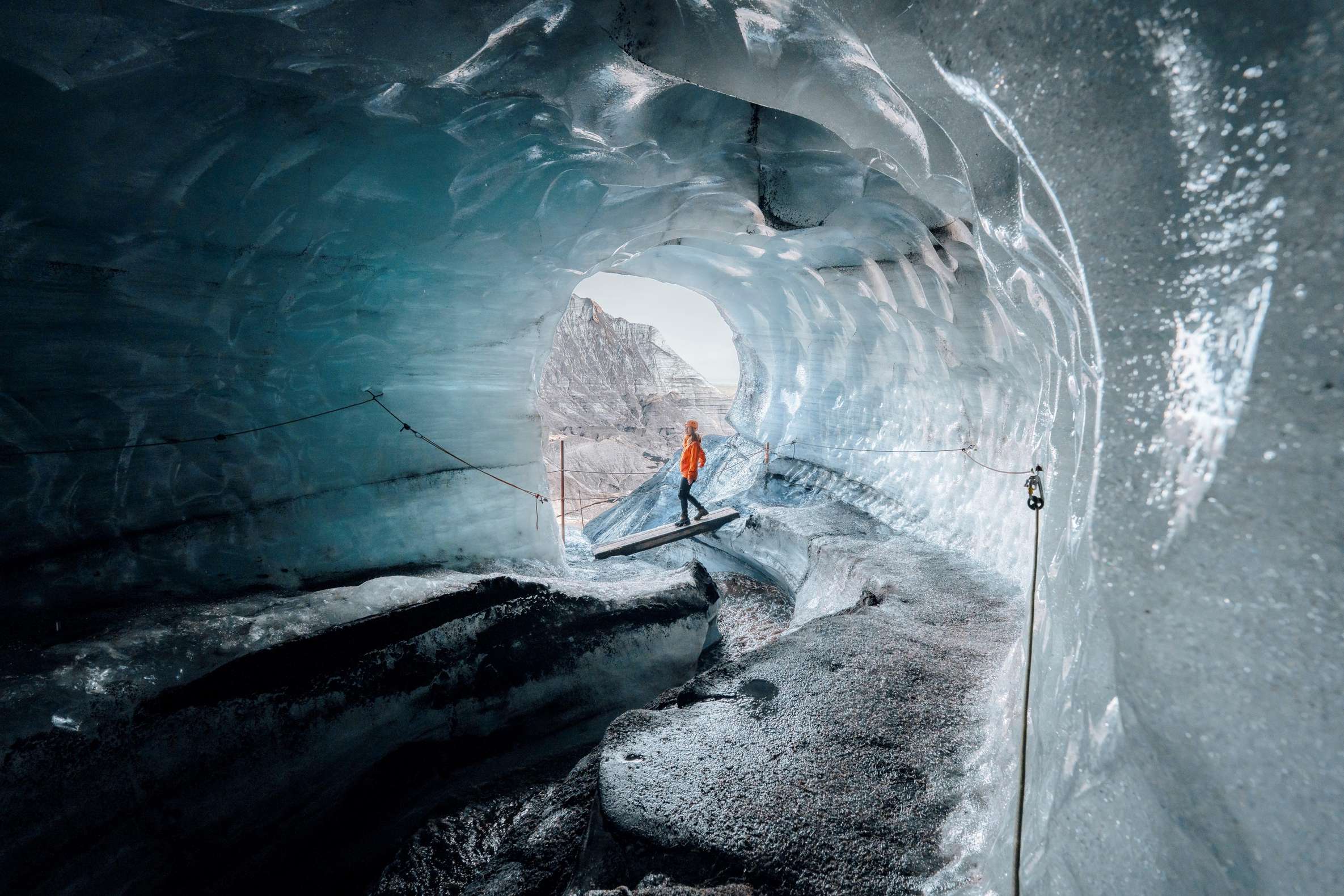
The honest numbers first. The walk from where the road ends to the cave entrance takes about 10 minutes, and the full route from the jeep parking covers 1 to 2 km of uneven ground with little elevation.
One operator's own route description allows 20 to 25 minutes depending on weather; that figure belongs to a single operator's slower routing, and it tells you the same approach can stretch when the track is soft, so treat the short time as the best case.
Once on the ice there is no climbing and no rope work; travelers describe Katla as a short ice walk, nothing like the sustained effort of a full glacier hike.
Recent visitors split on how it feels: some call the approach an easy climb that still takes stamina, others found it steep and awkward in crampons.
The truthful read is easy to moderate: most people with average fitness manage it comfortably, but nobody should expect a flat pavement stroll. Wear the boots, take the guide's pace, and the walk becomes a highlight of the day in its own right.
Anyone who handles uneven trails at home will be fine here. Anyone with a joint that complains on rough scree should book the shortest tour and say so at check-in.
Katla Ice Cave and claustrophobia - ceiling heights, light and tight spaces
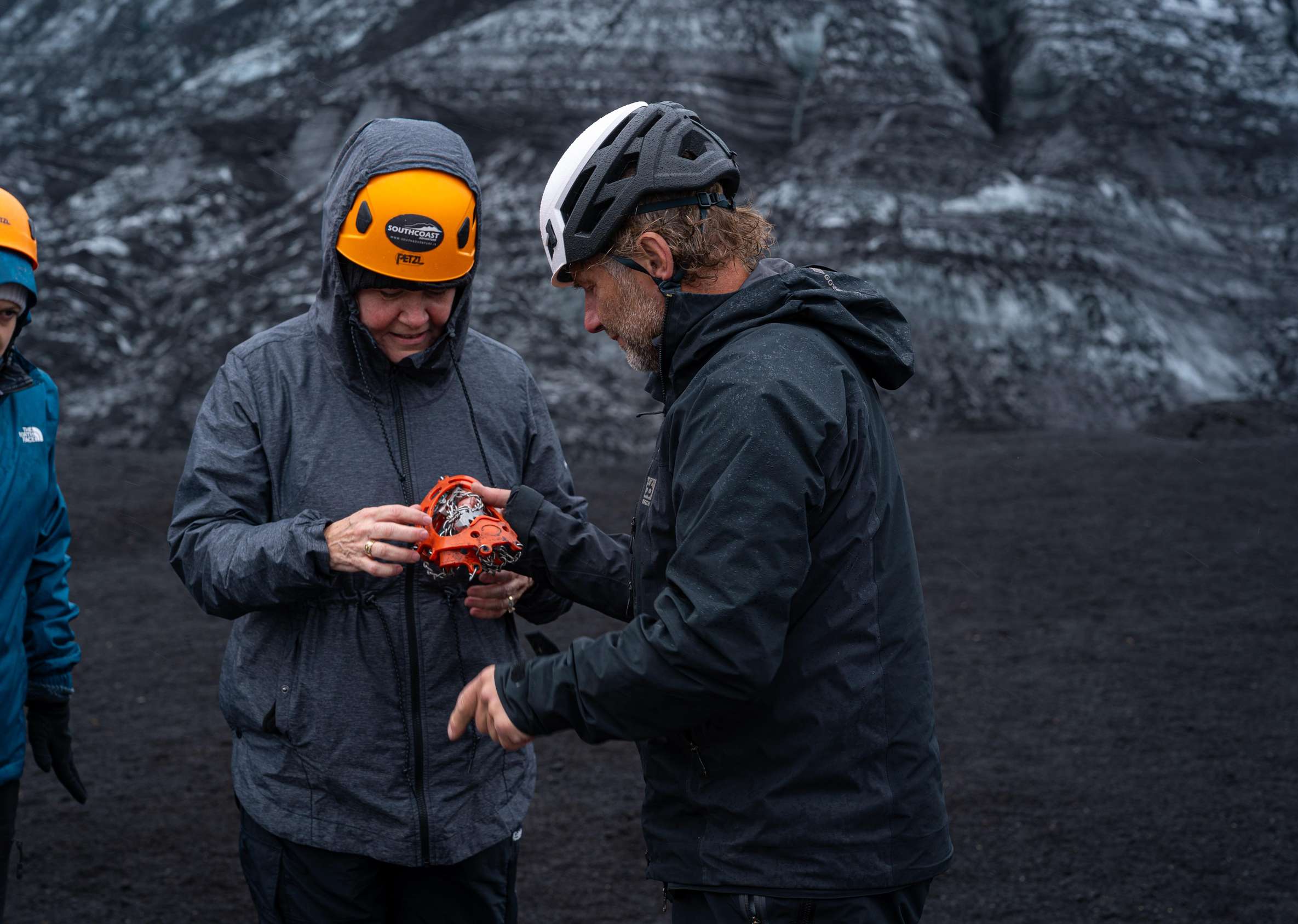
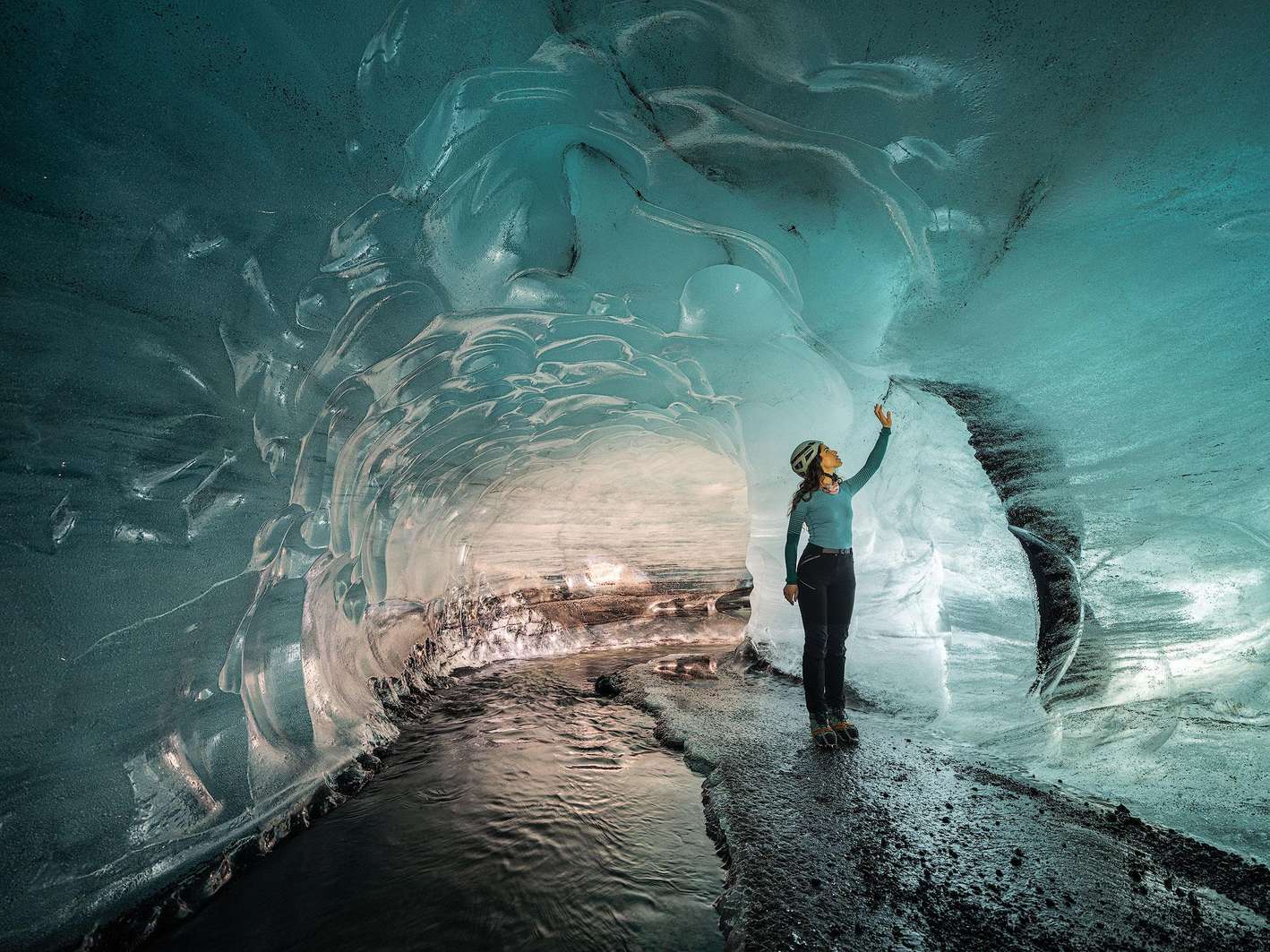
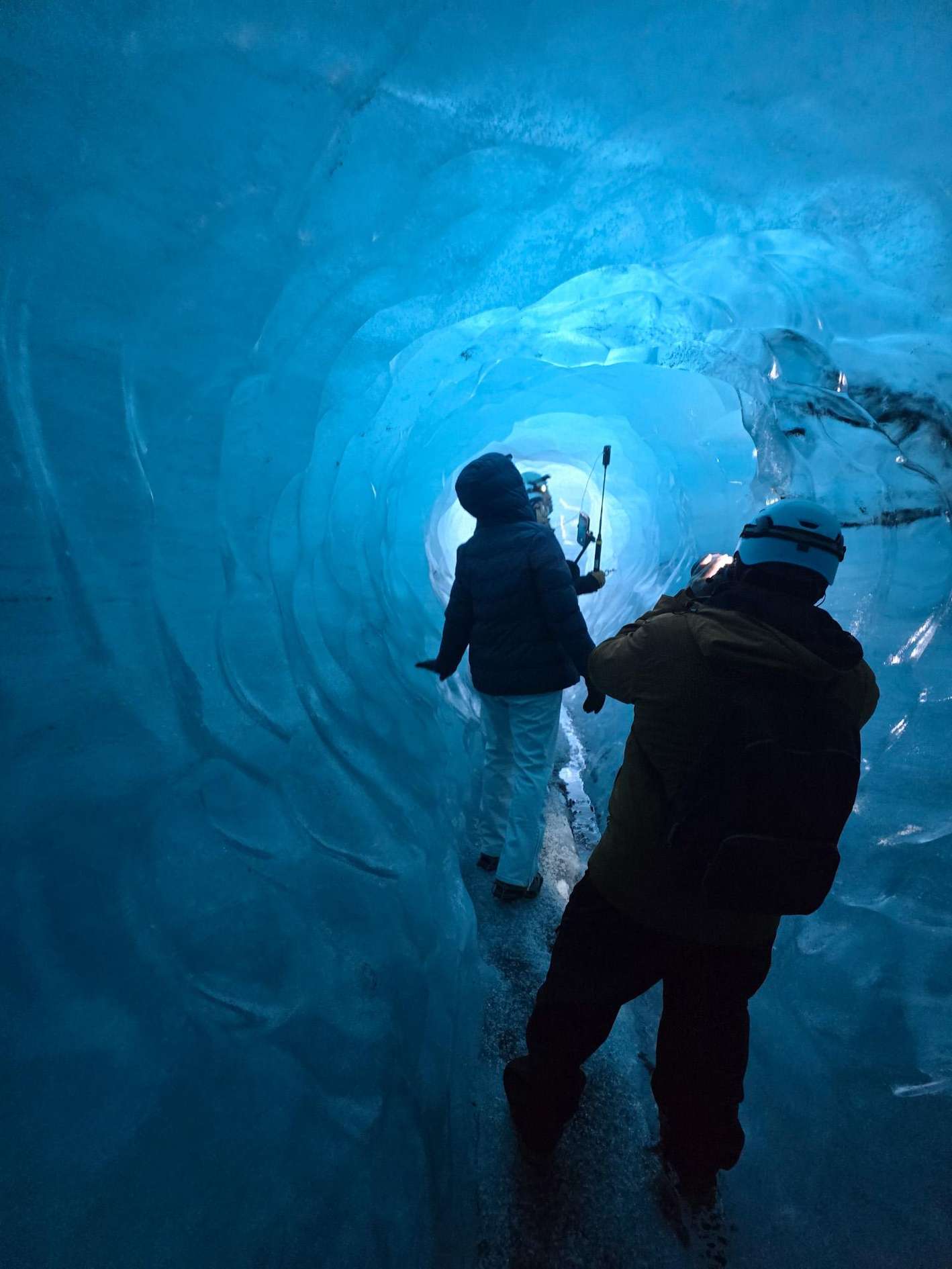
Standing inside Katla, the first thing most people notice is the sheer height of the space.
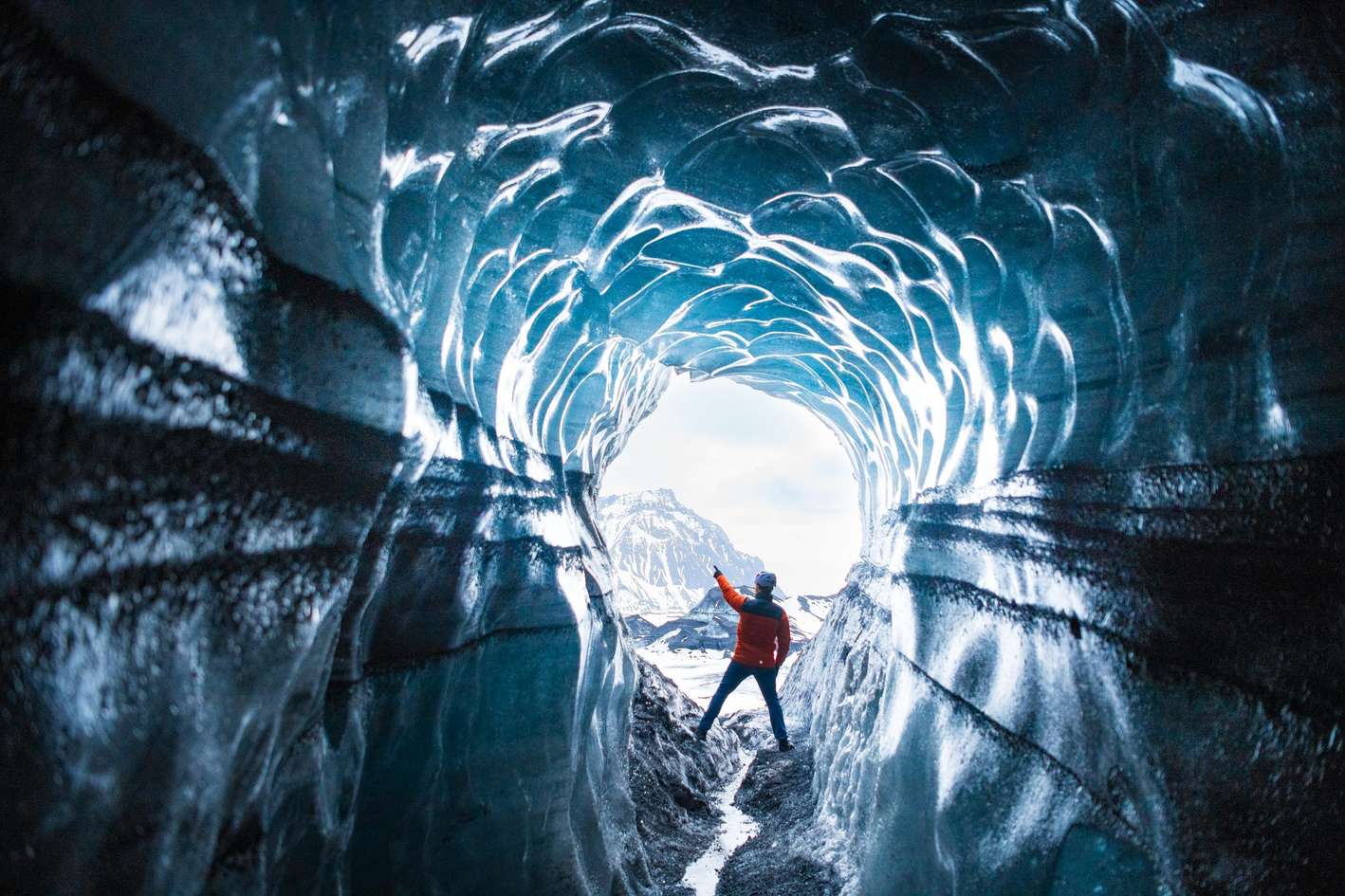
Chambers typically run 3 to 6 meters high, the main ice tunnels reach up to 10 meters, and the walking route never asks anyone to crawl or squeeze through a crack. A few passages have lower ceilings that need a slight stoop, nothing more.
Light is the honest caveat. Daylight reaches the entrances and the thinner roof sections, but the deeper chambers are dark, which is why guides carry headlamps and hand them out.
Some operators still advise severe claustrophobia sufferers against the trip, and several tour descriptions say so outright. If tight dark spaces genuinely panic you, believe them; if your fear is of cramped crawlways, Katla's open chambers rarely trigger it.
The air inside holds steady near freezing all year, so in winter the cave can feel warmer than the wind outside.
For a nervous visitor, the dimensions below are the reassurance in numbers.
Those figures give the shape of the place: tall enough to walk upright through, wide enough to look around in, and about half an hour long, which is as much deep cold as most people want.
The super jeep ride - what pregnant travelers and people with back problems should know
The last stretch before the glacier is not a road. The super jeep crosses roughly 40 minutes of black sand, old lava fields and shallow streams, and the jolting is real: bumps, tilting, changes of speed, occasionally vigorous enough to bring on motion sickness.
Most people call it half the fun, a bouncing ride across country that looks like another planet.
For some bodies it is the part to think about first. The jolting is hard on bad backs, necks and recent surgery, and one operator does not recommend its tour for pregnant women for exactly this reason.
The Katla tours from Vík list no pregnancy rule of their own, so anyone pregnant past the early months should ask the operator before booking rather than assume a place is safe.
Super nice experience! 🌋 Camil explained everything about the Katla Cave, the volcano and the area's history, friendly and knowledgeable. Plenty of time for photos without feeling rushed. Definitely recommend! ⭐⭐⭐⭐⭐
Plan for the bumps and the ride rewards you. Fight them and it is a long 40 minutes.
Katla Ice Cave with kids - keeping children warm and steady on the ice
Families who clear the age limit usually discover the real challenge is not the ice, it is the wind on the walk. The approach to the cave is exposed, and sleet arrives sideways more often than anyone plans for. Children feel it first, so layering them properly decides whether the day is a hit.
Dress a child the way guides dress themselves: a thin wool or synthetic base layer, a warm fleece or wool mid-layer, then a windproof and waterproof shell on top.
Add a warm hat and mittens, and choose hiking boots with ankle support over trainers, because the supplied crampons strap onto boots and slip off soft shoes. Mittens beat gloves for small hands on cold ice.
The one-line version, worth writing on the packing list:
Get the layers right and kids tend to love the whole outing: the jeep, the ice, the helmet that makes them feel like explorers. Get them wrong and the day ends early and cold.
Getting to Vík and Katla - driving the South Coast yourself or taking a day tour from Reykjavík
Reykjavík to Vík is 187 km, about two hours and forty minutes without traffic, and the drive has two known trouble spots. Hellisheiði, the pass out of the capital, ices over frequently, and the exposed stretch under Eyjafjallajökull catches gusts strong enough to shove a car across its lane.
Check umferdin.is for roads, the Met Office for the forecast and SafeTravel for alerts before you leave; 4WD is only legally required on F-roads, so a normal car handles the Ring Road in ordinary conditions.
In December Vík gets under five hours of daylight, so a do-it-yourself day with the cave suits the summer calendar better than the winter one. Winter travelers who want the cave plus the waterfalls usually hand the driving to a guide instead.
The Reykjavik: Katla Ice Cave & South Coast Tour does exactly that, a 12-hour day with pickup, stops at Skógafoss and Seljalandsfoss, and the super jeep leg from Vík built in.
Self-drivers meeting in Vík: aim to park and check in 20 minutes before departure.
When Katla Ice Cave tours get cancelled - weather, flooding and your refund
Bad-weather cancellations are a normal part of the South Coast calendar. Extreme winds above about 20 m/s cancel Katla departures.
Heavy rain can flood the cave or make the tracks unsafe, a red wind warning can shut down the whole driving day, and tours are suspended if seismic activity or sub-glacial flooding looks likely. A Route 1 closure strands everyone equally; the tour cannot run if the road will not.
The financial risk is what the tour terms remove. A weather or safety cancellation costs you nothing: you choose a full refund or a new date.
If high winds close Route 1, the tour may be rerouted or altered instead of canceled, and a closure that stops you reaching the meeting point yourself is treated the same way, as a safety cancellation.
The four situations worth knowing in advance, straight from the tour terms:
When the weather wins
| If this happens | What happens then |
|---|---|
| Severe wind, flooding or a blizzard forces the operator to cancel | Choose a full refund or reschedule for another available date or time |
| High winds close Route 1 between Reykjavík and Vík | The tour may be altered or rerouted, or canceled with a refund or reschedule |
| The cave floods or is judged unsafe on the morning | Alternative arrangements may be offered, or a reschedule or full refund |
| A road closure stops you reaching the meeting point | Treated as a safety cancellation: refund or new date |
Book with that in mind and the weather costs you a change of plan, and nothing more.
Your Katla Ice Cave day - timing, time inside the cave, and the best departure slot
A 3-hour tour from Vík sounds like three hours of cave, and it is not. The super jeep leg takes about an hour to an hour and a half round trip, and you get roughly half an hour inside the cave, about a sixth of the tour.
That half hour is the reason people book; the ride, the walk and the face of Mýrdalsjökull fill the rest honestly.
Two timings decide the day. First, check-in: arrive at the Vík meeting point 20 minutes early to park and sign in. Second, the slot: travelers consistently recommend the earliest morning departure or the final afternoon one, when crowds are thinnest, and the first slot in late autumn adds the best natural light inside the ice.
Here is how the whole outing unfolds, minute by minute:
- 120 minutes before departureCheck in and park at the Vík meeting point
Self-drivers need the buffer to find a space
- 2First hourSuper jeep across black sand and shallow streams to the glacier edge
Bumpy and scenic, roughly 40 minutes each way
- 3Next 10 minutes or soWalk from the road's end toward the cave entrance
Uneven ground, crampons on
- 4About 30 minutesInside Katla Ice Cave with your guide
The coldest, bluest part of the tour
- 5Final hourJeep back across the floodplains to Vík
Photo stops and daylight on the way
What else to see near Katla Ice Cave on the South Coast
The cave books first; the coast fills the rest of the day. The full-day tours thread Seljalandsfoss, Skógafoss and Reynisfjara black sand beach around the ice, and the stops deserve the same safety attention the glacier gets, because Reynisfjara is the South Coast's most serious hazard.
The beach runs a traffic-light system for good reason: sneaker waves have killed visitors there. When the yellow light shows, stay out of the yellow zone.
On red, the beach is closed, so keep to the upper beach or the designated viewing area, and on orange stay at least 25 meters from the water. Never turn your back on the sea, keep children by the hand, and mind falling rocks near the cliff.
Safety officers can close the beach at short notice, and the closure is not negotiable. Follow the lights and Reynisfjara becomes the highlight it should be: basalt columns, sea stacks and the loudest surf you will hear all trip.
Safe, guided, and within most people's reach
Yes, Katla Ice Cave is safe on a guided tour: certified guides inspect the ice daily, carry the safety gear, and cancel when the day says no. The walk is easy to moderate, a kilometre or two over uneven ground.
The answer changes for anyone pregnant past the early months, travelers with severe claustrophobia or back trouble, and families with children under 6, since some tours set the bar at 8 or older.
What to know before you book a safe Katla Ice Cave tour
Tours from Vík meet at set spots in town, such as the Vík Inn or the bus parking lot behind the Icewear building. Arrive about 20 minutes before departure so you can park, find your guide and check in without rushing.
The Reykjavík tours include pickup and drop-off, some from designated bus stops or hotels in the capital area. Pickup starts at the time on your voucher and can take up to 30 minutes, so be outside and visible from the start of the window.
The Super Jeep ride across black sand and old lava takes roughly 40 minutes each way, and it is bumpy. People with back or neck trouble, recent surgery, pregnancy or strong motion sensitivity often find it uncomfortable, so plan seats and timing with that in mind.
Most Katla departures run as small groups, which keeps the pace on the glacier relaxed and leaves room for questions. Private options for one to sixteen passengers exist if your family or group prefers its own vehicle and guide.
Crampons, helmets and headlamps are provided on every Katla tour, so you need no mountaineering equipment of your own. You bring warm clothing, rain gear and proper boots; the tour supplies the rest.
Crampons strap over stiff, ankle-supporting hiking boots and cannot grip soft sneakers or fashion shoes. Wear sturdy waterproof boots, or rent a pair from the operator that offers them at the glacier location.
Katla tours set their own minimum ages: some take children from 6, others from 8, and extended tours may ask for 10 or 12. Check the limit on the exact departure you book before bringing a younger child.
Some Katla tours exclude wheelchair users and people with heart problems, and several warn against joining with limited mobility. Some tours do not recommend the bumpy Super Jeep ride for pregnant travelers. Read each tour's restrictions before you book.
“Fantastic from start to finish. Tom kept the first half relaxed with great info and.”
Katla Ice Cave safe - twelve straight answers
Is Katla Ice Cave safe?
Yes, on a guided tour. Certified glacier guides check conditions before each visit, fit you with a helmet and crampons, and take you only to spots they judge safe that day. Independent visits are the risky thing; the guided route is the safe one.
Can I visit Katla Ice Cave without a guide?
No. The cave sits on Kötlujökull, an outlet of Mýrdalsjökull, and guided access is the only way in. Even experienced travelers on the forums say to stay off the glacier without a guide and proper safety gear.
Can I drive my rental car to Katla Ice Cave?
A regular rental, even a 4x4, cannot reach the trailhead. The route crosses rivers and private glacier tracks that only a specialized Super Jeep handles. Every tour from Vík includes that transport.
Is Katla Ice Cave safe in summer?
Yes. Katla is one of the few natural ice caves that runs year-round, when most Vatnajökull caves close for the melt season. Guides pick the safe areas each day, so the cave you see can differ from the photos.
What is the minimum age for Katla Ice Cave tours?
There is no single rule. Standard shared tours generally start at 6 or 8 years old, and some extended tours require 10 or 12. Check the age limit on the tour you are eyeing before you book.
How difficult is the Katla Ice Cave tour?
Most tours rate easy to moderate. You walk 1 to 2 kilometers over uneven, icy ground in crampons, with about 30 to 60 minutes on your feet. Fair or moderate fitness is enough for most people.
How long is the walk to the cave entrance?
Roughly 10 minutes from where the Super Jeep parks at the end of the road. The footing is uneven gravel and glacier ice, which is what the crampons are for.
Is Katla Ice Cave claustrophobic?
The chambers are big, typically 3 to 6 meters high and up to 10 meters in the main tunnels, and the route needs no crawling or squeezing. Deeper sections are dark and enclosed, though, and several tour operators advise against the trip if you have claustrophobia or a fear of the dark.
Can pregnant travelers join a Katla Ice Cave tour?
It depends on the operator, and the Katla listings here do not all say. The Super Jeep ride can be vigorous and bumpy, and some glacier tours elsewhere in Iceland decline pregnant passengers from the third trimester. Ask the operator before booking if this affects you.
What safety gear do I need to bring?
The operator provides glacier crampons, a helmet, and a headlamp. You bring sturdy, waterproof hiking boots with ankle support and a firm sole, since the crampons strap onto rigid boots and cannot grip soft sneakers.
What qualifications do the guides have?
Lead guides on glacier cave tours must have completed at least Hard Ice 3 under AIMG standards, or an equivalent course. That covers ice rescue and crevasse work, so the person leading you into the cave has trained for it.
What happens if bad weather cancels the tour?
If severe wind or a blizzard forces a cancellation, you choose between a full refund and rescheduling for another date. Guides also call off visits when the cave floods or weather warnings make access unsafe, so you are never pressured to go in poor conditions.
Safe ways to visit Katla Ice Cave - guides, gear and kids
If you like clear answers on who can join inHow to Get ThereStandard rental cars cannot handle the glacier tracks to Katla, so you can see how the guided route from Vík works instead.If you like that Katla runs all year roundBest Time to VisitSummer melt closes most Vatnajökull caves, while Katla stays open, and the season you pick shapes the ice you see.