
3 - 12 hours·English
4.6(2,597)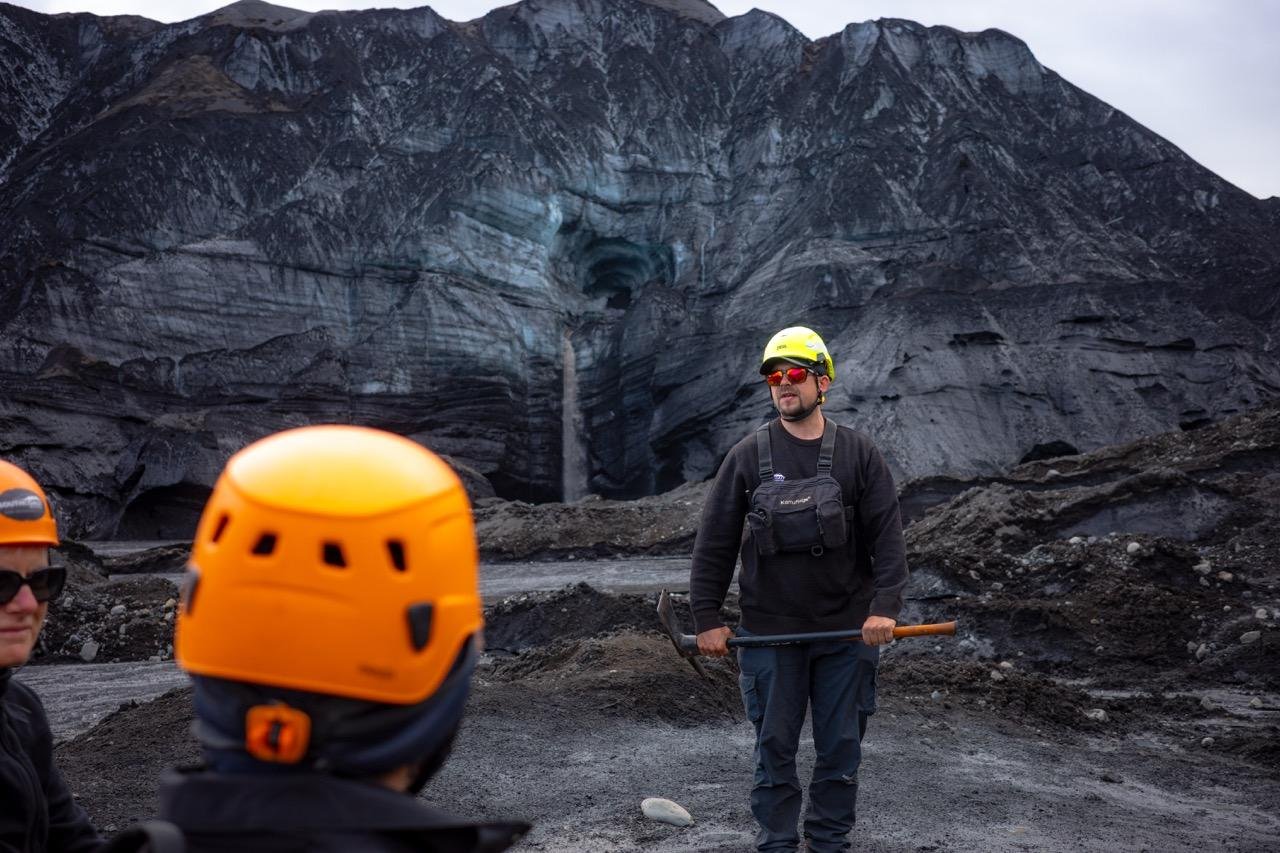
From Vik: Katla Ice Cave and Super Jeep Tour
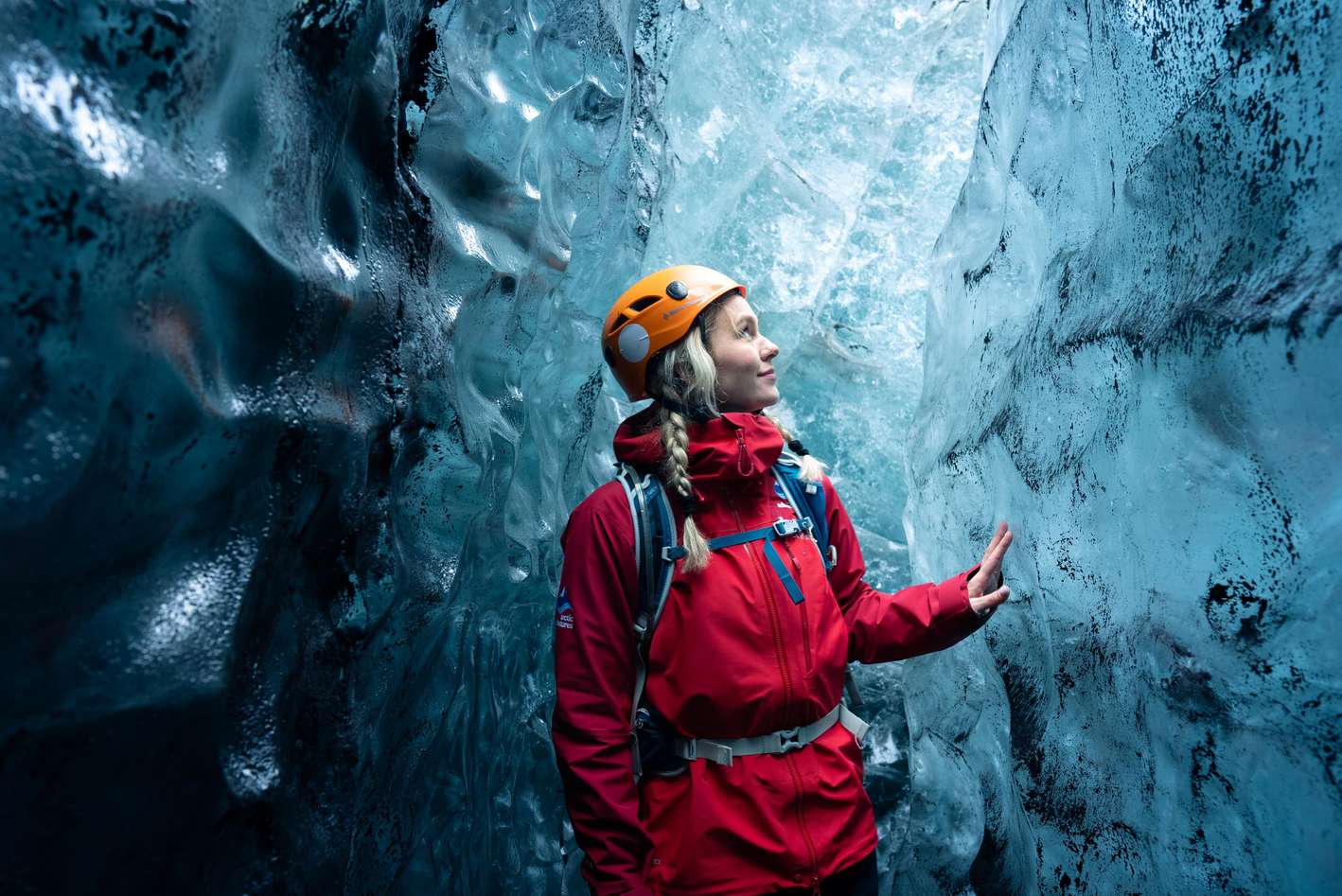
Free cancellationHotel pickup includedRoundtrip Super Jeep transportation from Vík
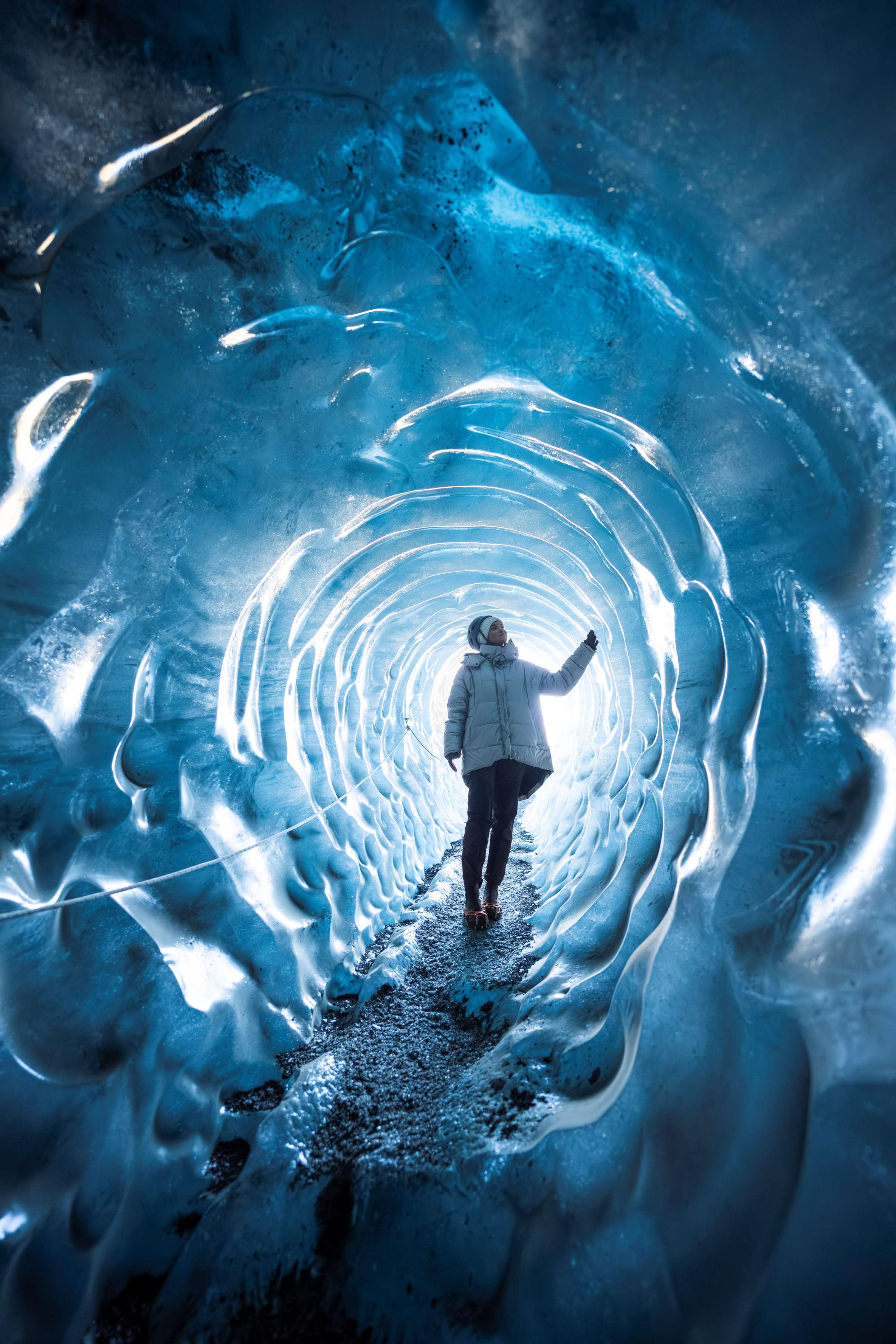
Worried your travel month rules out the ice? Book a season-proof cave - Katla runs year-round by Super Jeep, crystal caves glow blue from December to February, and certified guides check the ice every day. Pick your month and step inside a glacier.
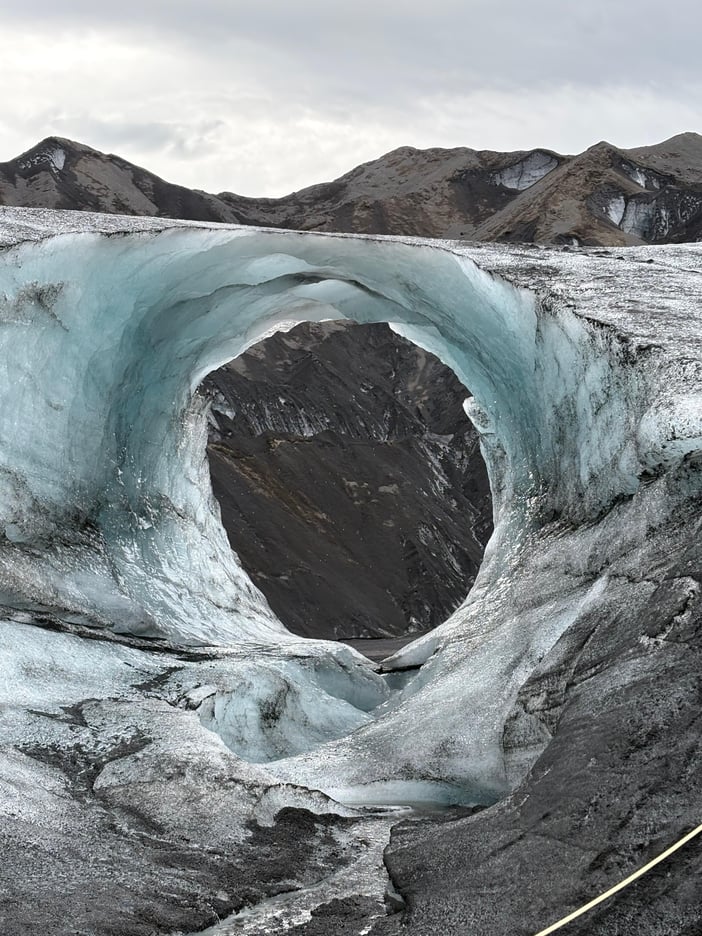
"My husband and I rate this among our top 3 excursions ever. Being inside the glacier was gorgeous, we never felt rushed, and our guide explained a lot and helped with photos. Highly recommend."
katla puddles in summer; pack dry socks
Vatnajökull's natural crystal caves shut when spring melt begins, while Katla near Vík and the Langjökull ice tunnel run all year. Which one is open in your month decides where you go and what you see.
Vatnajökull's natural crystal caves run roughly November through March, with listings stretching October to April depending on conditions.
There is no single opening day: operators scout new caves each autumn and open each one when the ice holds.
Katla Ice Cave near Vík and the man-made Langjökull tunnel run year-round, including July, August and September.
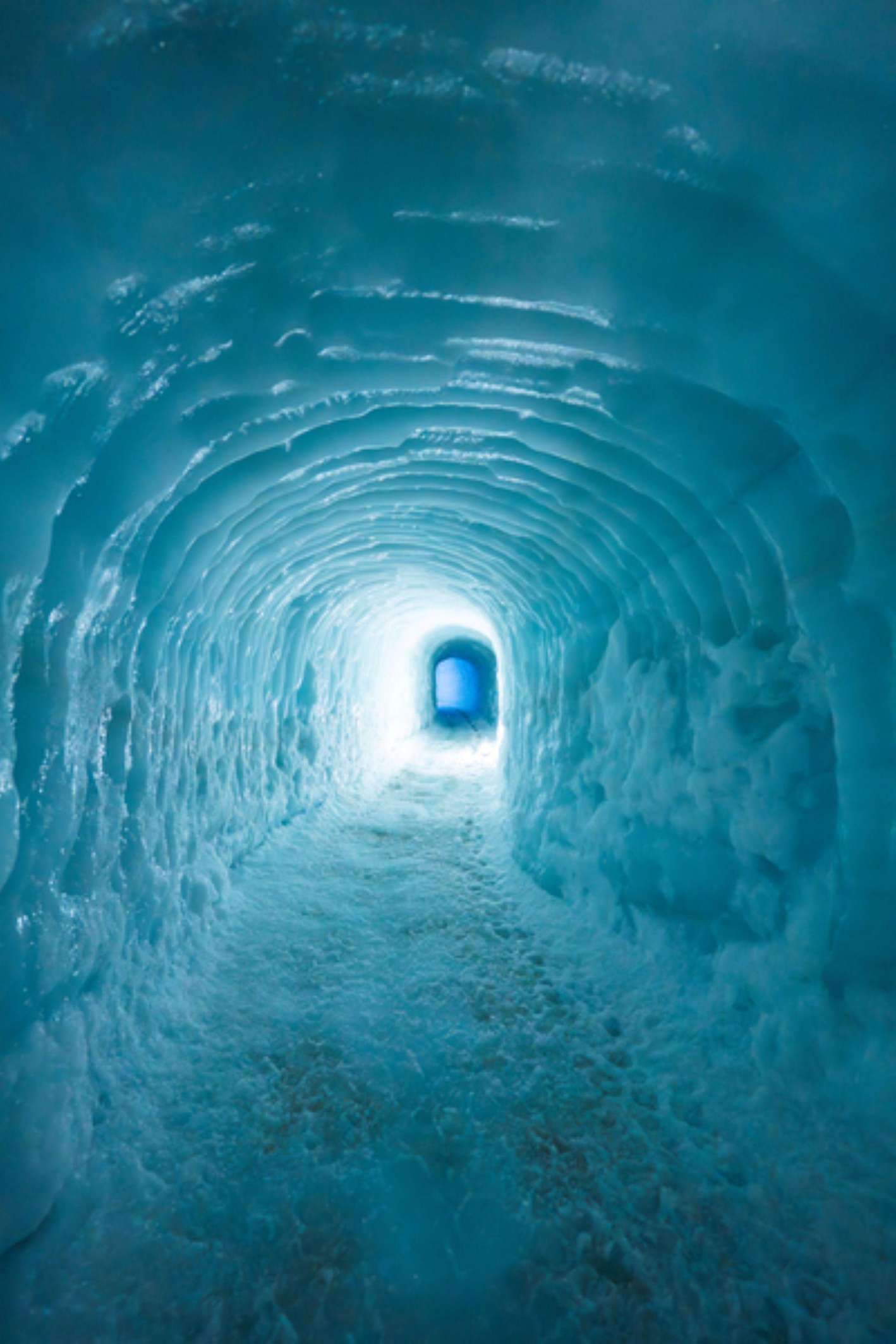
The ice is at its deepest blue from December to February, when steady cold holds the cave in shape.
Book Katla at least a few days ahead in summer, and further ahead for the July peak.
If you are visiting between spring and early autumn, book a Katla ice cave tour from Vík, which runs year-round, or the Langjökull ice tunnel from Húsafell, and save the Vatnajökull crystal caves for a winter trip.
The season question has a two-part answer. The natural crystal caves of Vatnajökull, near Jökulsárlón, are a winter experience: most excursion reports put the season from the beginning of November through March, and listings stretch the possible window from October through April, always depending on conditions.
There is no universal opening day. Operators scout new caves each autumn and open each one when the ice is safe.
Outside that window you are not out of luck. Katla Ice Cave near Vík runs year-round, September included, when most Vatnajökull caves near Jökulsárlón are not yet stable or open. The engineered ice tunnel at Langjökull, reached from Húsafell, also operates in every month.
| Usual window | The caveat | |
|---|---|---|
| Vatnajökull Crystal Ice Cave | November to March, listings say October to April | Closed May through September, when meltwater fills the caves |
| Katla Ice Cave, near Vík | Year-round | Weather- and condition-dependent, and the cave changes |
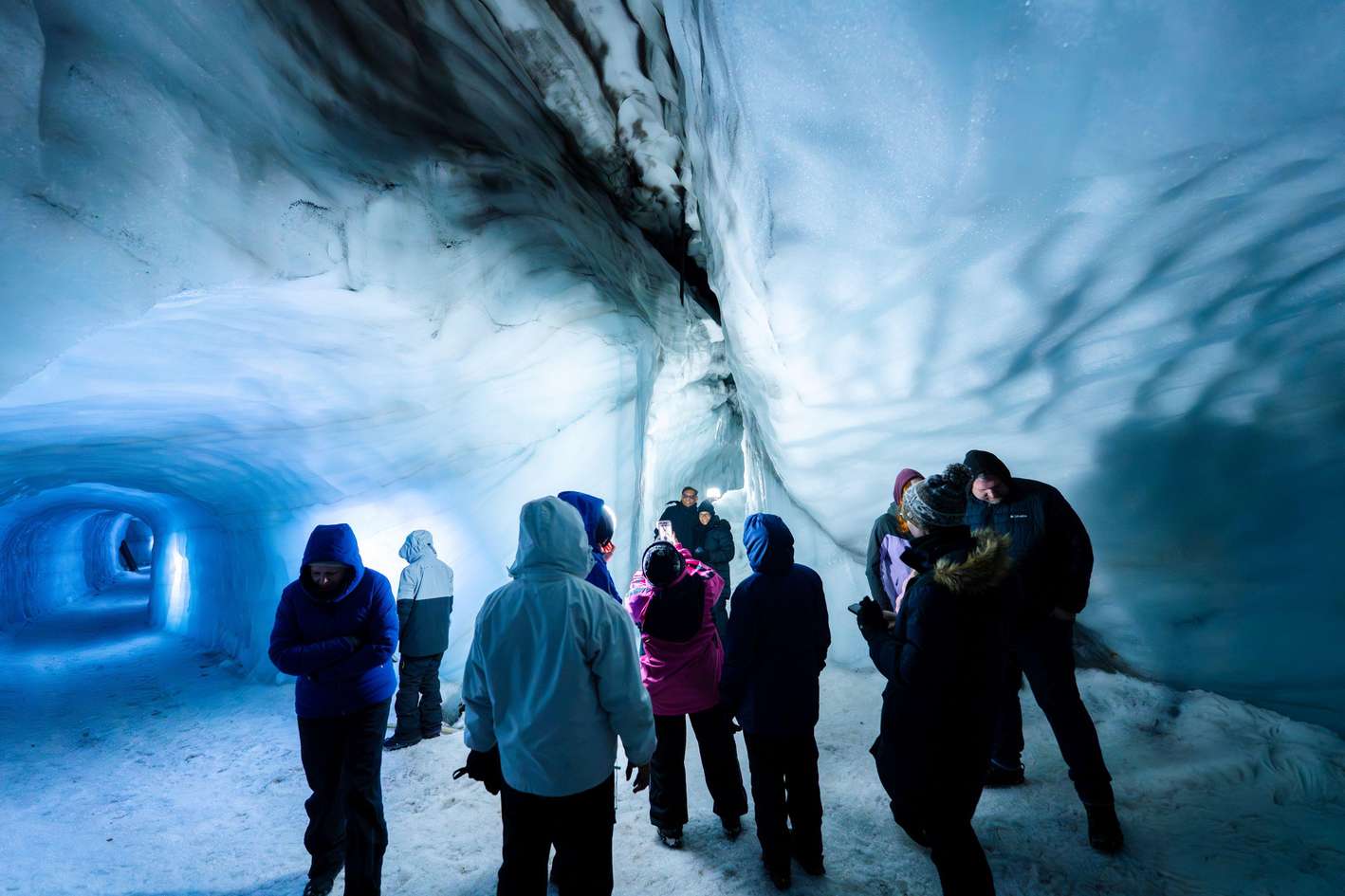
| Langjökull ice tunnel, from Húsafell | Year-round | Man-made and monitored, so it looks much the same each visit |
So the calendar decides the cave: a summer trip means Katla or Langjökull, and a winter trip opens the crystal caves too. Check the rows against your dates before you fall for a specific glacier.
The seasonal divide lives in the water. Vatnajökull's caves are carved by meltwater, and in summer that water flows hard enough to fill the passages, thin the roofs and make the formations unstable.
Winter cold reduces the flow and strengthens the ice, which is why the crystal caves exist as caves at all from late autumn to early spring. Warm spells with wind and rain can flood a passage quickly, even mid-season.
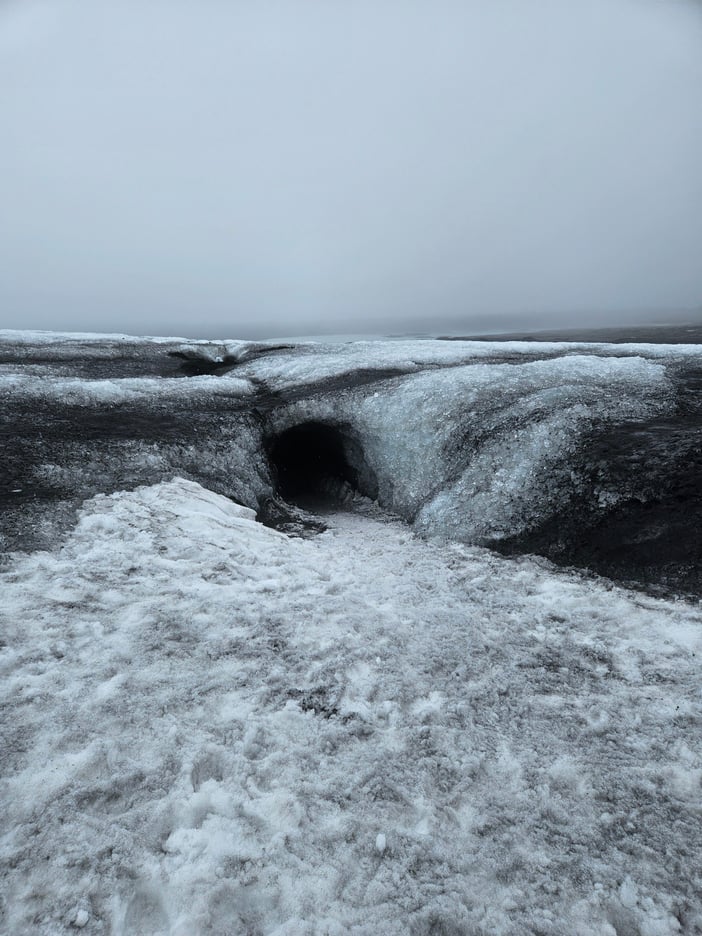
Katla sits differently. Its cave lies on the upper part of Kötlujökull, where the risk of sudden flooding is lower than in caves formed beneath the glacier, and layers of volcanic ash insulate the ice and slow the melt.
Geothermal heat from the Katla volcano keeps working beneath Mýrdalsjökull, and meltwater carves and enlarges openings year after year.
None of this makes a summer visit unconditional. Guides choose the safe spots available on the day, and the cave shifts with weather, temperature and ice movement. The year-round label covers the tour; which chamber you walk into is the guide's call that morning.
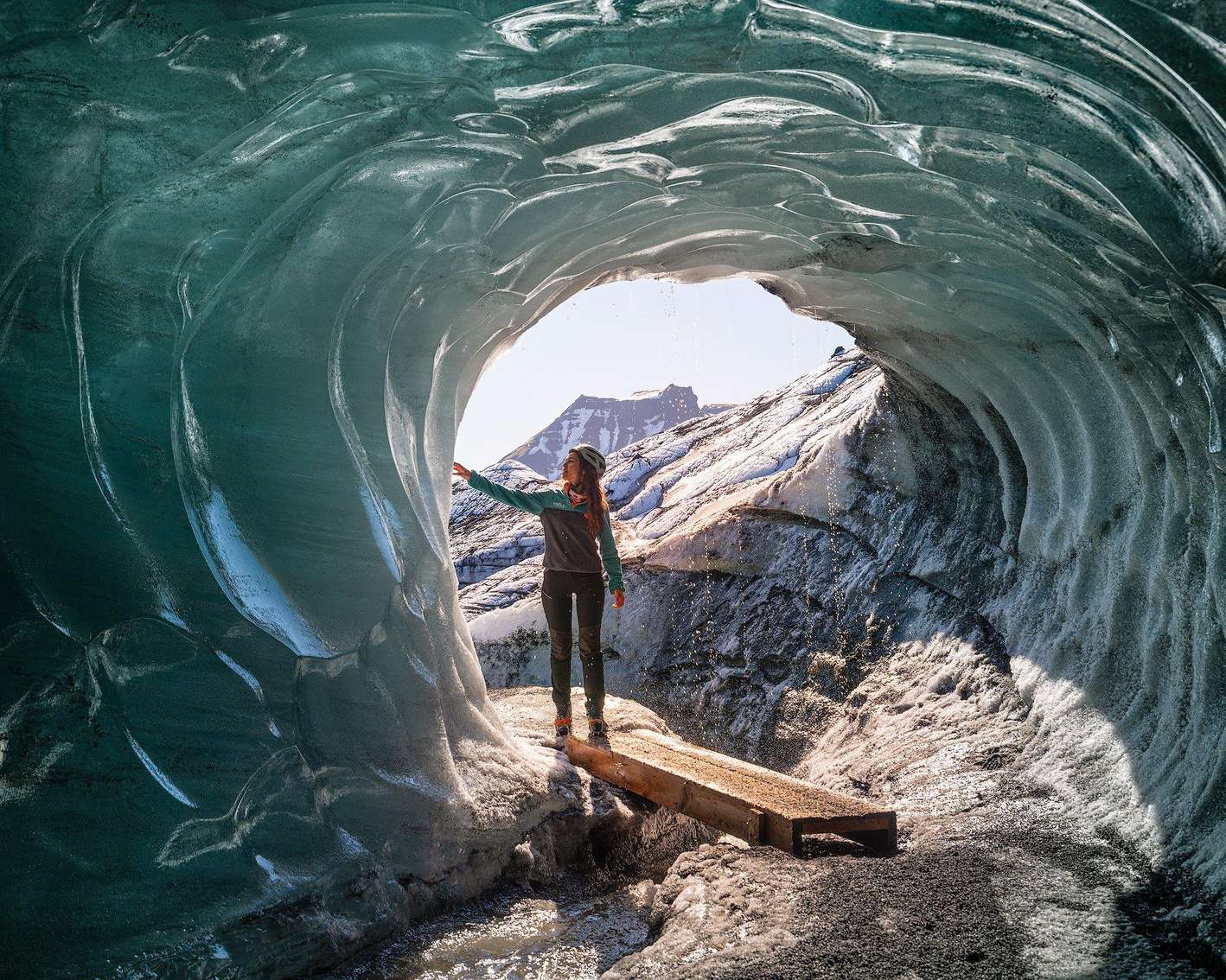
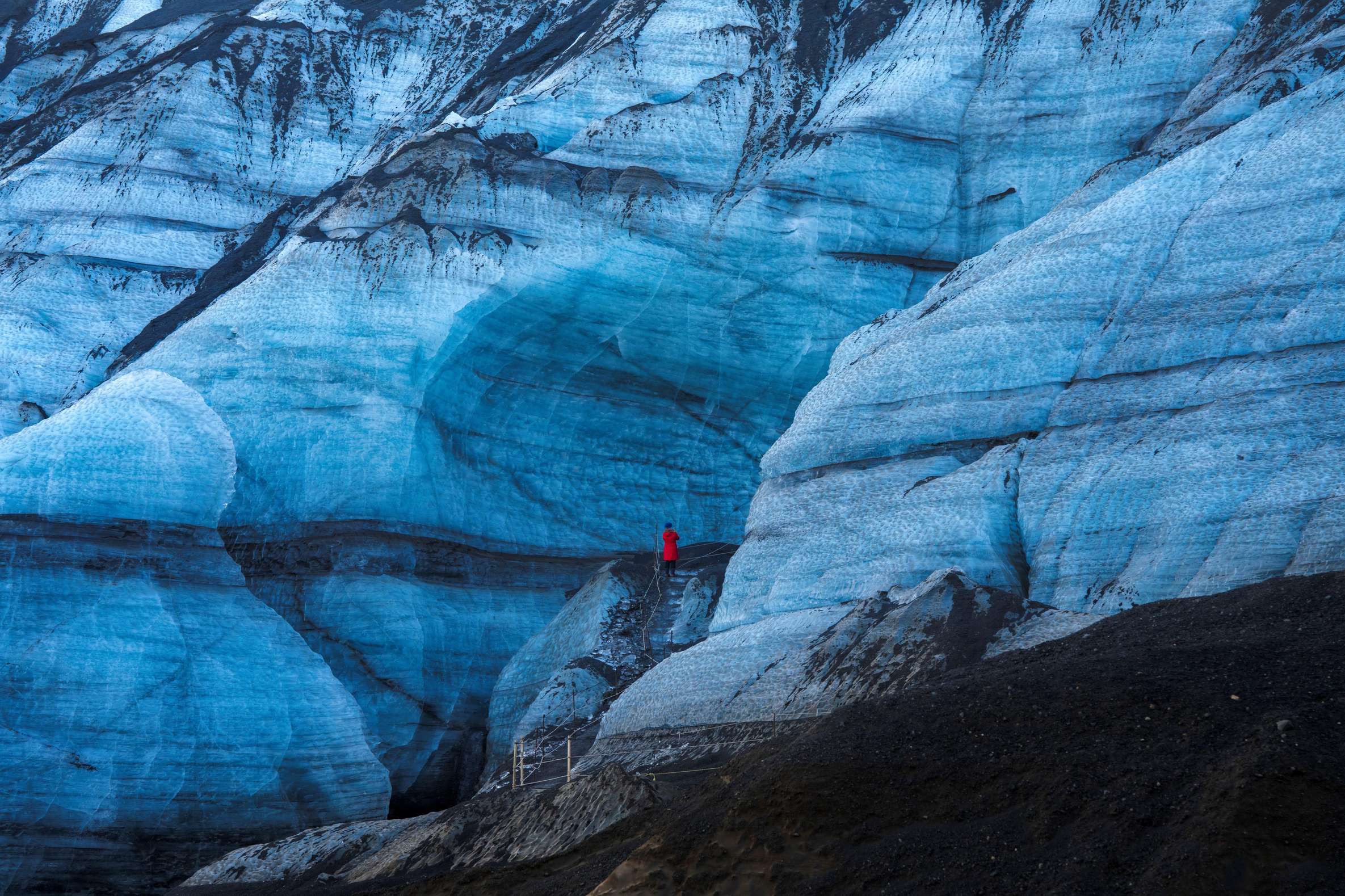
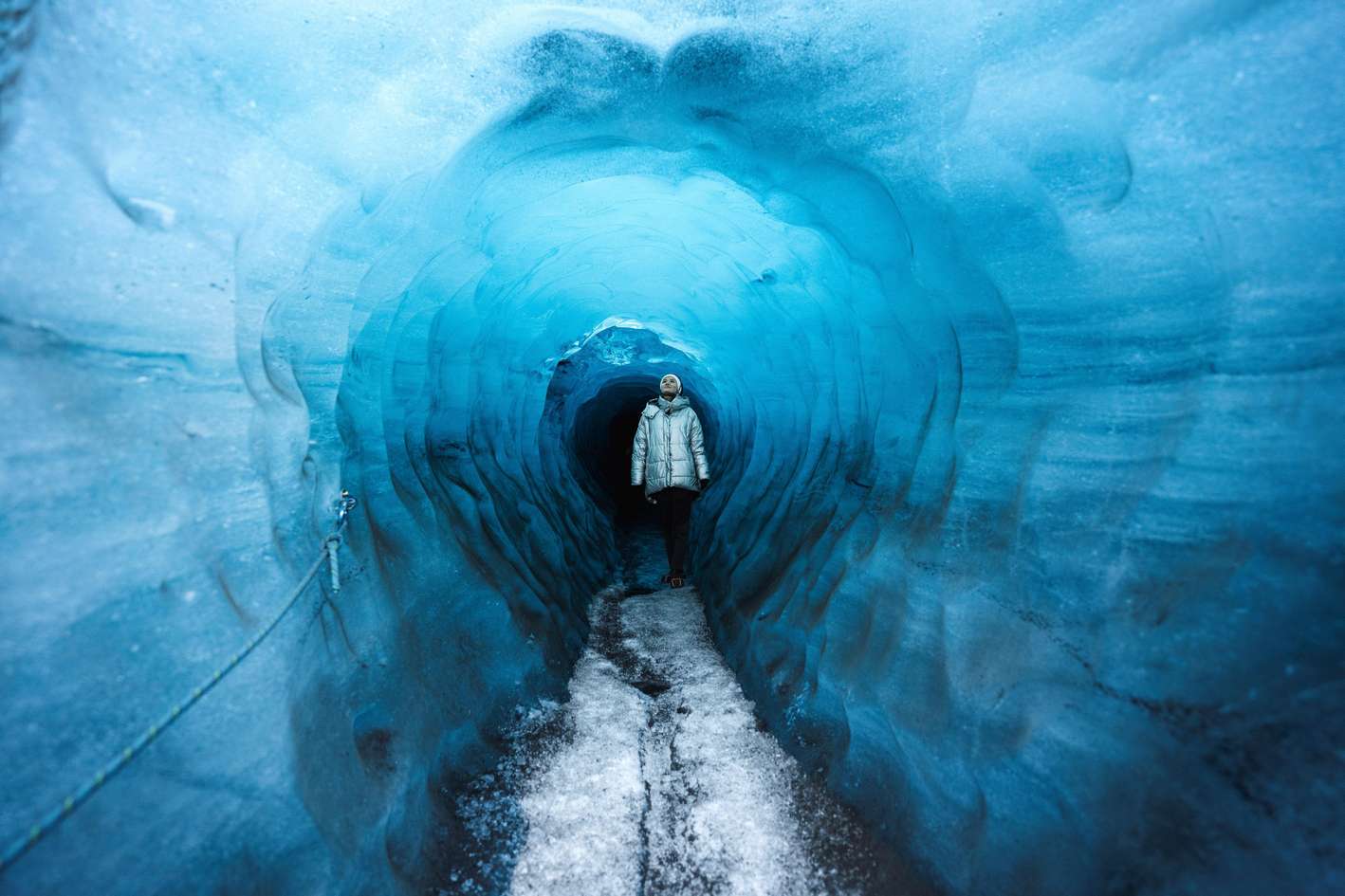
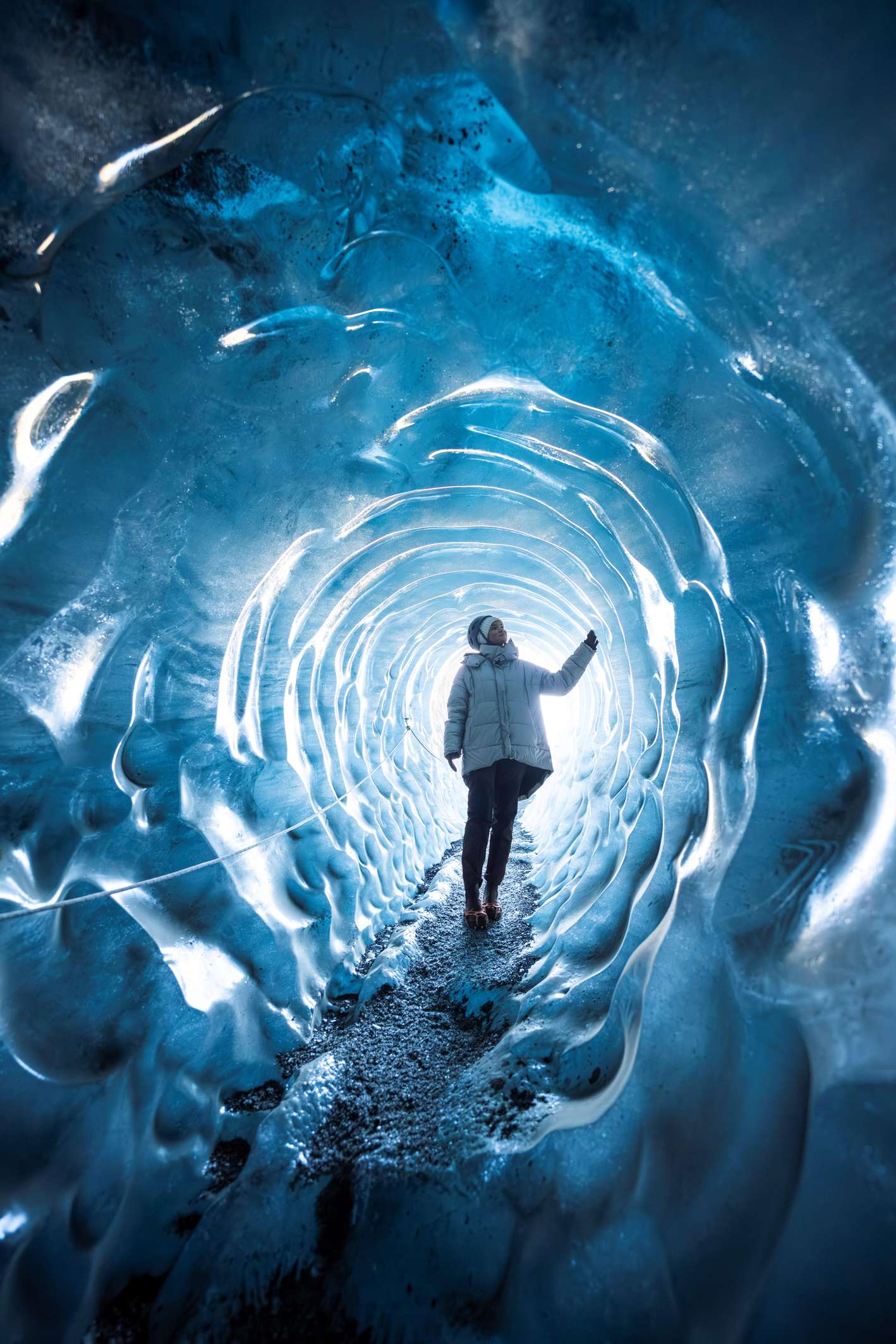
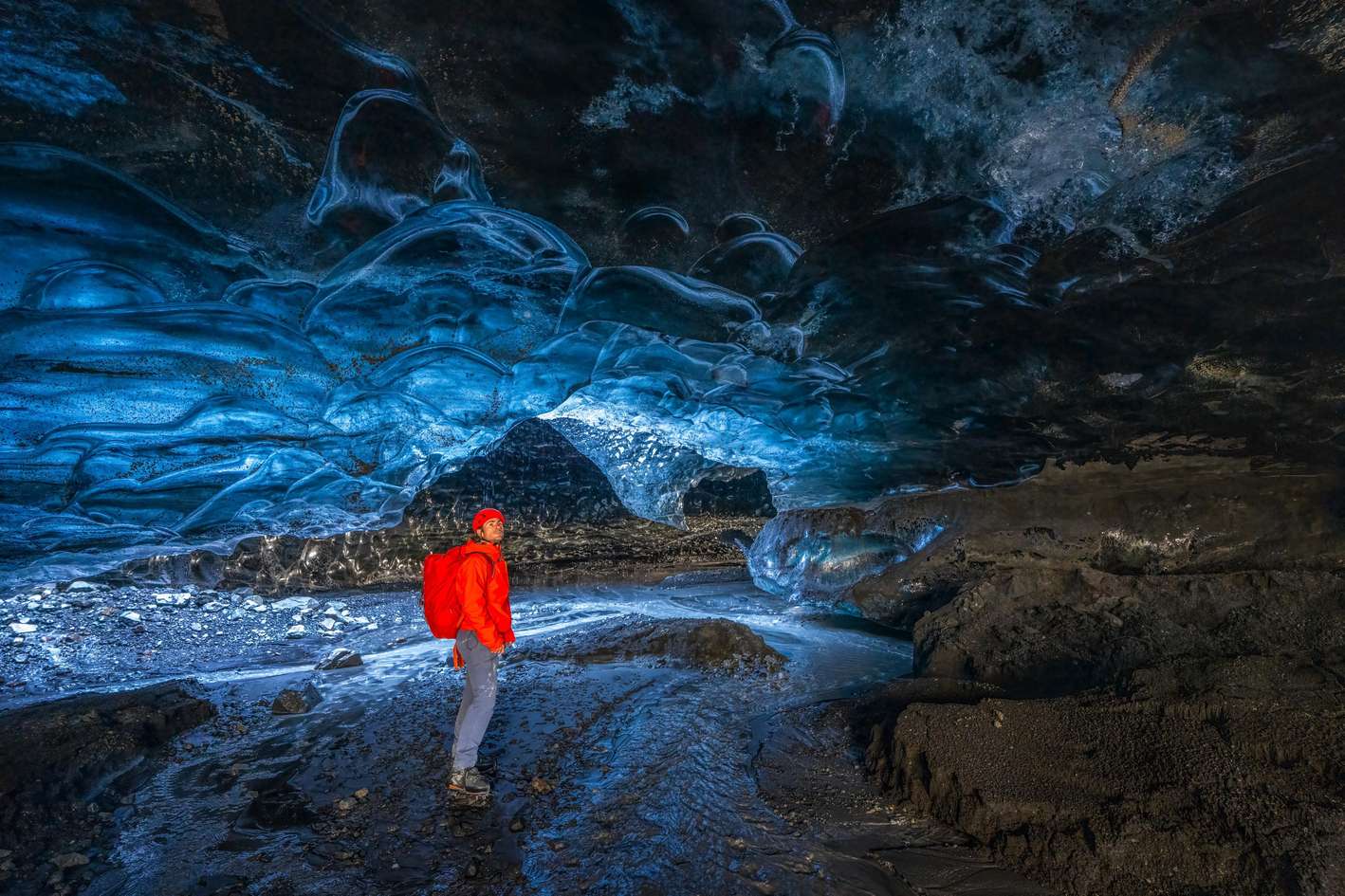
Winter travelers come for the color, and the calendar rewards them. The ice is at its bluest from December to February, when sustained cold solidifies the meltwater channels into stable caverns.
Dense, deep ice absorbs every color except blue, and overcast light often makes the blue look richer than hard sunshine would. February pairs that stable ice with about 8.6 hours of daylight, while December offers closer to four.
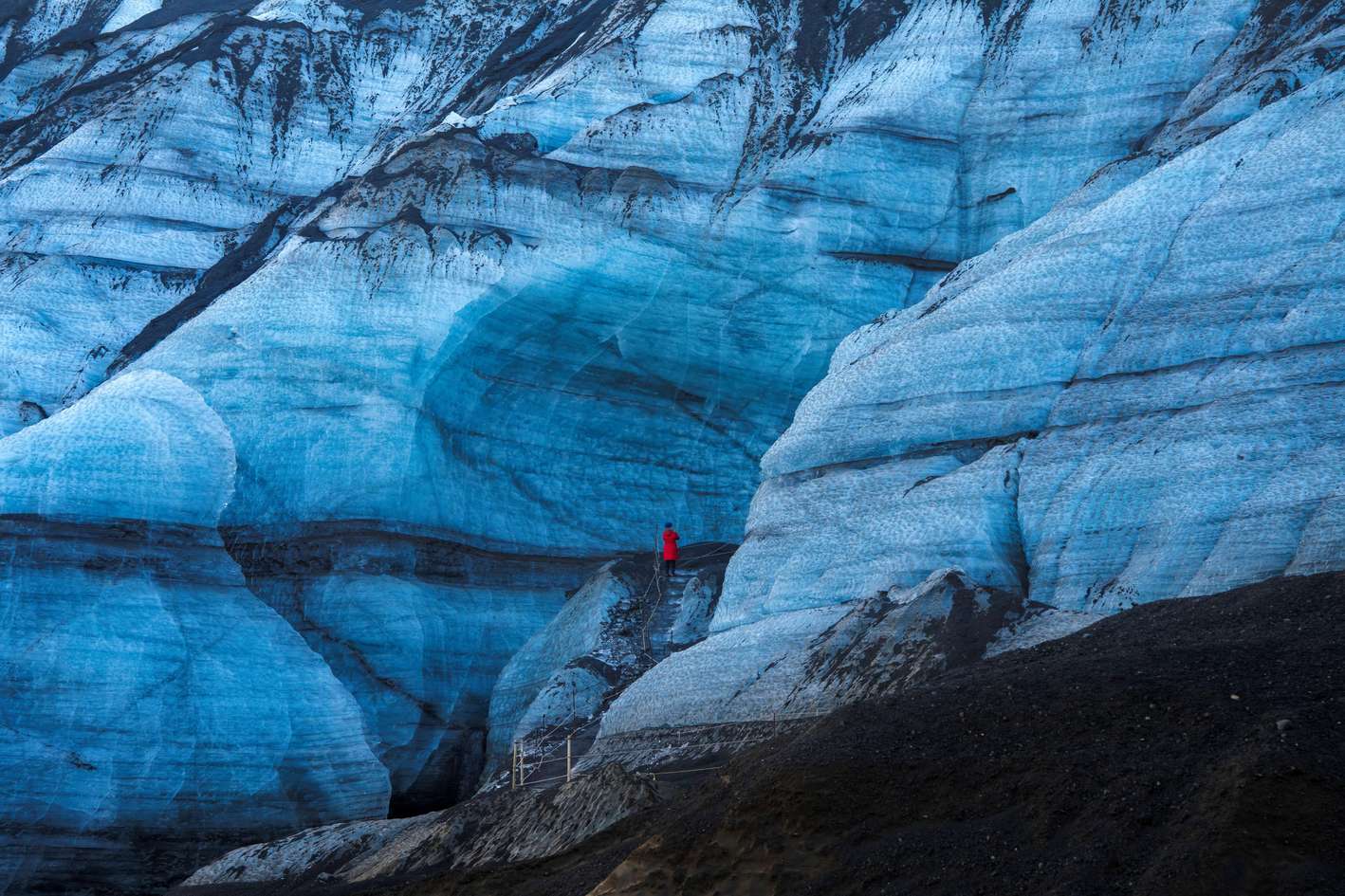
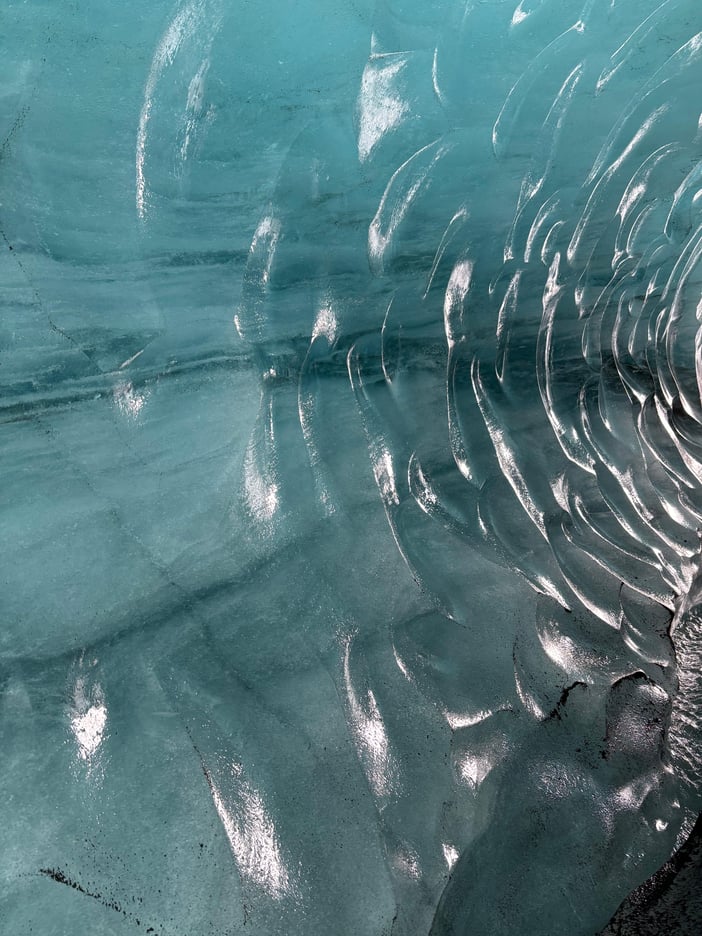
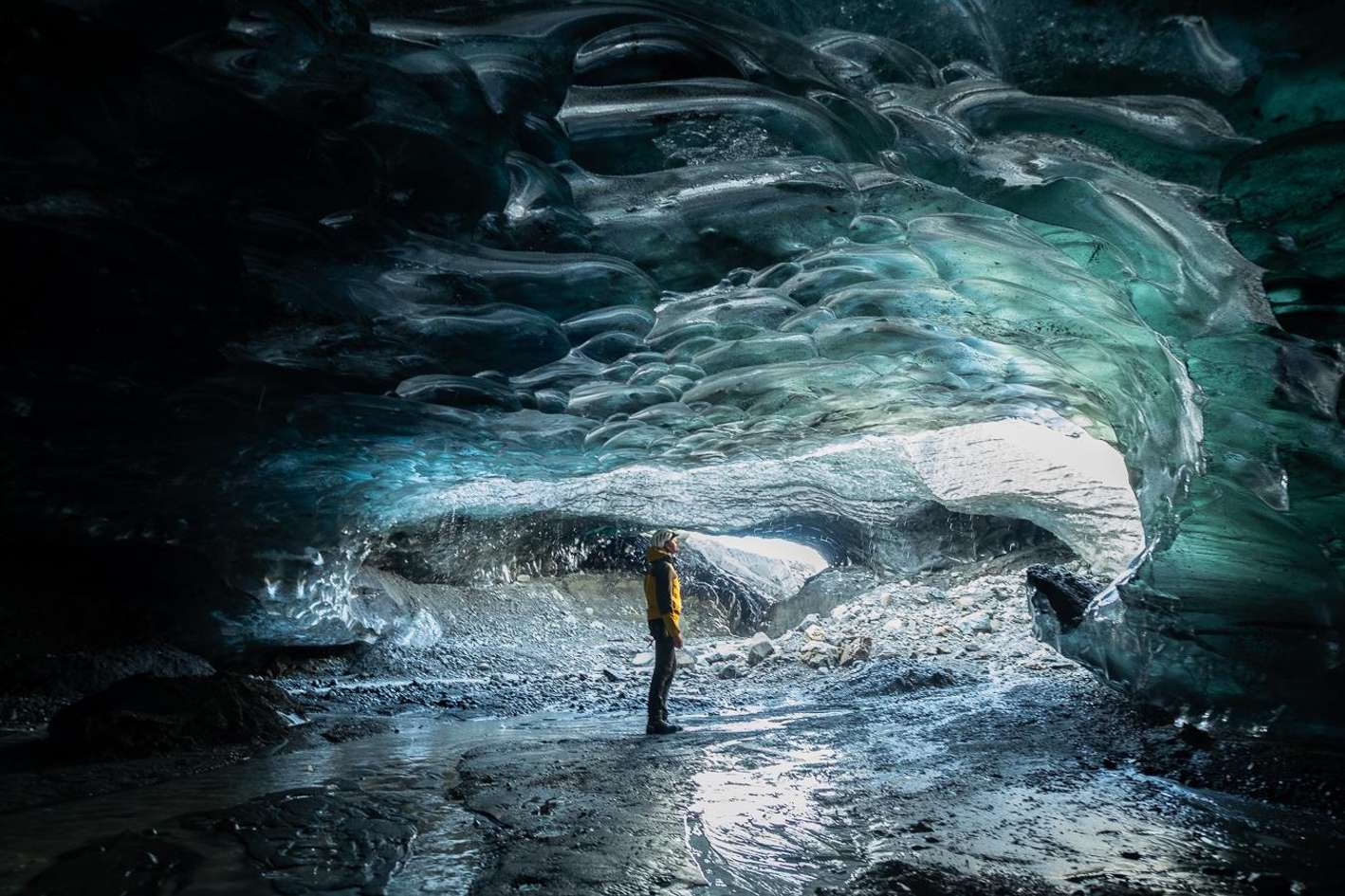
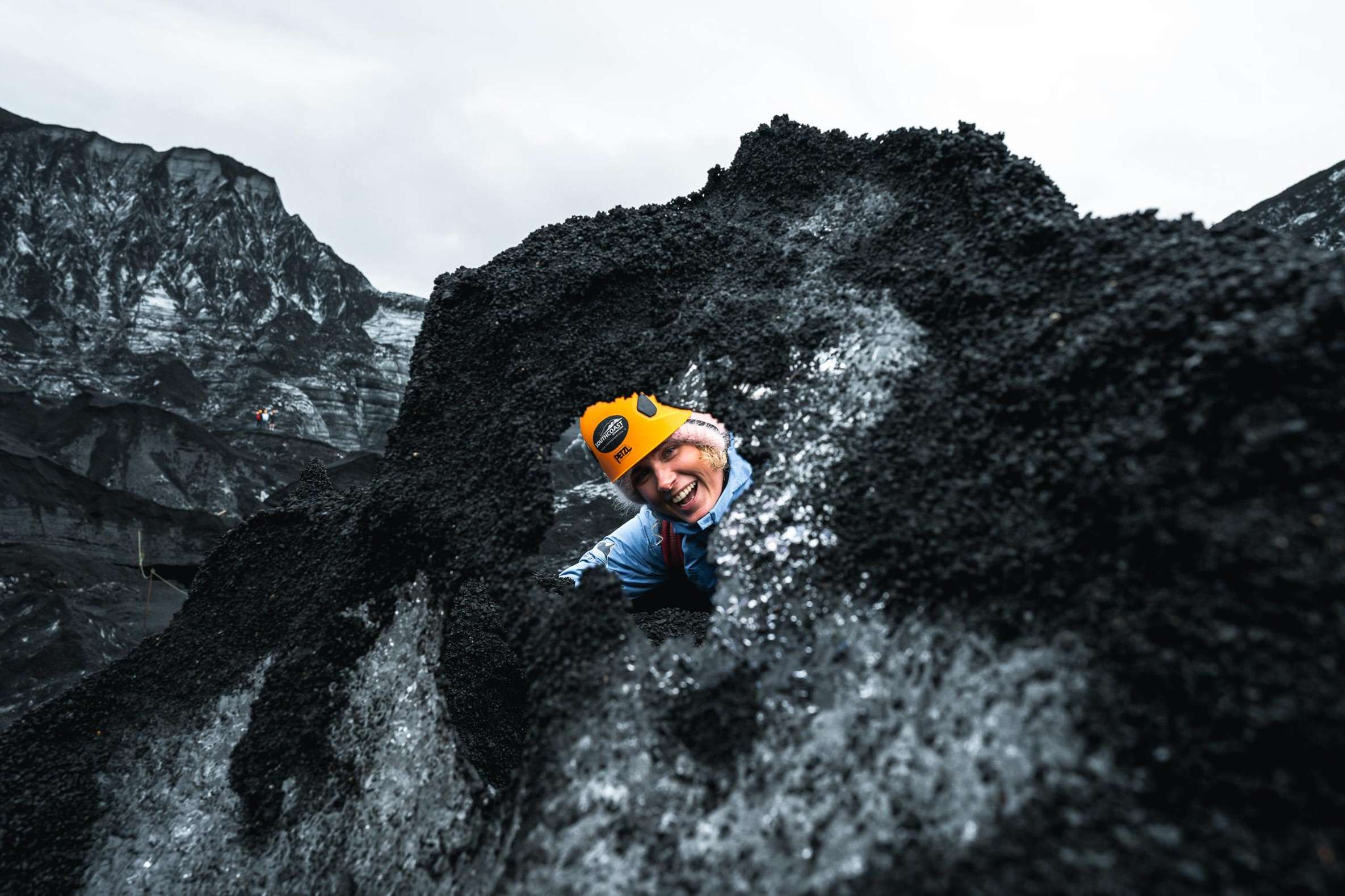
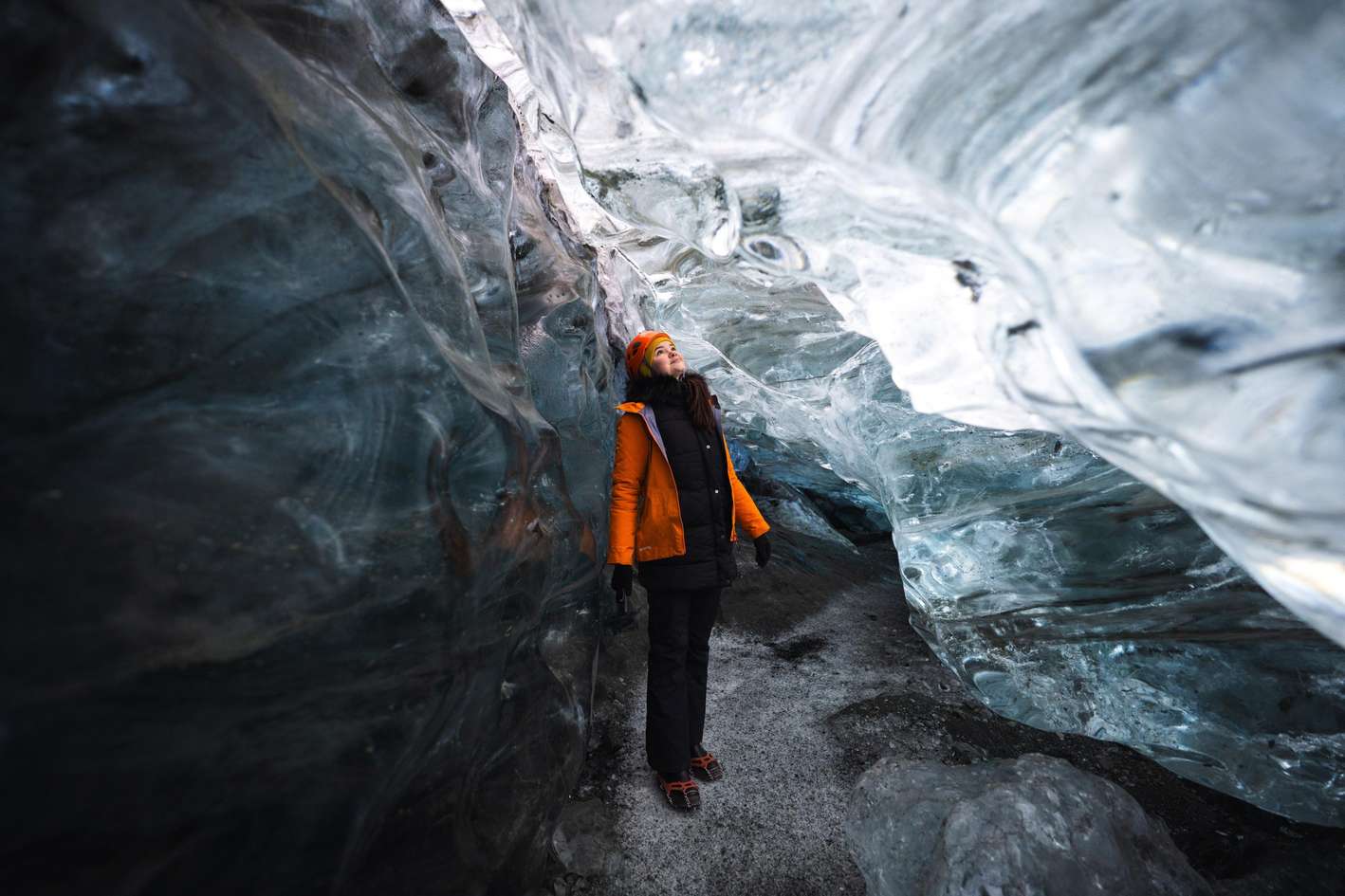
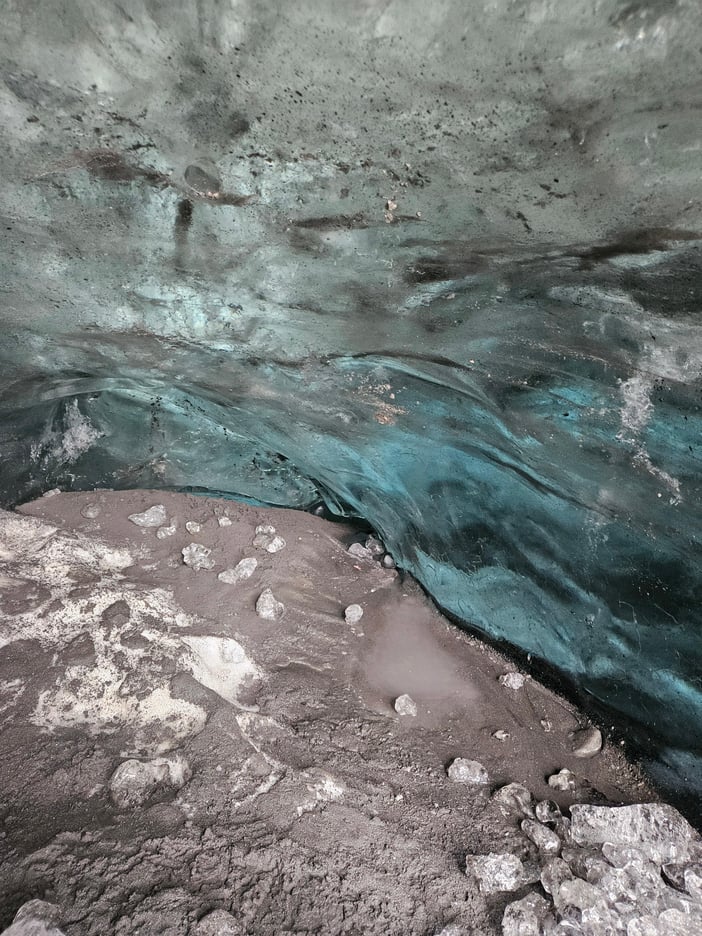
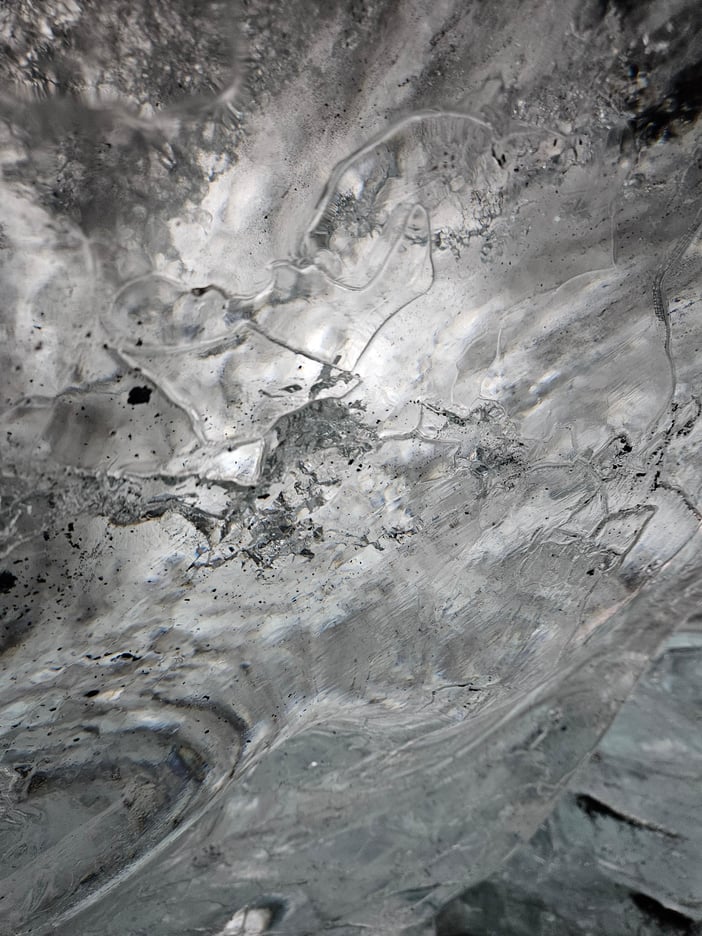
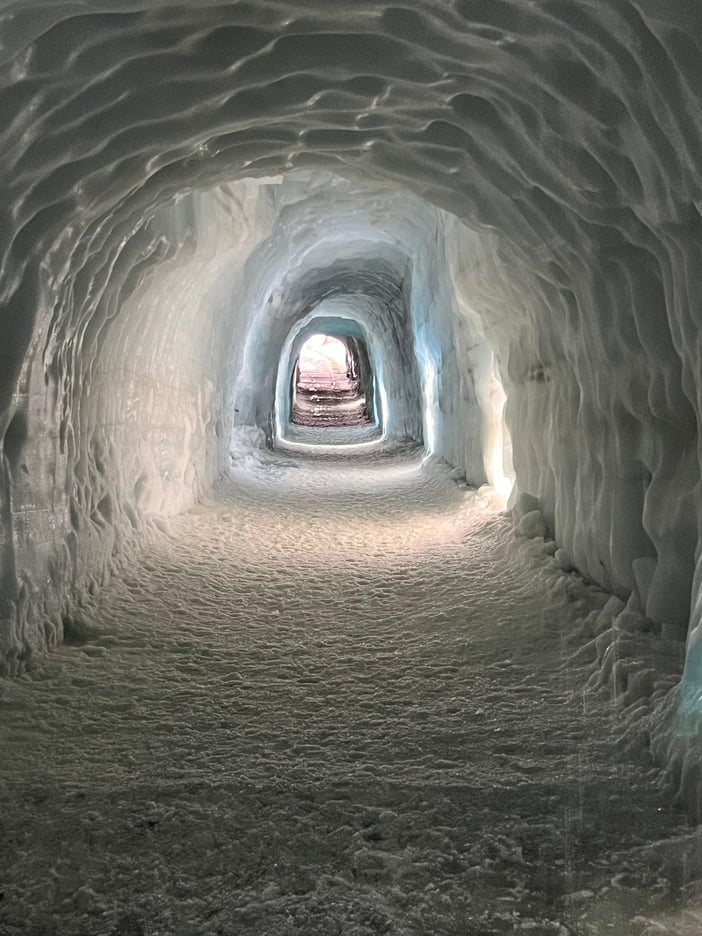
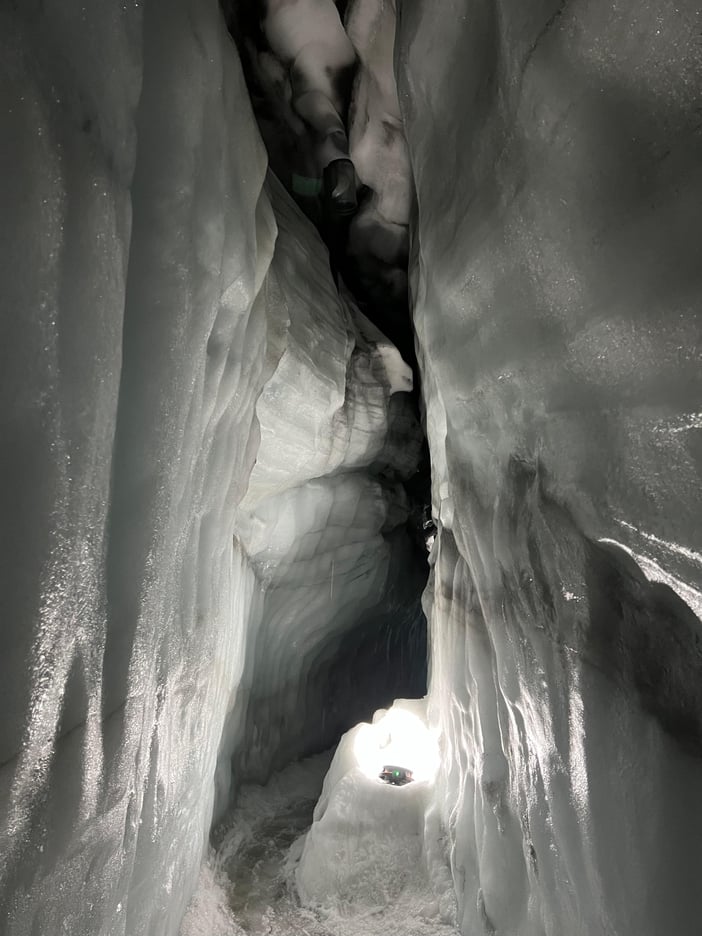
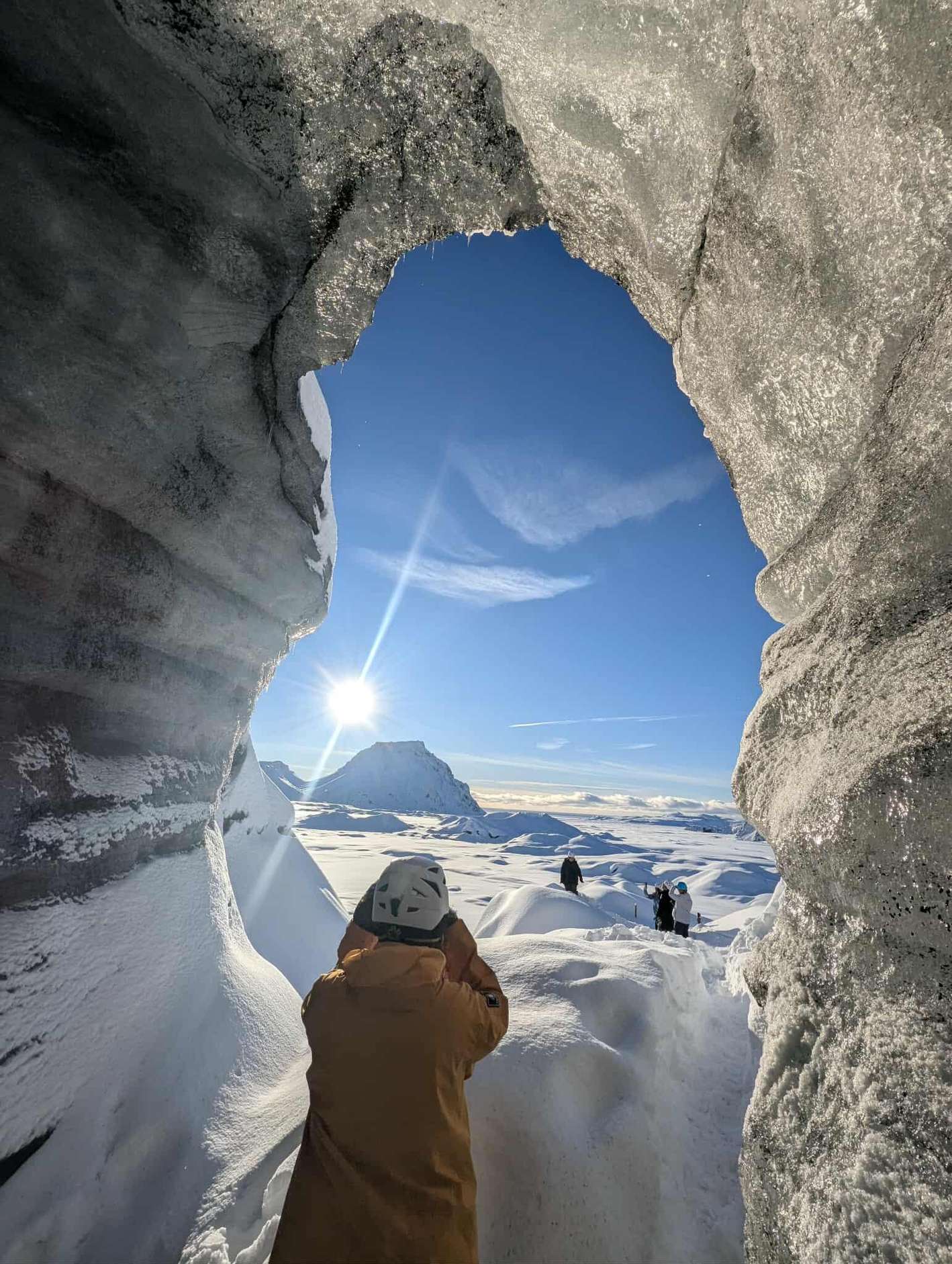
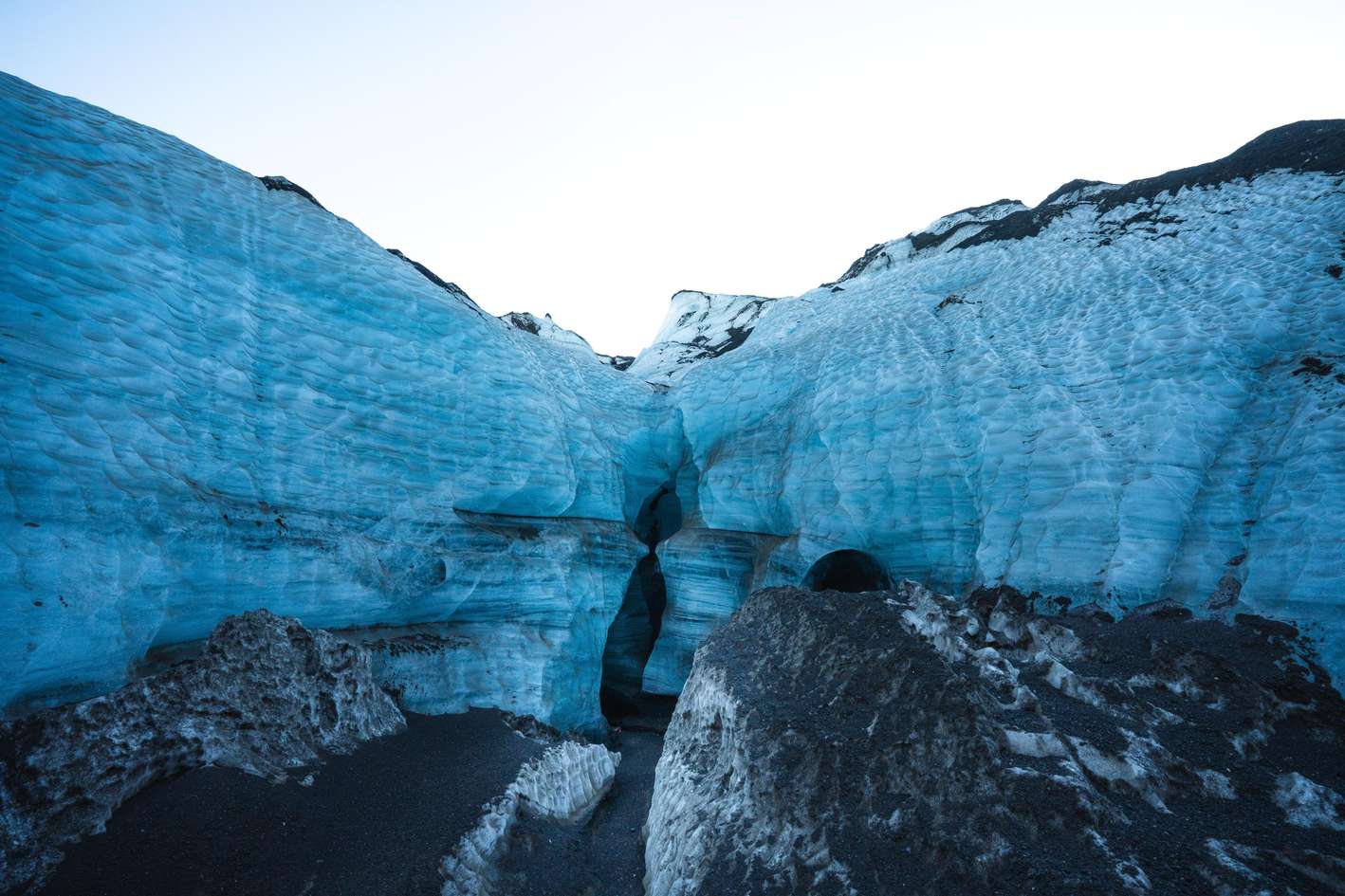
Now temper the expectations the photos set. Katla's ice carries black and grey volcanic-ash bands, laid down by eruptions and trapped as snow compacted into glacier.
That darker marbled look is the character of the place, and one traveler who did both caves preferred Katla on the day. Vatnajökull's Crystal Cave is the translucent sapphire one.
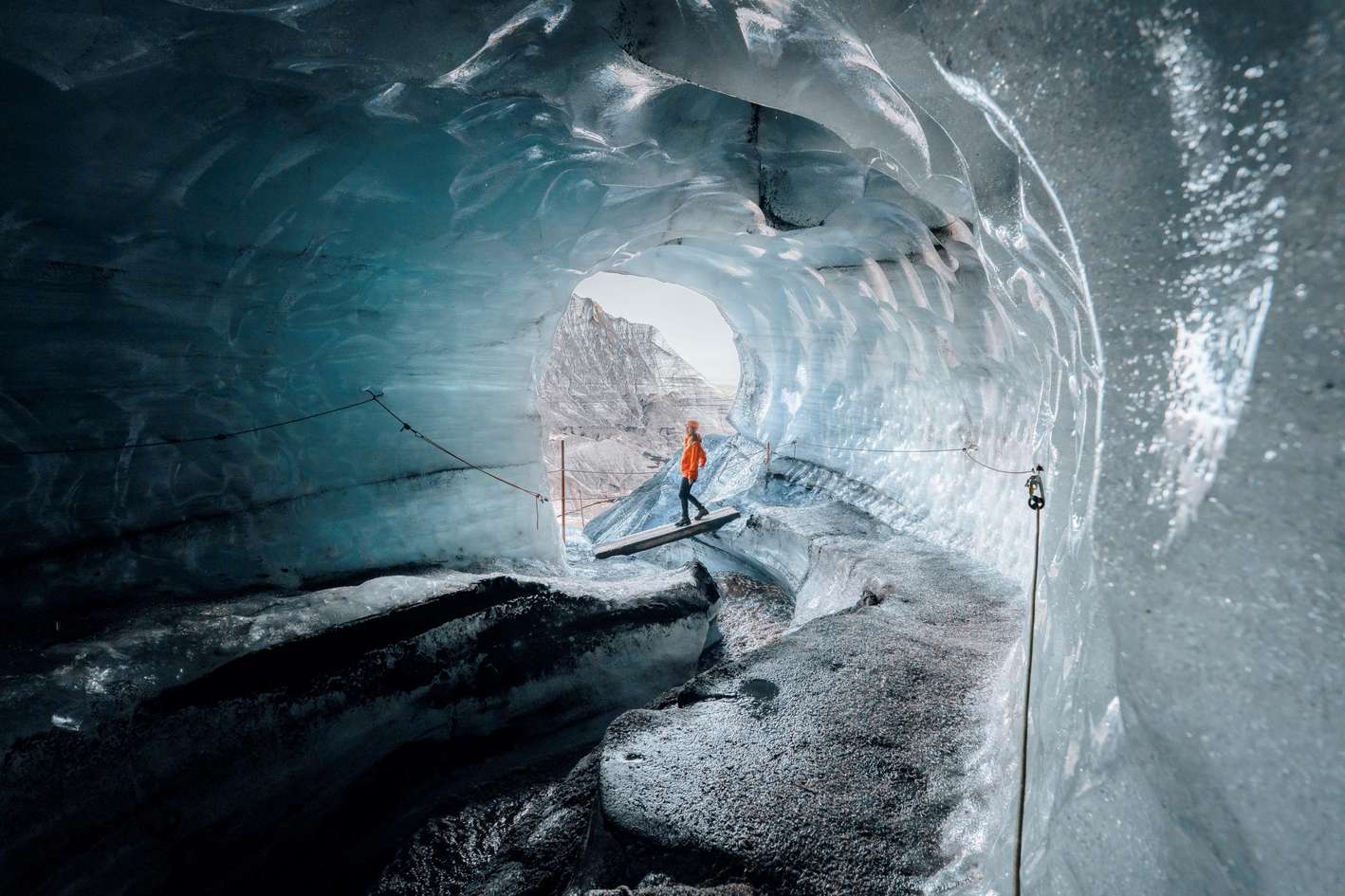
And no image guarantees your cave. The Katla cave has gone from an enclosed spring tunnel to an open autumn dome within a year. Guides choose among the safe formations available, so what you walk into may differ from the website shot, and from what your friend saw in March.
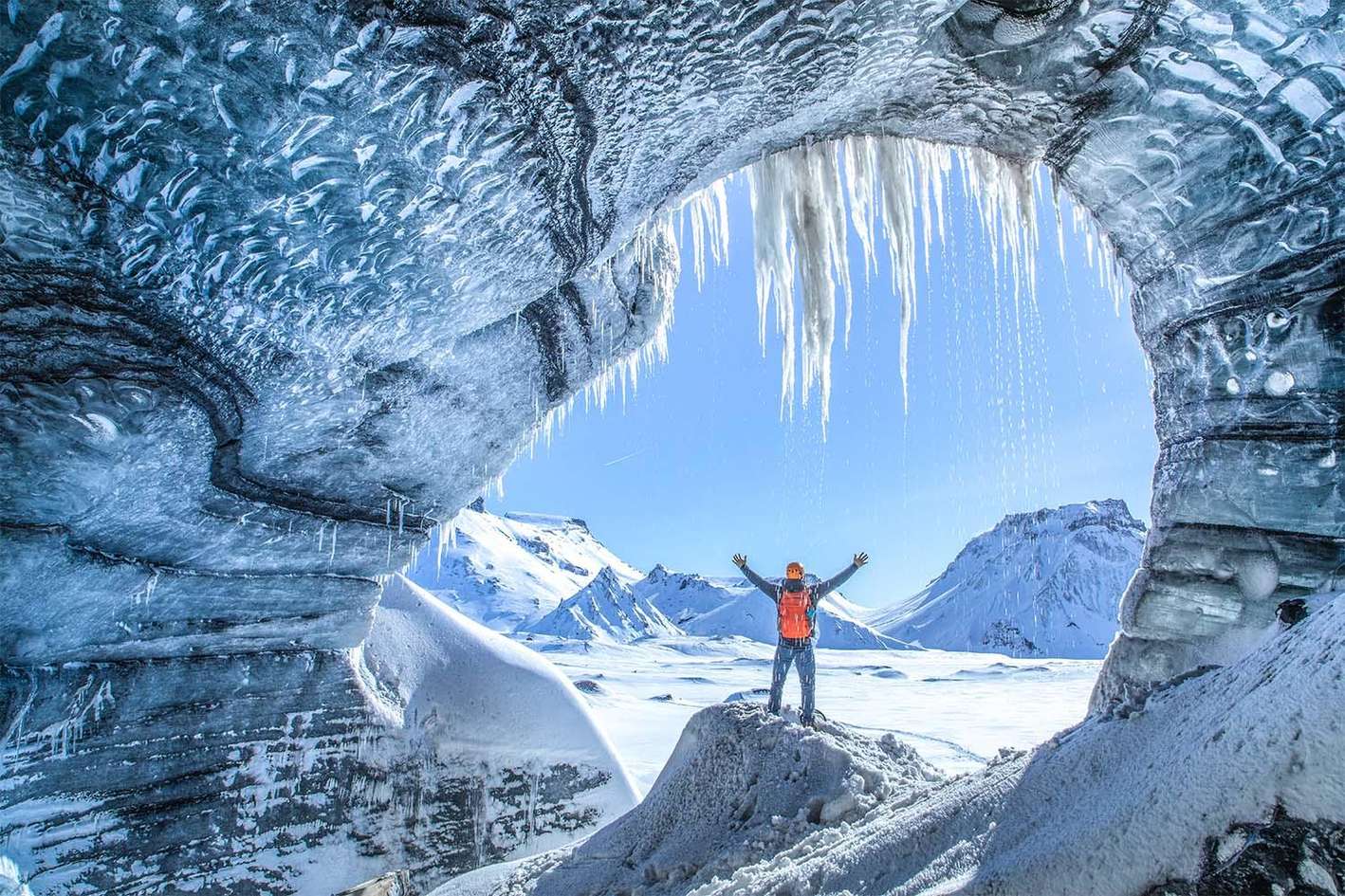
Dense ice can glow deep blue, but Katla's walls carry black and grey volcanic-ash bands, and dark layers are normal
Caves shift, melt and reshape from week to week; guides take you to the best safe formation of the day
Most natural caves close for the melt season, and Katla's structure changes through the year
The rows above come down to one habit: come for the glacier, and let the guide pick the formation of the day. Photos set the mood; the ice sets the details.
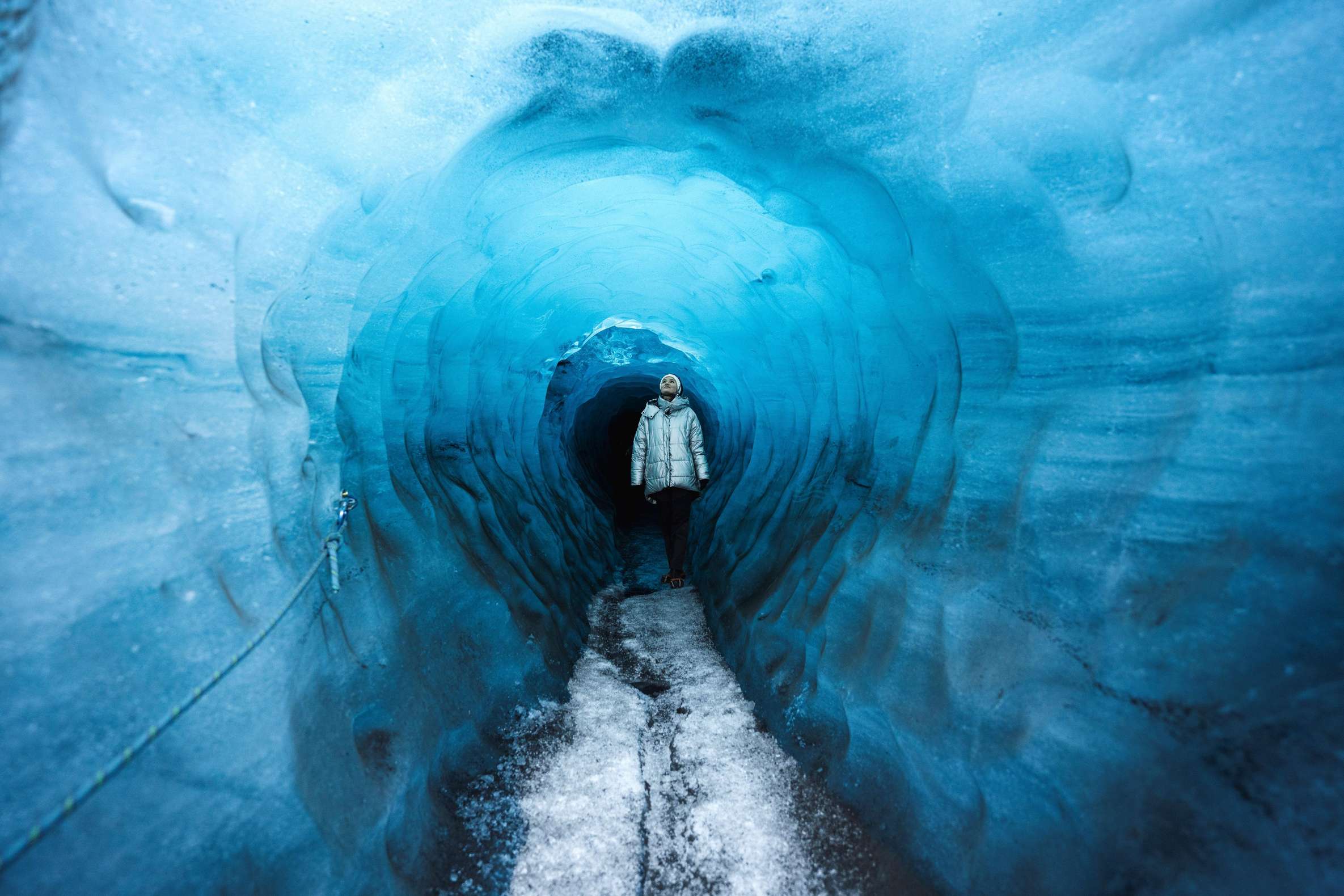
Daylight quietly schedules a winter trip. It runs about six hours in November, four in December, five in January, then stretches to nearly twelve by March.
Operators compress cave departures into the bright middle of the day, mostly between 10 am and about 2 pm, hand out headlamps for the dim interiors, and rearrange South Coast sightseeing so the outdoor stops finish before dark.
Summer flips the problem. July gives about 20 hours of light and a mild 9.7°C afternoon, so scheduling gets generous and the tours get busier. January runs the other way: days around minus five, snow on roughly two days out of three, and the quietest crowds of the year.
September: 5 out of 5 for how busy it gets. The busiest month across tours with cooling autumn temperatures and 13 hours of daylight.
Tap a month to read it.
June: 21.6 hours of daylight. Summer conditions bring over 21 hours of light while high-season crowds begin to pick up.
Tap a month to read it.
July: highs around 9.7°C. Glacier tours see heavy summer visitor volumes alongside peak temperatures near 10°C.
Tap a month to read it.
Weigh the months against each other. A December visit means a tightly timed outing built around a short stretch of light, and colder hands.
July brings flexibility and crowds at the popular stops, with September the busiest month of the later season and October the quietest of all. Spring and autumn sit between, and February gives you stable ice with enough light to see it properly.
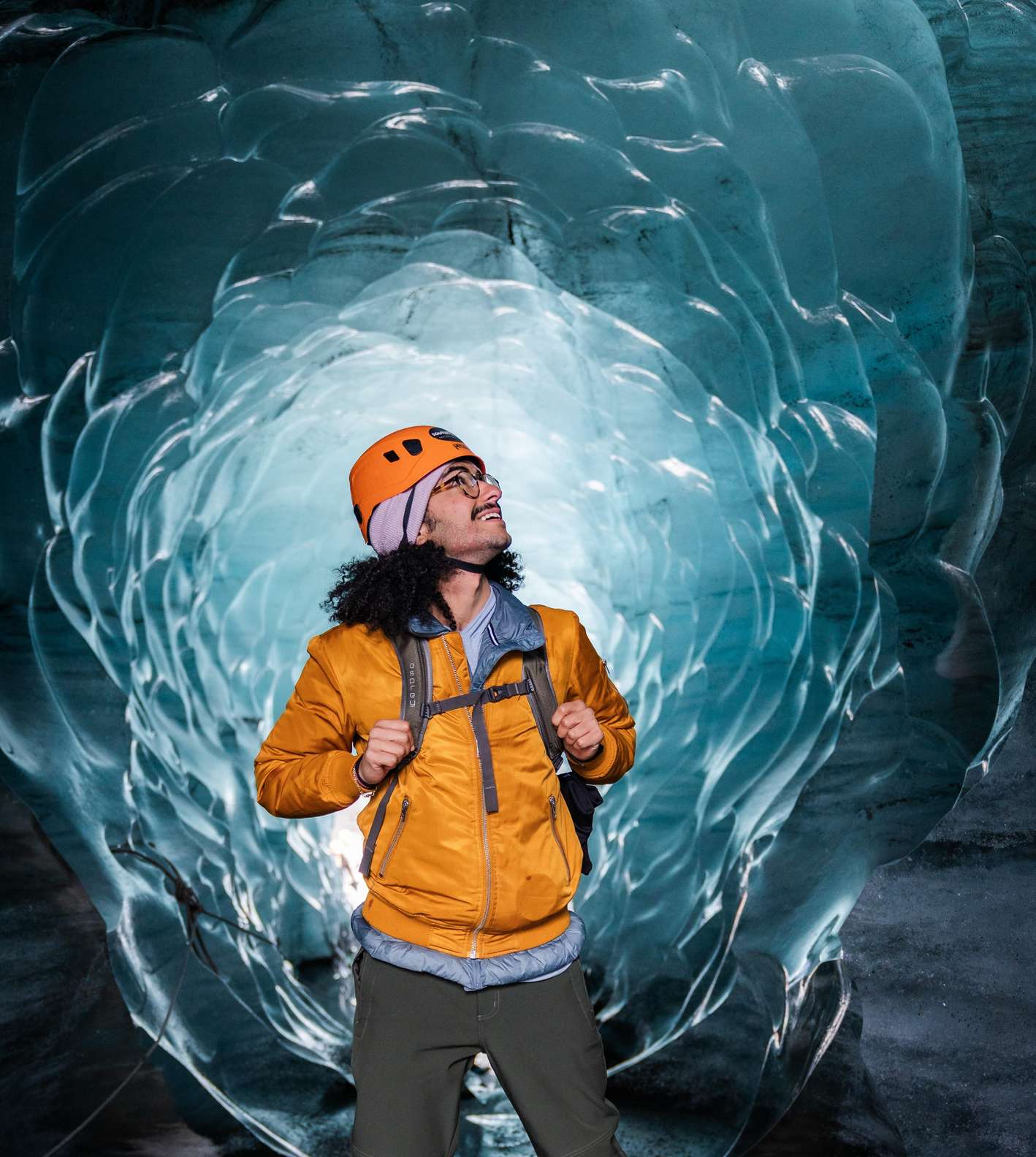
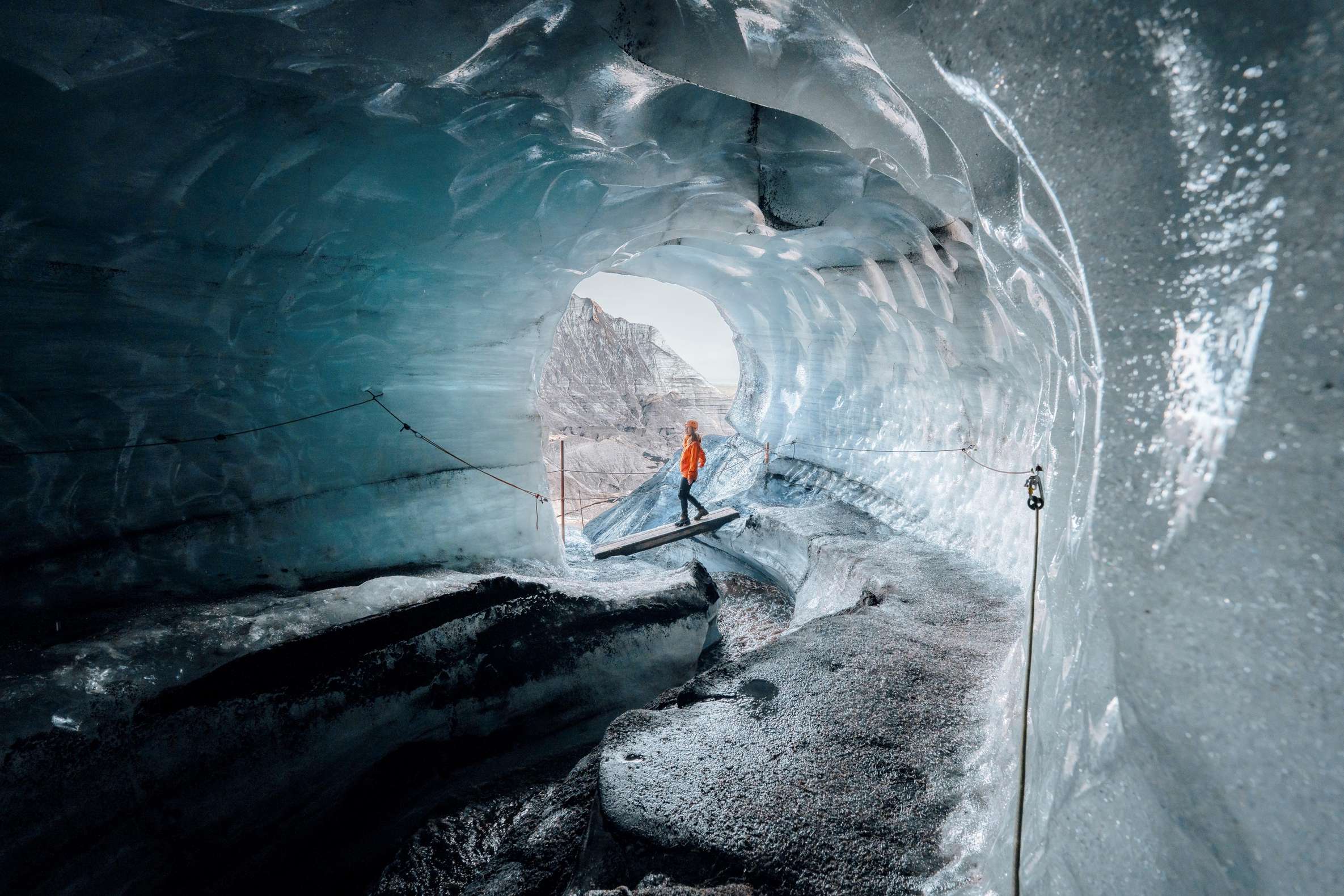
Booking windows differ by season, so match yours to the cave. Katla departures should be locked in at least a few days ahead in summer, and further ahead for the July peak, when slots fill fastest.
Winter crystal-cave trips reward earlier planning too, since the season is short and the departures bunch into the bright hours.
The practical move is to book the cave first and build the rest of the trip around it. Free cancellation up to 24 hours in advance on these tours means weather can rewrite a day without costing you the booking.
If your month is settled, reserve the departure you want and let the weather be the thing that changes.
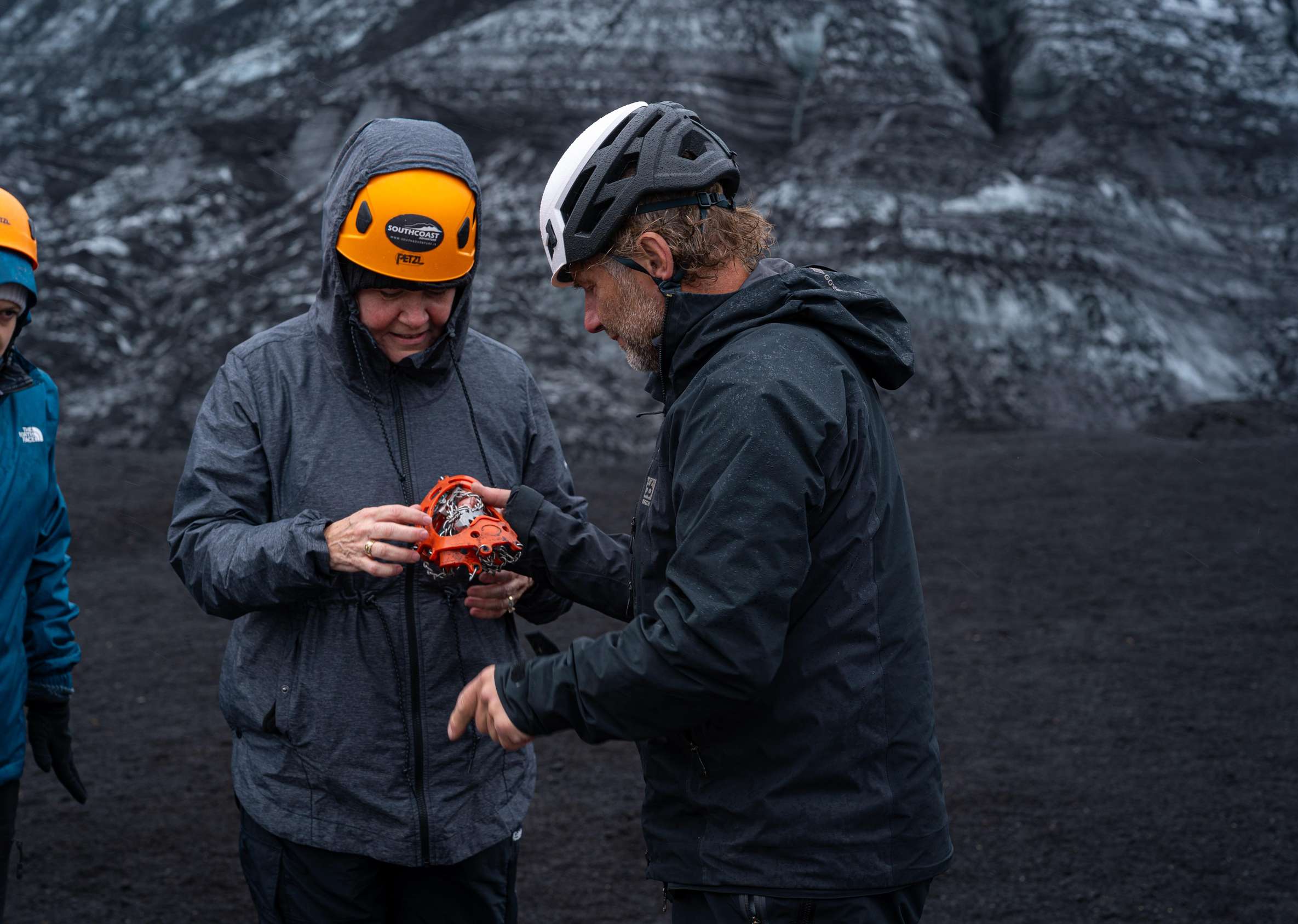
A natural cave is a moving target, and the safety call is made fresh each day. Guides check temperature and wind over the two days before a visit and on the day itself, then inspect the entrance ice.
Water, loose material, broken ice or cracks in the ceiling rule the cave out. Snow and near-freezing temperatures, with no visible melt or flowing water, count as relatively safe. Sites judged unsafe are avoided that day, and guides scout new openings as the ice shifts.
This is also why you cannot go alone. Natural ice caves need a licensed guide to visit safely and legally, and Vatnajökull National Park has barred independent access outright in the past.
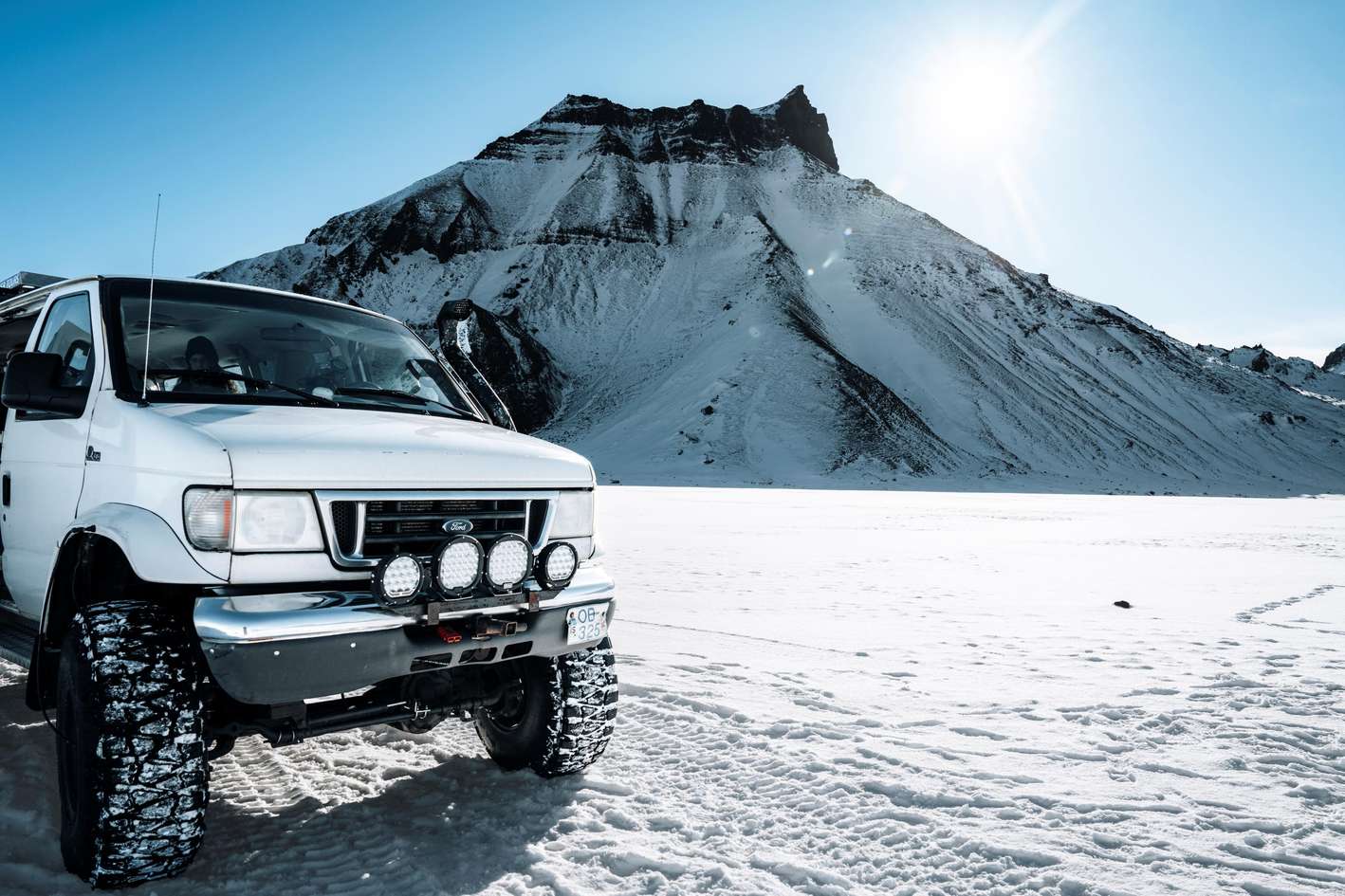
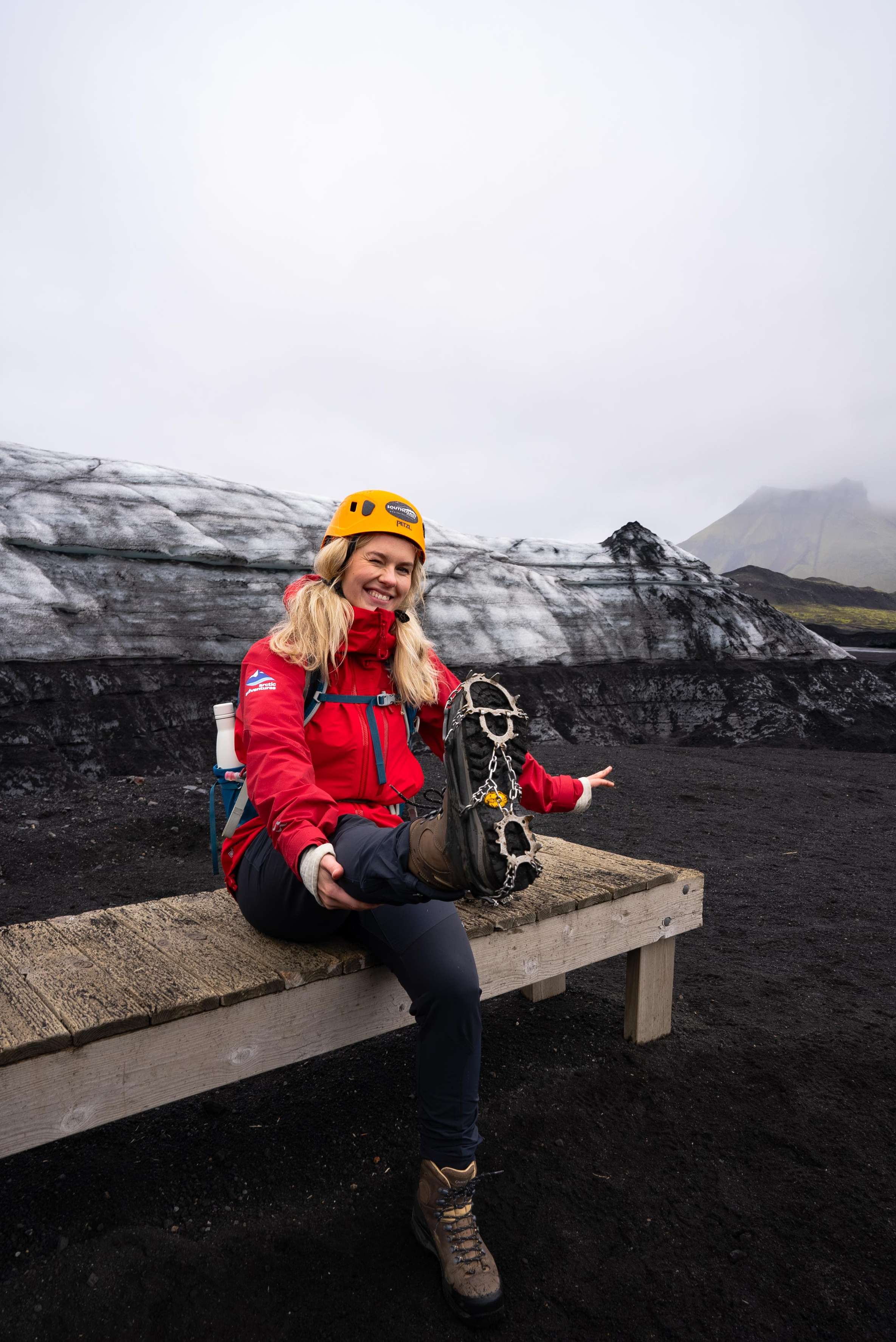
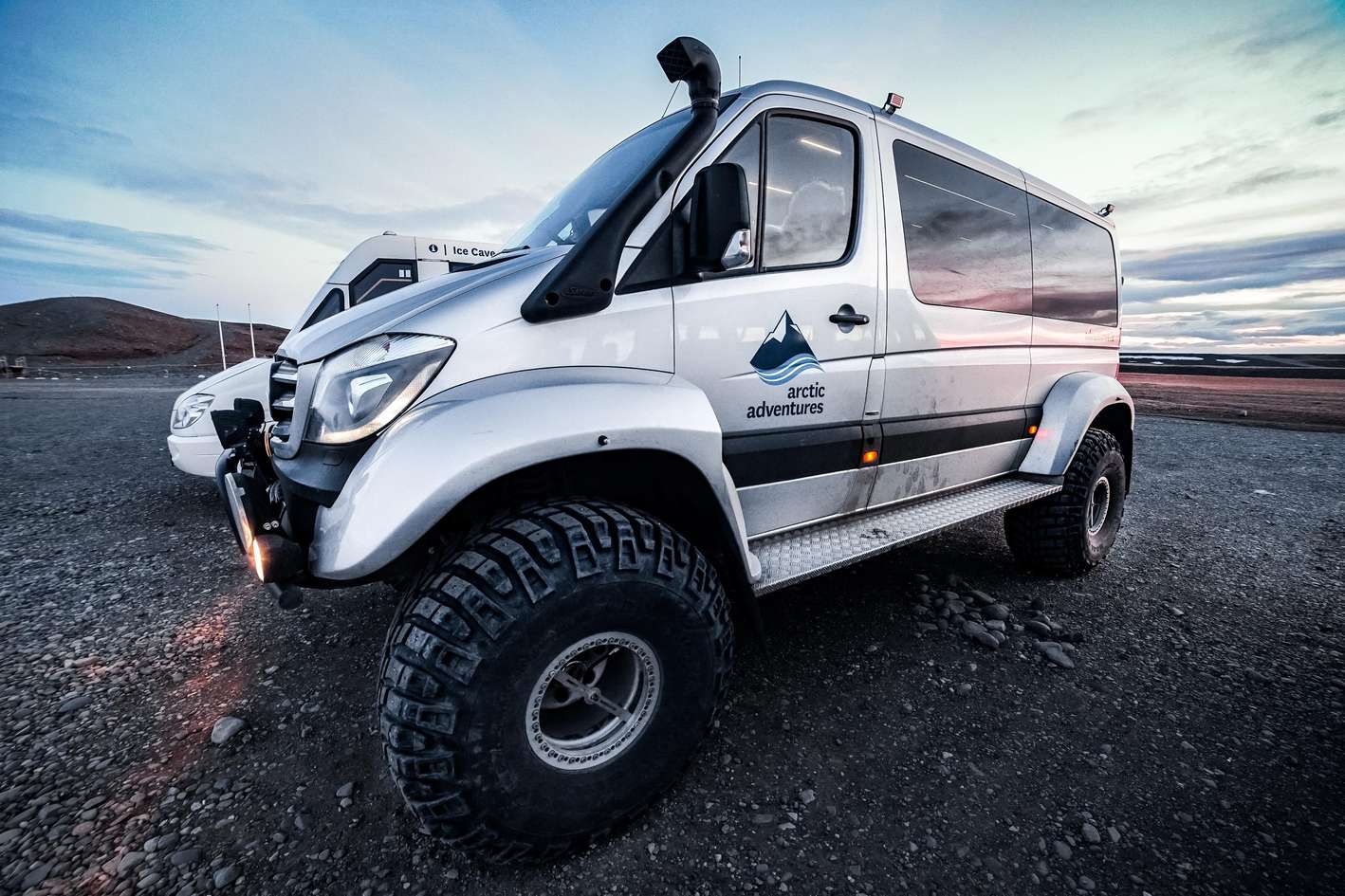
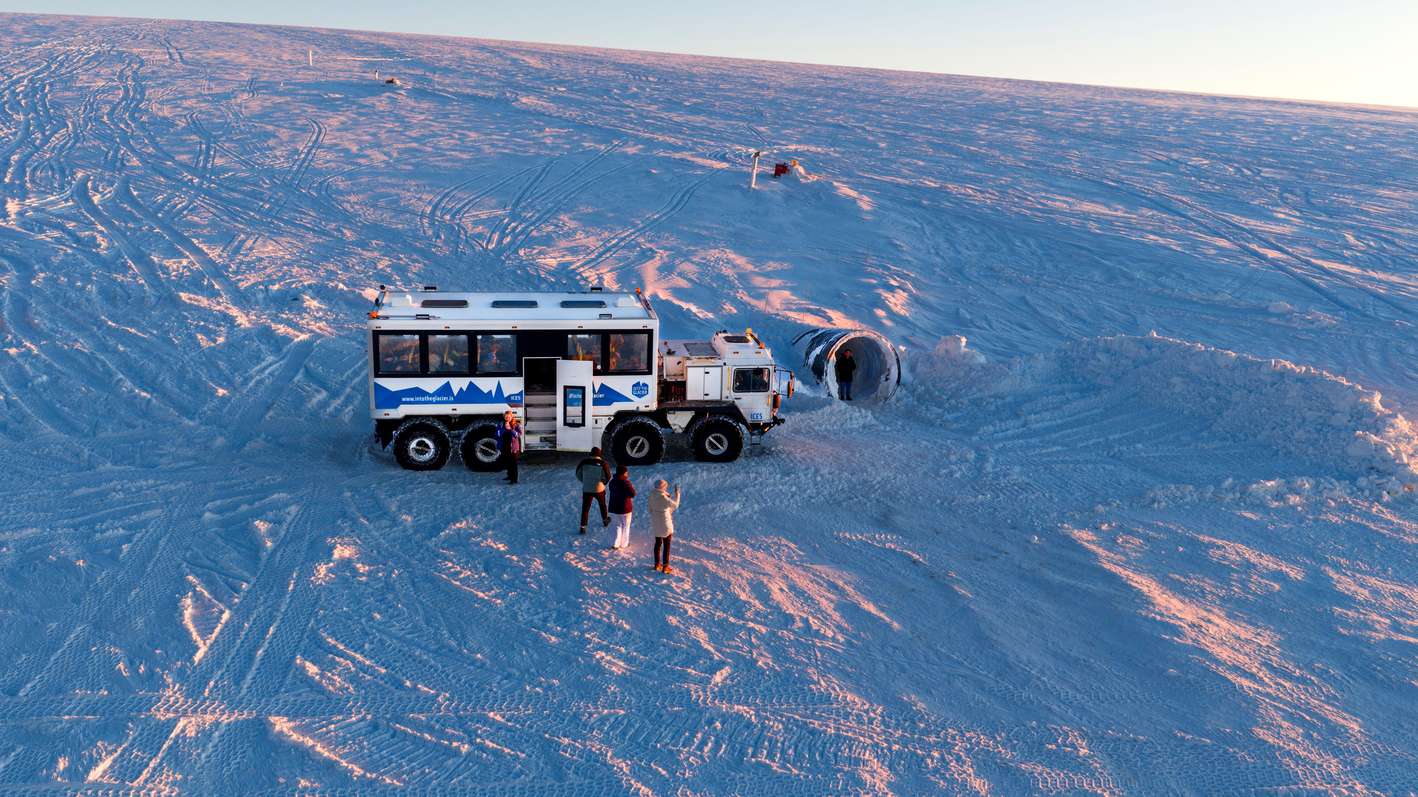
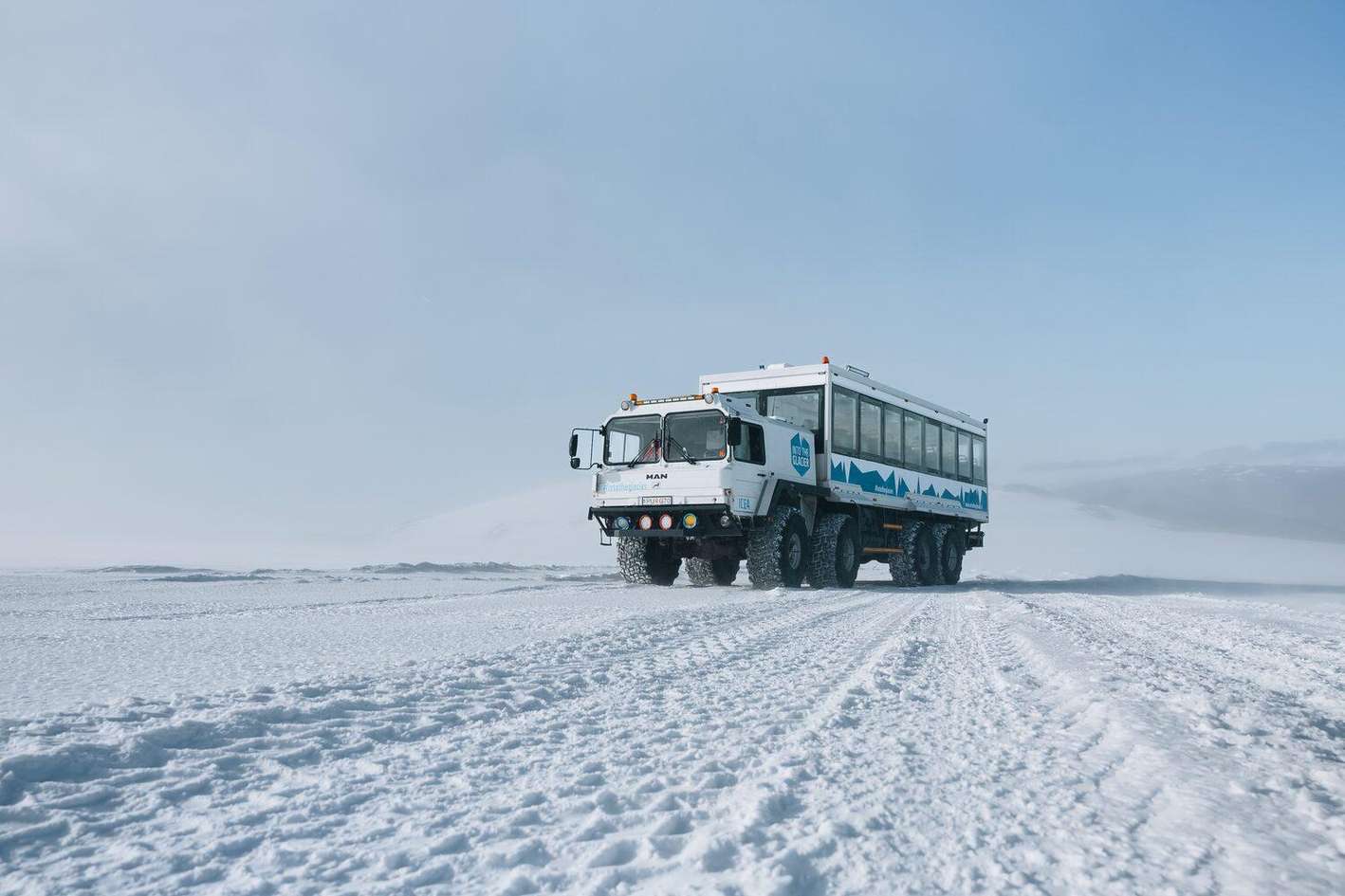
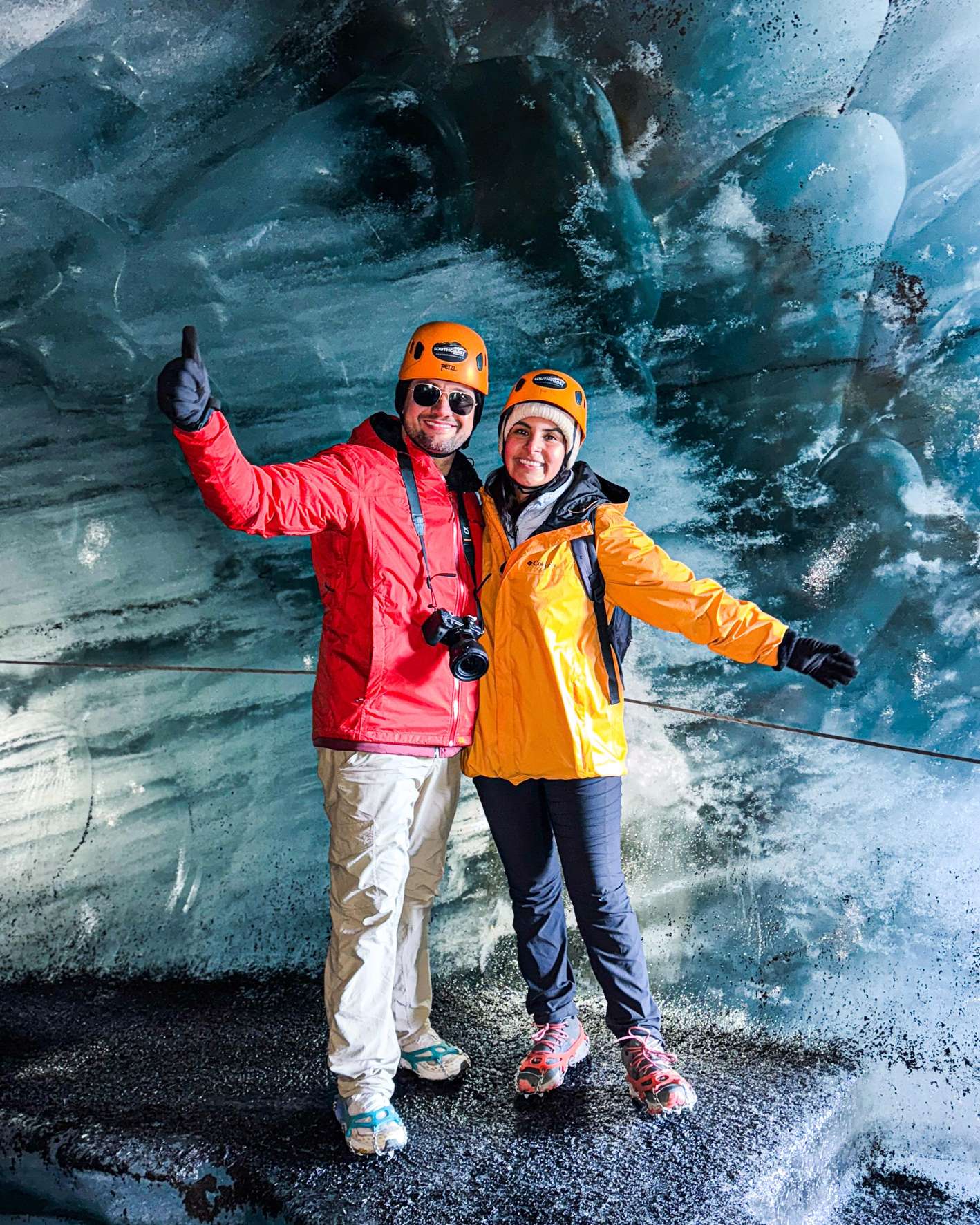
Katla is guided-only as well; the specialized Super Jeeps that reach its trailhead are run by tour companies. The tours on this page include a certified glacier guide and safety gear such as crampons and helmets.
The cave shows water, broken ice or ceiling cracks The guide avoids or cancels that cave for the day and takes the group to a safe alternative or another part of the glacier A warm spell or heavy rain has melted or flooded the cave The visit may be cancelled and rescheduled, since meltwater can fill a passage quickly No certified guide No entry. Access to Katla and the Vatnajökull caves is by guided tour only
For your booking, the lesson is simple: choose a tour with free cancellation, and treat the guide's same-morning call as final. A cave ruled out today can be open tomorrow.
Weather touches both halves of the outing: the drive and the glacier. Route 1 closes during individual storms, usually for a few hours and occasionally for a day, and the December 2022 blizzards shut busy South Coast roads for days.
Orange warnings, with sustained winds of 18 to 35 m/s or gusts above 40, can prompt closures; a red alert means widespread closures and cancellations. Katla tours are called off in extreme weather, including winds above 20 m/s.
The fixes are ordinary. Check road and weather sites before setting out, and call the operator as soon as you see a closure, before departure time.
If the operator cancels for weather, safety or glacier conditions, the tours offer a reschedule or a full refund, and a road closure that stops you reaching the meeting point is treated the same way.
| If this happens | What happens then |
|---|---|
| The operator cancels for weather or unsafe ice | You can reschedule or receive a full refund |
| Authorities close the road and you cannot reach the meeting point | The operator treats it as a safety cancellation, with a refund or a new date |
| You are driving and spot the closure in the morning | Call the operator before departure time to discuss your options |
| The tour runs but conditions shift | The itinerary may be altered or rerouted for safety |

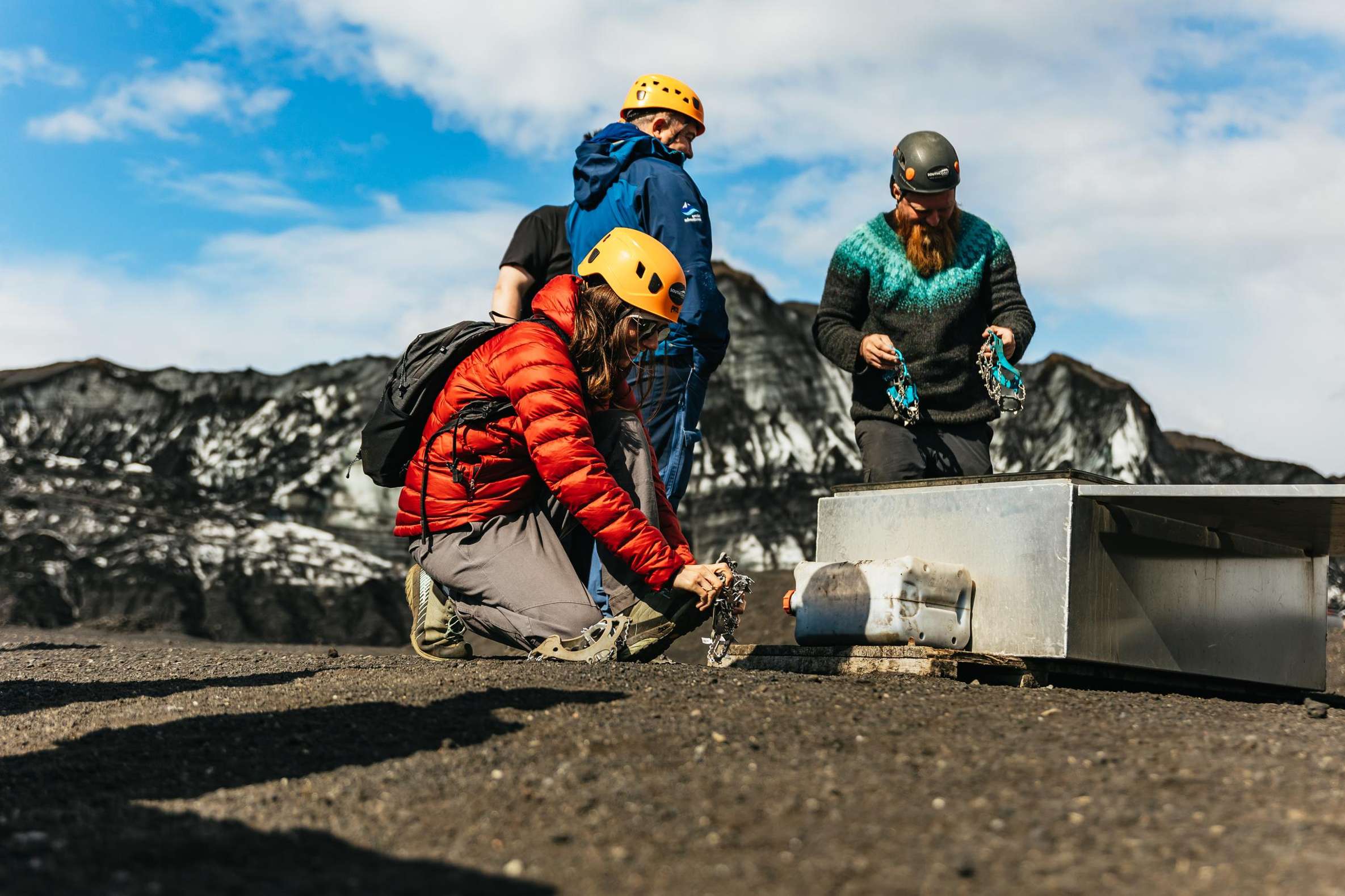
Turn the calendar into a choice. Winter visitors after the deep blue formations head for the Vatnajökull departures, where the crystal caves run from October through April at the widest.
Summer visitors choose between two very different year-round options: the natural Katla cave near Vík, with its ash-streaked ice, or the engineered Langjökull tunnel from Húsafell, which looks consistent from visit to visit.
For a warm-season trip, the From Vik: Katla Ice Cave & Super Jeep Tour is the closest natural-cave fit: a three-hour outing that includes the Super Jeep ride toward Mýrdalsjökull, a glacier walk to the cave, a certified guide and all the ice-cave equipment. It runs year-round and stays weather-dependent, as any natural cave does.
| Check | Why it matters | Our pick |
|---|---|---|
| Operating window | The crystal caves close for summer, so your month may decide the glacier | Runs year-round, weather and conditions permitting |
| Natural cave or engineered tunnel | Natural caves change and can be cancelled; the Langjökull tunnel is built and monitored | A natural cave on Kötlujökull, chosen fresh each day |
| Departure location | Vík is about 2.5 hours from Reykjavík; Jökulsárlón is about five | Meets in Vík, with Reykjavík options on the longer variants |
| Duration and walking | Time inside is short and the approach is uneven ground | About three hours with a short glacier walk over rugged terrain |
| Safety terms | Cancellations happen for weather and ice | Free cancellation up to 24 hours ahead; guided visit with equipment included |
Summer travelers booking late should look at the Katla departures first. Winter visitors chasing blue ice have a shorter window and fewer slots, so their choice is really about which week.
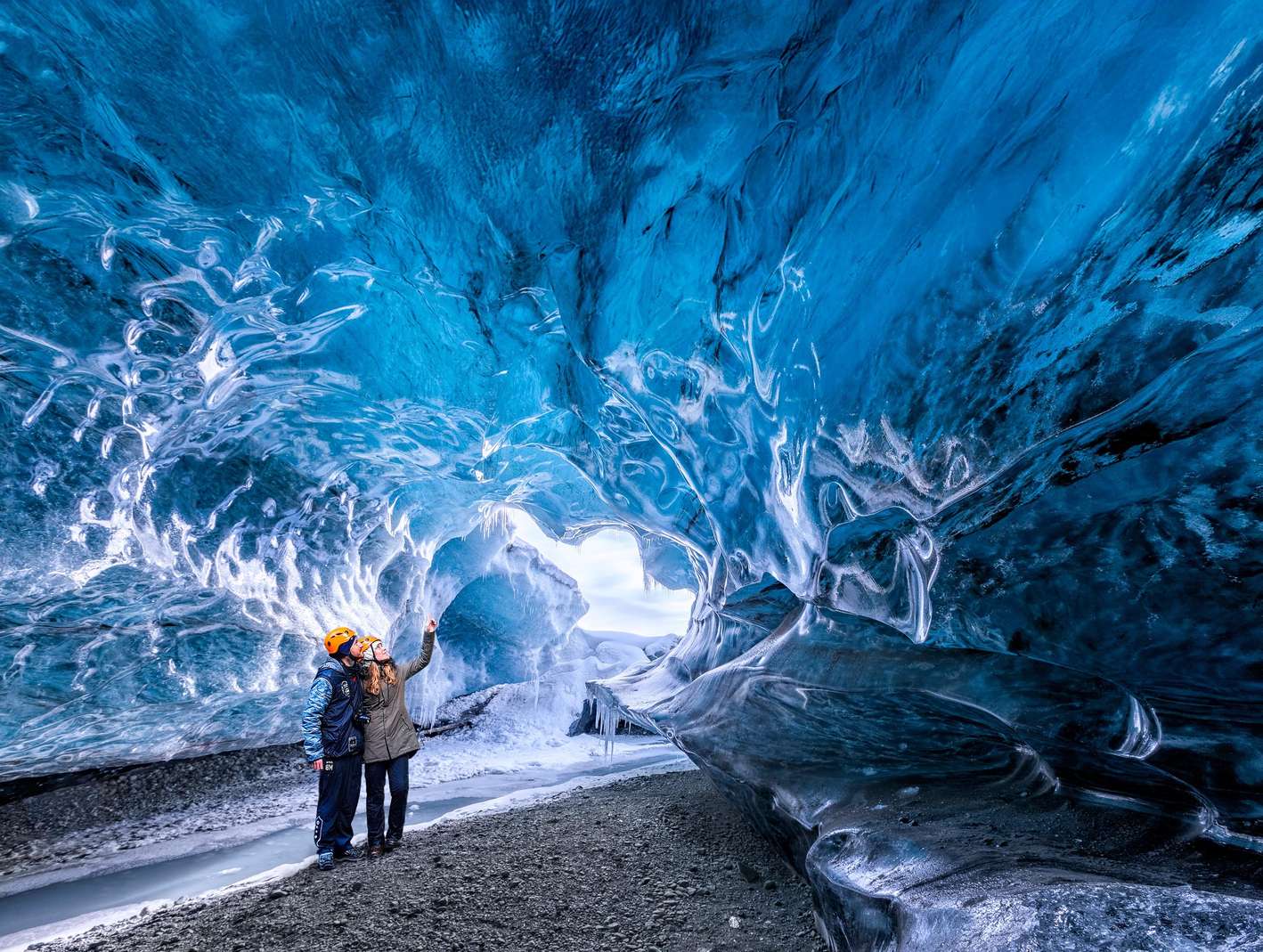
Set the clock honestly. On a three-hour Katla tour from Vík, expect about 30 minutes inside the cave, roughly one-sixth of the outing.
The Super Jeep ride takes about 40 minutes each way across black sand, old lava and shallow streams, and the walk from the drop-off to the entrance runs about 1 to 2 km over uneven ground, 20 to 25 minutes depending on the route and the weather.
Travelers describe that off-road stretch as part of the experience in its own right, a bumpy run through volcanic floodplains. The guide's explanations of the glacier, the volcano and how the cave formed fill the rest of the day; give them their due.
The caveat first-timers miss: the approach takes some stamina, and one visitor called it steep in crampons. The cave itself is a short ice walk, no climbing or rope work, and most people with average fitness manage it.
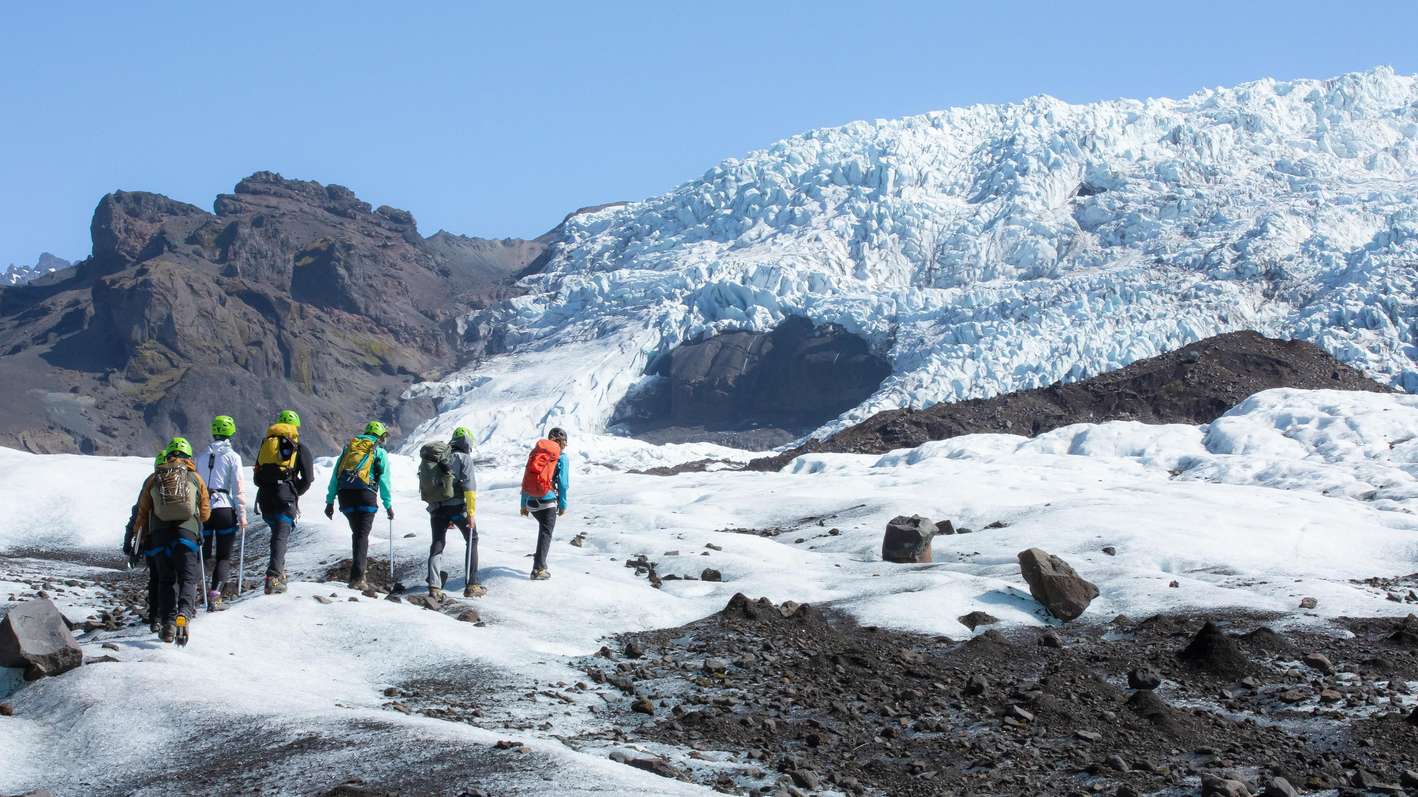
Anyone wanting more time on the ice can compare a glacier hike, which is the more active day.
Most of a three-hour tour is the Super Jeep run, the walk and the guide's stories
People remember the bumpy crossing of black sand and streams as much as the ice
Expect footing that demands boots with grip, and a pace the guide sets
The cave tour takes you inside the glacier; a hike takes you across its surface
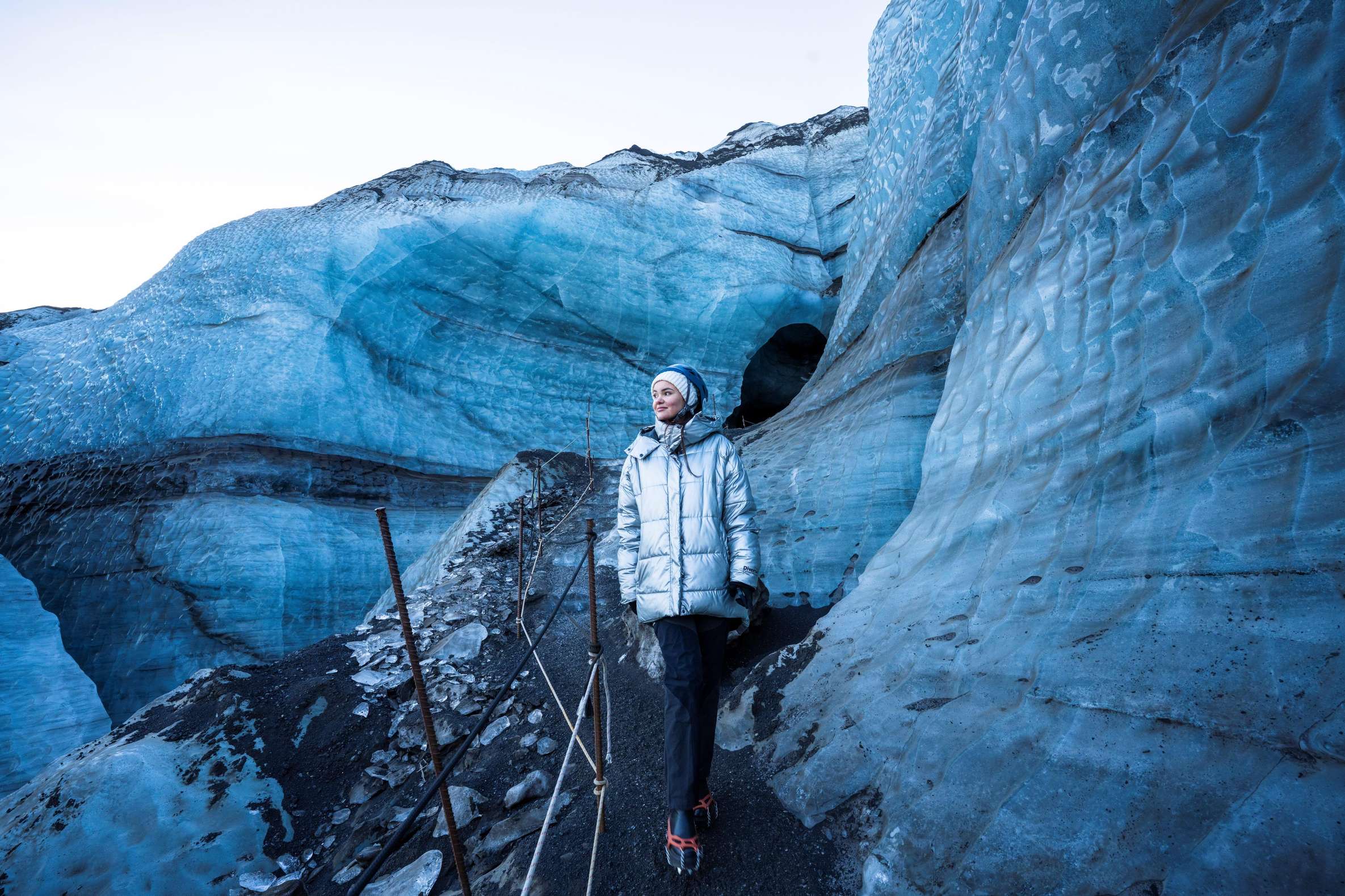
The cave holds around 0°C year-round, so a July visit can put you in colder air inside than out. Summer calls for layers under a waterproof jacket, with a lighter outer layer for the drive; winter wants the full set, thermal base layers, fleece, hat and gloves.
Either way, the outside world stays wet: rain falls on roughly one day in two near Katla through the year.
Boots decide more than anything else. Choose sturdy, waterproof hiking footwear with ankle support and grip for the uneven, sometimes muddy approach. Meltwater drips from cave roofs, puddles soak footwear, and spare dry socks earn their place in the bag.
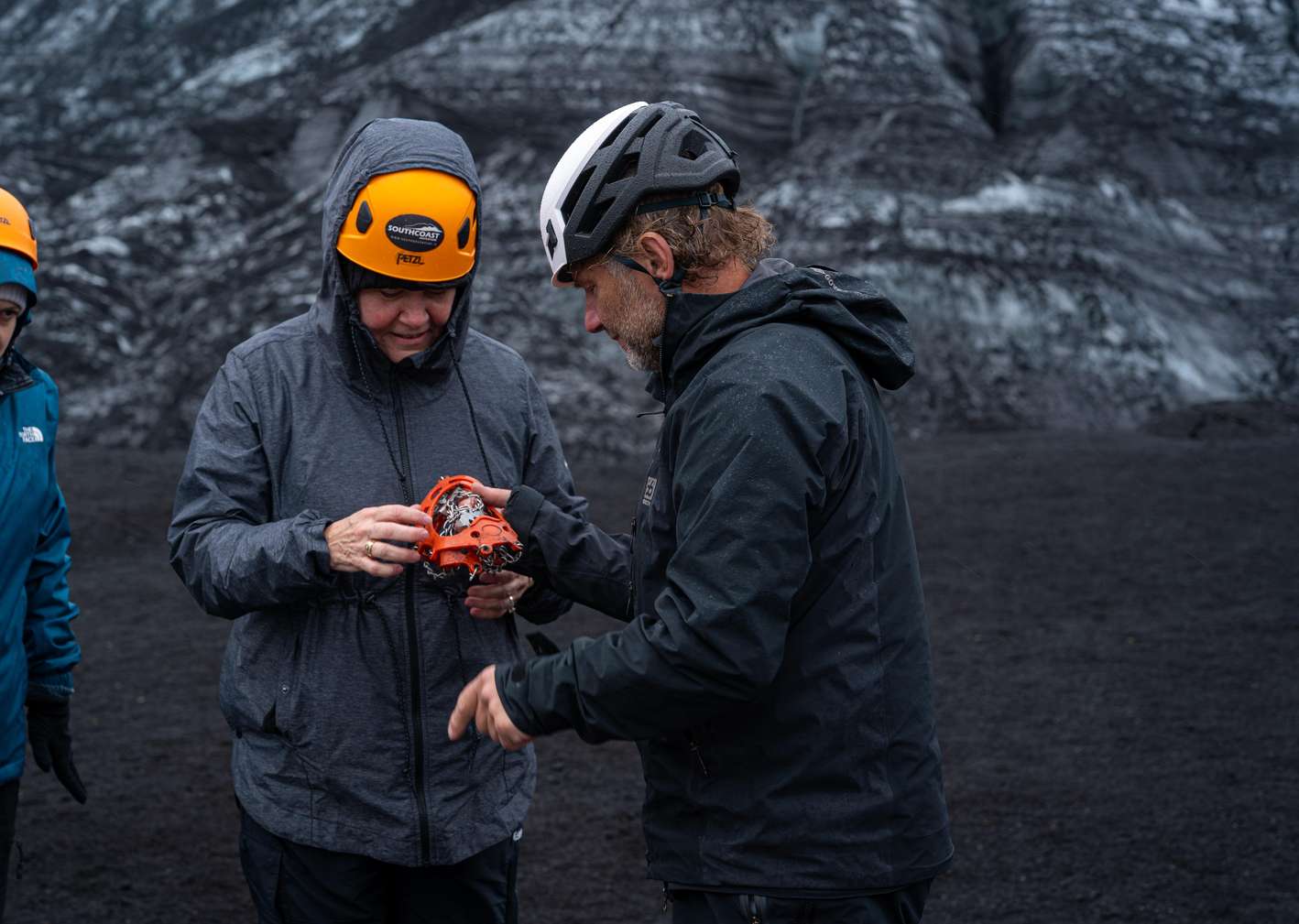
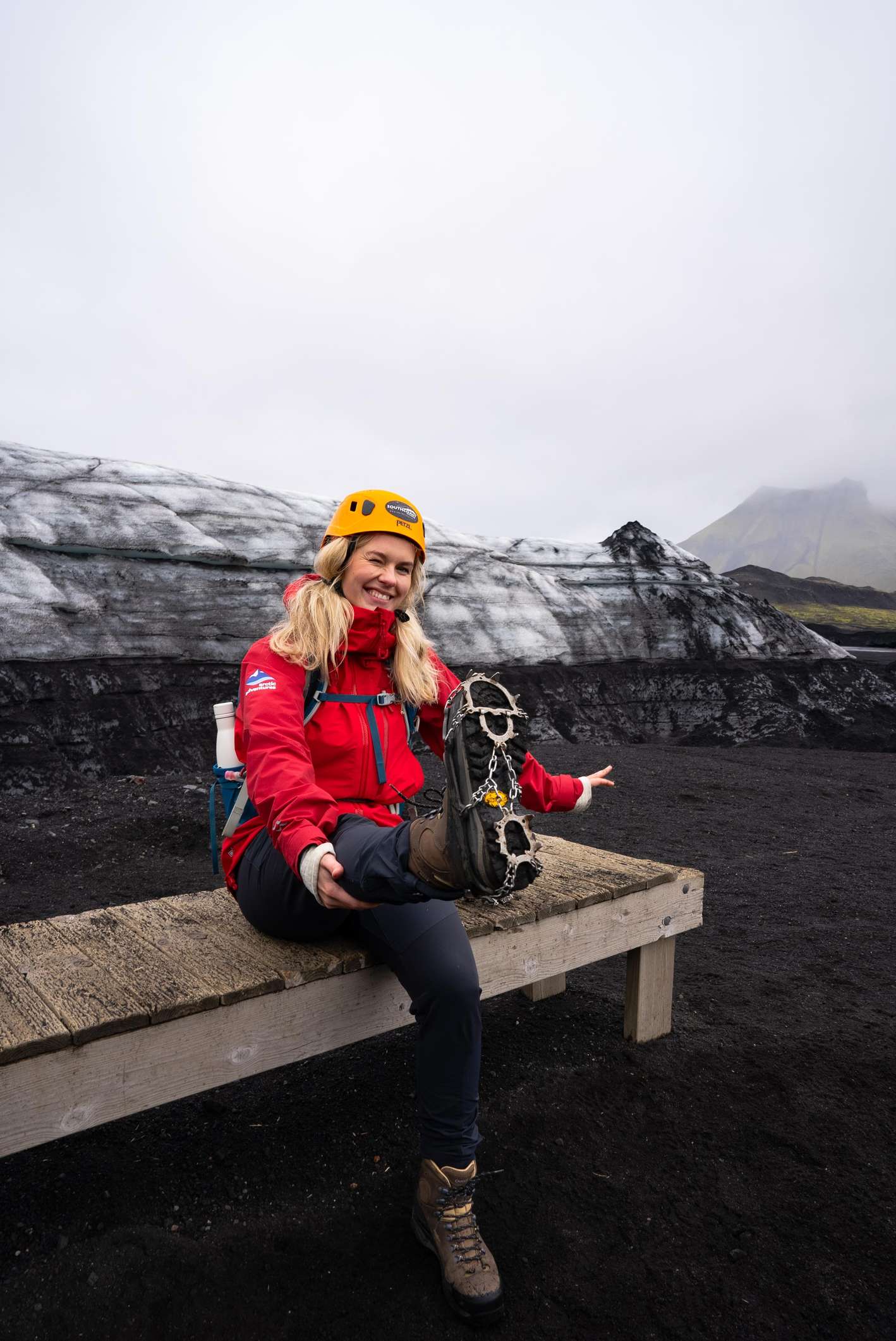
The tours supply the technical kit, crampons and a helmet, and some add snowsuits at Langjökull. What they do not replace is your clothing. Jeans turn cold and heavy when wet, so keep them out of the day bag and pack waterproof trousers over warm layers instead.
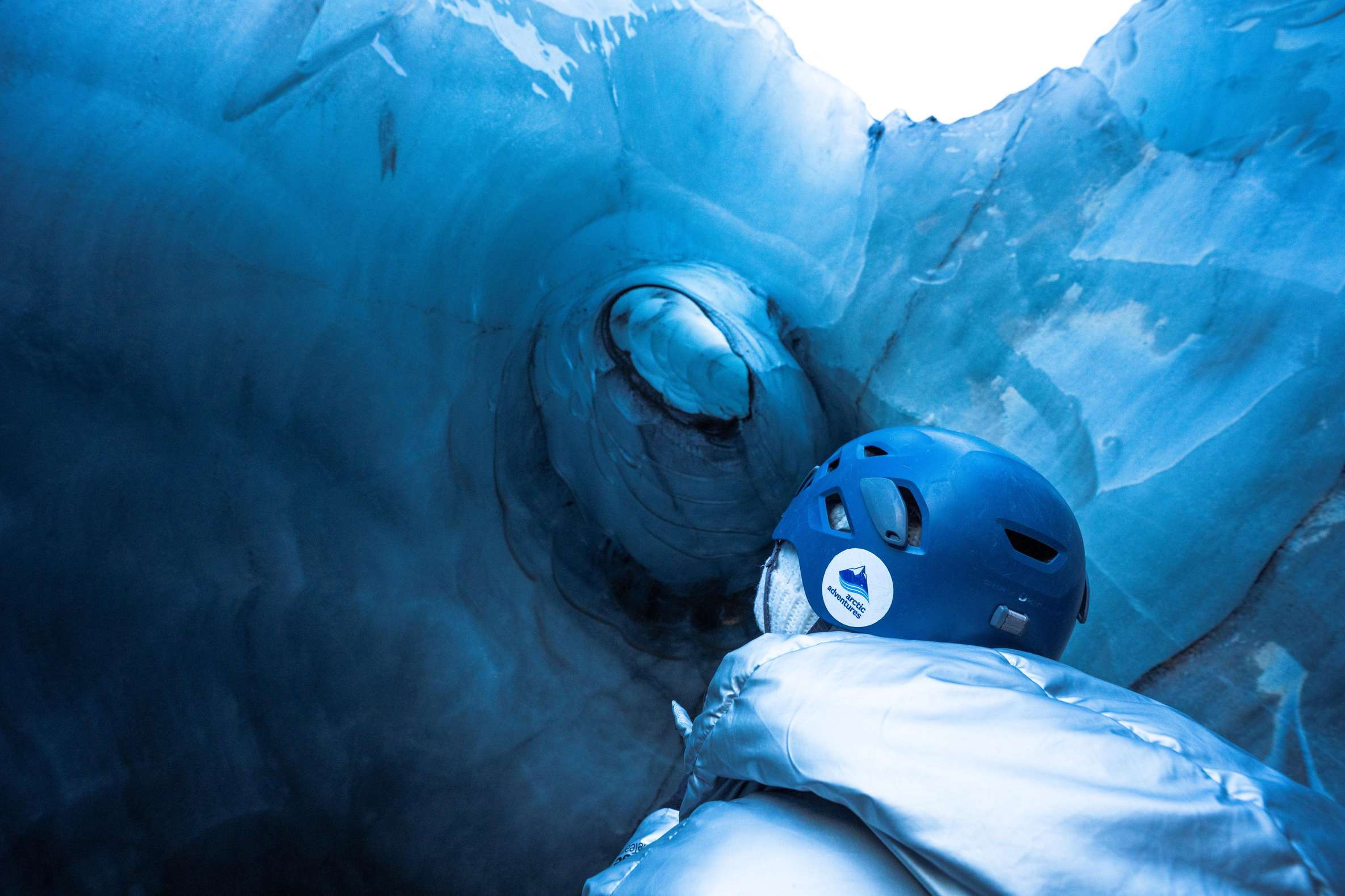
The guided Katla day trips from Reykjavík fold the sightseeing in for you: the 12-hour version stops at Seljalandsfoss and Skógafoss, and the 10-hour small-group variant adds Víkurfjara Black Sand Beach. The rating runs easy to moderate, so the day rewards more than the cave.
Season matters for anything on the water. Boat tours on Jökulsárlón Glacier Lagoon run from early May through October, with Zodiacs ending in October and amphibian boats listed through November, weather and ice permitting. A winter crystal-cave trip pairs the lagoon with the ice; a summer one can add a sailing.
For a longer arc, the three-day Golden Circle, Glacier Lagoon and Ice Cave tour chains the sights together with two nights included, and the route shifts by season so the cave matches the month.
The Golden Circle stops cost little extra time: the hot springs at Geysir sit minutes apart on foot, and Gullfoss is a short drive on. That is part of what a three-day trip buys, a second region folded in without a rushed day.
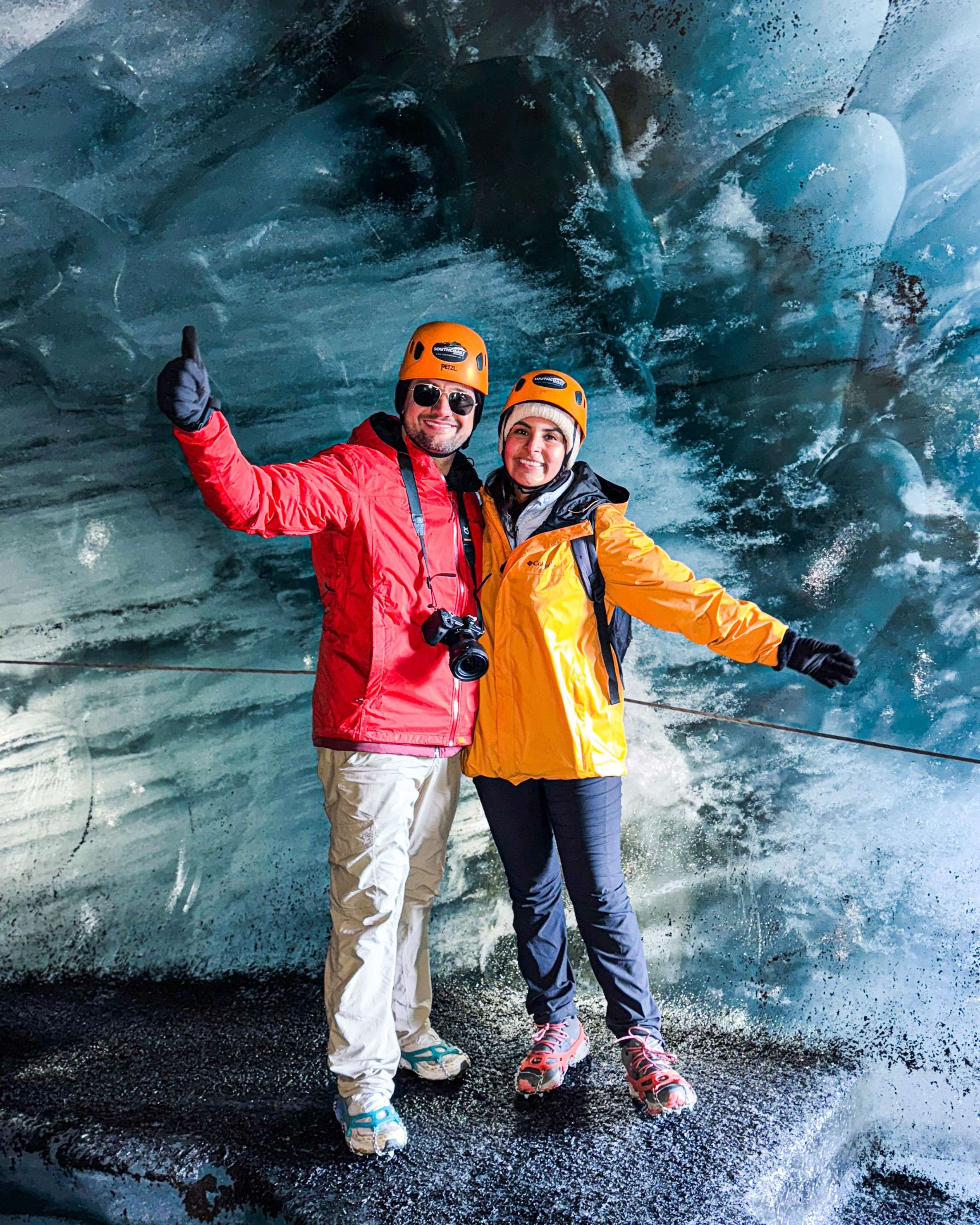
Two different roads get mixed up in this question, so split them. You can drive yourself to Vík for a local departure; the Reykjavík leg is 187.4 km and takes about 2 hours 38 minutes without traffic, longer when the Hellisheiði pass ices over or the coast beneath Eyjafjallajökull throws gusts above 25 m/s.
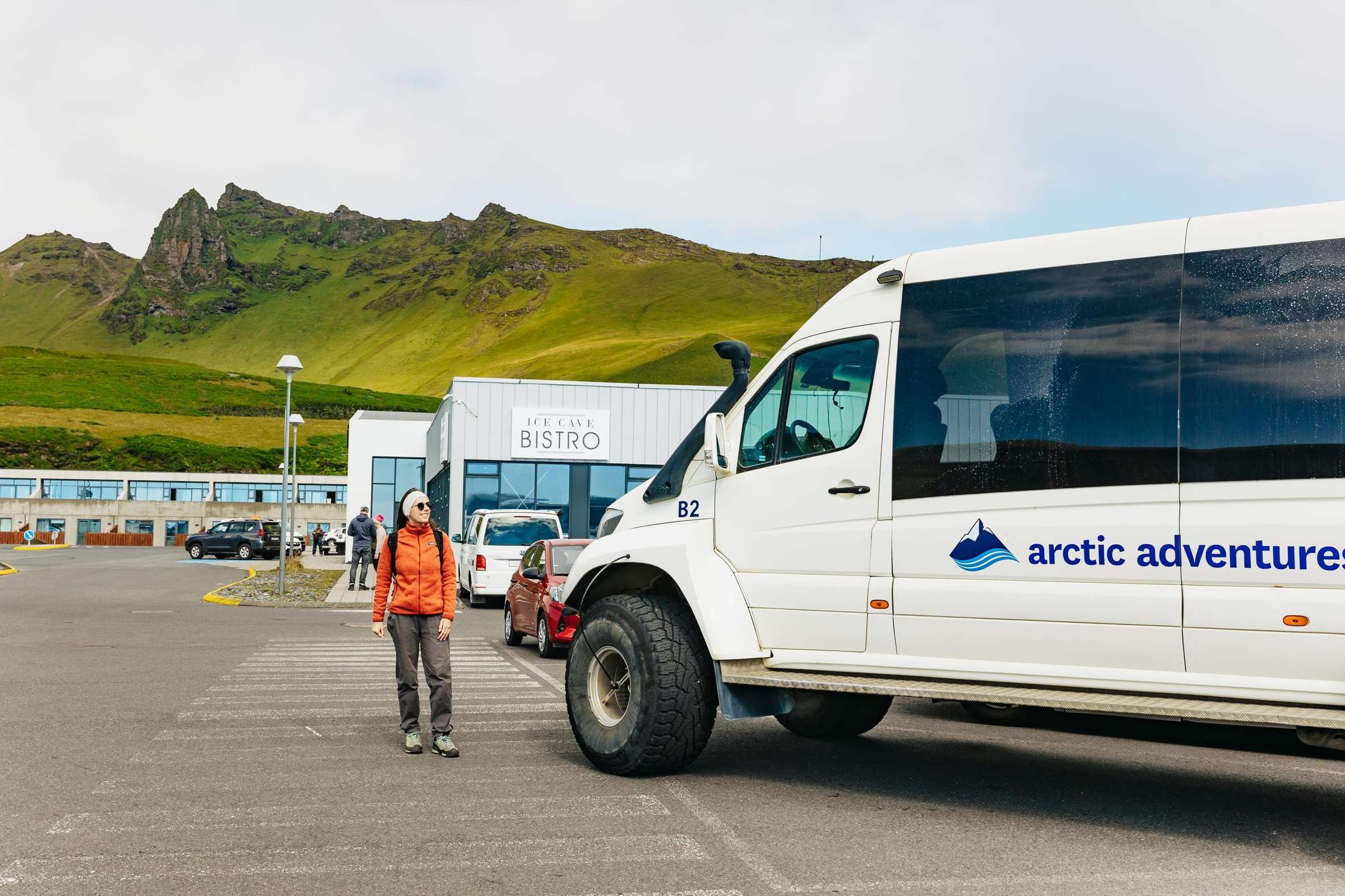
Arrive at the Vík Inn meeting point 20 minutes early to park and check in.
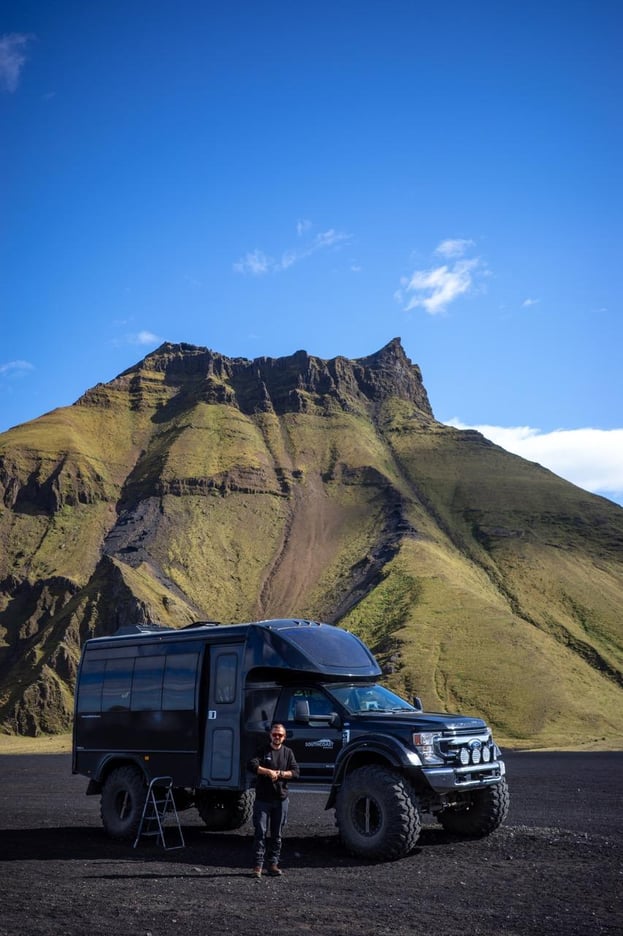
You cannot drive to the cave. The glacial tracks to Katla's trailhead take a specialized Super Jeep, and a standard rental SUV will not manage them. The tour includes the jeep both ways, which is the point of meeting in Vík.
In winter, weigh the return leg too. Vík has under five hours of daylight in December, so a same-day round trip from Reykjavík runs partly in the dark, and travelers driving east to Jökulsárlón are told to stay overnight in Vík or Kirkjubæjarklaustur instead of driving back.
The Reykjavík Katla day tours with pickup solve this by putting someone else at the wheel.
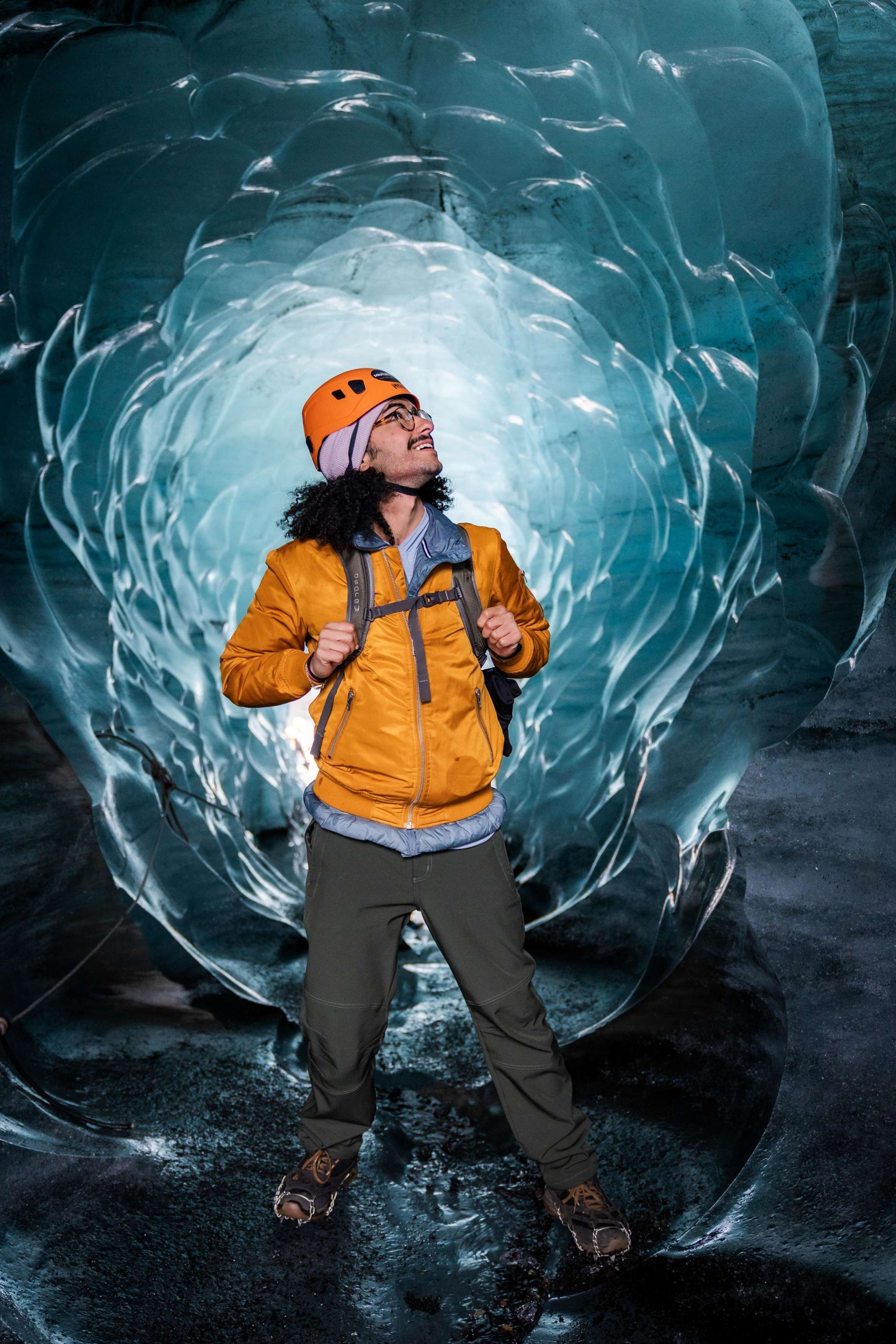
Time it, then book it. Winter, roughly November through March, opens the crystal-blue natural caves of Vatnajökull. Any other month still gets you inside a glacier at Katla near Vík or in the engineered tunnel at Langjökull.
Match the cave to your dates, book early for July, and let the guide's morning call decide the ice.
katla runs year-round; crystal caves shut by spring
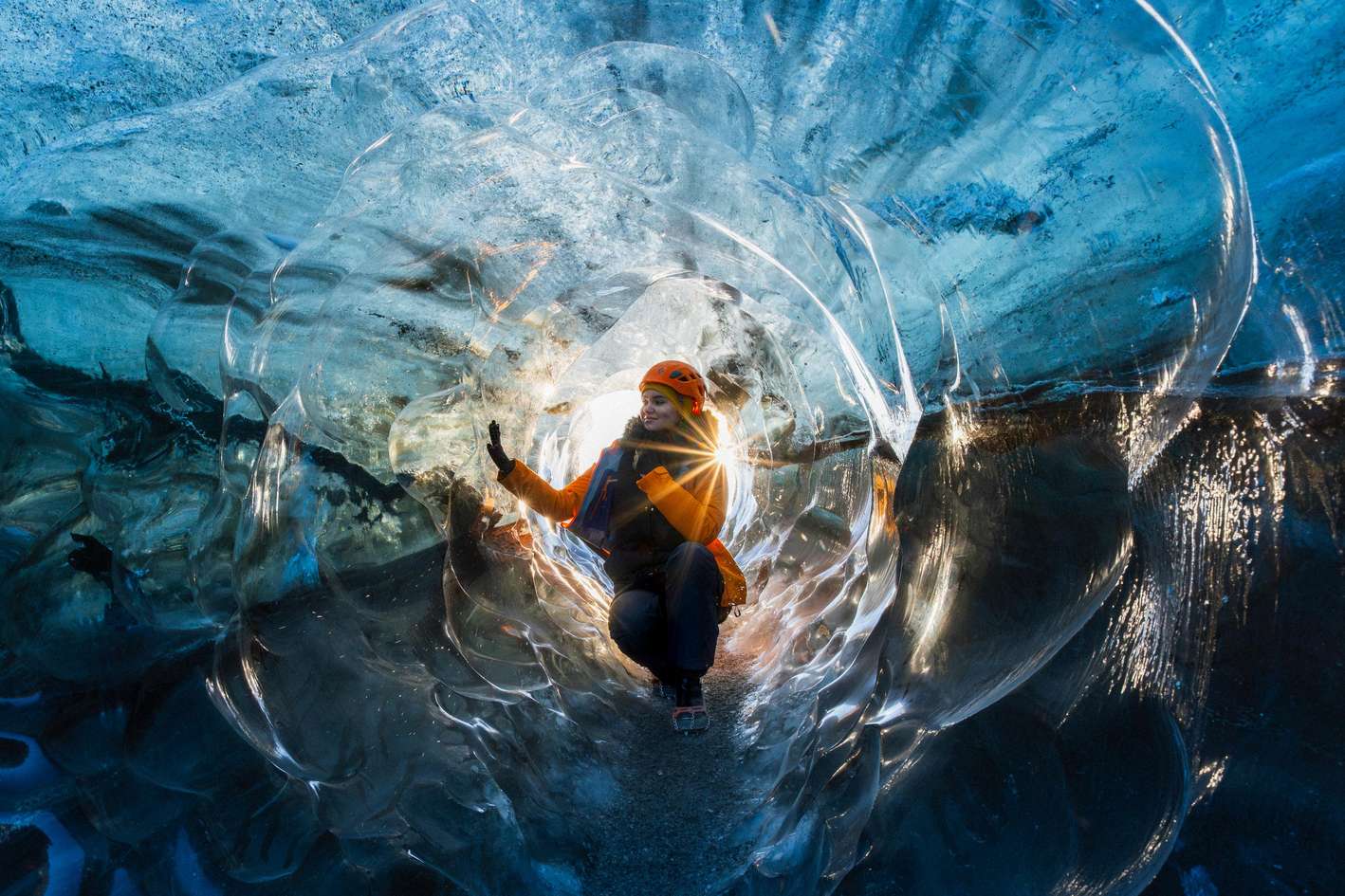
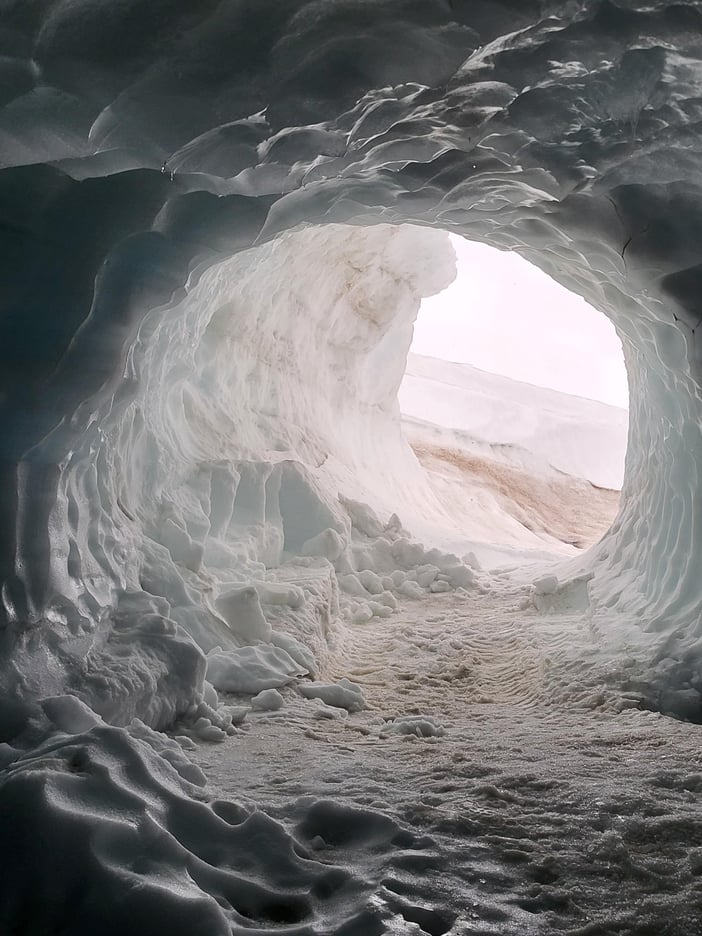
vatnajökull caves shut by april 1
New to ice caves in Iceland? Start here for how the tours work and which glaciers hold them.
Worried about shifting ice? See how certified glacier guides keep a cave visit safe in any month.
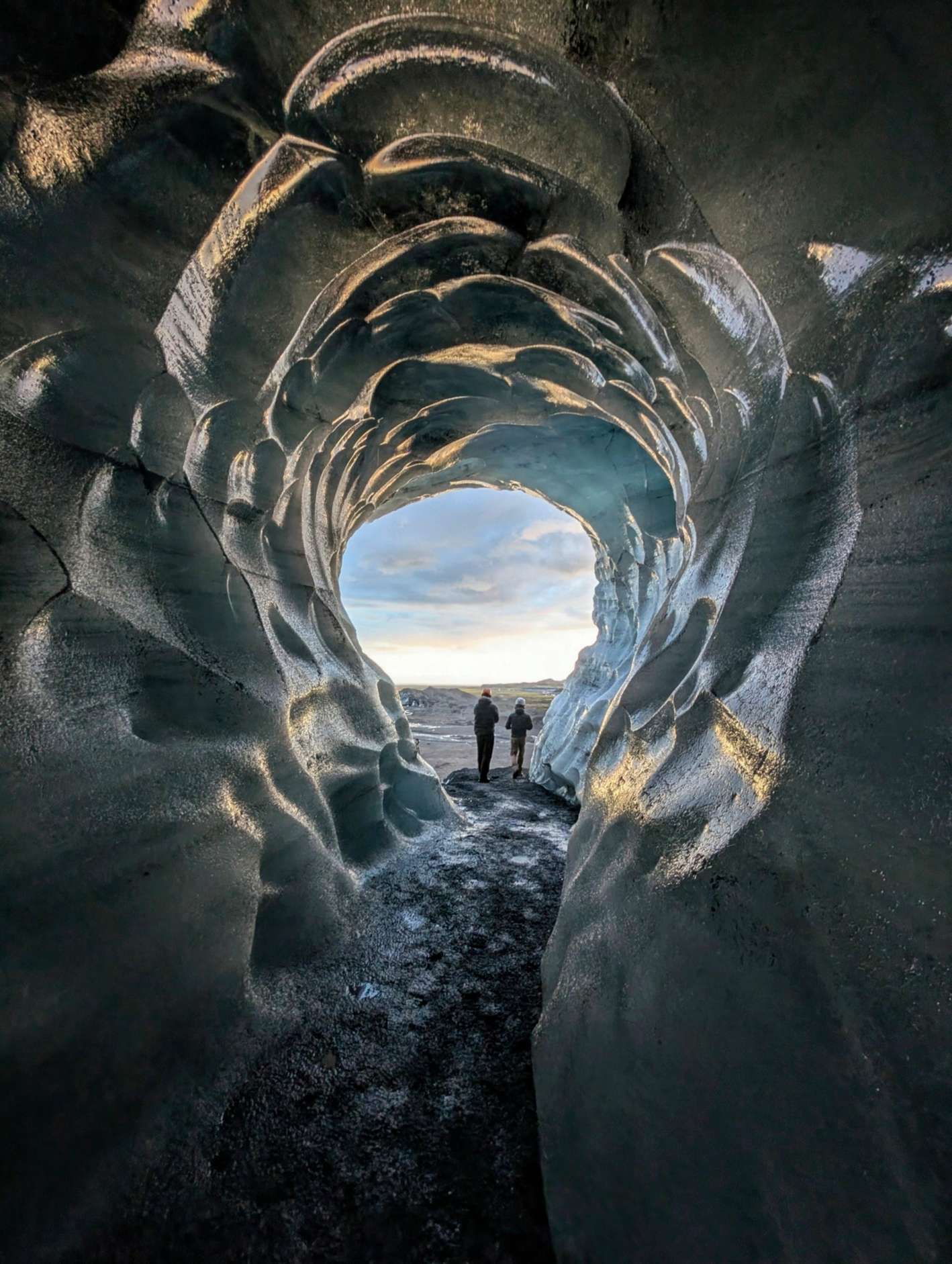
Traveling with a private group? Compare custom trips that run in winter and summer alike.
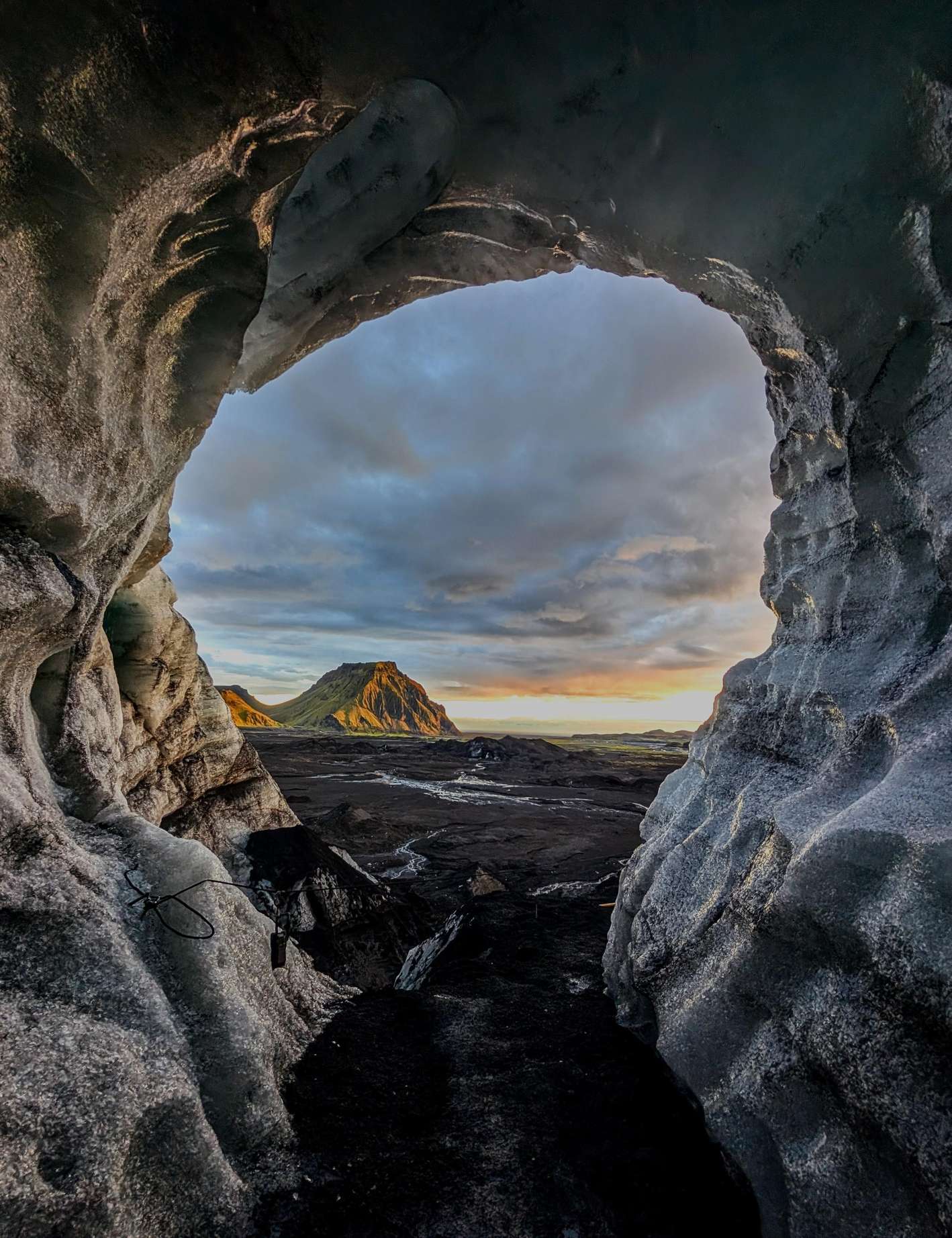
Hate big buses? Find small-group departures that keep the glacier visit relaxed in peak season.
Want more time on the ice? Pair a cave visit with a guided glacier walk on your dates.

Short on days? See how a helicopter trip adds a glacier landing to your seasonal plans.
Visiting Katla in July or January? Check current conditions and tour options for the cave near Vík.
Driving yourself? Learn why a rental car cannot reach the Katla trailhead and how to get there instead.
Unsure between summer and winter at Katla? Get a month-by-month read on the best time to go.
Bringing kids or dealing with knees? Check age limits and difficulty before you pick a season.
Meltwater drips inside the cave year-round. See what to pack for a summer or winter visit.
Torn between Katla's black-ash ice and the sapphire blue of Vatnajökull? Compare the two caves.
Filling the rest of your route? Browse waterfalls, beaches and other South Coast activities.
Prefer a smaller coach from Reykjavík? Find full-day South Coast trips with fewer seats.
Crampons and ice axes your thing? See South Coast glacier hikes that run in any season.
Planning the drive between cave meeting points? Get the route map and realistic timing.
Storm closures can reshape a cave day. Check South Coast weather by month before you book.
Staying longer than a day? Get three-day itineraries that fit a cave tour and the coast.
cave stays around 0°C, even in july
Short answers to the month-by-month questions travelers ask most.
 Hvolsvöllur2026
Tours into Vatnajökull's natural caves generally start in early October, and the Crystal Ice Cave season at Jökulsárlón runs from around the beginning of November through March. Operators scout and open fresh caves each autumn.
Yes. The Katla ice cave runs year-round, including July and August, and the man-made ice tunnel on Langjökull is open in every month too. Most natural caves in Vatnajökull are not open in summer because meltwater makes them unstable.
You can. Katla stays accessible through late summer, while many Vatnajökull caves near Jökulsárlón are not yet stable or open that month. A Katla tour from Vík is the usual September choice.
Yes, at Katla and at the Langjökull ice tunnel. July is the milder and brighter month, with an average high around 10°C and long daylight, though tours are busier than in midwinter.
Those caves are carved by meltwater, and in summer the flow fills them with water. Winter cold reduces the flow and strengthens the ice, so tours run from October or November through April.
It sits in the upper part of Kötlujökull, where the risk of sudden flooding is lower than in caves formed beneath the glacier, and layers of volcanic ash insulate the ice and slow melting.
December through February. Steady winter cold holds the cave in shape, dense deep ice gives the richest blue, and overcast light can make the colour look even stronger than hard sunshine.
It is worth visiting in either season. Summer is milder, brighter and busier; winter brings far more snow and a colder, quieter cave. The cave changes from visit to visit, so no season promises a particular look.
Guides check temperature and wind in the days before a visit and on the day itself, and look at the entrance ice. Water, loose material, broken ice or ceiling cracks mean the cave is skipped; guides scout the openings and adapt routes as the ice shifts.
No. A licensed professional guide is required to visit a natural ice cave safely and legally, and access inside Vatnajökull National Park is guided and permitted. Tours include the guide and safety gear such as crampons and a helmet.
In winter, wear warm layers, a waterproof jacket and ankle-supporting hiking boots with a firm sole. In summer, a lighter rain jacket works outdoors, but bring layers anyway: inside the cave it stays around 0°C, and your shoes can get wet in either season.
If the operator cancels for weather, safety or glacier conditions, you can reschedule or receive a full refund. The same applies when road closures along the South Coast prevent the tour from running.
ash layers keep the ice cool in july
Katla runs in every month, winter or summer. Cancel up to 24 hours ahead for a full refund, so your date stays flexible.