
Likely to sell out
12 hours·English
4.9(215)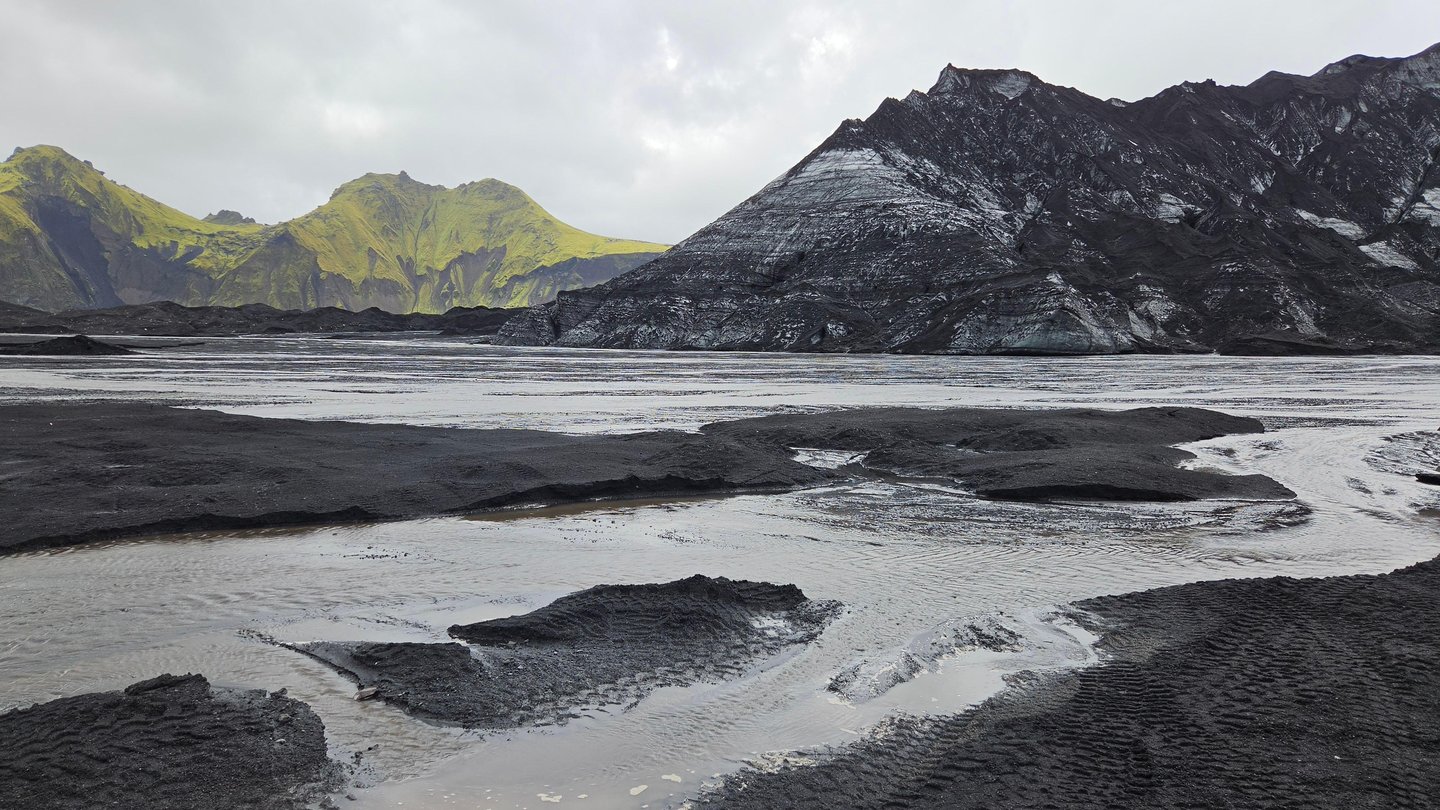
From Reykjavik: Katla Ice Cave and South Coast Day Tour
Free cancellationHotel pickup includedPickup and drop-off at Reykjavik
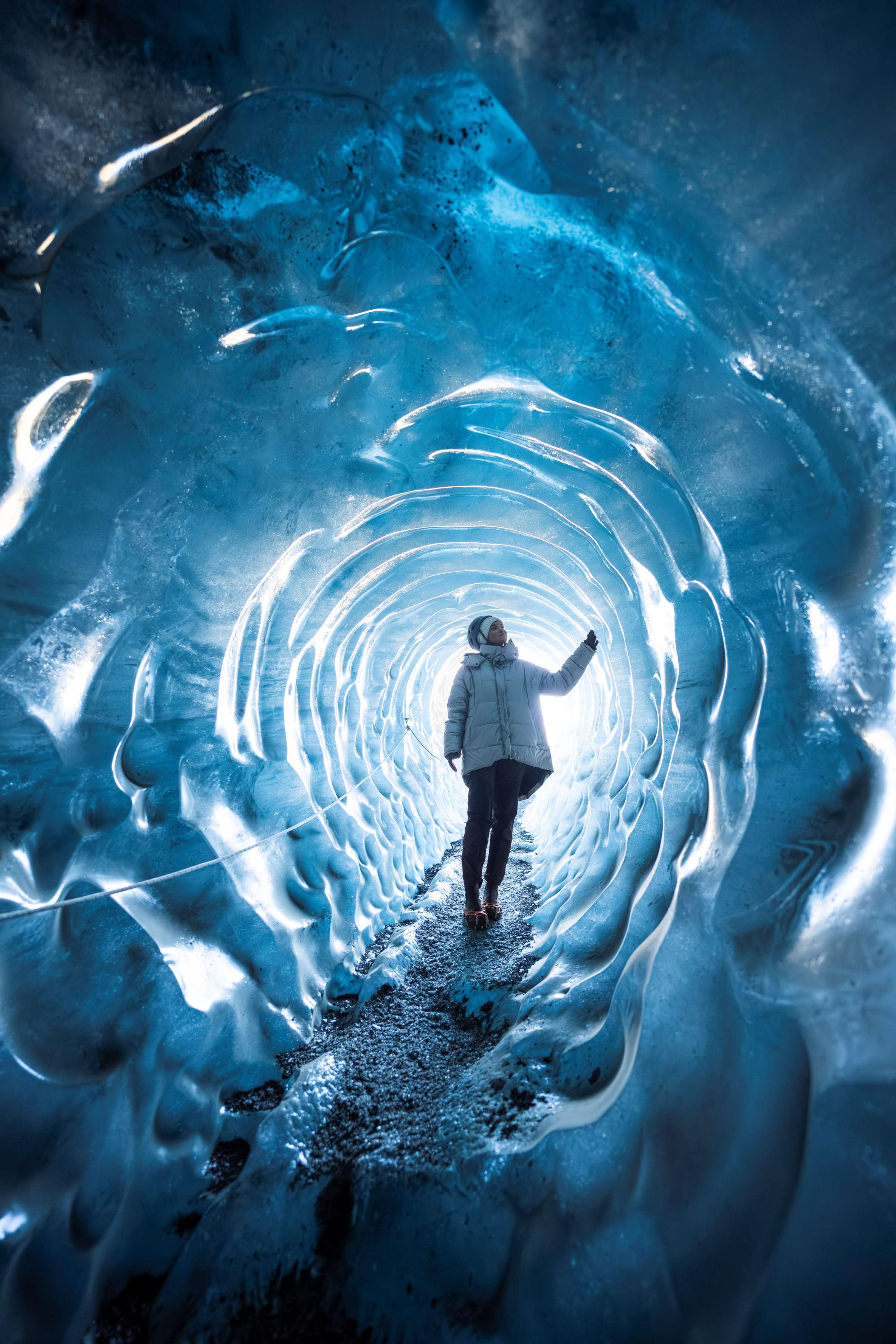
Layer up for the drips and pack the right boots, then let the guides handle the rest. Every Katla Ice Cave tour from Vík fits you with a helmet and crampons at the glacier edge. Book a departure, arrive warm, and step into the blue and black ice.
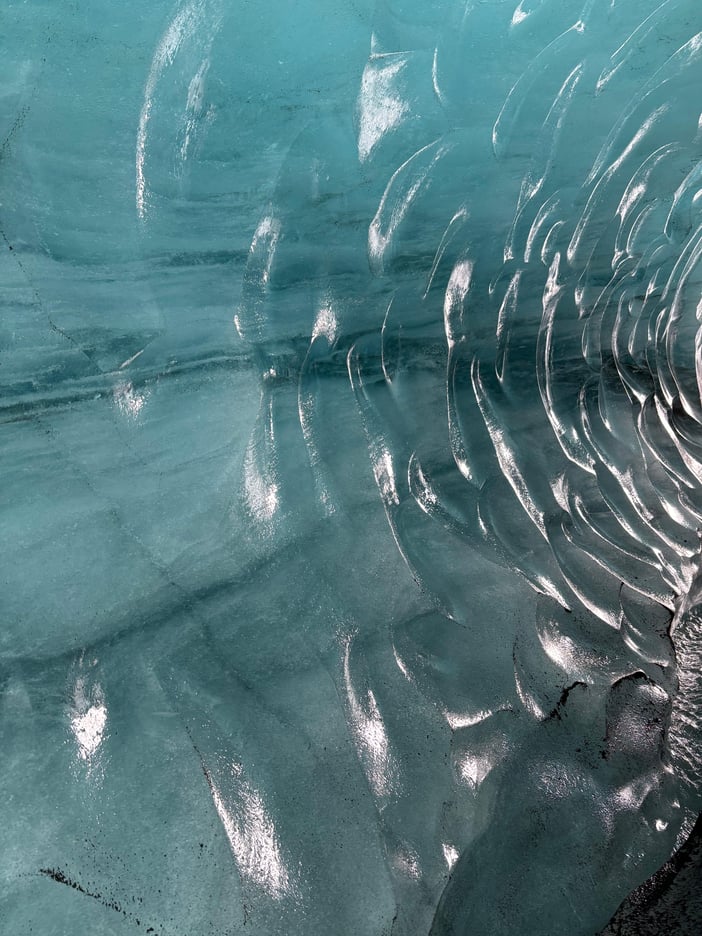
"Loved this trip! Our guide Alec was upbeat and knew so much. We'd happily do it again."
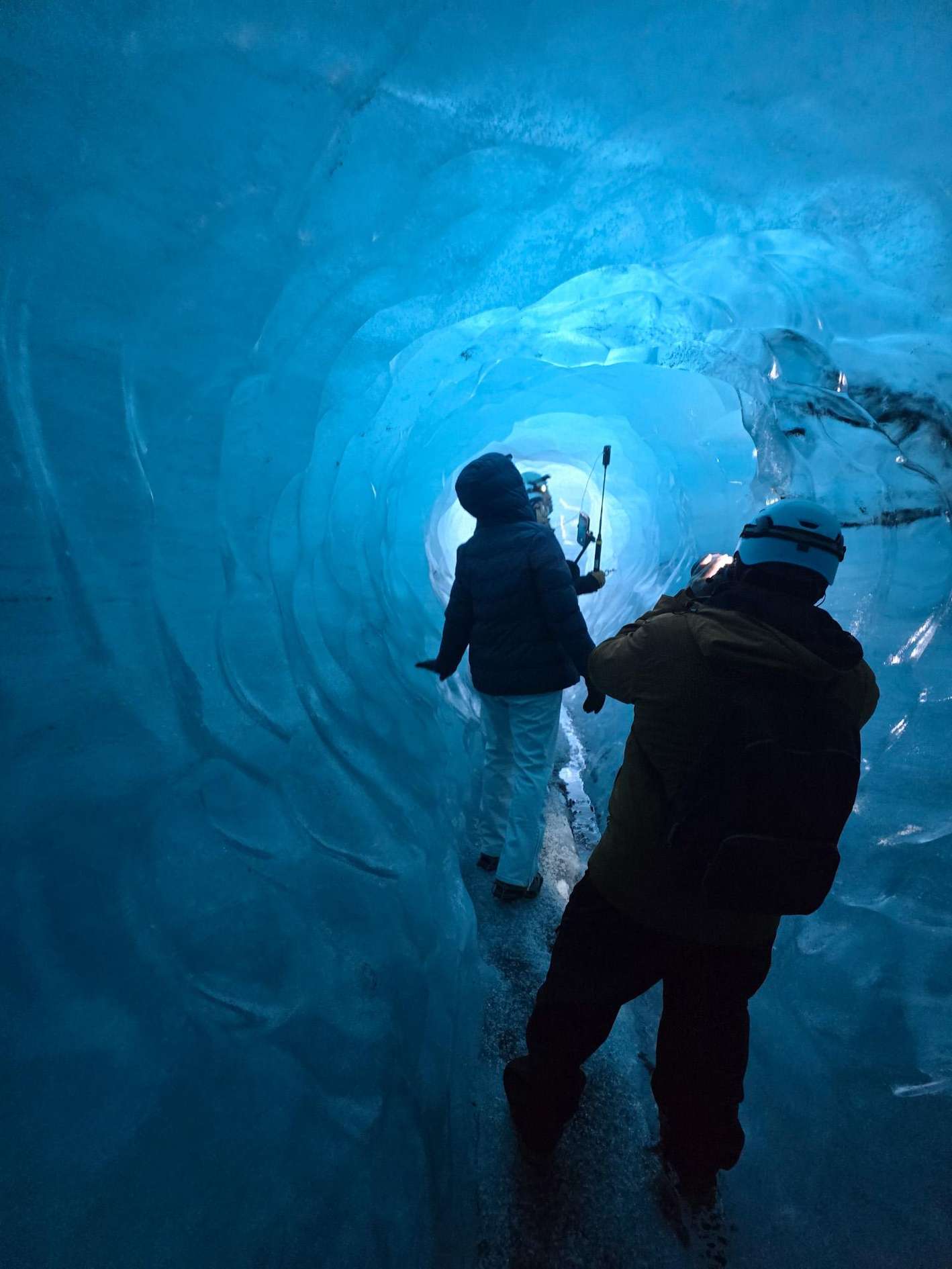
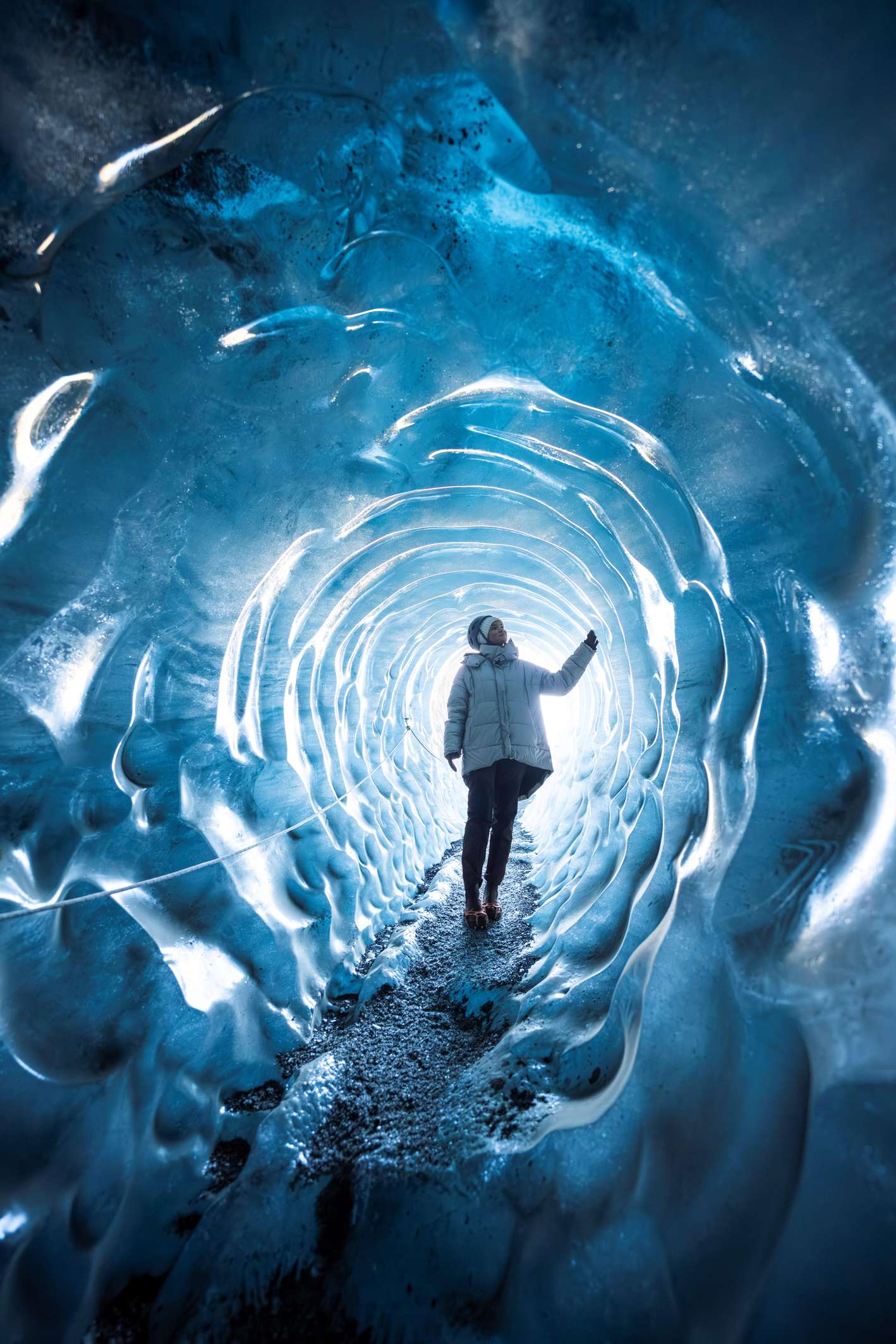
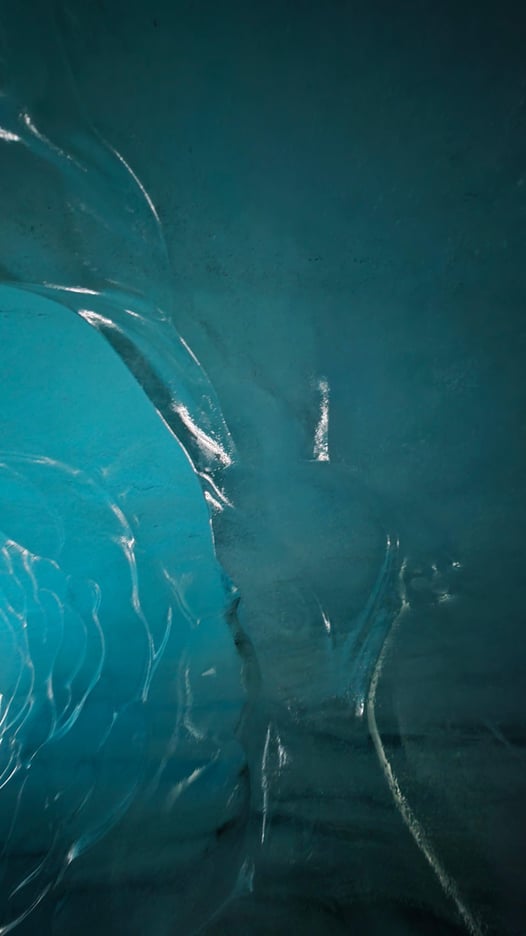
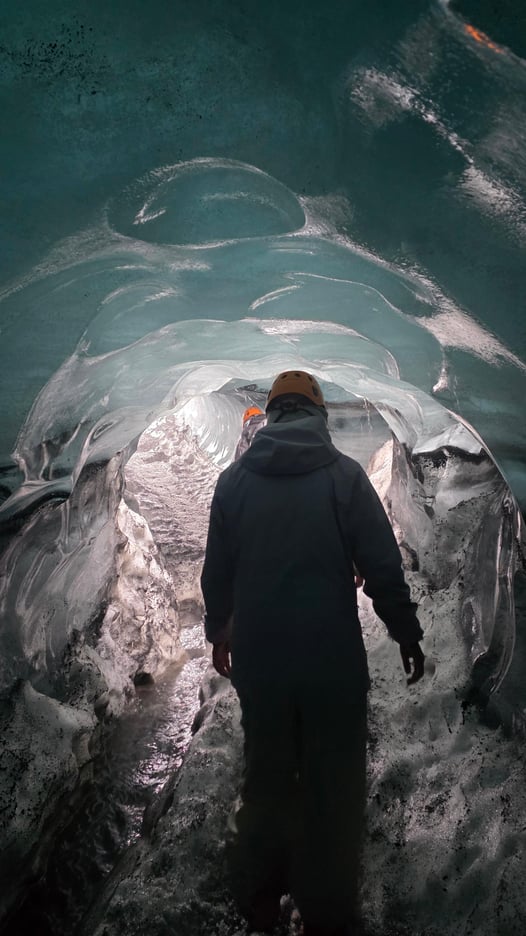
down jacket gets wet, stops insulating
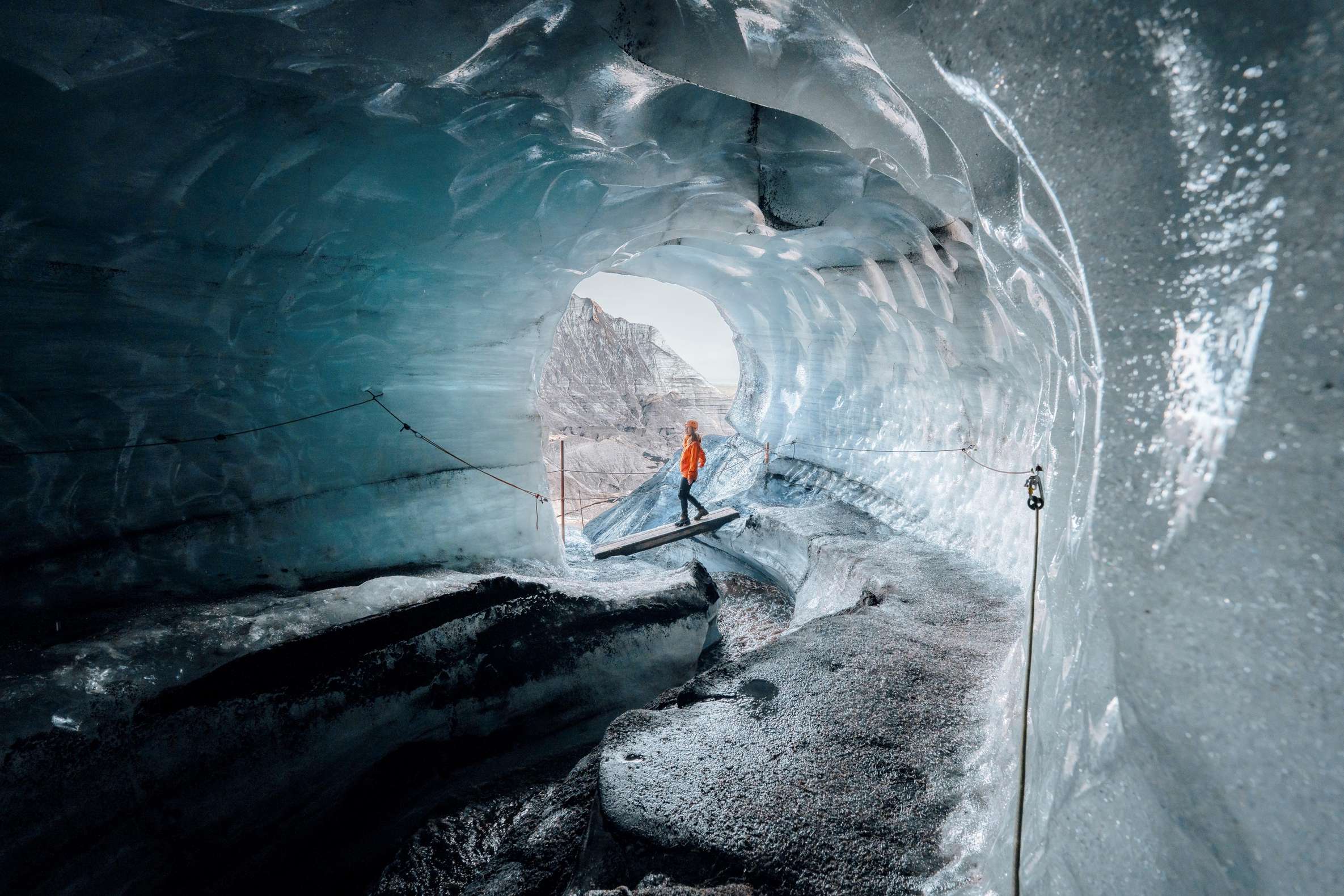
Inside Katla the ice sits at about zero degrees all year, and meltwater drips from the roof whatever the sky does. Warm layers, a sealed shell and stiff boots make that day a good one.
The cave holds near freezing all year, so pack for wet weather in every month.
Wear a wool or synthetic base layer, a fleece mid-layer, and a fully waterproof jacket and trousers over both.
Crampons strap only onto stiff boots with ankle support, and trainers fail the gear check on the spot.
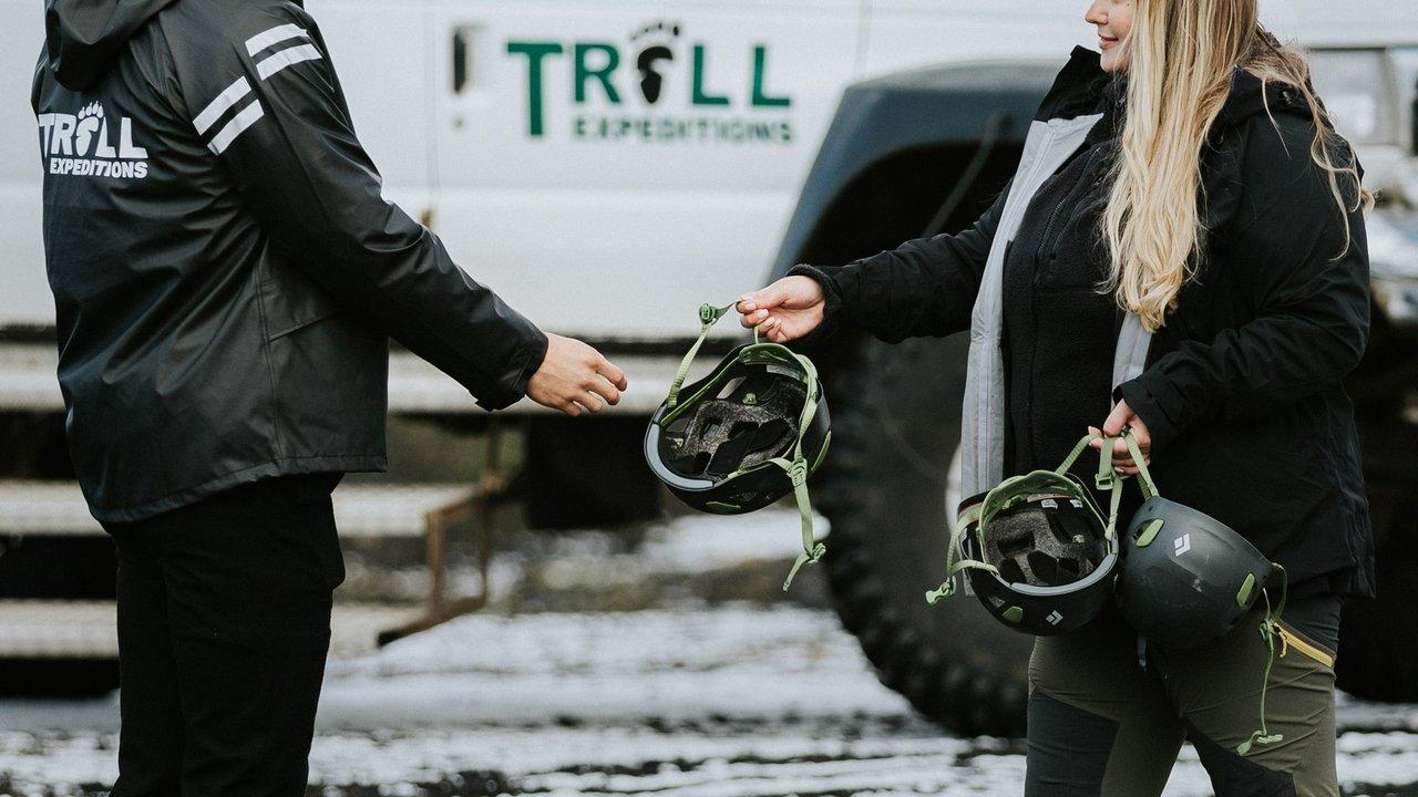
Every Katla tour from Vík supplies crampons, a helmet and a headlamp, fitted at the glacier edge.
Book at least a few days ahead in summer, and expect a reschedule or full refund if the operator cancels for wind or flood.
Wear or rent proper boots before your Katla tour. Crampons are supplied at the glacier edge, but they only fit rigid boots, so trainers will not do. If you arrive in soft shoes, one operator rents boots at the cave location, though relying on that risks a delay on a short 3-hour tour from Vík. Pack warm clothing and rain gear too, since meltwater drips from the cave roof.
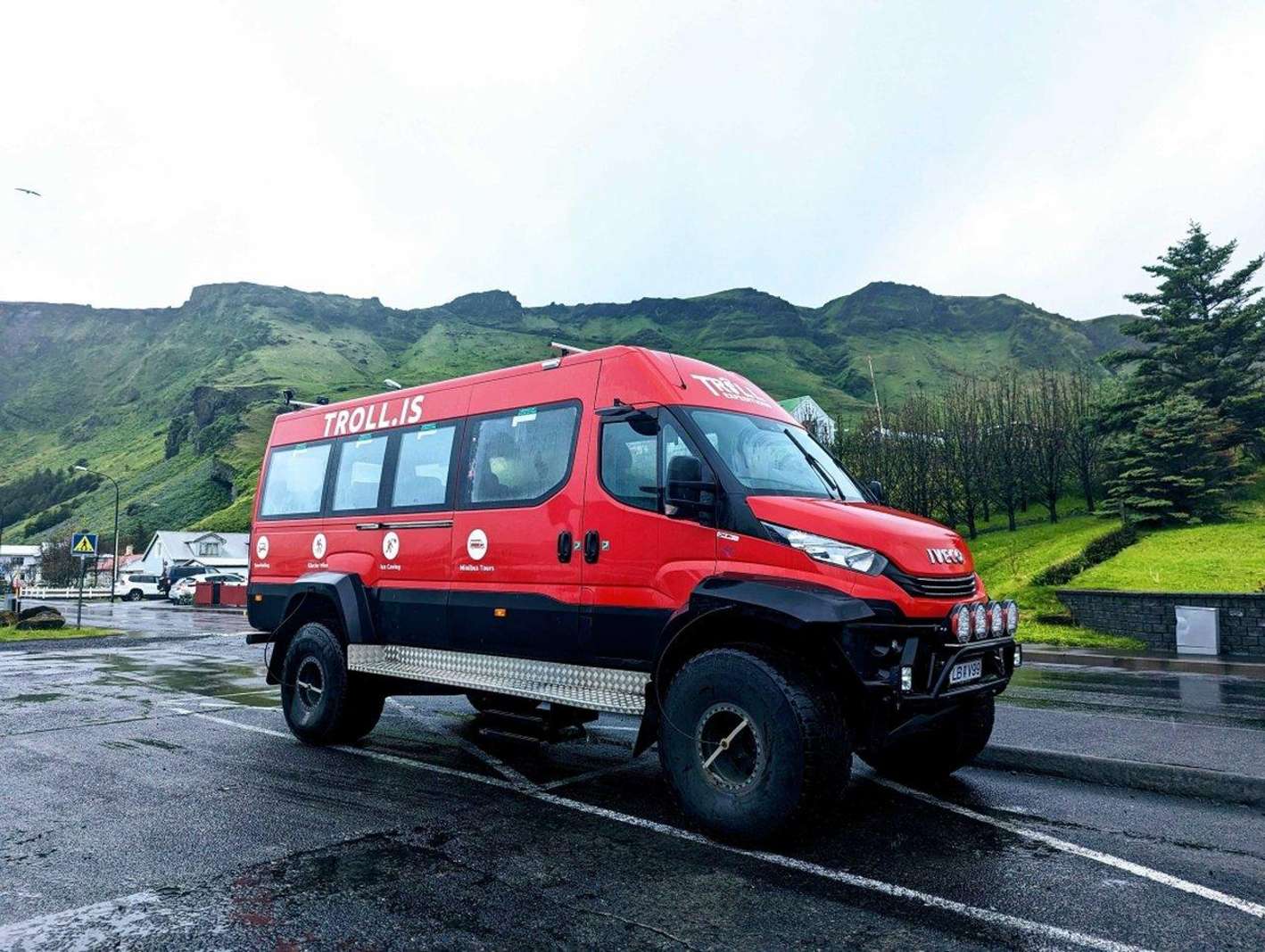
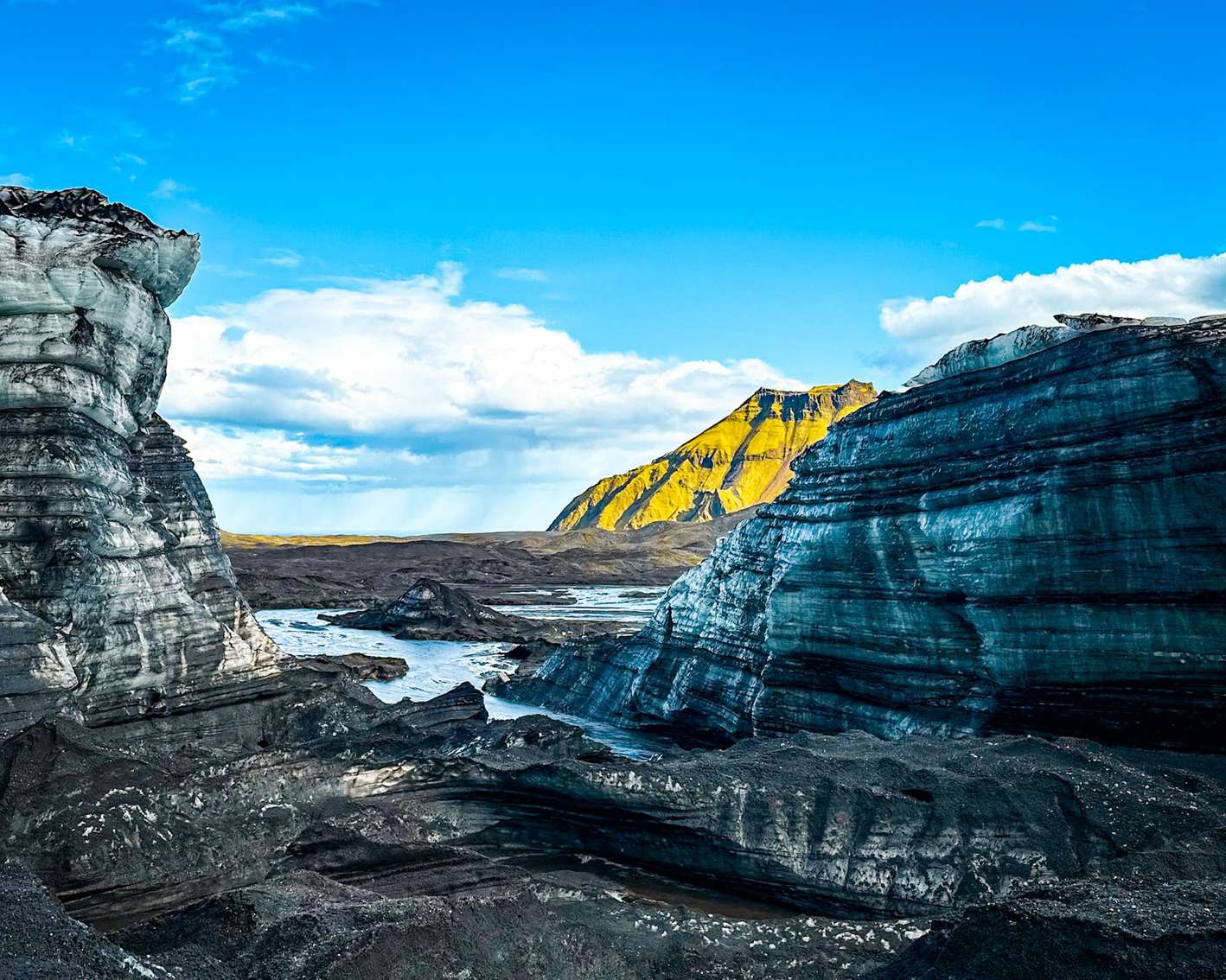
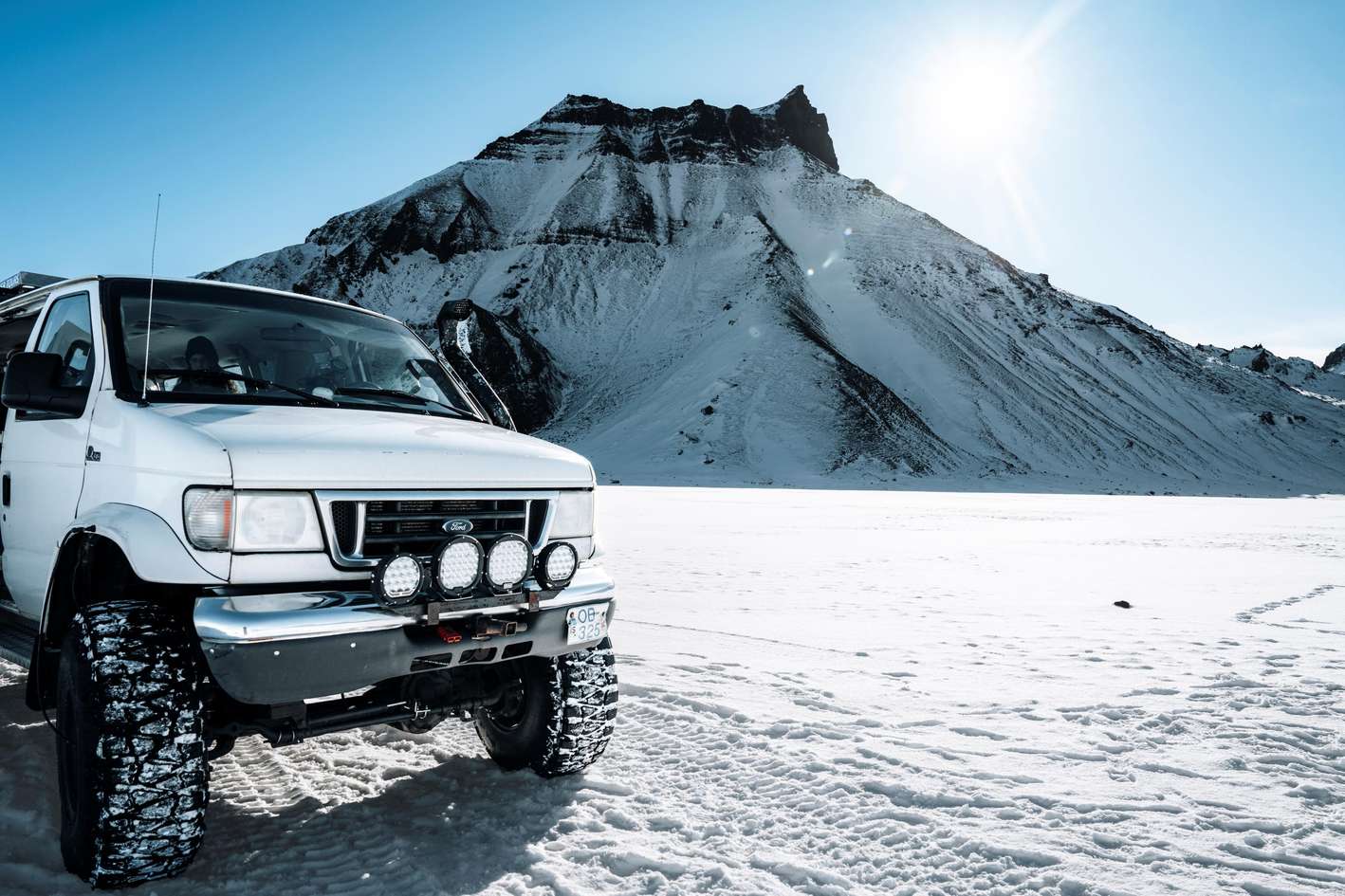
Route 1 carries you to Vík and no further. The last stretch to Kötlujökull crosses black volcanic floodplains and shallow streams, and only a specialized super jeep owns that ground. Every Katla visit, whatever you drive to town, ends with a guided departure from Vík.
That shapes your bag more than you would think. If you self-drive, you swap vehicles in town, so put the layers you want on your body or in a daypack, because the rest of your luggage stays with the car.
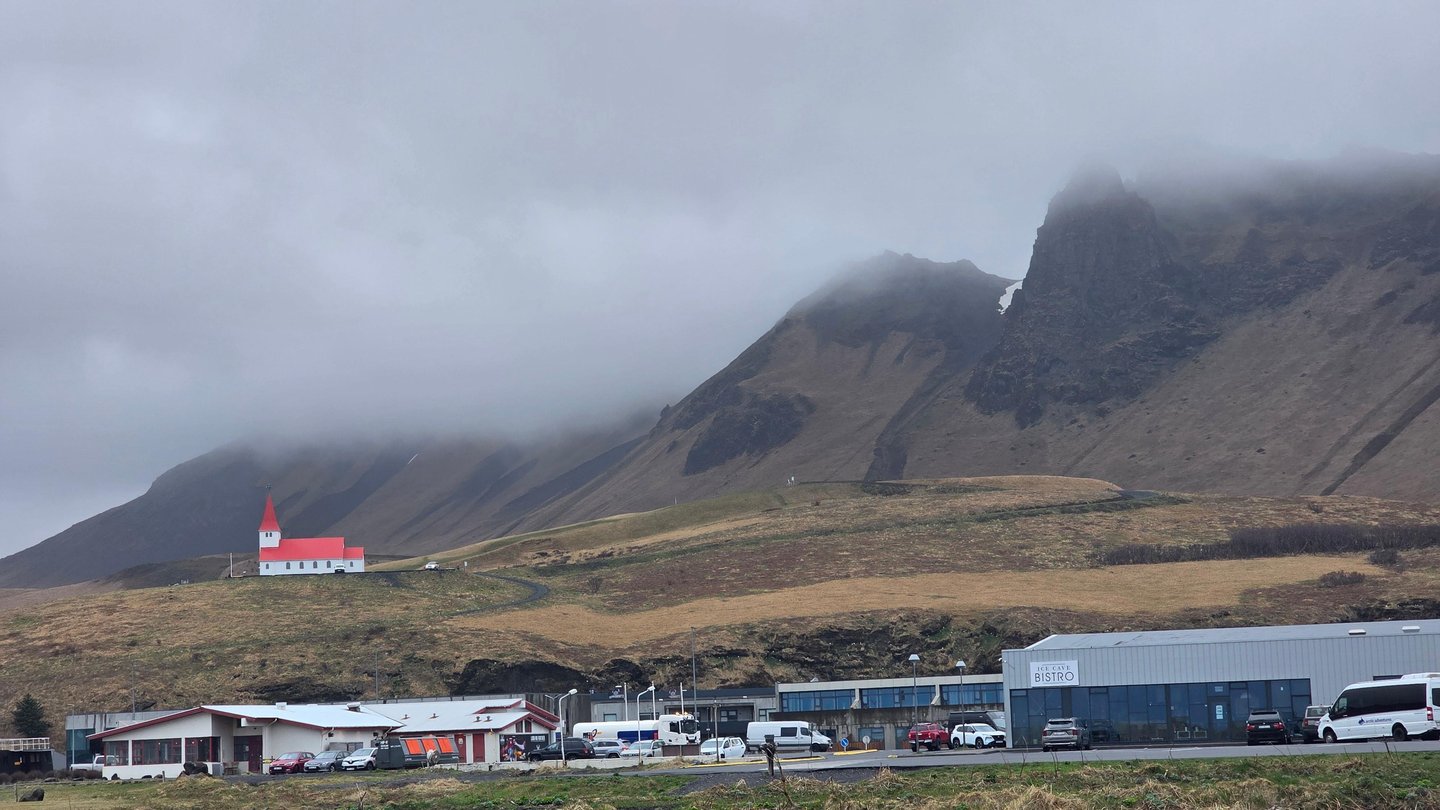
Arrive at your meeting point 20 minutes before departure to check in, and allow time to park. Tours meet around Vík's main buildings, at the Vík Inn or the bus lot behind the Icewear store.
The drive itself has traps worth respecting. Hellisheiði, between Reykjavík and Selfoss, ices over often, and the coast under Eyjafjöll takes sudden, violent gusts. The stretch east of Vík can close in winter storms, which strands you short of a meeting point entirely. Check road and wind conditions before you leave, and build in slack.
Three ways of getting there divide the difficulty sharply, and the difference decides how much driving you take on yourself.
Whichever way you arrive, the hour before departure in Vík looks the same: park, check in, and step out of the wind with your layers already on.
The cave sits at about 0°C all year. That single fact rewrites the packing question. In January, when the air outside can sink well below zero, the chamber is often warmer than the road you drove in on.
In July, when Vík's afternoons push past ten degrees, the ice feels properly cold against your hands within minutes of stepping in.
So dressing for Katla means wet and wind in every month. Rain falls on roughly one day in two near the glacier, month after month, and the south coast wind is what closes roads and cancels tours.
The month you choose shapes the air you wait in outside; the ice you stand on stays the same.
August is among the busiest months, with mild temperatures, frequent rain and no snow.
Tap a month to read it.
July is one of the busiest months, with the year's warmest average temperatures, frequent rain and no snow.
Tap a month to read it.
July is one of the busiest months, with the year's warmest average temperatures, frequent rain and no snow.
Tap a month to read it.
February is quieter than average, with near-freezing highs, below-freezing lows, frequent rain and snow.
Tap a month to read it.
April is quieter than average, with cool temperatures, frequent rain and some snow.
Tap a month to read it.
July asks for a fleece in the jeep and little more, yet the waterproof shell stays on the list every month, because the cave drips regardless.
Winter visitors should add a warm hat and thick gloves for the ride and the walk, when you are moving less and feeling the air more. For readers still weighing the months, the season chapter covers the cave's shifting shape through the year.
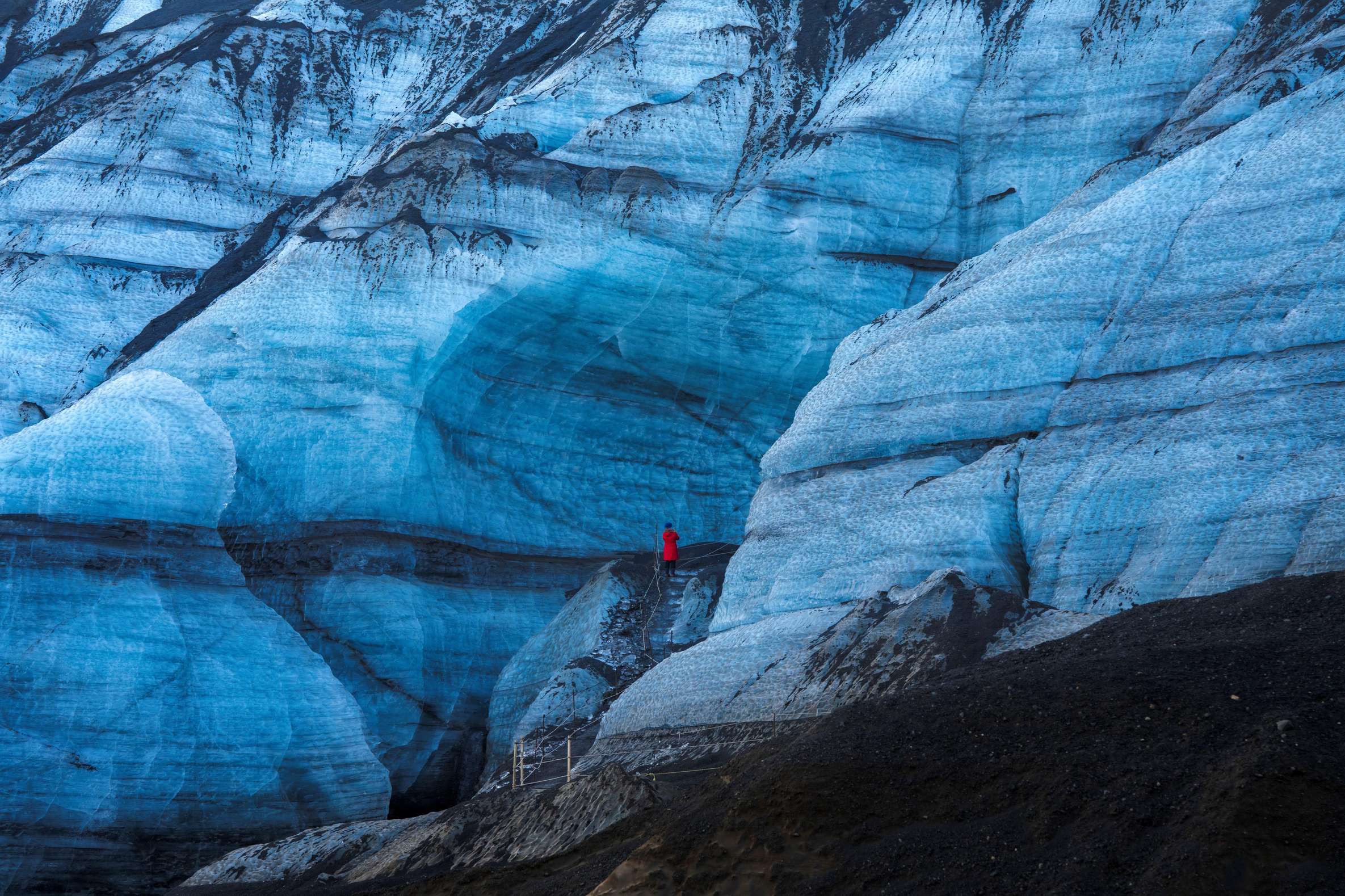
Start at the skin. A wool or synthetic thermal long-sleeve top and leggings hold your core warm while you stand still in the chamber, which is most of what you do in there.
Over that goes the insulating mid-layer: a fleece jacket, a wool jumper or a light down vest. The layer you will regret skipping is the waterproof shell, jacket and trousers, and chapter four explains why it earns its place twice over.
Then the parts that freeze first. Hands go into warm waterproof gloves, because the cave can soak them and you may grip rope handrails on the planks. Head into a warm hat. Eyes get plain sunglasses, enough for glare on the walk out; ski goggles stay at home.
Feet are a chapter of their own, covered below. Socks deserve a line here: melting ice and puddles soak footwear on the approach, so spare dry socks go in the bag.
Two things stay on the hanger. Jeans turn cold and heavy the moment they get wet, and wet cotton pulls heat out of you fast. If you want cotton bottoms at all, they sit under waterproof trousers, never on their own.
In the daypack: water, snacks and a camera, plus the spare socks. Everything you are not wearing stays in the jeep.
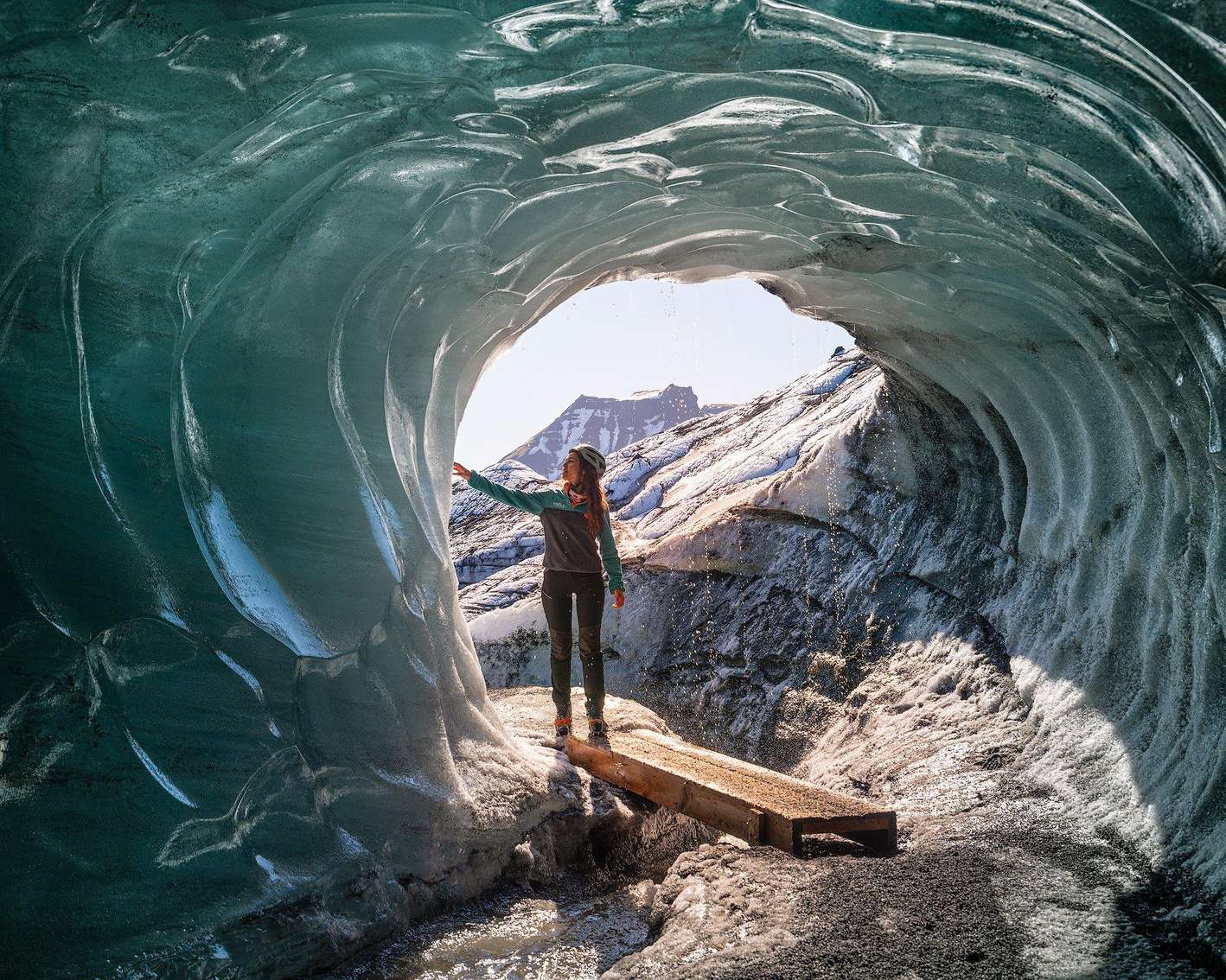
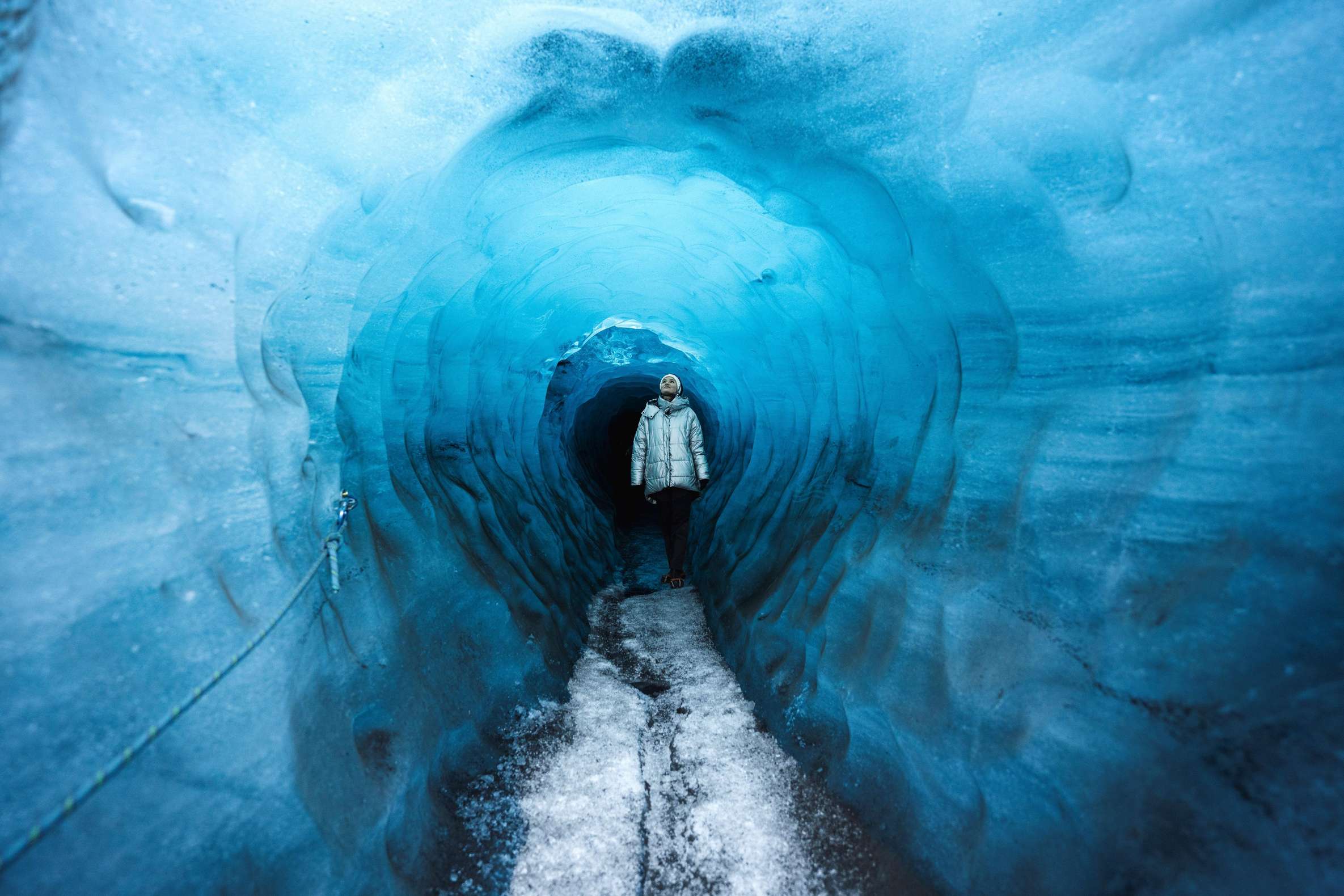
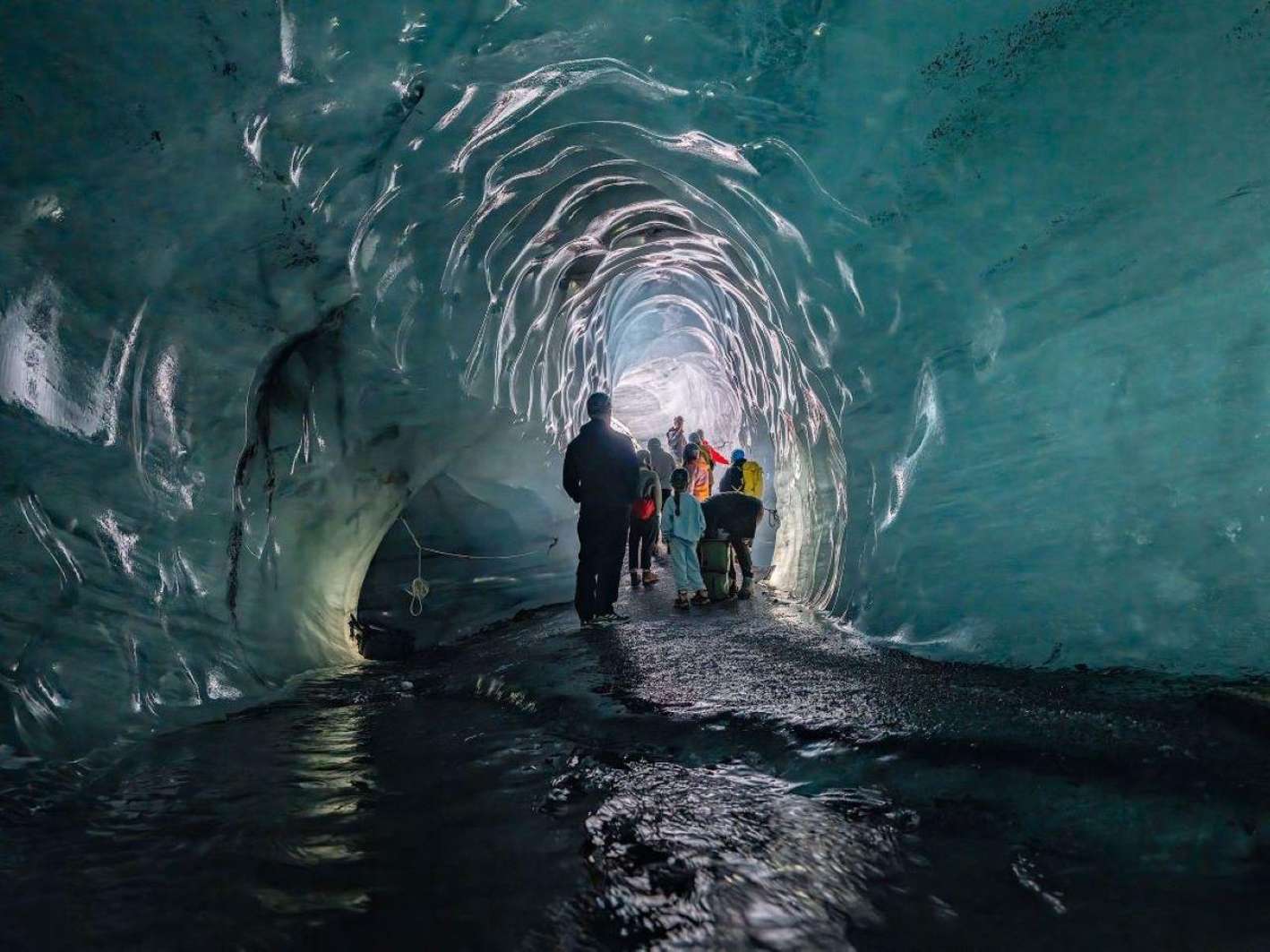
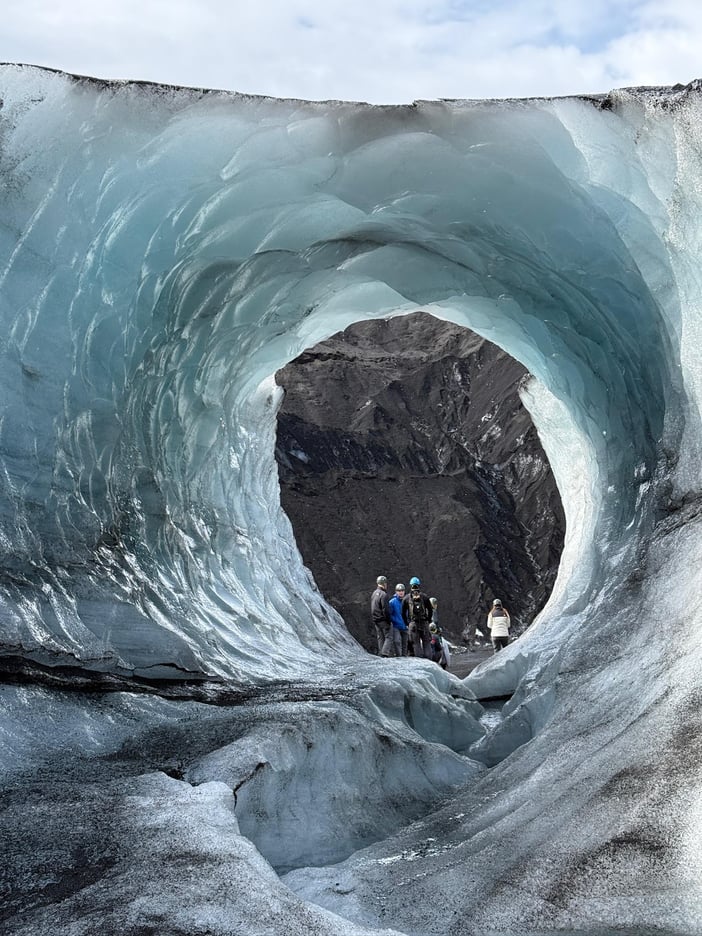
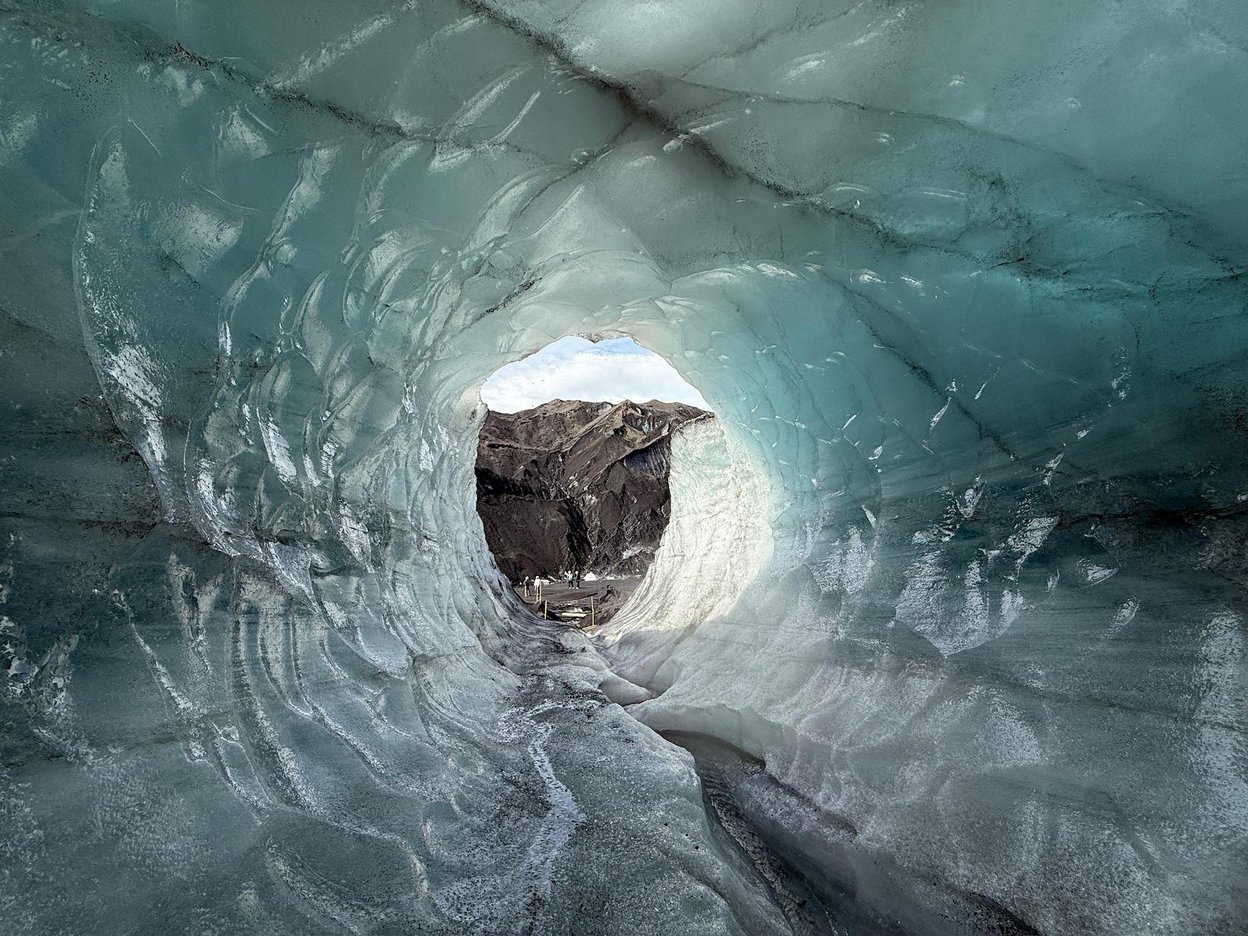
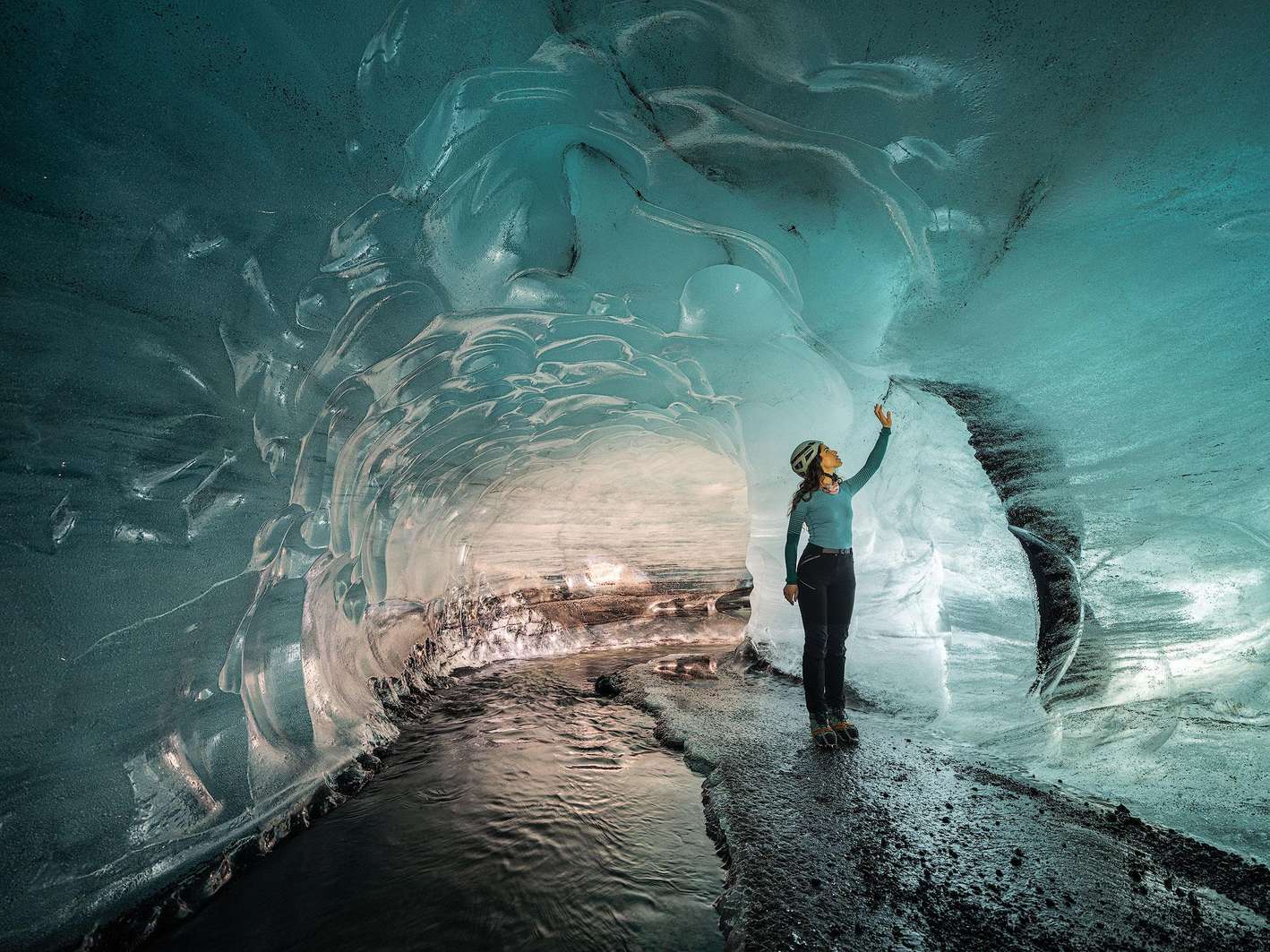
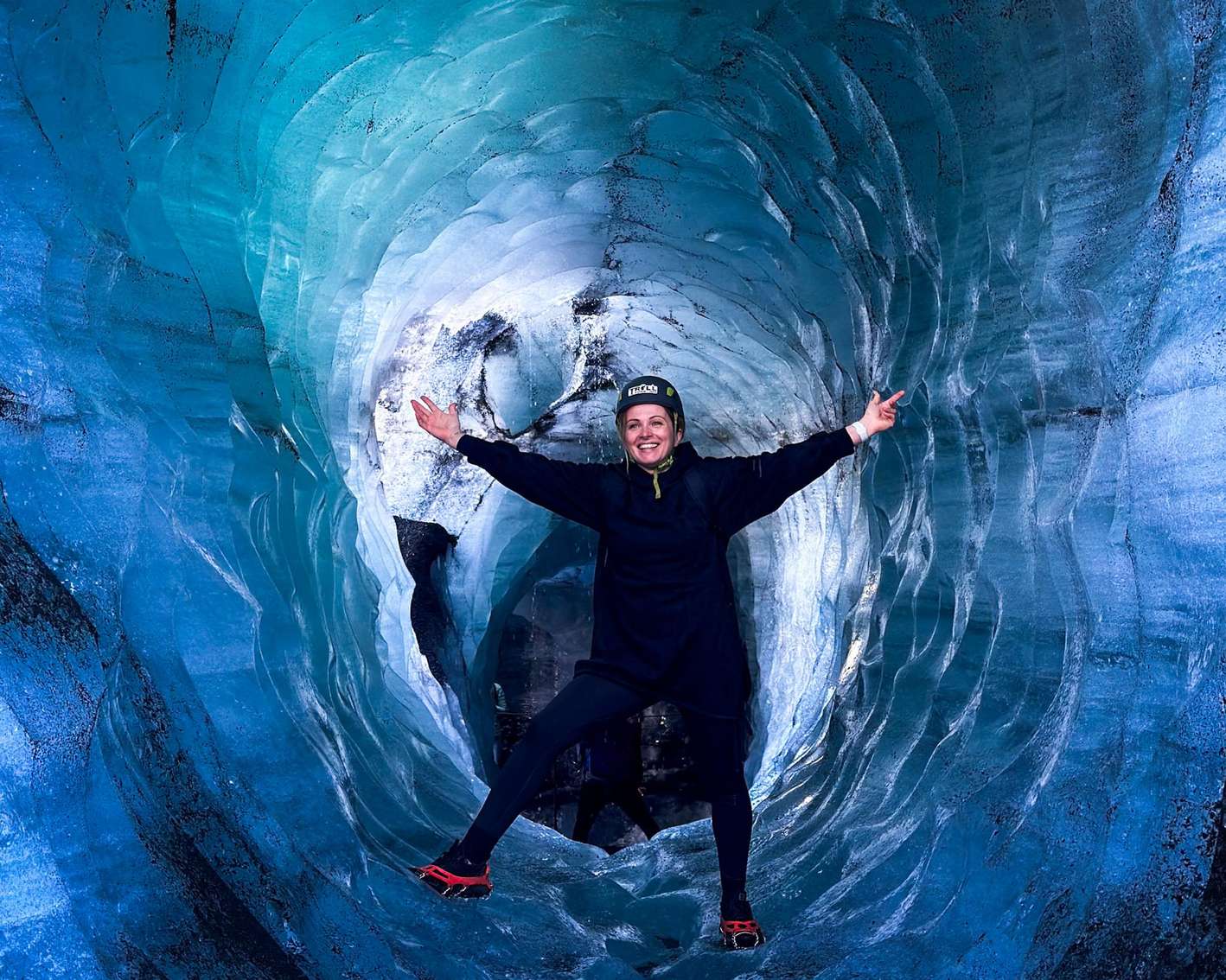
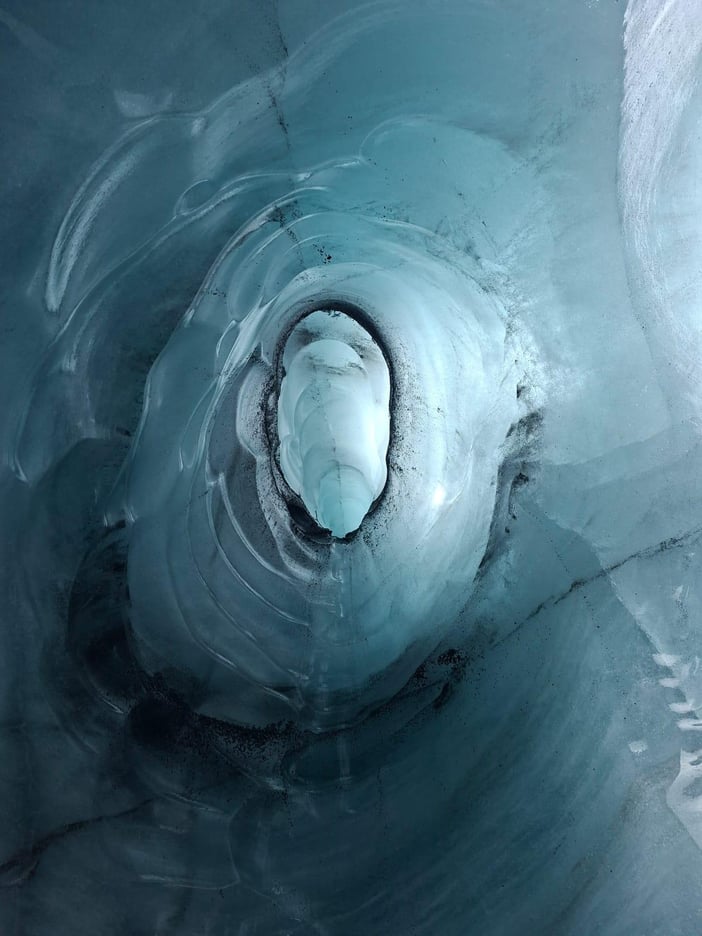
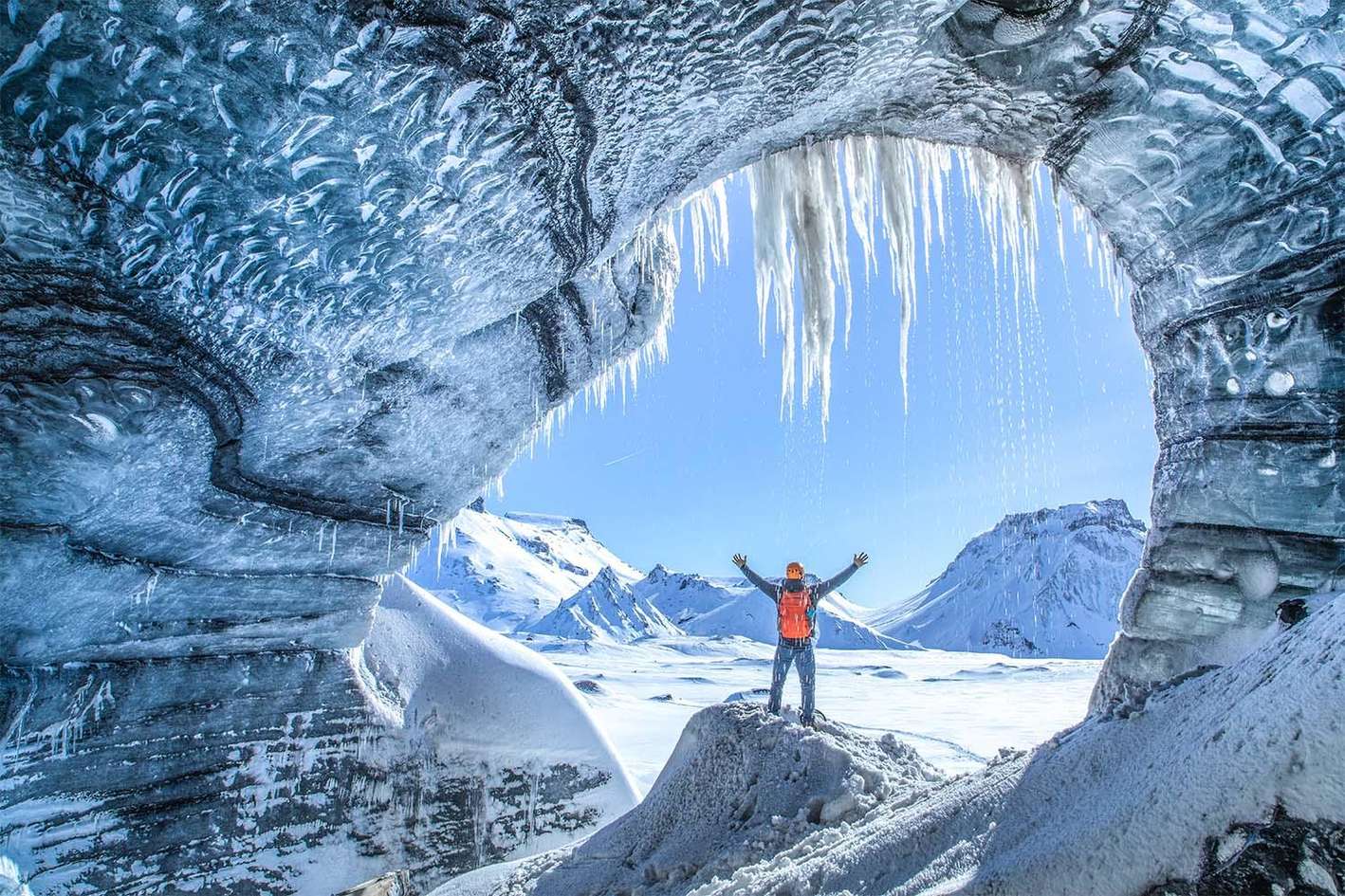
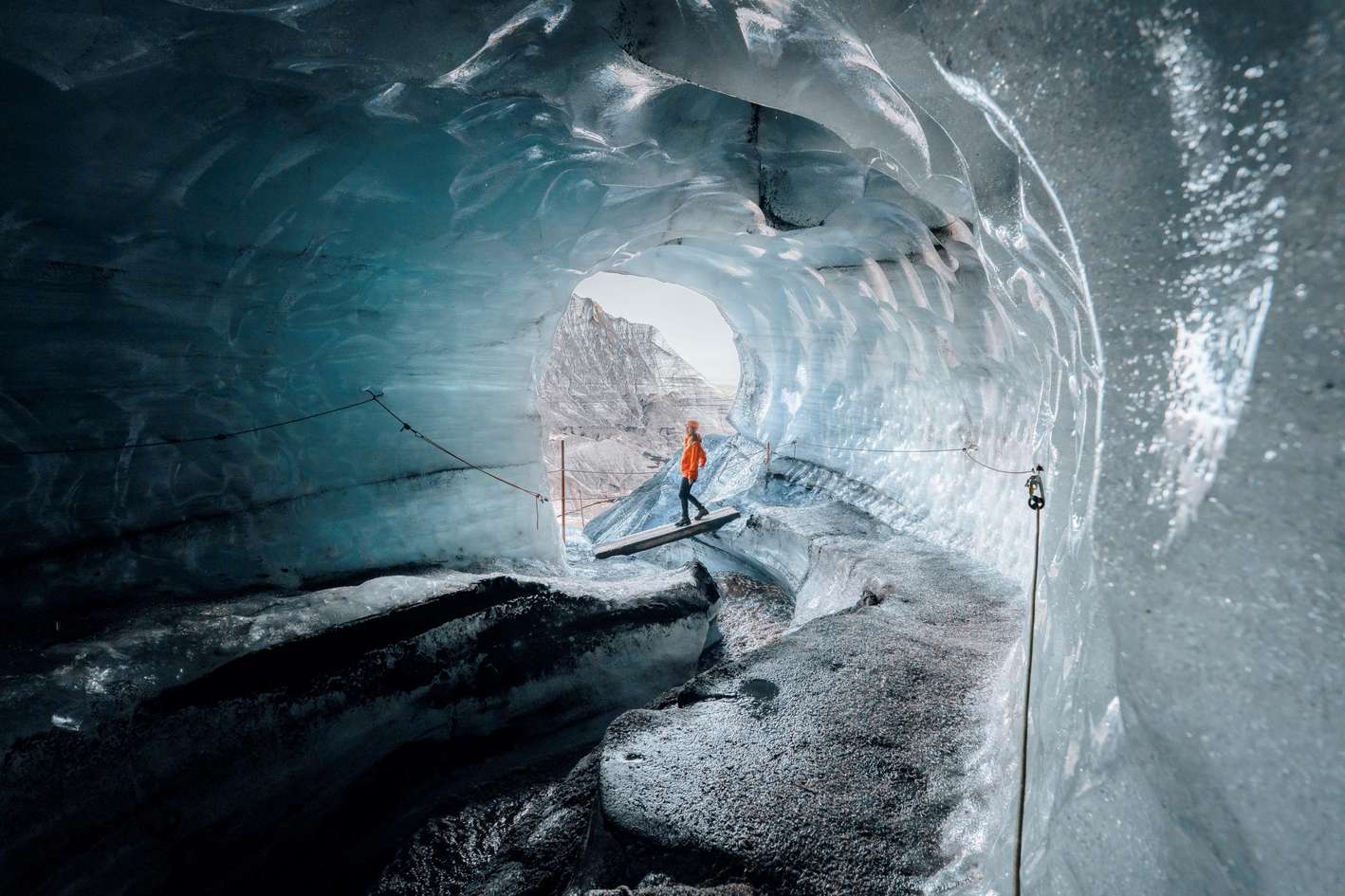
Step inside the chamber and look up. Water runs through the glacier, and the roof drips constantly, heavier along the edges and, on a sunny day, actively all over.
Travelers who went in ordinary water-resistant winter coats came out cold. A resistant fabric beads drizzle on a street; inside a live ice cave, the drip never stops long enough to matter.
The worse half of the story is what happens to insulation. A down jacket that gets wet stops insulating altogether, so the expensive warm coat you love is the worst possible single layer here. A cheap waterproof hard shell worn over your warm layers beats it every time.
The water is not clean, either. Katla's glacier carries ash from the volcano beneath it, and ash mixed with meltwater leaves clothes wet and dirty.
Wear things you do not mind staining, and keep a plastic bag in the daypack for the shell on the drive home. Camera gear wants the same respect: a sleeve or a hood over it keeps dripping water off the lens and electronics.
First-timers learn the shell lesson the hard way, and it comes down to three points worth knowing before you pack.
The cave drips constantly from the ceiling, and a resistant coat soaks through within minutes
If the filling gets wet it holds nothing, so wear the down under a shell or leave it home
A basic waterproof jacket and trousers over warm layers does the whole job
Once the shell is settled, the rest of the clothing list falls into place: a cheap waterproof hard shell over your warm layers covers the drip, the ash and the wind in one stroke, and nothing else in the bag has to be technical.
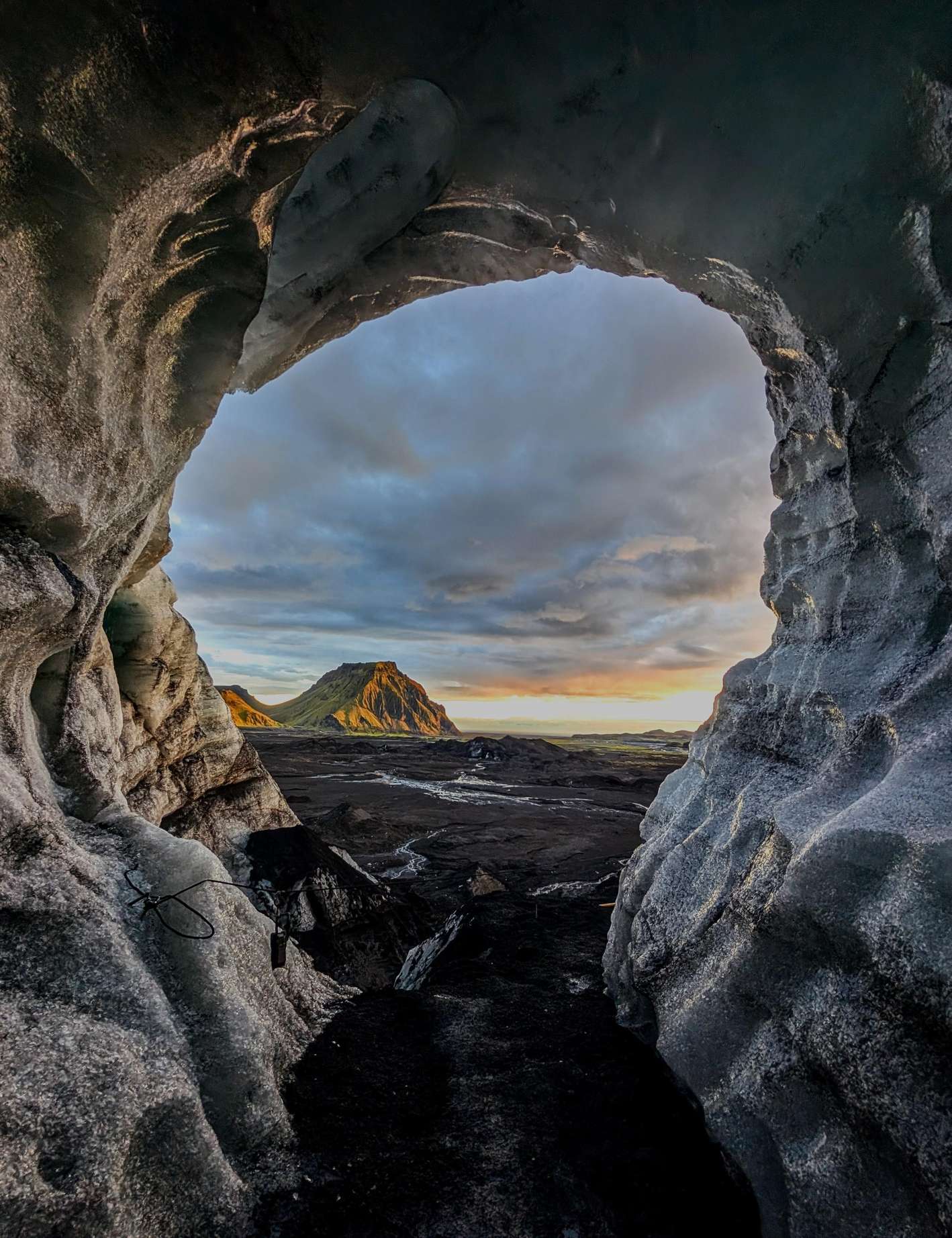
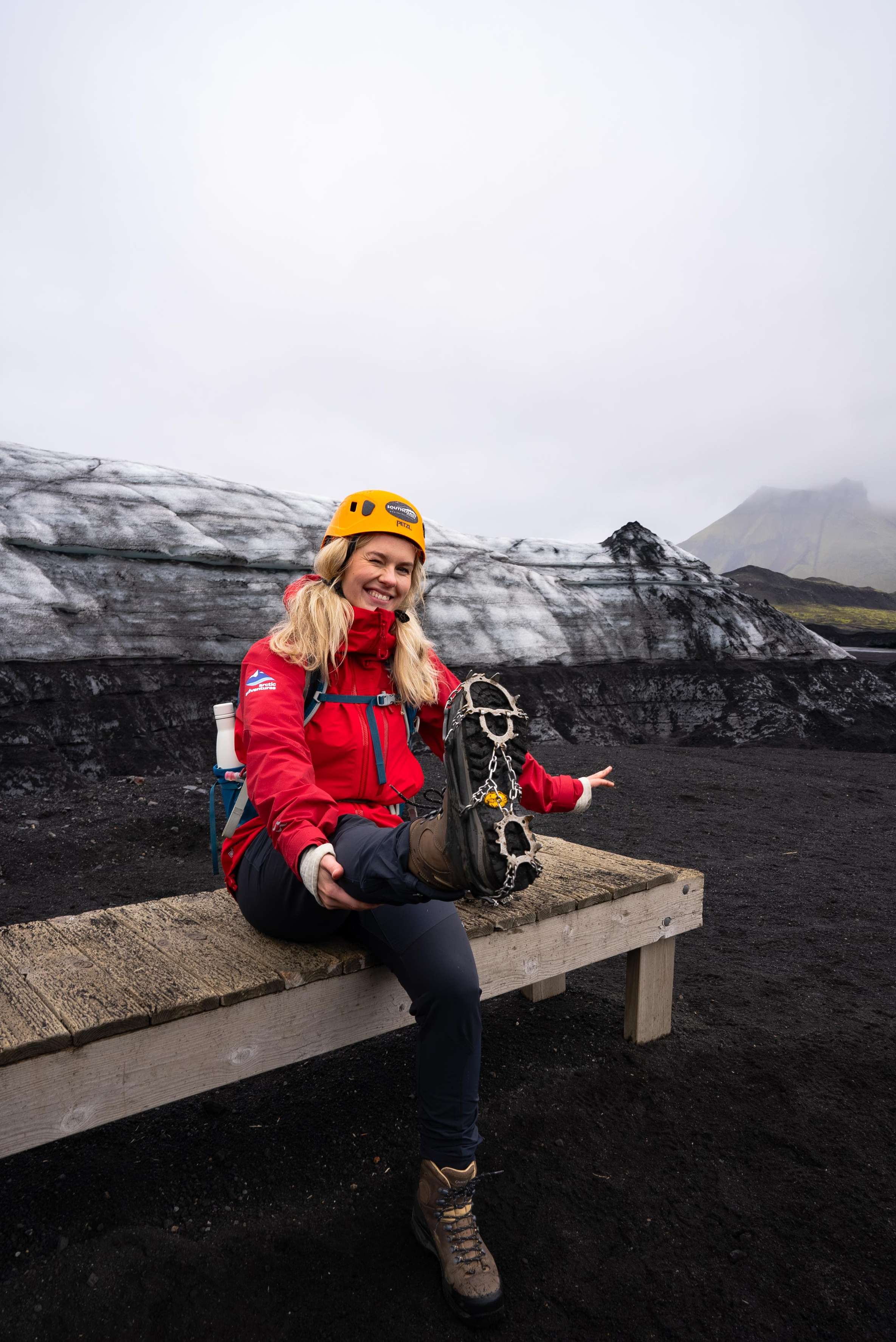
One rule at the gear check decides your footwear, and guides enforce it. Crampons are steel spikes strapped under the boot, and they only hold onto a sole that is stiff and an ankle that is supported.
Sturdy hiking boots with ankle support pass the check. Soft trainers fail it, and flat streetwear fails the same way, and one tour operator states its boot rule outright rather than leaving it to the briefing.
People arrive in running shoes every week and assume the short walk makes it fine. The walk is short, true, but it crosses uneven ground and glacier ice in fitted crampons, and a soft sole flexes exactly where the strap needs a firm edge.
Being turned away at the gear check is the outcome, and no argument undoes it.
If your own boots fail the test, the fix costs little. Suitable boots with reinforced ankle support can be rented at the glacier tour location, so the morning is salvageable, but renting in a hurry eats your buffer time.
If you are unsure whether your boots count, try them: a stiff sole you cannot bend in the middle, and a collar that grips above the ankle bone, is the standard.
They strap onto stiff ankle boots only, and flex under a soft sole
The gear check turns soft footwear away regardless of the walk's length
Rentals with reinforced ankle support exist at the glacier tour location
The cheap insurance is a five-minute test at home. Bend the sole and look at the collar the night before, and if the boot flexes or the ankle sits bare, sort a rental in Vík while you still have buffer time to spend.
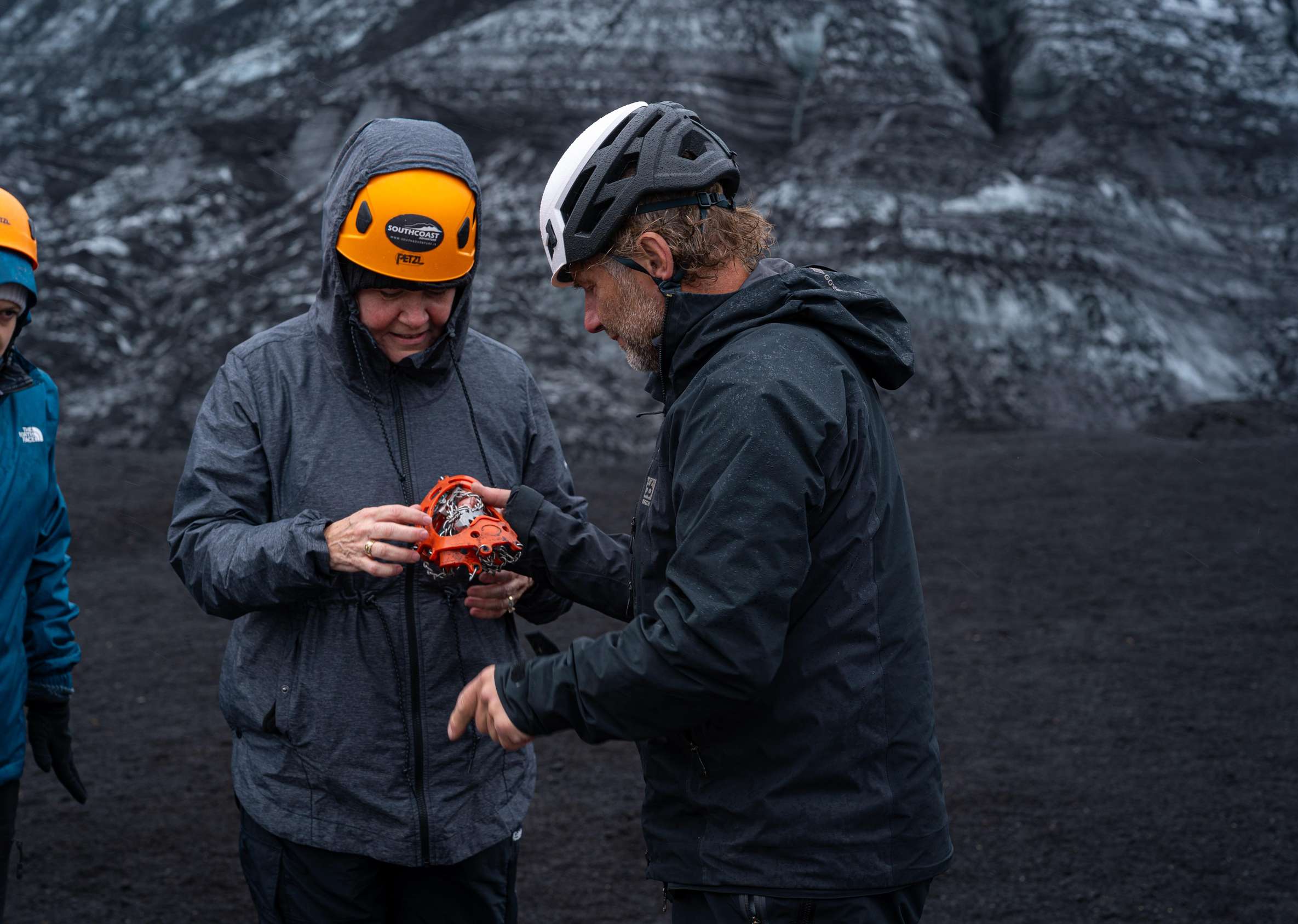
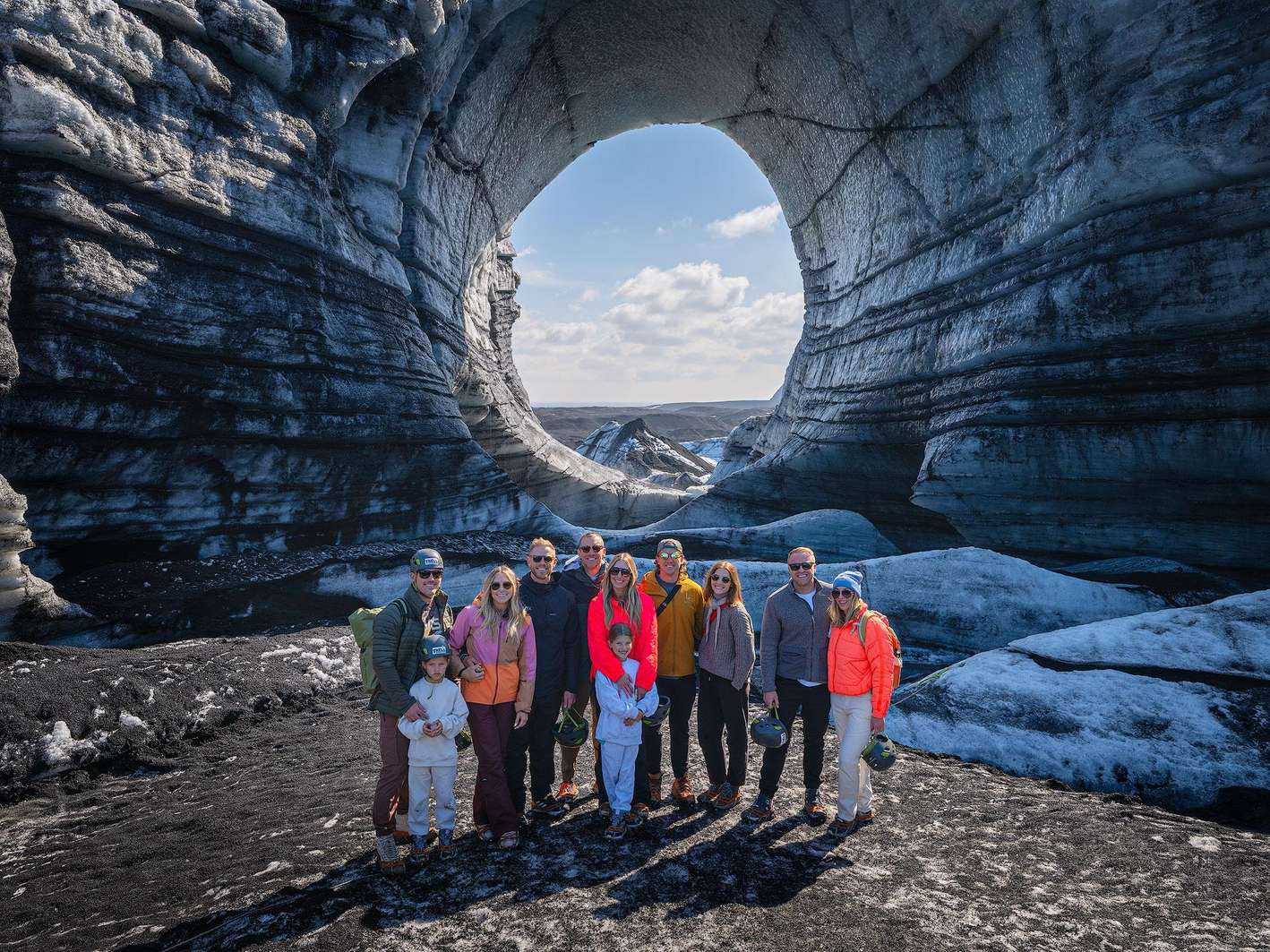
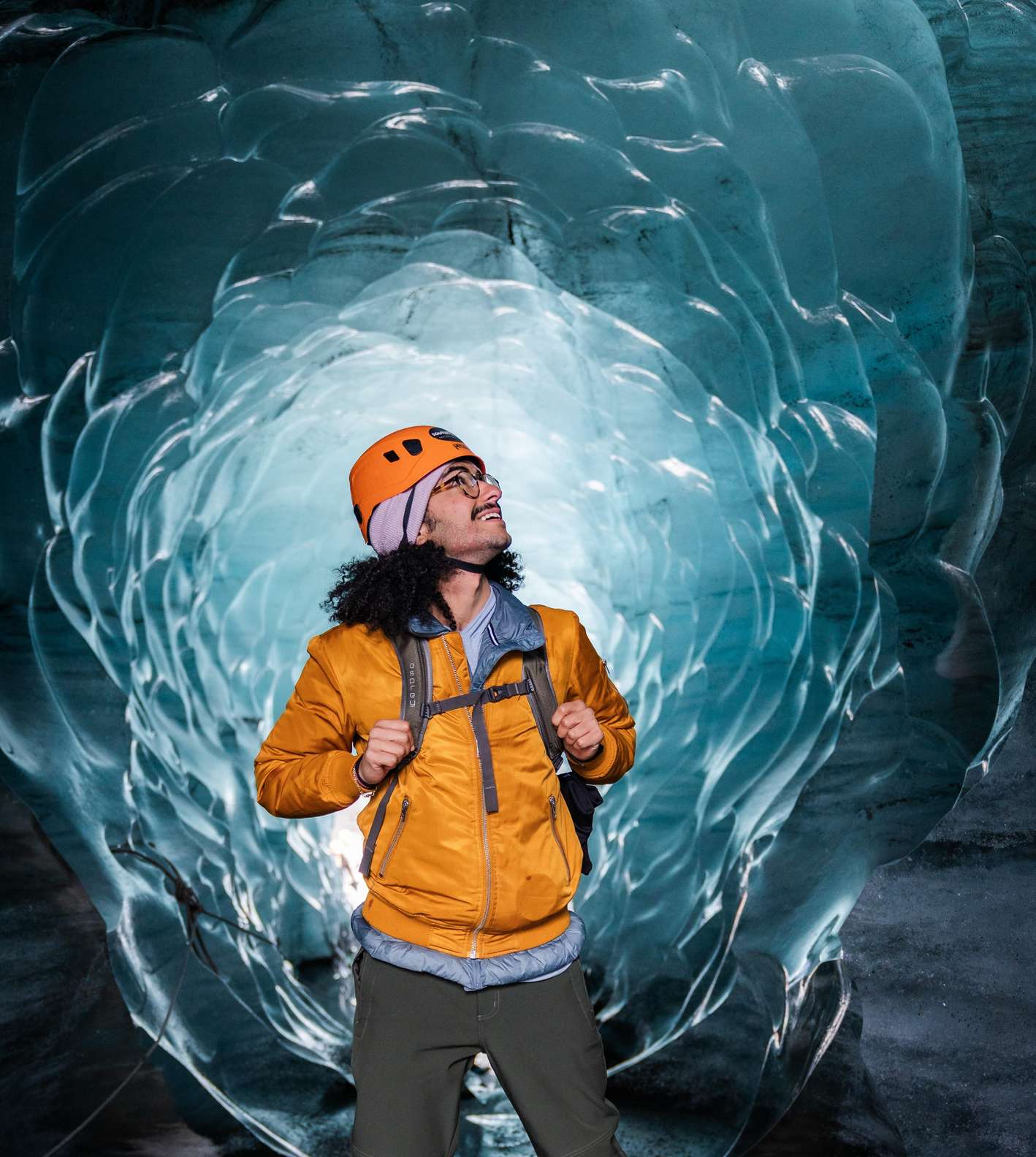
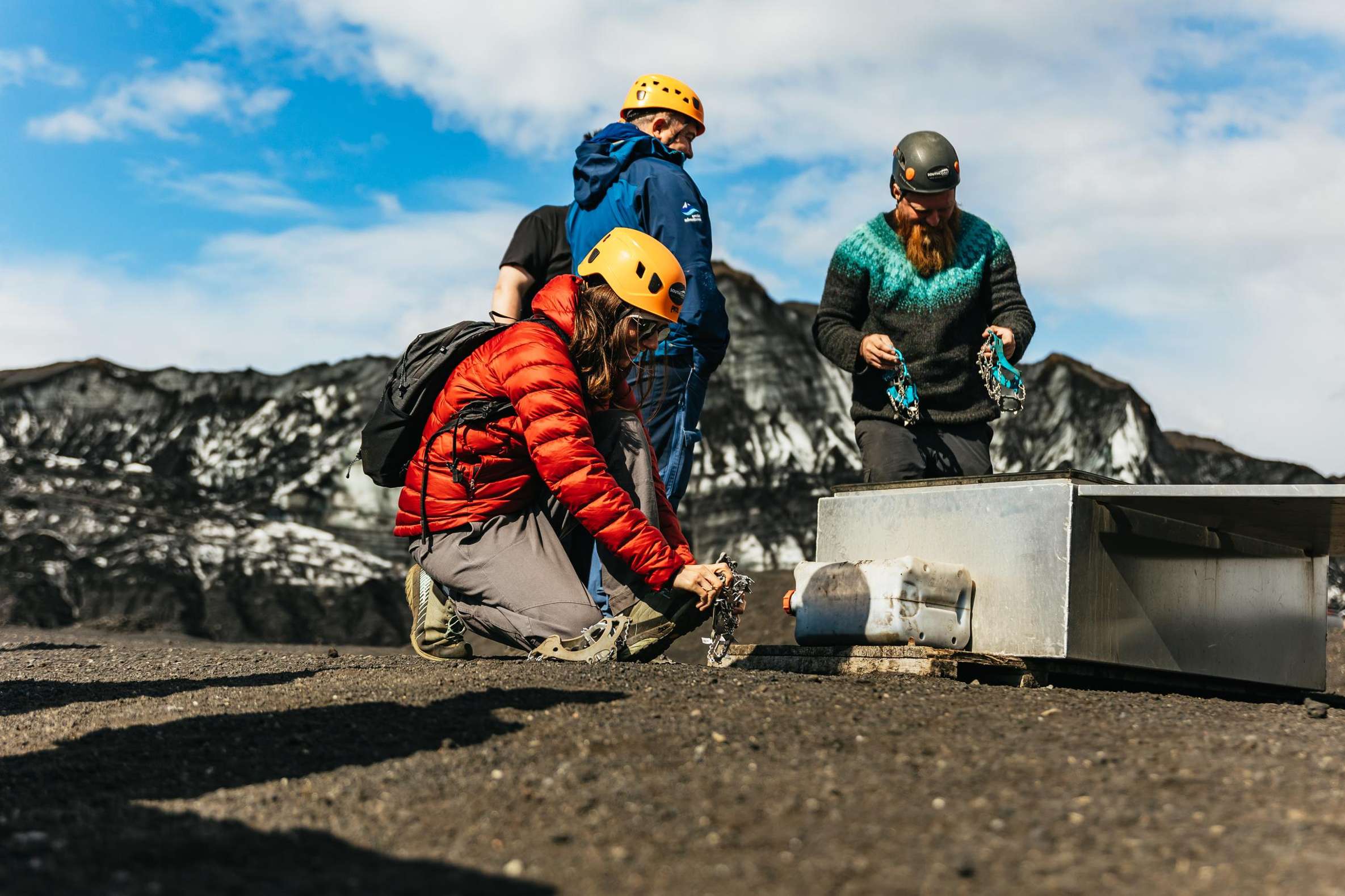
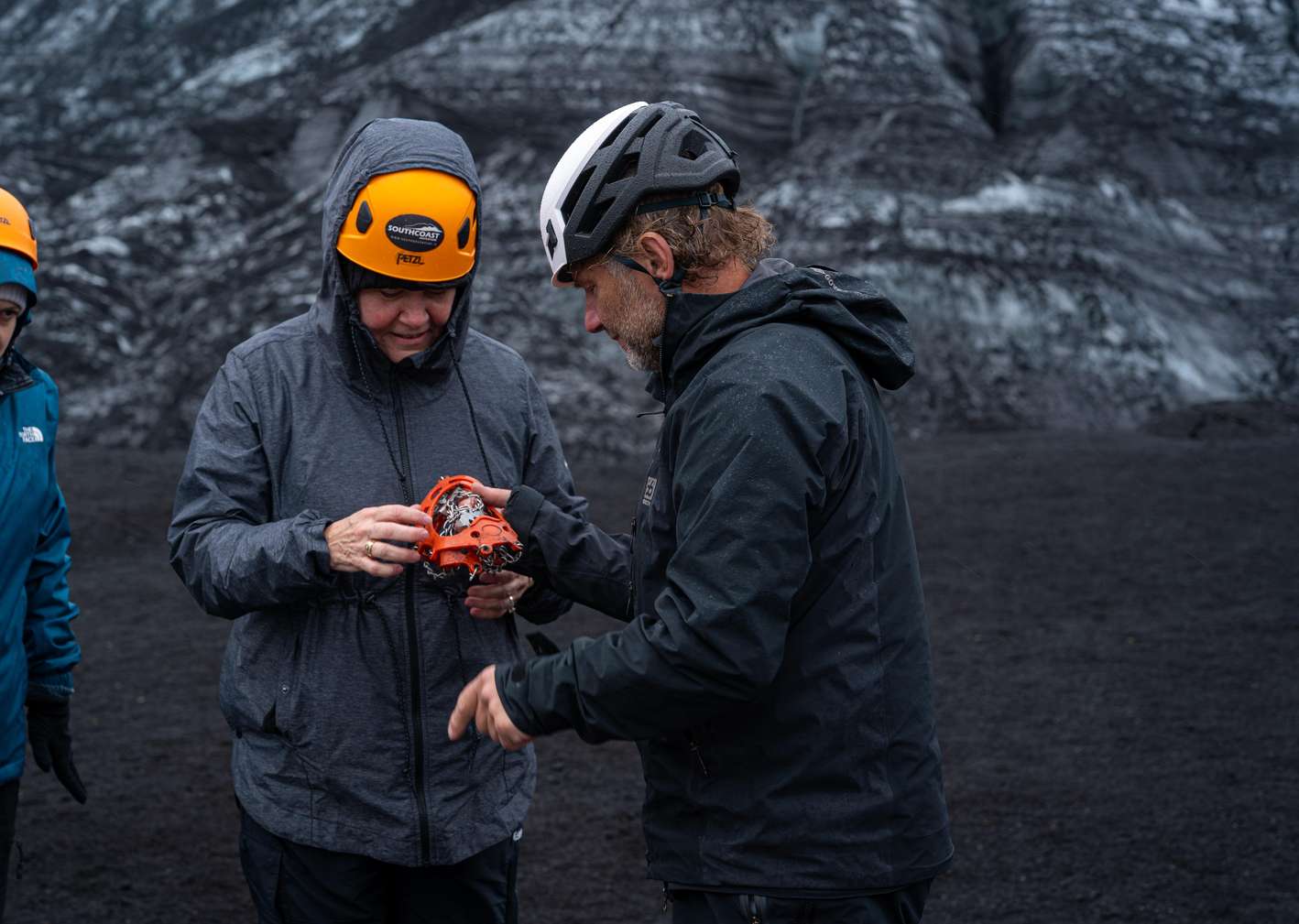
At the edge of Kötlujökull, after the jeep shuts down, the guide runs a short briefing on safety and what to expect, then fits each visitor with a helmet, a headlamp and crampons before anyone steps onto the ice.
The helmet covers your head as you move around, and the crampons give traction where the surface turns slick.
That is the whole technical kit, and it means nothing in the crampon and helmet line needs buying for a single tour. What the operator cannot lend is your clothing: the warm layers, the waterproof shell, the boots that pass. Gear that touches your skin all day stays yours.
| Check | Why it matters | Our pick |
|---|---|---|
| Safety gear included and fitted on site | Saves you buying crampons and a helmet for one visit | Every Katla tour from Vík includes crampons and a helmet, fitted at the glacier edge |
| Boot rental if yours fail | A soft-soled shoe otherwise ends the day at the gear check | Boots with ankle support can be rented at the glacier tour location |
| Meeting point and check-in time | Arriving late means missing a departure that cannot wait | Vík tours meet at the Vík Inn or behind the Icewear building, 20 minutes before departure |
| Group size and pace | A small group leaves more room at the stops and inside the cave | Small-group and extended options run alongside the standard 3-hour tours |
Run your booking against those three lines and the choice is nearly made. Any of the Vík super jeep departures pass all of them, so the real picking comes down to departure time and group size.
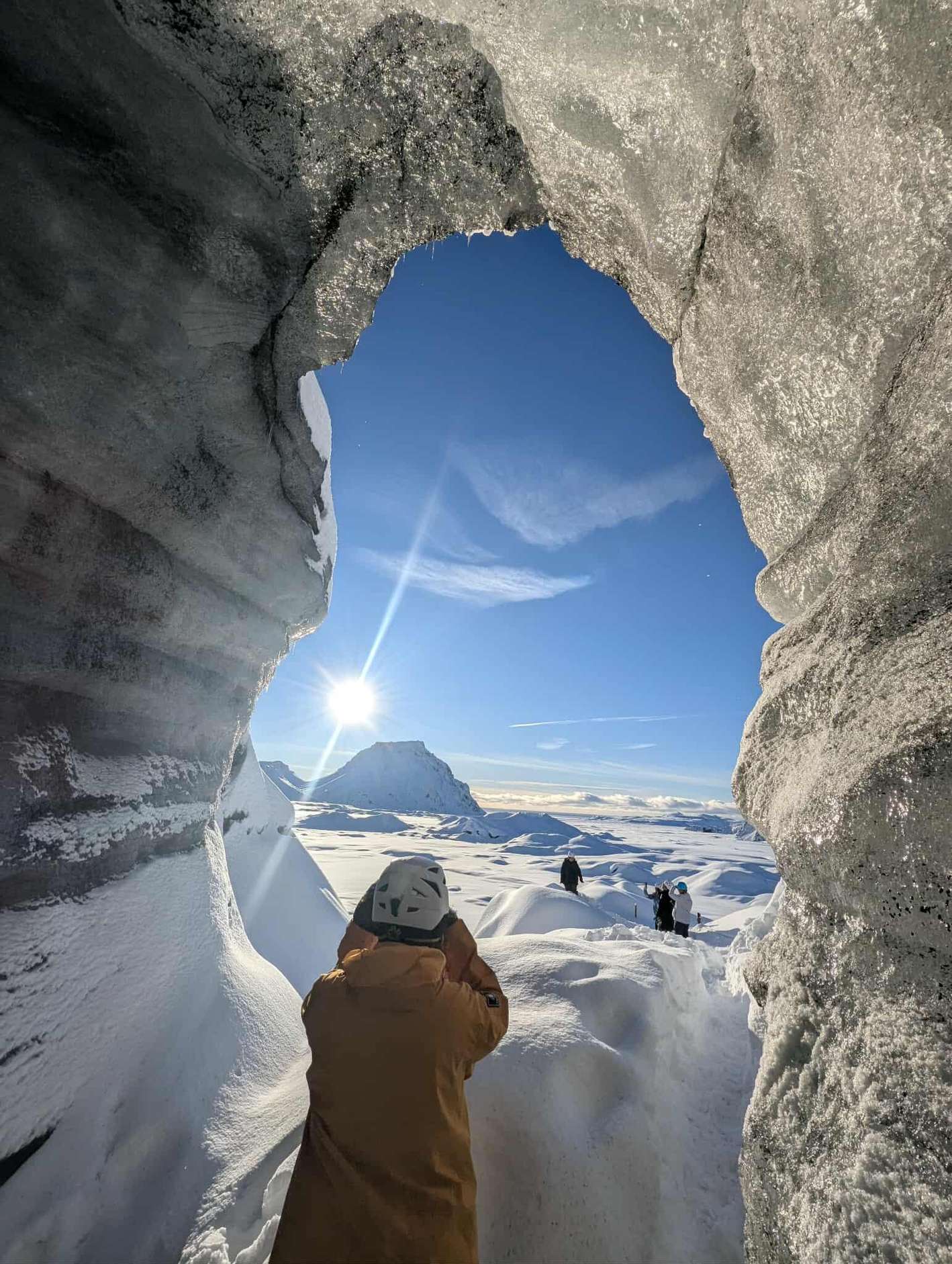
The tour from Vík runs about three hours, and the proportions surprise first-timers. Roughly 40 minutes of the outbound journey is the super jeep, hammering across black sand, old lava and shallow streams toward the glacier edge.
It is bumpy enough that one tour flags motion sickness as a reason to sit this one out, and scenic enough that travelers call the ride a highlight in its own right.
At the glacier edge comes the briefing and the gear fitting, then a short walk over uneven ground, about 10 minutes from where the jeeps park to the cave entrance.
Inside, you get roughly half an hour: about a sixth of the tour, the rest spent on the ride and the glacier itself. People expecting a long underground trek recalibrate fast. The visit is a short, vivid stop inside the ice, with no caving skills asked of anyone.
Sort the practical things in Vík before the jeep leaves. The town has public restrooms and petrol stations, and there are none at the glacier edge. Snacks come from Vík too, since food is not part of the tour.
20 minutes before departure, gear and daypack sorted
About 40 minutes each way over sand, lava and streams
At the edge of Kötlujökull, before the walk
Roughly 10 minutes over uneven terrain
About 30 minutes, then the ride back to Vík
One option for this is the 3-hour Katla Ice Cave & Super Jeep Tour, which pairs the jeep crossing and the guided cave visit with coffee back at the Vík Inn afterwards.
A wet, windy morning on the south coast forces a decision you should make before you book. Extreme winds, flooding or unsafe ice cancel Katla tours, and the pattern is predictable enough to plan around.
Wind leads the list. Gusts beyond roughly 20 metres a second cancel Katla departures, and a red wind warning can close Route 1 outright, which cuts the road the tour depends on.
Heavy rain floods caves or makes the tracks unsafe, and rain or a thaw raises the risk enough on its own. Tours are also suspended when signs suggest the volcano beneath Mýrdalsjökull is stirring, a rare call guides make with the day's conditions in hand.
What happens next is the reassuring part. If the operator cancels, you choose a reschedule or a full refund, and that holds when roads close too: a closure that prevents you reaching the meeting point counts as a safety cancellation. If the cave itself is judged unsafe that morning, alternative arrangements may be offered.
Self-drivers carry one extra duty. The moment you see a closure on the roads you need, call the operator, before departure time. Options that are easy at 8 am shrink to nothing at 9.
| If this happens | What happens then |
|---|---|
| Extreme winds above about 20 m/s or a red wind warning | Route 1 can close and tours cancel; if the operator cancels, you get a reschedule or a full refund |
| The cave floods or is judged unsafe that morning | Alternative arrangements may be offered instead of the cave visit |
| A road closure stops you reaching the meeting point | The operator treats it as a safety cancellation and you choose a refund or a new date |
That safety net is what a guided booking buys you on a coast where the weather writes the schedule. An operator that cancels on its own judgement owes you the day back, one way or the other.
Here is the pleasant surprise for anyone weighing the two famous caves: both want the identical outfit from you. Waterproof shell, warm layers, stiff boots for the crampons. The choice between them is geography and season, and clothing never enters it.
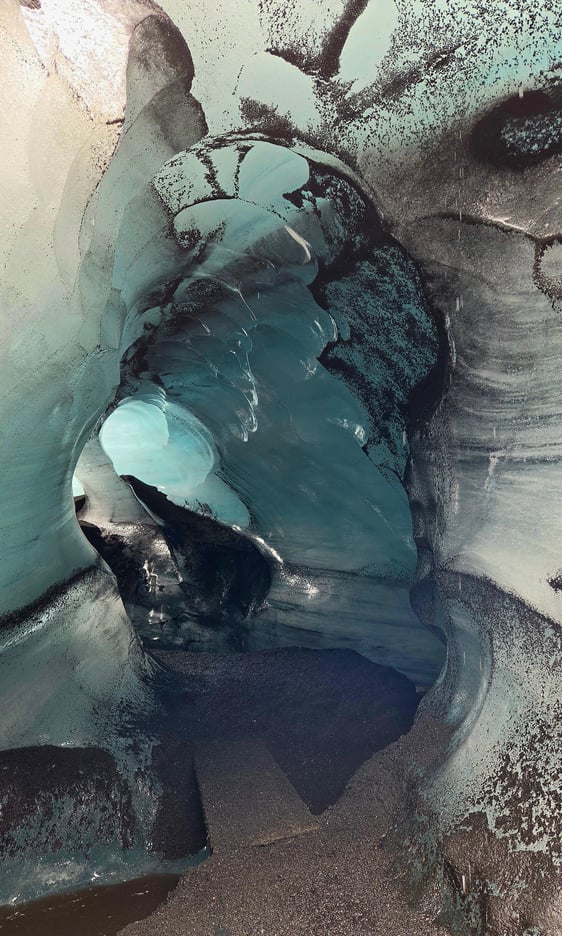
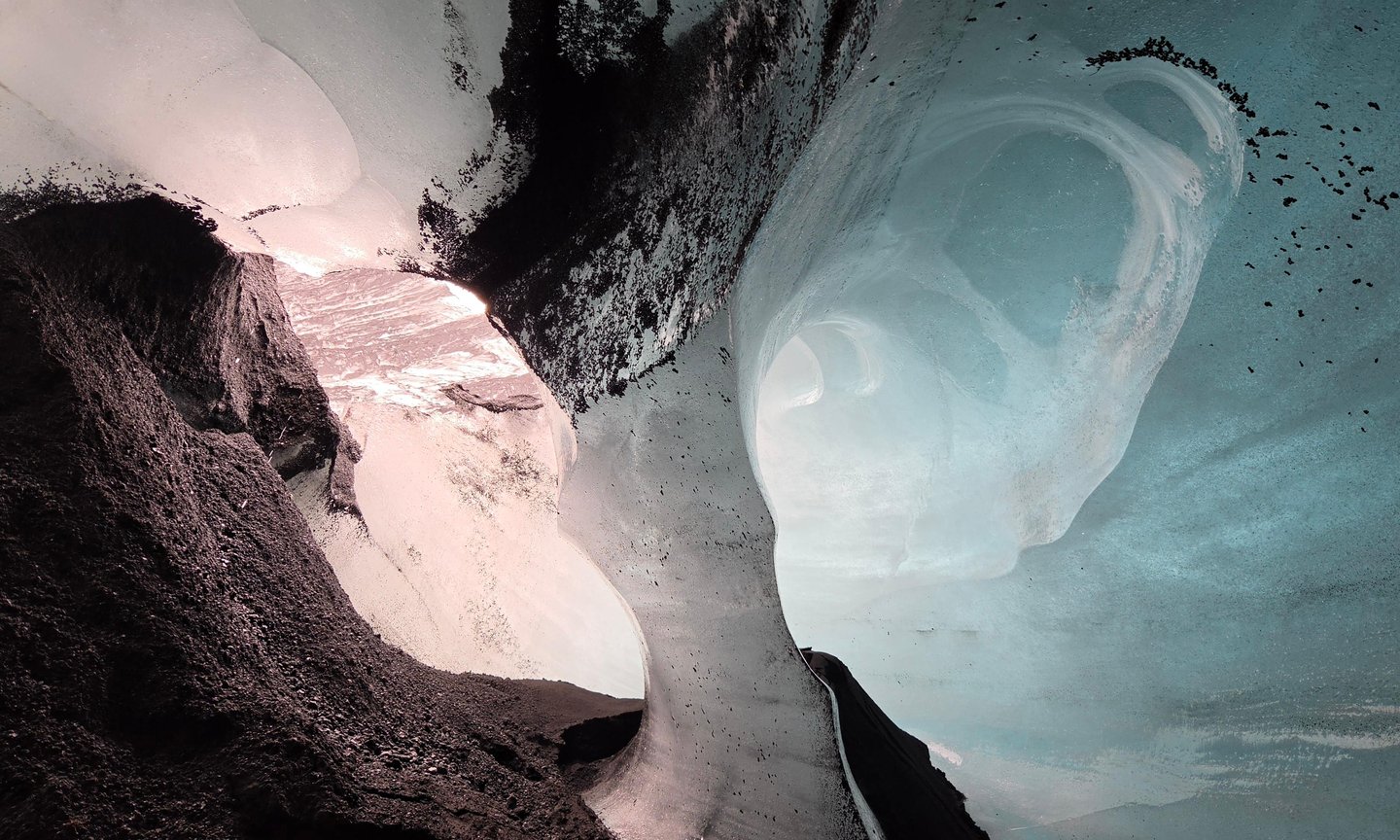
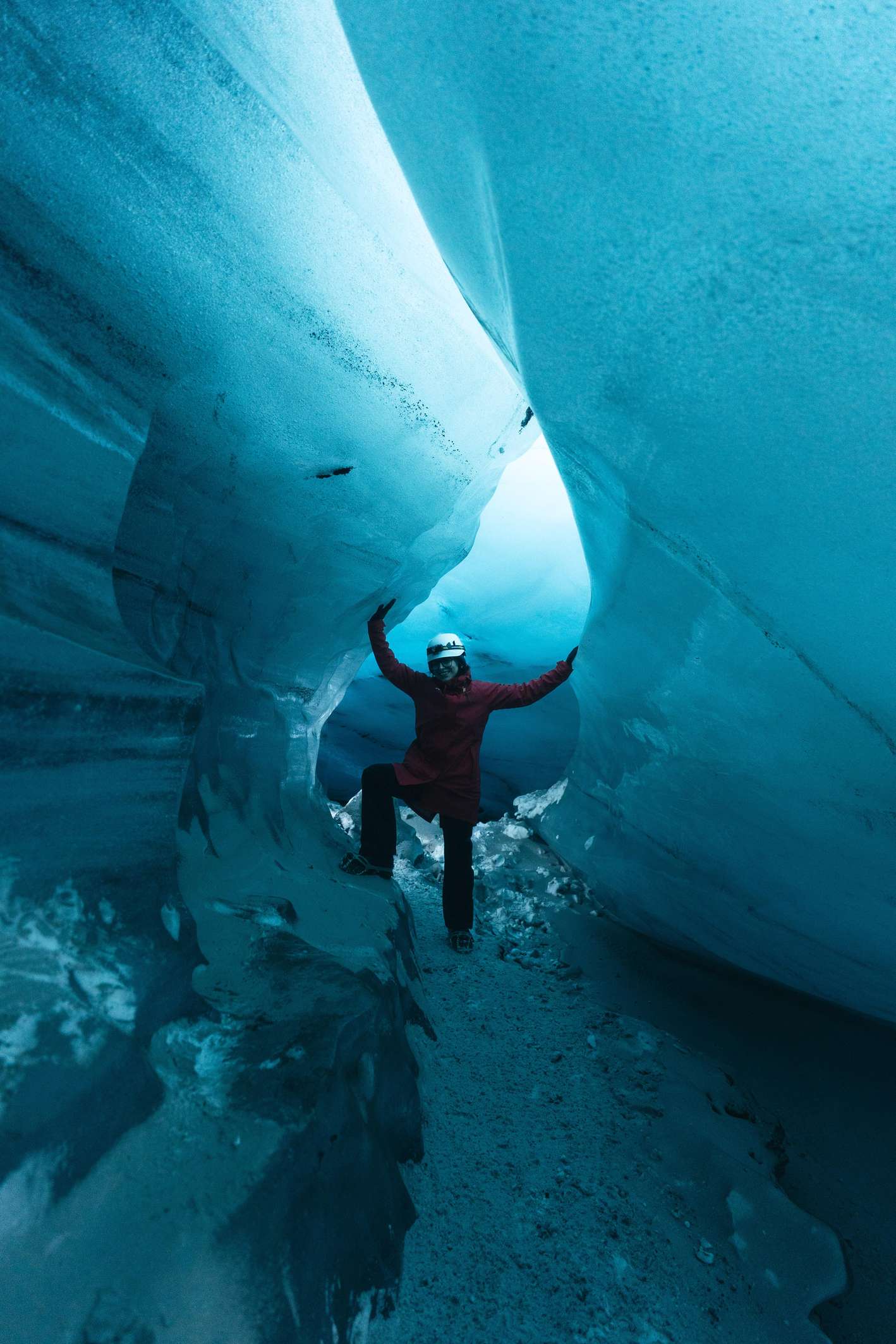
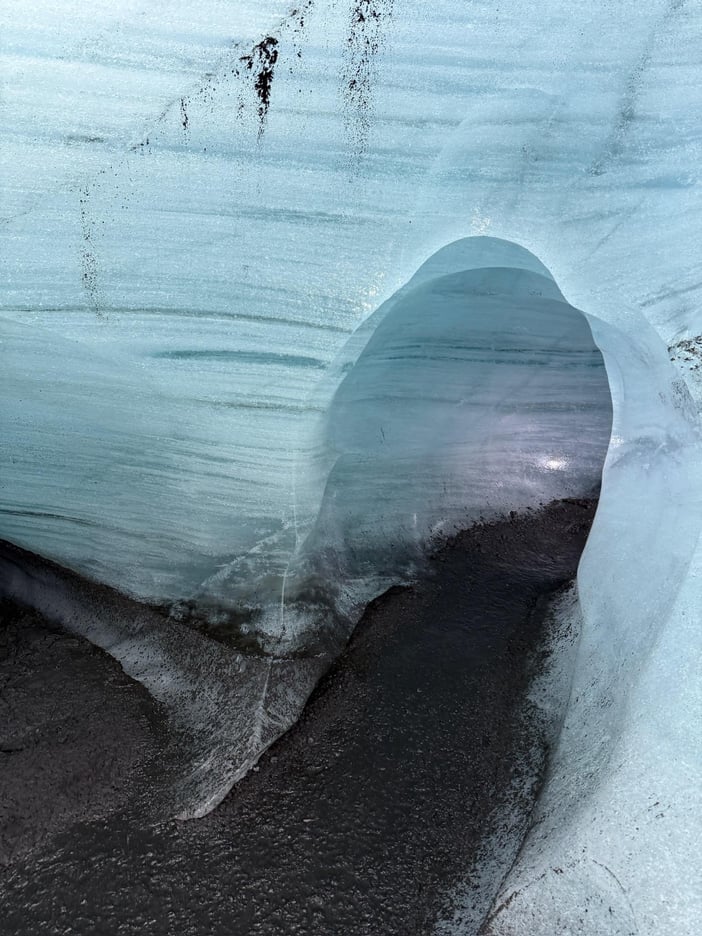
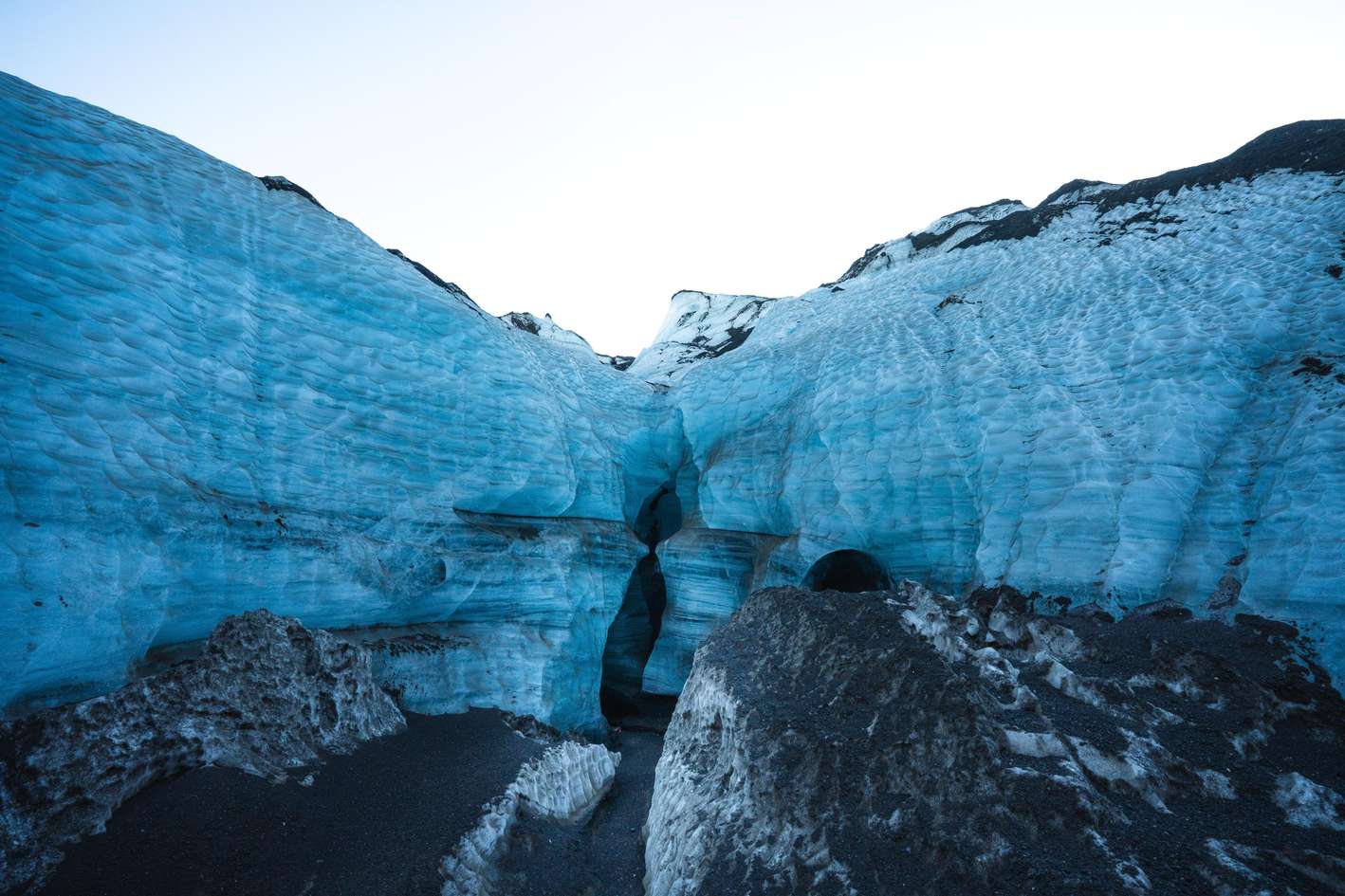
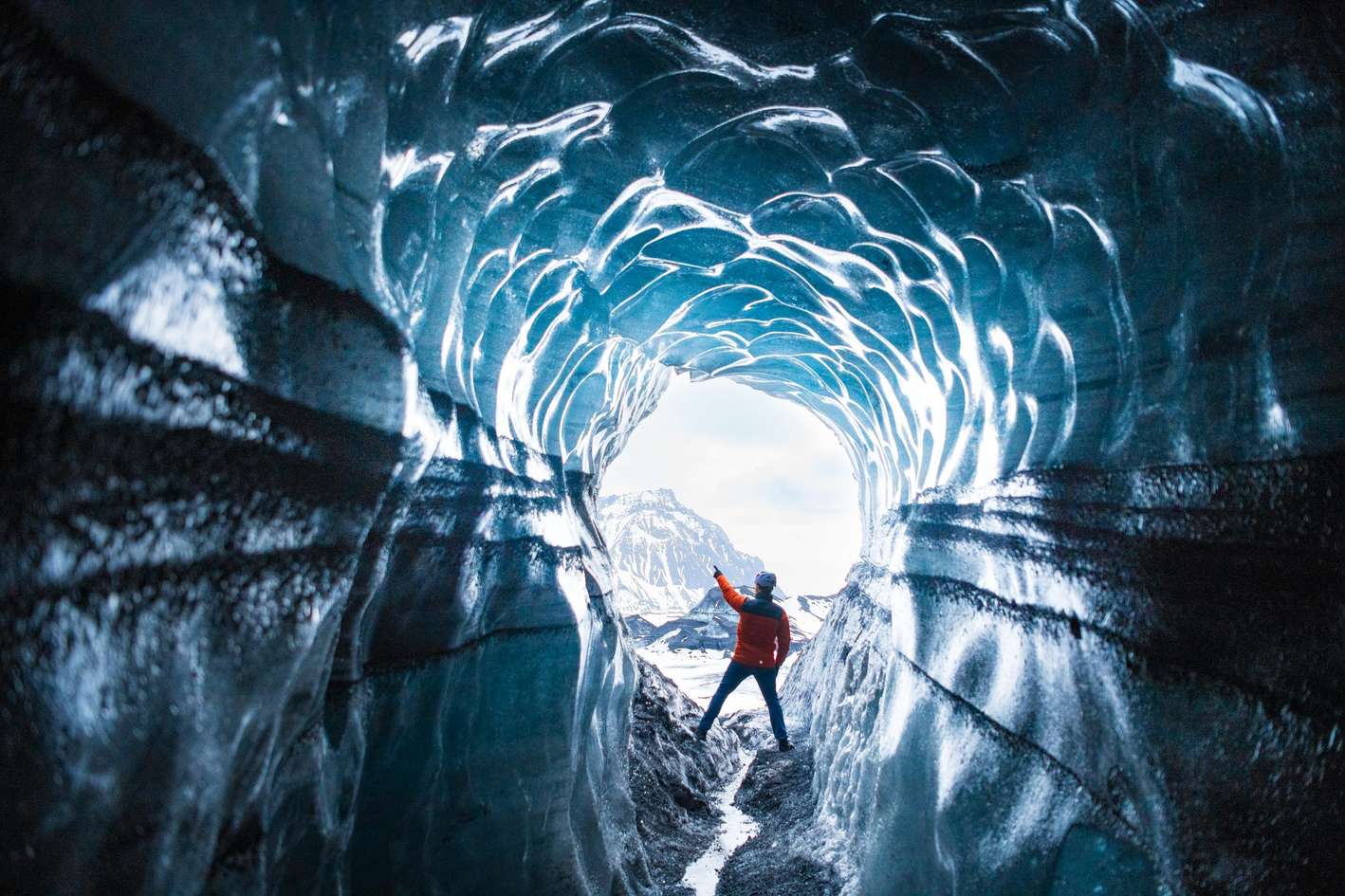
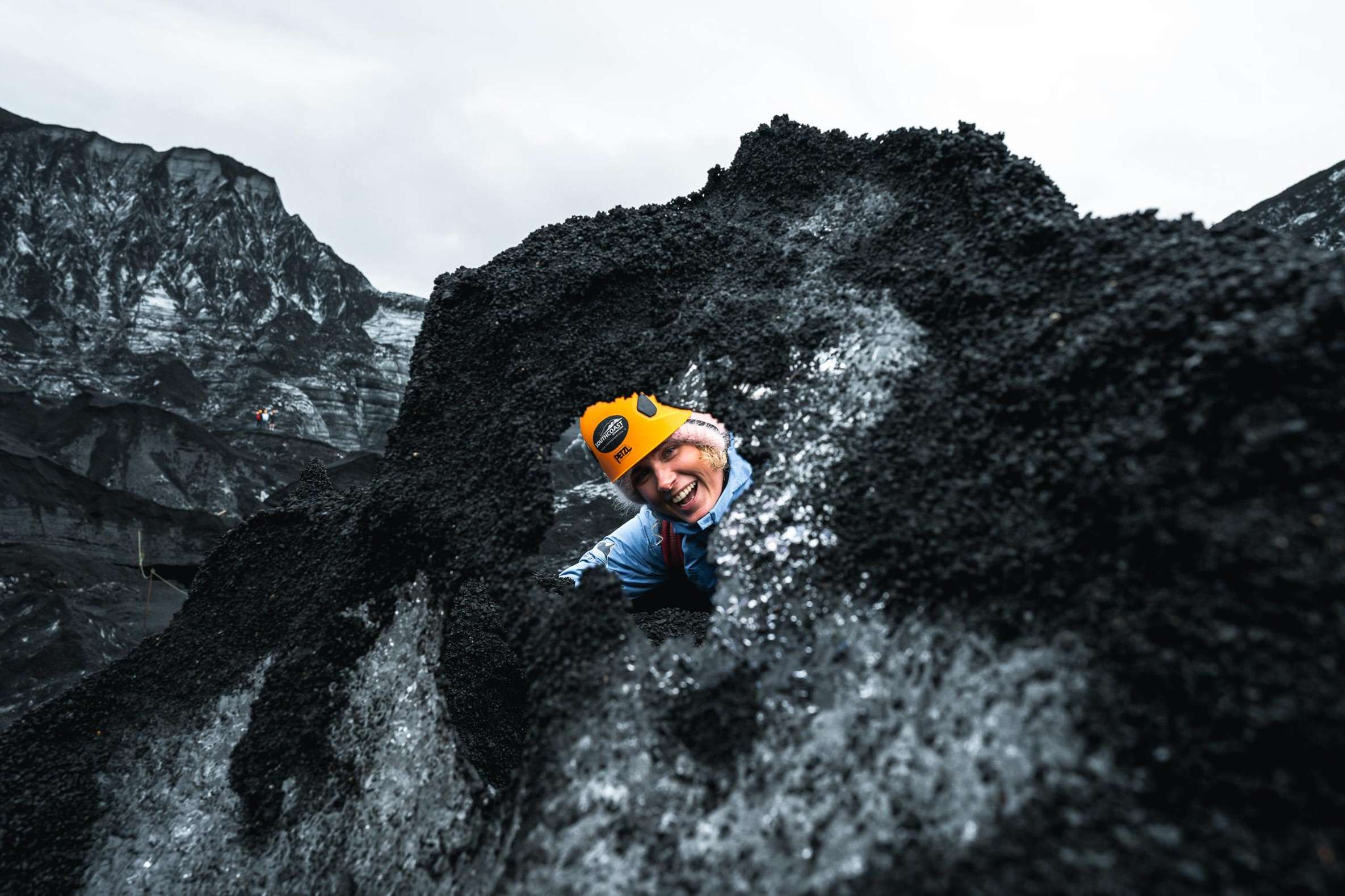
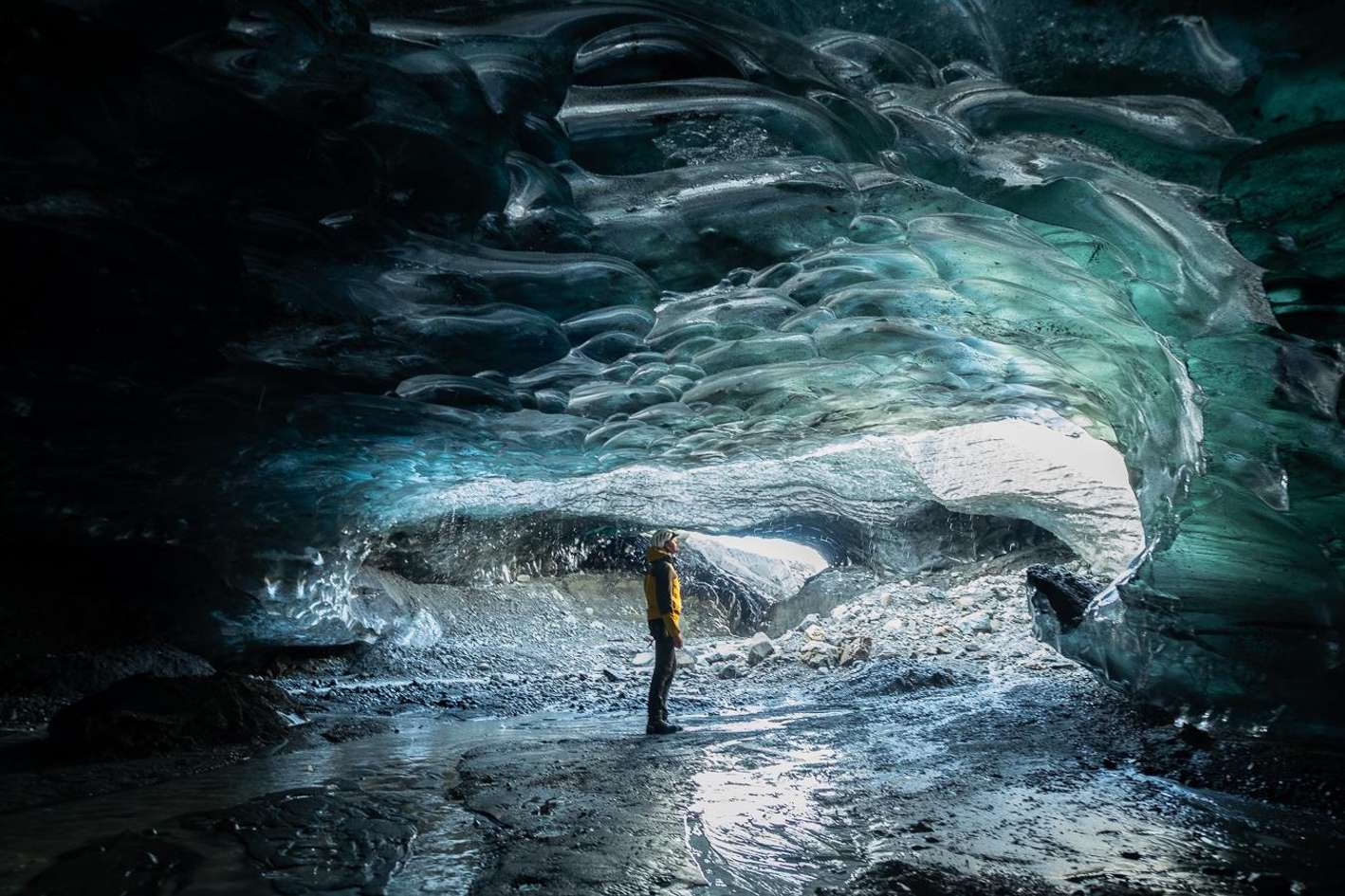
Katla runs all twelve months and sits about two and a half hours from Reykjavík, which makes a Vík departure an easy base for the South Coast. Its ice carries black bands of volcanic ash through the blue, and a short, uneven hike leads to the entrance.
The Crystal cave near Jökulsárlón glows in deep, even sapphire, reached by a short, easy walk, but it closes from May through September and costs about five hours of driving each way from the capital, with crowds that can mean waiting to enter.
In winter you could do both on one trip. From late spring to early autumn, Katla is the one left standing, which is worth knowing before you build a whole itinerary around a cave that will be shut.
| Ash-striped blue ice with dark volcanic bands | Deep, even sapphire blue | |
|---|---|---|
| Drive from Reykjavík | About 2.5 hours to Vík | About 5 hours to Jökulsárlón |
| Season | Open all twelve months | Closed May through September |
| Approach | Short, easy hike over uneven terrain | Short, easy walk, with possible waiting to enter |
The detailed comparison lives on the cave versus cave page.
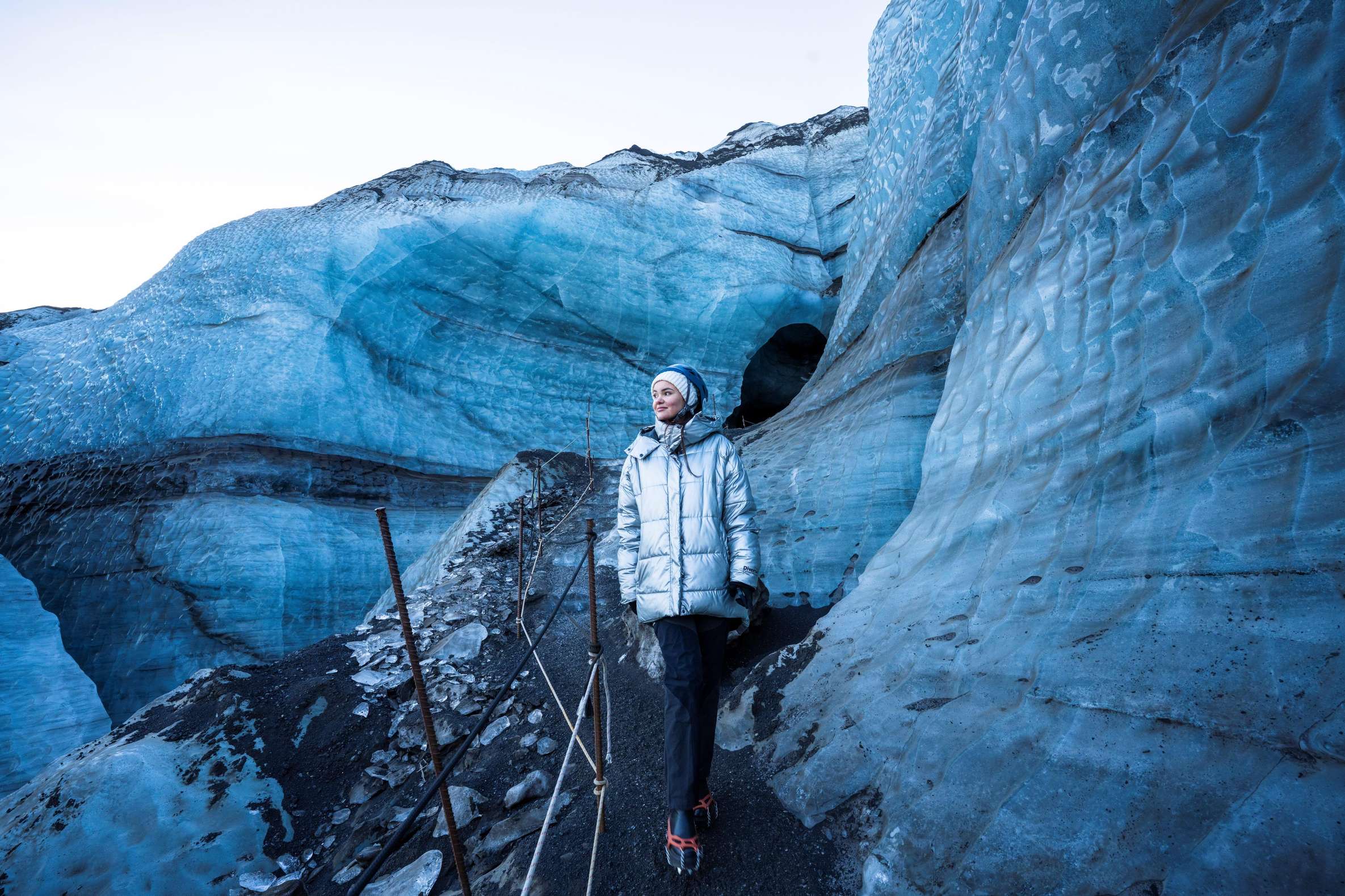
Some travelers want the glacier under their boots as well as the chamber over their heads. The combined outing answers that: one extended guided tour from Vík takes the super jeep ride, the cave visit, and then an open hike across Kötlujökull, with glacier canyons and hidden waterfalls on the route.
Physically it is a step up. The standard cave visit asks a light walk over uneven ground; a glacier hike adds sustained walking and climbing on the ice, which is why glacier walkers earn the fit they arrive in.
Your clothing does not change, though. The same stiff boots and ankle support hold crampons on open ice just as they do at the cave mouth, and layers you can shed matter more here, because moving on the glacier warms you up quickly after a still half hour in the cold chamber.
One packing note changes with this option, and it is worth writing down. There are no toilets at the glacier edge, only in Vík, and the longer outing extends the stretch between facilities. Sort that before the jeep pulls out.
The 4-hour Katla Ice Cave Extended Guided Tour with Super Jeep covers this format, with the cave plus the extended glacier hike and the guide carrying the safety kit throughout. The full breakdown sits on the glacier hike page.
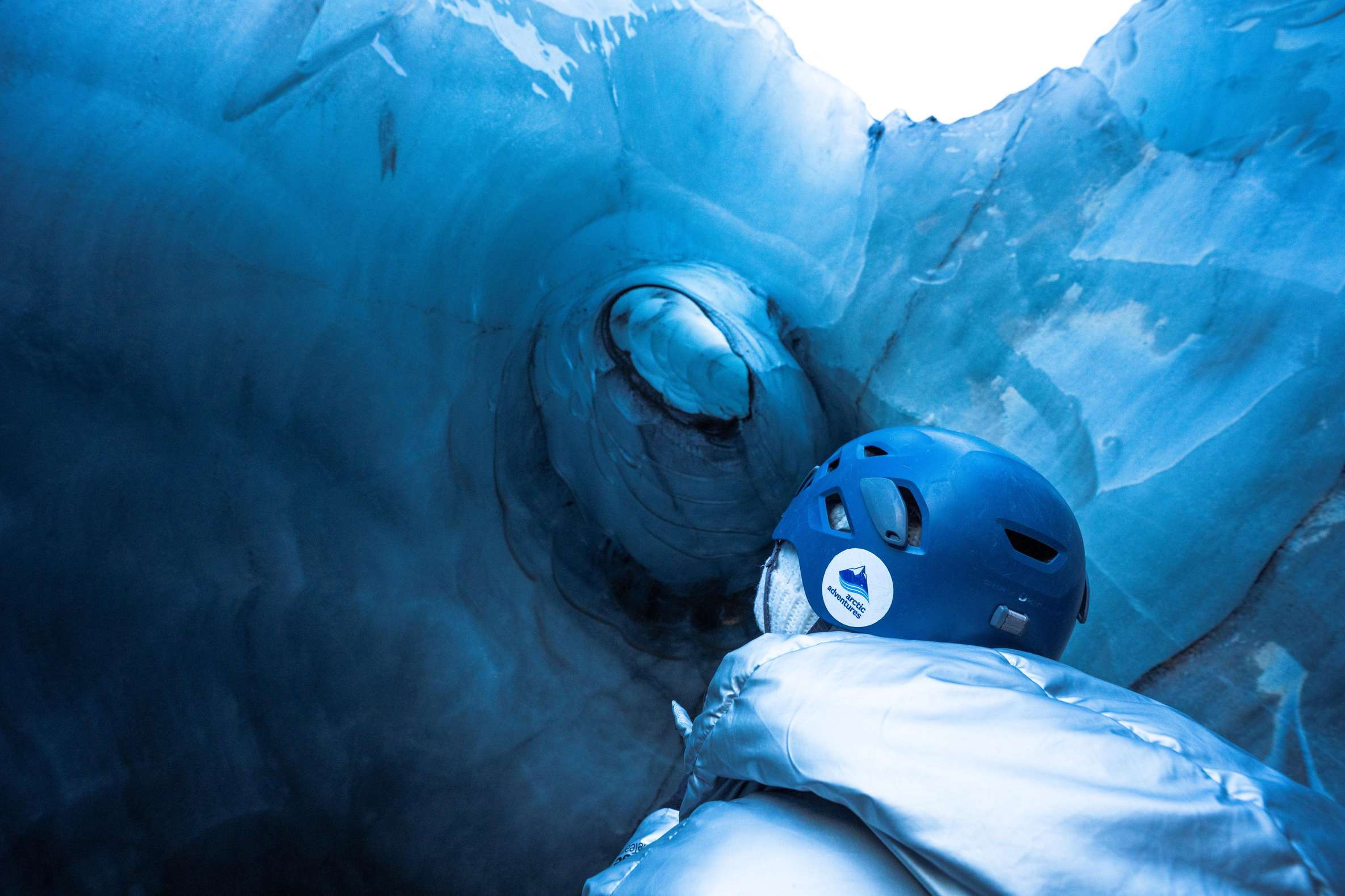
Without a car, the cave still happens, and it comes with the waterfalls thrown in.
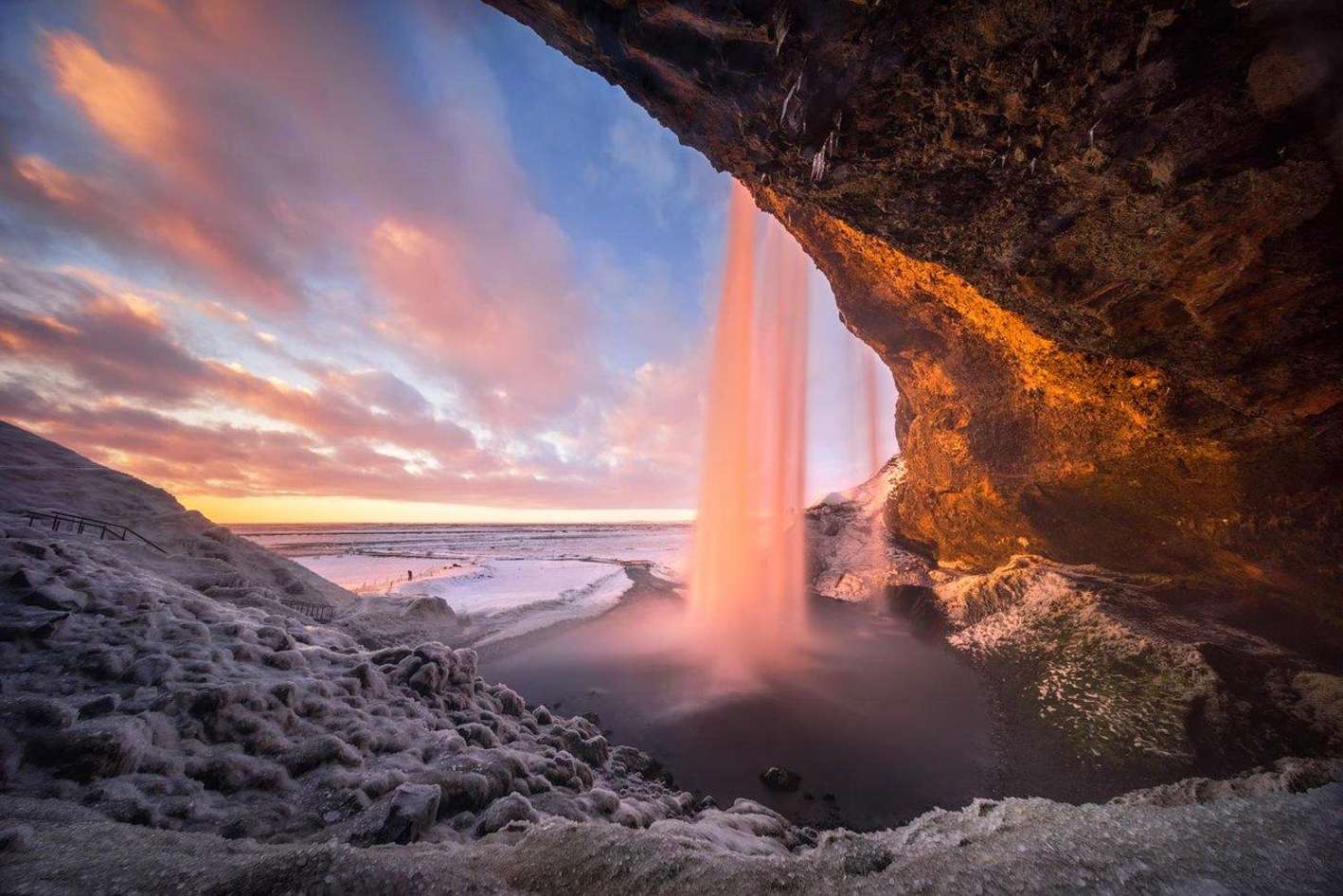
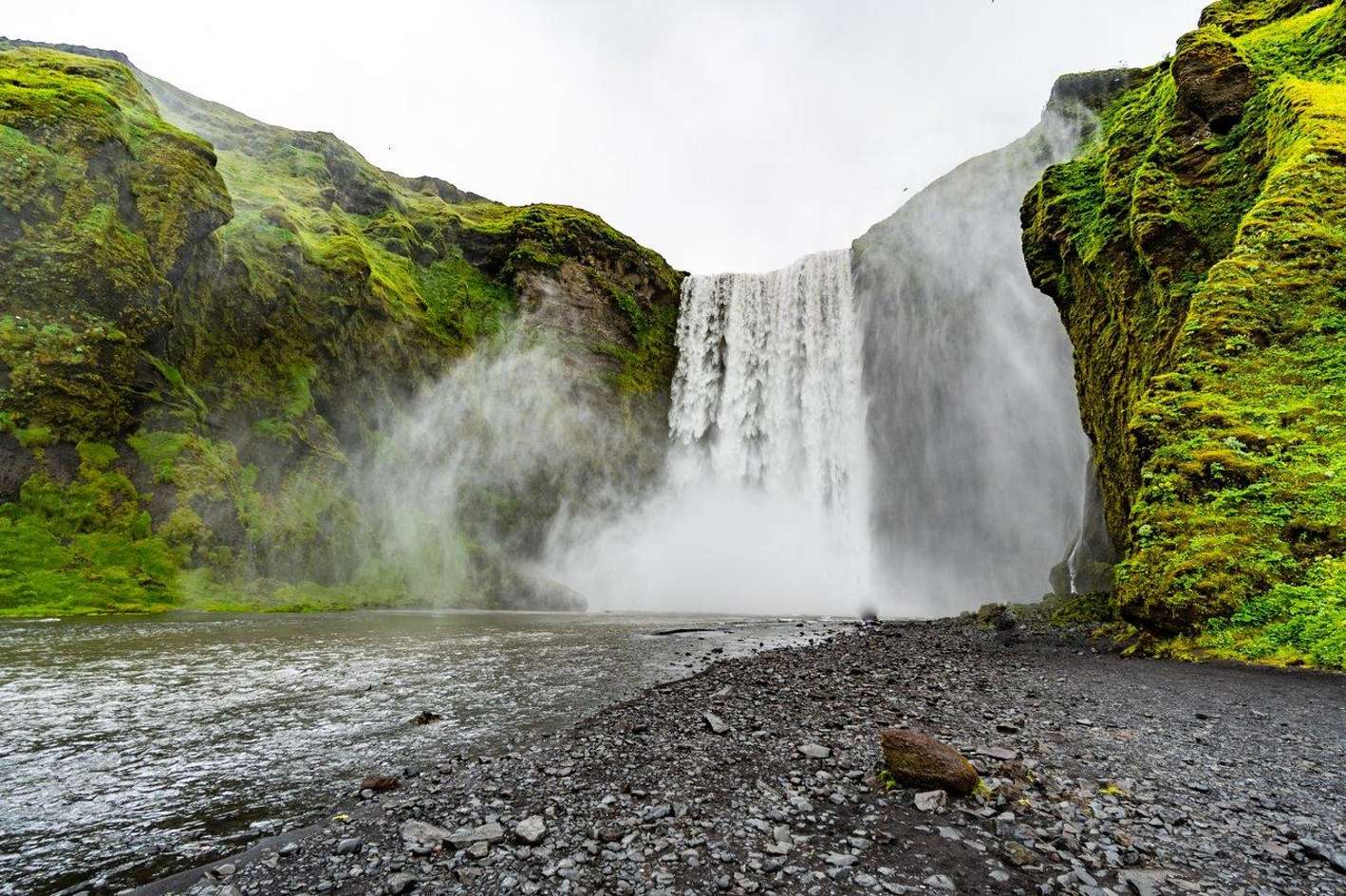
A pickup from Reykjavík strings the South Coast together across an 11 to 12 hour day: Seljalandsfoss, where you can walk behind the falls, then Skógafoss, often a black sand beach, and the super jeep turn in Vík for the cave itself. The touring is rated easy to moderate.
That itinerary changes the clothing math in one specific way. Waterfall spray soaks your shoulders hours before you reach the ice, and then the cave drips on the same jacket.
A fully waterproof shell earns its place twice in one day, which is the strongest argument for wearing it from the first stop rather than leaving it folded in the bag.
The pickup has its own rhythm. Reykjavík uses authorized numbered tour stops, which are not the same as city bus stops, so read the sign, and pickup from your stated time can take up to 30 minutes. Be at the stop from the start of the window and wait where a driver can see you.
One tour that runs this whole format is the 12-hour Reykjavik Katla Ice Cave & South Coast Tour, with pickup, the waterfall stops and the guided cave visit all booked as one. The full day by day lives on the South Coast day tour page.
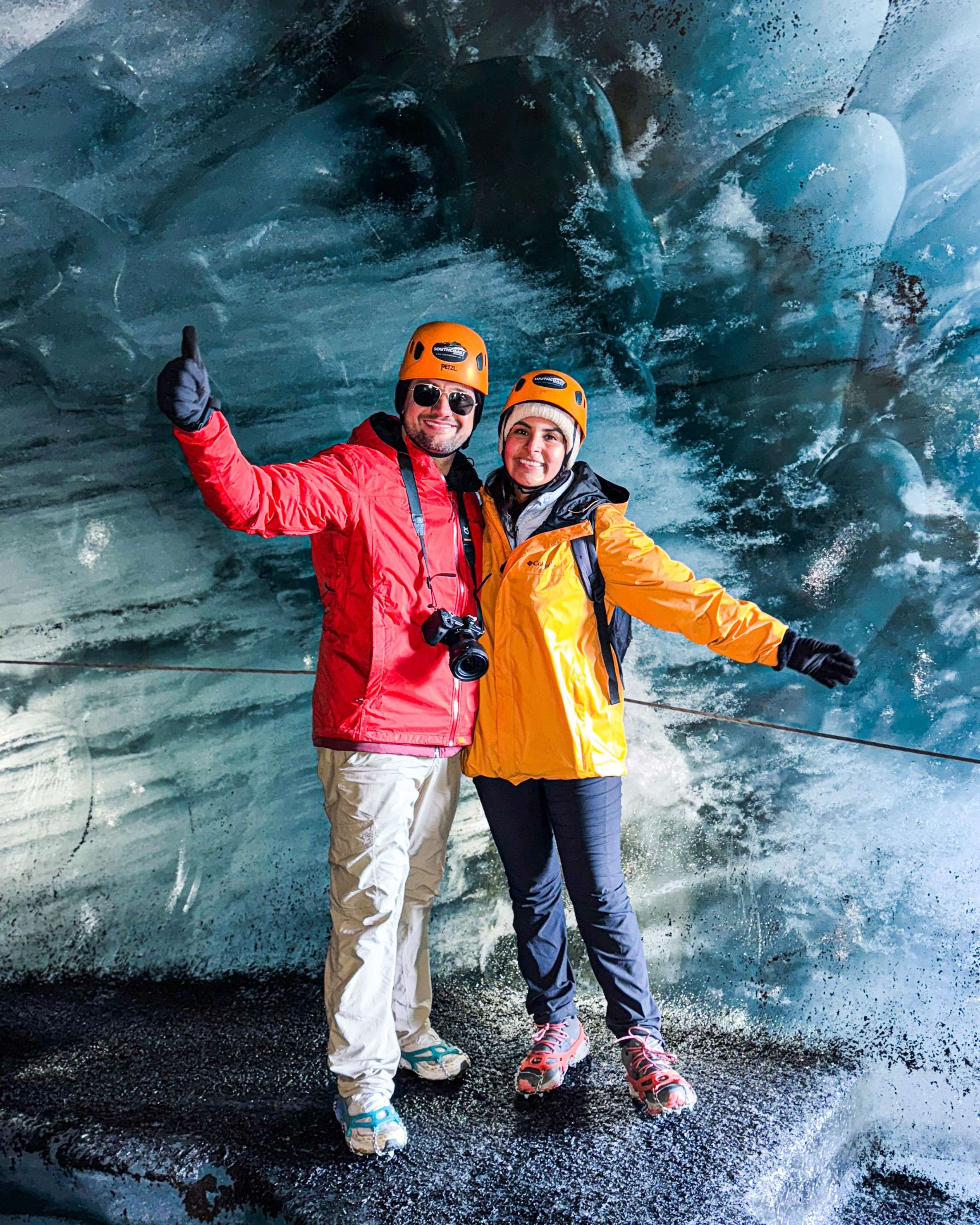
Families deserve the honest version before booking. Minimum ages vary by tour rather than by cave: limits run from 6 to 12 years depending on the operator, with one operator taking children from 6 in summer and 8 in winter, and another setting 12 for its standard outing and 6 for its fast format.
Check the age line on the specific tour, because it is the one rule that stops a booking outright.
The walking suits most people of average fitness. It is short, over uneven terrain, and easy in the tour's own rating, but the footing is rough enough that one operator rules out limited mobility, and the small-group tour excludes wheelchair users and people with heart problems.
A recent visitor put it plainly: small children and bad knees, ankles or backs find the ground harder than the brochure suggests.
The jeep adds its own filter.
The off-road ride is vigorous and bumpy, one operator does not recommend it for pregnant travelers for exactly that reason, and the tour listings themselves stay silent on some cases, so a health condition that a bumpy ride would aggravate is worth a direct question to the operator before you book.
The gear fits children the same as adults: crampons and helmets come in the sizes needed, fitted at the glacier edge like everyone else's.
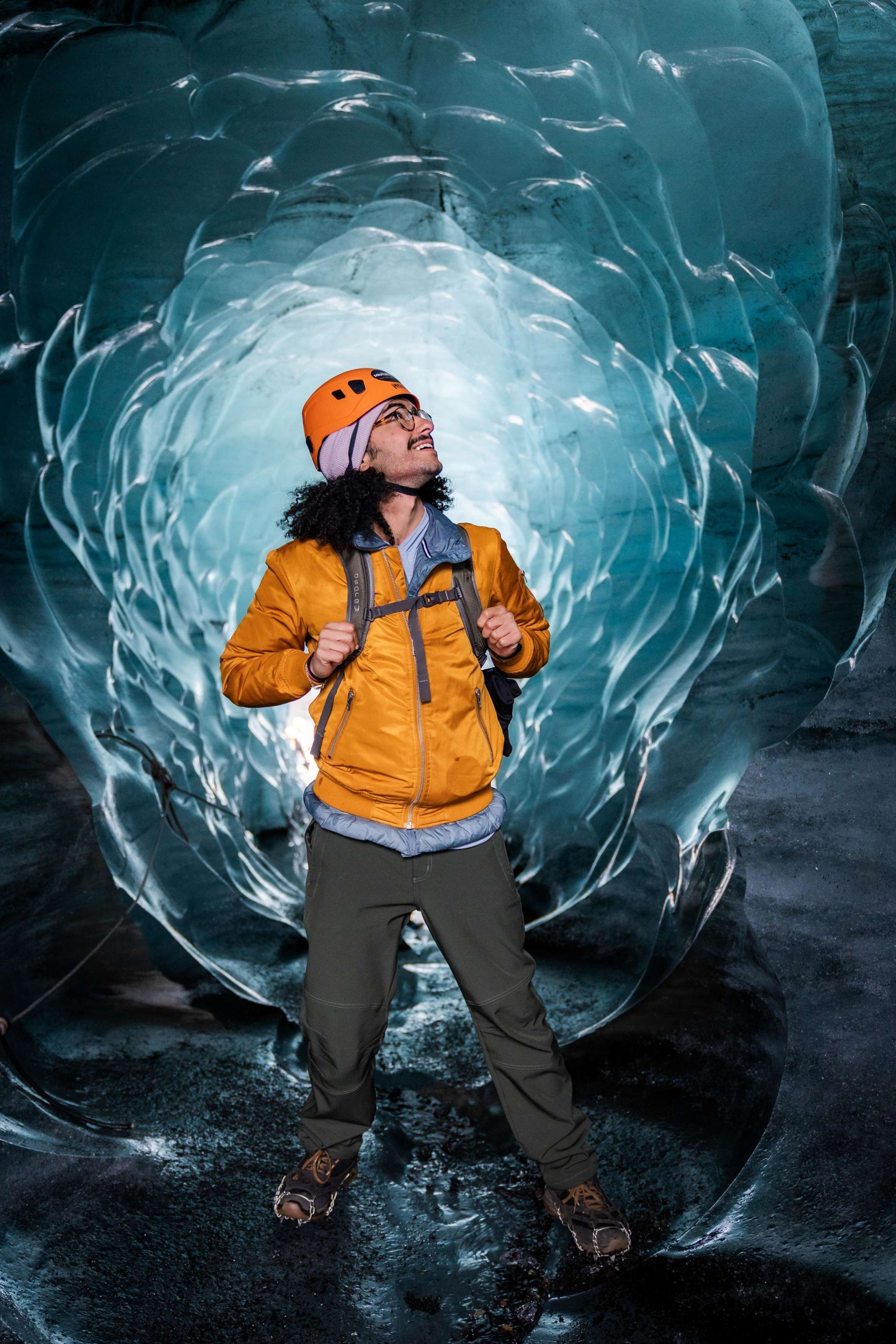
Katla rewards anyone who dresses for a wet, near-freezing chamber in every season. Wool base layer, fleece, sealed waterproof shell and stiff boots cover the whole year, and the operator supplies everything technical at the glacier edge.
Book the tour that fits your day, arrive with time to spare, and let the guides handle the ice.
No road reaches the cave, so your packing starts with knowing where you will actually get out of the car.
Read the guideKatla stays open through summer, and the month you pick changes the shape of the chamber and the clothes you need.
Read the guide
Certified guides inspect the cave every day and fit your helmet and crampons, but your own boots decide whether you board.
Read the guide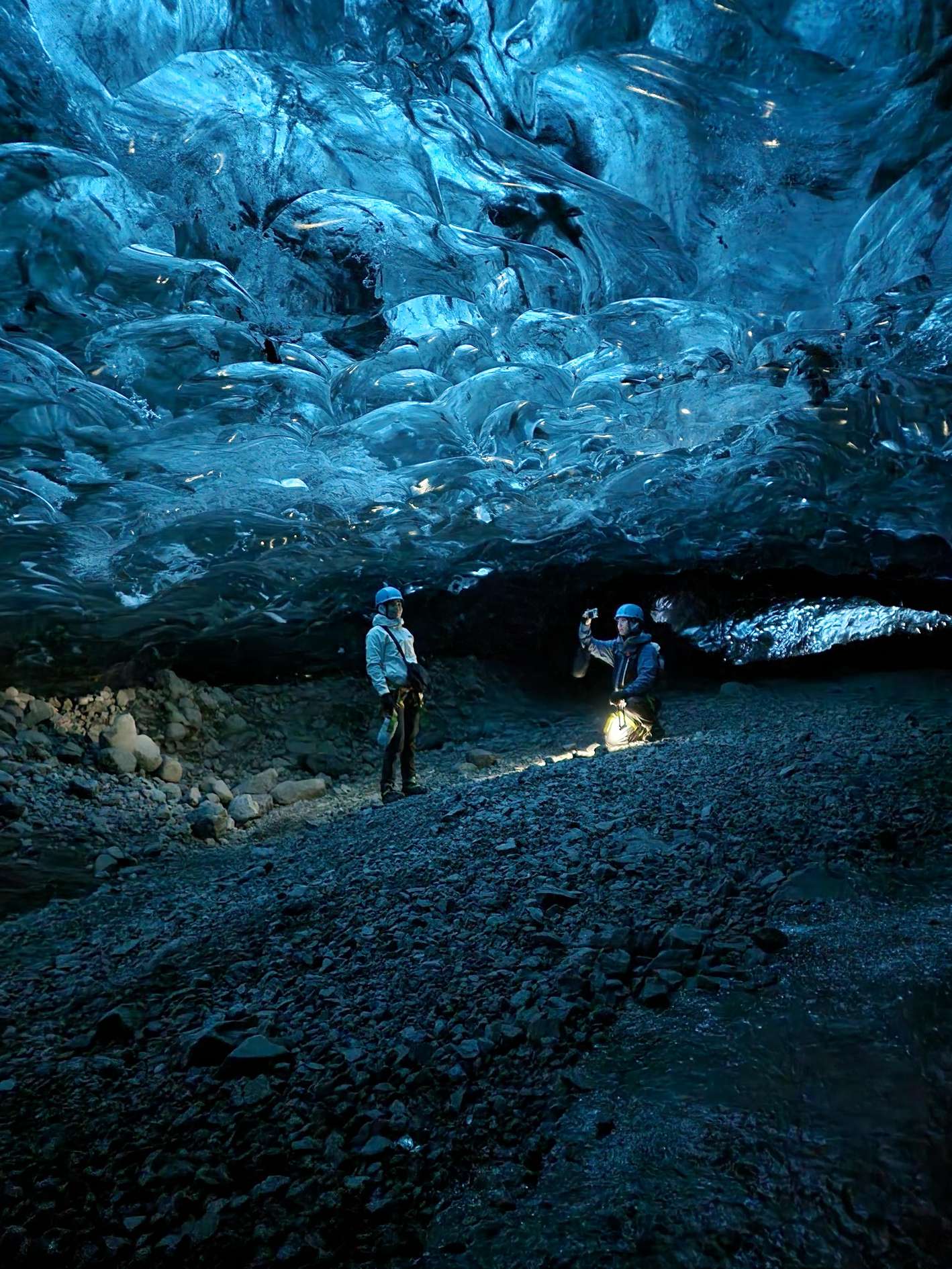
Katla runs year-round two and a half hours from Reykjavík, while the Crystal cave glows bluer but closes from May through September.
Read the guide
The combined tour adds real time on the glacier surface, which asks more of your boots and your legs than the cave alone.
Read the guideFrom Reykjavík one booking covers Seljalandsfoss, Skógafoss and the cave, and your clothes must work for spray as well as ice.
Read the guideThe rest of your Katla trip splits into four questions, and these pages answer each one in turn.
Where the road ends and the super jeep takes over
Route 1 carries you about 187 km from Reykjavík to Vík, roughly two hours and forty minutes without stops, and there the tarmac ends. Only a specialized super jeep crosses the black floodplains to Kötlujökull, so every visit ends with a guided departure from Vík.
That shapes what you pack: leave your spare layers in the car, because you swap vehicles in town and check in twenty minutes early. Dress for the jeep ride itself, which can be cold and draughty.
The cave that runs all twelve months, and the hour that keeps it quiet
Katla is one of the few natural caves in Iceland open all year, which means your wardrobe question depends on when you come. Summer trips happen in mild air but wetter weather, while winter puts you in deep cold with only a few hours of light to dress for.
The chamber itself shifts too: travelers describe an enclosed tunnel in spring opening into a wide dome by autumn. The earliest departure brings quieter chambers and low light on the ice. Extreme winds are what cancel a tour, and a canceled one brings a reschedule or a full refund.
Daily ice checks, age limits and the boots that pass the gear check

Every Katla tour runs with certified glacier guides who check the ice daily and carry the helmets, crampons and headlamps. What they cannot lend you is the right footwear: crampons strap onto stiff boots that hold your ankle, and soft sneakers fail the gear check.
Minimum ages run from 6 to 12 depending on the tour, and the walk covers a kilometre or two of uneven ground. Bring your gloves and warm hat for standing still in the cold, since hands and head feel the chill first.
Ash-striped ice close by, or sapphire walls five hours east
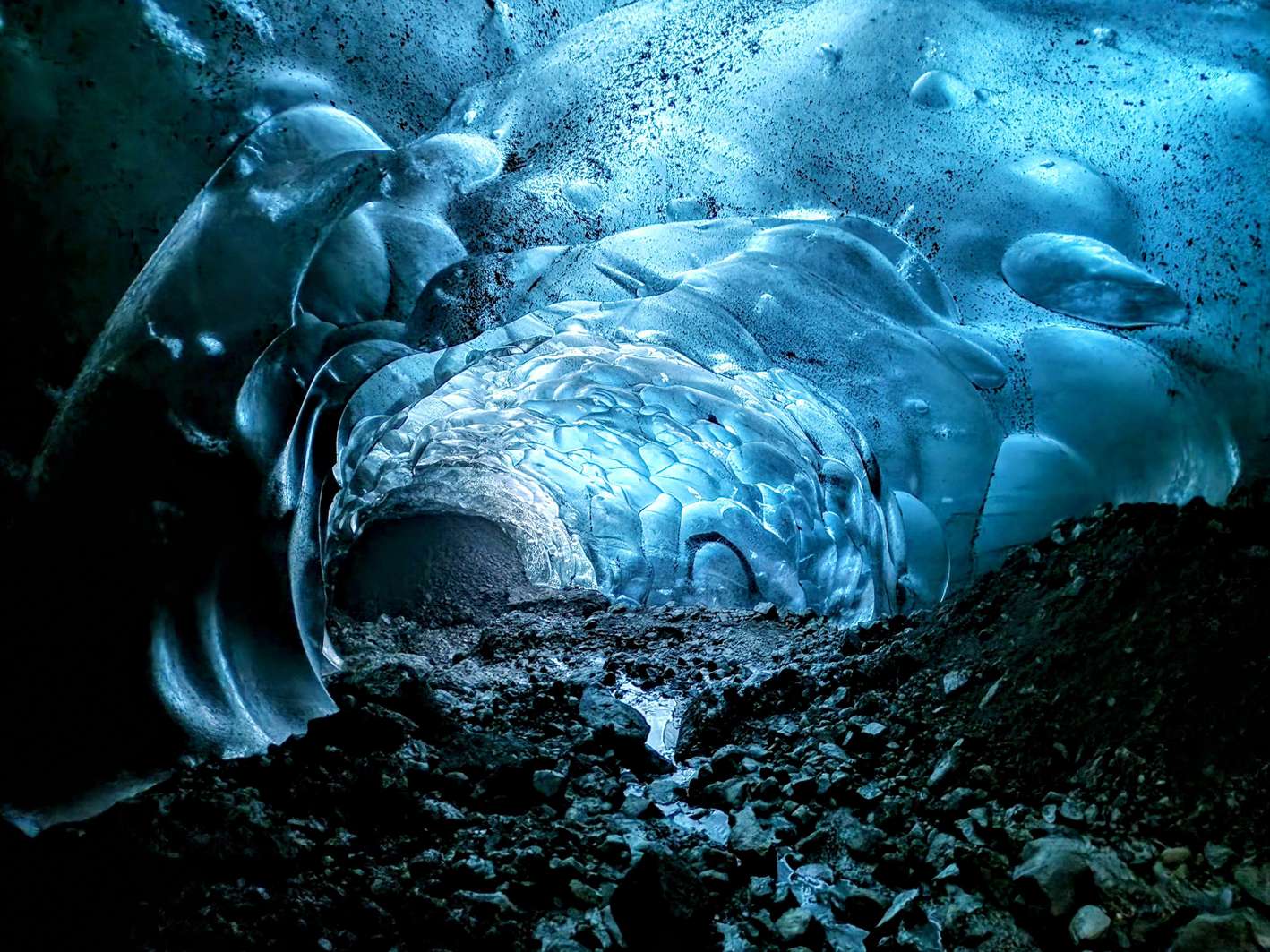
Both caves want the same clothing from you: waterproof outer layers and stiff boots for the crampons. The differences lie elsewhere. Katla sits about two and a half hours from Reykjavík and runs all year, and its blue ice carries black bands of volcanic ash from past eruptions.
The Crystal cave near Jökulsárlón glows in deep, even blue, but it shuts from May through September and costs about five hours of driving from the capital. In winter you could do both; in summer, Katla is the one left standing.
Cave plus open glacier walking in one three-hour outing
A combined Katla tour puts you inside the cave and out onto the glacier for a short walk, about 45 to 60 minutes in the cave area on foot.
Glacier ice asks the same of your feet as the cave does: stiff soles and ankle support for the crampons, plus layers you can shed when you warm up on the move.
One practical note shapes your bag: there are no toilets at the glacier edge, only in Vík, so sort that before the jeep leaves. From Vík the whole outing takes about three hours.
12 hours · ★ 4.9 (215)From Reykjavik: Katla Ice Cave and South Coast Day TourFrom $284 3 hours · ★ 4.8 (28)From Vík: 3-Hour Katla FastTrack Ice Cave TourFrom $250 4 hours · ★ 4.8 (8)Katla Ice Cave Extended Guided Tour with Super JeepFrom $291 12 hours · ★ 4.7 (1,354)Reykjavik: Katla Ice Cave & South Coast TourFrom $278 Two waterfalls, a black sand beach and the cave in eleven hours
A day tour from Reykjavík strings the South Coast together before the jeep turn in Vík, with stops at Seljalandsfoss and Skógafoss and often the black sand beach. That changes your clothing math: waterfall spray soaks shoulders just as meltwater drips inside the cave, so a waterproof jacket earns its place twice.
Count on eleven to twelve hours, a rest break around Hvolsvöllur, and about half an hour of walking between the jeep and the cave. Bring snacks, since food is not included and lunch happens where you find it.
11 hours · ★ 5.0 (2)From Reykjavik: Private South Coast and Katla Ice CaveFrom $2,401 /group 12 hours · ★ 4.9 (215)From Reykjavik: Katla Ice Cave and South Coast Day TourFrom $284 12 hours · ★ 4.7 (1,354)Reykjavik: Katla Ice Cave & South Coast TourFrom $278 10 hours · ★ 4.7 (779)Reykjavik: South Coast and Katla Ice Cave Small Group TourFrom $267 jeans get cold and heavy when wet
Now that your packing list is set, see how Katla tours work day to day, what tickets cost and which slots are open.
Find out where the Super Jeep leaves from in Vík and why your rental car cannot make the glacier track.
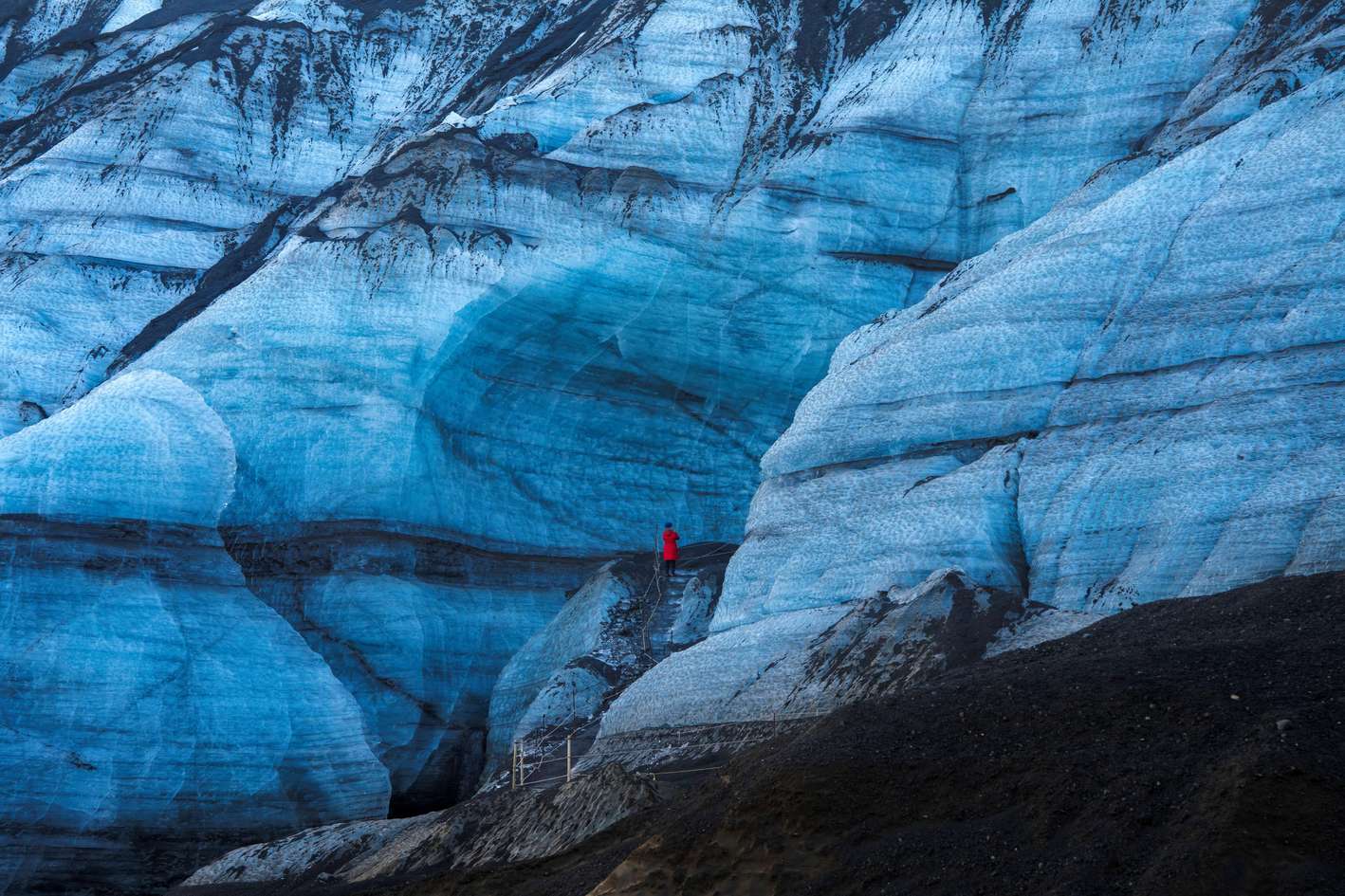
Your waterproofs work in any season. Compare summer and winter visits to pick the month that suits you.
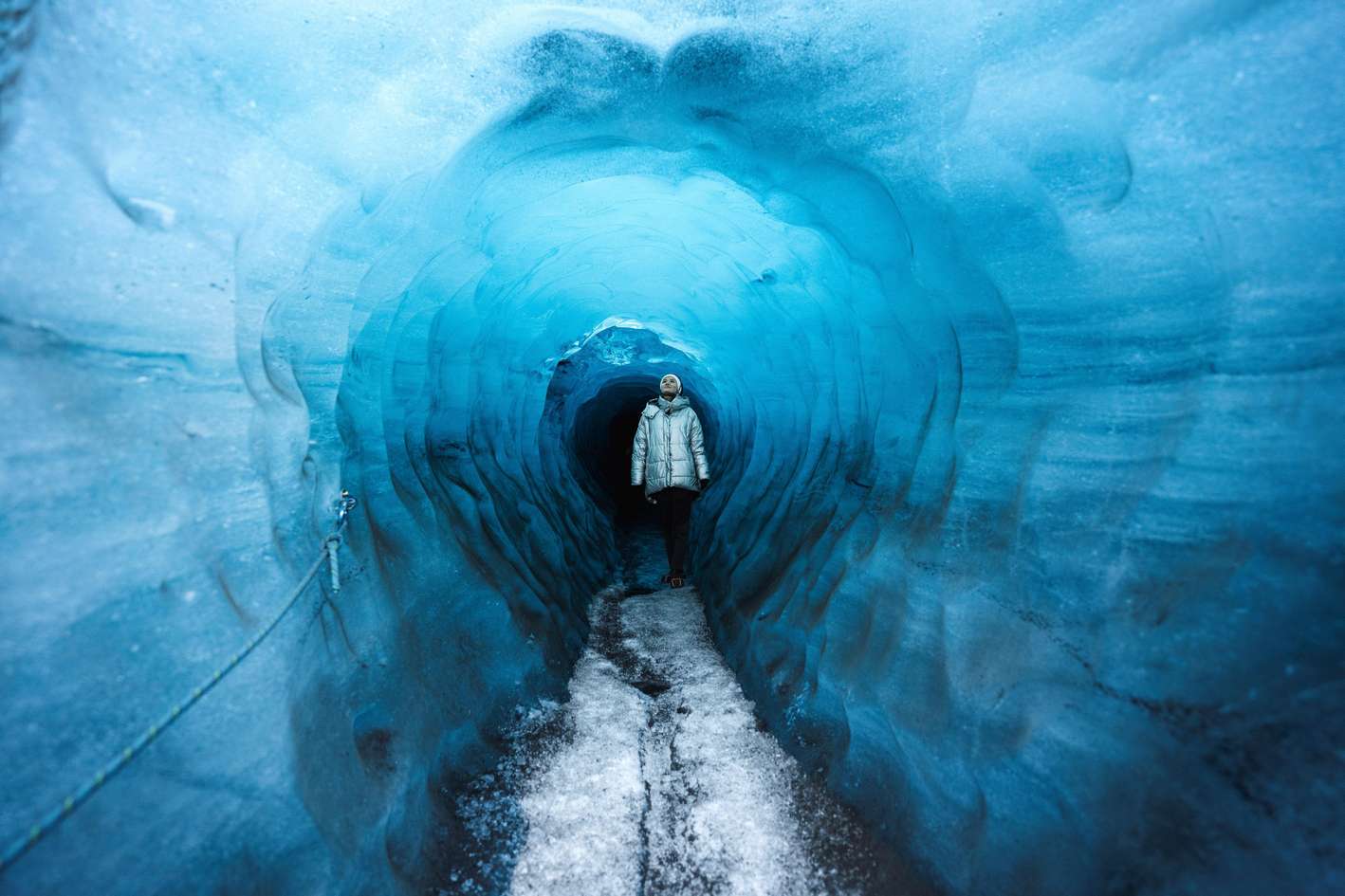
Wearing the right layers is half of it. Read how difficult the walk is and whether kids can come along.
Deciding between Katla's black-streaked ice and the sapphire caves at Jökulsárlón? See the two side by side.
Want more time on the ice than the cave visit gives? See how Katla pairs with a full Mýrdalsjökull hike.
Katla is one cave of many. Get the full picture of natural ice cave tours across Iceland's glaciers.
Your guide fits crampons and a helmet on the day. Compare guided trips and pick the one that fits your plans.
If you would rather have the jeep and guide to yourselves, see what a private Katla trip looks like.
Prefer fewer people in the cave with you? Small-group departures from Vík keep the pace easy.
Crampons on a cave walk are one thing. See what a full glacier hike adds to an ice cave day.

Your warm layers also work from the air. See how a glacier helicopter flight with landings fits the trip.
You are already dressed for the South Coast. Add waterfalls, black sand beaches and more to the same days.
Hate crowded buses? Find full-day South Coast trips from Reykjavík that keep groups small.
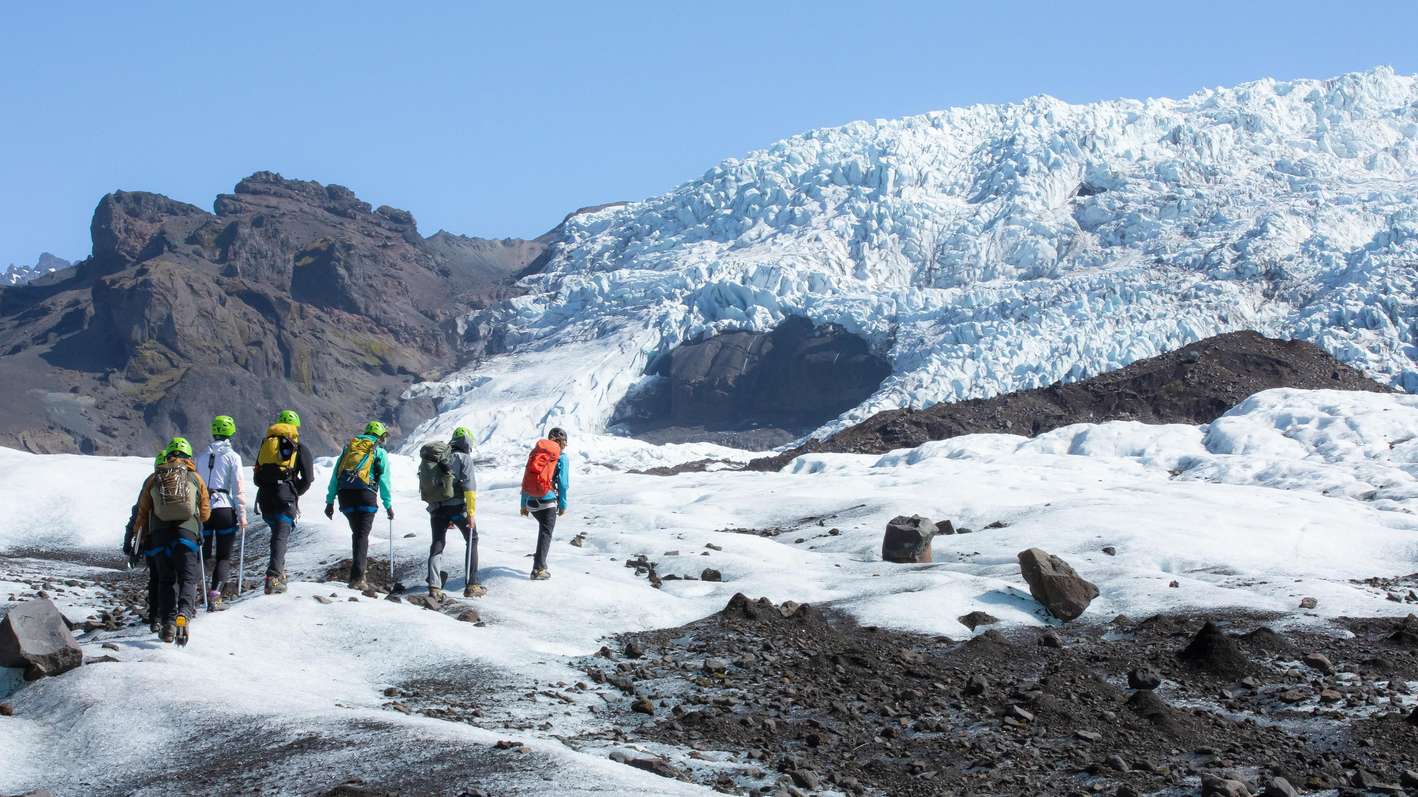
Those sturdy boots suit glacier walks too. See hikes and ice walks across the South Coast's glaciers.
Once you are packed, map the drive. Plan a route that links Vík, the waterfalls and the glacier lagoon.
Check what the weather does month by month so your layers and your itinerary match the season.

Turn one day into several. See three-day itineraries that pair your Katla visit with the whole coast.
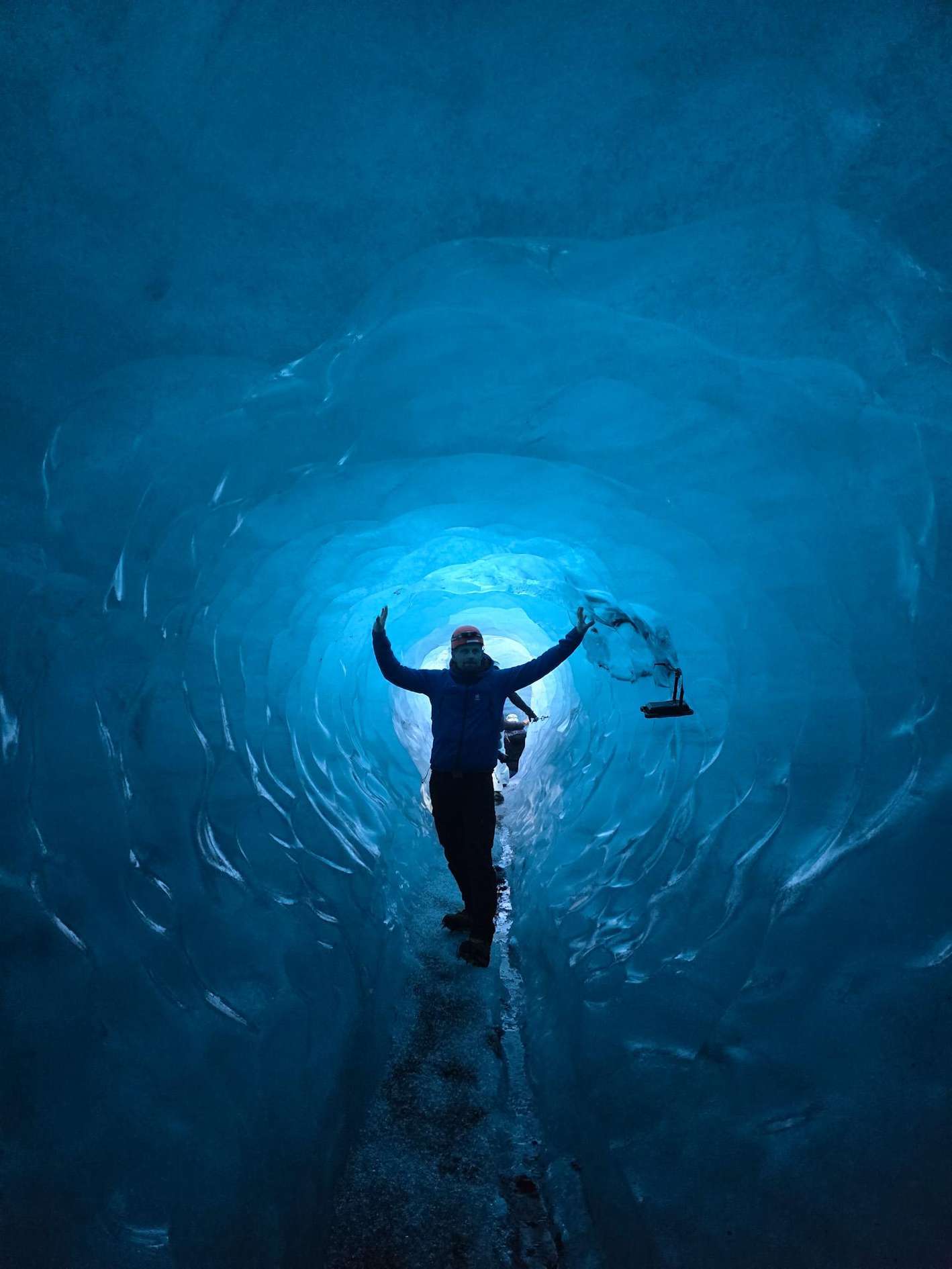
jeans go cold and heavy when wet
The clothing questions travelers ask before a Katla ice cave tour, with straight answers.
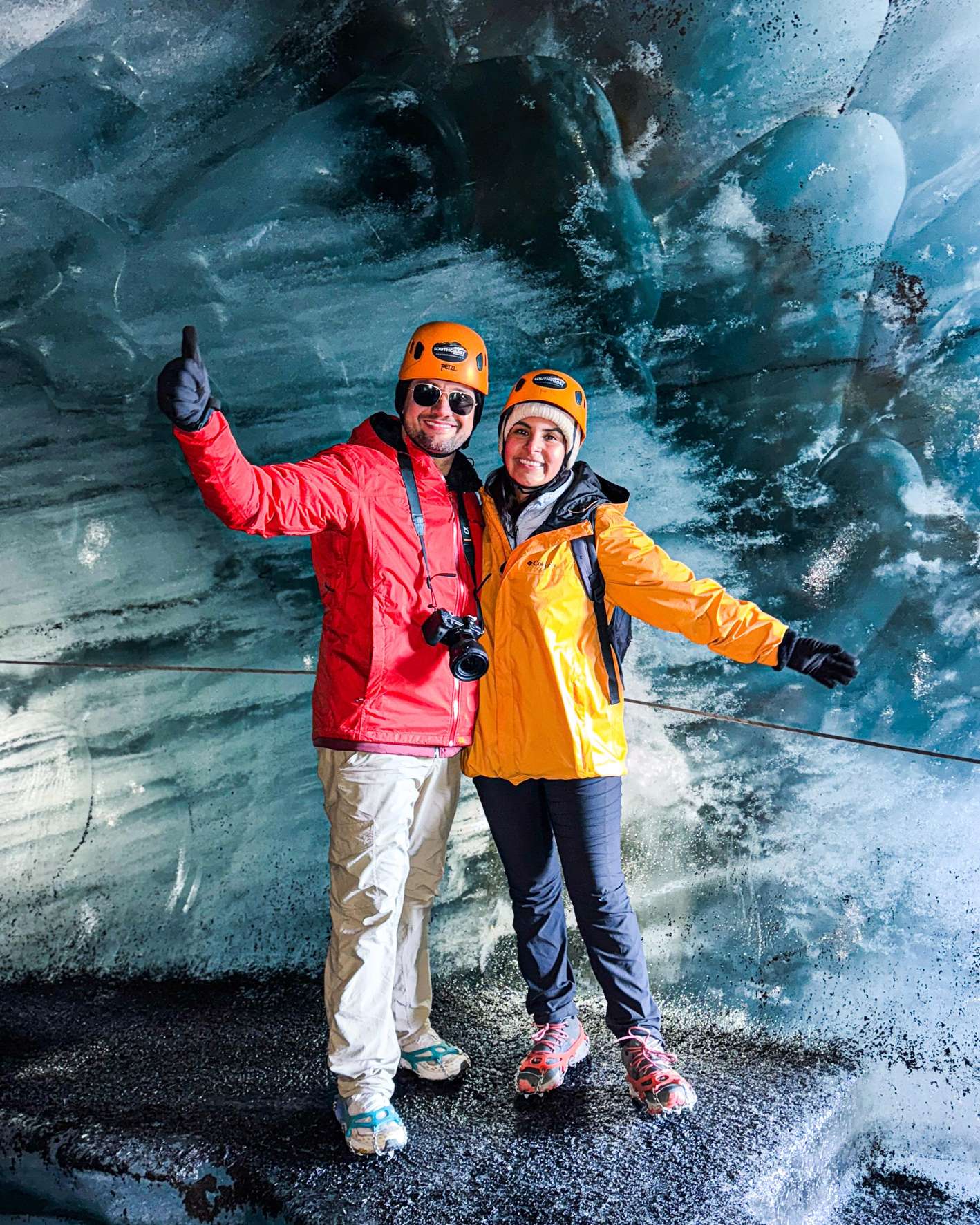 Hvolsvöllur2026
Dress in three layers: a wool or synthetic thermal top and leggings, a fleece or light down mid-layer, and a waterproof jacket and trousers on top. Add sturdy hiking boots, gloves and a warm hat. The tours list warm clothing, hiking shoes and rain gear under what to bring.
Yes. Meltwater drips from the roof of a natural ice cave, so travelers recommend a fully waterproof hard shell over a water-resistant coat. A soaked down jacket also loses its insulation, so keep the outer layer sealed and pack a spare pair of dry socks.
Leave the jeans at your guesthouse. One tour operator warns that they turn cold and heavy when wet. Cotton sweatpants work only as a layer under waterproof trousers, so synthetic or wool bottoms with a waterproof shell over them are the surer choice.
An ice cave sits around 0°C all year, whatever the air outside does. In winter it can feel warmer than the open air at the trailhead. Still, you stand still for stretches inside, so insulating layers matter more than raw temperature numbers.
Sturdy hiking boots with good ankle support, ones that crampons can fit over. Trainers will not do, and one operator states the ankle-support rule outright. Open-toed shoes are barred on the Reykjavík Katla tour, and the ground underfoot is wet volcanic sand and uneven ice.
The Katla tours from Vík and Reykjavík fit you with glacier crampons and a helmet at the glacier edge; guides handle the fitting before the walk. That saves you buying technical glacier gear. You supply your own warm and waterproof clothing and boots.
The walk from where the Super Jeep parks to the cave entrance takes about 10 minutes. Some visitors describe it as easy, others as steep in crampons, so count on uneven footing and a bit of stamina rather than a flat stroll.
Plan on roughly 30 minutes inside during a 3-hour tour from Vík, about a sixth of the whole outing. The rest goes on the Super Jeep ride across the black sand floodplains, gearing up and time on the glacier around the cave.
Pack water, snacks, a camera and your spare socks, and wear the warm, waterproof layers rather than carrying them. Anything you leave behind can stay in the Super Jeep during the glacier walk, so you climb to the cave with light hands.
Sunglasses are worth packing; glare off the ice on the walk to the cave is strong. Ski goggles stay at home, as the short walk and cave visit give them no real job. Gloves and a warm hat do more for your comfort than any extra eyewear.
It depends on the tour. Among the Katla listings, minimum ages run from 6 to 12: one operator takes children from 6 in summer and 8 in winter, another sets 6 for its FastTrack tour. Some tours also rule out people with limited mobility, so read the age line before booking.
Average highs near Katla run from 0.2°C in January to 11.5°C in July, and rain falls on about 17 to 21 days a month. Snow is most common from December to February. Dress for frequent wet weather in every season, and check the forecast on the morning you go.
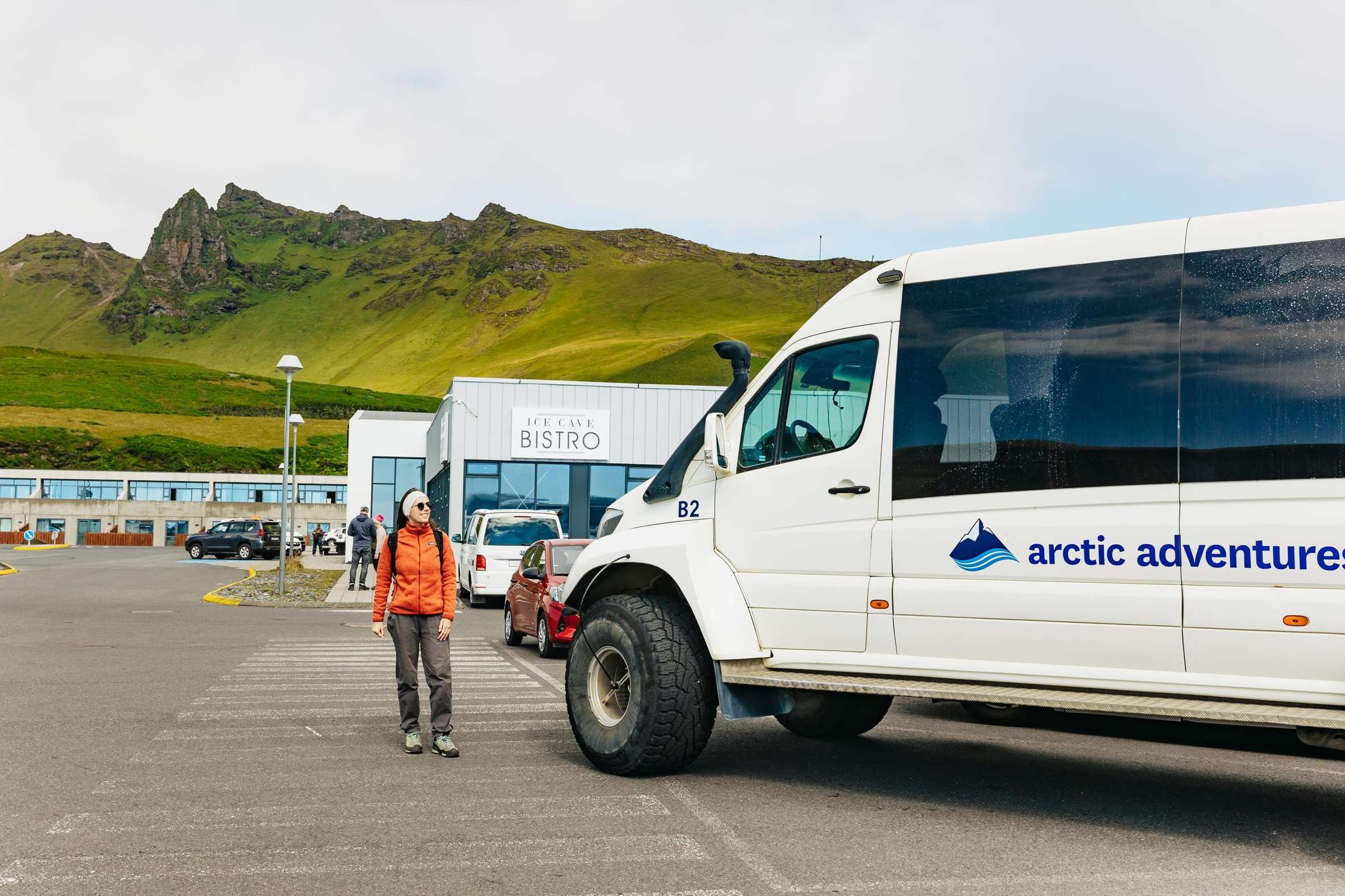
crampons and helmet are fitted at the glacier edge
Warm layers, waterproofs and hiking shoes are all you bring: the tour from Vík fits your helmet and crampons at the glacier, and free cancellation stays open until 24 hours before.