

11 hours·English
5.0(2)
From Reykjavik: Private South Coast and Katla Ice Cave
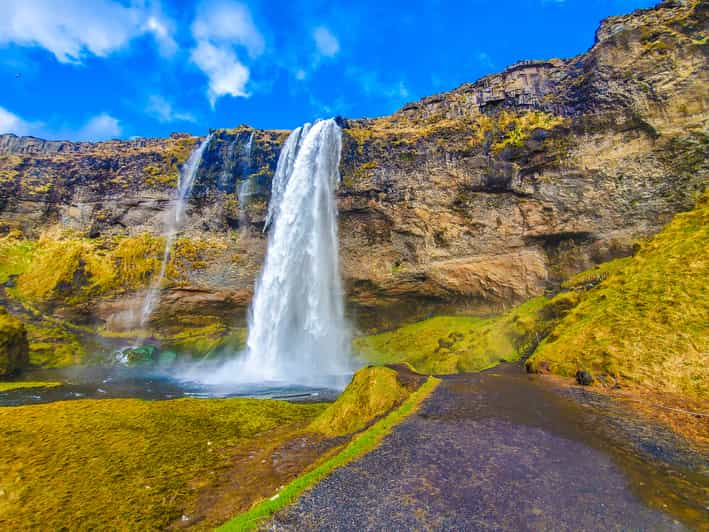
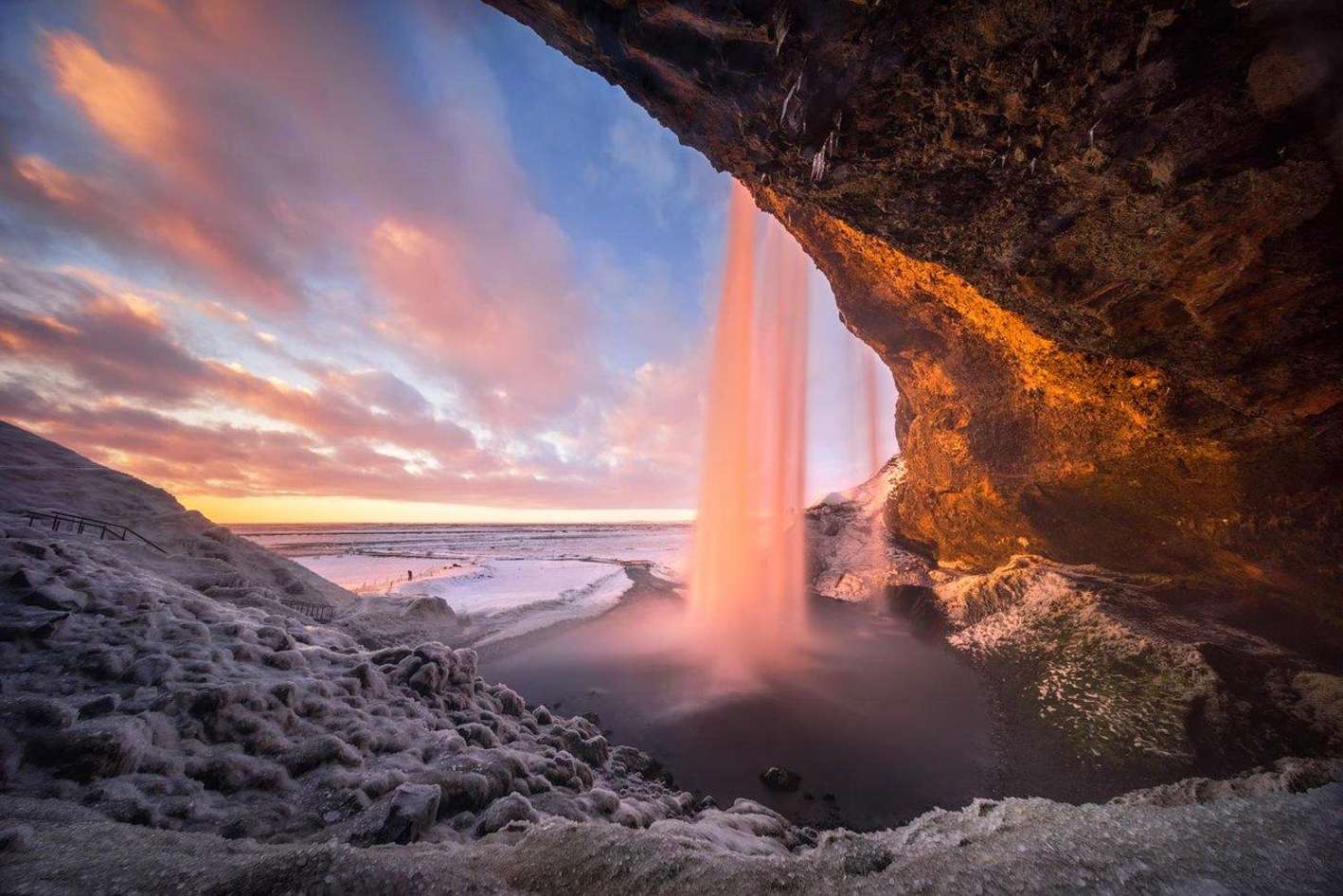
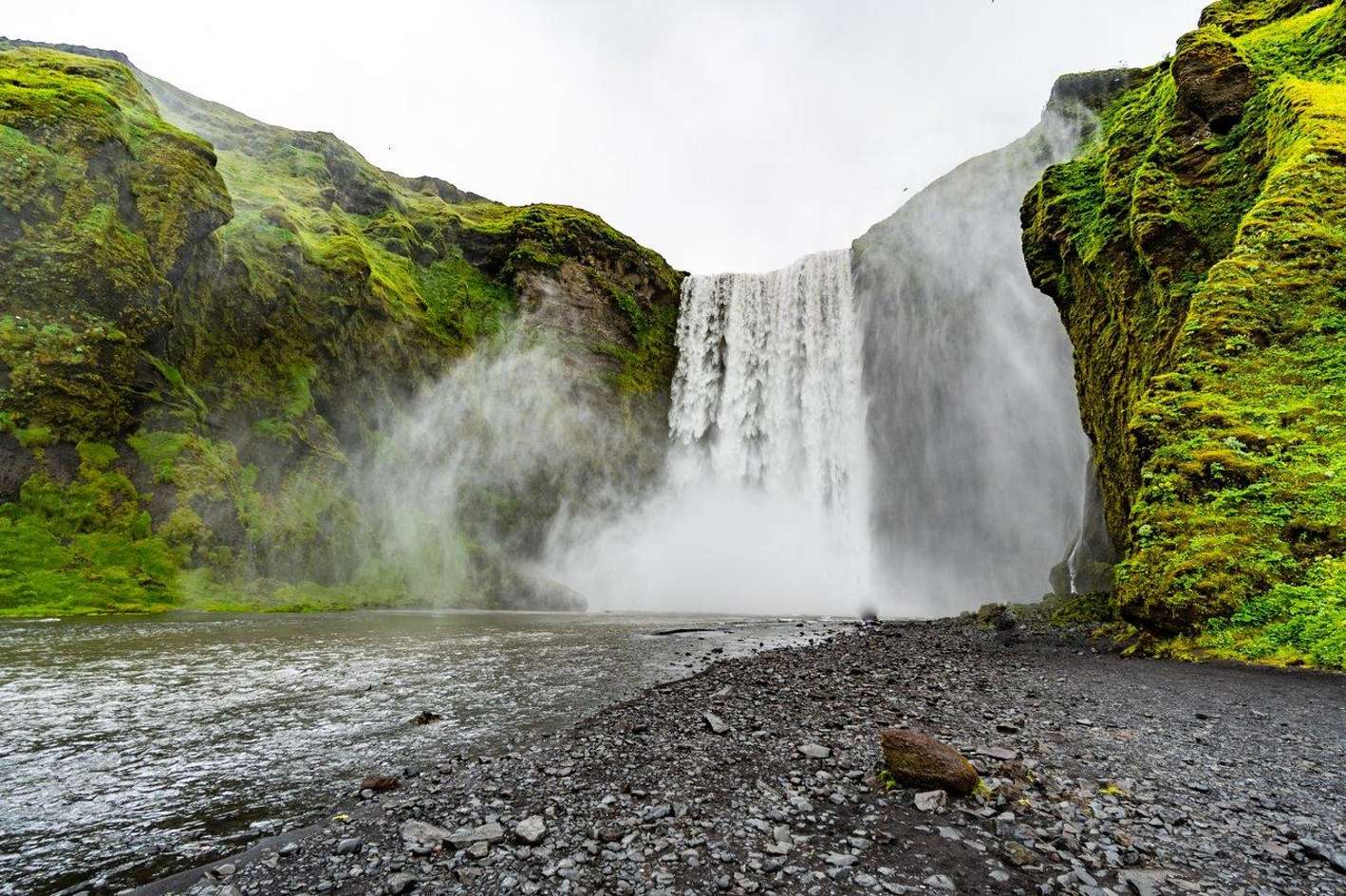
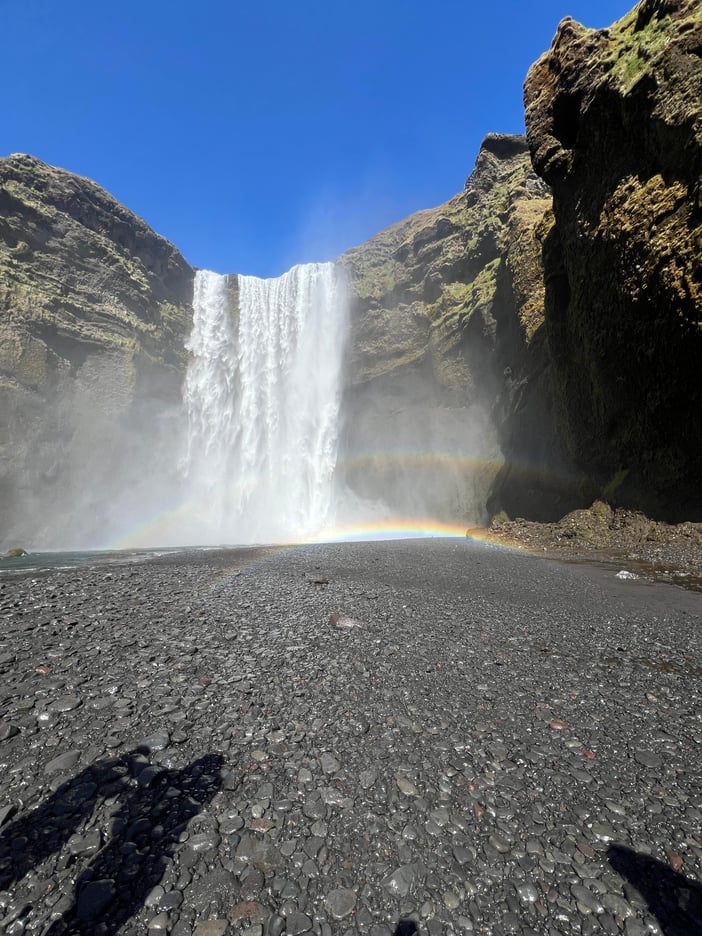
Climb all 527 steps to the top of SkógafossWalk behind the Seljalandsfoss waterfall
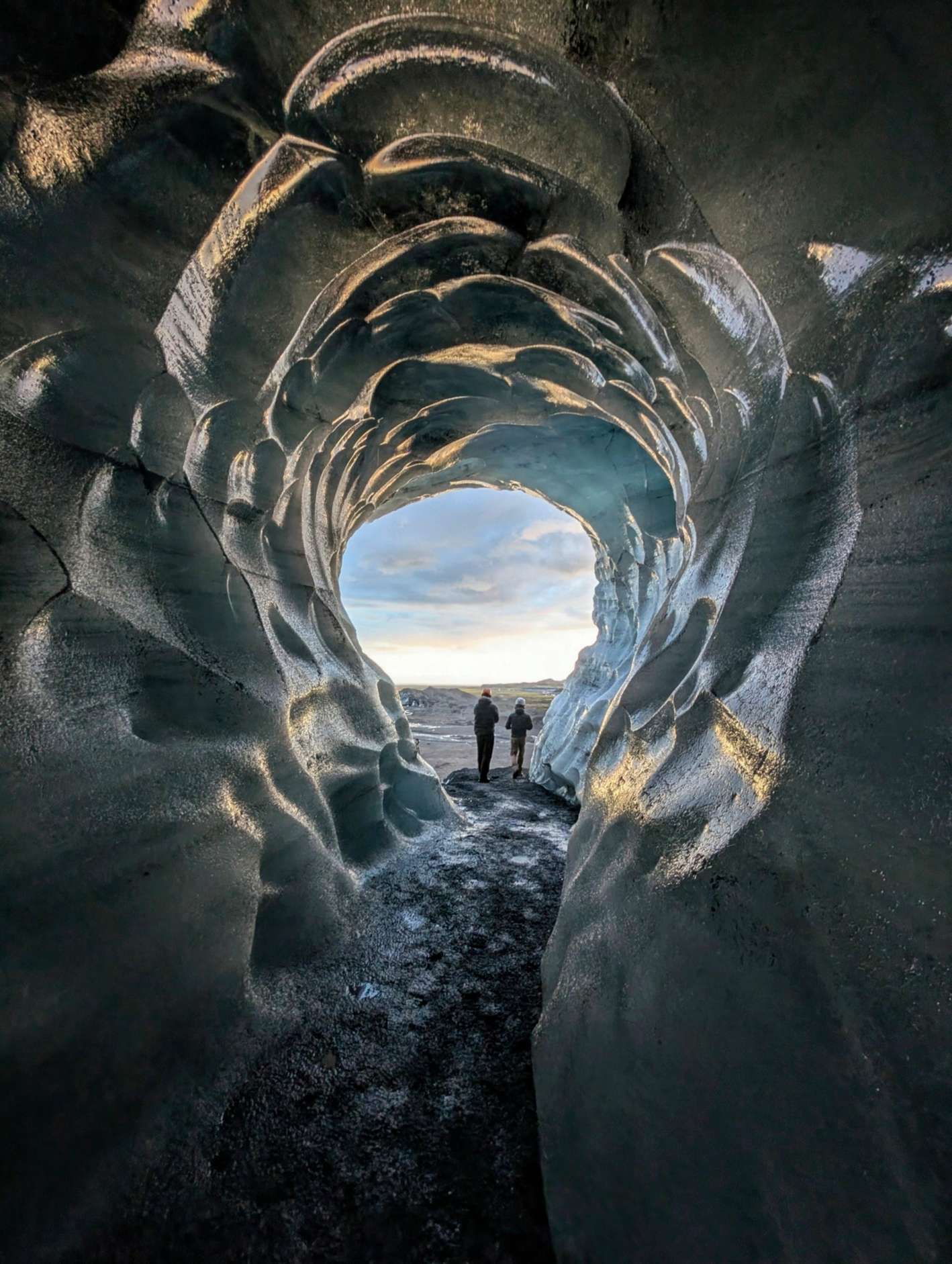
Plan the South Coast Iceland itinerary in one go - Seljalandsfoss, Skógafoss, Reynisfjara, Vík and a guided Katla Ice Cave, with a mapped route and honest drive times so the day never runs ahead of you. Book the guided day tour with Reykjavík pickup, or slot a local ice cave departure into your own drive.
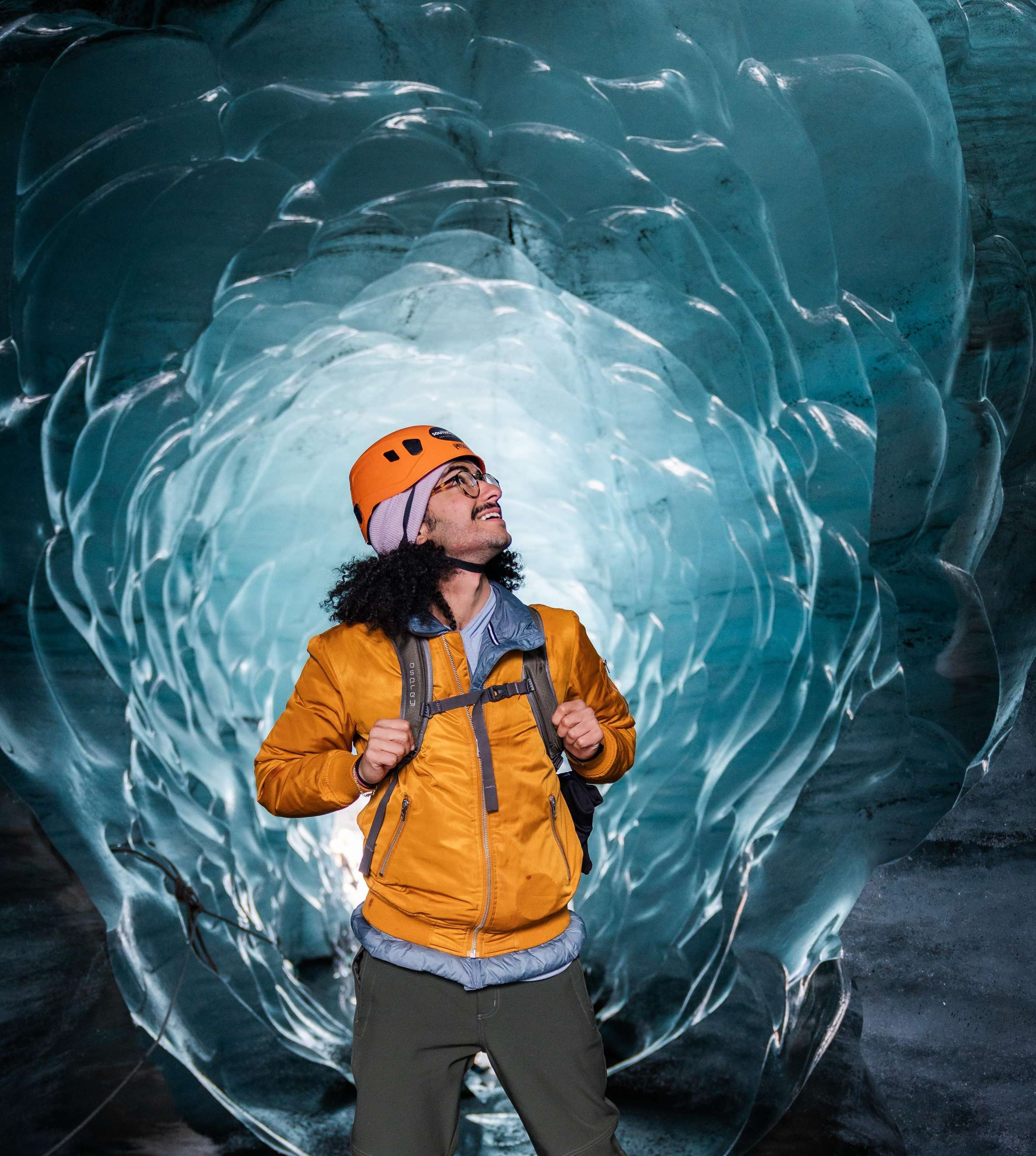
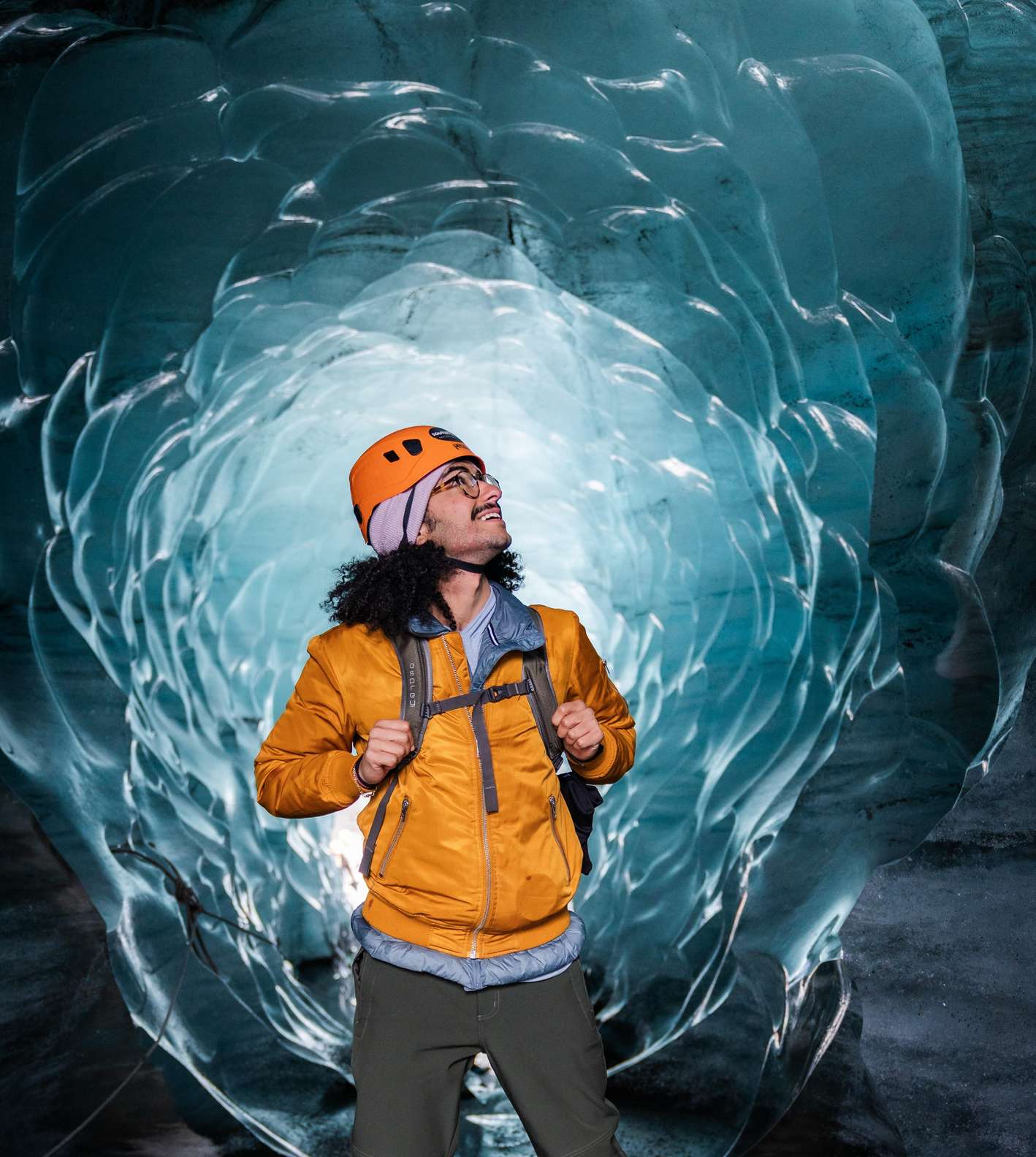
"Loved my time in the cave! We walked through first, then took our time on the way back for photos. Our guide was knowledgeable and patient. Really enjoyed it!"


reynisfjara red light: upper beach only
Route 1 runs about 187 km from Reykjavík to Vík, and every waterfall, black-sand beach and ice cave hangs off it. The stops line up in one order; the question is whether your day can hold them all.
The efficient eastbound order is Seljalandsfoss, Skógafoss, Reynisfjara, then Vík, with no backtracking on a 187 km run.
A round trip with all main stops means about 5 hours of driving and 10 to 12 hours door to door.
Winter daylight of about 4.5 hours in December cuts the stop list hard; April to September fits the full route.
Reynisfjara is the one stop with real rules: stay out of the marked light zones and never turn your back on the sea.
Winter storms close Route 1 for hours at a time, and a cancelled ice cave tour means a reschedule or a full refund.
Watch the warning lights at the beach: stay out of the yellow zone when the yellow light is on, keep at least 25 metres from the water at orange, and use the designated viewing area at red. Never turn your back on the sea, and keep children close.
Route 1 leaves Reykjavík heading east and the coast lines up its sights in a single sequence, so the smartest plan is also the simplest one. Seljalandsfoss comes first, about 128 km out, with the narrow walk to Gljúfrabúi a few minutes north of the falls.
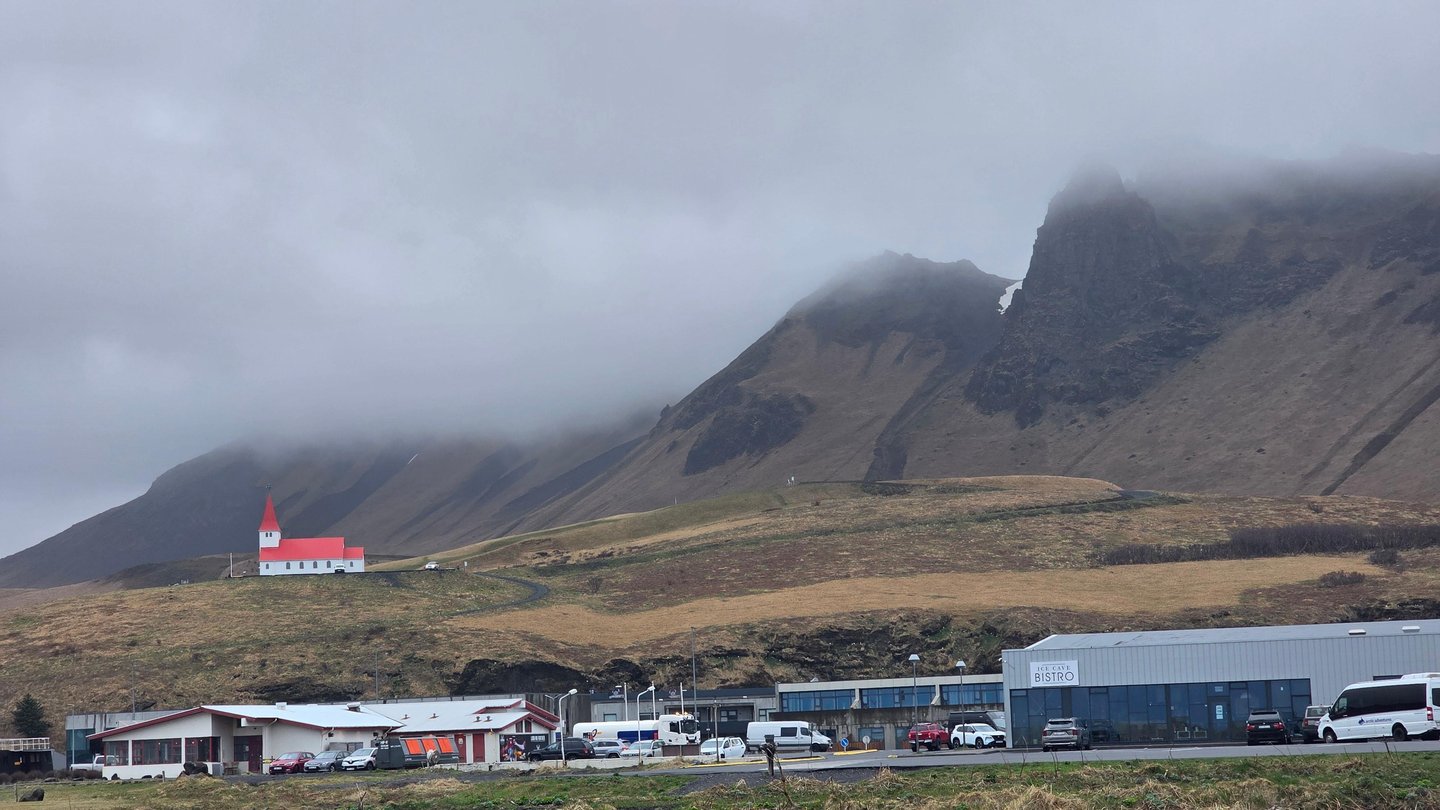
Skógafoss sits another 30 km on, then the Sólheimajökull glacier turn-off, then Reynisfjara black sand beach, and finally Vík í Mýrdal at roughly 187 km, where the super jeeps leave for the Katla ice cave.
One exception is worth knowing. If your ice cave meeting time in Vík falls early in the morning, drive straight there first and save Reynisfjara, Skógafoss and Seljalandsfoss for the drive back west.
The same stops serve both directions; the order just flips, and a fresh angle on the coast makes the return leg feel shorter.
A rental car buys you freedom. You set the pace, stretch a stop when the light is good, and change plans without asking anyone. Two travelers point out it can also cost less per person when a group shares the rental and fuel.
What it buys you is work: the planning, the driving, the parking and the fatigue all land on you, and the day runs to about 10 to 12 hours door to door either way.
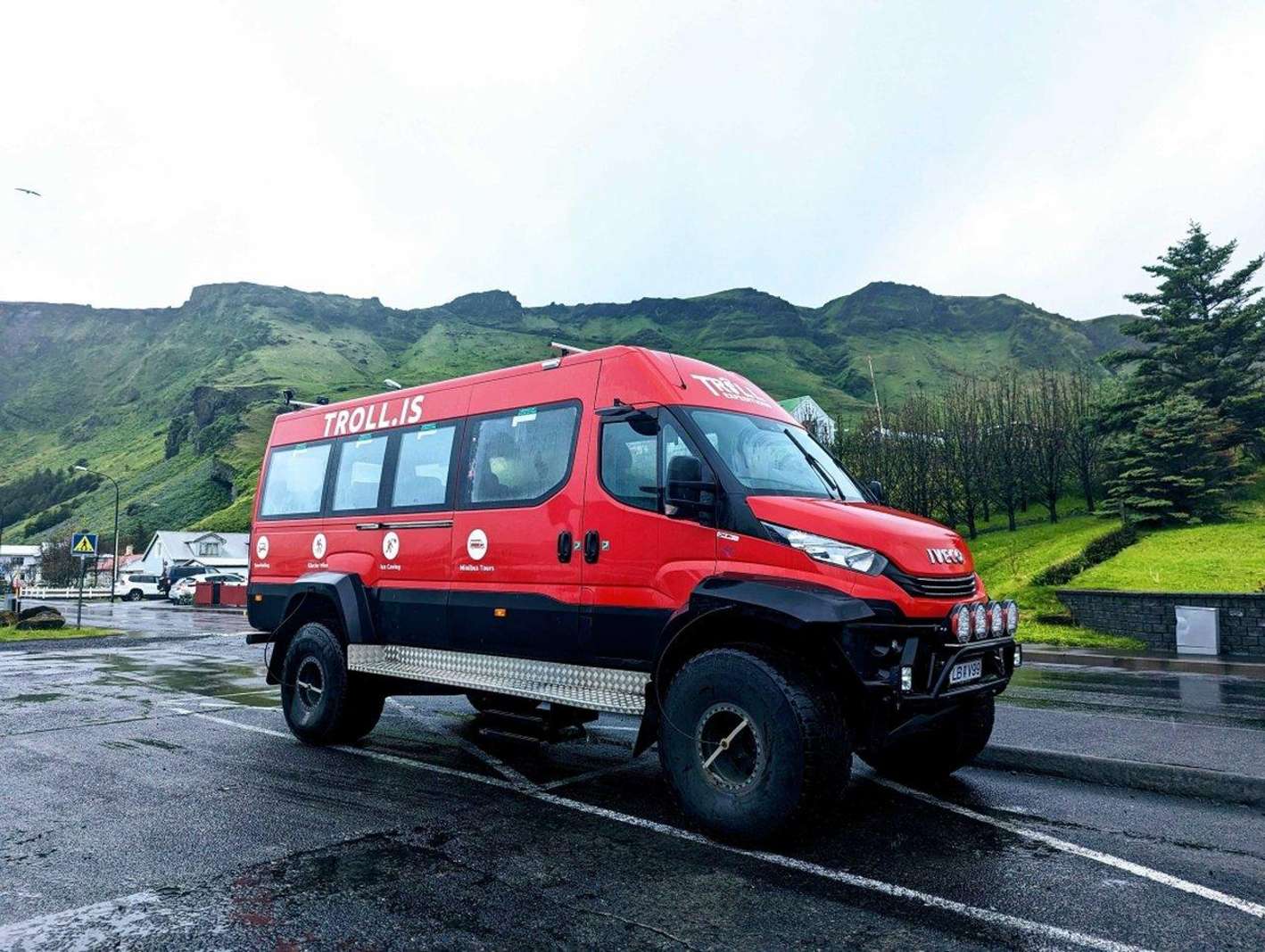
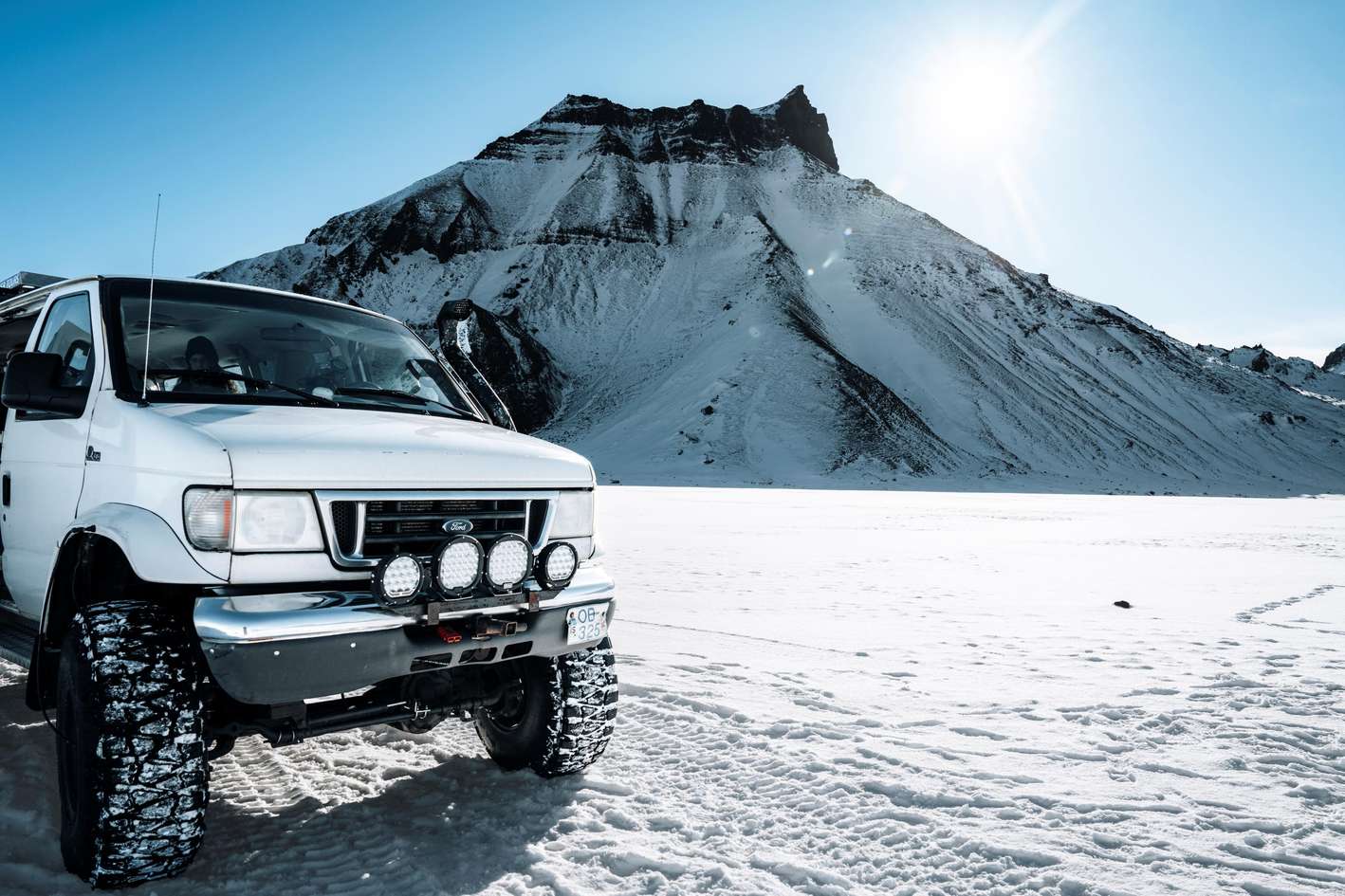
A guided day trades that freedom for relief. Small-group tours from Reykjavík, like the Reykjavik: Katla Ice Cave & South Coast Tour, pick you up, handle the waterfalls and the black sand, and put a certified guide and a super jeep between you and the glacier.
Visitors who do not drive, or who would rather not meet Icelandic winter roads, say this is the reassuring option.
| About 5 hours at the wheel plus parking | None; pickup and drop-off in Reykjavík | |
|---|---|---|
| Schedule | Your pace, longer stops, plans can change | Fixed timetable, 10 to 12 hours door to door |
| Winter roads | Ice and gusts are your decisions | An experienced driver makes the road calls |
| Cost per person | Lower when costs are shared in a group | Fixed per seat, no rental or fuel |
Read that table against your own winter confidence. If the road and parking columns feel like a burden you want gone, the guided day is the cleaner plan, and the trade is a set schedule.
The clock is what makes or breaks this day. Leave Reykjavík around 7 am in the brighter months and you reach the first stops ahead of the coach crowds, since sunrise averages well before six from May to August.
Budget about 5 hours of driving in total, then give each stop its honest share: 45 to 60 minutes at Seljalandsfoss, 45 at Skógafoss, 45 at Reynisfjara, and half an hour in Vík for food before an ice cave departure.
In summer the sun is already up; in winter it is still dark
45 to 60 minutes, plus the short walk to Gljúfrabúi
45 minutes for the falls and the viewing path
45 minutes among the basalt columns, well back from the water
30 to 45 minutes for food before or after the ice cave slot
The calendar matters as much as the clock. April through September gives daylight enough for that whole schedule, March sits right on the edge at just under 12 hours, and October averages under ten. Shoulder months thin the crowds too, which is its own reward.
January: 5 out of 5 for how busy it gets.
Tap a month to read it.
Whatever the season, hold a little slack. One stopped-up hour early in the day does not recover itself later, and the drive home is the part nobody wants to rush in the dark.
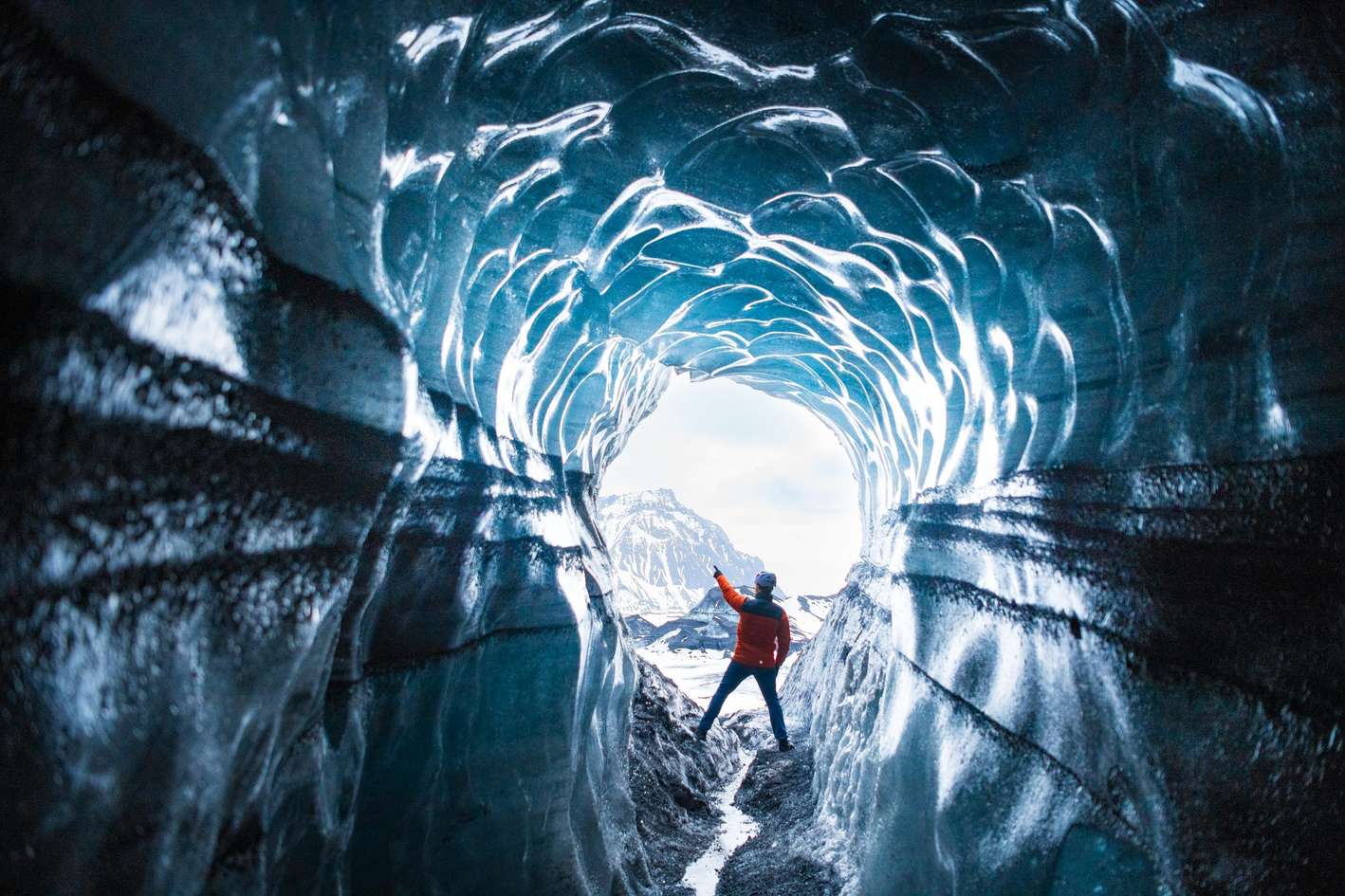
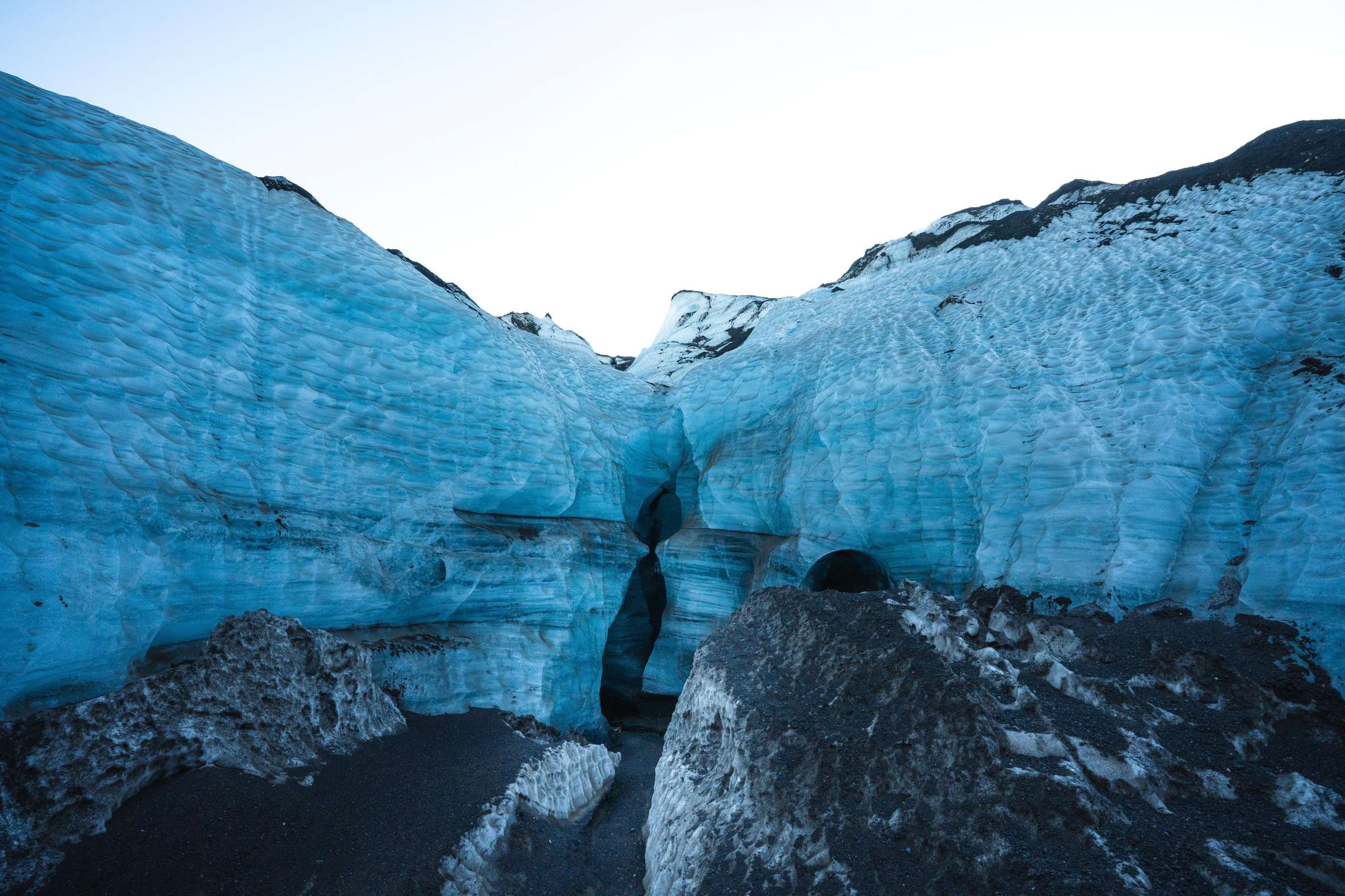
Daylight is the number that decides the shape of the day. In December the sun rises around 11:04 and sets by 3:35 pm, leaving about 4.5 hours of usable light, and January stays under six hours. That does not end the trip; it reshapes it.
Winter itineraries cut the secondary detours and focus on core stops like Seljalandsfoss, Vík or the ice cave, running the outbound and return legs in the dark so the sights are reached while the light holds.
The season-by-season weather page carries the full daylight and temperature curve if you are still choosing a month. Judge your stop list against your own season's light. A winter day that holds two stops done well beats a summer-shaped list half finished in the dark.
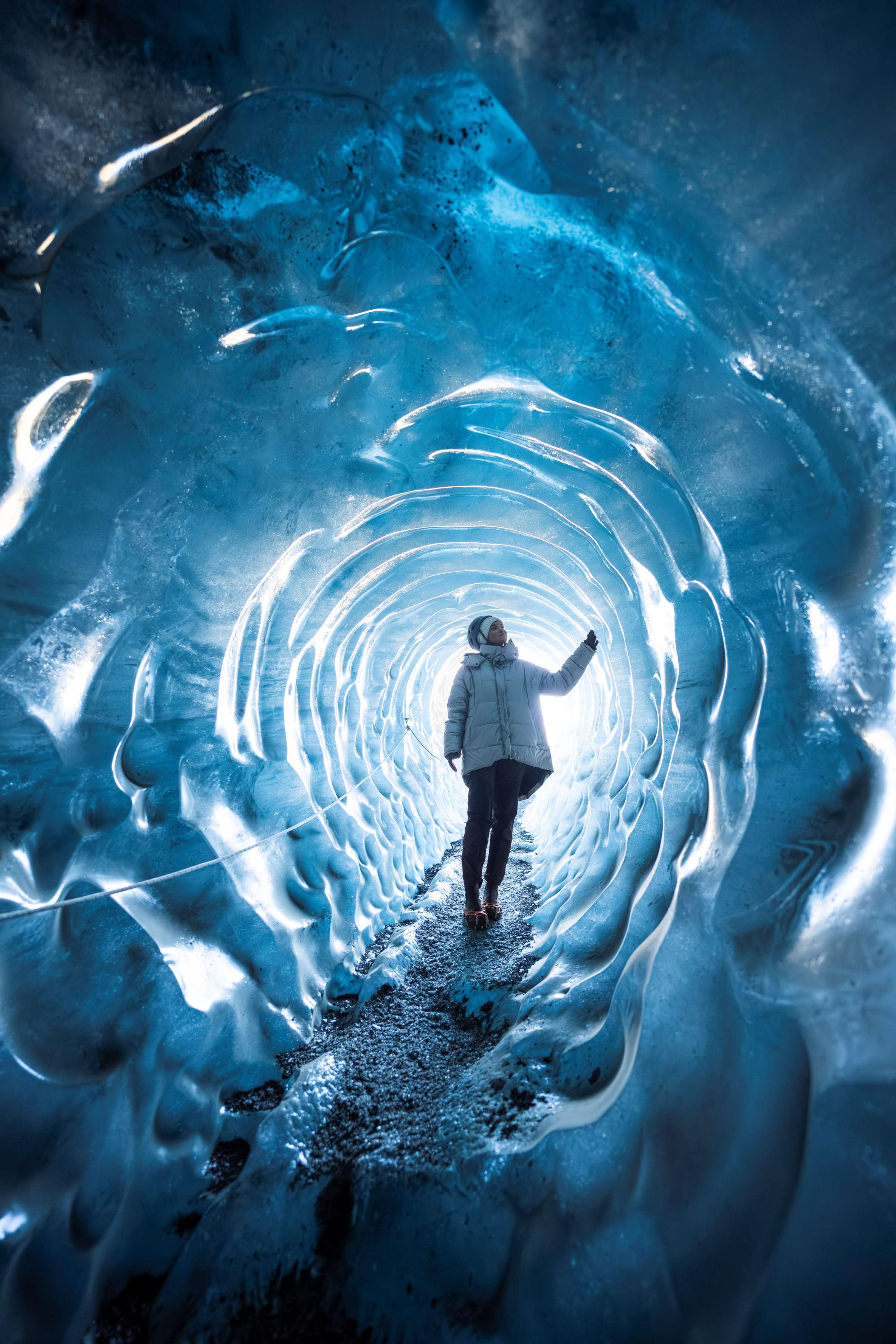
Crowds along the coast follow the coaches out of Reykjavík, and the fix is simple: be there before they are. An overnight near the coast beats a dawn dash from the city, because Skógafoss sits a cautious 134 minutes out by one driving estimate and Reynisfjara another 80 beyond it.
Visit Reynisfjara before 8:30 am and reach Skógafoss before 9 am, and you will have both largely to yourselves ahead of the midday peak.
Arrive before the tour-bus rush.
Expect the busiest stretch of the day.
Crowds ease after the daytime peak.
Reynisfjara deserves respect beyond timing. The black sand sits under cliffs of basalt, the Reynisdrangar sea stacks stand offshore from a volcanic eruption under a glacier in the Ice Age, and the waves that shaped them still arrive without warning.
The beach runs a traffic-light system: stay out of the yellow zone when the yellow light shows, and on red, keep to the upper beach behind the marked line.
At orange alert, hold at least 25 metres from the sea. Safety officers can close the beach at short notice, and children stay with an adult at all times.
The two driving figures sit together like this: the 134 minutes is a careful stop-free estimate for reaching Skógafoss alone, while the 2.5-hour baseline you see elsewhere covers the full 187 km to Vík under no-traffic summer conditions. Neither counts your stops, so both are floors.
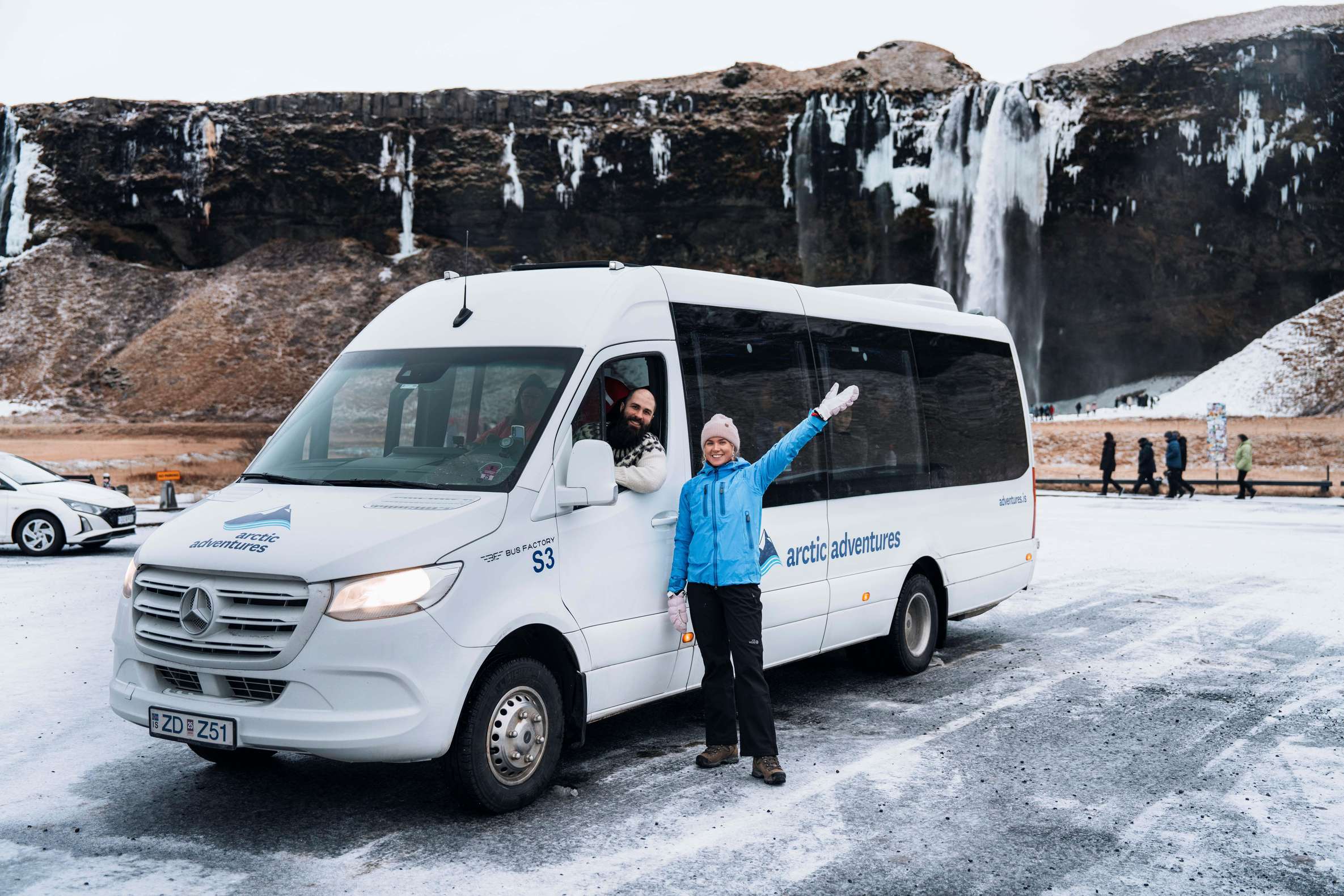
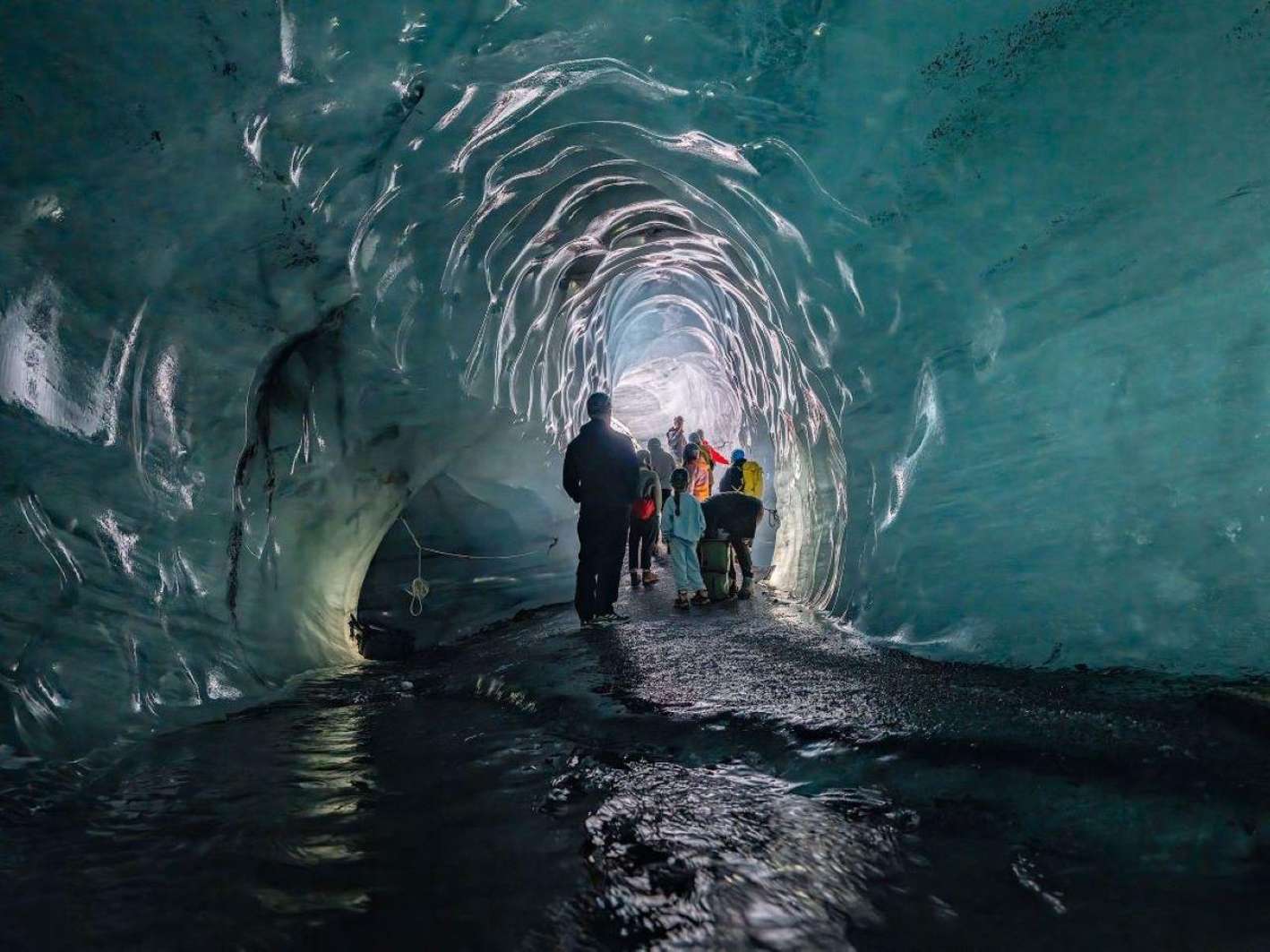
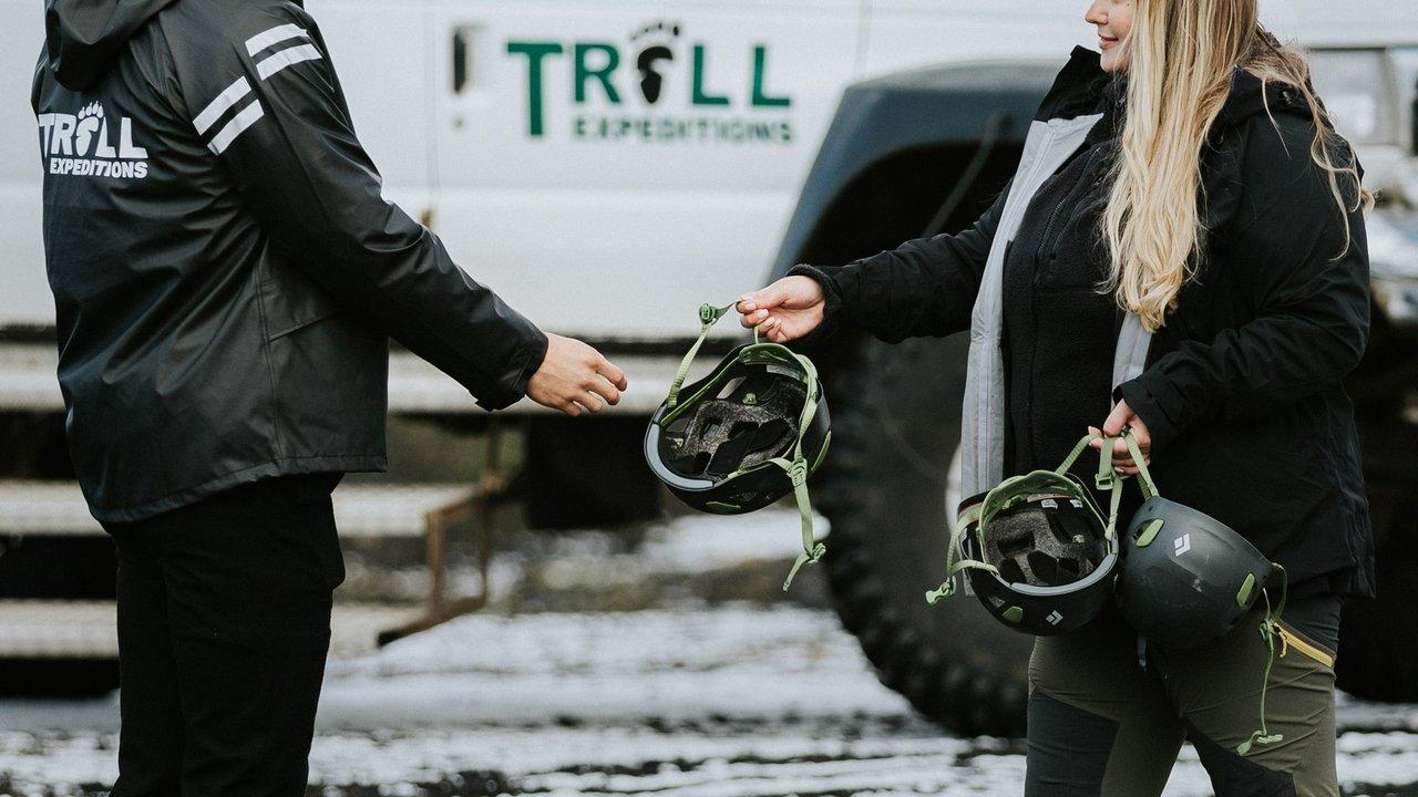
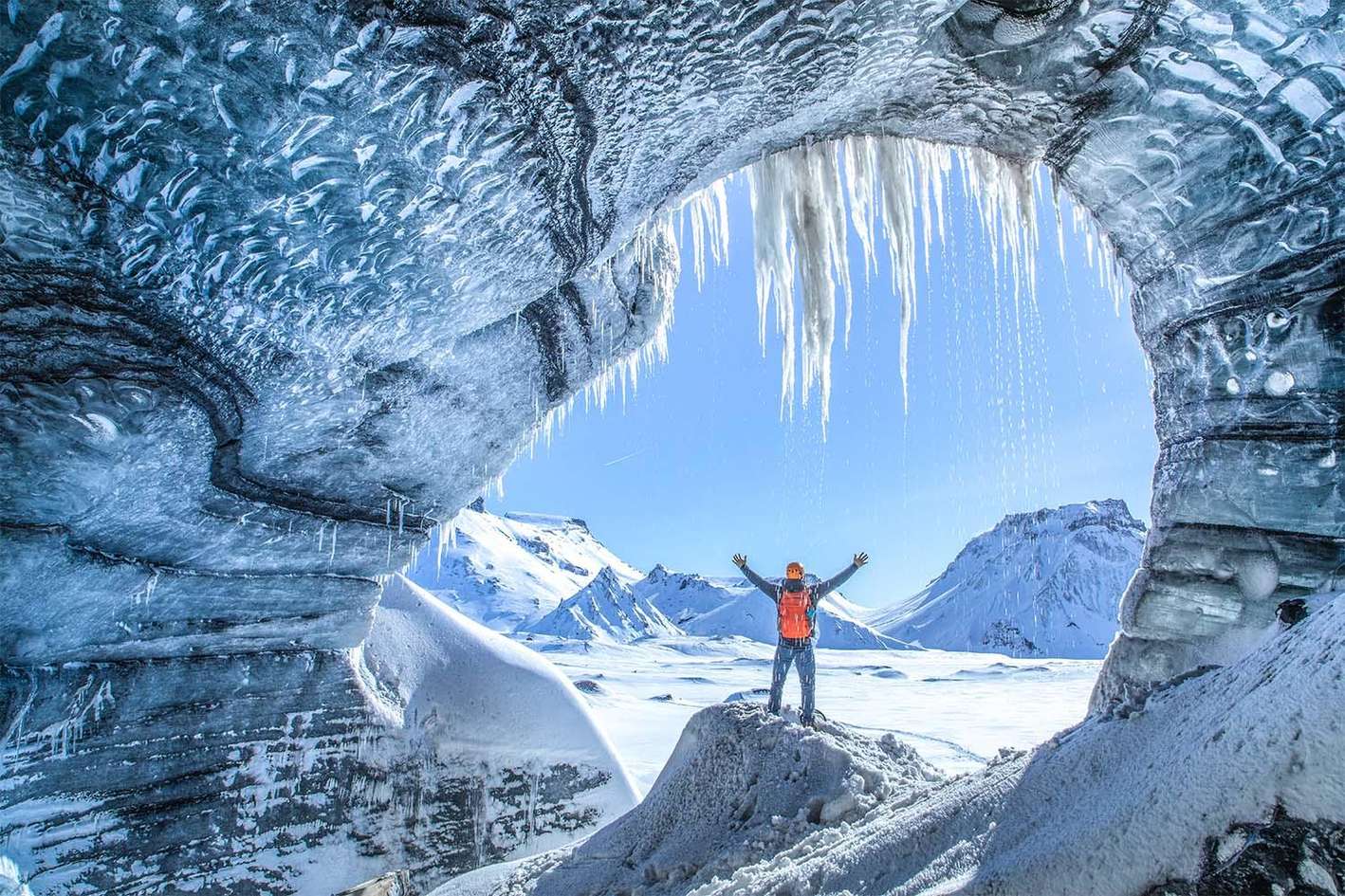
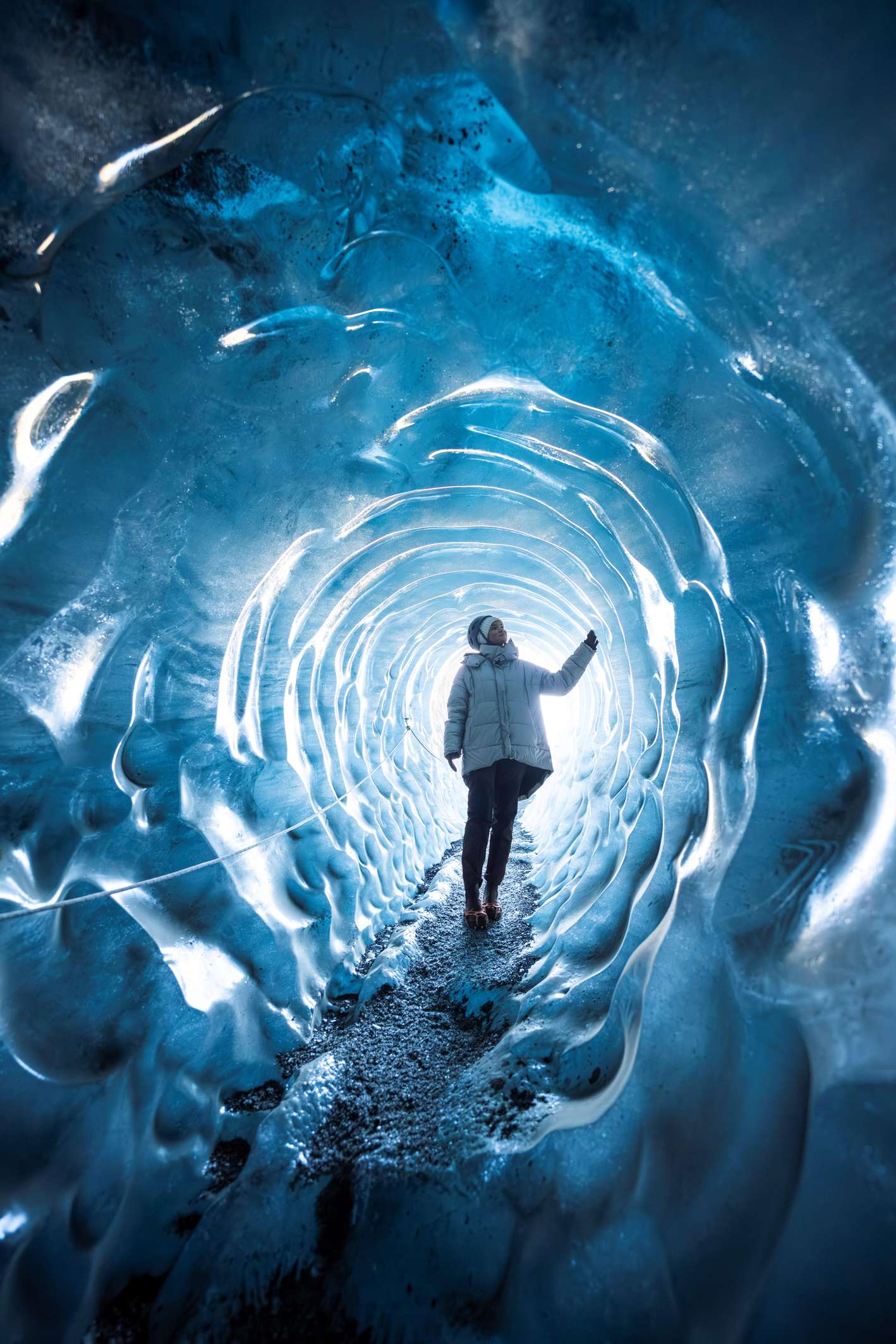
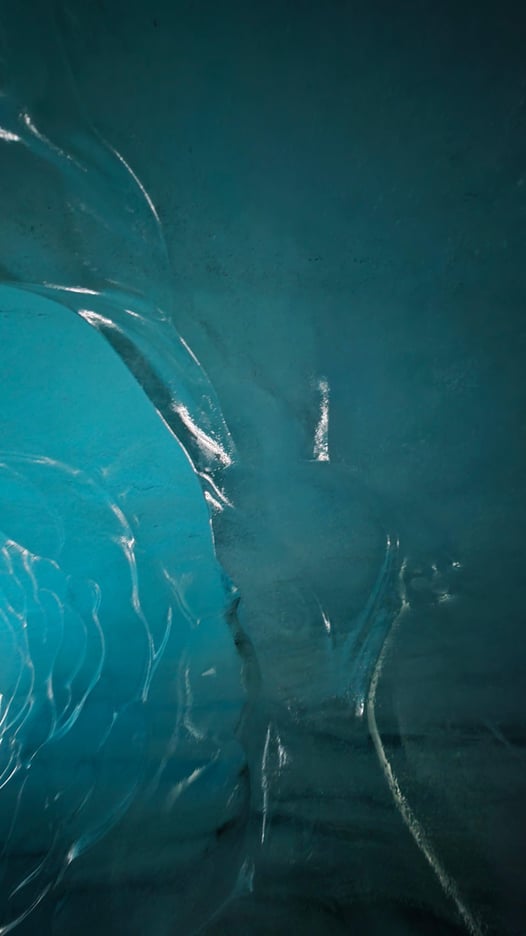
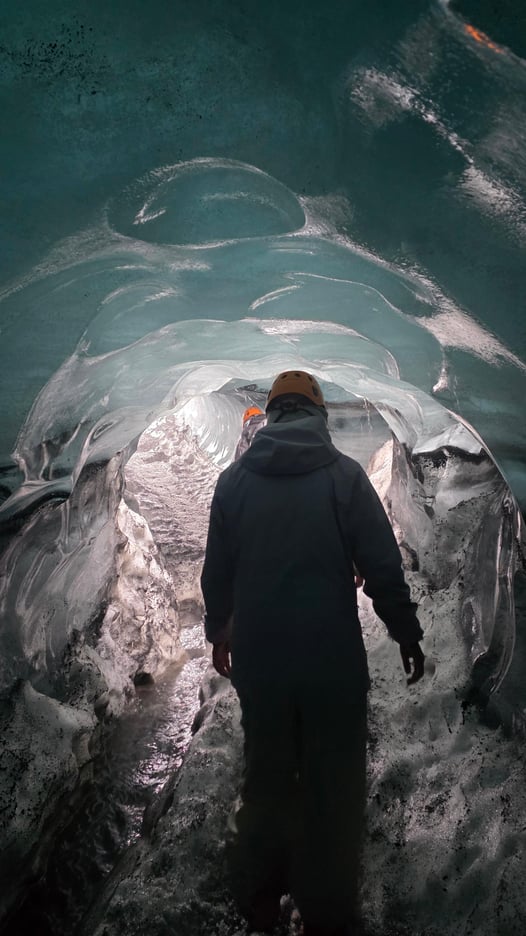
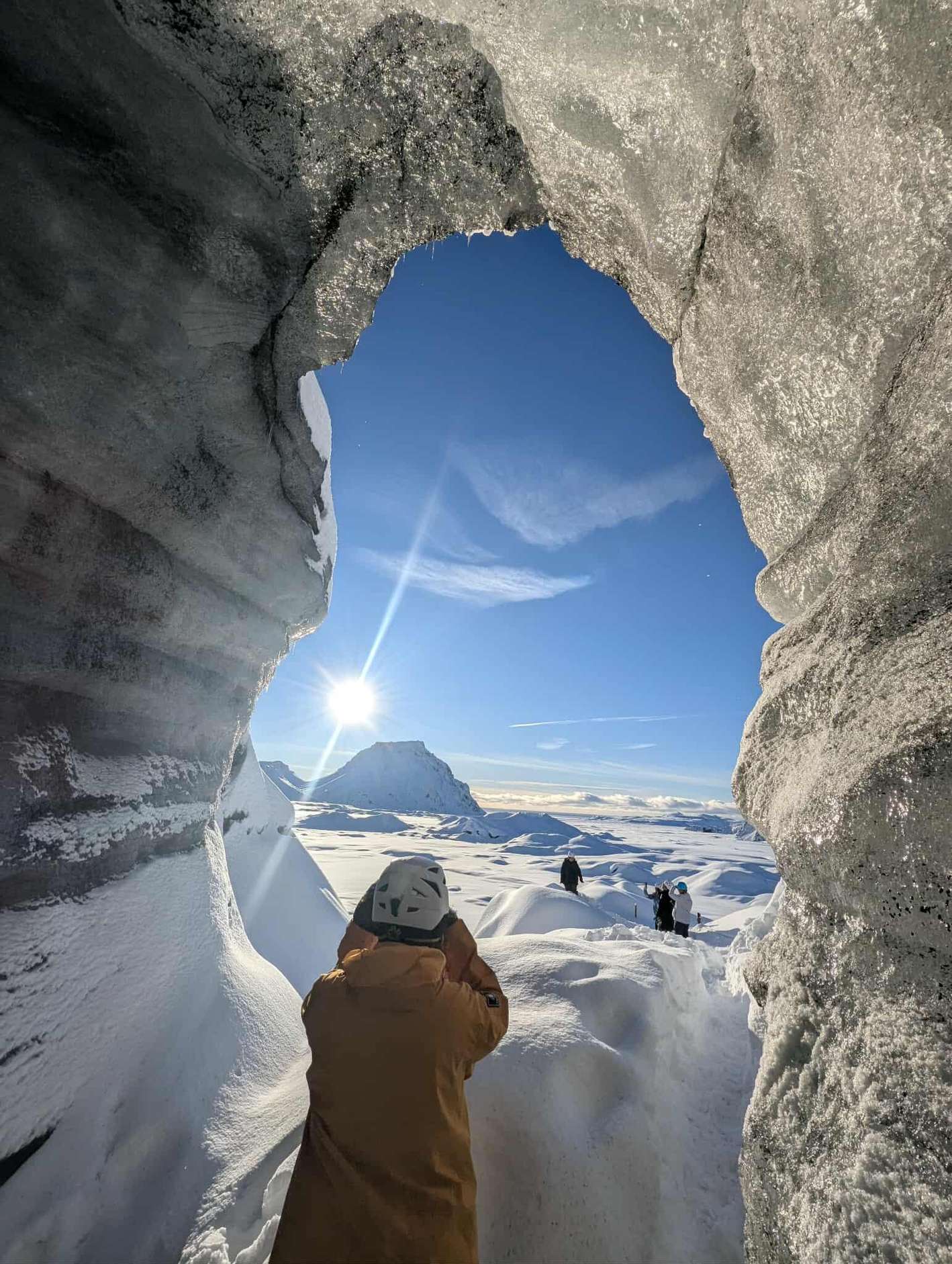
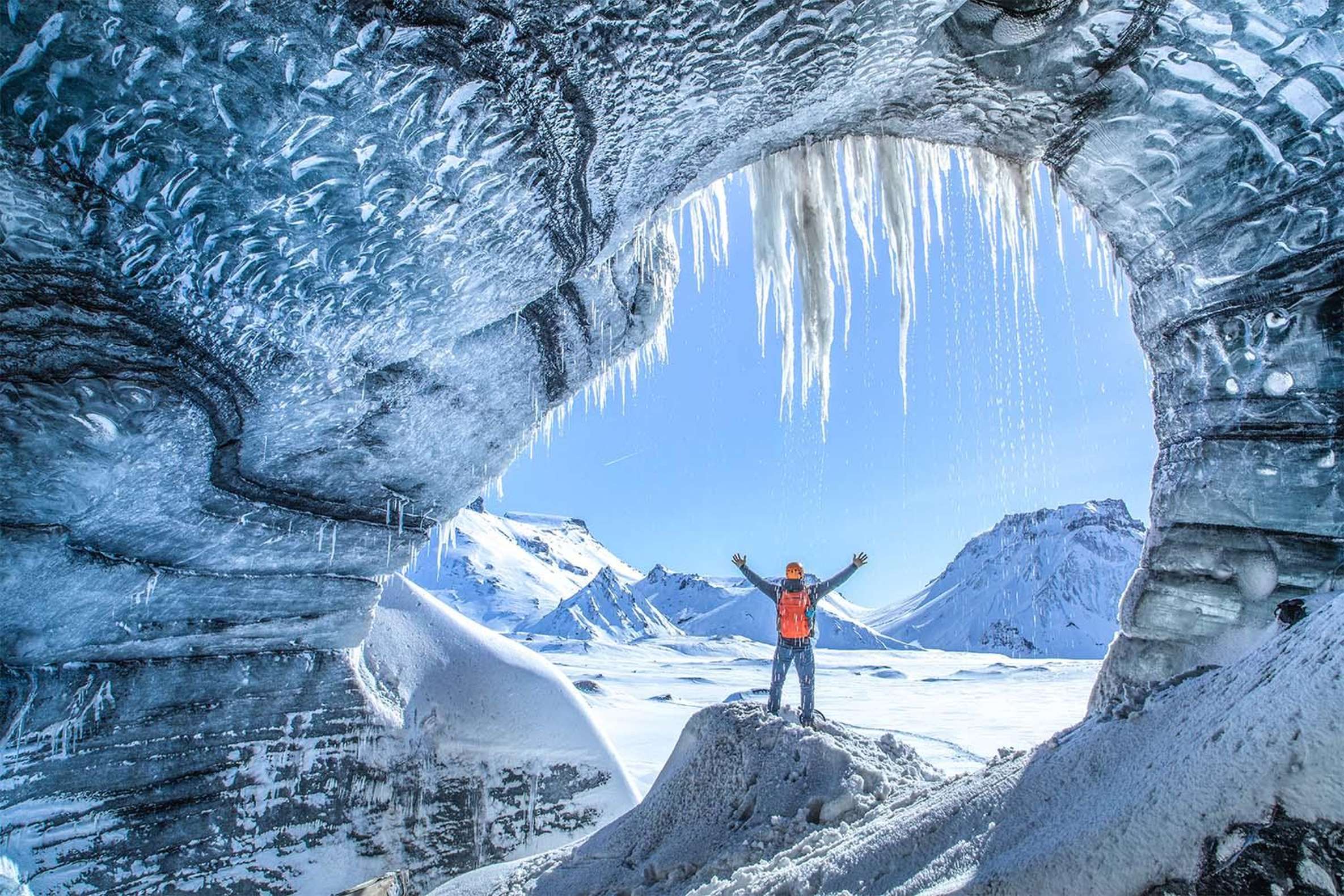
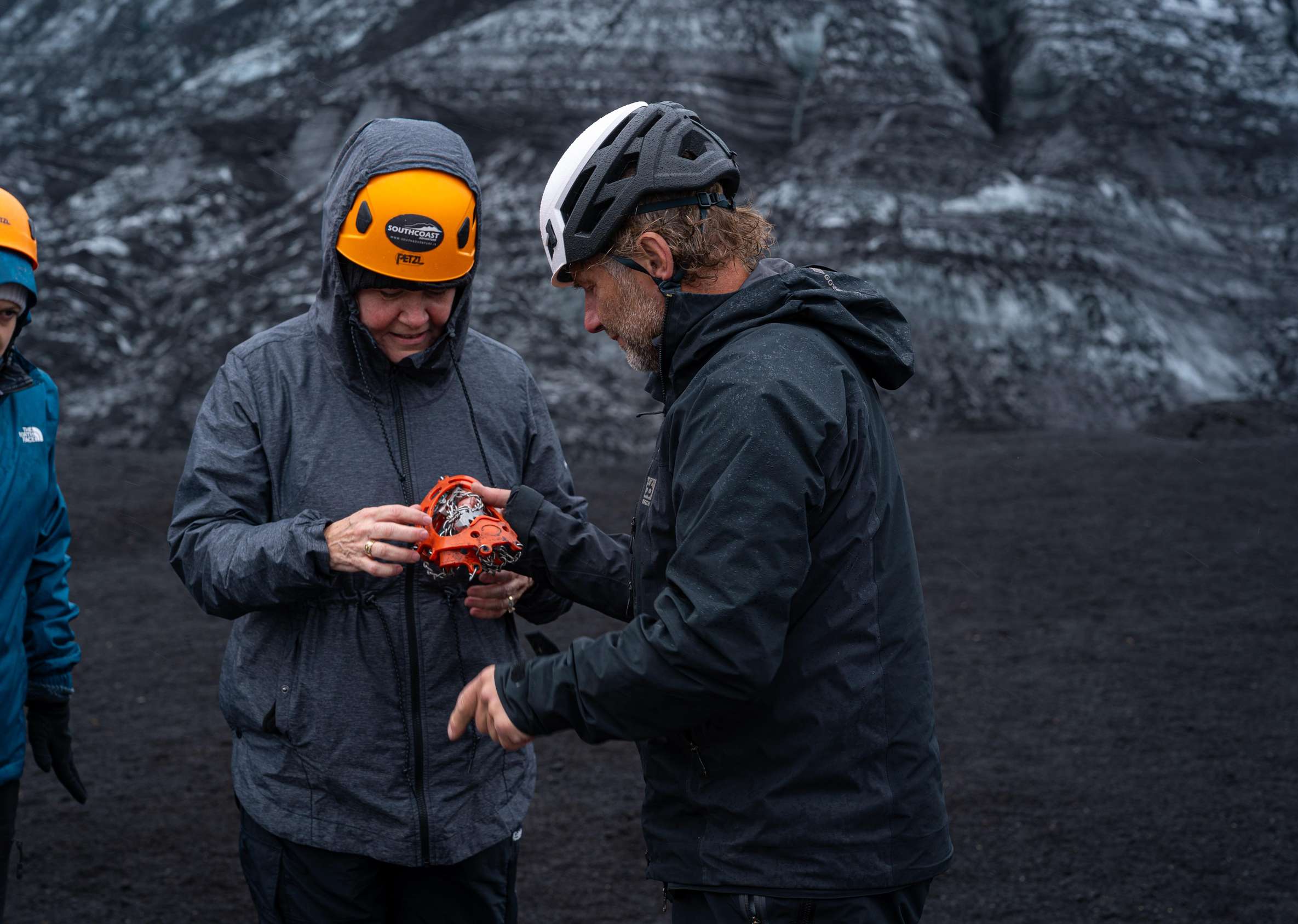
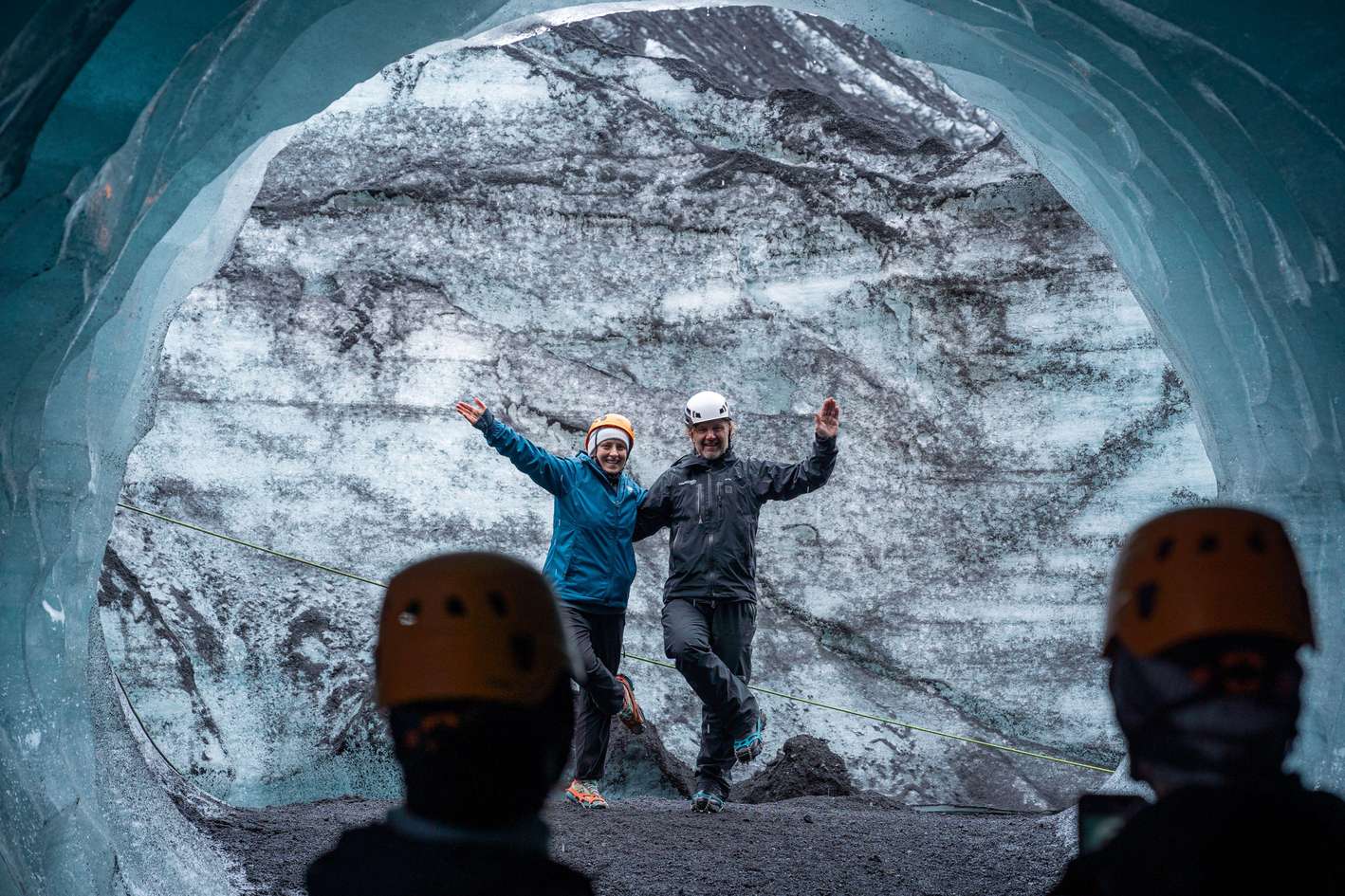
Two ways exist to meet the ice, and they ask different things of you. An ice cave tour takes you inside the glacier, by super jeep to the entrance and a short walk on uneven ground, with a helmet and head torch provided where needed.
A glacier hike takes you across the surface: the three-hour Falljökull hike from Skaftafell puts crampons, a helmet, a harness and an ice axe on you and walks you onto the ice of Vatnajökull.
Travelers who have done both describe the difference plainly. The hike is the more active day, more time on the ice, more of a physical challenge.
The cave visit leans contemplative, no rope work, no scrambling, and people with average fitness handle the walk fine. The glacier hikes and ice walks page covers the hiking side in depth.
For the route, the base decides. Skaftafell fits an eastbound road trip with an overnight on the southeast coast, and the Falljökull hike takes ages 8 and up.
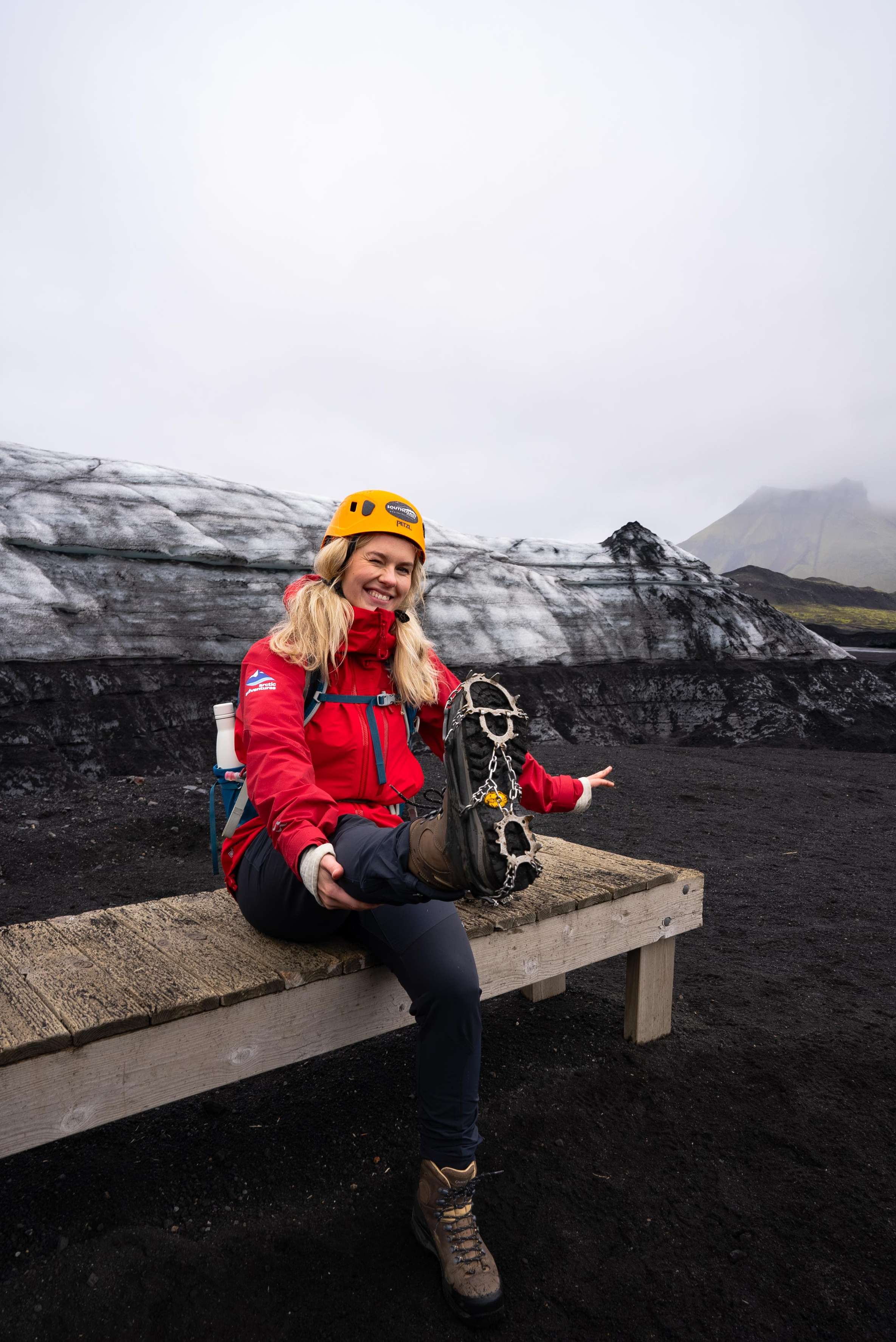
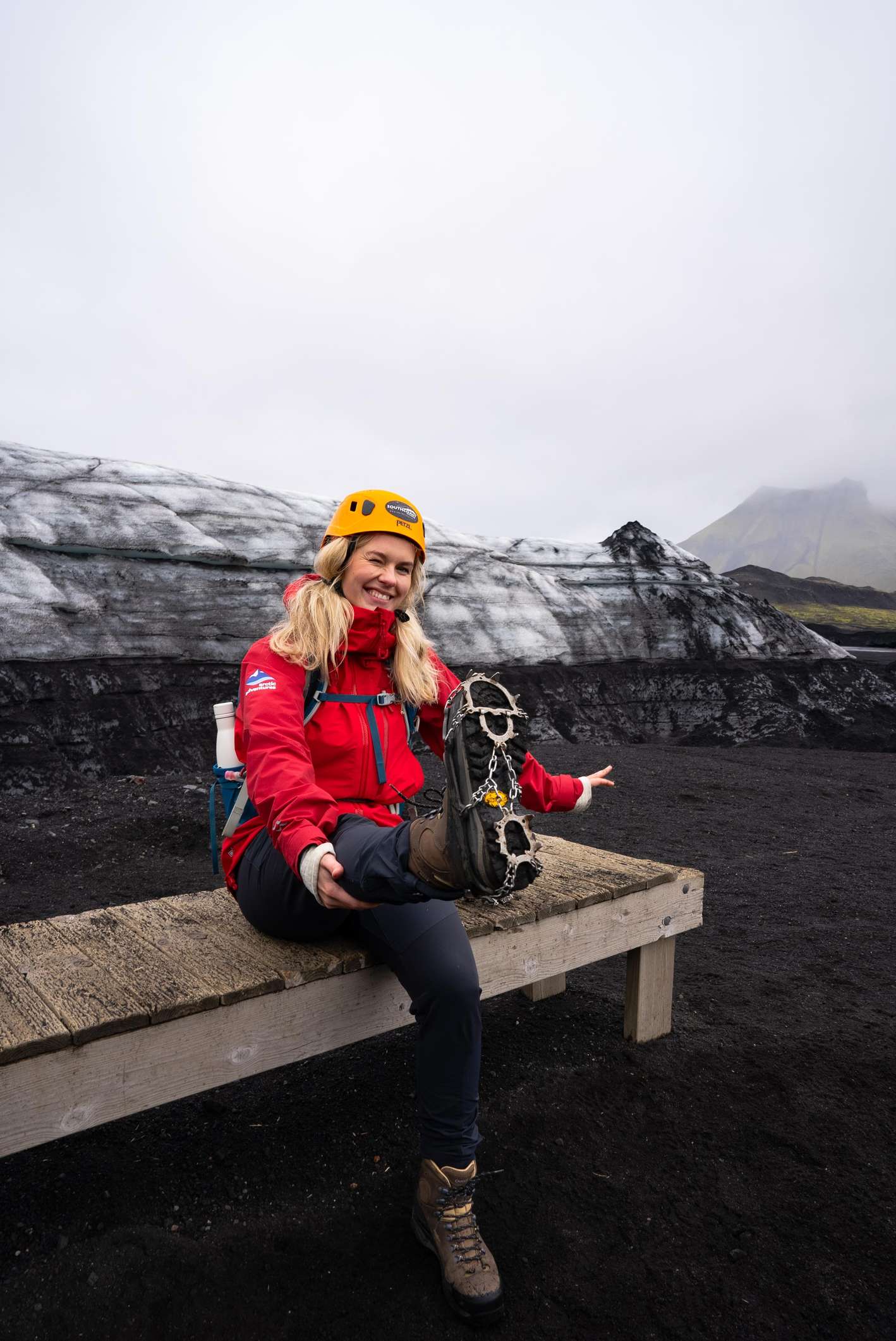
Boots need a stiff sole and ankle support for crampons; soft sneakers can get you turned away at the gear check, and boots can be rented on site.
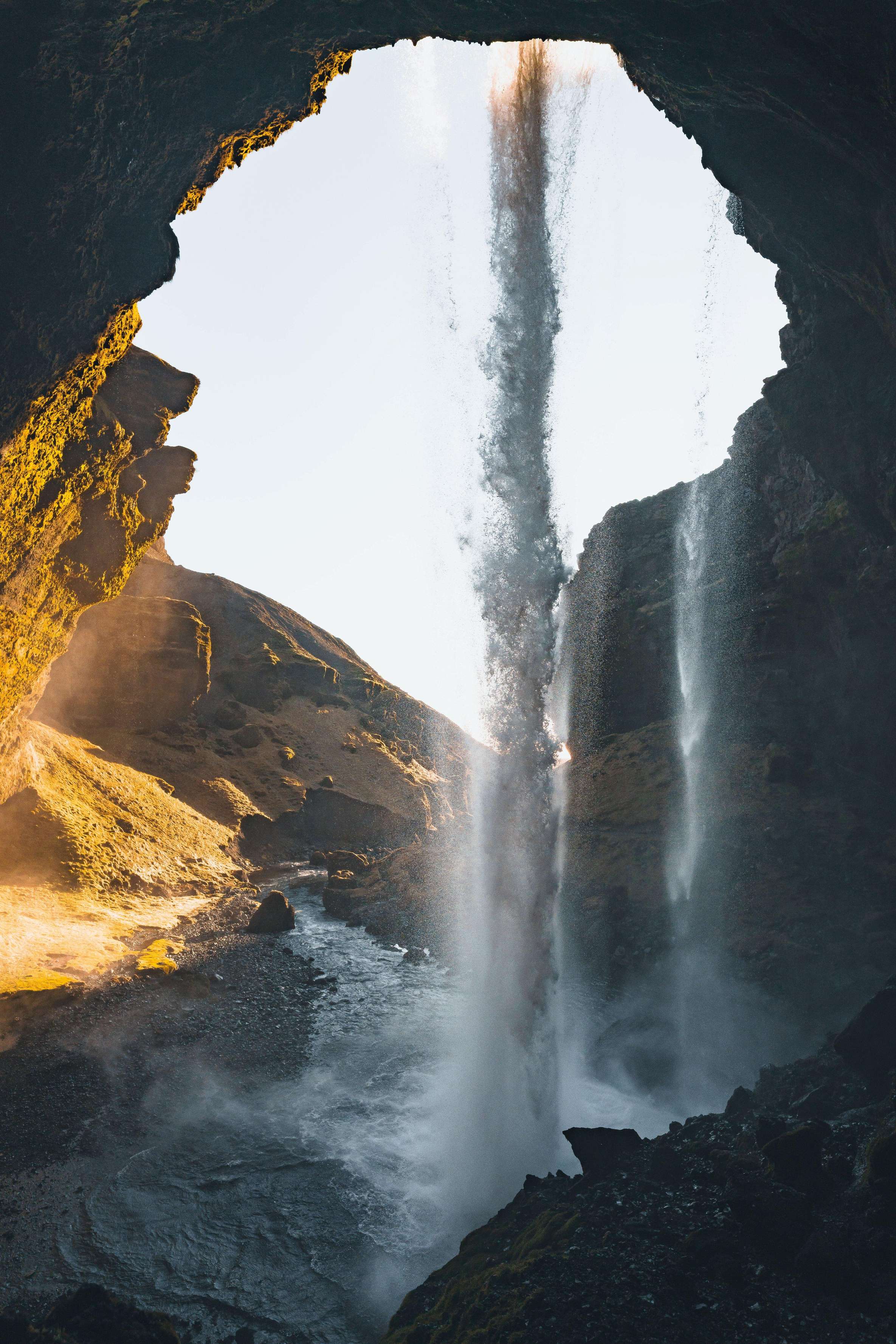
The Katla super jeep tour from Vík runs about three hours, and it slots into the driving day if you pick the departure with intent.
One operator lists slots at 9 am, 10:30 am, 12:30 pm, 2:30 pm and 4 pm, which means a morning cave before the falls or an afternoon cave after them, whichever suits your direction of travel. Arrive at the Vík meeting point 20 minutes early to check in and park.
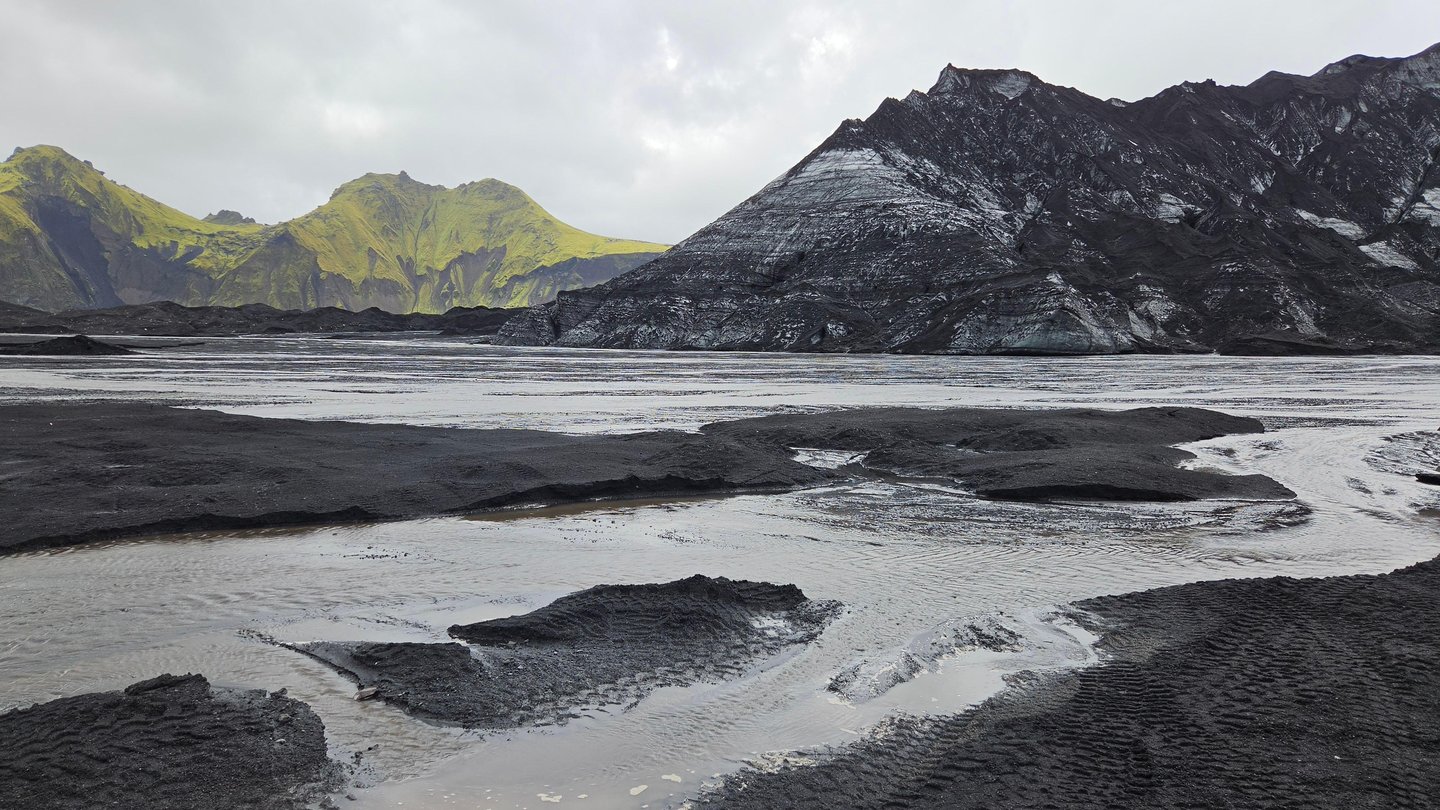
What the three hours actually hold surprises people. The jeep ride across black sand, old lava and shallow streams takes about 40 minutes each way, loud and bumpy and, travelers insist, part of the fun.
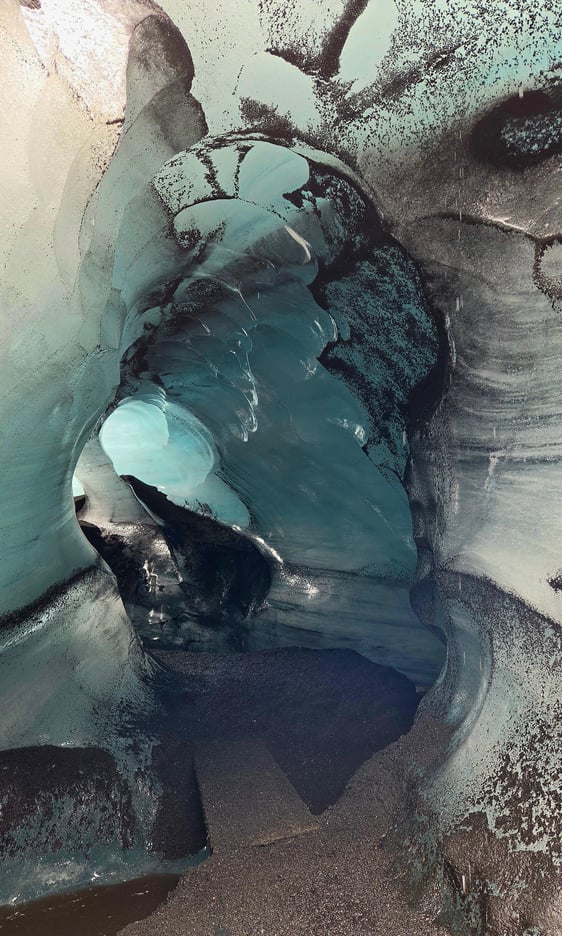
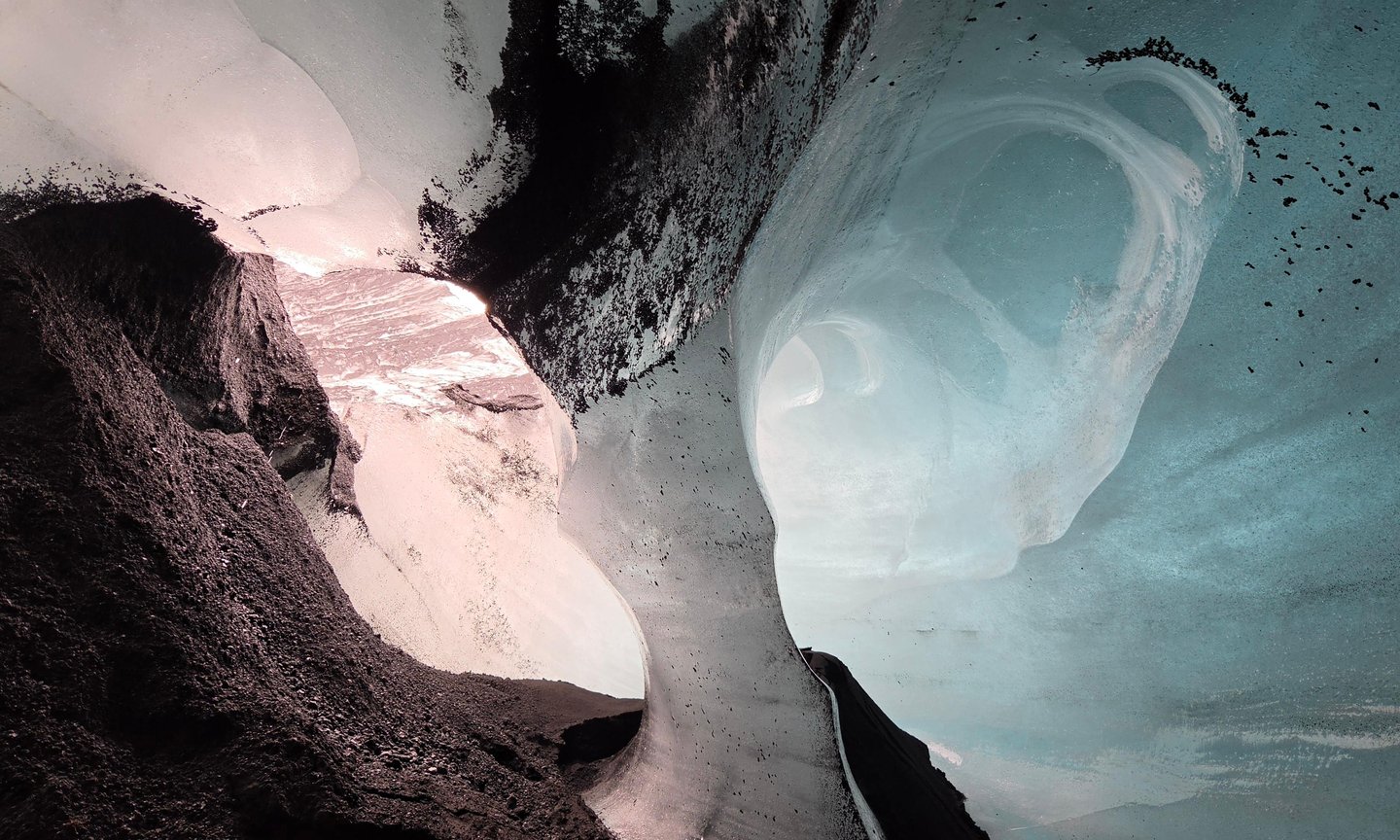
The walk from the drop-off runs 1 to 2 km over uneven ground, and the time inside the cave comes to about half an hour, roughly one-sixth of the tour.
If the driving itself sounds like too much on top of it, the From Reykjavík: Katla Ice Cave and South Coast Tour folds the whole coast into an 11-hour day with hotel pickup, the waterfalls on either side of the glacier. Two departures a day, one slot, no sequencing to solve.
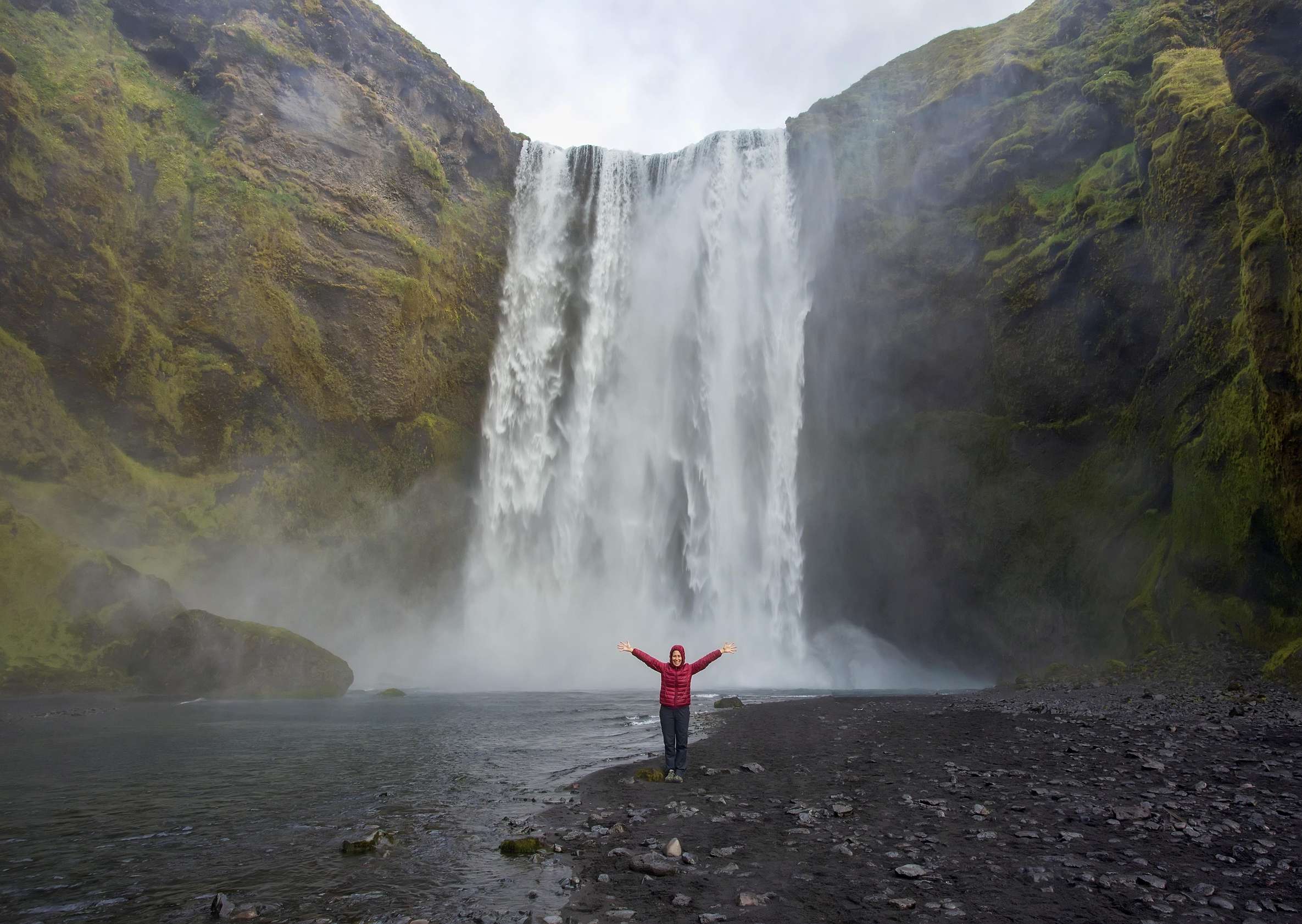
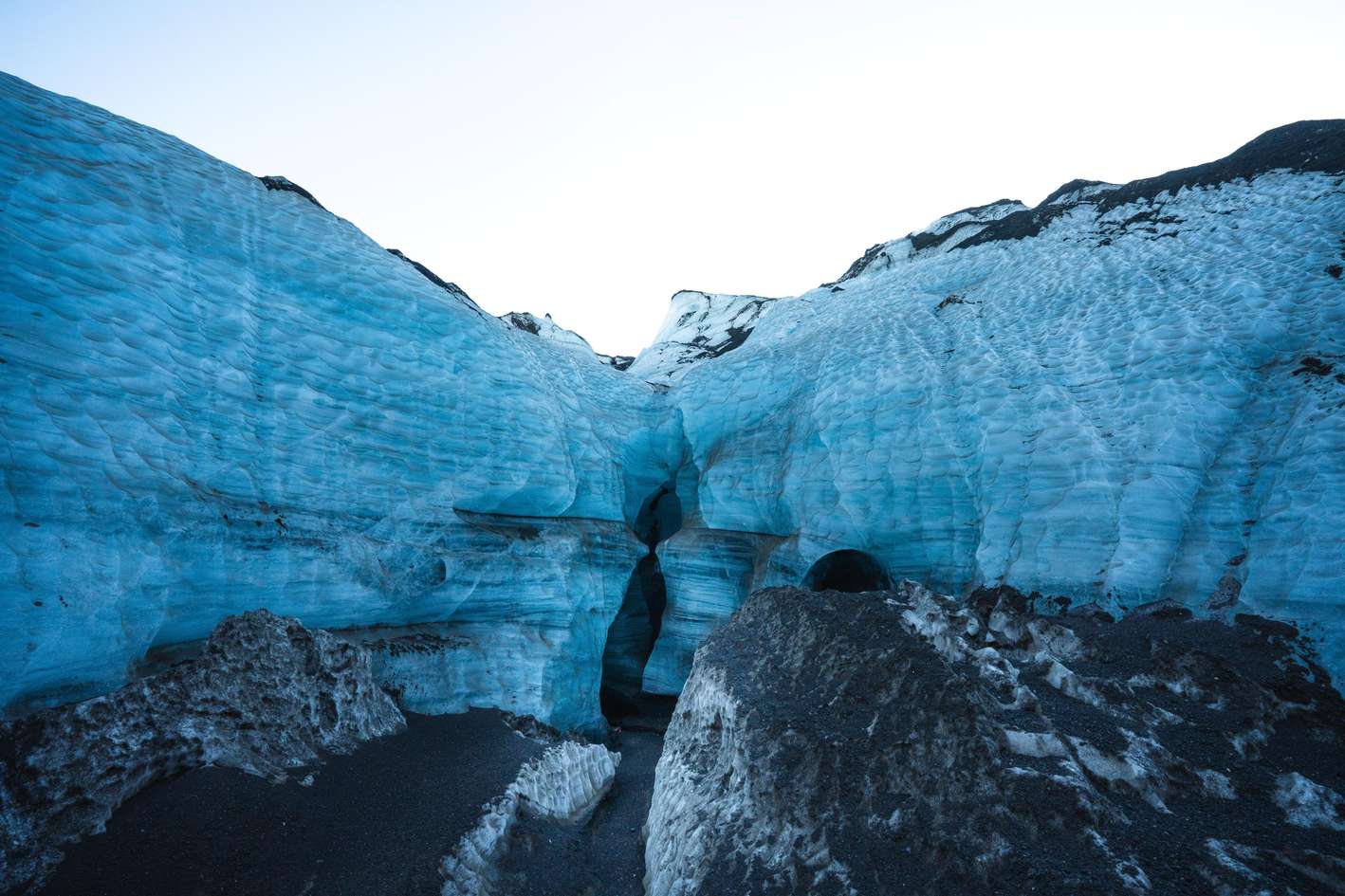
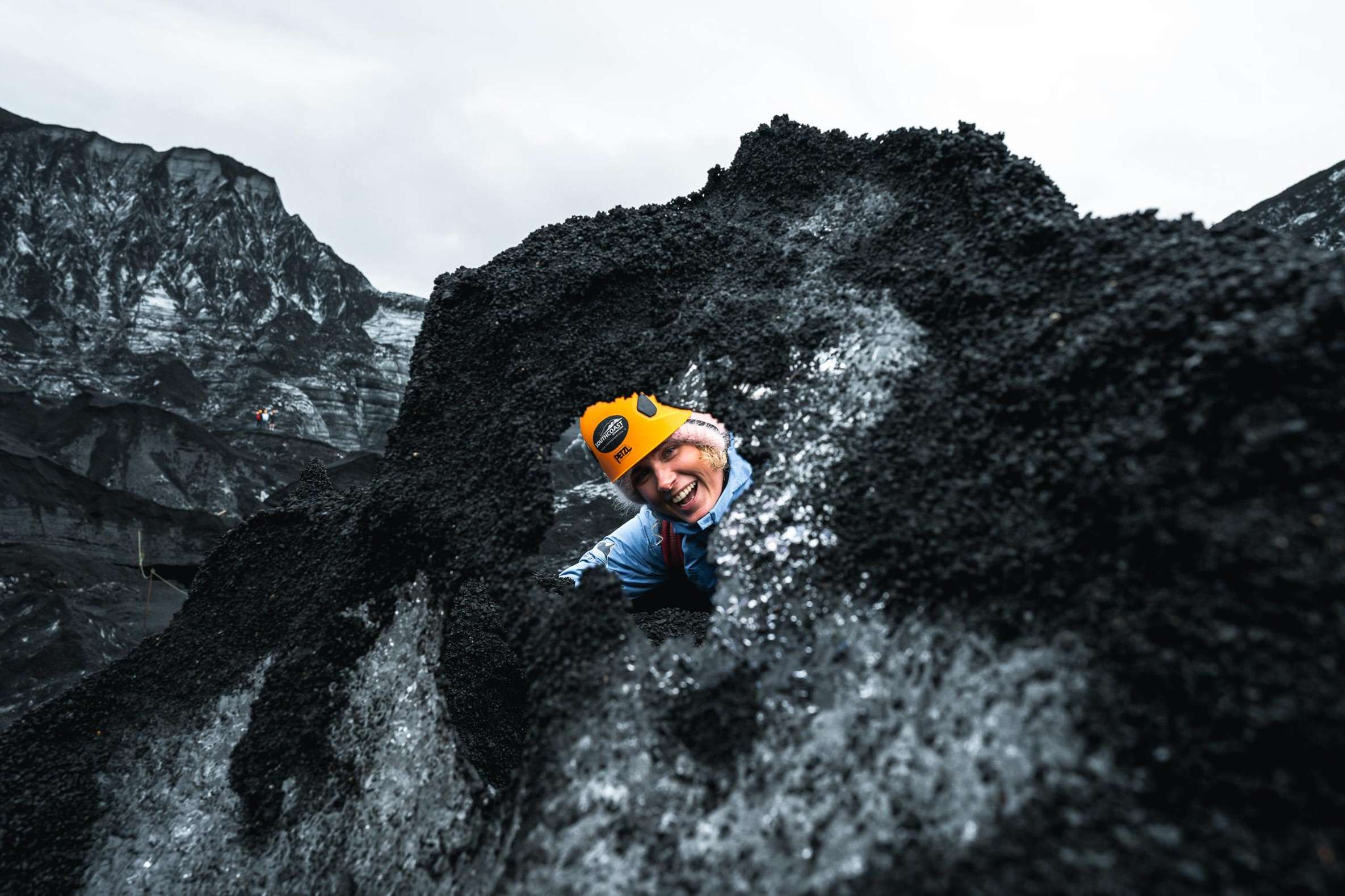
The coast is wet roughly every second day all year, and the cave adds its own water from above. Meltwater drips from the roof inside Katla, and the approach crosses uneven, sometimes muddy ground.
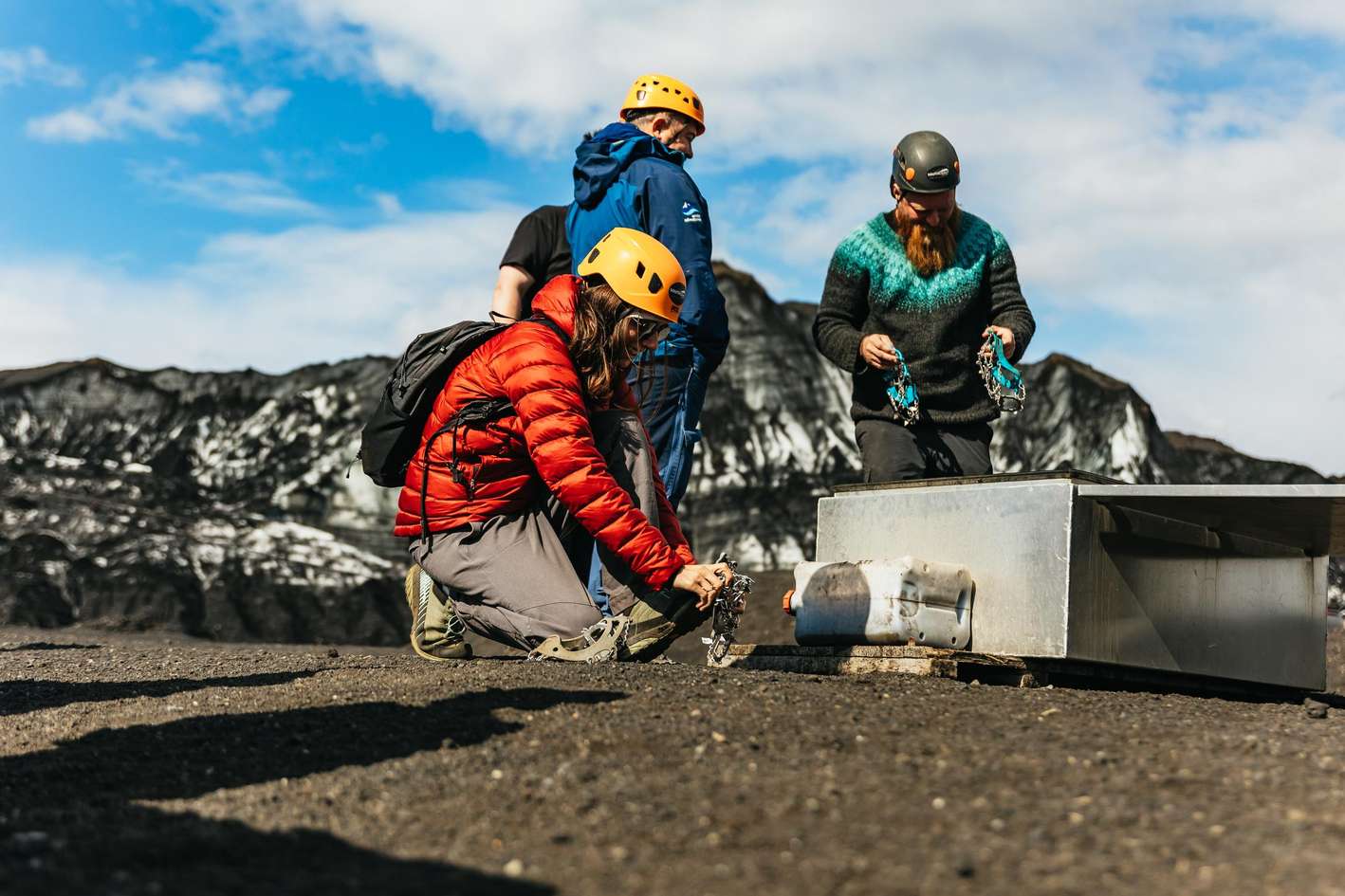
The kit that handles both is the same: a waterproof, wind-resistant jacket and trousers over thermal base layers and a warm fleece or wool mid-layer, plus sturdy waterproof hiking boots with grip and ankle support. Jeans come out cold and heavy once wet, so leave them behind.
One tour operator makes hiking boots mandatory on its Katla outing, and boots can be rented at the glacier location if yours fall short.
Inside the cave the ice holds near freezing year-round, so the layers matter even in July. Gloves, a warm hat and spare dry socks earn their place in the bag; soaked footwear is what ends a cave day early.
From October to April, lows near the glacier sit around -3 to 1°C, so go heavier on the mid-layers. The rest of the year stays milder, and the waterproofs still come.
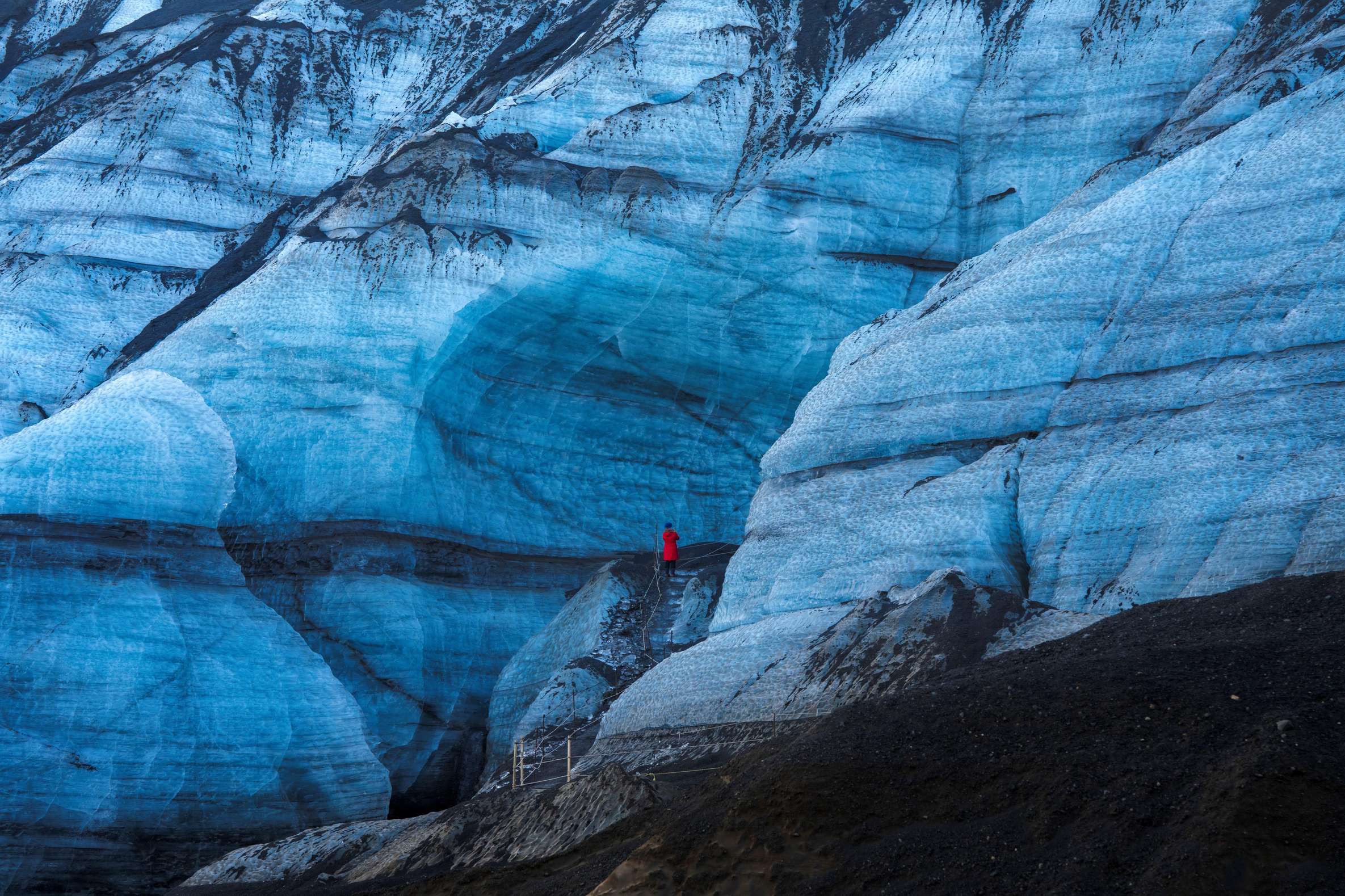
Winter rewrites the driving math. Hellisheiði, the pass between Reykjavík and Selfoss, ices over frequently, and the exposed stretch beneath Eyjafjallajökull regularly catches gusts above 25 m/s, with sudden violent crosswinds known under Eyjafjöll and around Vík.
Snow, ice and short daylight from November to March can add an hour or more to the drive, and storms close stretches of Route 1 for hours, occasionally a whole day; December 2022 blizzards shut south coast roads for days.
Winter storms can close stretches of Route 1 for hours or days Check umferdin.is for live road status before you set out and keep the schedule loose enough to absorb it
That is the case for handing the wheel over. Travelers who have driven the coast in midwinter without specialized winter experience call it risky, and a guided day puts an experienced driver on the road and weather decisions, especially when a closed road means no driving at all.
In December, with daylight of four to five hours, reaching Vík while it is still light is the whole game. The weather page has the seasonal detail.
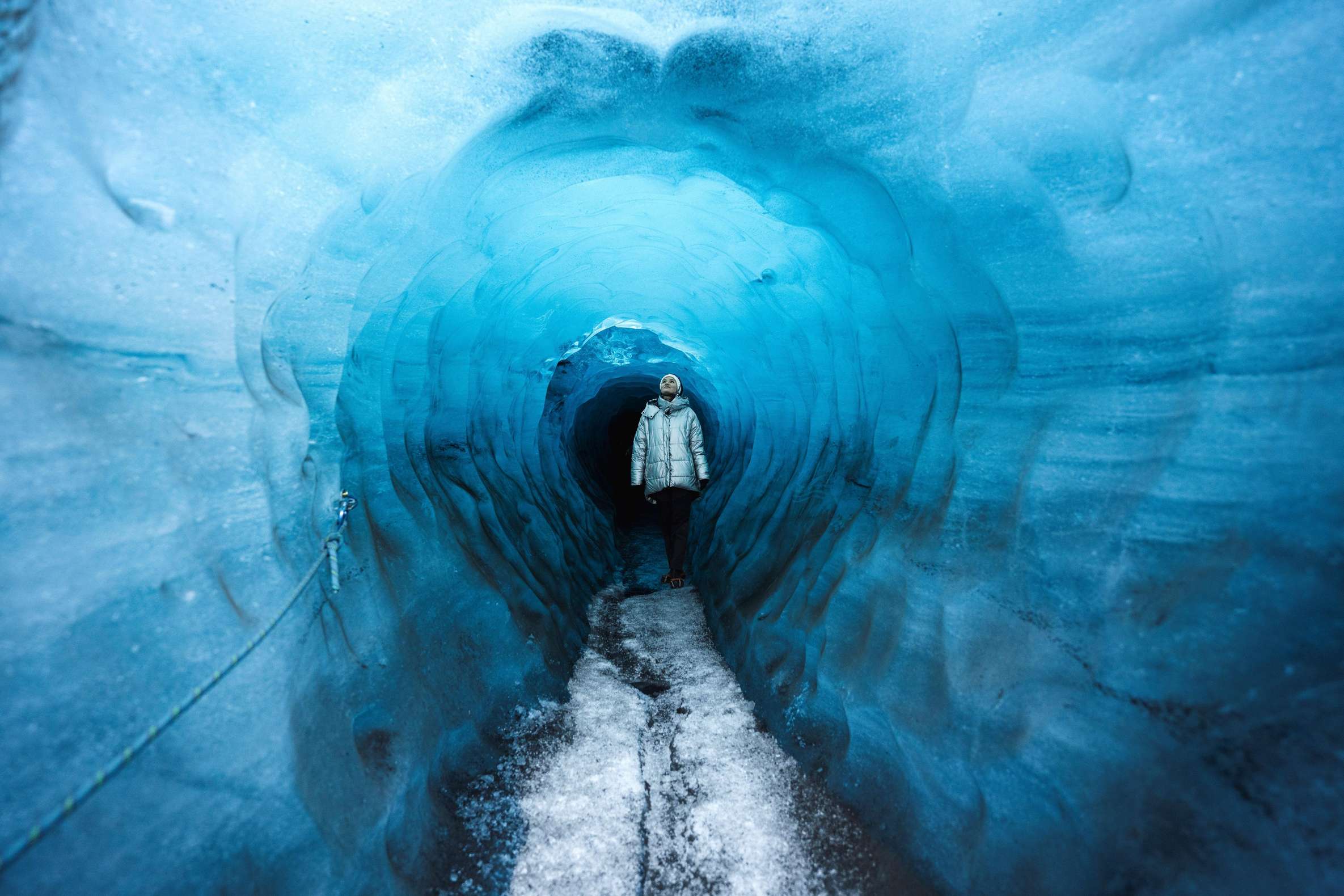
The service map matters more than most planners expect, because the gaps between stops are long. Hveragerði, Selfoss, Hella, Hvolsvöllur and Vík cover fuel on the western stretch, Selfoss is the place for a proper sit-down meal, and Hvolsvöllur has cafes including the Eldsto Art Cafe.
Vík is the major service stop with fuel, food and accommodation, and Kirkjubæjarklaustur covers both, quieter than Vík, farther east.
Parking at the sights runs on apps and automated cameras. At Seljalandsfoss, pay by card at the kiosk or online through Check-It, where a camera reads your number plate.
At Skógafoss, use the Parka app or the on-site kiosk. None of it takes long; all of it takes longer than you planned if you leave it to the last minute.
One legal note clears a common worry: four-wheel drive is only mandatory on Highland F-roads, so a standard car is legal for the coast itself. The practical note matters more: the drive Reykjavík to Vík is billed at about 2.5 hours without stops, and with sightseeing it always runs longer.
The question every planner dodges is where the route ends. Reykjavík to Jökulsárlón and back is about 9.5 hours of driving before a single stop, on a remote stretch with no detour that can close in winter, and much of it falls in darkness.
That leaves a short window at the lagoon and a long, tired drive home, which is exactly what two travelers warn against.
A night in Vík or Kirkjubæjarklaustur changes the whole shape of the trip. It suits a route focused on the black-sand coast and a deeper South Coast day, and it earns its keep whenever a winter activity or short daylight would rush the return.
With an overnight, the southeast stretch opens up: time for Fjaðrárgljúfur canyon, a Skaftafell hike, Diamond Beach, even a second look at the lagoon in different light. Travelers who planned the southeast in depth suggest three days for that stretch, so every sight gets its hour.
And what not to add: the Westman Islands take at least half a day or an overnight on their own, and packing Skaftafell, Diamond Beach and a lagoon boat tour into one day is the schedule that breaks.
Weather shares the road with you on this coast. Rain or thaw can raise the risk on a glacier, winds above 20 m/s can call off a Katla super jeep departure, and tours are suspended when seismic activity or potential sub-glacial flooding becomes a concern.
When high winds close Route 1, a day tour may be altered, rerouted or cancelled outright for safety, and the route, stop order or activity timing can change at short notice.
The terms behind that are fair, and worth knowing before you book rather than after. Operators typically offer a reschedule, a full refund or an alternative activity when unsafe conditions cancel the day, and booking with a cancellation window gives you room to move too.
| If this happens | What happens then |
|---|---|
| High winds close Route 1 | The tour is altered, rerouted or cancelled for safety |
| The operator cancels for weather or a road closure | You can reschedule or receive a full refund |
| Winds above 20 m/s or flooding in the cave | Katla super jeep tours are called off |
| Unsafe glacier or road conditions | The route, stop order or activity timing changes |
Put that next to your own calendar. A cave day lost to a storm costs nothing if you booked with flexible terms and kept a spare slot in the plan; it costs the whole outing if the ice cave was the only day you gave it.
The South Coast in one day is real: about 5 hours of driving, four stops, and an ice cave if you slot it well.
Do it self-driven from April to September if you enjoy the wheel, or hand it to a guided Katla day tour when winter closes in. Pushing past Vík to Jökulsárlón on the same day is where plans break; give that a night.
A 10-hour small-group day from Reykjavík that covers the waterfalls, the black sand and the Katla Ice Cave.
Read the guide
Walk on the ice itself, on a three-hour guided hike from Skaftafell or a cave walk from Vík.
Read the guideMonth-by-month temperatures, wind, rain and daylight, so you can match your schedule to the season.
Read the guideOne route, three decisions: who drives, what you do on the ice, and what the season allows.
A van, not a coach, with a guide who talks with you
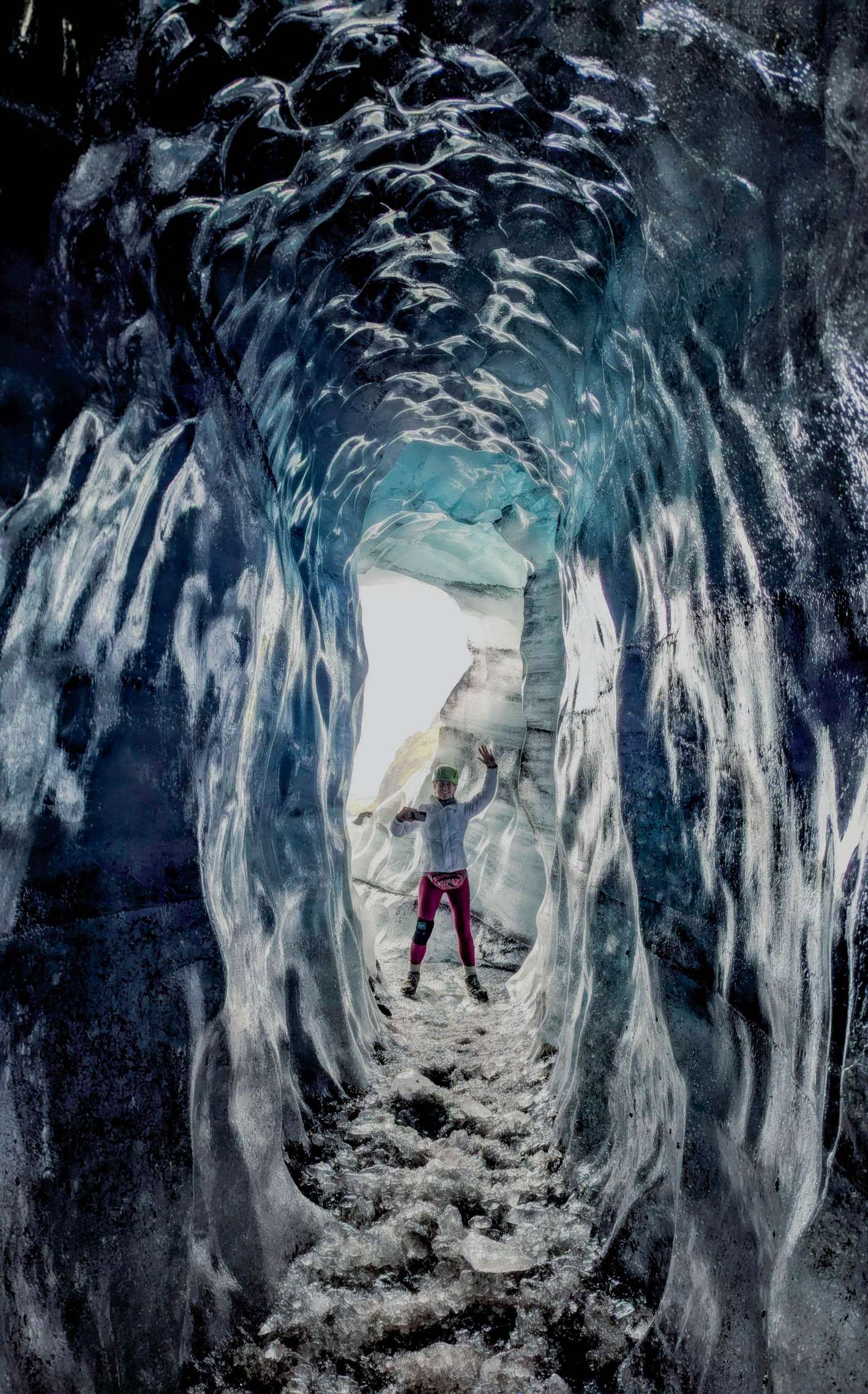
The day runs 10 to 12 hours door to door, and most of that is road. The trade you make is simple: a van of 8 to 20 people and a guide who answers questions one on one, instead of a coach and a microphone. About half an hour of the trip happens inside the Katla Ice Cave itself; the rest is waterfalls, black sand and the bumpy super jeep ride that gets you there.
It suits a single open day. Summer slots sell out, so book a few days ahead and earlier still for July. Check the minimum age for children before you commit.
10 hours · ★ 4.7 (779)Reykjavik: South Coast and Katla Ice Cave Small Group TourFrom $267 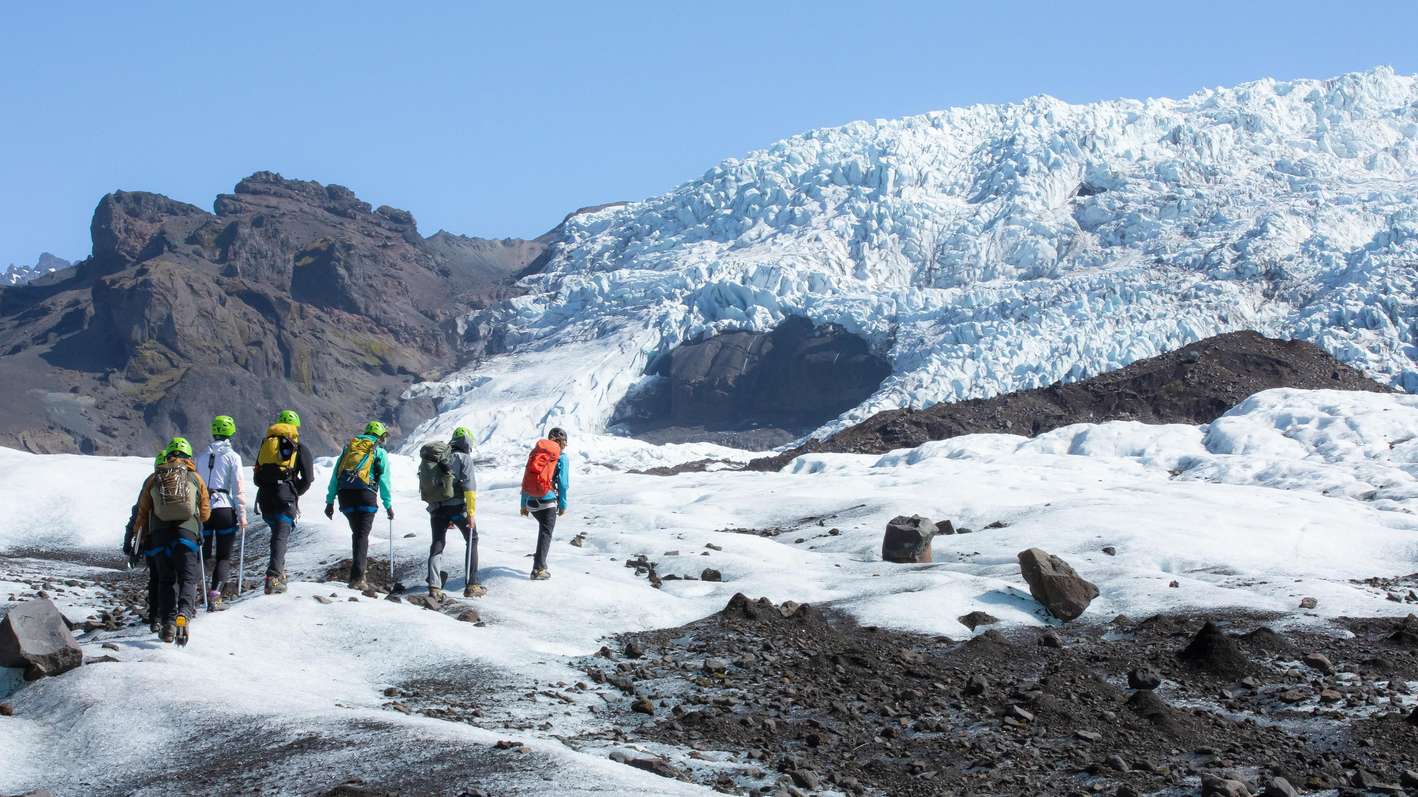 3 hours · ★ 4.6 (1,715)Skaftafell: Falljokull Glacier Easy Group HikeFrom $103 3 - 12 hours · ★ 4.6 (2,597)From Vik: Katla Ice Cave and Super Jeep TourFrom $197
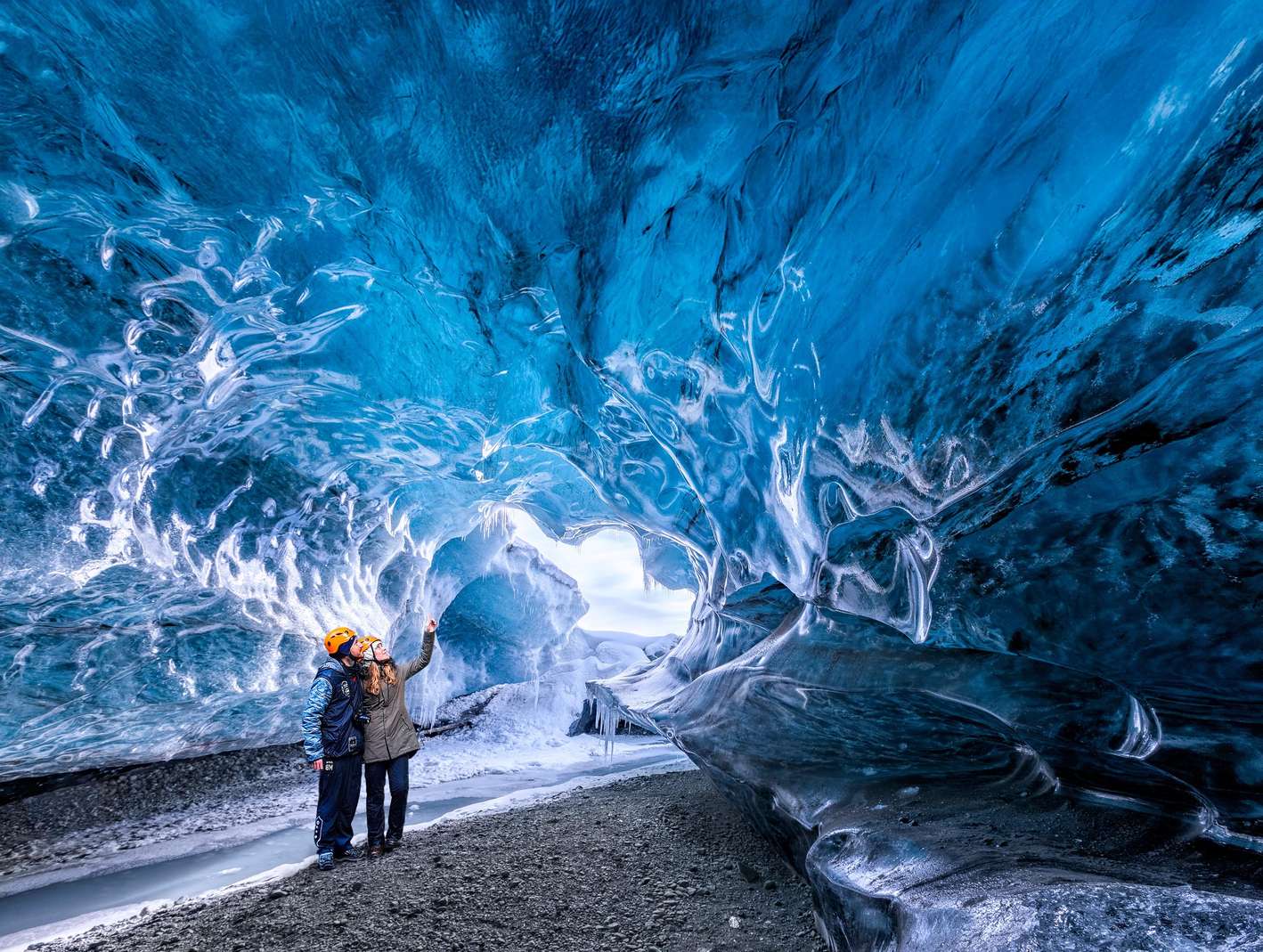 3 hours · ★ 4.5 (606)From Jökulsárlón: Crystal Blue Ice Cave Super Jeep TourFrom $168
Crampons on the ice with a certified guide leading
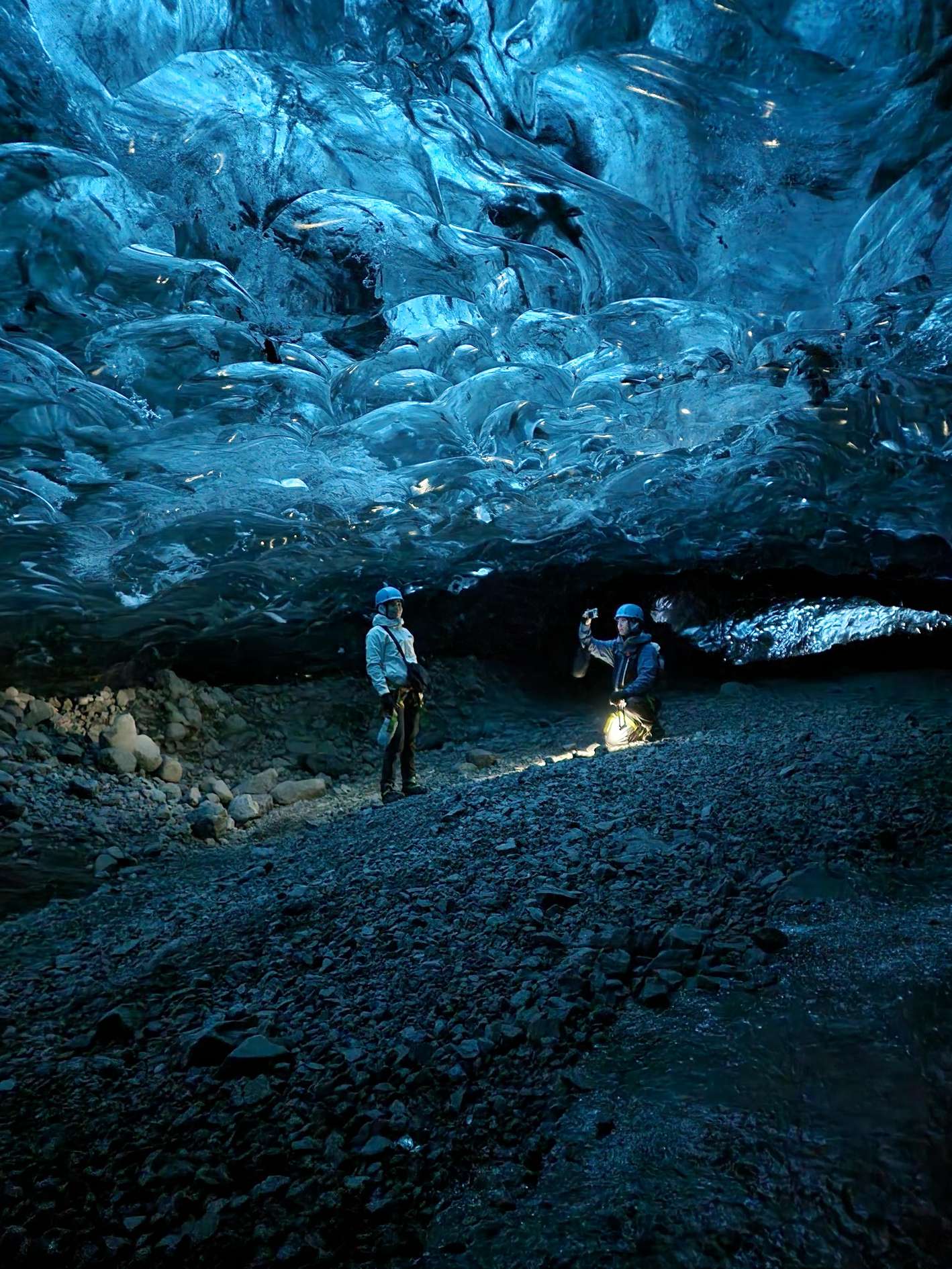
The three-hour Falljökull hike from Skaftafell takes you onto the ice of Vatnajökull with crampons, a helmet, a harness and an ice axe, all provided. The walk suits beginners, and the minimum age is 8. Boots you bring yourself need a stiff sole and ankle support, because crampons will not grip soft sneakers; boots can also be rented on site.
For a self-drive plan, the base decides your day. Skaftafell fits an eastbound route with an overnight on the southeast coast. Vík suits a western day, and its Katla cave runs year-round, a short walk over uneven ground with the super jeep doing the hard miles.
6 hours · ★ 4.9 (69)Jökulsárlón: Small-Group Blue Ice Cave Tour & Glacier WalkFrom $242 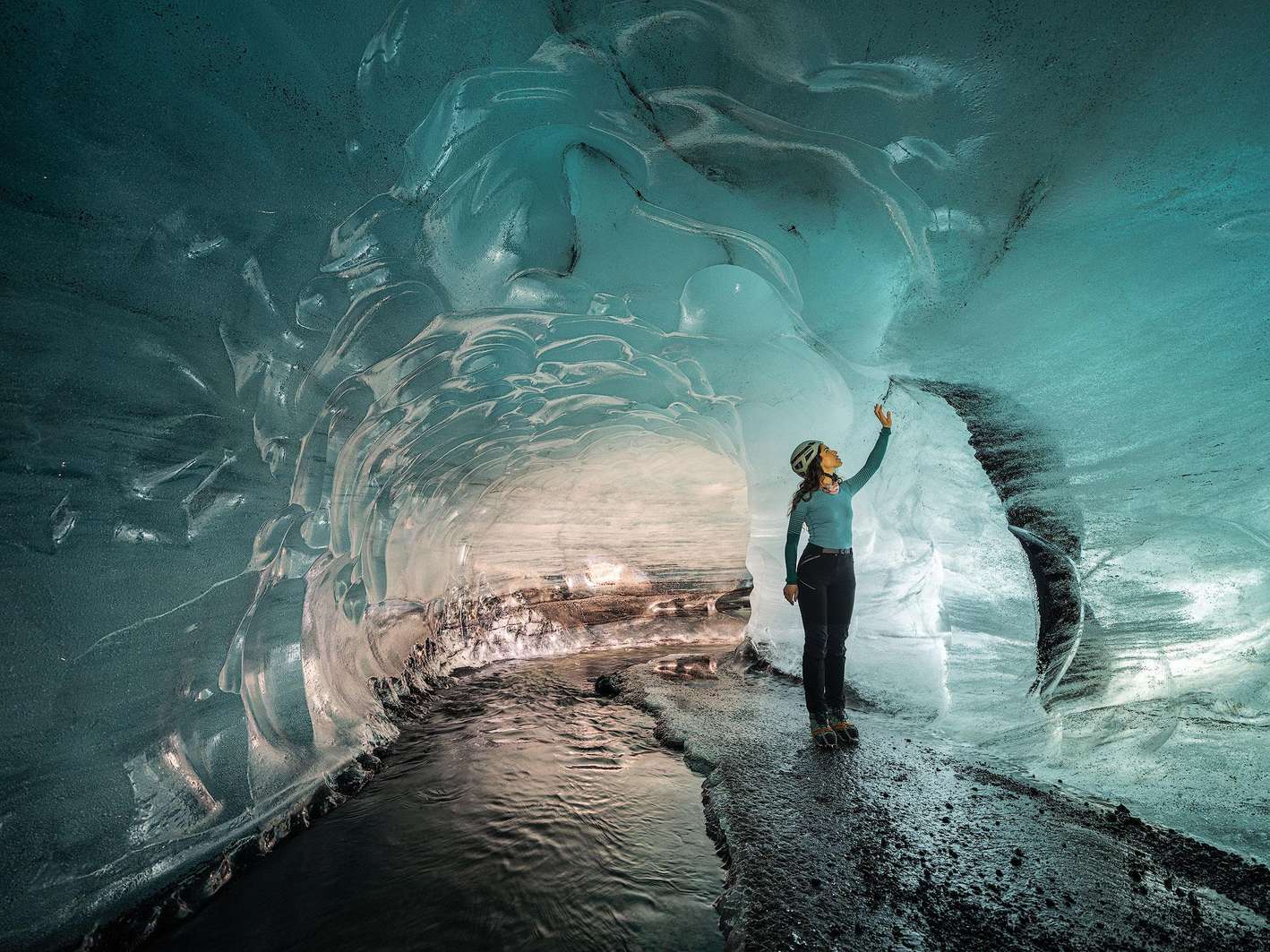 4 hours · ★ 4.8 (8)Katla Ice Cave Extended Guided Tour with Super JeepFrom $291
 5.5 hours · ★ 4.7 (225)From Jökulsárlón: Ice Cave and Glacier Exploration TourFrom $275
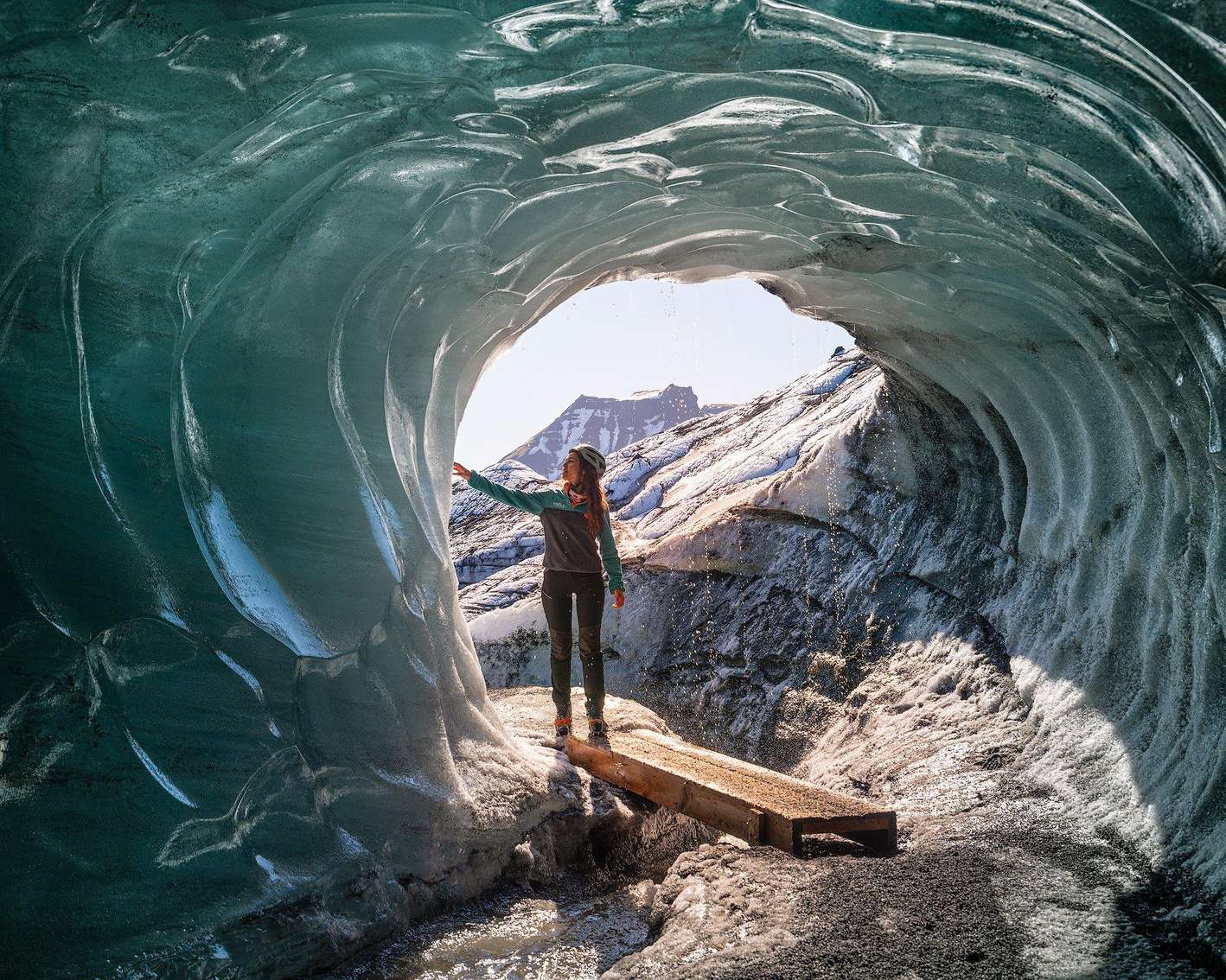 3 hours · ★ 4.7 (1,521)From Vik: Katla Ice Cave & Super Jeep TourFrom $267
From 20 hours of June light to 4.5 in December
The coast runs from about 1°C in winter to 12°C in July, and February is the windiest month while July is the calmest. Vík is one of the wettest inhabited places in Iceland, so rain lands roughly every second or third day all year. Plan your stops around it rather than hoping it away.
The number that shapes your day most is daylight: about 20.6 hours in June against 4.5 in December. In winter your itinerary fits fewer stops and more driving in the dark, and storms can close stretches of Route 1 for hours at a time. Check umferdin.is before you set out.
vík ice cave tours meet at vík inn, 20 min early
Browse the full range of South Coast activities and tours to fill the gaps in your route with stops that fit.
If a big coach sounds crowded, see how a small-group day trip from Reykjavík covers the same route with fewer people.
Want more time on the ice than a cave visit gives? Compare guided glacier hikes you can slot into your drive.
Check temperatures, daylight hours and storm patterns for each month before you fix dates on your route.
Not sure which cave belongs on your map? Compare Katla, Vatnajökull and Langjökull before you pick a stop.
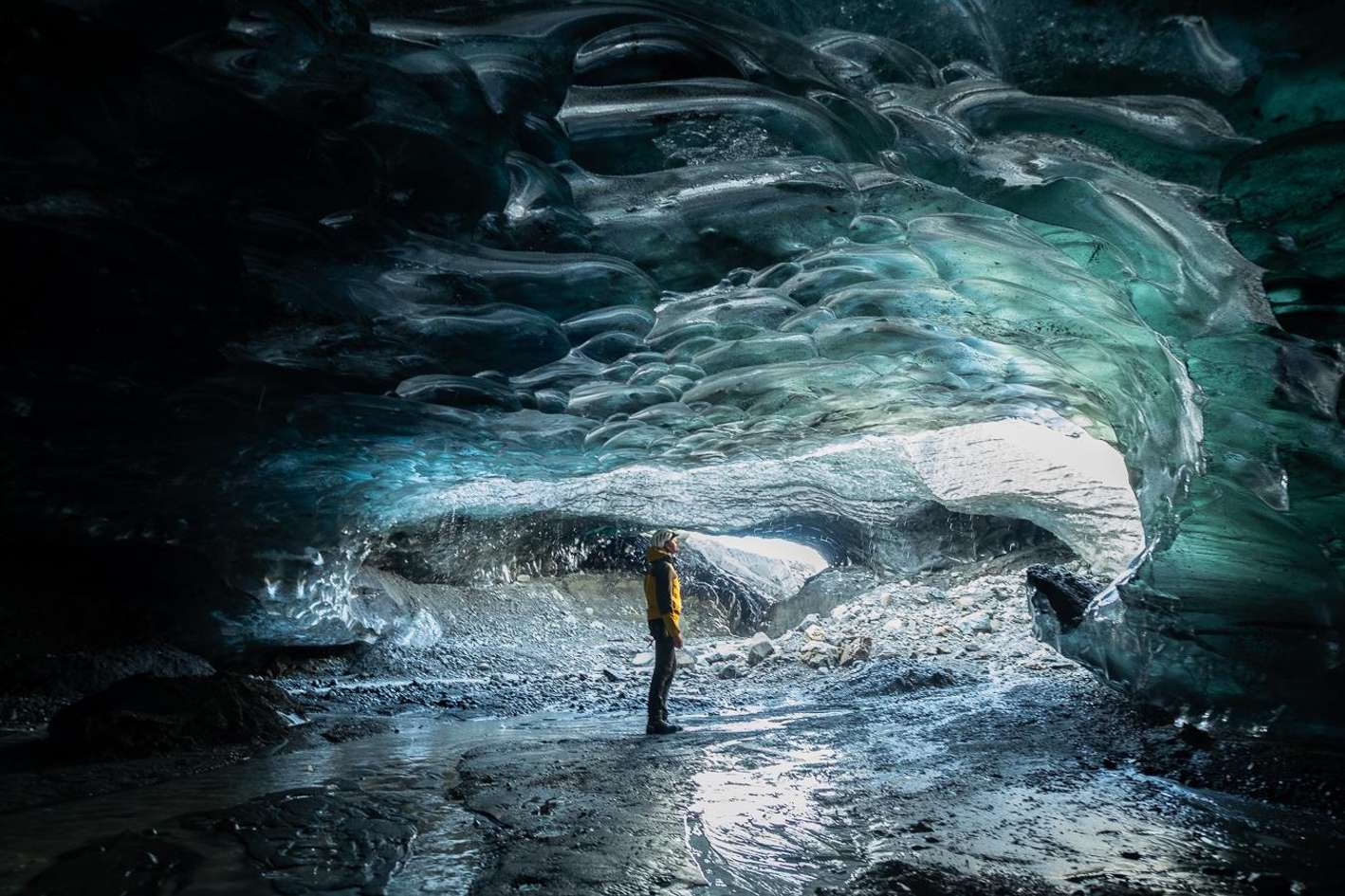
See what a guided ice cave trip involves day to day, from gear and safety checks to how long you spend inside.
Prefer the route without the crowds? Private ice cave tours let you set the schedule and skip the shared bus.
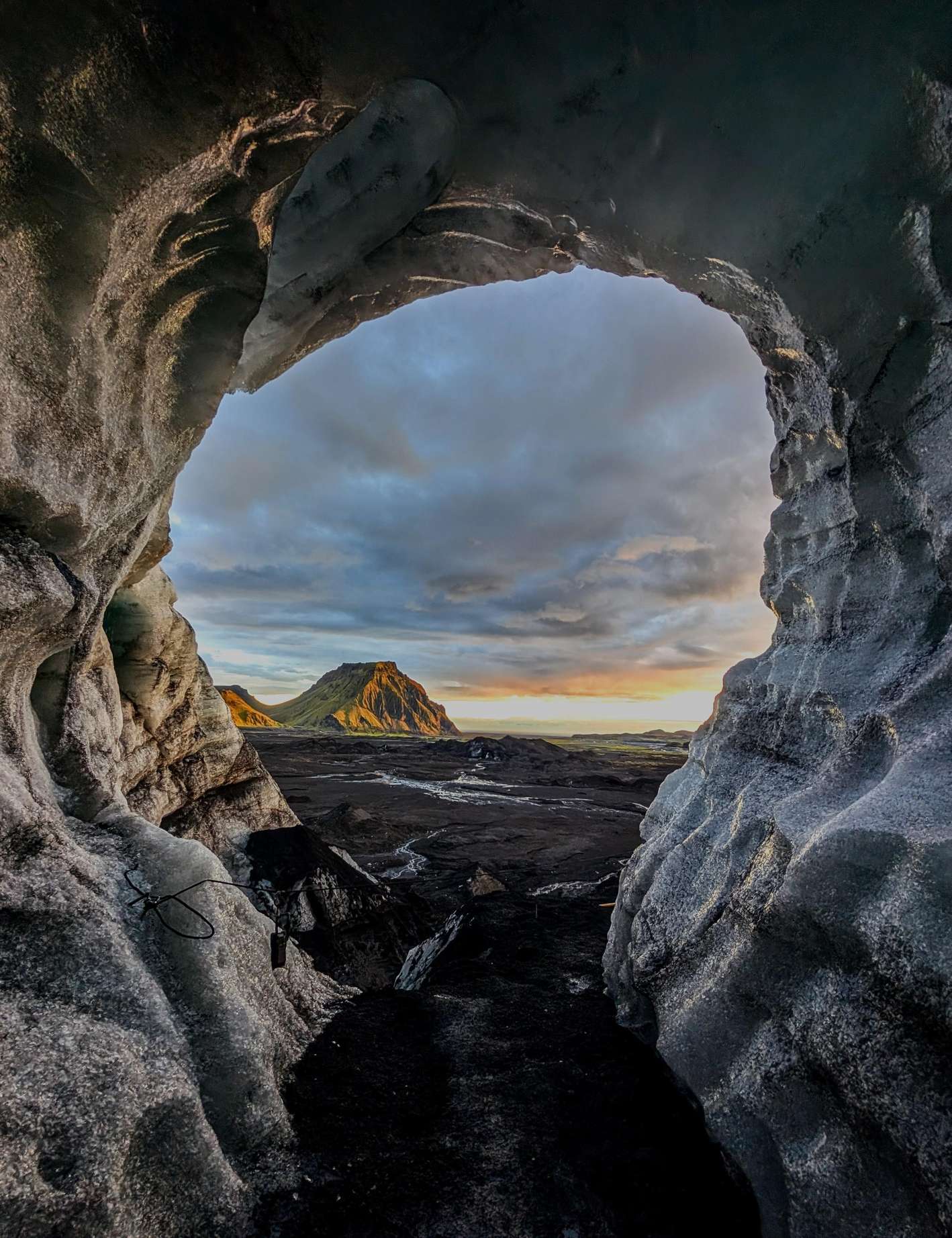
Small-group cave trips keep the pace relaxed; see which departures suit a stop between Vík and the lagoon.
Combine a glacier walk with a cave visit on one departure if you want both activities in a single stop.

Short on time or skipping the long drive? A helicopter tour puts you on a glacier without hours on Route 1.
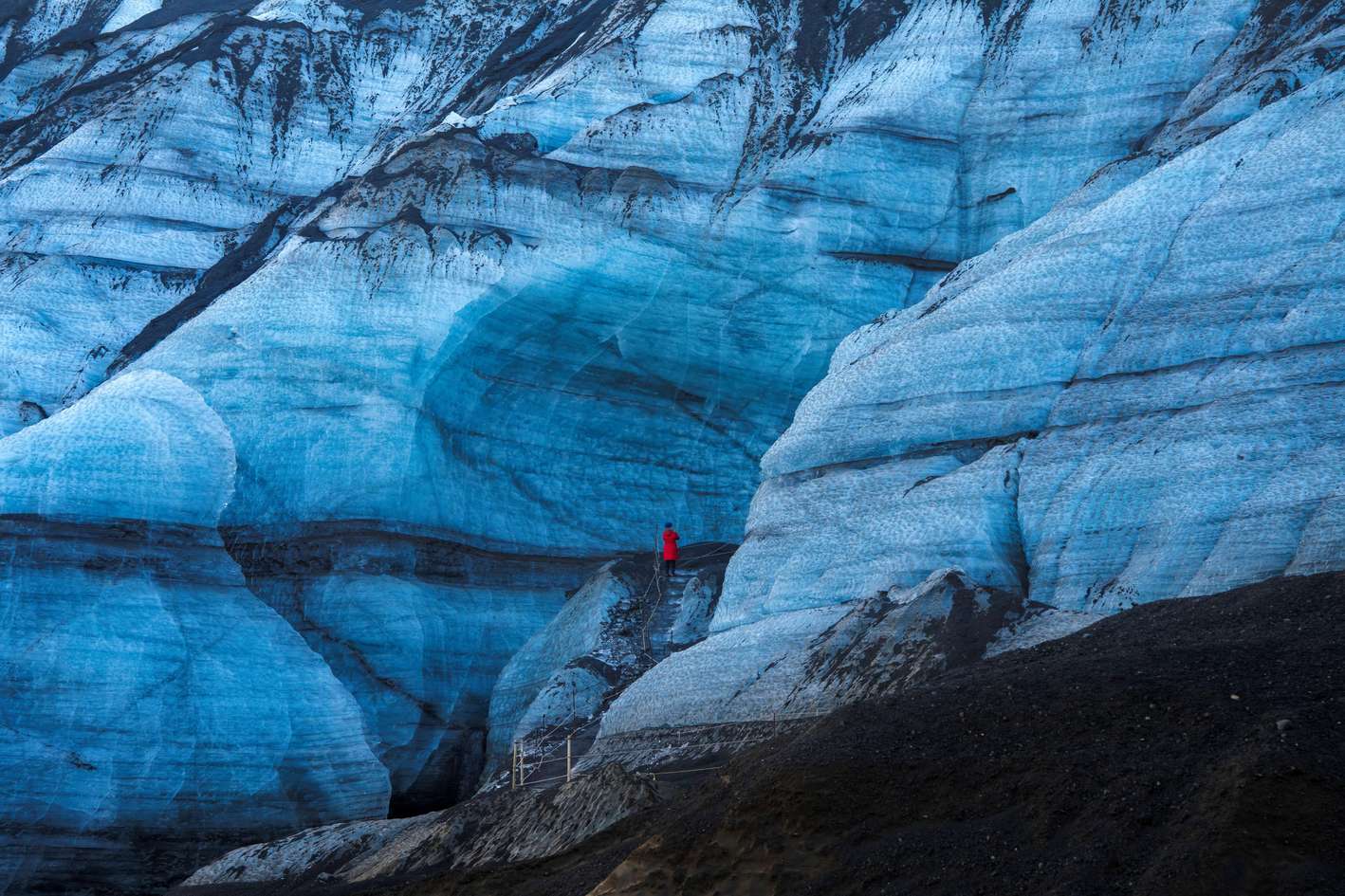
Planning the Katla stop in detail? Get current conditions, departure times and ticket options for the cave.
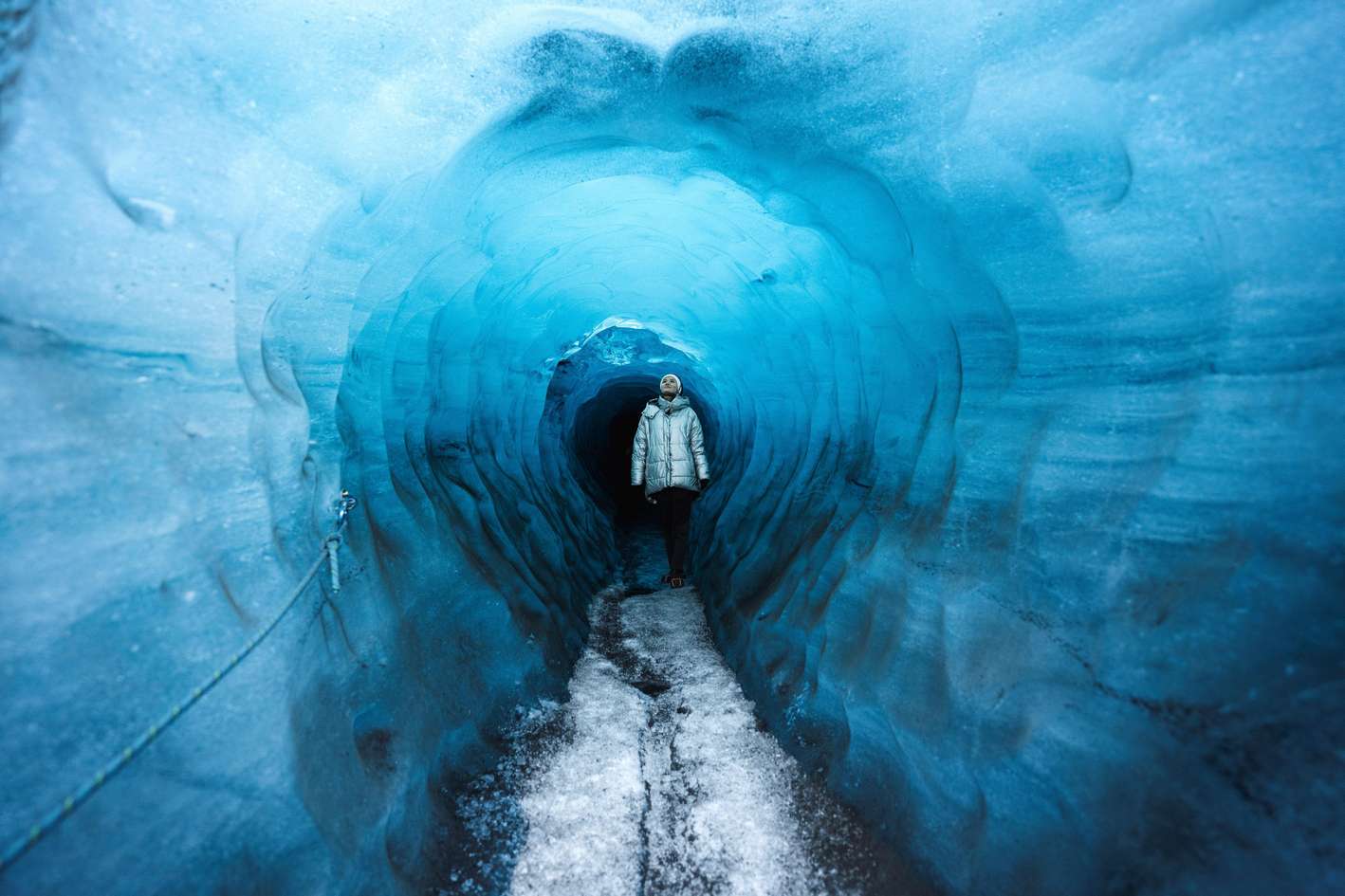
Find out why a rental car cannot reach the cave trailhead and where to park for your Vík super jeep departure.
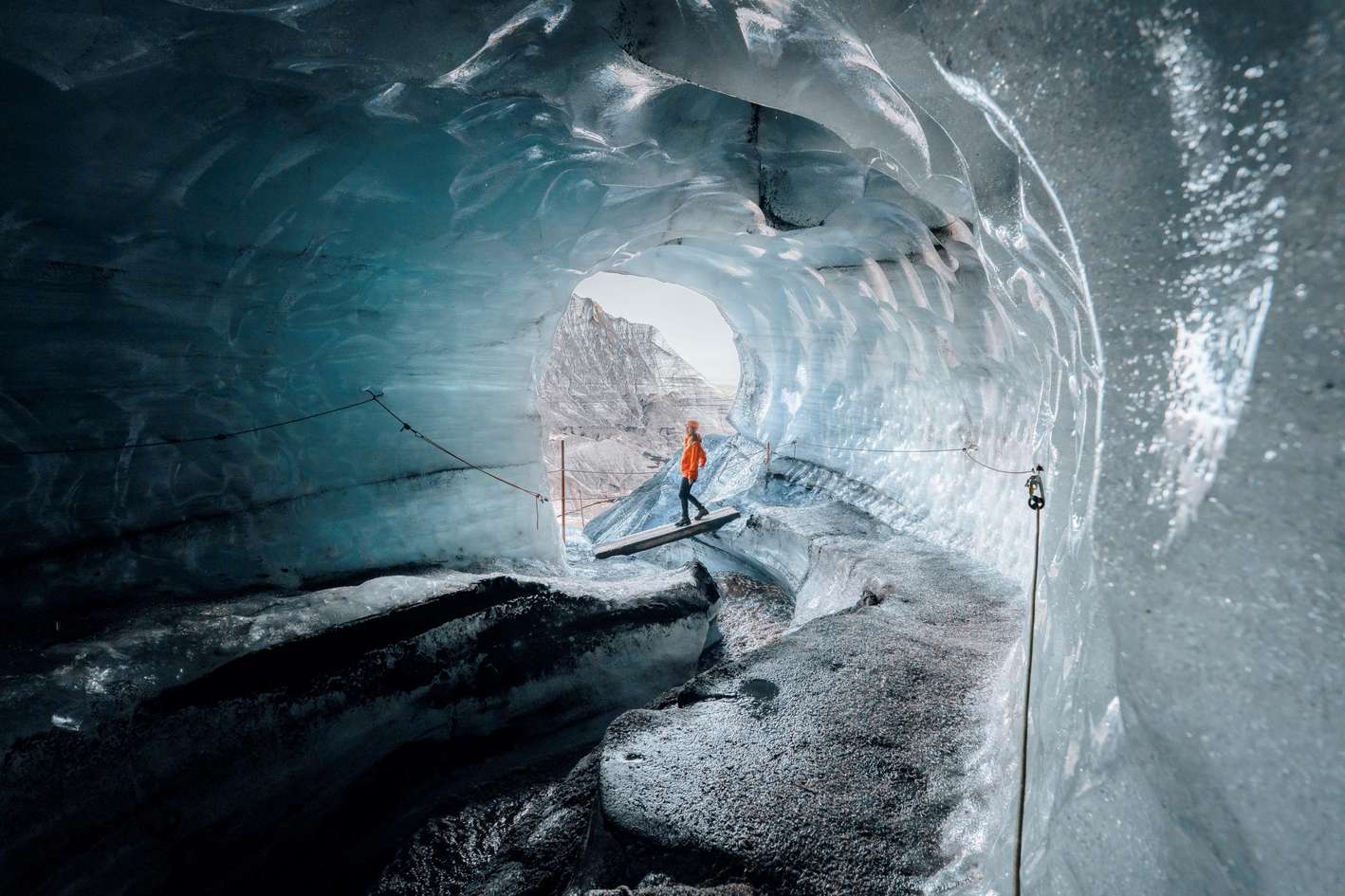
Decide which month or time of day to place the cave stop, whether your trip falls in winter or summer.
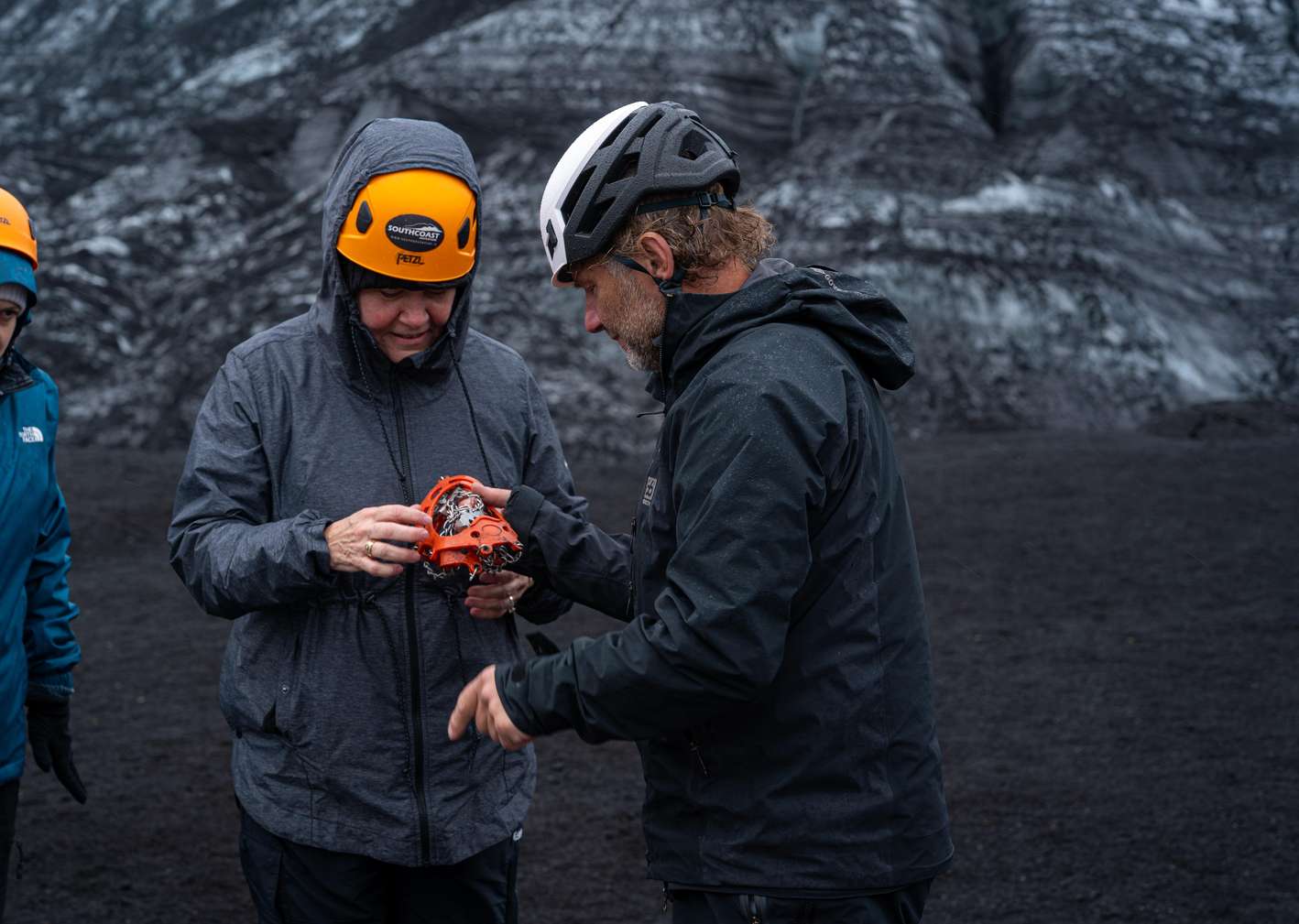
Check ages, fitness and mobility rules for the cave before you plan it into a family or less-mobile route.
Get the clothing and footwear list right for the cave stop so a wet, cold hour on the glacier never derails the day.
Torn between Katla and the Crystal Blue Ice Cave? Compare ice, drive times and seasons before routing east.
One day not enough? See 3-day South Coast itineraries that spread the waterfalls, lagoon and caves out.
parka app for skógafoss parking
Quick answers to the questions people ask before they plan this route.
 Vik2026
Heading east from Reykjavík, the natural sequence is Seljalandsfoss, then Skógafoss, the Sólheimajökull glacier access road, Reynisfjara black sand beach, and Vík last. Super jeep tours to Katla Ice Cave depart from Vík. If your cave slot is early morning, drive straight to Vík first and do the waterfalls on the way back.
Reykjavík to Seljalandsfoss is about 128 km, and Skógafoss is another 30 km east. Reynisfjara sits 10 km from Vík, which is roughly 180 km from the capital. Route 1 carries you the whole way.
Yes, and plenty of people do. Count on about five hours of driving plus time at the stops, so ten to twelve hours door to door. Guided day tours from Reykjavík that include the Katla Ice Cave run ten to twelve hours as well.
A workable budget is 45 to 60 minutes at Seljalandsfoss, about 45 minutes each at Skógafoss and Reynisfjara, and 30 to 45 minutes in Vík for food. Add slack for delays, because the coast rarely runs exactly to plan.
The three-hour super jeep tours from Vík include transport to the glacier and a guided cave visit. Departures run through the day, so you can slot one between your waterfall stops without giving up the rest of the route.
From April through September, average daylight covers the whole schedule comfortably. March is borderline, October averages just under ten hours, and the winter months are shorter still. In December the daylight can shrink to four or five hours, so plan to reach Vík while it is light.
Self-driving gives you the pace, the longer stops and the freedom to change plans. A guided tour takes the driving, parking and road decisions off your plate.
If you are not used to icy roads and the strong crosswinds that push cars around on exposed stretches, travelers say the guided option is the more comfortable call in winter.
From November to March, snow, ice and short days can add an hour or more to the drive to Vík, and winter storms can close parts of Route 1. If you lack experience on winter roads, a day tour with an experienced driver handles those calls for you.
If a winter activity or short daylight would make the return drive rushed, spend the night in Vík or Kirkjubæjarklaustur. Many travelers recommend the split when a same-day return would mean a long, tiring drive with stops squeezed thin.
Yes. At Seljalandsfoss you pay by card at the on-site kiosk or online, where a camera reads your number plate. At Skógafoss you pay through the Parka app or at the kiosk.
Bring a windproof, waterproof jacket and trousers, thermal base layers, a warm mid-layer, and hiking boots with grip and ankle support. Warm gloves and a hat matter too. From October to April, lows average around freezing, so layer up.
pickup can take 30 min from the voucher time
Let a 12-hour guided day tour cover the whole South Coast Iceland itinerary: pickup in Reykjavík, the waterfalls, and Katla Ice Cave, with free cancellation up to 24 hours ahead.