
12 hours·English
4.7(1,354)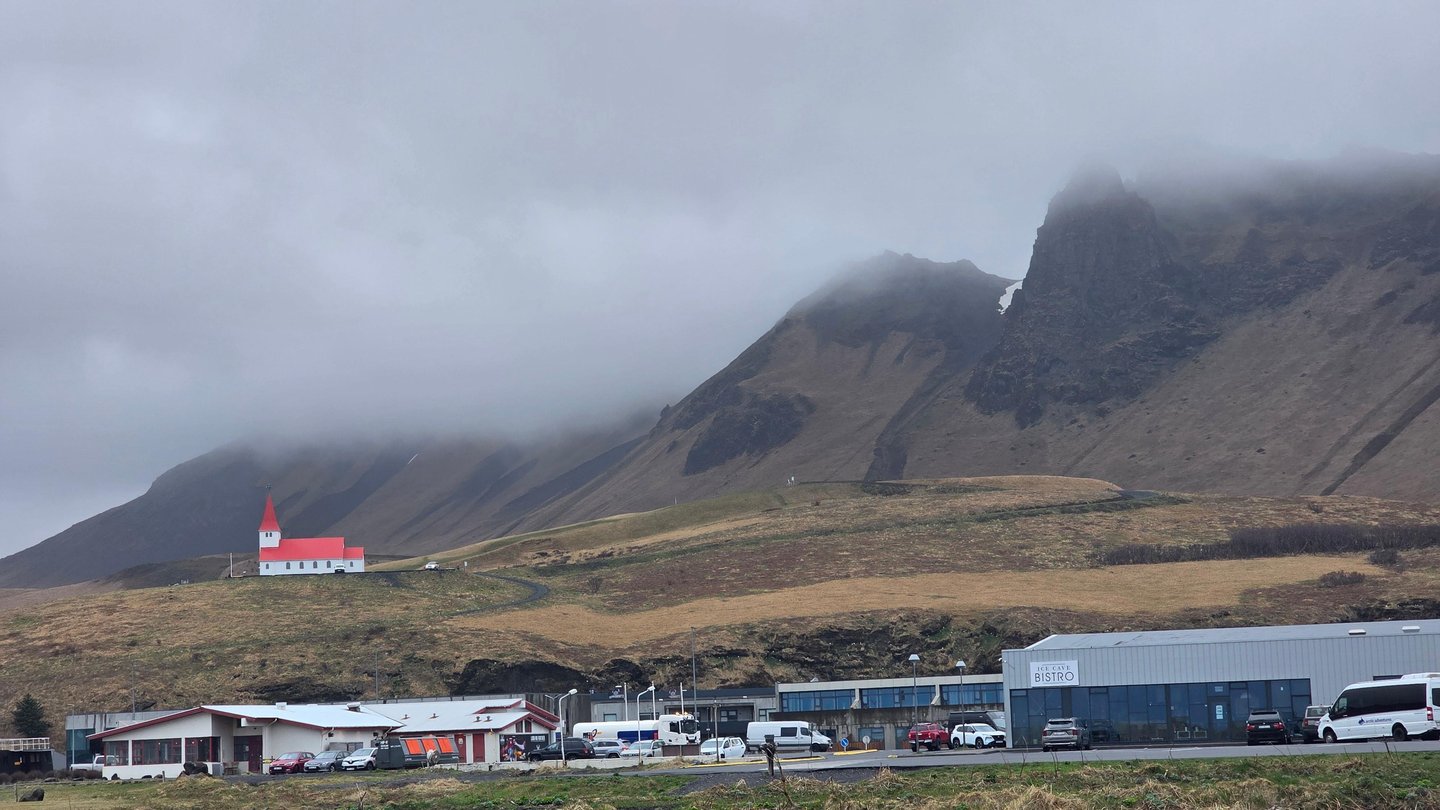
Reykjavik: Katla Ice Cave & South Coast Tour
Free cancellationHotel pickup includedConvenient Reykjavík pickup and drop-off
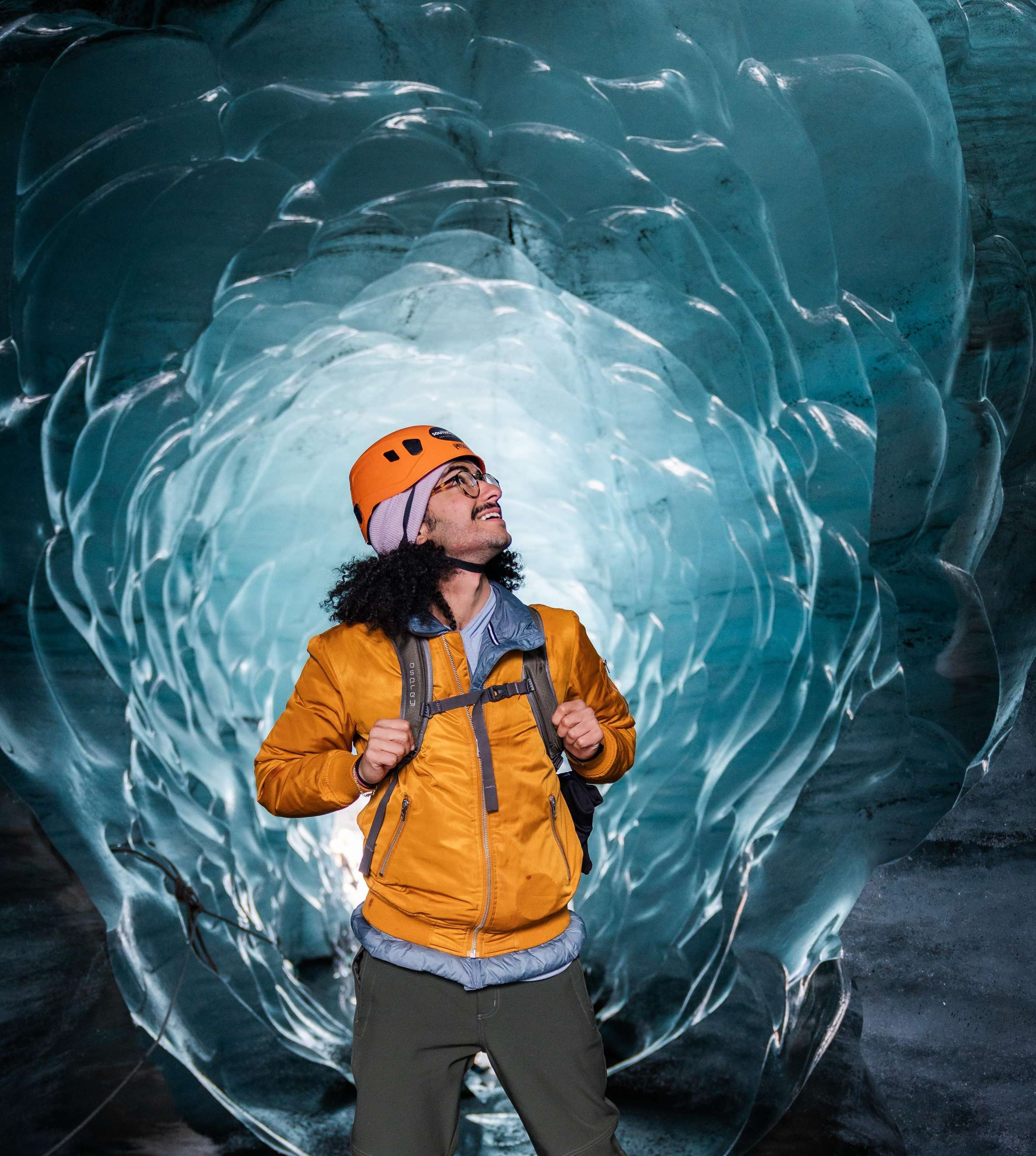
Plan for the wind, not around it. Check South Coast temperatures and daylight by season, then let a certified glacier guide handle the driving from Reykjavík in a Super Jeep built for ice, gusts and black sand.
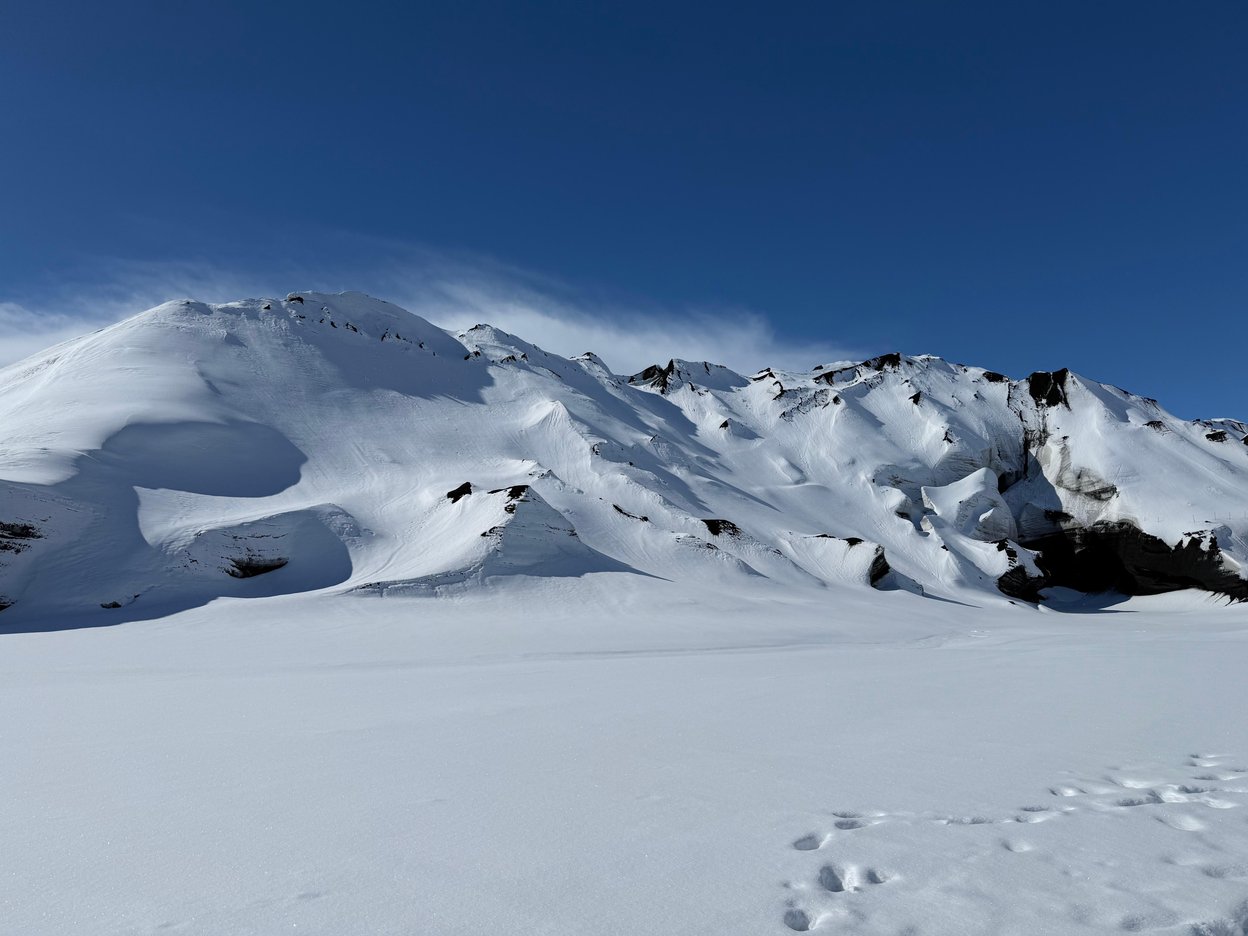
"Easy pickup, and driver Sigge knew so much. Loved the 4WD ride to the cave and the spectacular ice cave itself. Those cinematic landscapes! Amazing day!"
rain one day in two, tours still run
Vík sits under one of the wettest skies in Iceland, and the wind there can stop traffic. What matters more than any single forecast is which month you pick, and who does the driving.
December gives the coast about 4.5 hours of daylight, June about 20.6, so your month decides the shape of every day.
Expect rain on roughly one day in two all year; waterproof layers matter in July as much as in January.
February is the windiest month, and sustained winds of 19 m/s or gusts near 30 can close Route 1 near Vík outright.
From October to April, Route 1 carries snow, ice and blizzards; a guided Super Jeep tour puts that road on someone else's licence.
Katla Ice Cave runs year-round, while most Vatnajökull caves shut down around April and reopen in November.
Check the Icelandic Met Office forecast and umferdin.is road conditions the evening before and again on the morning of your drive. If authorities close Route 1 or the weather turns to a red warning, operators treat it as a safety cancellation, so you can usually reschedule or take a full refund. Leaving extra time between Reykjavík and Vík protects your check-in slot.
The calendar does most of the deciding here. June hands you 20.6 hours of light, sunrise around 3 am and sunset near midnight, so a full coast day never feels rushed.
December gives you about 4.5 hours, with the sun up at 11:04 am and gone by 3:35 pm. In January, regulars say, plan around 5 to 7 usable hours and a sunrise that lands at 10 am or later.
Rain barely takes a season off. Vík sees wet weather on 15 to 19 days in nearly every month, which is why the town around Mýrdalsjökull counts among Iceland's wettest inhabited spots. Moist southern air rises over the cliffs and the glacier, cools, and drops.
Crowds split in two. The waterfalls at Seljalandsfoss and Skógafoss pack in July and August, while the ice-cave tours themselves fill up in December, January and February. So pick the month for what you want to see: waterfalls in the summer crowds, or blue ice alongside the winter tour rush.
The shoulder months have their own pull: late May brings long evenings and puffins, late September the first northern lights.
January is a very busy month, averaging 17 rainy days and 5 windy days.
Tap a month to read it.
May is a quiet month, averaging 19 rainy days and 1 windy day.
Tap a month to read it.
February is a very busy month, averaging 18 rainy days and 6 windy days.
Tap a month to read it.
The picture works as a planning tool. Spring and autumn trade crowds for shorter days, and midwinter trades daylight for blue ice. What no month removes is the rain, and that is where the packing list starts.
A 1°C afternoon at Reynisfjara rarely feels like 1°C. The coast wind strips the warmth off fast, and February, the windiest month, makes the thermometer a liar. July reaches a mild 12°C on average, and even then the sea breeze keeps a jacket relevant.
Three layers beat one thick coat. Start with a thermal base that moves sweat out, add a fleece or wool mid-layer, and finish with a windproof, waterproof shell, jacket and trousers.
From October to April the average lows run about -3 to 1°C, so thicken the middle layer; from May to September the same shell still earns its place.
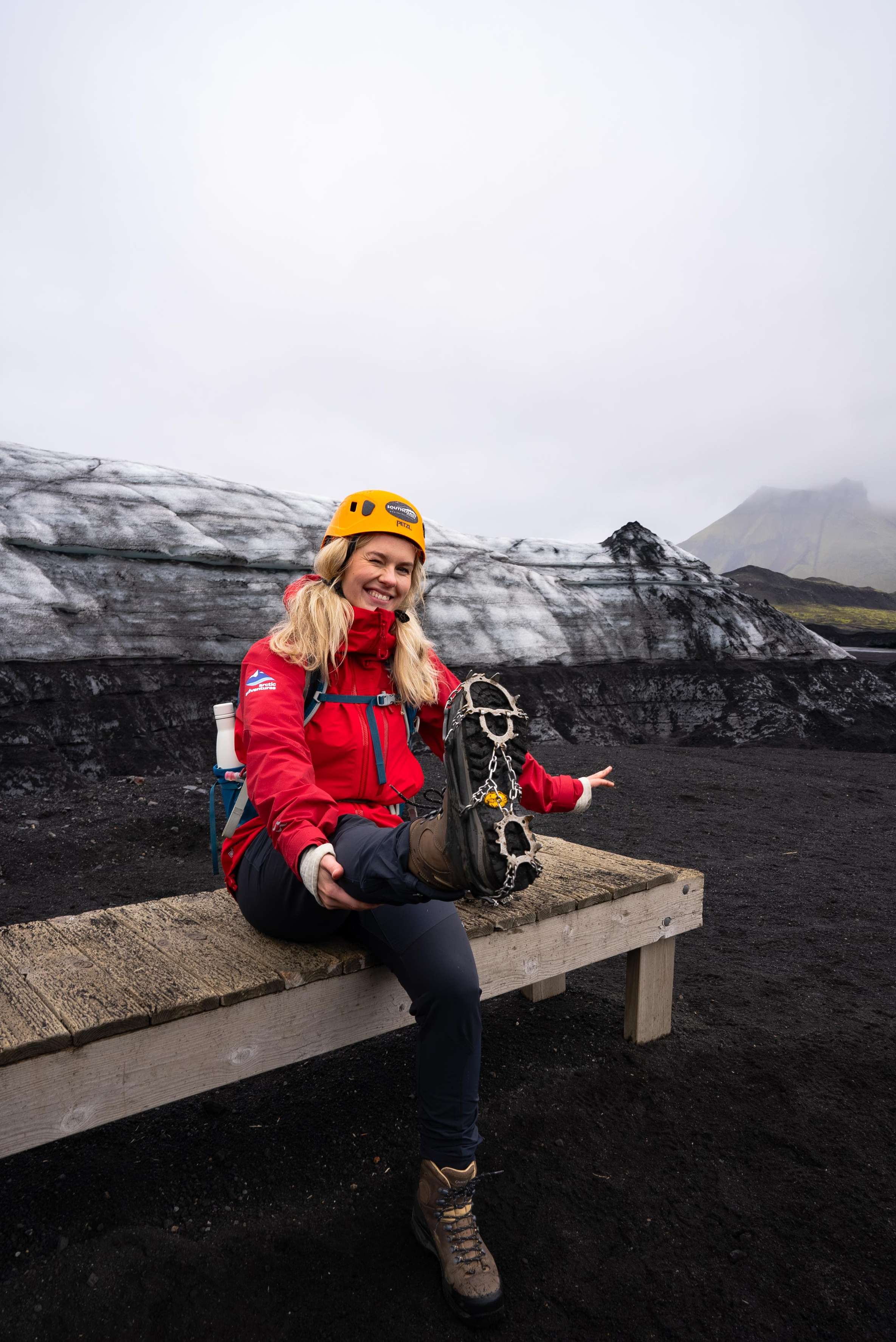
Boots decide the day. Sturdy hiking boots with grip and ankle support handle the wet, uneven ground at the glacier edge, and one Katla operator makes them mandatory. Add warm gloves, a hat and spare dry socks, because meltwater and puddles soak footwear faster than you expect.
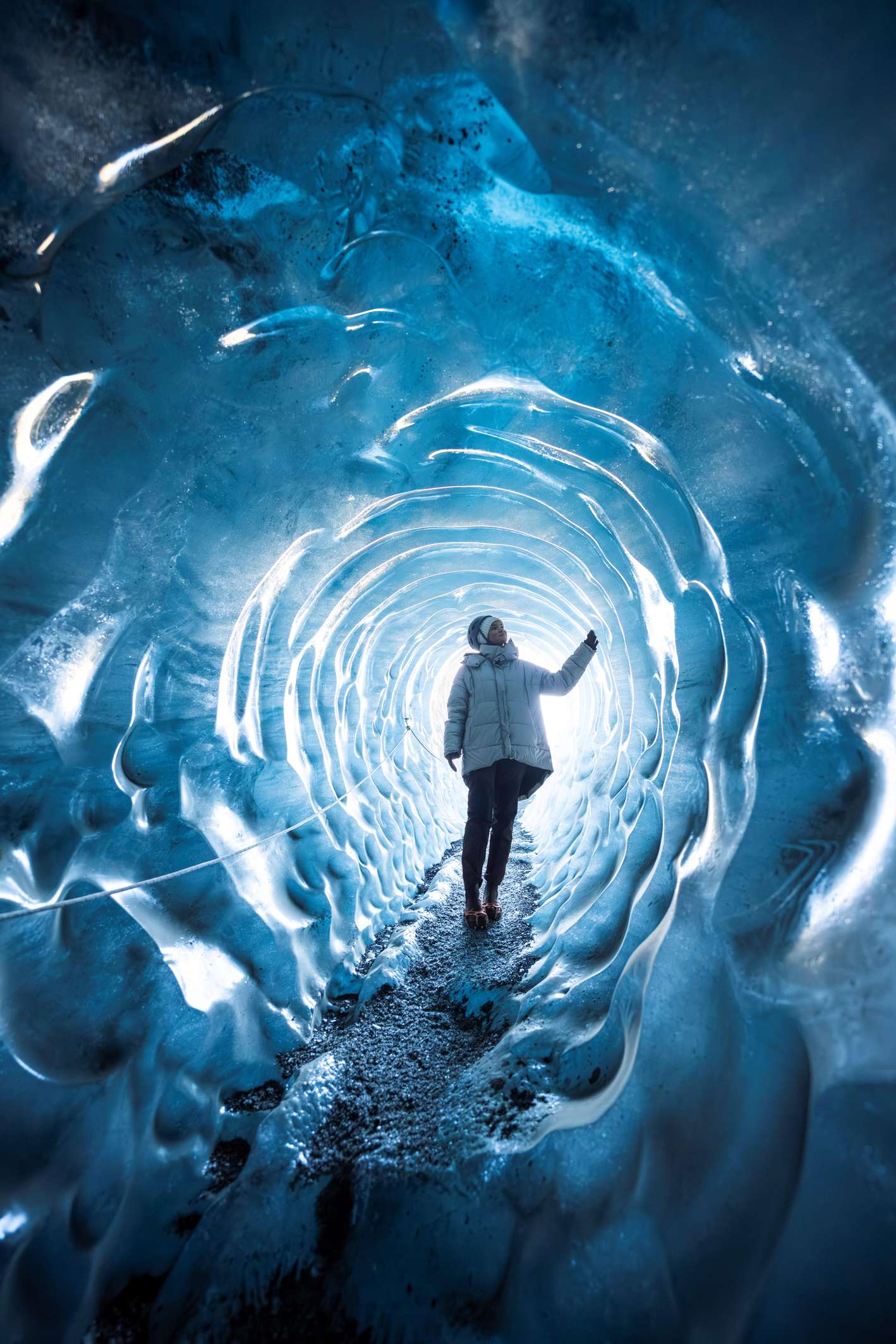
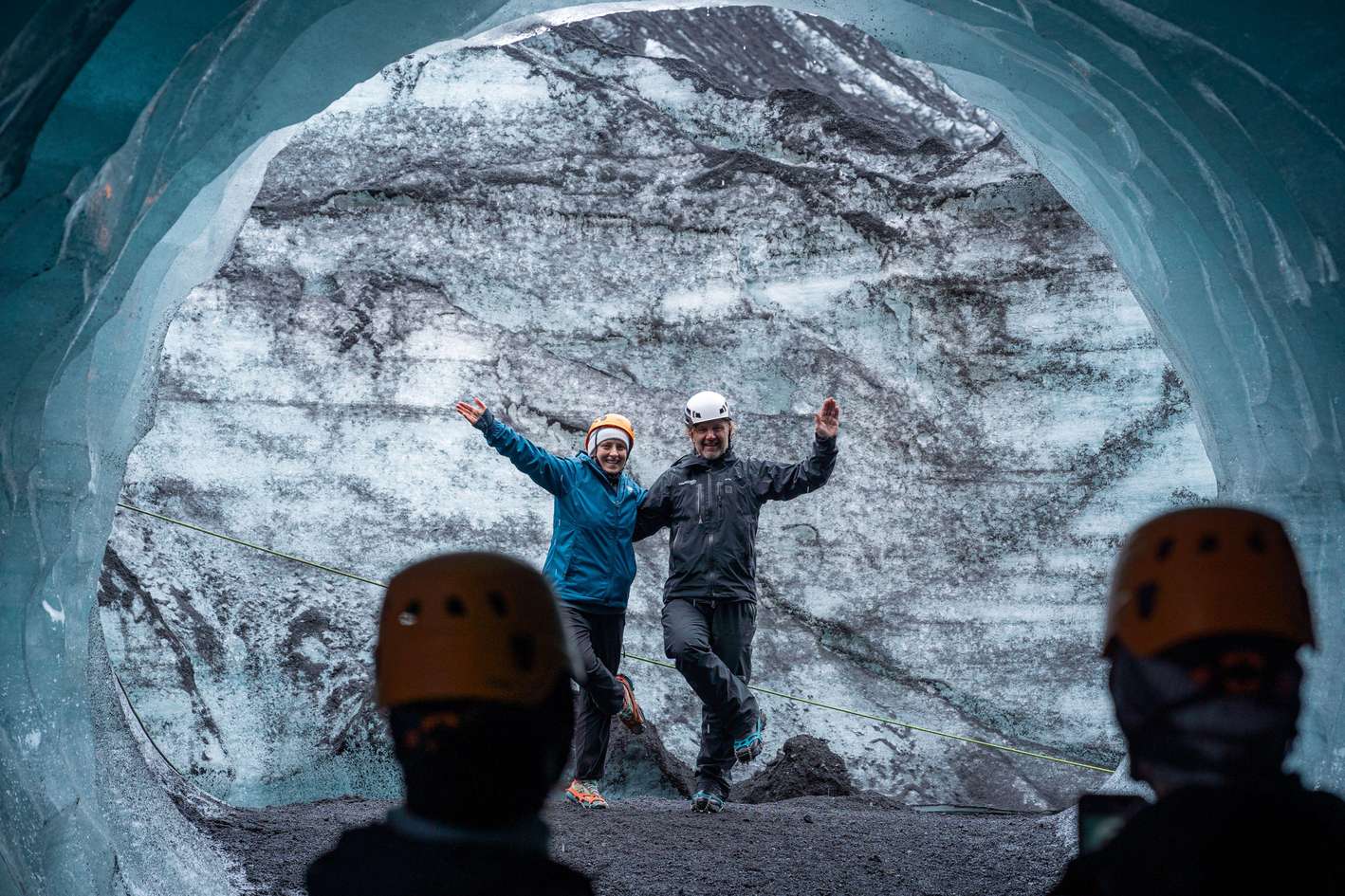
Inside the cave itself the ice holds around 0°C all year. On a January morning that makes the cave the warmest room on the coast.
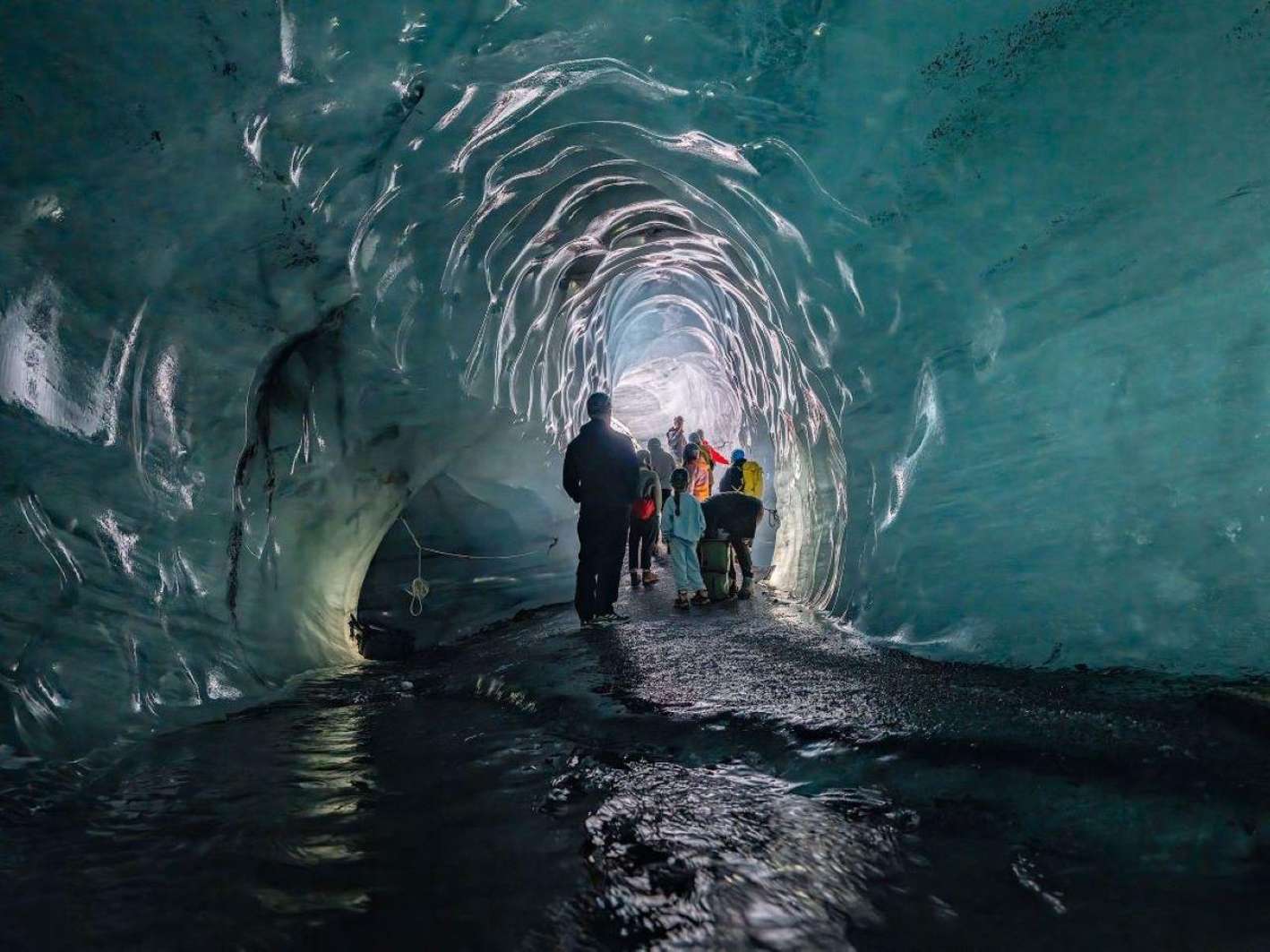
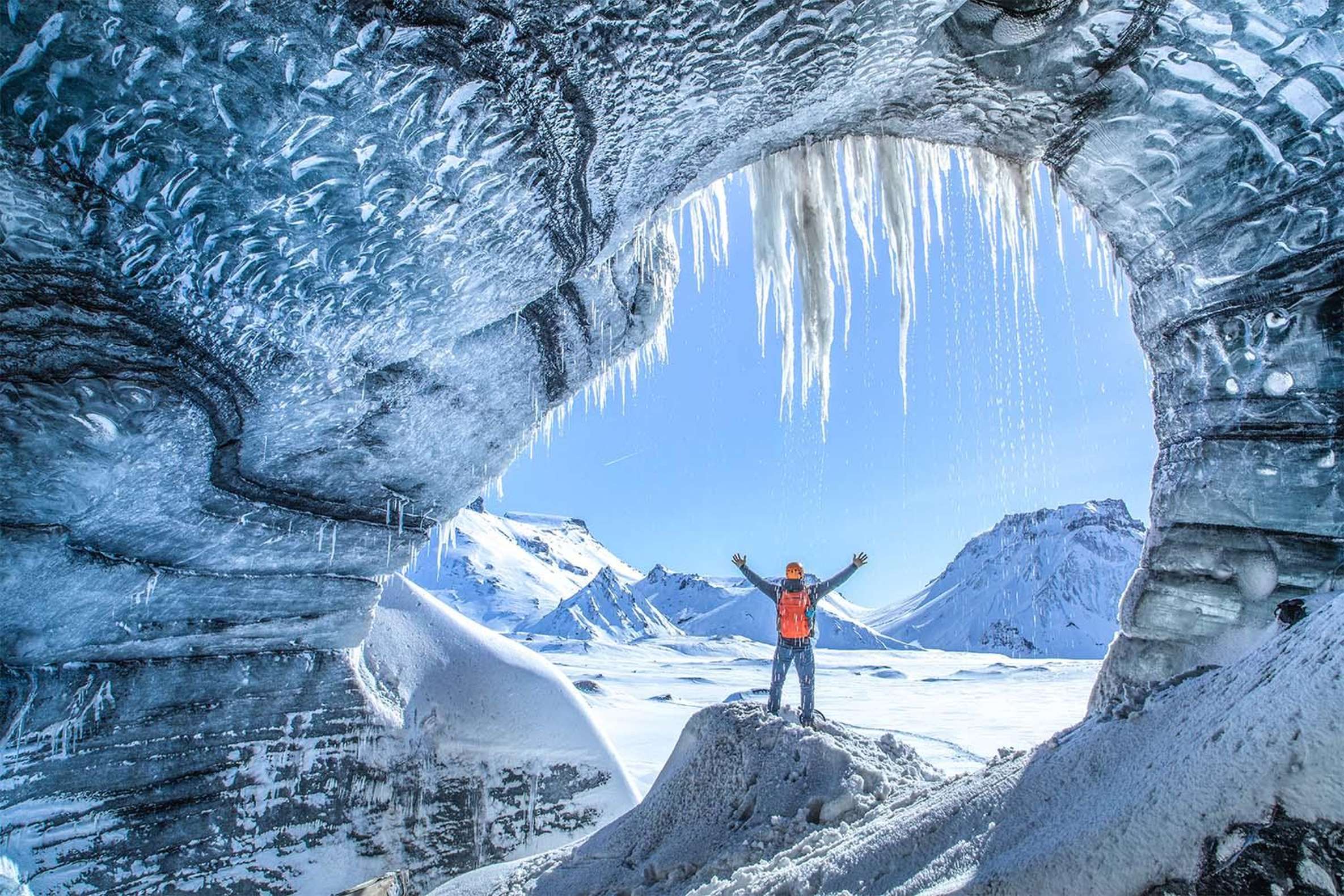
Honest answer: the southern shore is the windiest inhabited edge of the country, and some stretches earn it.
The road under Eyjafjöll counts among the windiest in Iceland, the Skógar to Vík section takes the full force of the Atlantic, and at Vík itself the wind lifts black sand off the beach and blasts it across Route 1.
The authorities keep score. Vegagerðin calls it storm weather at sustained winds of 19 m/s or gusts over 26, and a closure near Vík was reported during an orange warning with 28 to 30 m/s expected.
On a red alert, driving stops and tours cancel outright. Hellisheiði between Reykjavík and Selfoss ices over often enough to close on its own.
Check the two official sites every morning. umferdin.is carries road conditions and webcams, and the Met Office publishes the wind warnings. Locals do this daily, and it takes two minutes.
Gusts also arrive without ceremony. Even on a bright afternoon, sudden hard gusts can hit near Skógafoss, so hold car doors with both hands. Windblown grit scours paint off rental panels, and door dents cost at return.
Route 1 closed near Vík under an orange warning Skip the drive that day; check umferdin.is and reschedule the coast for another morning Red alert issued for the south No driving and tours cancelled; build a backup day into a winter itinerary
On one of those mornings, swap the coast drive for a Reykjavík day and move the glacier visit to your spare slot. The alerts tell you which morning that is a day ahead.
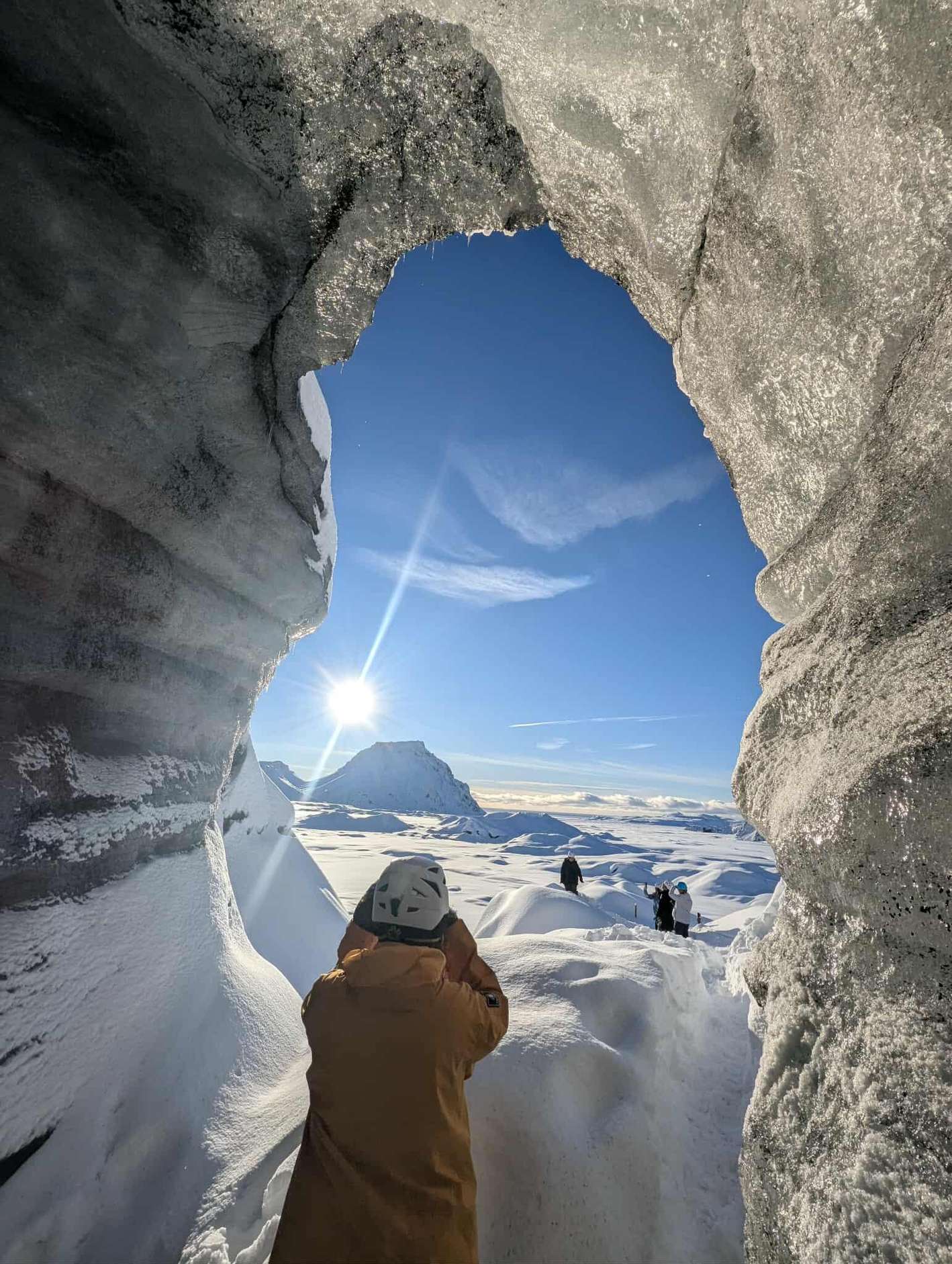
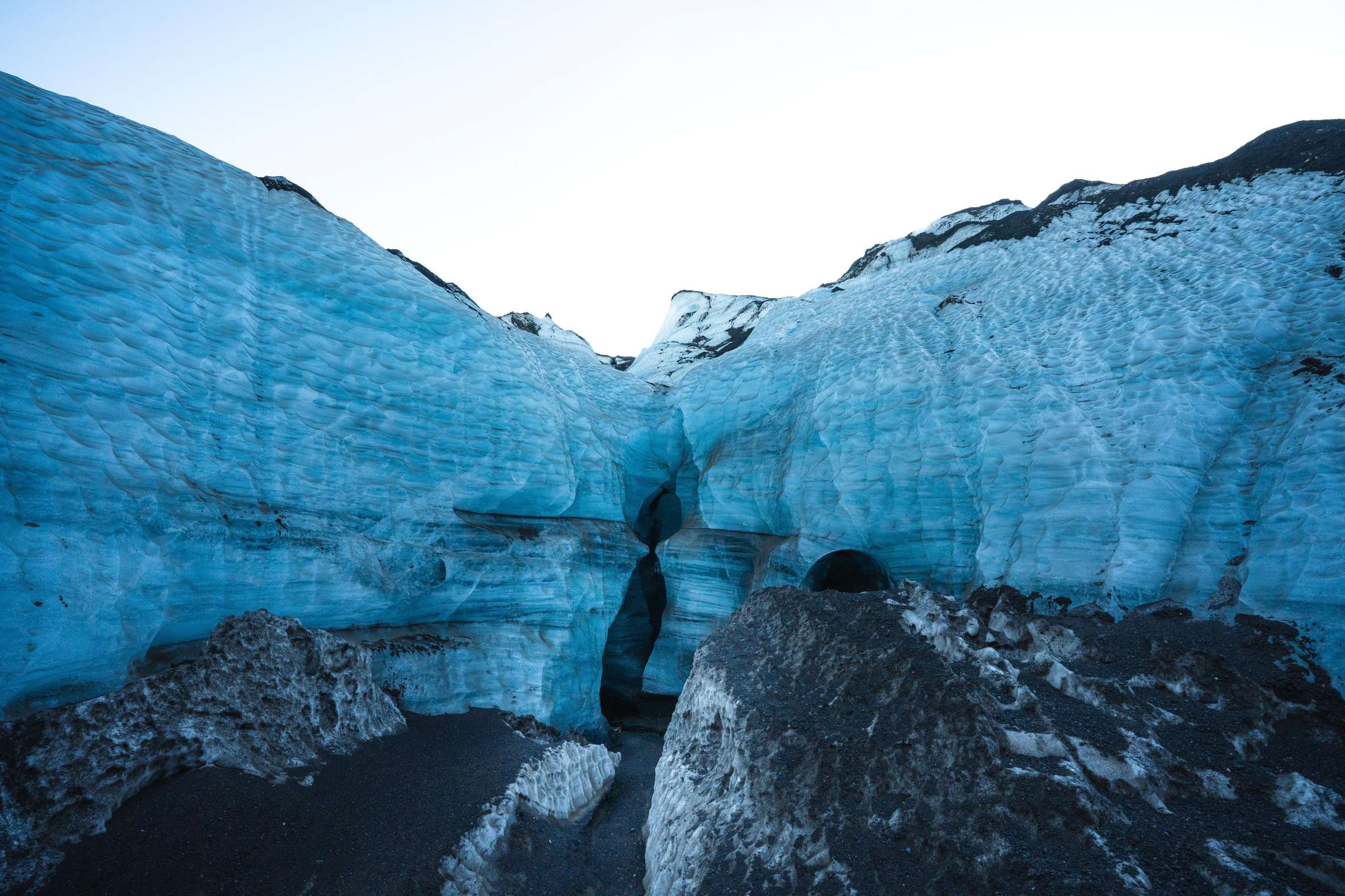
From October through April, Route 1 offers snow, ice, blowing snow, fog and the odd blizzard, and closures do happen. Most storms shut the road for a few hours, occasionally a full day, and December 2022 closed south coast roads for days. Vík itself rarely blocks with snow. It takes the wind instead.
The law is narrower than people assume: 4WD is only mandatory on the Highland F-roads, so a rental sedan is legal on the coast. Legal and comfortable are different things on a gusty, icy day.
Then there is the bus. Strætó serves Vík, but the published timetable lands there at 5 pm, after the last Katla cave departure, which typically runs through 3 pm. The timetable and the tours never meet.
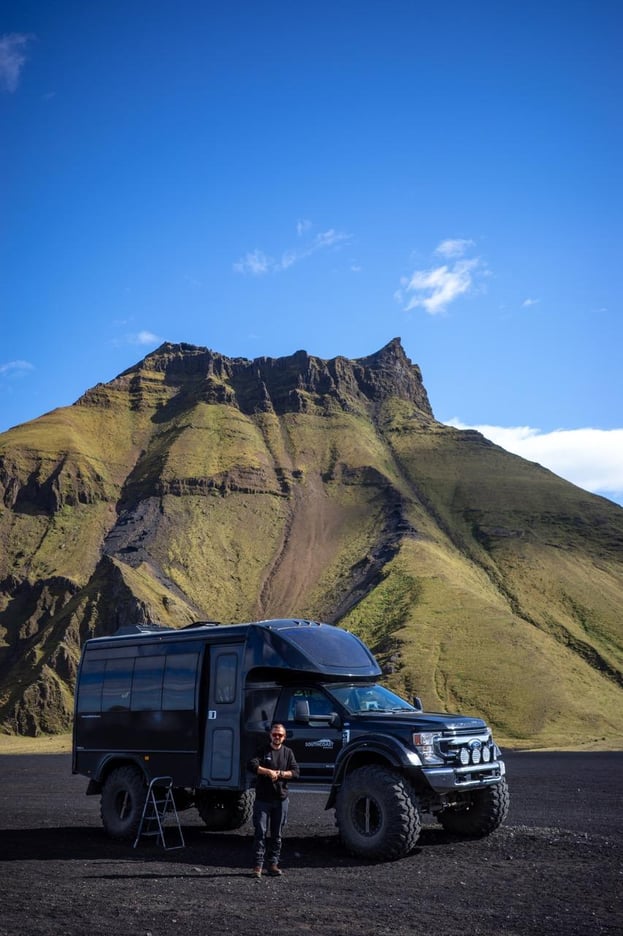
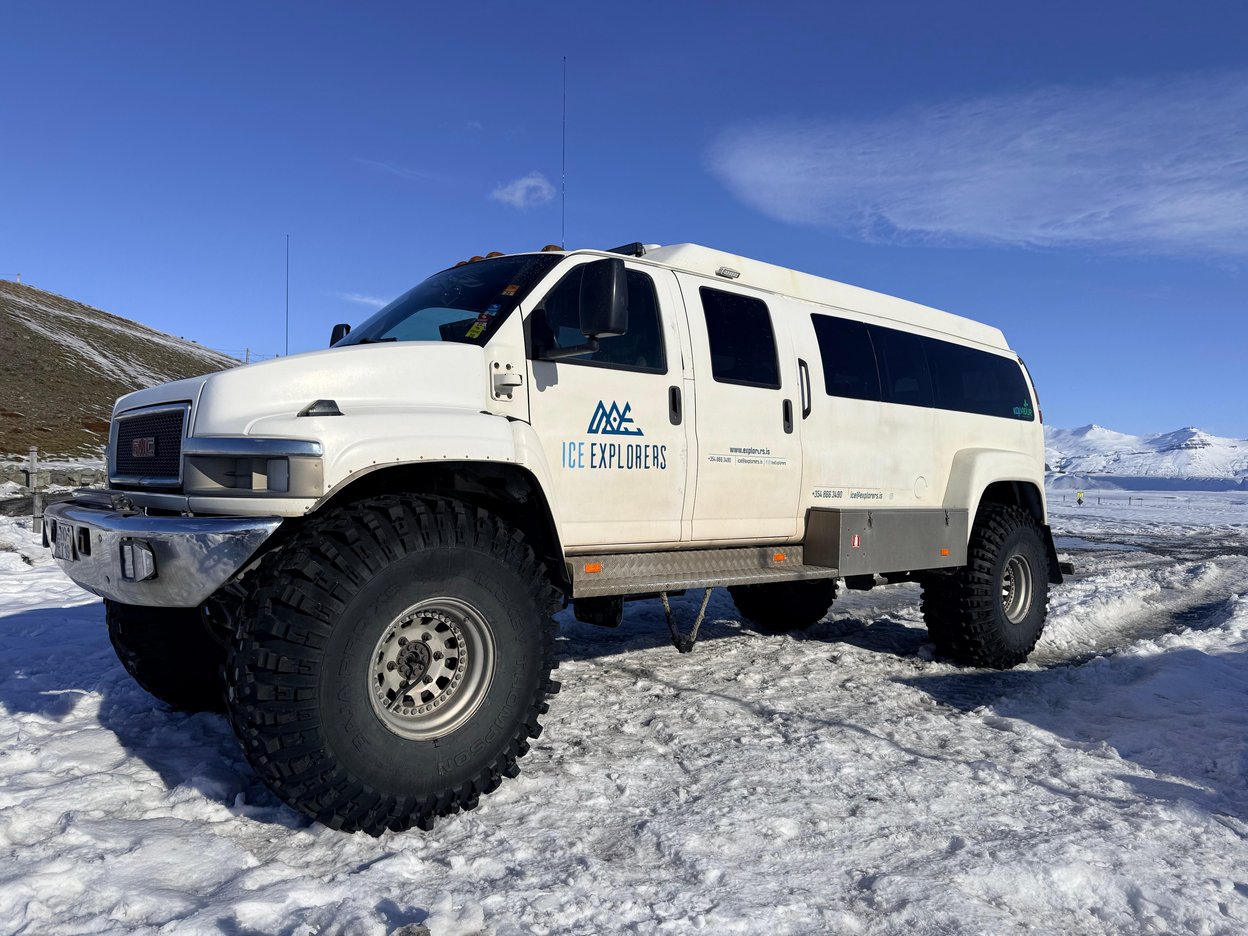
A guided Super Jeep takes the road off your shoulders. The Iceland South Coast Itinerary page maps the drive itself; the short version is 2 hours 38 minutes each way from Reykjavík, and no ordinary car reaches the cave, which needs a Super Jeep over the floodplains.
On the From Vik: Katla Ice Cave and Super Jeep Tour, a local guide handles both the highway logic and the off-road track.
When extreme weather closes the road, Katla tours are called off and your booking turns into a refund or a new date.
Weigh those rows against your dates. In summer the rental car row softens; from October to April the first row earns its keep.
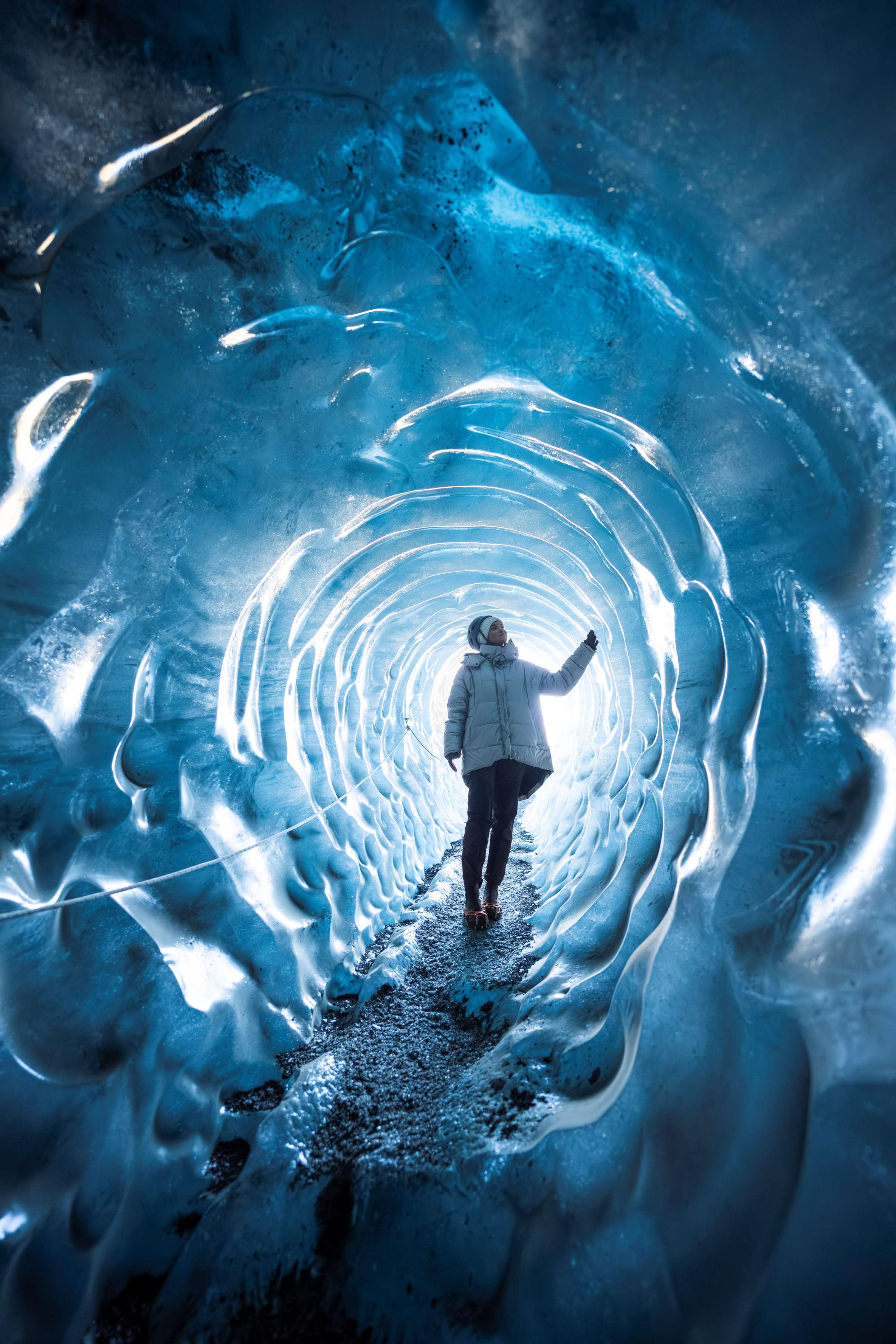
Two days beats one, and three beats two, mostly because of daylight arithmetic. The combined South Coast and Katla day trip runs about 10 hours door to door, and Vík holds under five hours of daylight in December and close to six in January. Doable in a day, but the last stretch happens under headlights.
Give the coast a second night and the pressure lifts. Staying in Vík or Kirkjubæjarklaustur turns a dark, five-hour return drive into a short morning hop. People who have done the winter run say this is the change they wish they had made the first time.
Season stretches and squeezes the plan too. In late May, daylight removes the race against sunset altogether, and milder roads make each leg calmer. By late September the shorter days already make a driving itinerary feel hurried.
The South Coast itinerary page lays out the route and map day by day. One more thing worth saying: a focused South Coast trip beats a rushed lap of the whole island in shoulder season, when weather and short days punish over-scheduling.
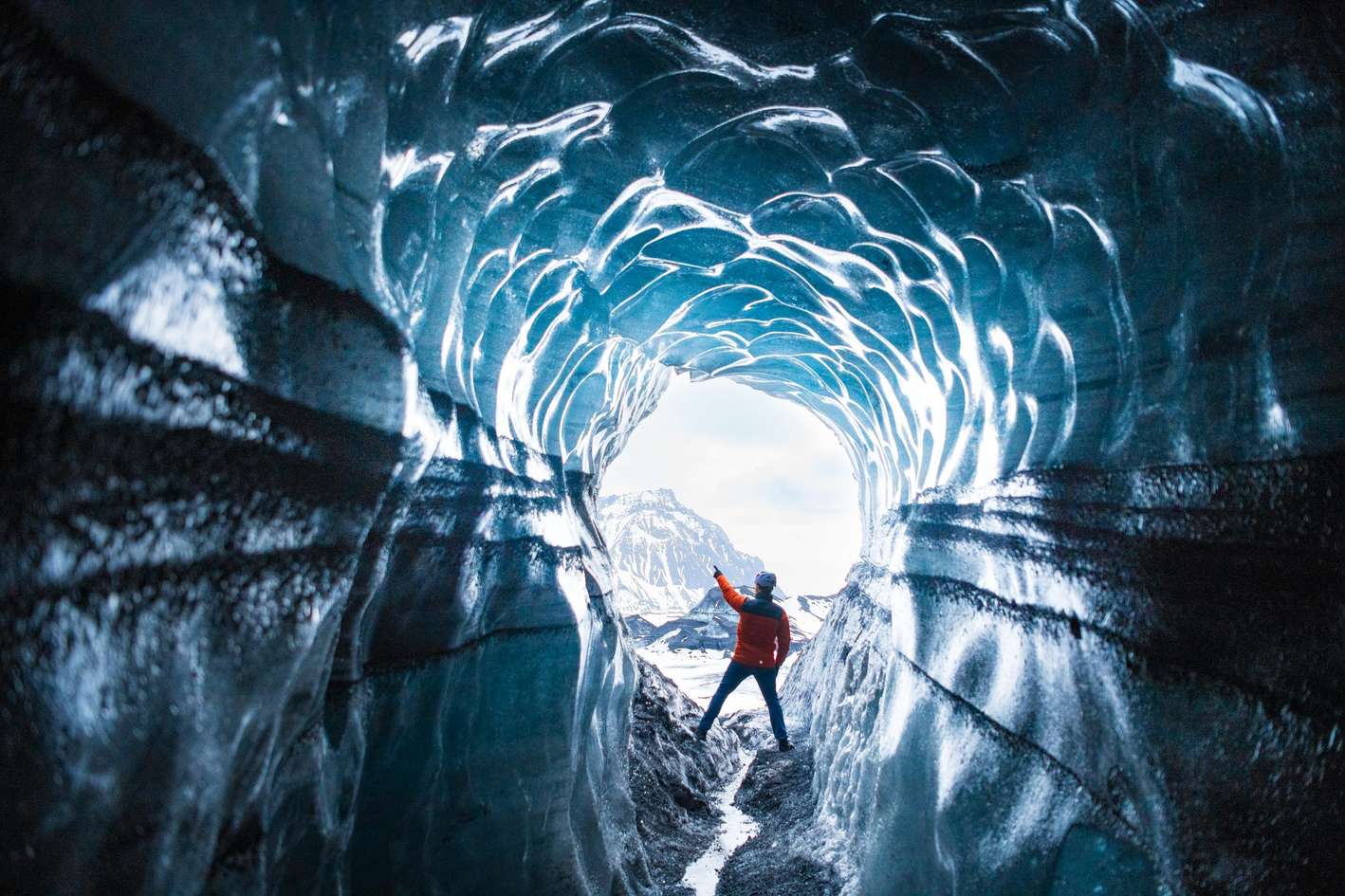
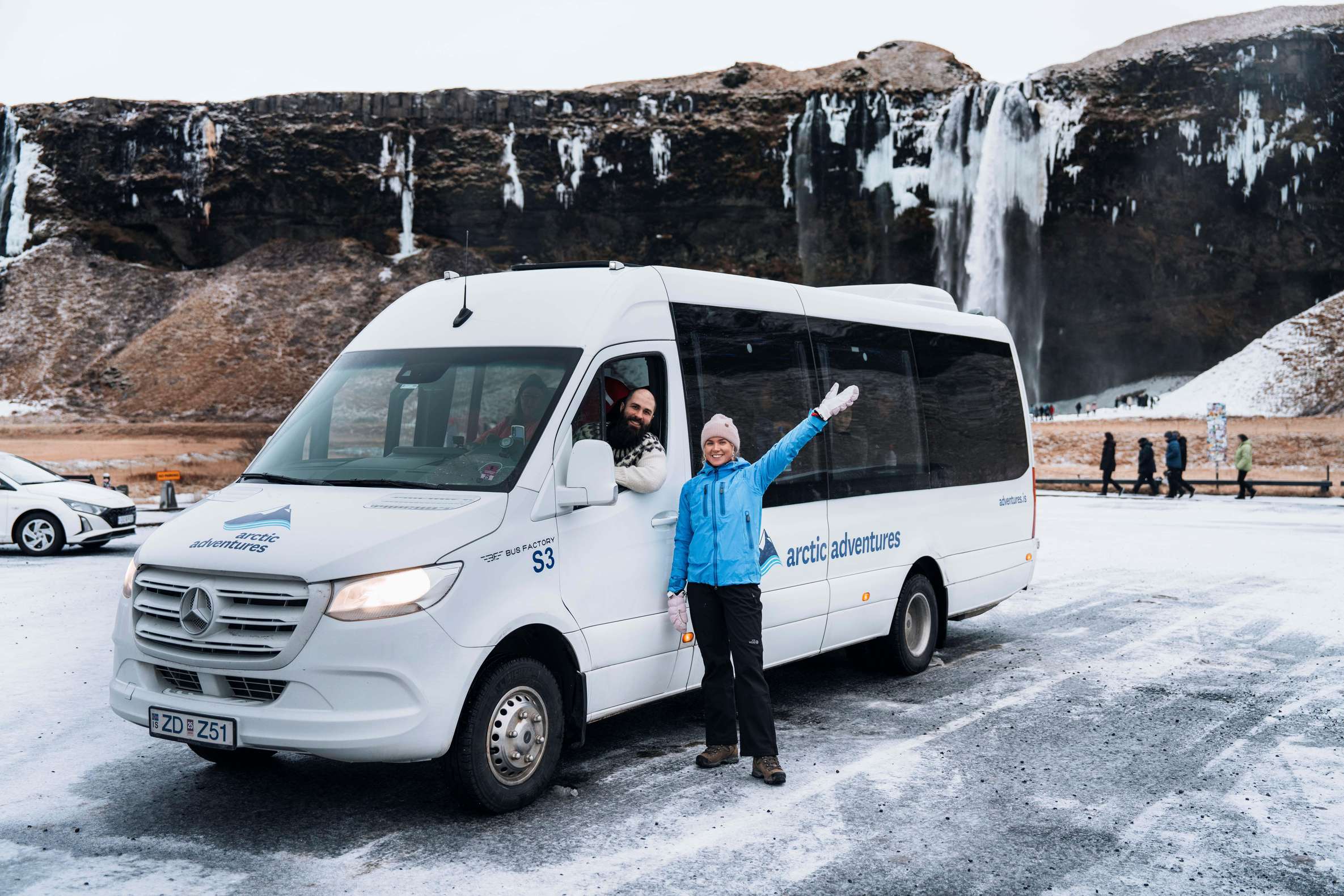
Here is the day that makes the forecast somebody else's job. On the From Reykjavik: Katla Ice Cave and South Coast Day Tour, a minibus collects you at an authorized numbered stop, and the pickup window can run up to 30 minutes from your voucher time, so be out front early.
Reykjavík's tour stops differ from city bus stops; check the sign.
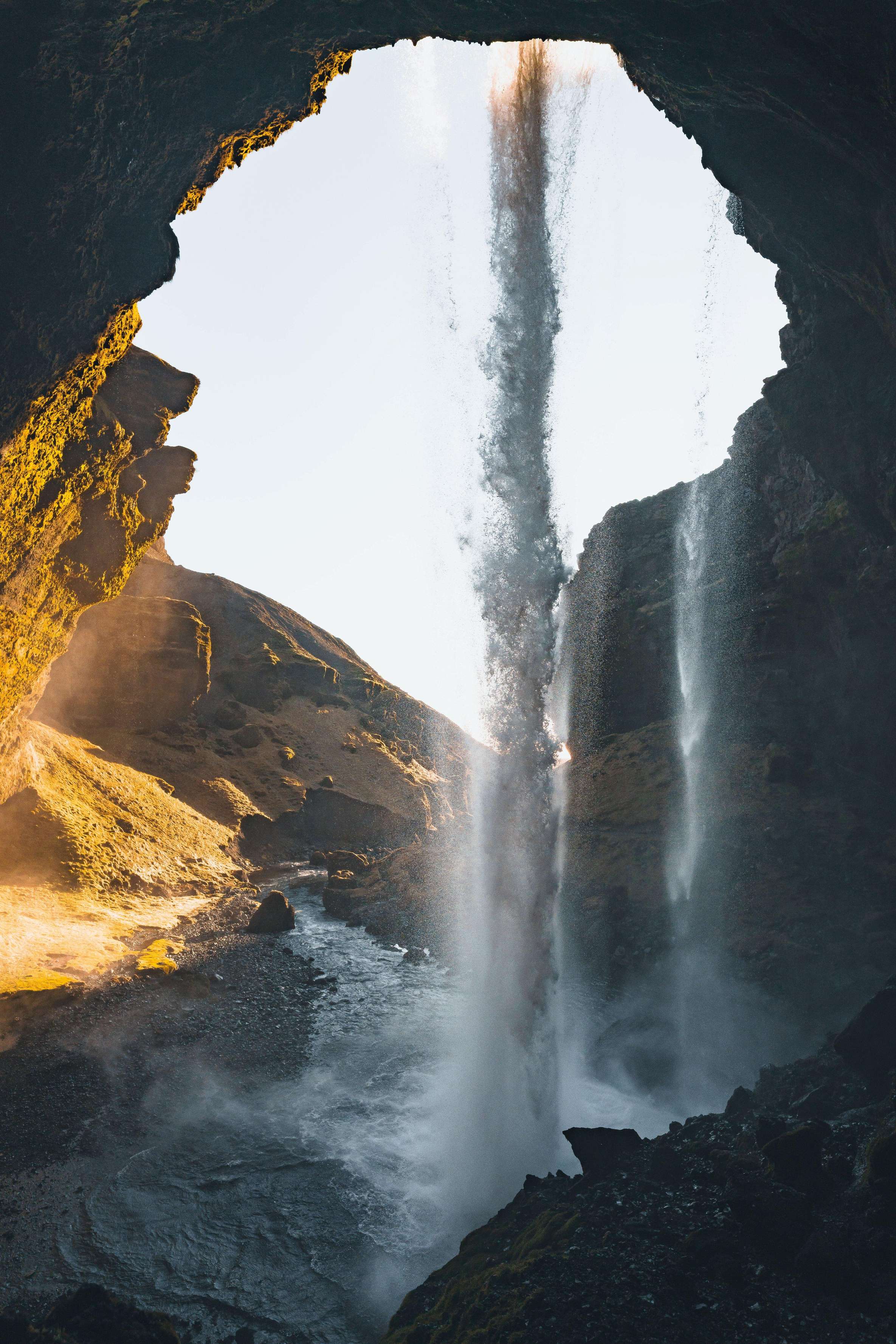
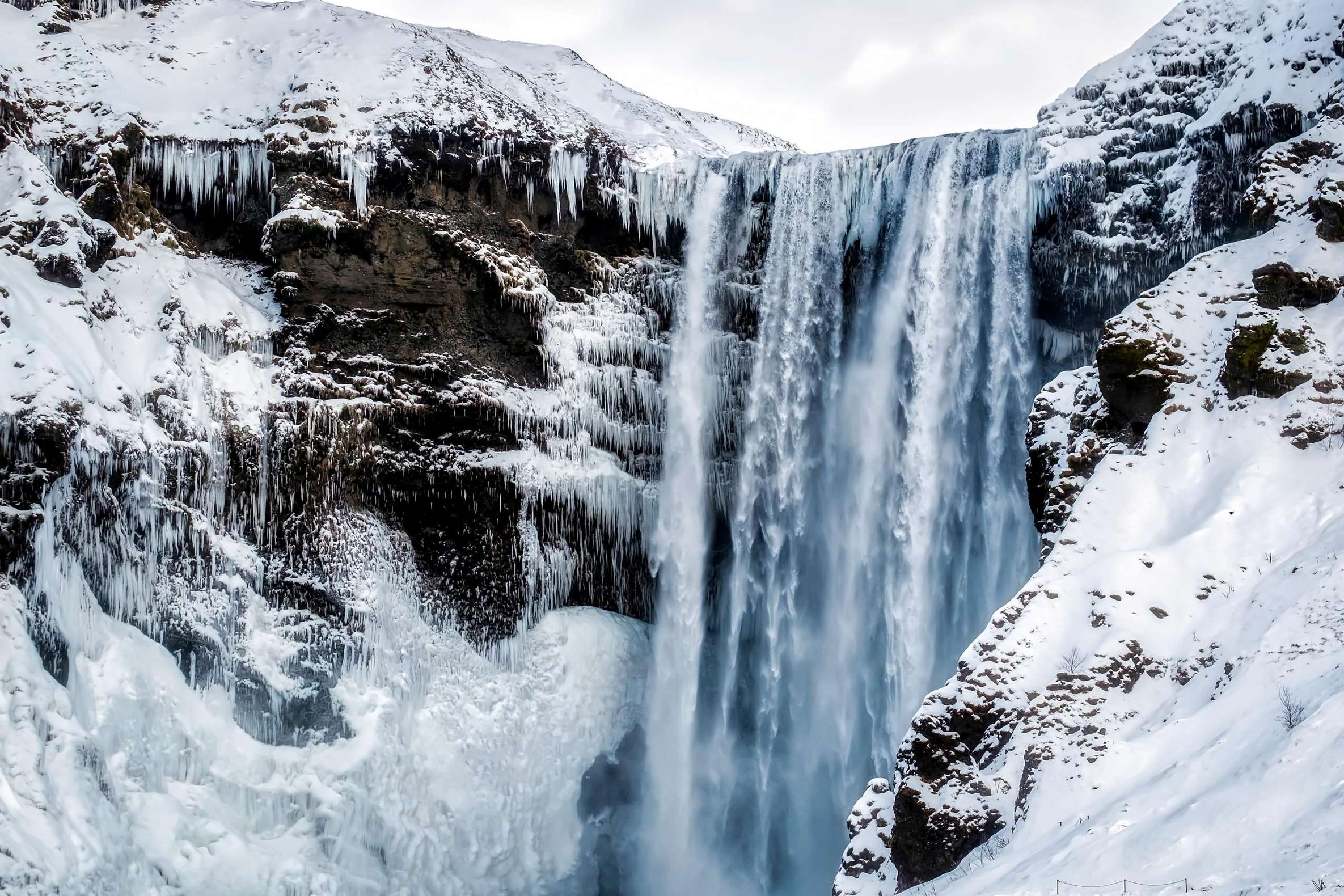
Then the coast unrolls: Seljalandsfoss, where you can walk behind the falls when conditions allow, Skógafoss with its viewing steps, the black beach at Reynisfjara. Rain or wind may trim a stop or bend the route; the guide adjusts to keep the day worth taking.
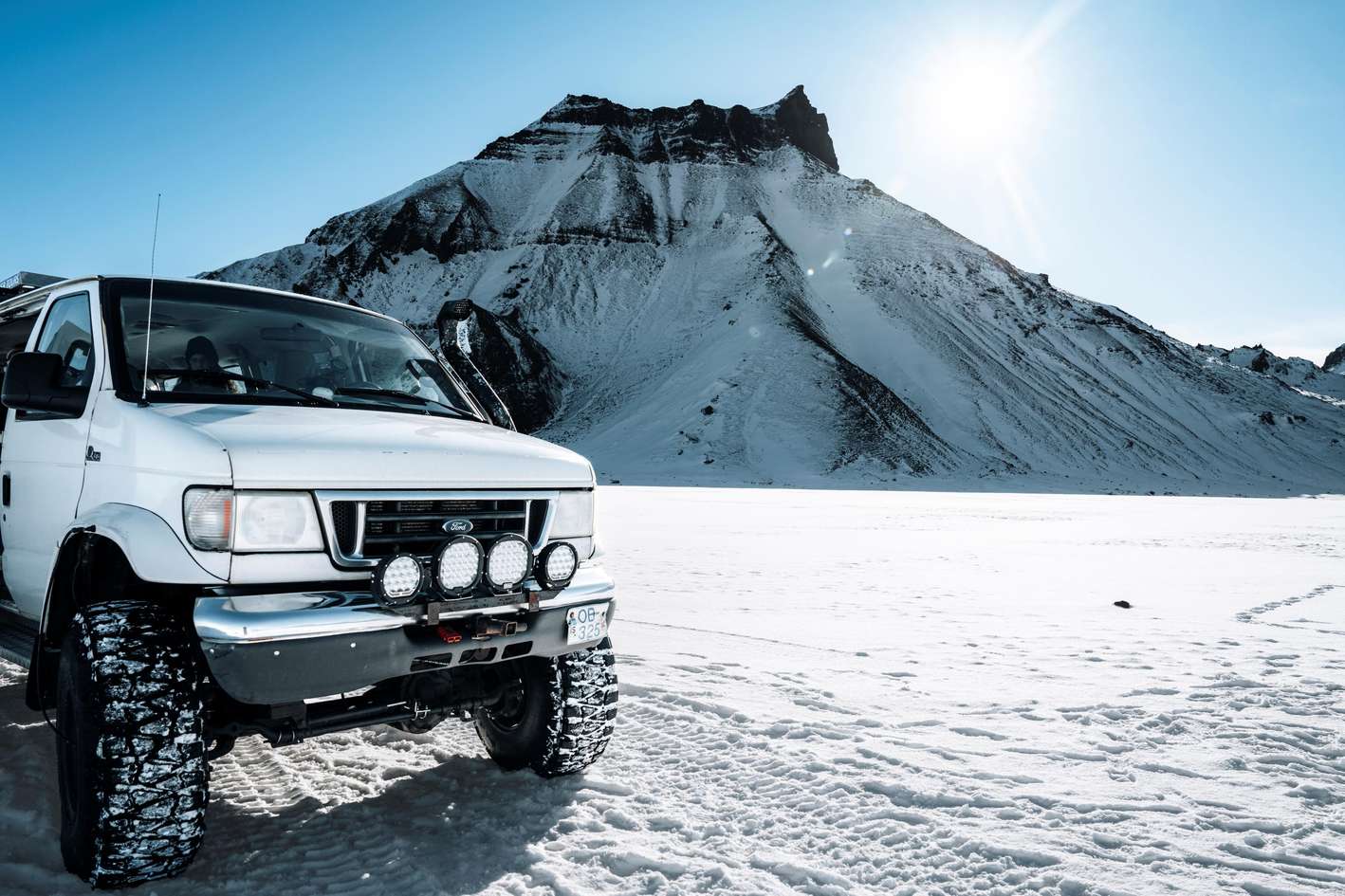
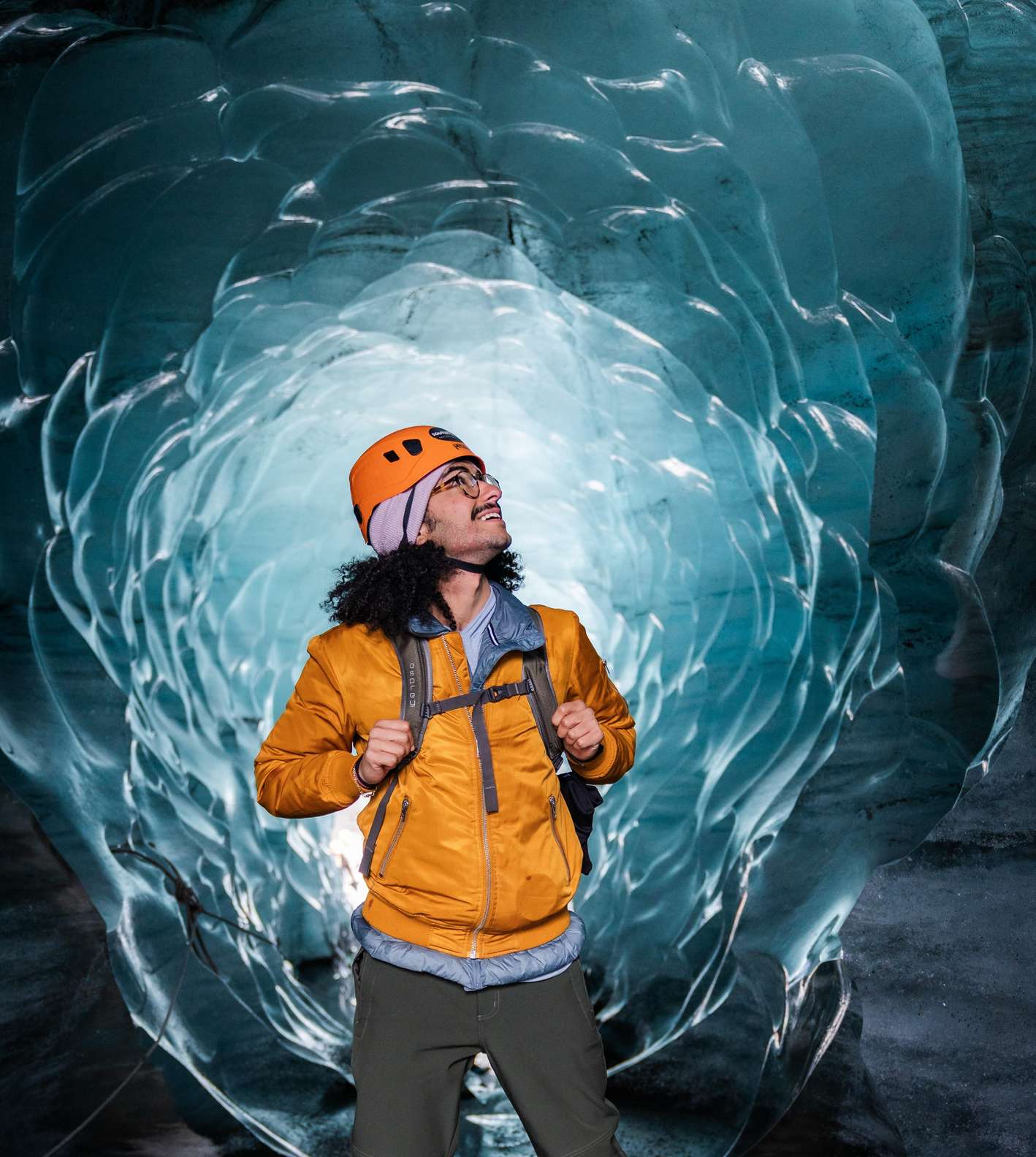
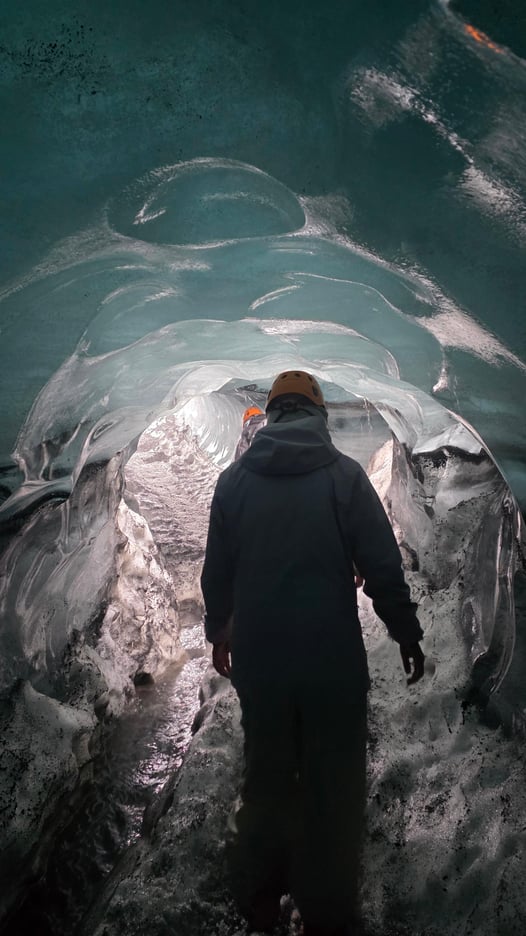
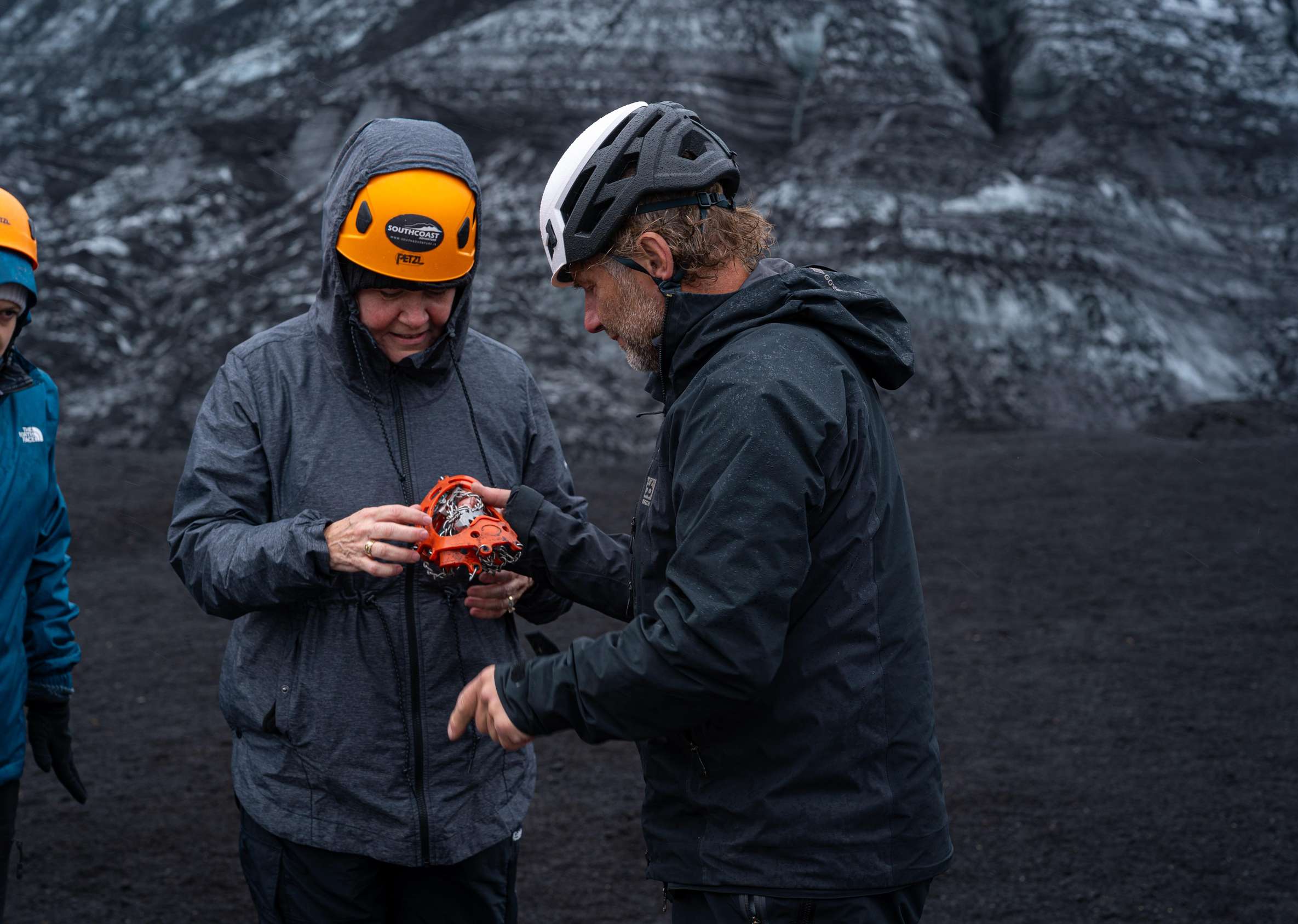
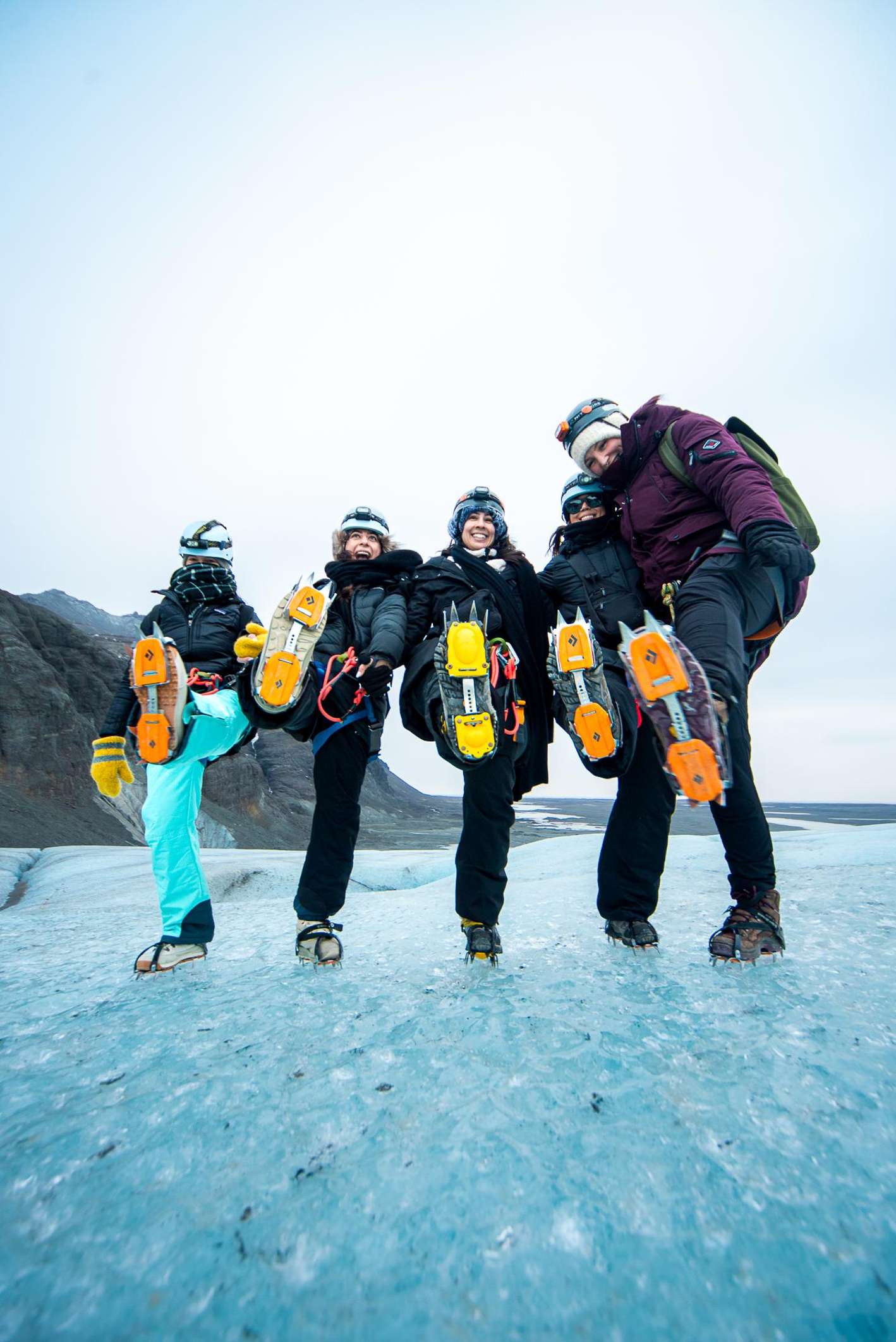
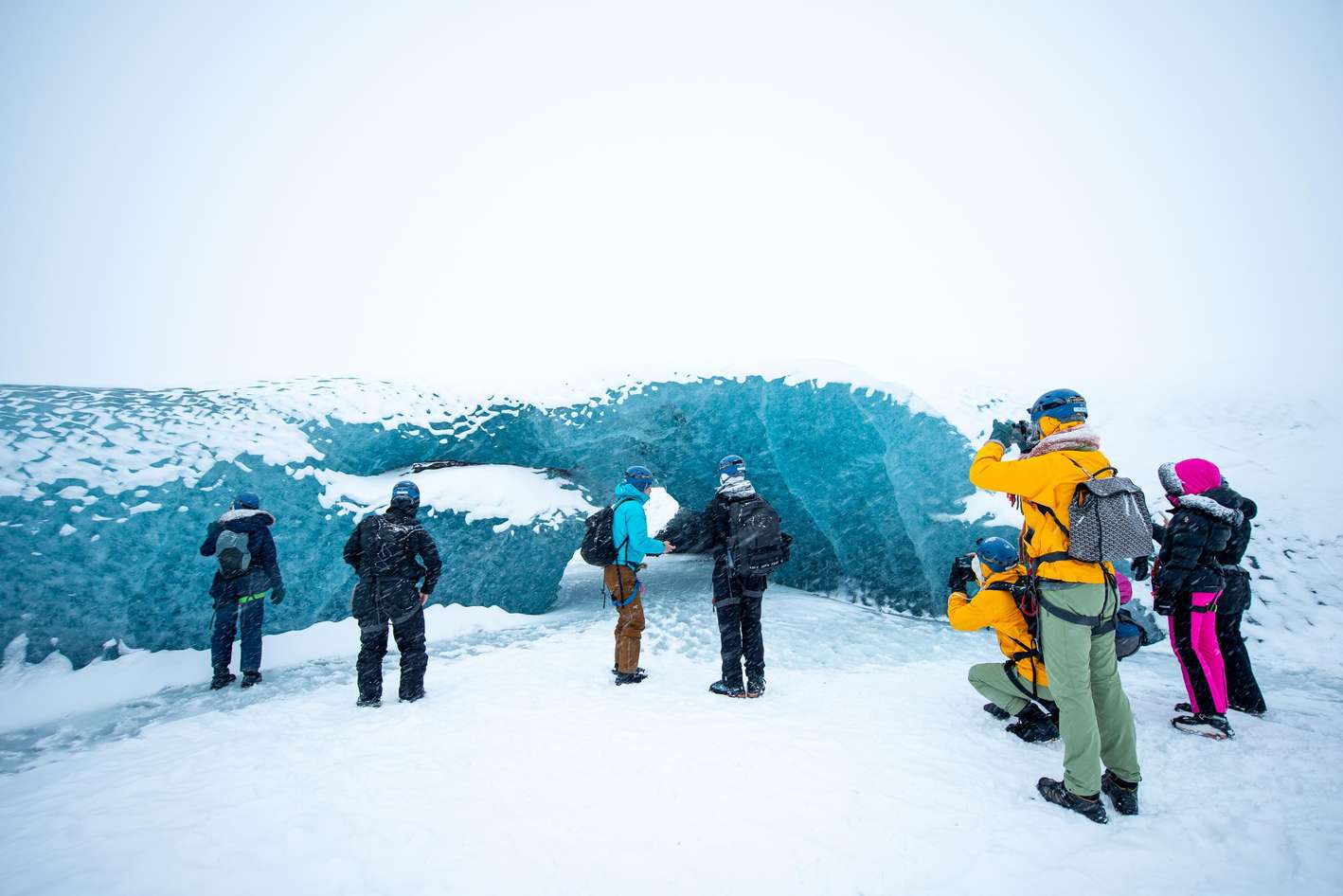
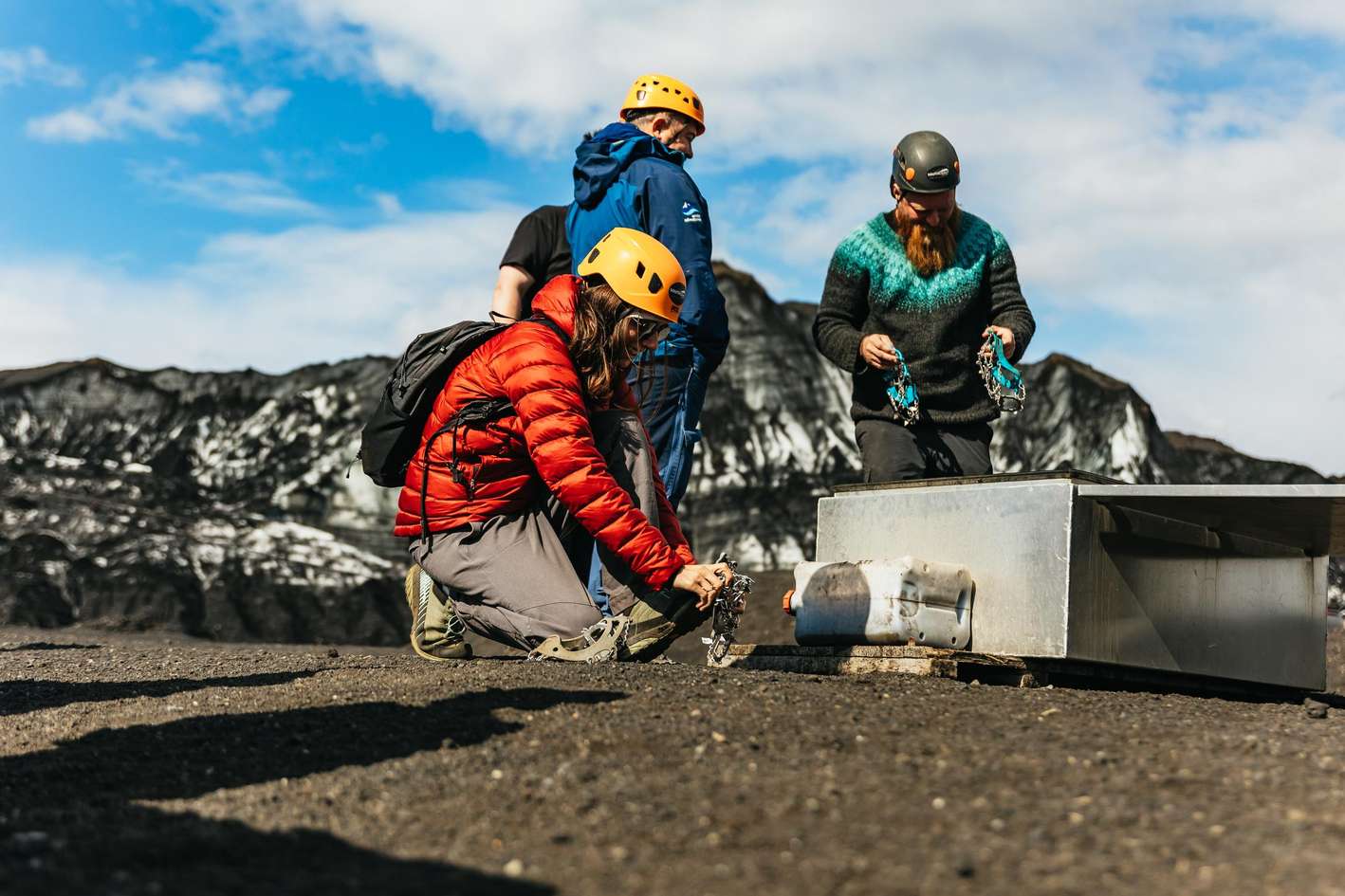
In Vík you switch to a Super Jeep for the 40-minute off-road run across black sand and shallow streams, crampons and helmet included, then step into the cave.
The whole outing runs 12 hours, rated easy to moderate, and children under 8 are not suited to the small-group version of this route, which the small group tour page covers in detail.
The return leg is the quiet argument for the tour: you sleep while someone else drives the dark 187 km home.
The bus can take up to 30 minutes to reach you; wait outside where the driver can see you
Stops shift or get skipped when wind and rain demand it
About 40 minutes off-road over black sand and streams
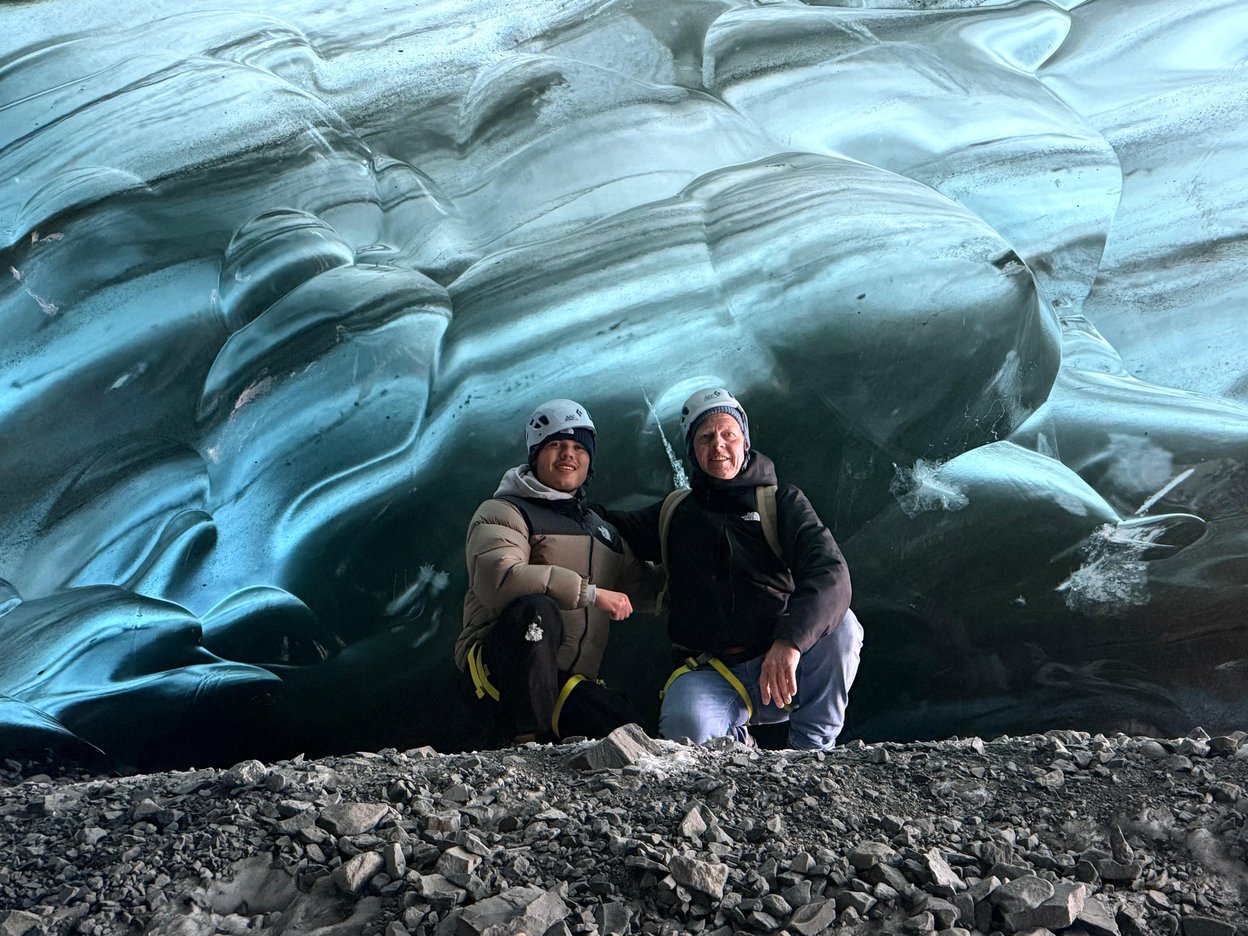
Helmet and crampons provided; the cave holds near 0°C
Sleep on the minibus; in winter you arrive after dark
None of those hours depend on your own driving, which is the whole point of handing the day over.
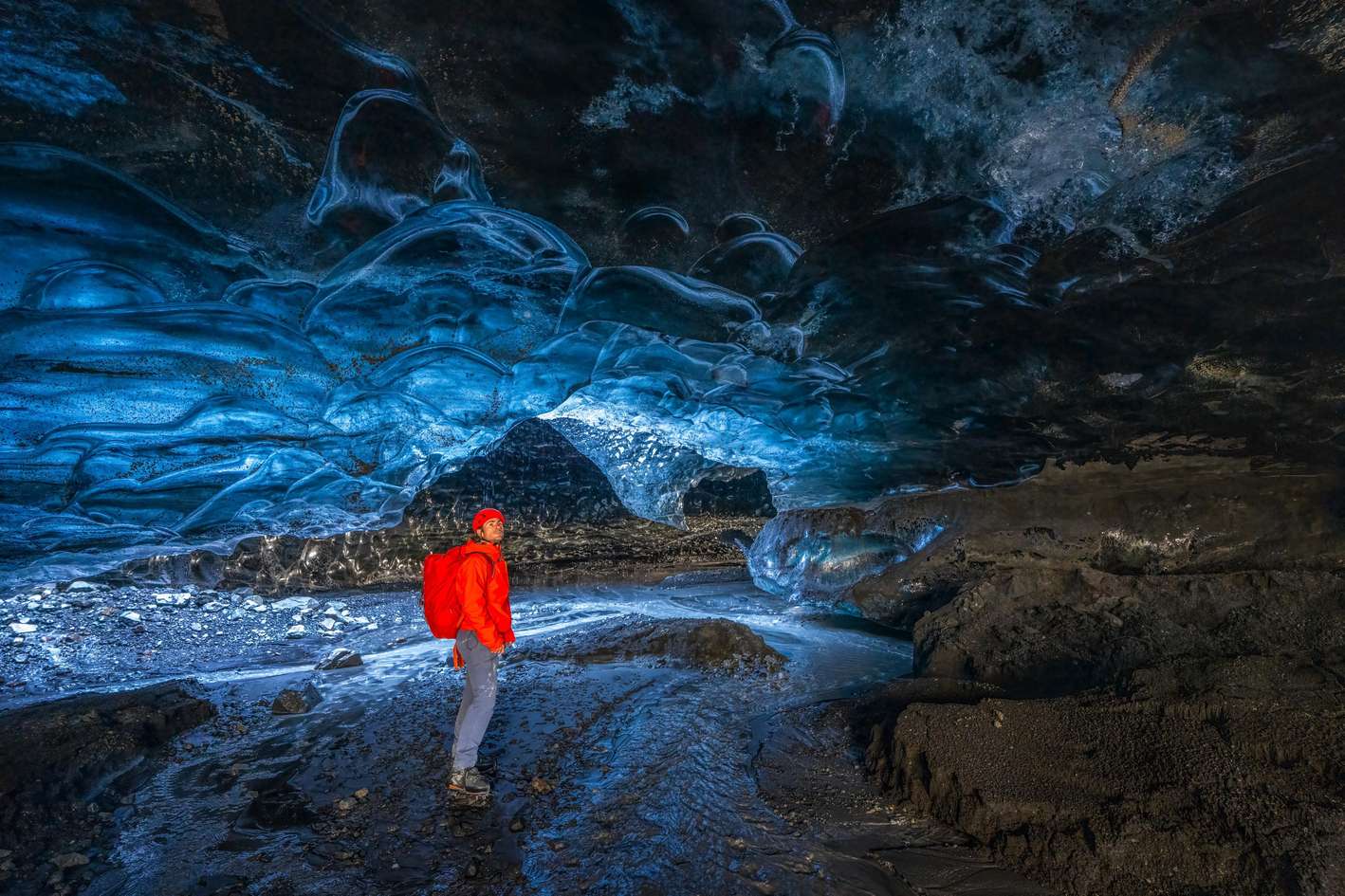
The two experiences look similar from the car park and feel nothing alike. An ice cave tour takes you inside the glacier; a glacier hike walks you across its surface.
On Katla, the Super Jeep drops you close, and the visit amounts to a light 1 to 2 km walk over uneven ground, no ropes, no climbing, manageable for most people of average fitness.
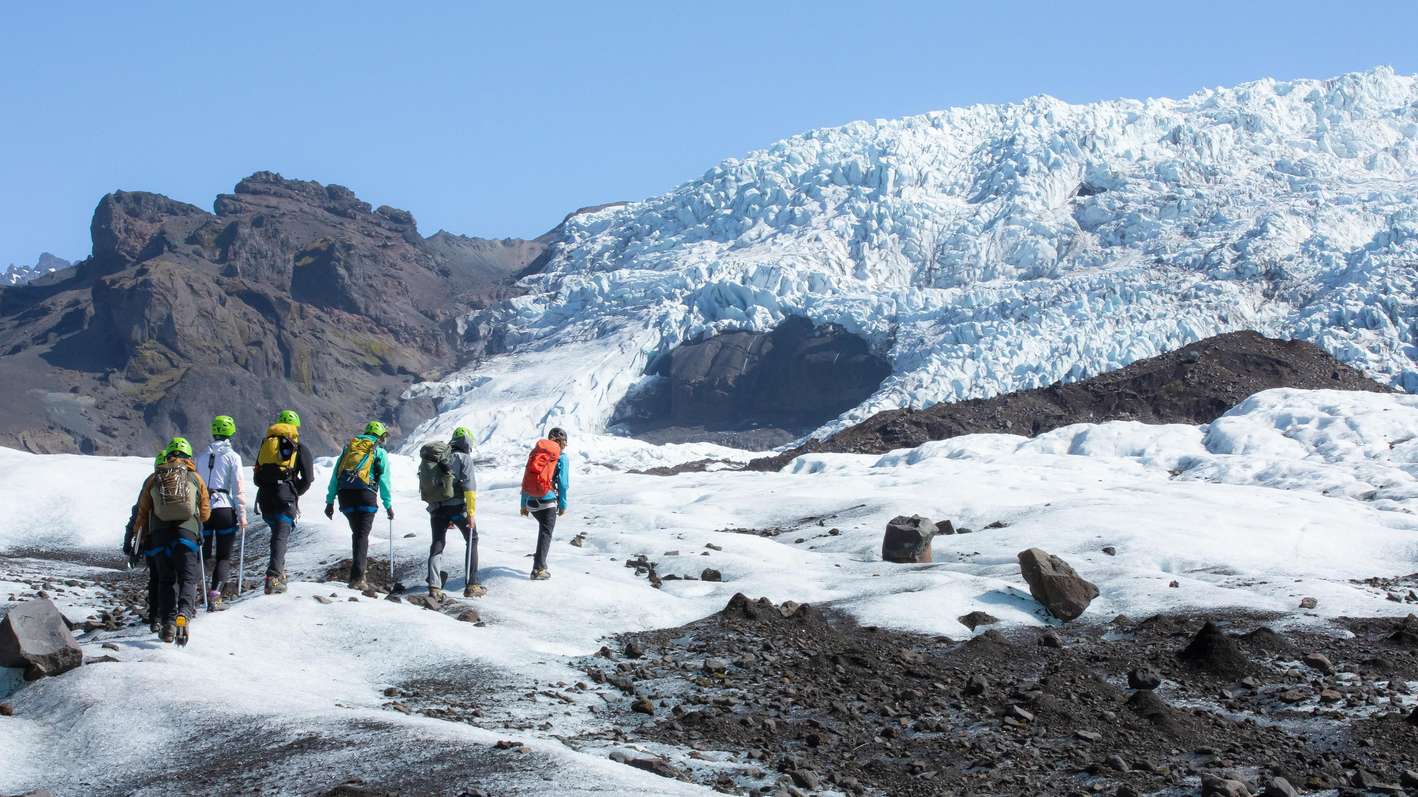
A glacier hike asks more. The three-hour Falljökull hike from Skaftafell means sustained crampon walking on the ice, with a guide, crampons, helmet, harness and ice axe. People who have done both say the hike spends far more time moving on the ice; the cave visit is mostly about standing still and looking.
Boots carry real weight here. At the Skaftafell gear check, high-top boots with stiff soles and a snug ankle fit are the standard, and unsuitable shoes can get you turned away.
The minimum age on the Falljökull hike is 8, and boots can be rented on site. The glacier tour page compares the walks in depth.
Season matters too: Katla runs all year, while many natural Vatnajökull caves close for the summer melt.
| Katla ice cave tour | Falljökull glacier hike | |
|---|---|---|
| What you do | Inside the glacier, via Super Jeep to the entrance | Across the glacier surface, sustained walking |
| Physical demand | Light 1-2 km walk over uneven ground | More active, hours on crampons |
| Gear provided | Helmet, crampons for the glacier walk | Crampons, helmet, harness, ice axe |
| Season | Year-round | Year-round |
| Footwear rule | Hiking shoes with ankle support mandatory on one Katla outing | Stiff high-top boots; wrong shoes get turned away at the gear check |
Use the footwear row as the tiebreaker; it is the rule most often enforced at check-in.
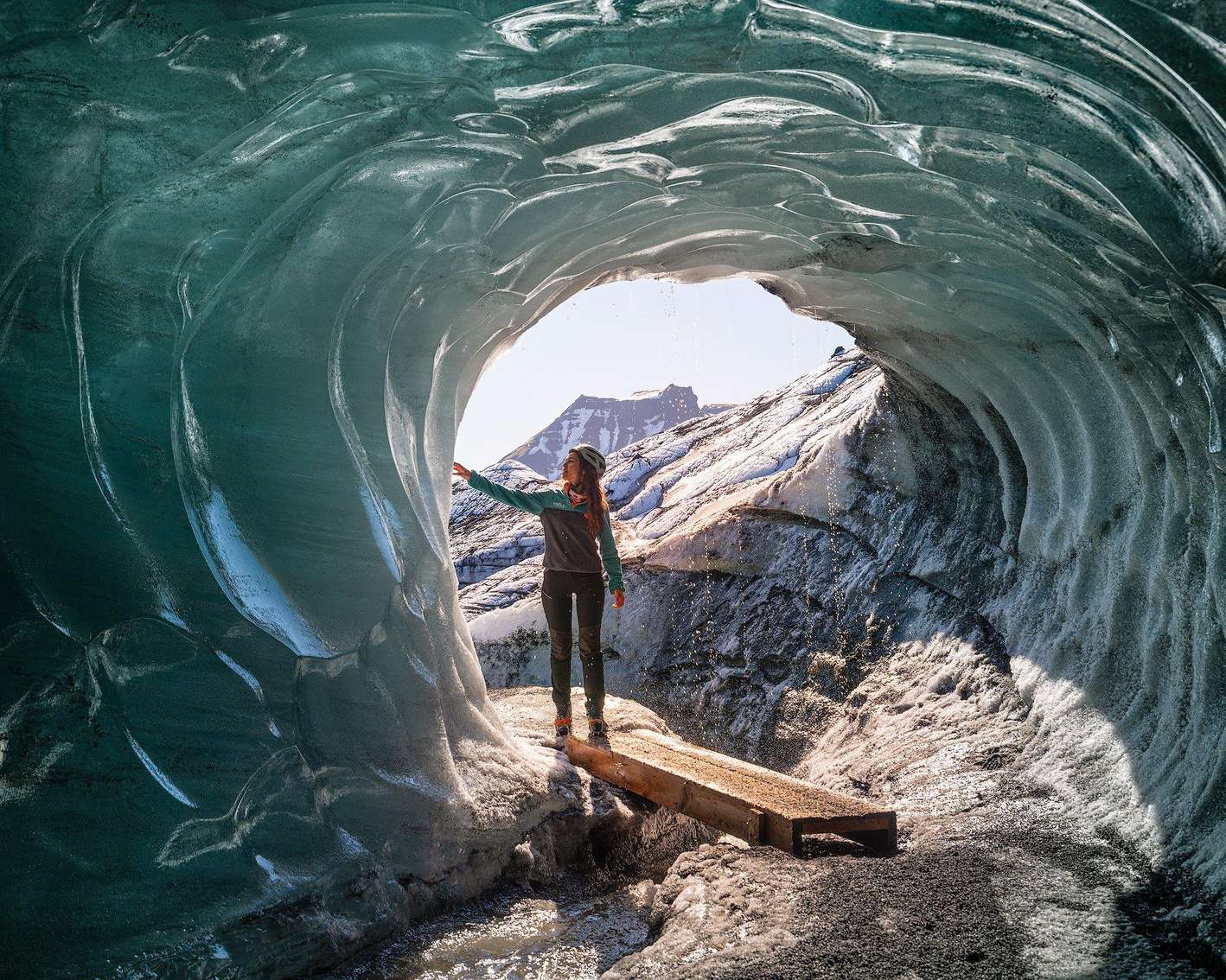
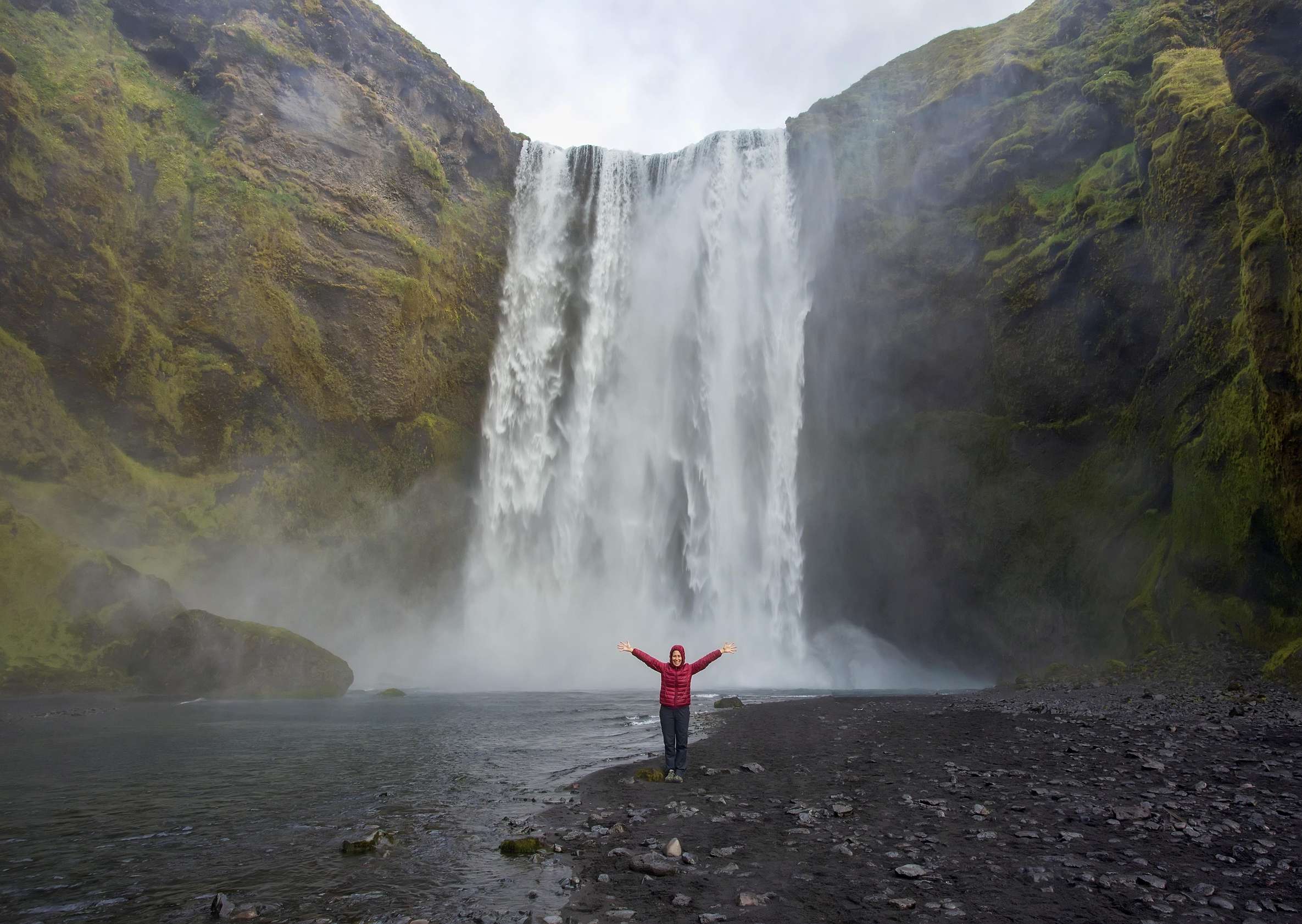
Rain and wind rarely cancel a South Coast day. Far more often they reshape it: a route altered, a stop skipped, the cave plan adjusted by a guide who reads the ice each morning.
Travelers report running Katla tours in steady rain, and the bigger variable is the cave itself, which can look different from week to week as weather and ice movement reshape it.
What does stop the day is real. Winds above about 20 m/s can cancel Katla tours, heavy rain can flood a cave passage, and a red wind warning disrupts the whole coast.
Tours are also suspended if seismic activity or sub-glacial flooding looks likely. No single wind-speed cutoff covers every operator, so the call belongs to the guide on the morning.
If the operator cancels, you do not lose the money. A cancellation for weather, safety or road closures brings a reschedule or a full refund on the tours listed here, and that holds when authorities close Route 1 too.
The practical move is a flexible attitude plus a spare day in the itinerary, which is exactly why the extra-night advice earlier pays off.
Rain usually means a changed route or a skipped stop; the tour still goes ahead
Eruptions in recent years have stayed in a small Reykjanes area; Katla tours only pause if the volcano itself shows signs
Each operator judges conditions daily; no universal cutoff exists
Every row comes back to the same habit: dress for the rain, keep a spare day in the plan, and let the operator's morning assessment do the deciding.
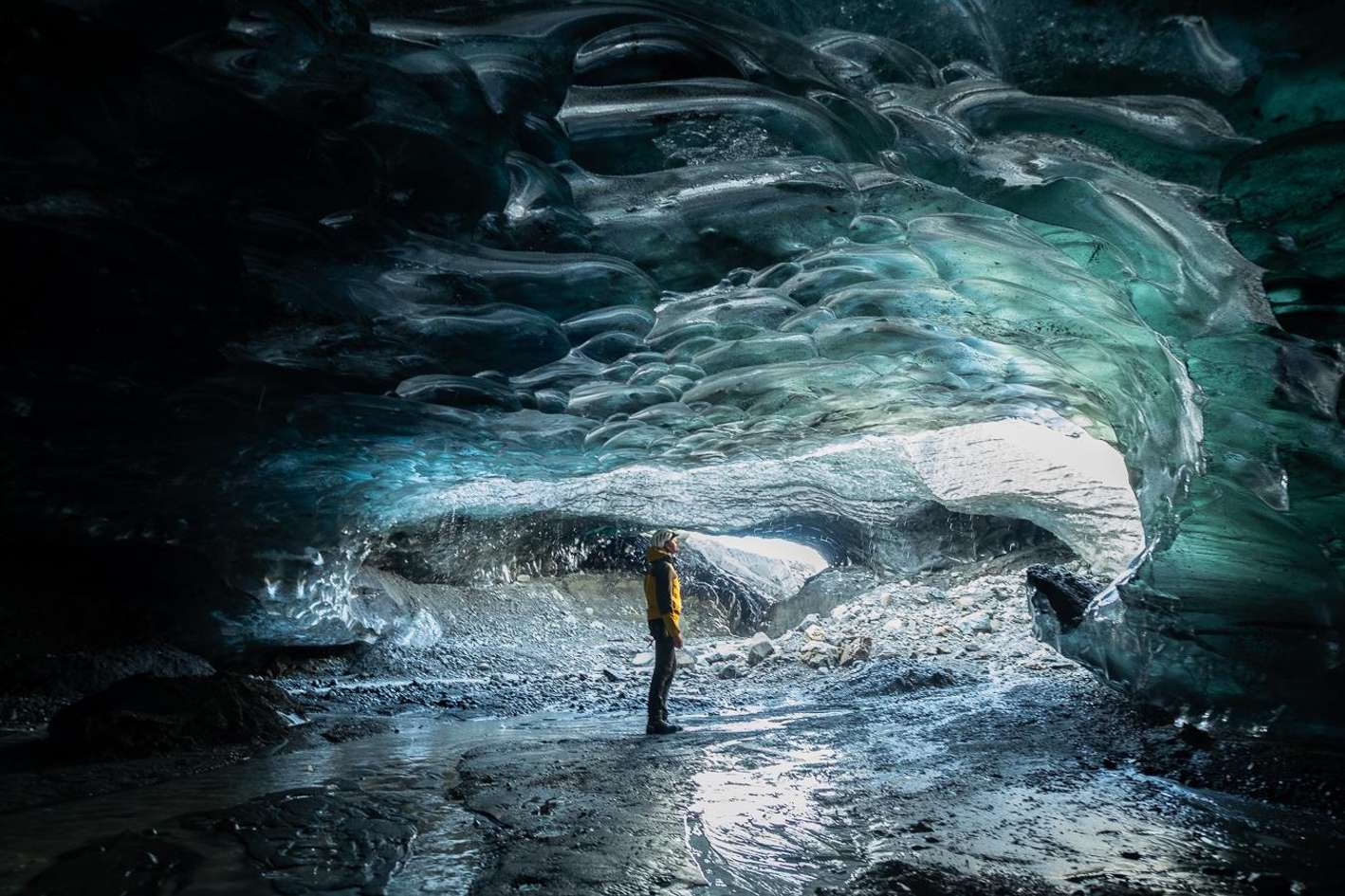
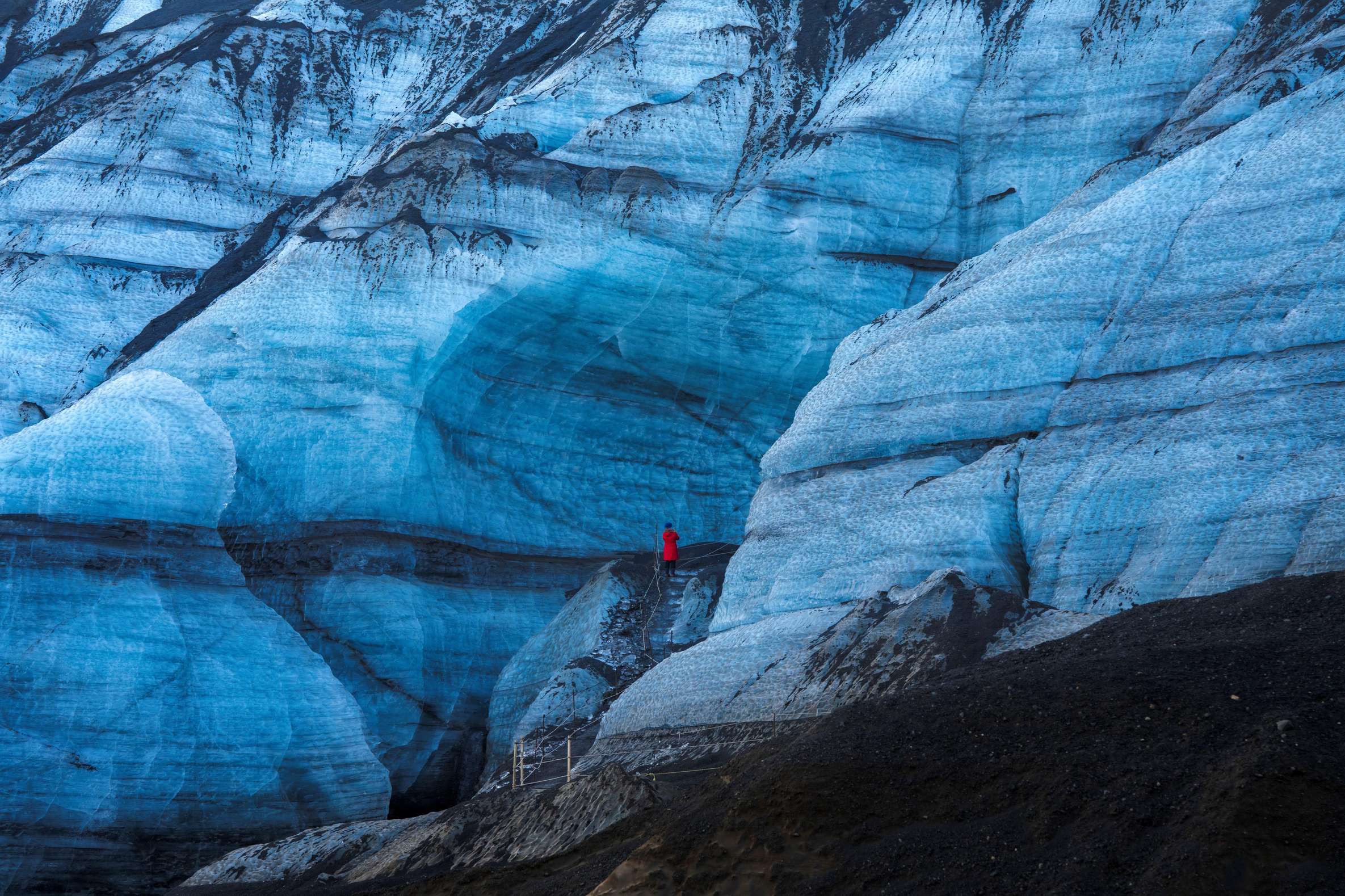
Each stop has its own hour. Reynisfjara photographs best early or late, Seljalandsfoss wants late afternoon into sunset, and Skógafoss sits well in the late morning light. A self-driver can chase that order; a tour sets its own schedule and lets the guide find the light that exists.
Inside the cave, travelers point at the edges of the day. The earliest morning departure or the final afternoon slot skips the biggest crowds, and in late autumn the first slot of the day also catches more natural sunlight on the glacier and inside the cave.
Summer slots need booking ahead: at least a few days in the season generally, and further ahead still around the July peak. Winter demand is heavy too, since the tours run busiest December through February, so the same rule applies early in the year.
Self-drivers meeting in Vík should plan the last minutes carefully. At Vík Inn, arrive 20 minutes before departure to park and check in; the meeting lots fill with tour vans, and the check-in is where boots and gear get sorted.
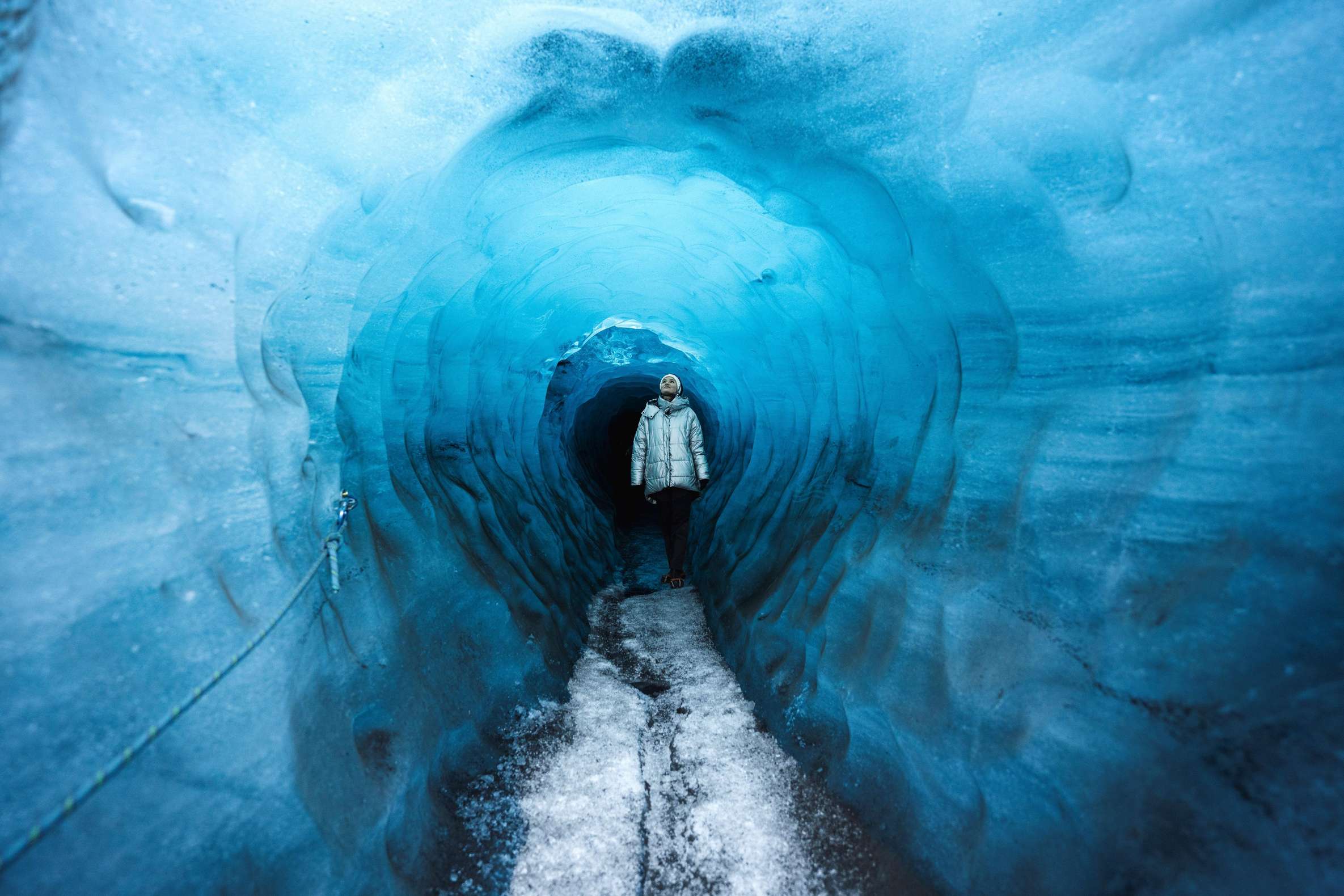
Most natural ice caves in Iceland close between March or April and November, because summer melt thins roofs, floods passages and weakens the ice. Vatnajökull's crystal caves shut from May through September, and park authorities prohibit entering natural caves there in the warm months. The Breiðamerkurjökull season runs from early November to about April 1.
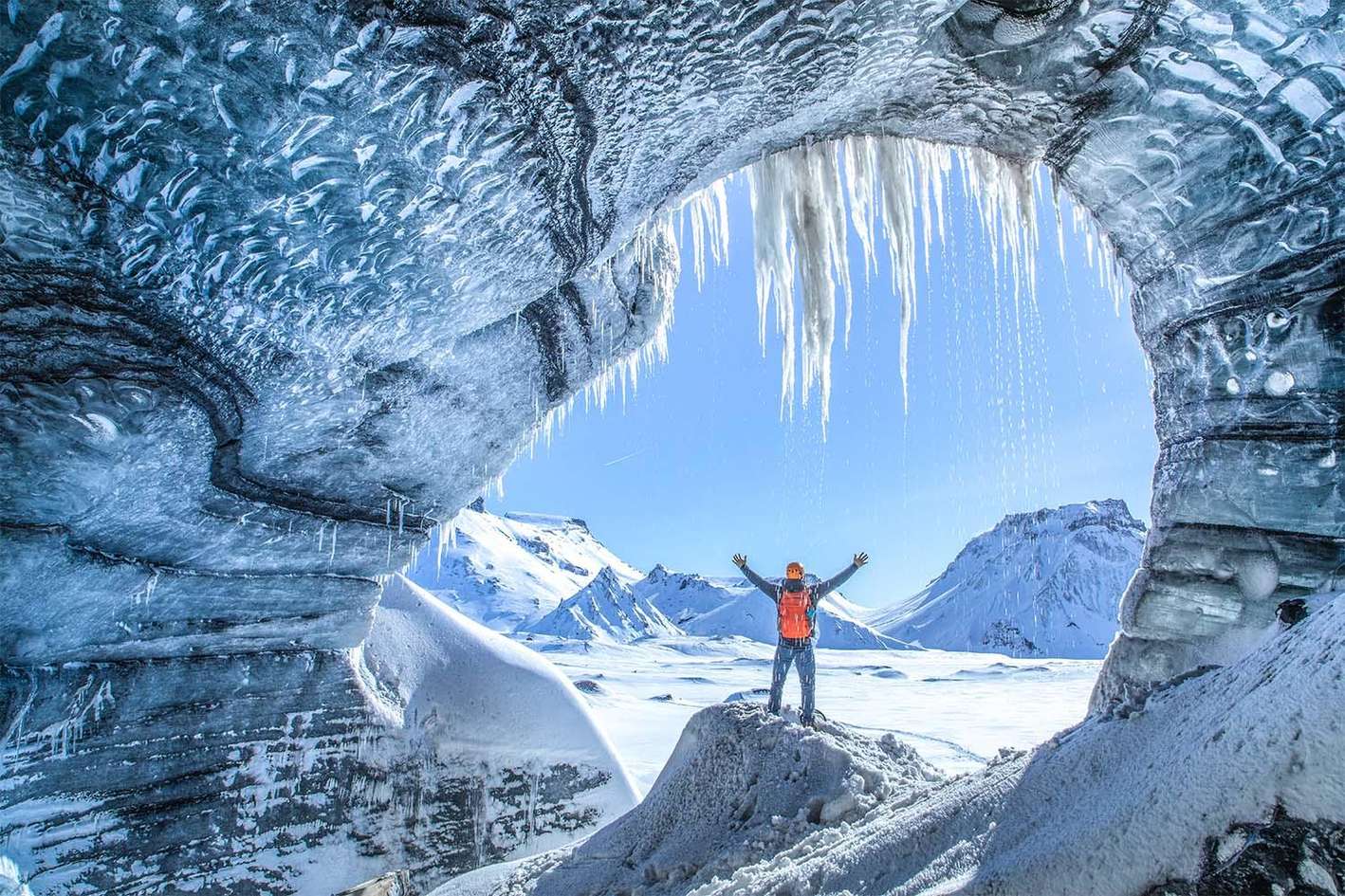
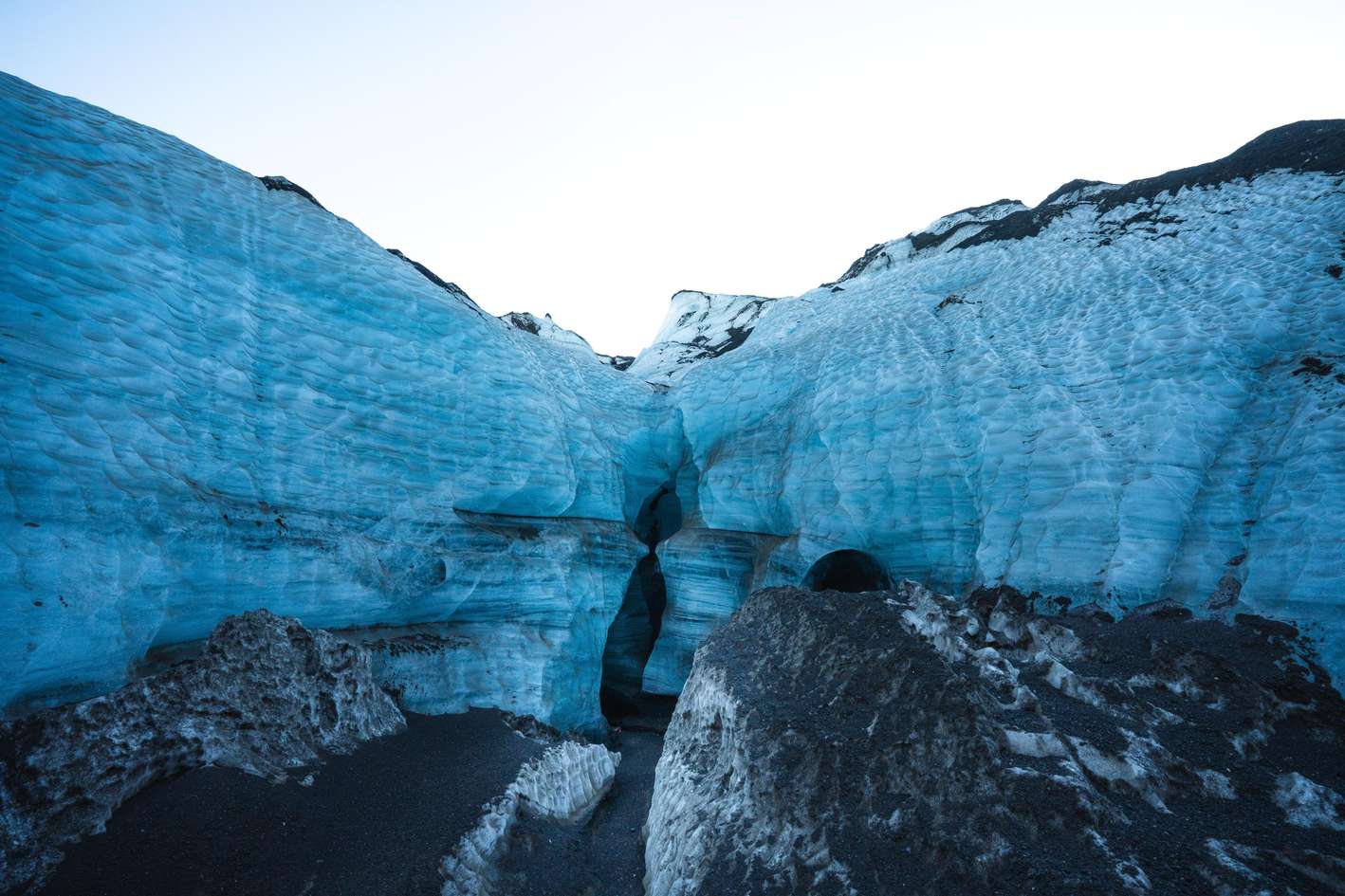
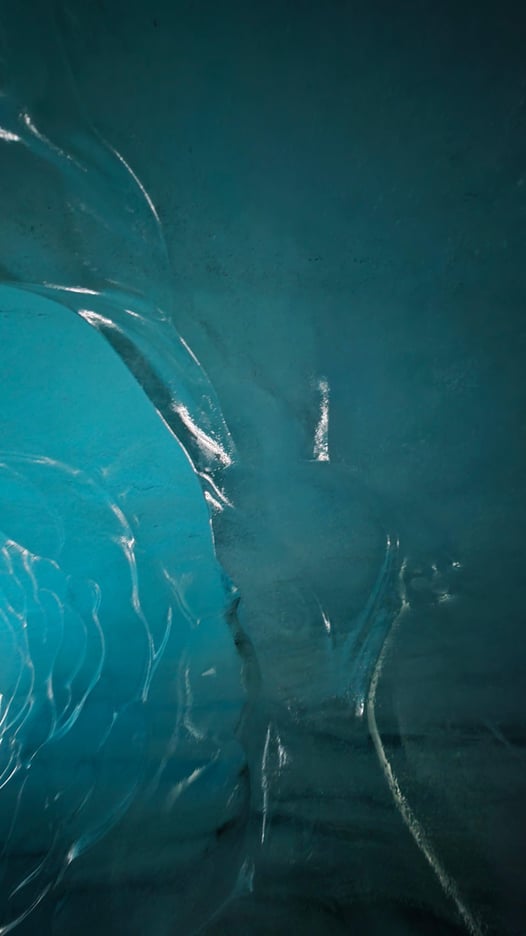
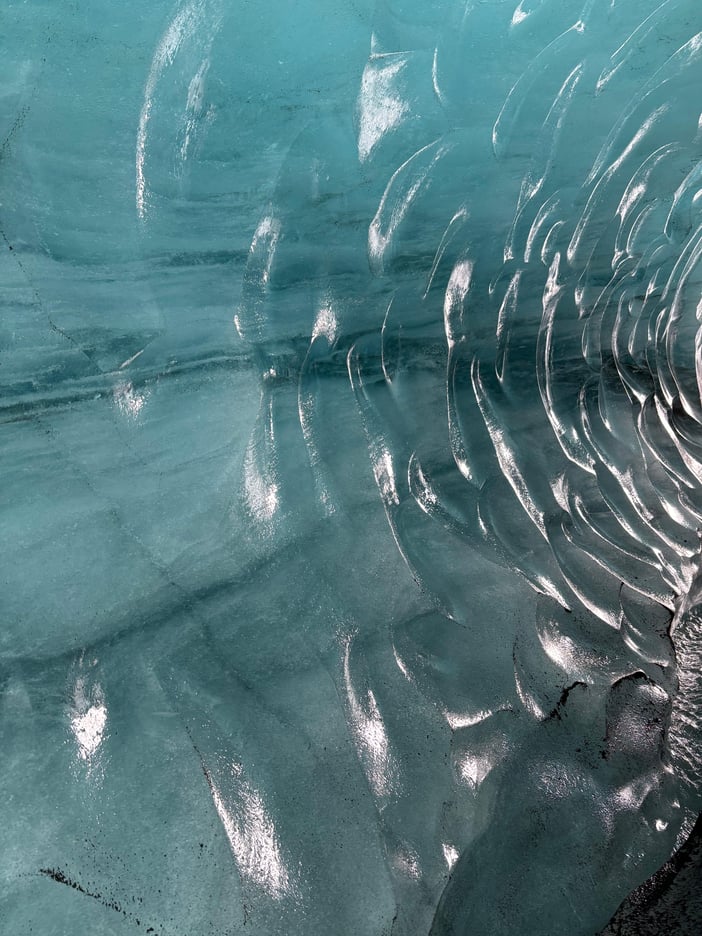
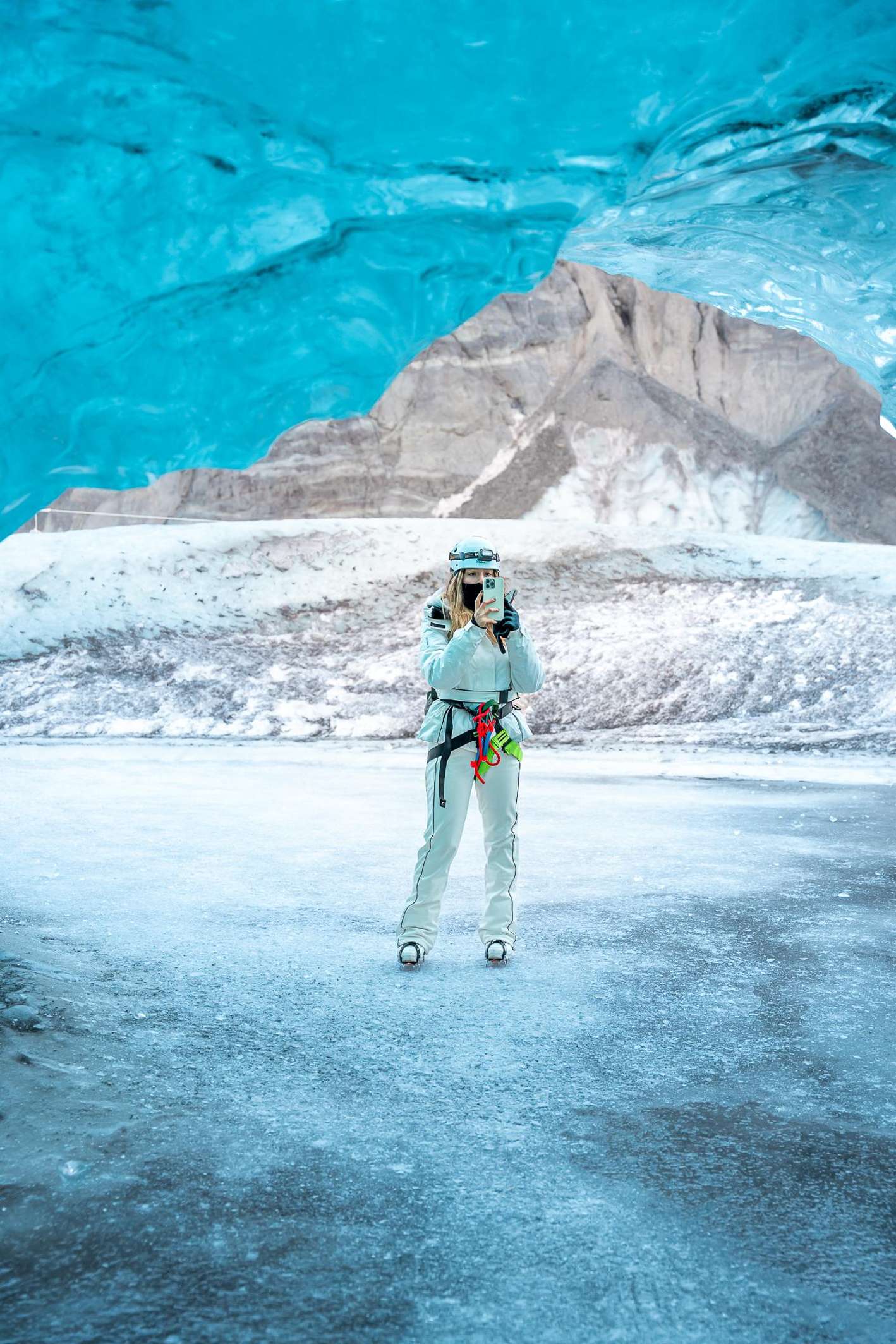
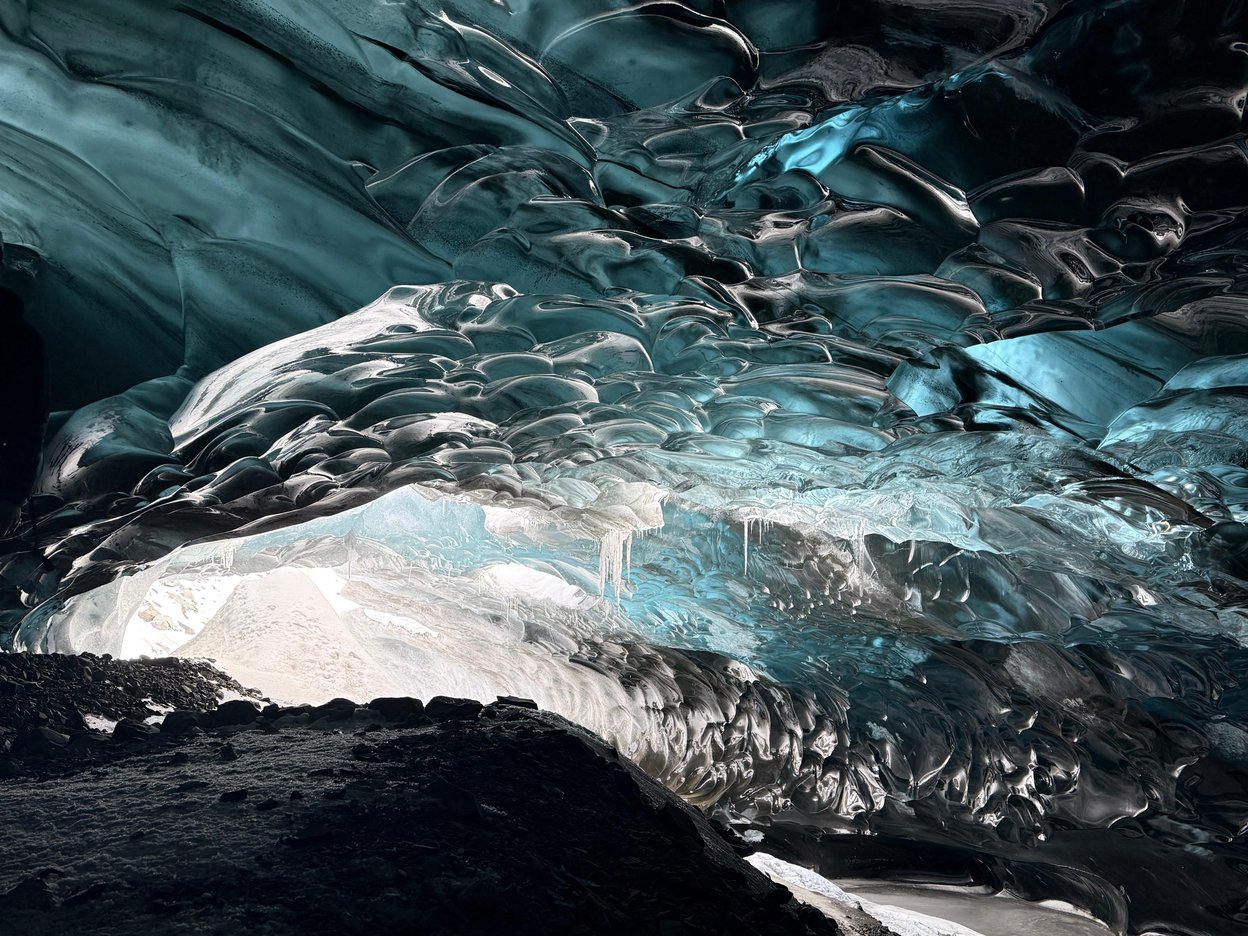
Katla breaks that rule. Its cave stays accessible year-round, including late summer, when many Jökulsárlón caves are neither stable nor open. Guides check the structure daily and take visitors to whichever formation is safe that day, so the cave you see may differ from the photo you booked.
Midwinter is when the ice peaks. December through February brings the deepest, most stable blue, as hard freezes solidify the meltwater channels into caverns. February combines that ice with the most daylight of the midwinter months, which makes it the sweet spot for the Vatnajökull caves.
So the season depends on the cave you want: Katla whenever you travel, the crystal caves in the frozen months. Book for the cave you want, because the seasons differ.
The coast fills the days around the cave. On Jökulsárlón, amphibian boat tours sail from May to November and Zodiacs run May through October, weather and ice permitting; winter freezes the lagoon's boats ashore. Zodiacs ask passengers to be at least 10 years old or 130 cm tall.
At Reynisfjara, the rules are the attraction's price. Stay well back from the water's edge, never turn your back on the sea, and follow the warning lights: yellow means out of the yellow zone, red means the upper beach and the sign only, orange means at least 25 metres from the water.
Local safety officers can close the beach at short notice, and children stay with an adult at all times.
Spring adds wildlife. Dyrhólaey's cliffs hold nesting puffins in late May, a stop many travelers drive straight past on their way to Vík.
And when a wet afternoon closes the outdoors, Reykjavík answers indoors: the Perlan museum or a performance at Harpa gives the weather a defeat without losing the day. The coast rewards travelers who keep one indoor backup in the pocket, in every season.
The South Coast weather punishes a plan made without margins. Pick your month for the daylight you want, pack the waterproof shell you will need regardless, and let a guide drive when the wind starts pushing cars around.
Katla's cave runs all year, the waterfalls never take a season off, and a cancelled morning still comes back as a refund or a new date. That is a coast you can book with confidence.
Go prepared for rain on one day in two, and the forecast stops being the enemy.
runs in rain, guides reroute in wind
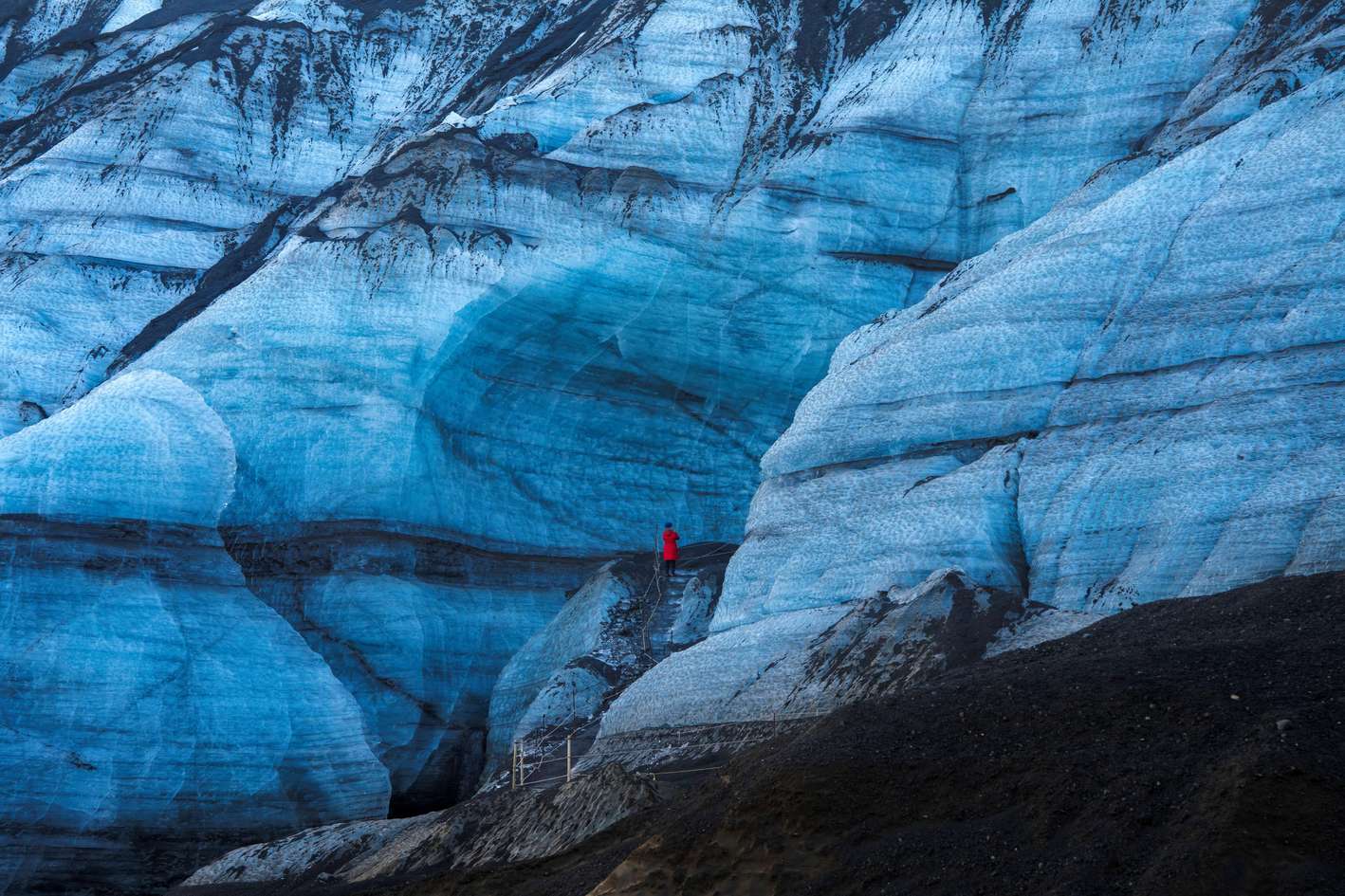
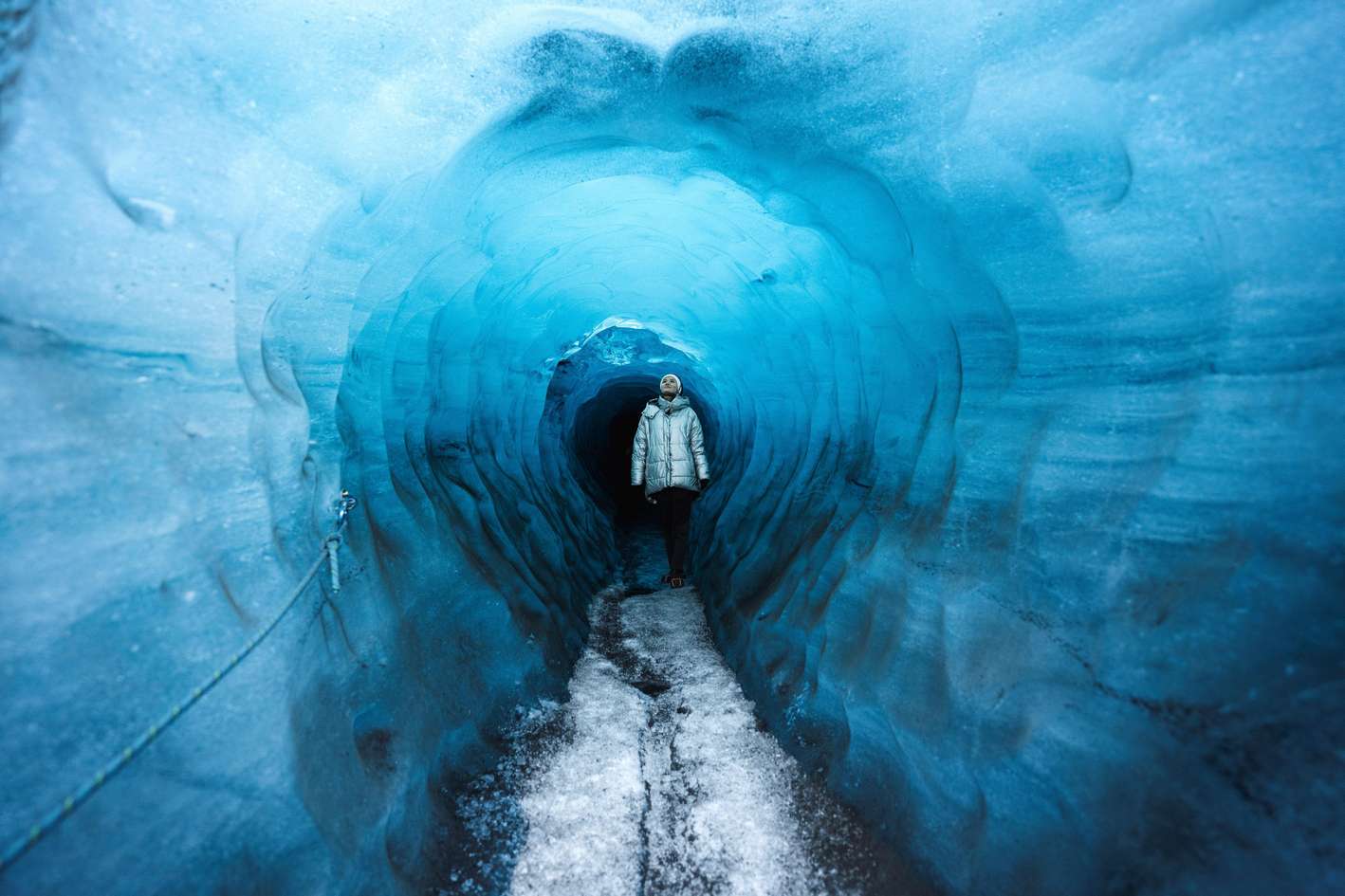
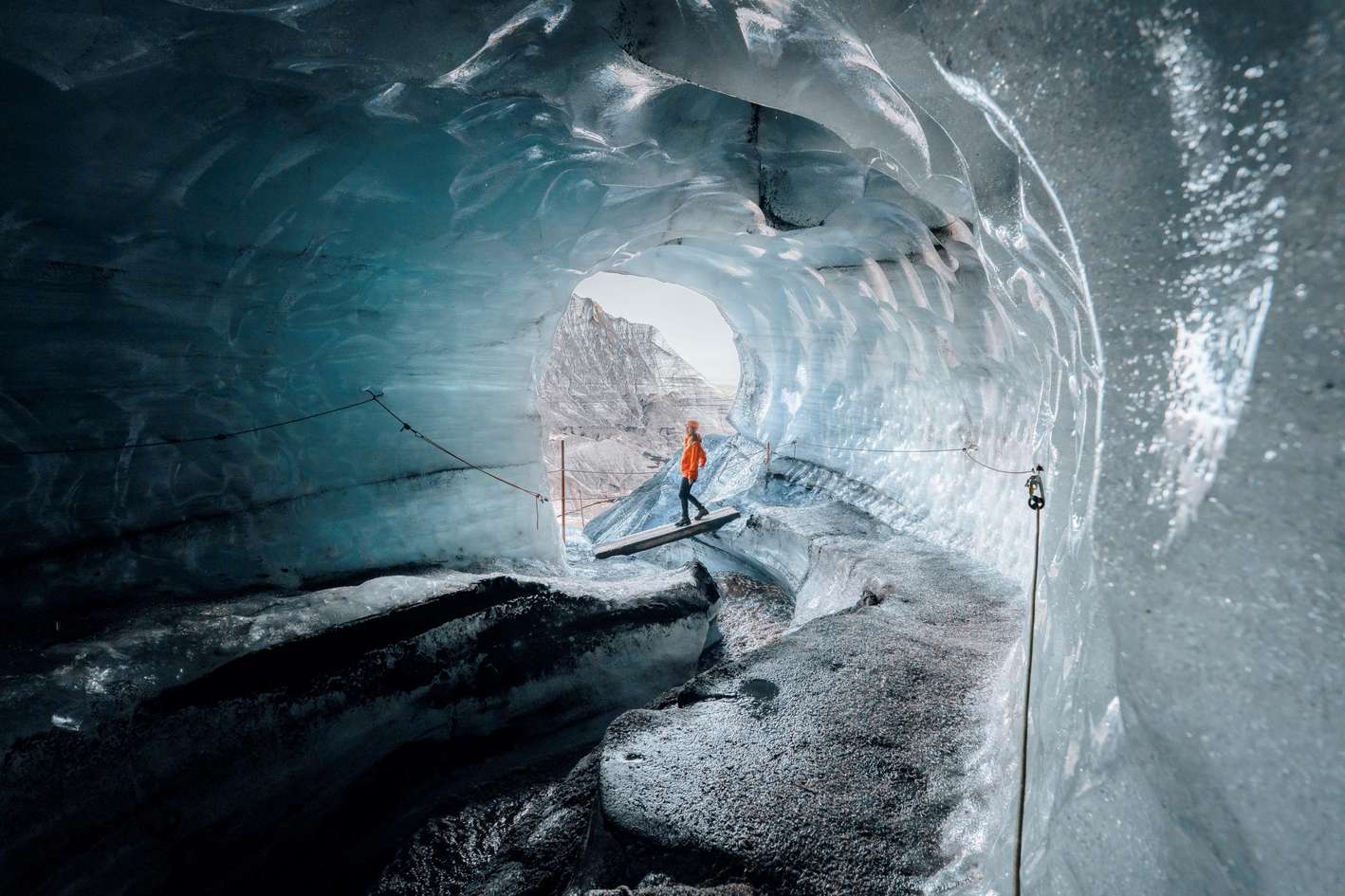
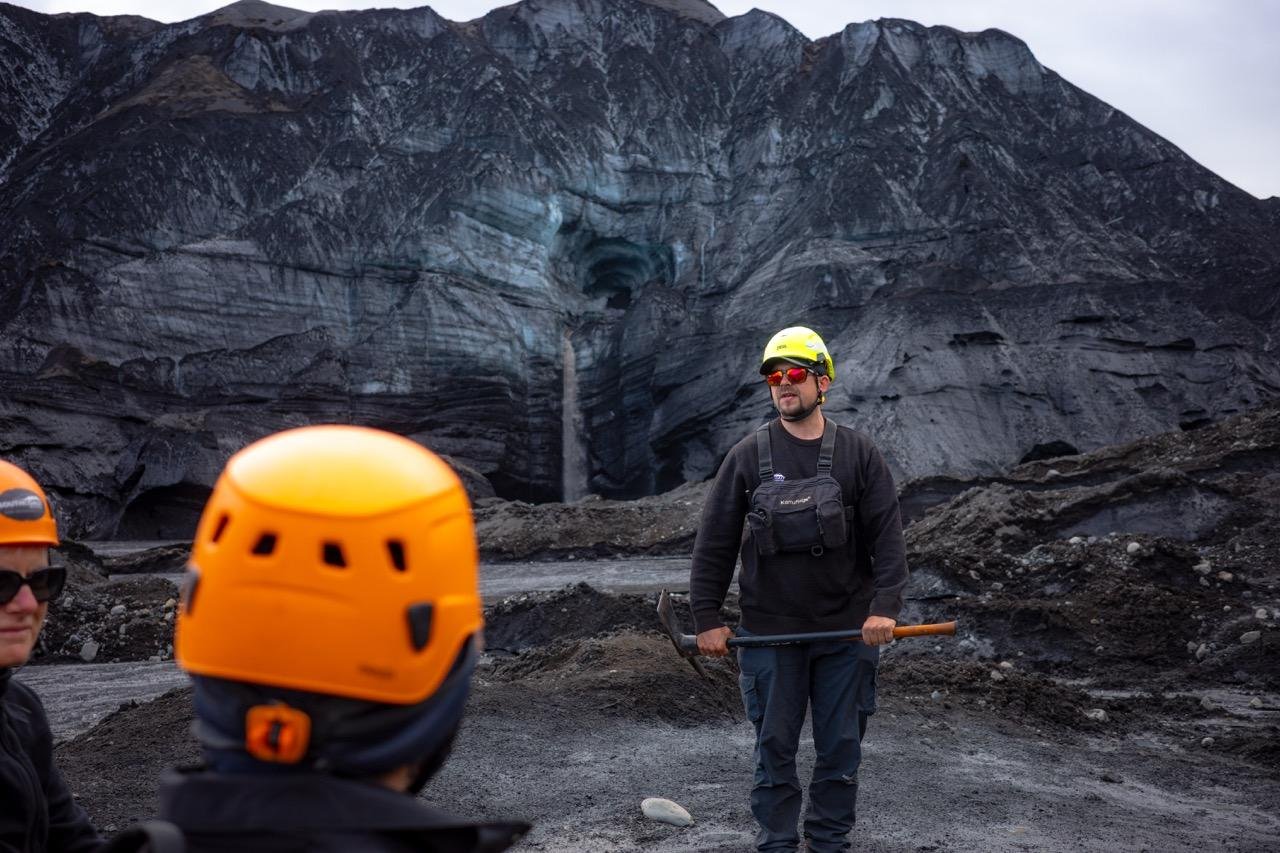

windiest month is february
All the South Coast Iceland activities worth a day, sorted so you can pick without wading through dozens of options.
If a big bus sounds like a bad way to spend ten hours in the wind, see what small-group day trips from Reykjavík look like.
Wondering how a glacier hike differs from a cave visit in weather and effort? This page walks you through both.
Map your route and timing, and see how daylight hours in each season shape a South Coast driving day.
Compare ice caves across Iceland, including which ones run in your month and which close for the melt season.
A guided ice cave tour explains who checks the ice, and why the guides decide each morning where to go.
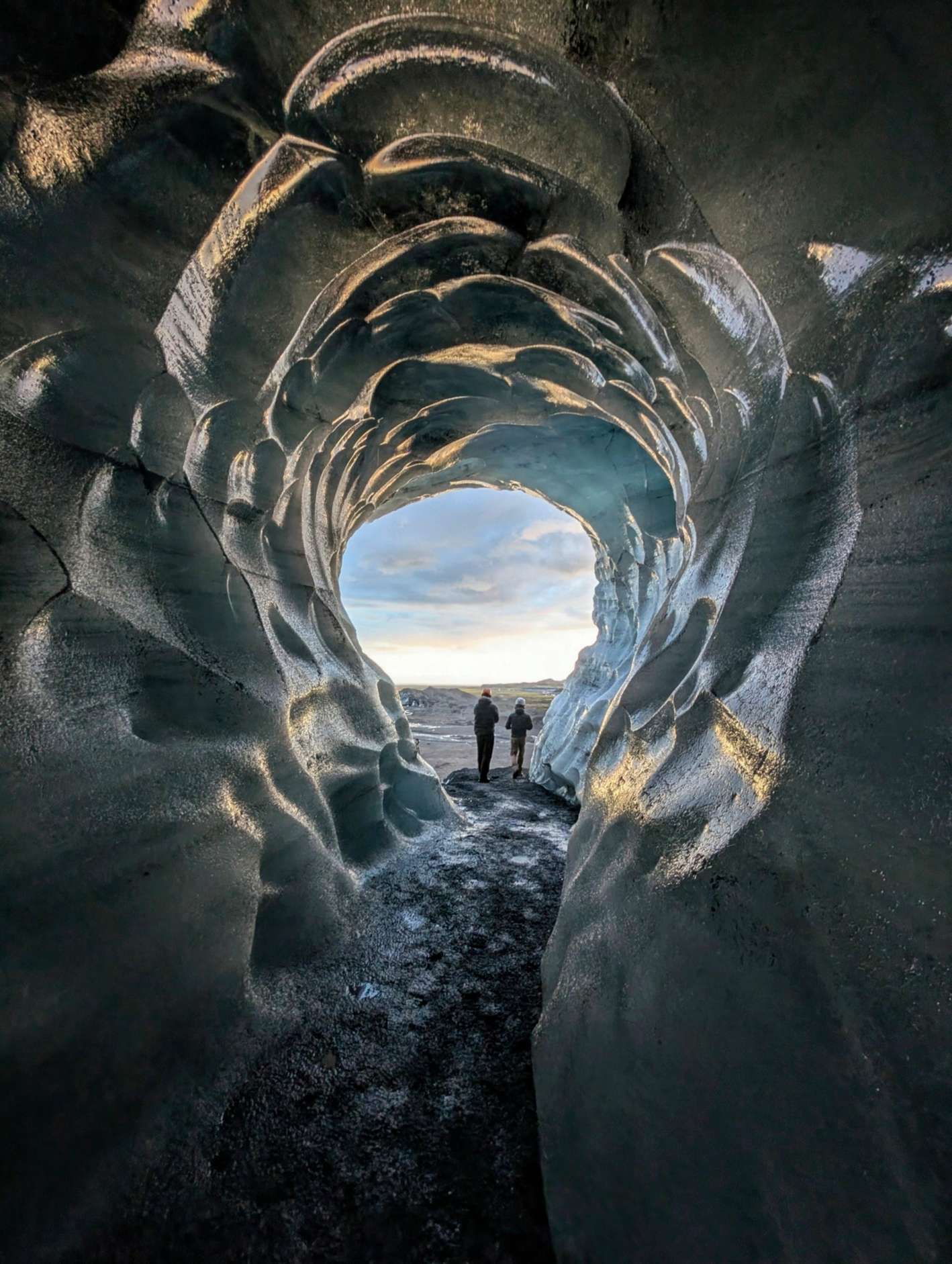
Want the glacier to yourself and room to shuffle pickups when the forecast turns? Start with private tour options.
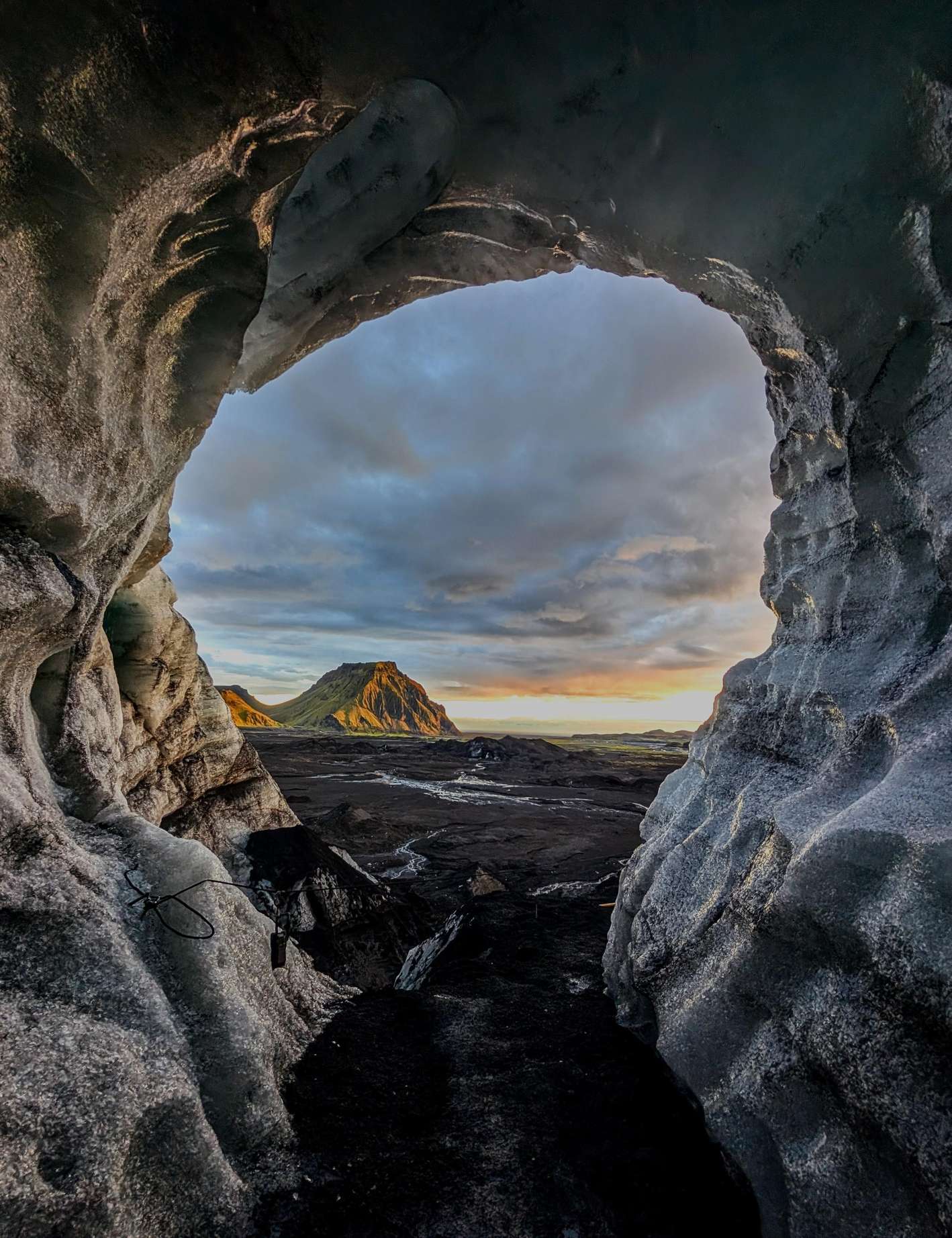
Small-group ice cave tours keep the glacier stop relaxed, and this page shows how the group sizes compare.
Combining a glacier hike with a cave visit changes what you pack and how long you are out in the cold. Details here.

Curious about seeing the ice from above? This page covers helicopter flights and how weather affects them.
Katla Ice Cave runs year-round, whatever the season you visit. Get current conditions and booking details.
Why your rental car cannot reach the cave, and where tours actually depart from. Directions and maps inside.
Which month suits an ice cave best, how daylight changes the trip, and why summer does not close Katla.
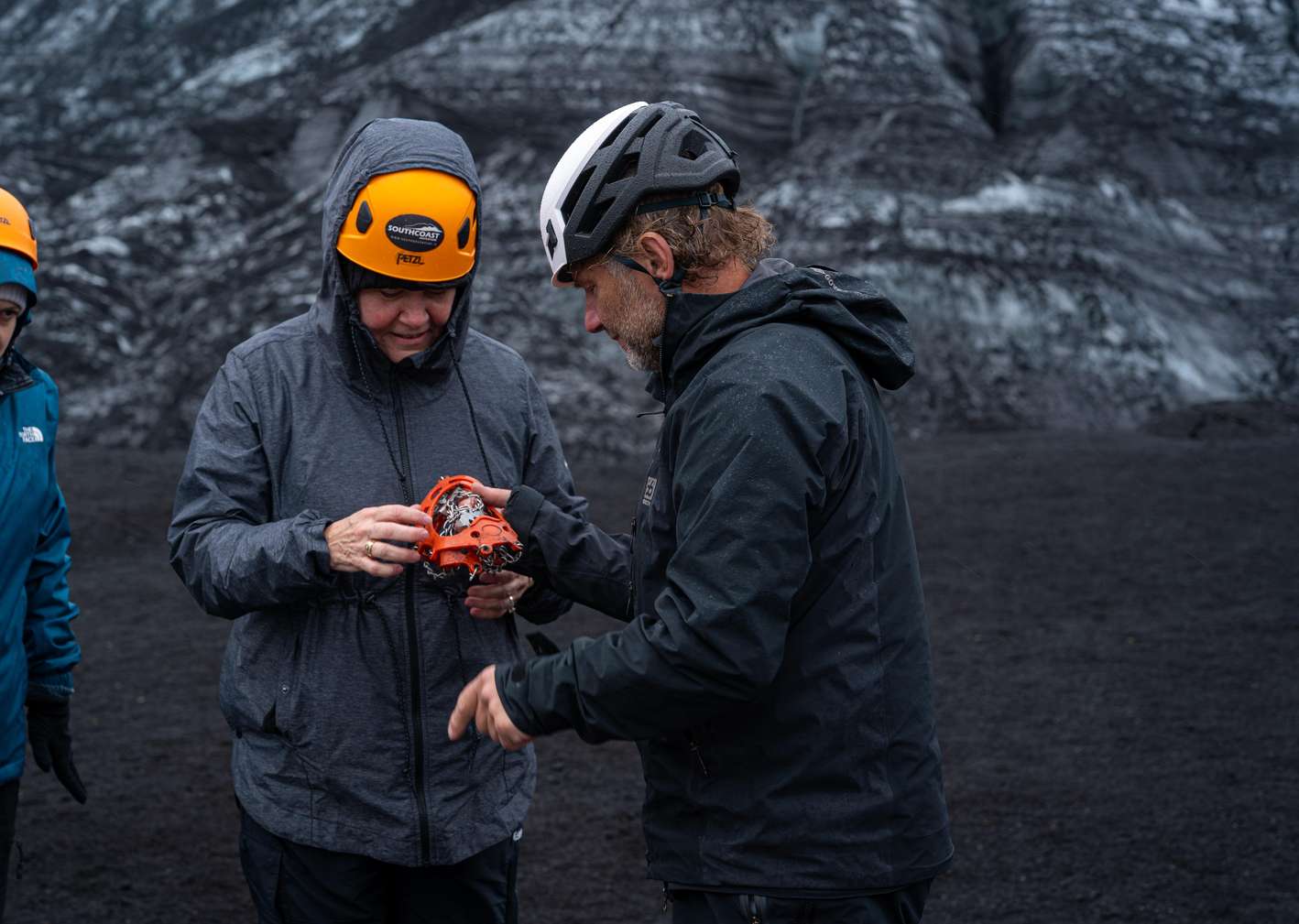
Worried about ice stability, rough jeep rides or bringing kids? The safety guide answers each concern.
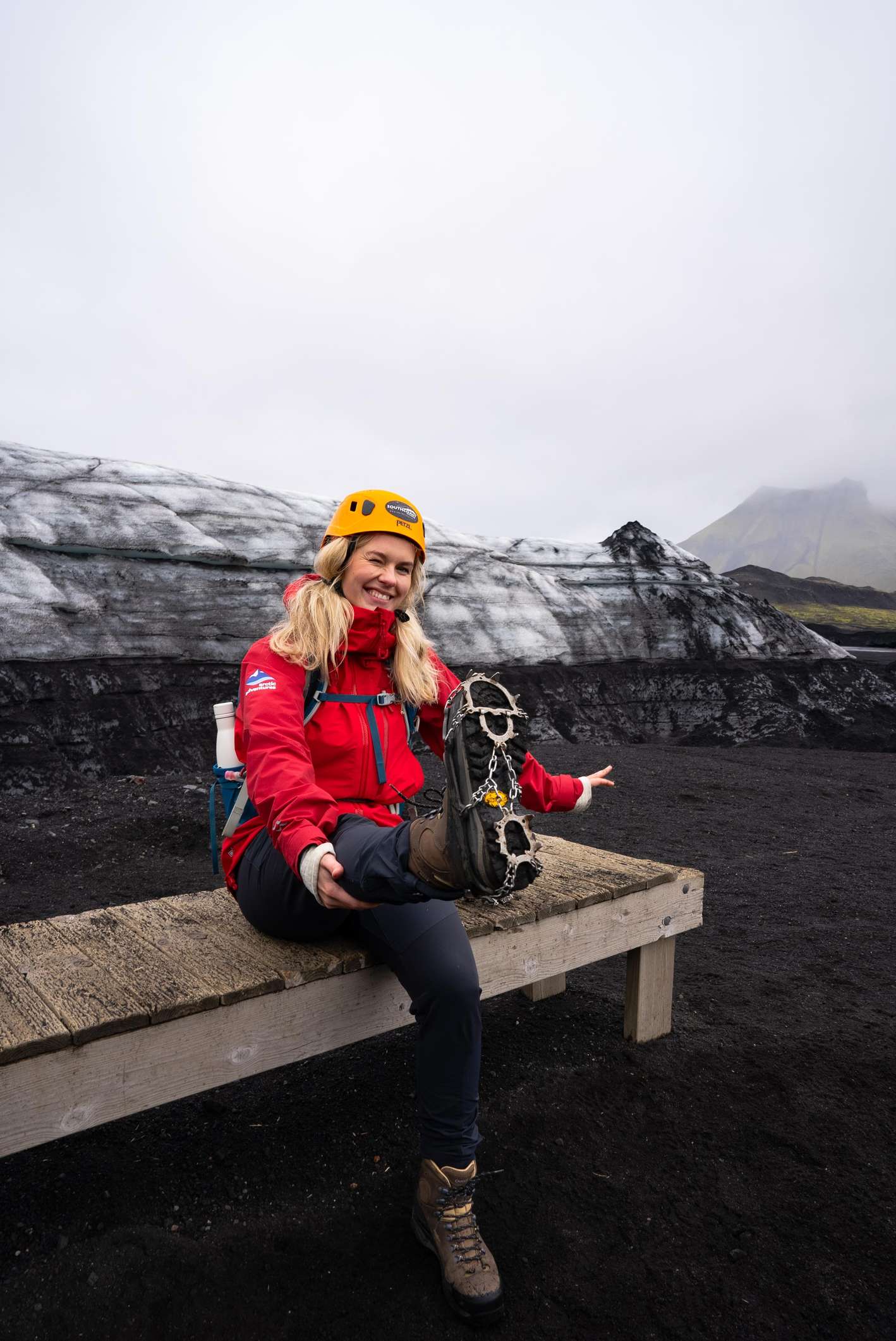
What to wear so dripping meltwater and coastal wind do not ruin the day, layer by layer.
Katla's black ash bands or the sapphire walls of Vatnajökull? A side-by-side look to settle the choice.

Stretch your visit into several days with three-day South Coast itineraries built around weather realistic timings.
february is the windiest month, july the calmest
Quick answers on South Coast Iceland weather, from road closures to what to pack.
 Vik2026
Expect snow or ice on the road at times, plus blowing snow, fog, blizzards and storms. Short closures happen. Winter conditions can also show up in autumn and spring, so check live road and weather conditions before you set out.
By law, four-wheel drive is only mandatory on Highland F-roads. Route 1 itself is ploughed and open most of the time, though storms can close sections for a few hours.
Extreme wind, flooding and closed roads end the day, and tours are also suspended when seismic or sub-glacial flood risks rise. Rain or wind alone often means a changed route or a skipped stop. There is no single wind-speed cutoff that applies to every tour.
Average temperatures run from about 1°C in December, January and February up to 12°C in July. Wind chill can make it feel colder than the thermometer shows, especially near the coast, and February is the windiest month.
Use the Icelandic Meteorological Office's alerts page for weather warnings and umferdin.is for live road conditions and webcams. Checking both the night before and the morning of a drive saves a lot of guessing.
Near the cave, average highs range from 0.2°C in January to 11.5°C in July, with lows near -4.8°C in midwinter. Rain falls on roughly 17 to 21 days a month, and snow is most common from December through February.
Often it does not. Heavy rain or a warm thaw can make guides change the plan or cancel the cave visit, and some travelers have been turned back in bad weather, but plenty of tours run in steady rain.
Pack a windproof, waterproof jacket and trousers, a thermal base layer, a warm fleece or wool mid-layer, and hiking boots with good grip and ankle support. Add gloves and a warm hat. From October to April, lows sit around -3 to 1°C, so go warmer.
Yes, on clear dark nights between September and February. Averages show a handful of dark, clear nights each month, but weather and solar activity mean a sighting is never guaranteed.
The stretch between Skógar and Vík is especially exposed, and the road under Eyjafjöll is one of the windiest. Near Vík, wind lifts sand off the black beach and blasts it at passing cars, which can chip paint.
wind closes route 1, so let the driver handle it
Rain or shine, this 12-hour Katla Ice Cave and South Coast day tour runs with Reykjavík pickup and free cancellation up to 24 hours in advance.