
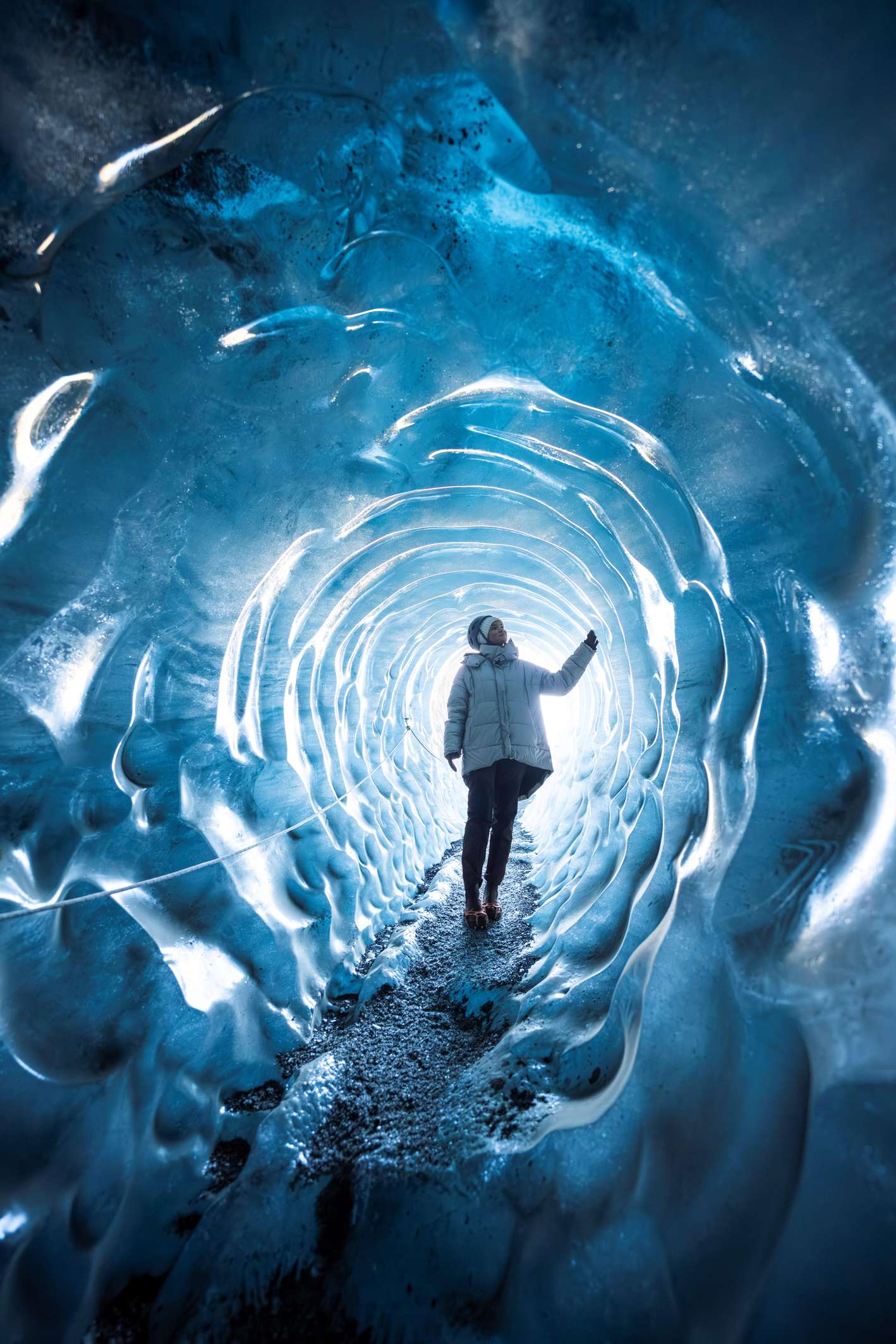
A · Katla Ice CaveOur pick
Kötlujökull, near Vík, open year-round
Blue ice shot through with black volcanic ash bands, 2.5 hours from Reykjavík and open every month of the year.
Best for: Summer trips and short South Coast itinerariesTours here
Choose your ice cave with confidence. Read how Katla's black-ash bands near Vík compare with the sapphire walls of Vatnajökull's crystal blue ice cave, then book the tour that matches your season, your driving range and your camera roll, guided by certified glacier guides.
Pick the Katla Ice Cave first. Katla sits about 2.5 hours from Reykjavík, runs all year, and still shows blue ice, streaked with volcanic ash.
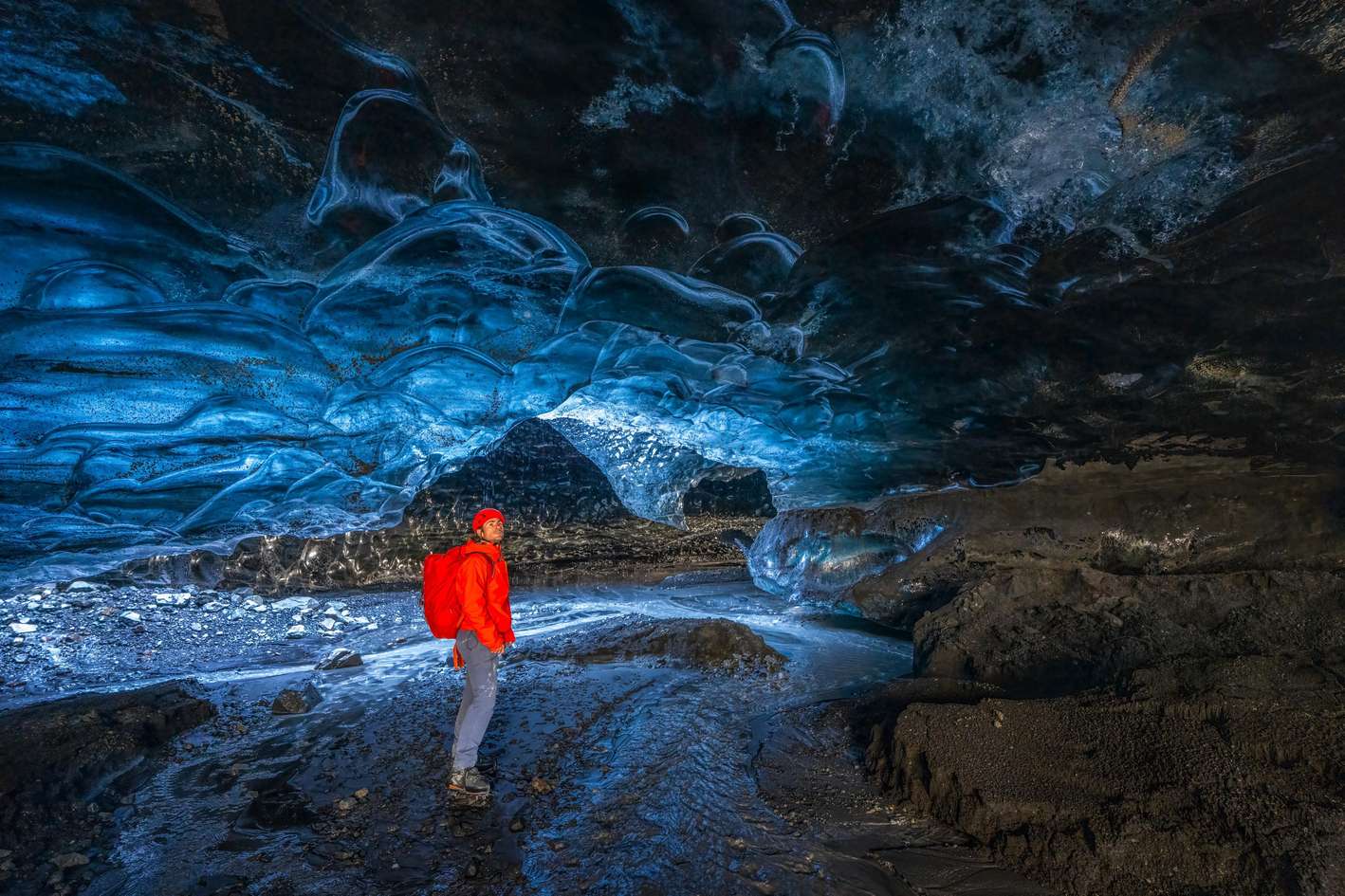
Choose Katla if your dates fall outside the deep winter months or you want a cave day that fits the South Coast route.
Choose the Crystal Blue Ice Cave if you are traveling in winter, staying near Jökulsárlón, and the glowing blue walls matter most to you. If your trip covers November to March, the facts favor doing both: Katla from Vík, the blue cave farther east.
Two caves, one decision: the ash-banded blue ice of Katla near Vík, or the sapphire walls of Vatnajökull's Crystal Blue Ice Cave near Jökulsárlón. Here is how your dates, your route and your legs decide it.
Vatnajökull's crystal blue ice caves close for the summer melt season from May through September, so a winter-only trip decides this comparison for you.
Check your travel dates first: Katla runs year-round from Vík, while the crystal blue cave books from Jökulsárlón roughly November to late March. If you travel in summer, Katla is the cave that will be open.
cave holds near 0°C all year
Both caves sit on South Iceland glaciers, but they start from different towns. Katla tours meet in Vík or pick up in Reykjavík, and Vík is about a 2.5-hour drive from Reykjavík. The Crystal cave tours depart from Jökulsárlón glacier lagoon, about 5 hours east.
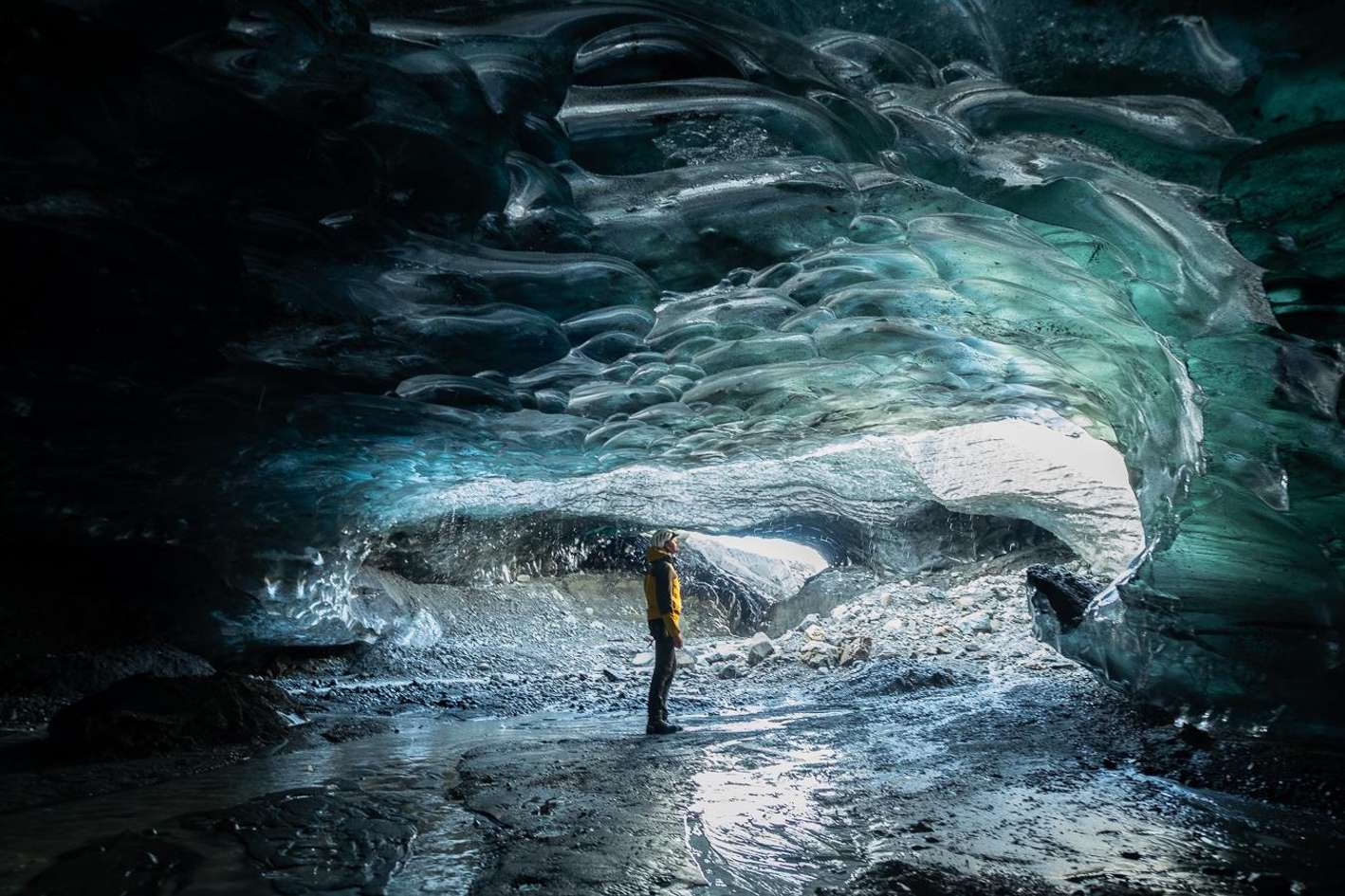
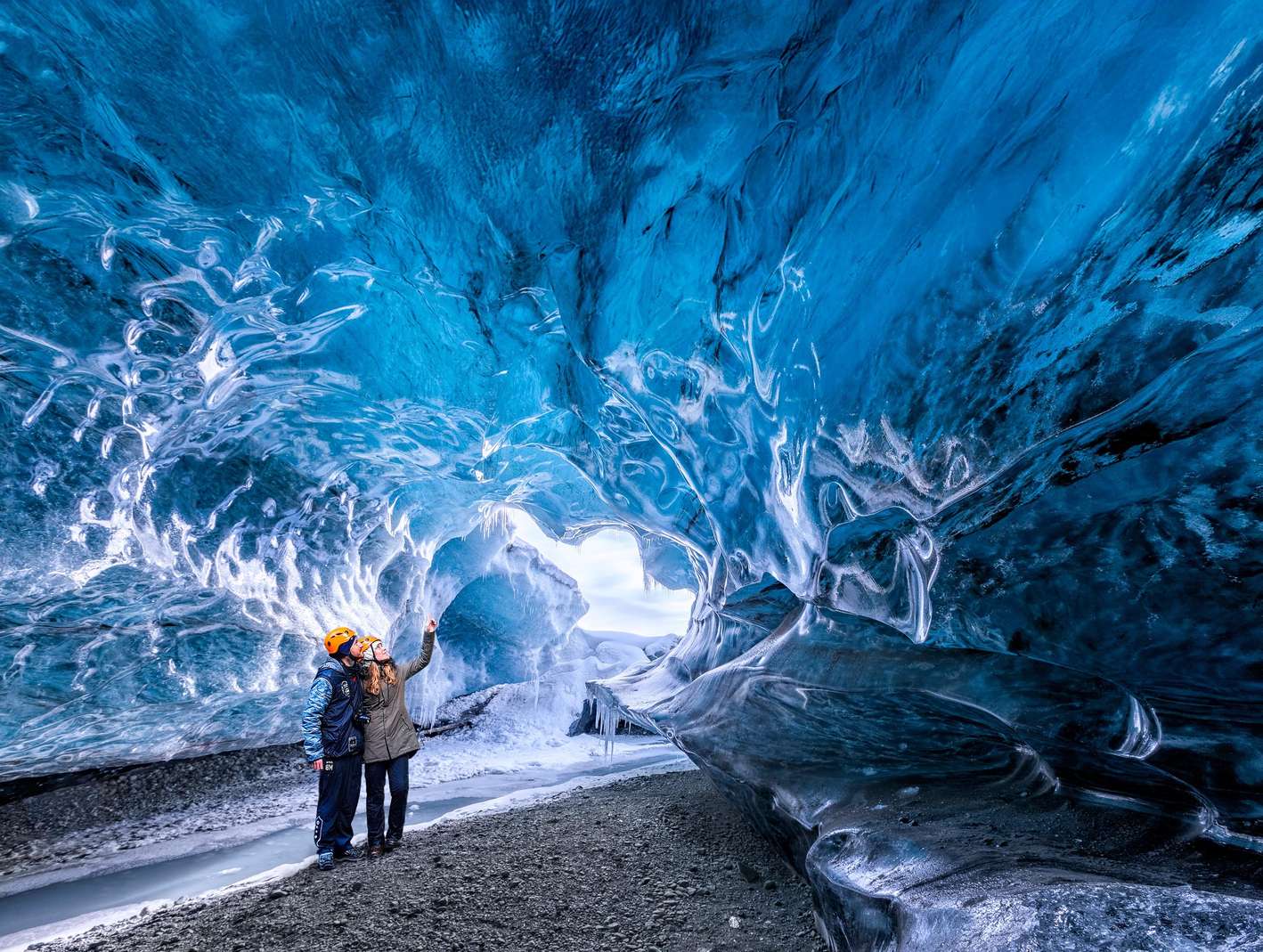
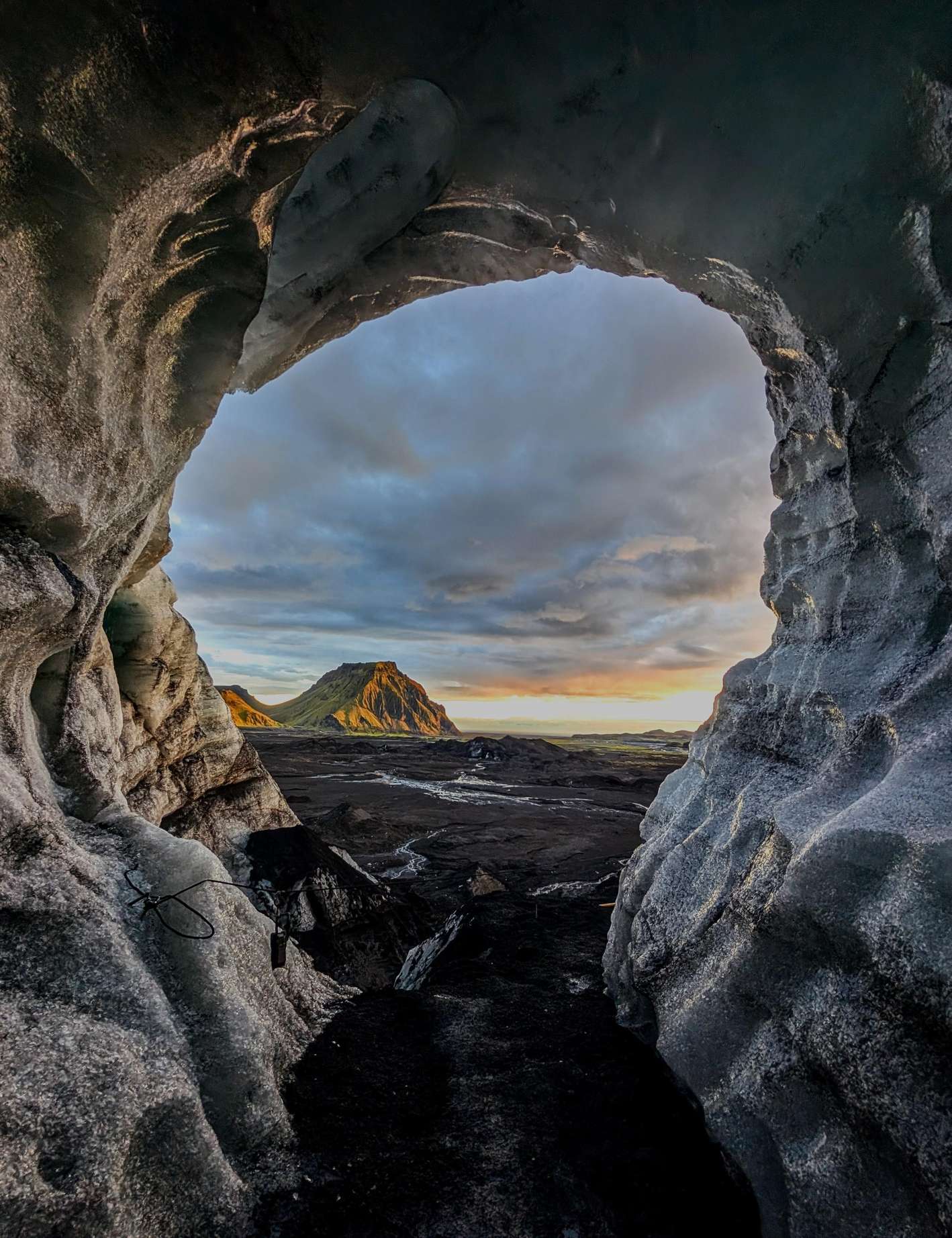
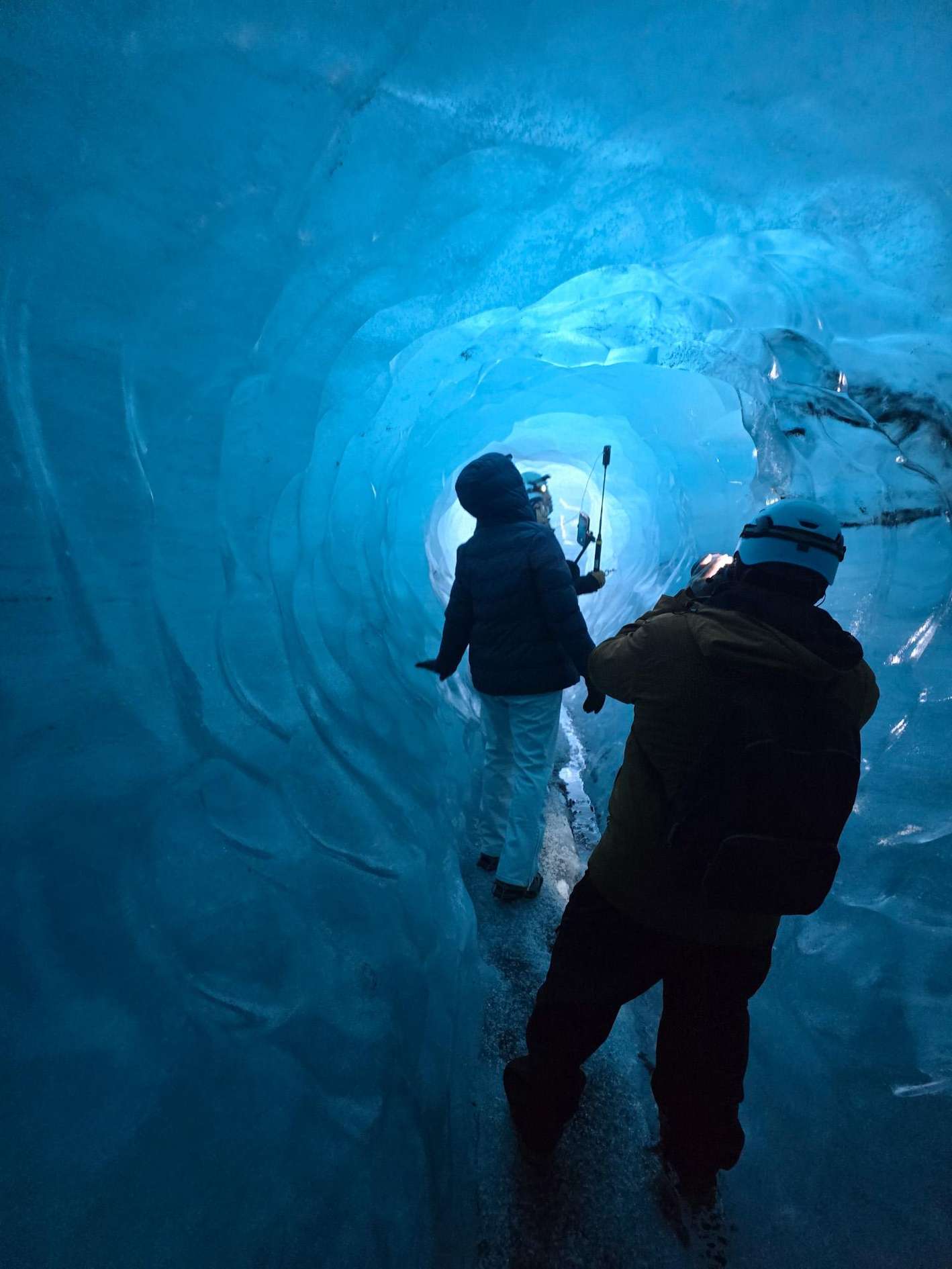
Inside, the ice tells the two apart. Katla's blue ice carries black volcanic-ash streaks from the volcano above it. The Crystal cave glows in shades of sapphire, without the ash. Katla is smaller, with lower ceilings and narrower tunnels; Vatnajökull caves are often larger.
The season decides most trips. Katla tours run year-round, summer included. The Crystal cave is open from October to April and closed May through September.
Effort is close to a tie. The Crystal cave involves a short, easy walk to the entrance; Katla involves a short, easy hike over uneven terrain. People who visit both say the Crystal cave can draw heavy crowds and brief visits, while Katla's traffic is lighter.
The chapters below take each of these points in turn.
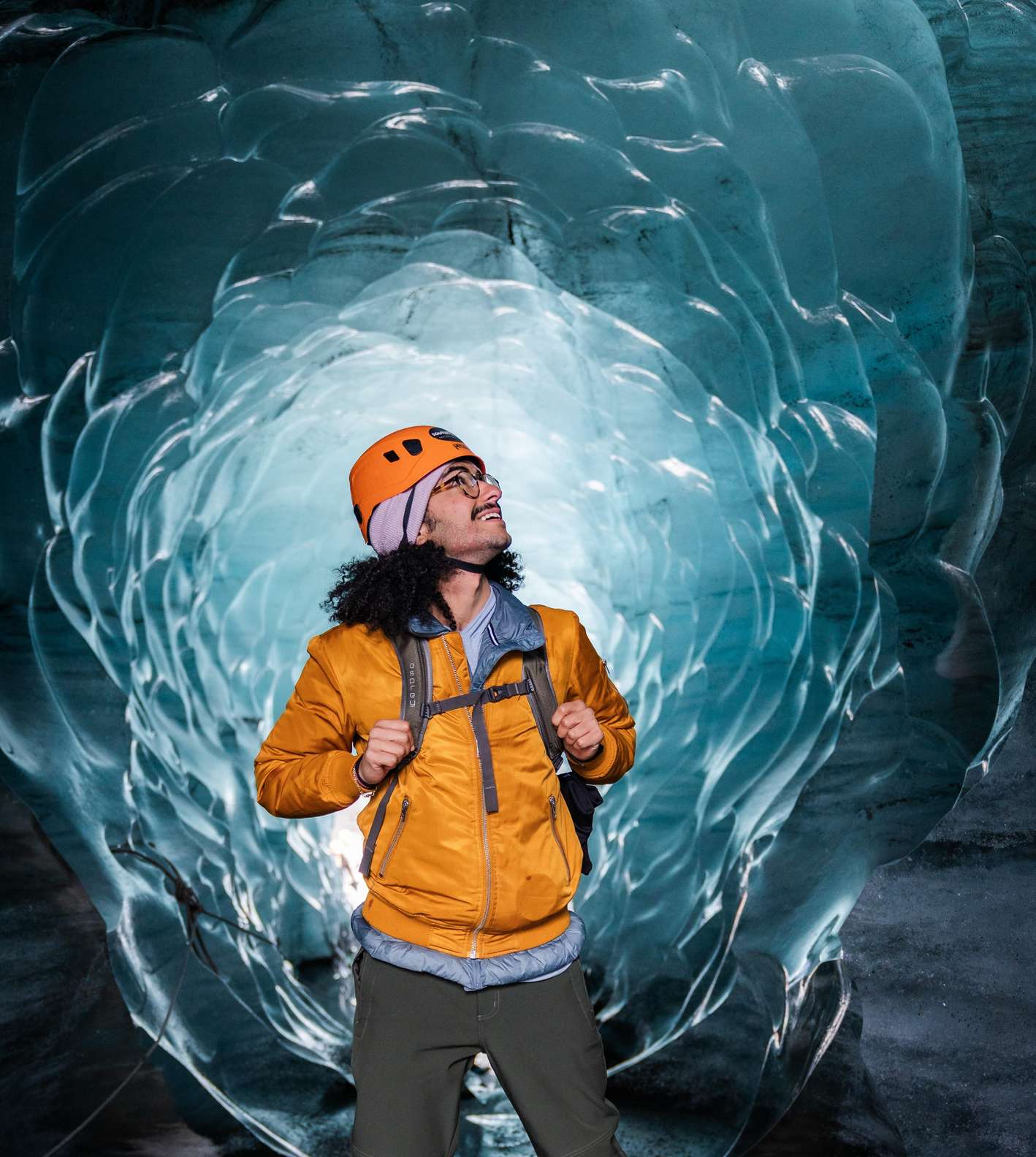
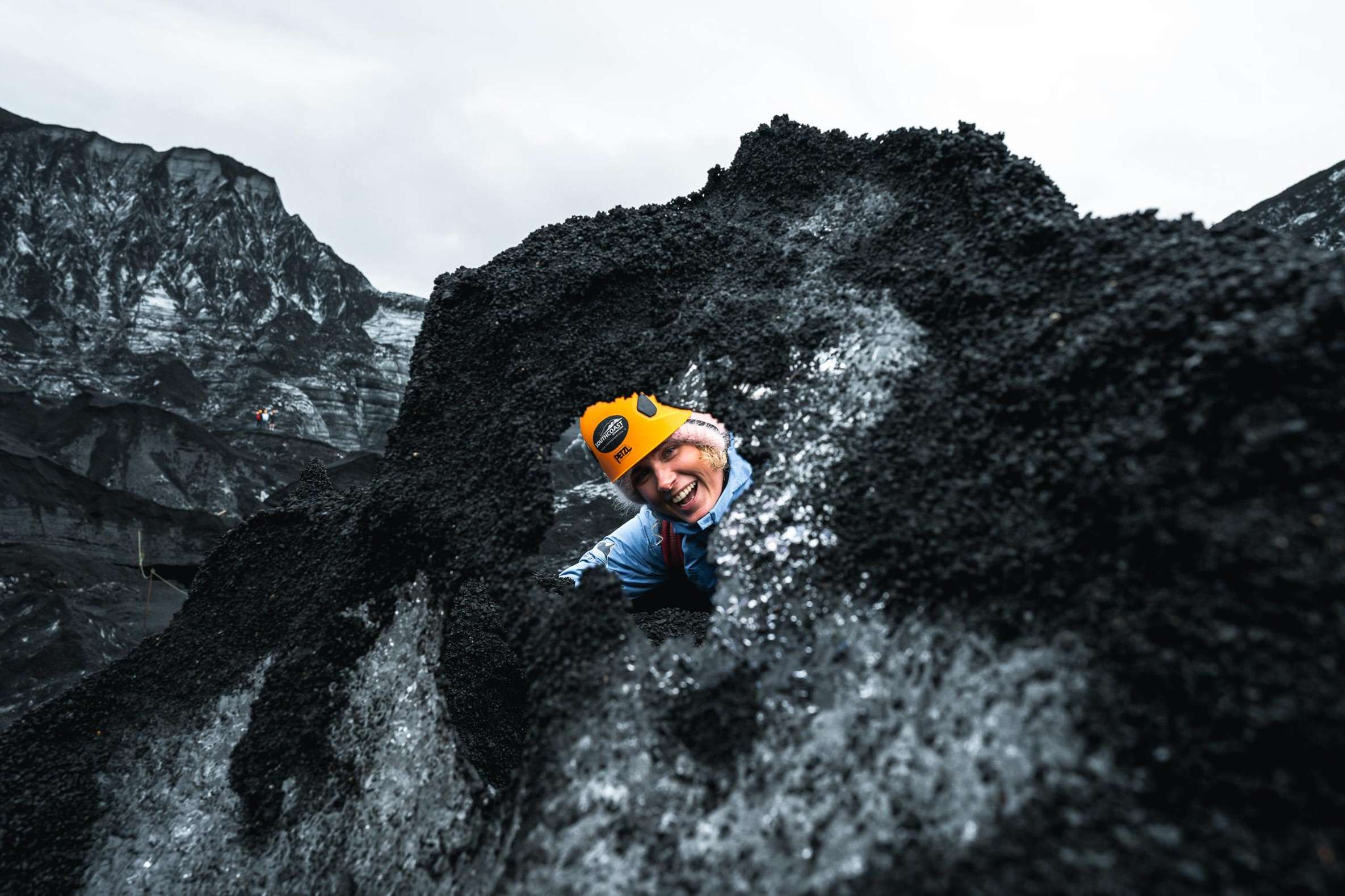
Katla's ice looks like nothing else on the South Coast. The volcano above Mýrdalsjökull erupts, ash and sand mix into the glacier, and the result is blue ice cut through with dark bands. Travelers describe South Iceland glacier ice as pockets of translucent blue between layers of volcanic ash.
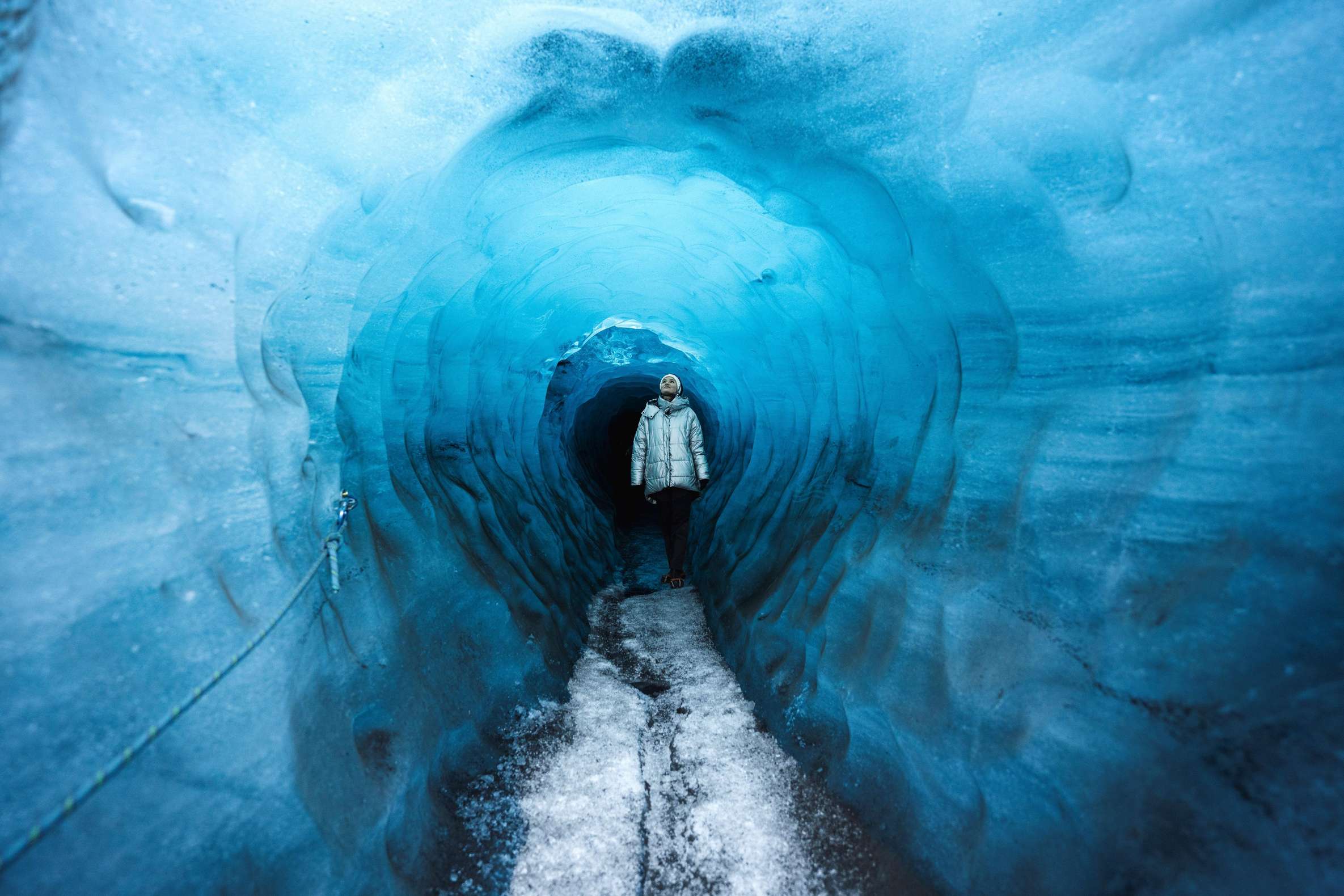
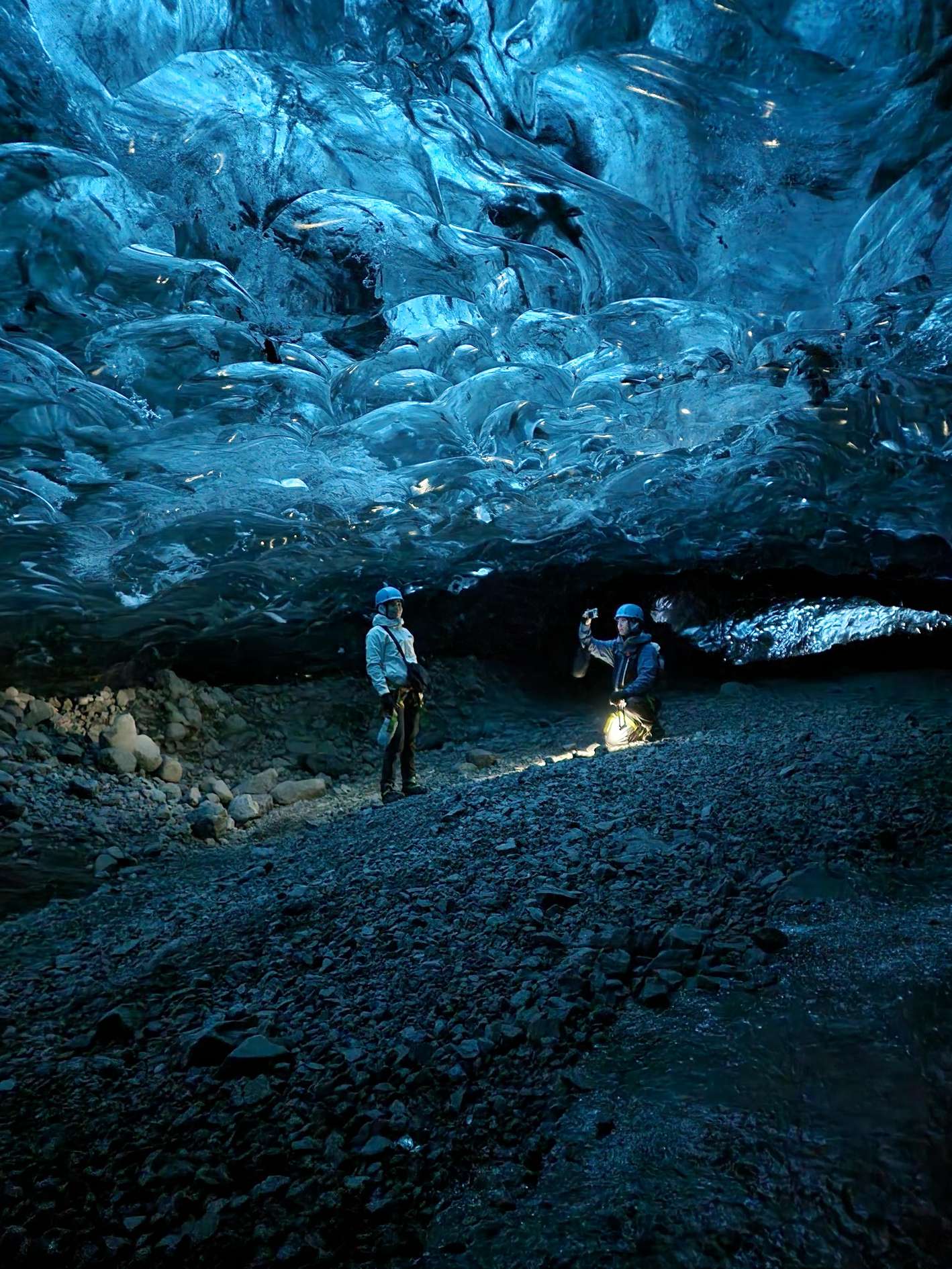
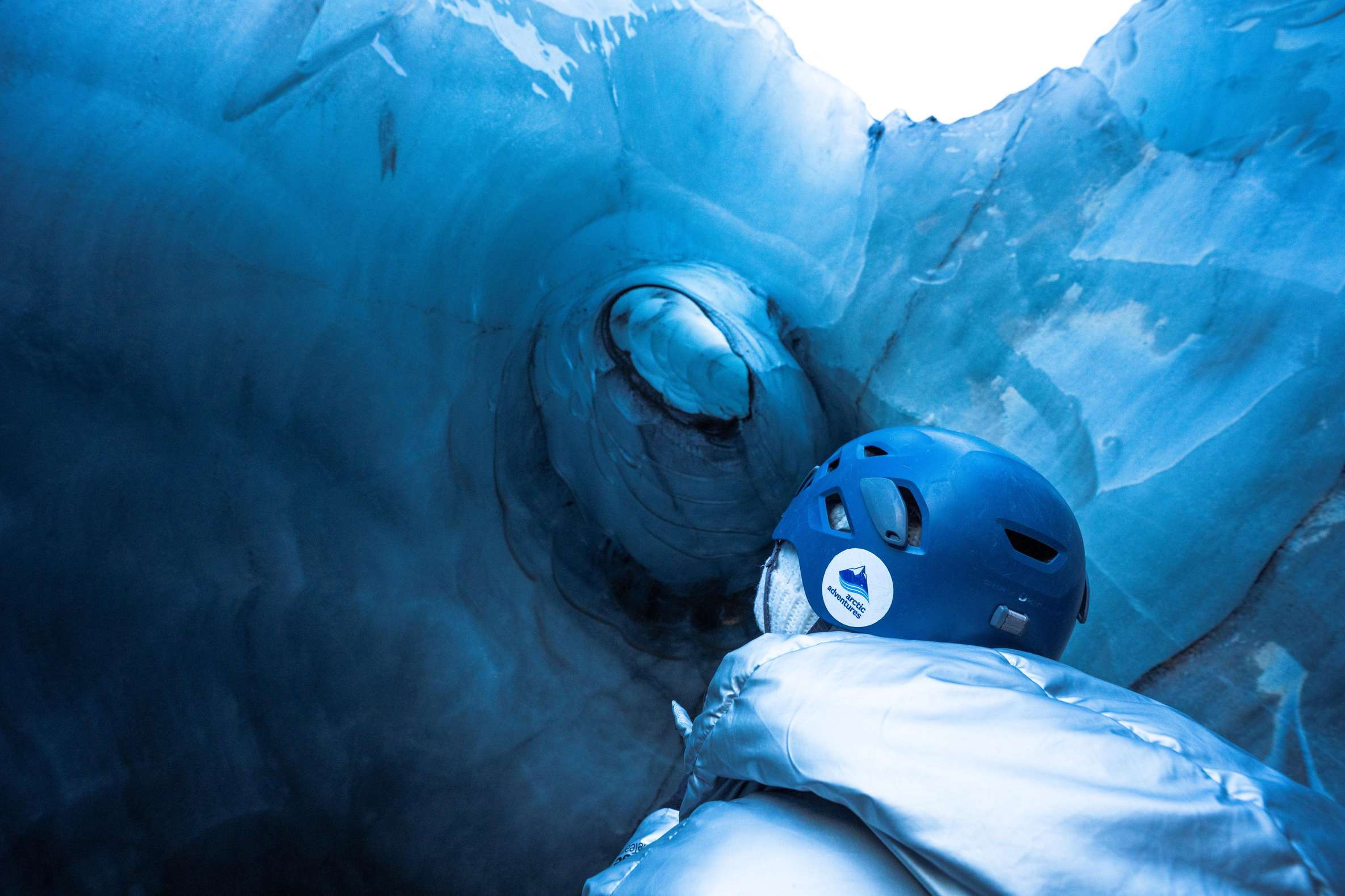
The Crystal cave on Breiðamerkurjökull gets its colour differently. Snow compressed under the weight of the ice loses oxygen, and the dense ice absorbs red and yellow light while reflecting blue. The walls read as translucent sapphire, with air bubbles making parts look whiter.
Two practical notes. Katla's brighter natural light makes it easier to move around and photograph, while the Crystal cave can involve waiting to enter behind other groups. Both caves change between visits, so the formations you see will differ from any photo you studied beforehand.
The two travelers below have stood in both. Read their lines before you pick a side.
If colour is the deciding factor for you, this is the split to weigh: ash-streaked blue with easy light, or deep sapphire behind a queue.
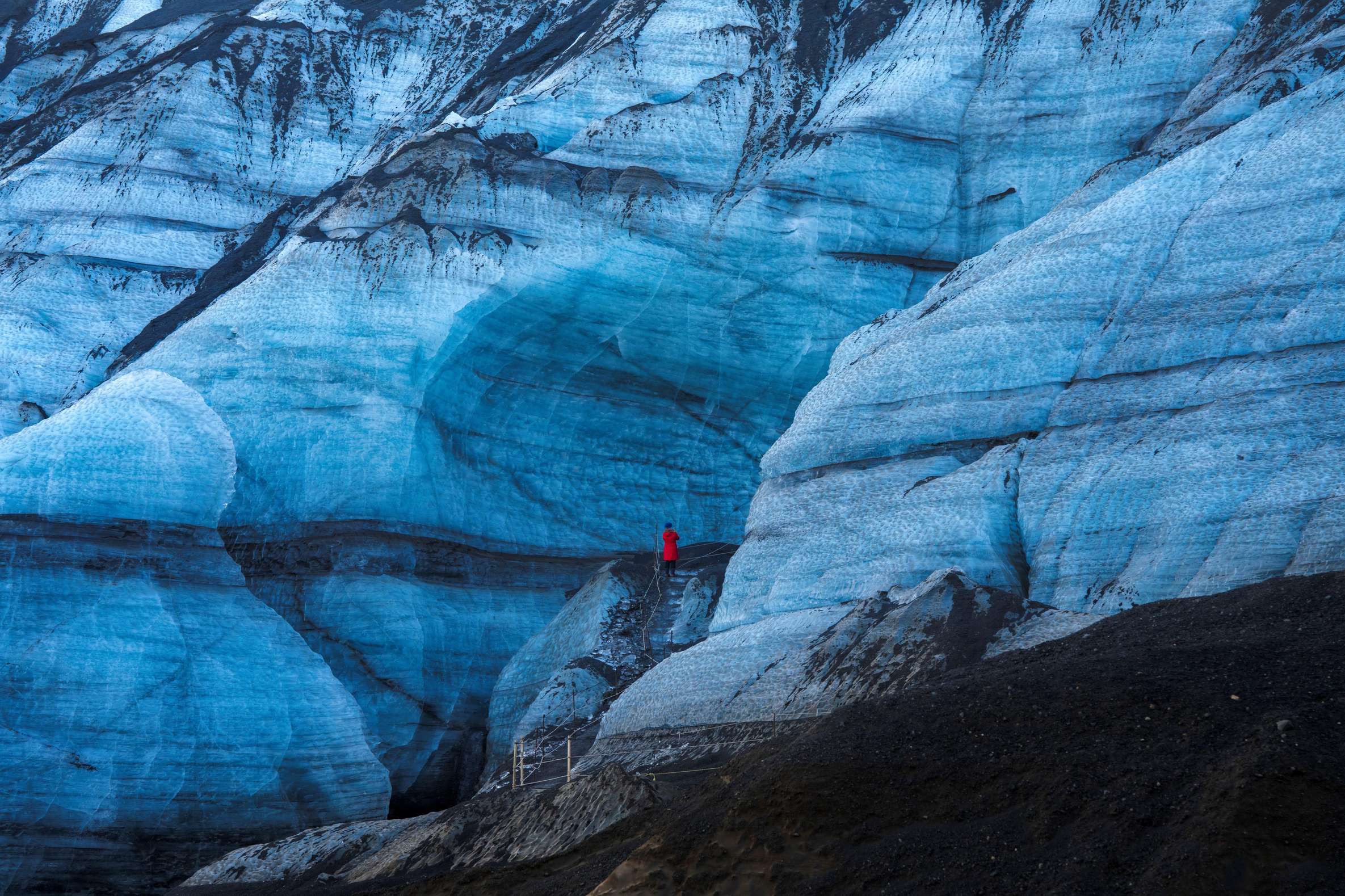
Your travel dates may make this the only chapter you need. Katla tours run every month of the year, summer included.
Guides choose the safe areas available on the day, and the cave changes with weather, temperature and ice movement, so what you see in July differs from January. That daily check is what keeps summer access possible at Katla while other formations close.
The Crystal Blue Ice Cave keeps a strict winter calendar. Excursions shut down completely from May through September, when summer melt makes natural caves thin, flood or become structurally unstable. The regional season runs from mid-November to mid-March, and some operators wrap up by April 1.
Midwinter is when the Crystal cave is at its best. From December through February, sustained freezes solidify meltwater channels into stable caverns and the ice reaches its deepest, clearest blue. February pairs that stability with 8.6 hours of daylight, against 4.4 hours in December.
So: traveling in summer, Katla is the natural pick. Traveling between November and March, you can do both, Katla from Vík and the blue cave farther east.
Vík sits about 187 km from central Reykjavík, roughly 2 hours 38 minutes without traffic. In winter, allow extra time, because the south coast regularly gets gusts strong enough to slow the drive or stop it. Jökulsárlón is about 5 hours each way in good conditions, longer in winter weather.
That difference changes what a day can hold.
The daylight figures come from two different counts, and both matter: Vík gets about 4 hours 43 minutes of daylight in December and 5 hours 52 minutes in January, while the 8.6 hours quoted for February against 4.4 in December measure the Jökulsárlón area farther east, where the Crystal cave sits.
Whichever count you use, a combined South Coast and Katla day trip runs about 10 hours and cannot fit entirely inside winter daylight.
If you would rather not drive in the dark, travelers recommend staying overnight in Vík or Kirkjubæjarklaustur and letting a tour with Reykjavík pickup carry the load instead.
A winter round trip from Reykjavík to Jökulsárlón in one day gets a firm thumbs-down from travelers: hours of driving in darkness and fog, with a cave tour squeezed in the middle. Stay nearby.
The map tells you more lies than truths here, so start with the three below.
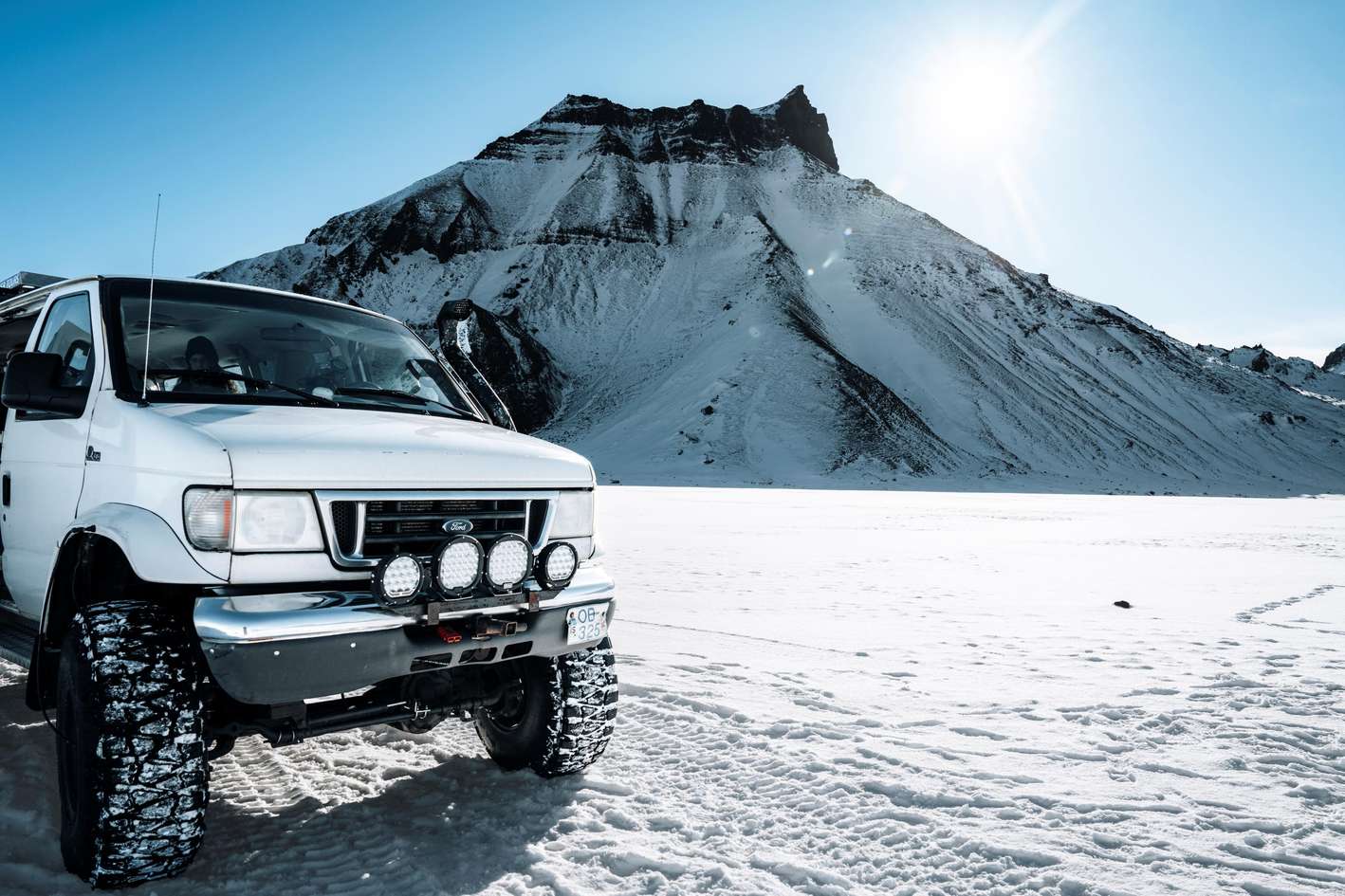
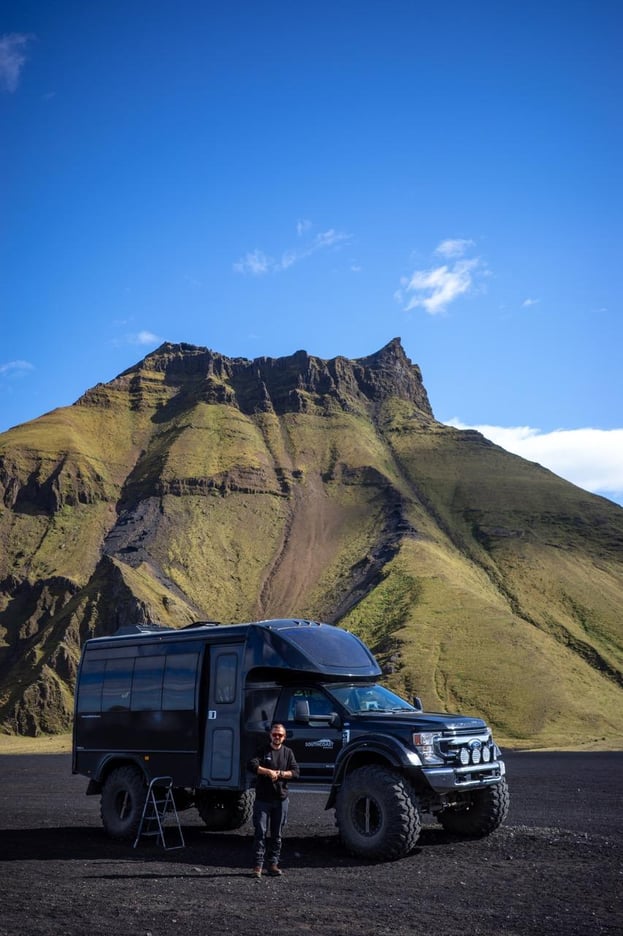
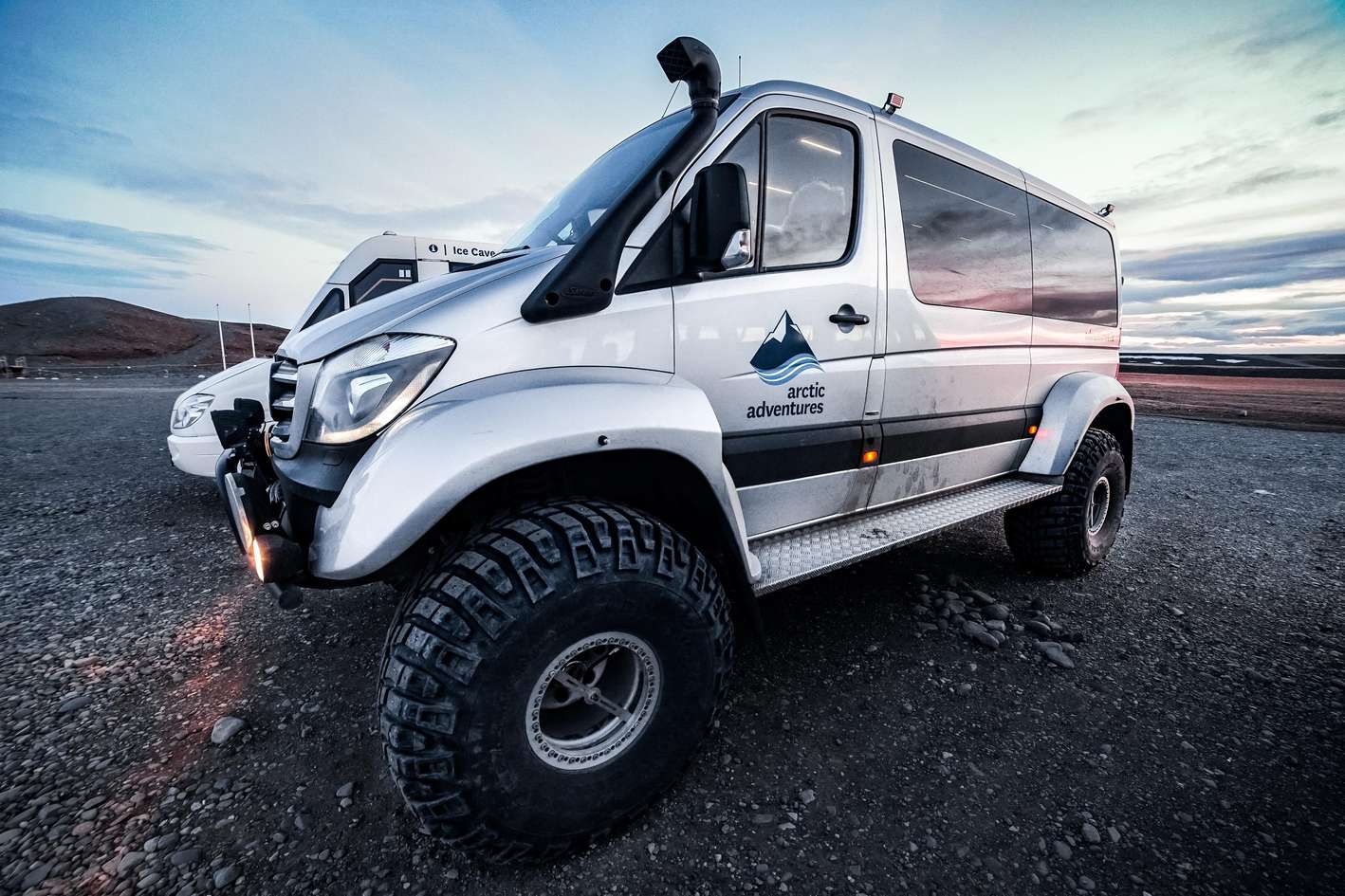
what the GPS will not tell you Myth: your rental 4x4 can reach the cave trailheads. Standard rental SUVs cannot navigate the rough private glacier tracks; only a specialized Super Jeep can.
Myth: a same-day self-drive to Jökulsárlón works in winter. Travelers advise against it: hours of driving in darkness and fog. Myth: both caves are always open. The Crystal cave closes May through September; Katla needs a guide regardless of season.
Take the first myth seriously: a rental SUV gets you nowhere near either cave, and the tour is the only way in.
Neither cave asks for mountaineering, but neither is a pavement stroll.
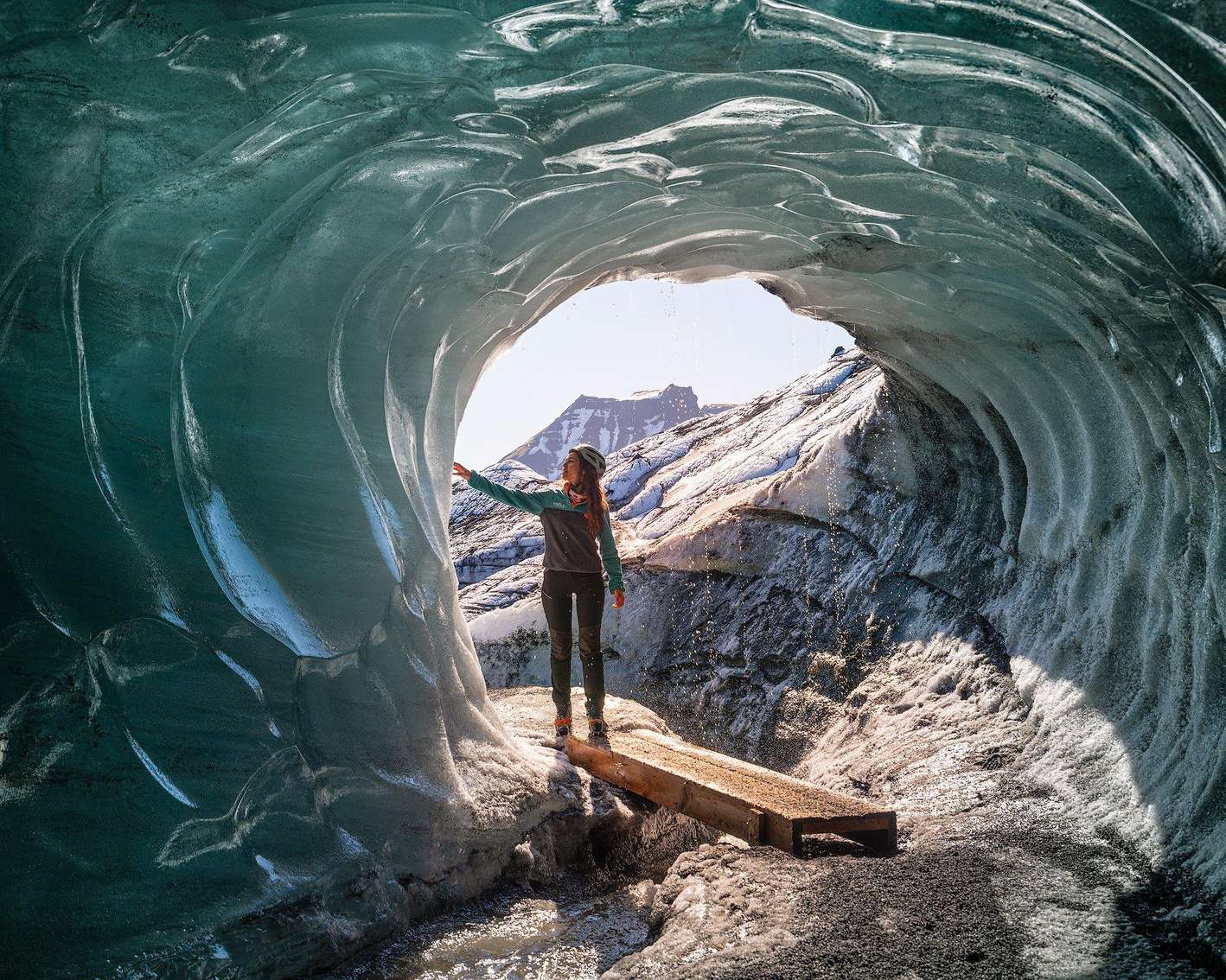
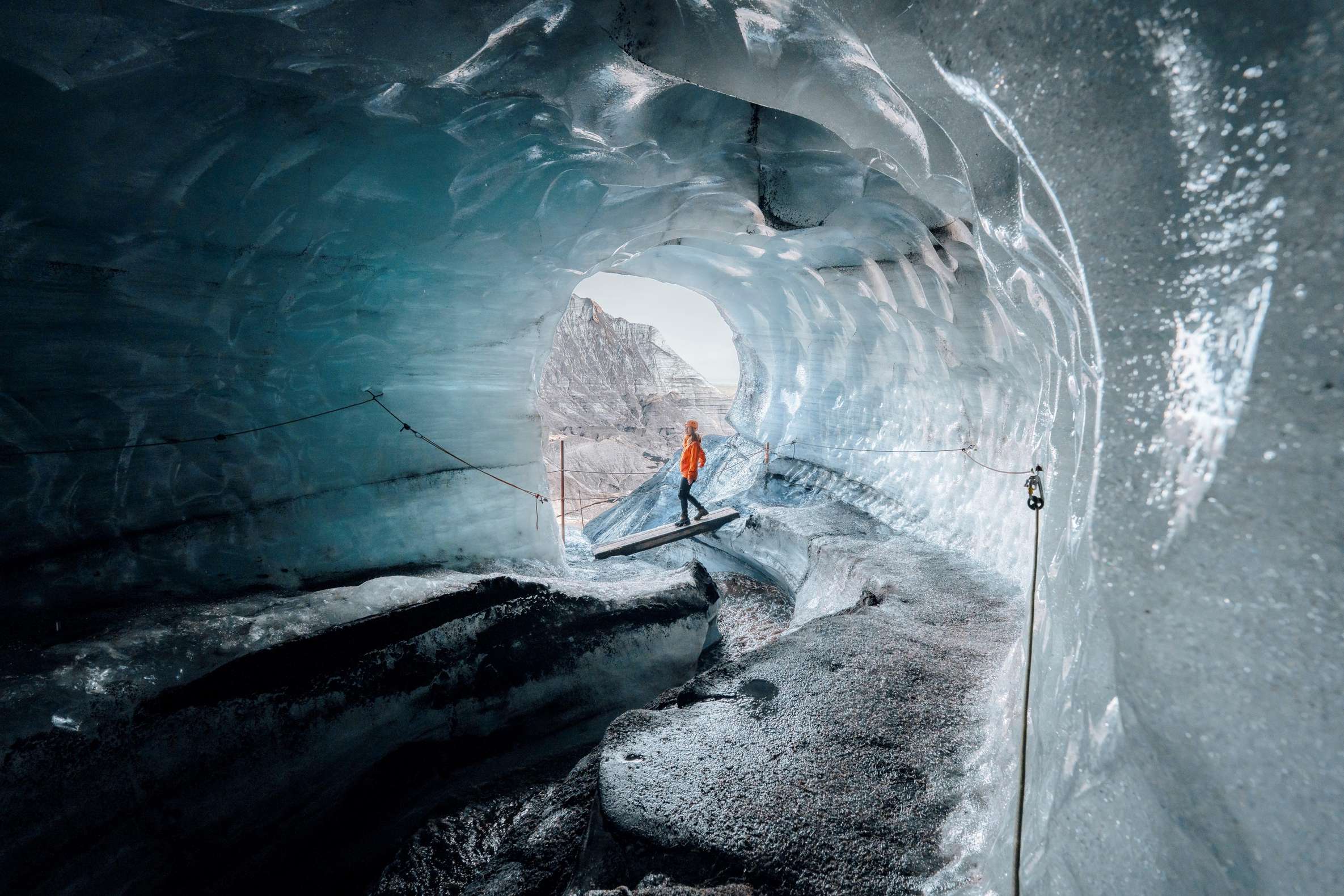
At Katla, the walk from the jeep drop-off to the entrance runs about 1 to 2 km over uneven ground with minor elevation. Recent visitors disagree on the feel: some call it an easy climb that still takes stamina, others steep and difficult to manage in crampons.
Route and conditions explain the spread; one route takes 20 to 25 minutes depending on weather. Go prepared for the harder reading, and be honest with yourself about knees and ankles.
At the Crystal cave, a super jeep crosses rough, uneven moraine from the lagoon to the glacier. The ride can be quite bumpy; pregnant women should avoid it. The walk at the other end is usually short, on icy, uneven ground, with no real climbing, so the tour reads as easy to moderate.
The contrast that matters is with a full glacier hike, which involves real time walking on ice and needs genuine walking fitness. A cave visit is the gentler introduction. One Katla tour operator excludes people with heart problems and wheelchair users, so read each tour's limits before you commit.
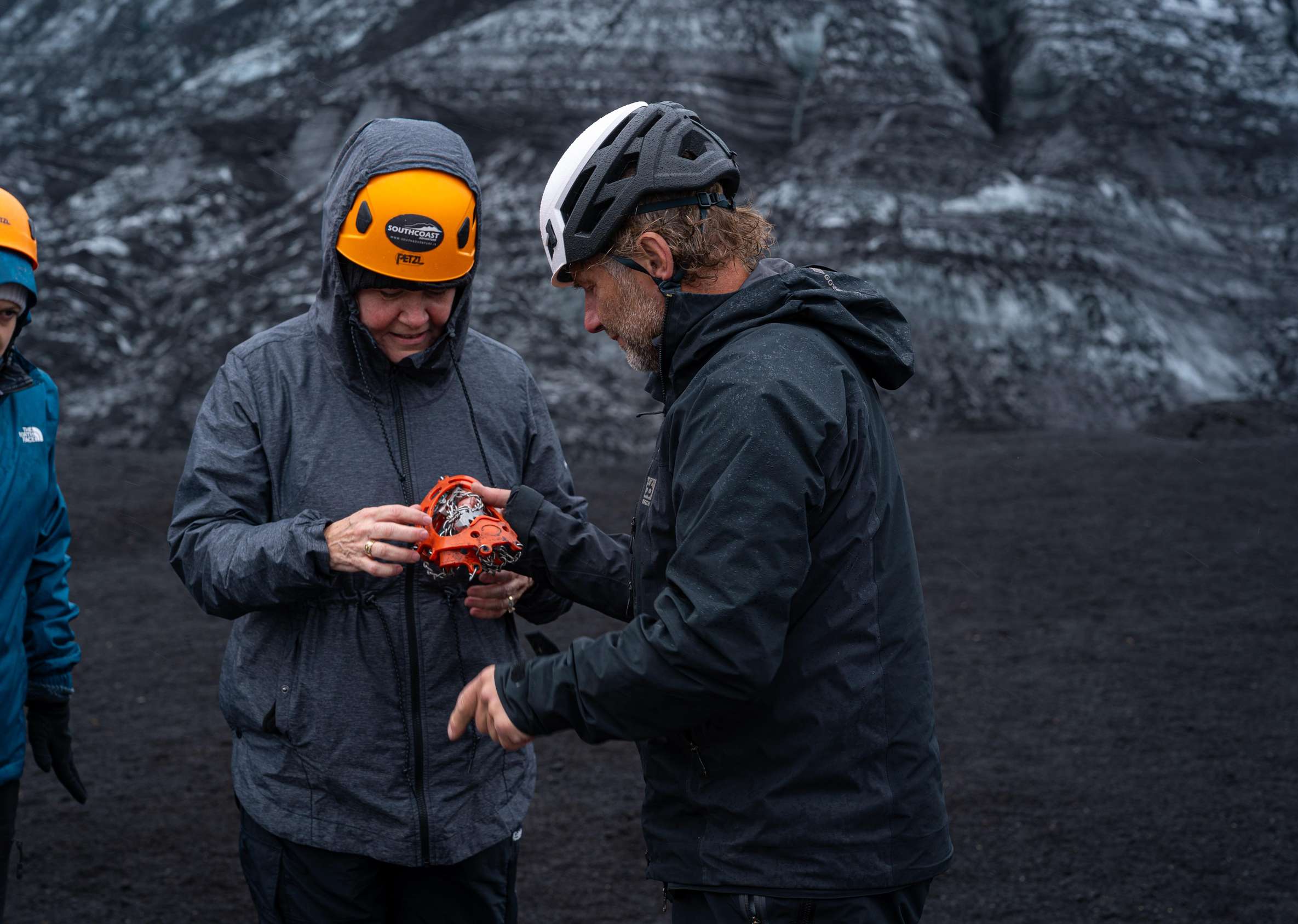
Here is the honest arithmetic of a Katla day from Vík. The super jeep takes about 40 minutes each way across black sand, old lava fields and shallow streams to the glacier edge. The ride is vigorous and bumpy enough to trigger motion sickness, though travelers also call it part of the scenic experience.
Then the walk, 1 to 2 km depending on route, and the cave. Expect about 30 minutes inside, roughly one-sixth of a 3-hour tour.
Some visitors report closer to 20 to 30 minutes, others up to an hour. The rest of the day is the jeep ride, the approach and the glacier walk above the cave.
The Crystal cave works on similar proportions: about 30 to 45 minutes inside a 2.5 to 3-hour tour, with the jeep ride taking about an hour in total.
The timeline below lays out a full Katla day from Vík so you can match it against your own schedule.
from check-in to back in Vík T-20 min: arrive at the Vík meeting point, park and check in. Hour 0: board the super jeep and head out across the volcanic floodplains.
Hour 1: reach the glacier edge after about 40 minutes off-road. Hour 1.5: walk the moraine to the cave entrance in crampons. Hour 2: about 30 minutes inside Katla Ice Cave. Hour 3: jeep ride back, tour ends in Vík.
Notice the proportion: the cave itself is the shortest block of the day. Book the tour for the whole outing, the jeep ride included, and the time inside will feel like enough.
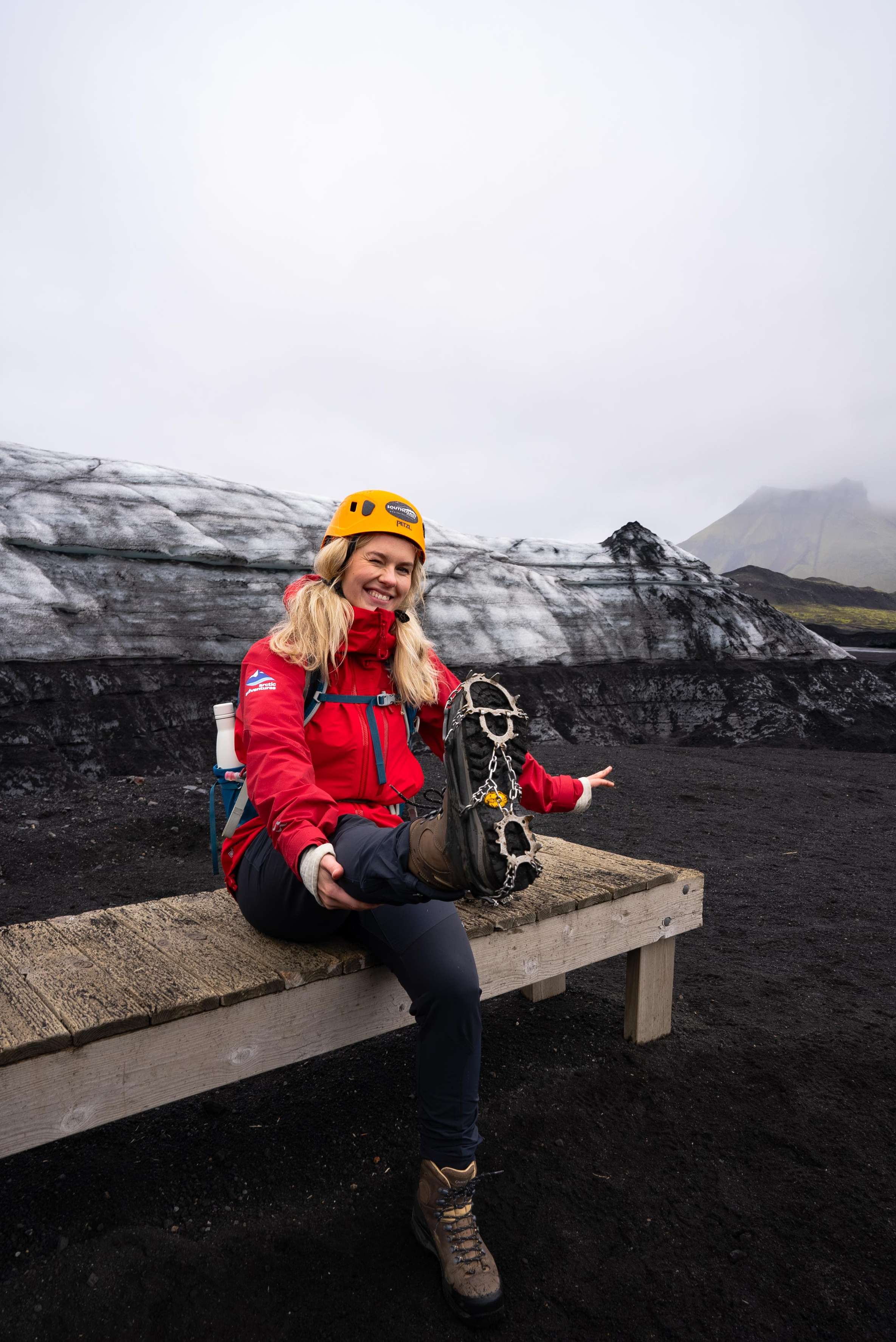
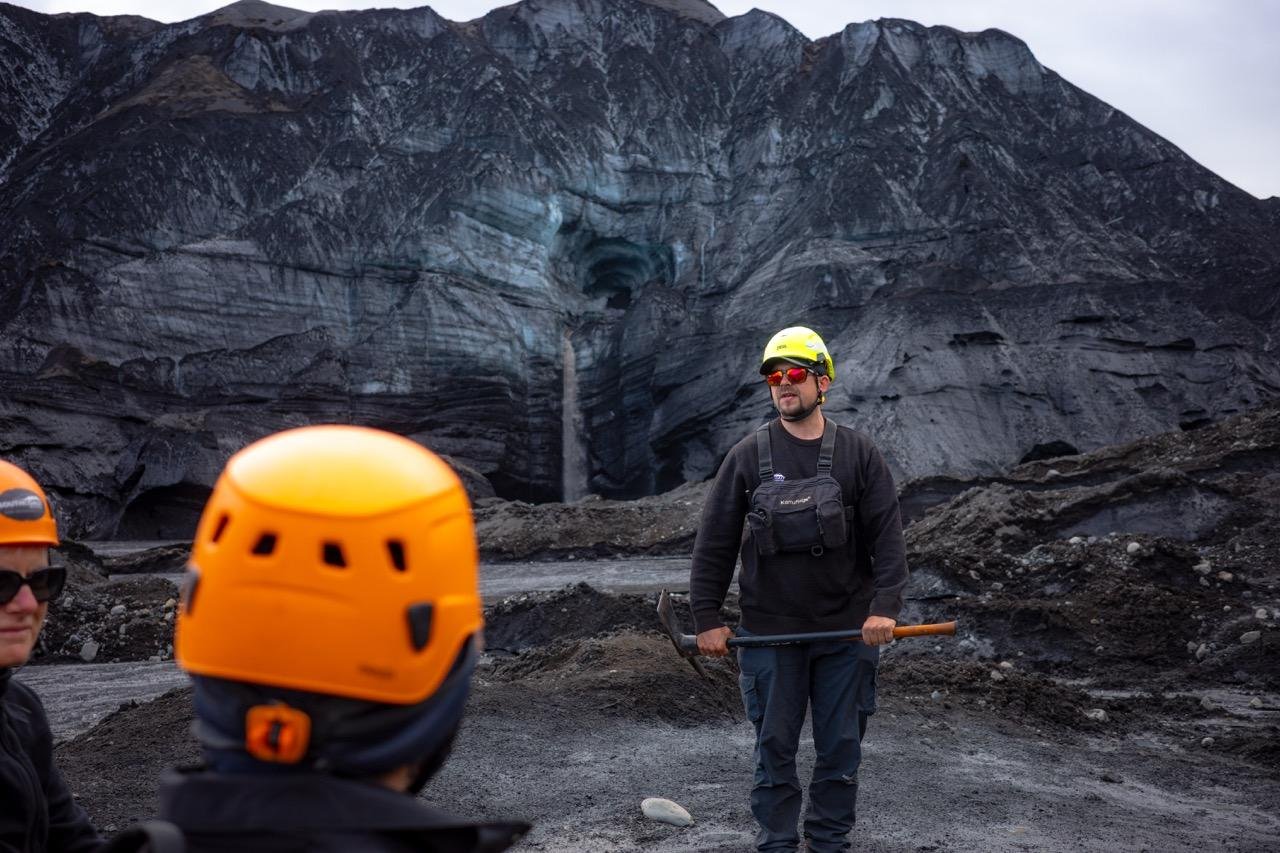
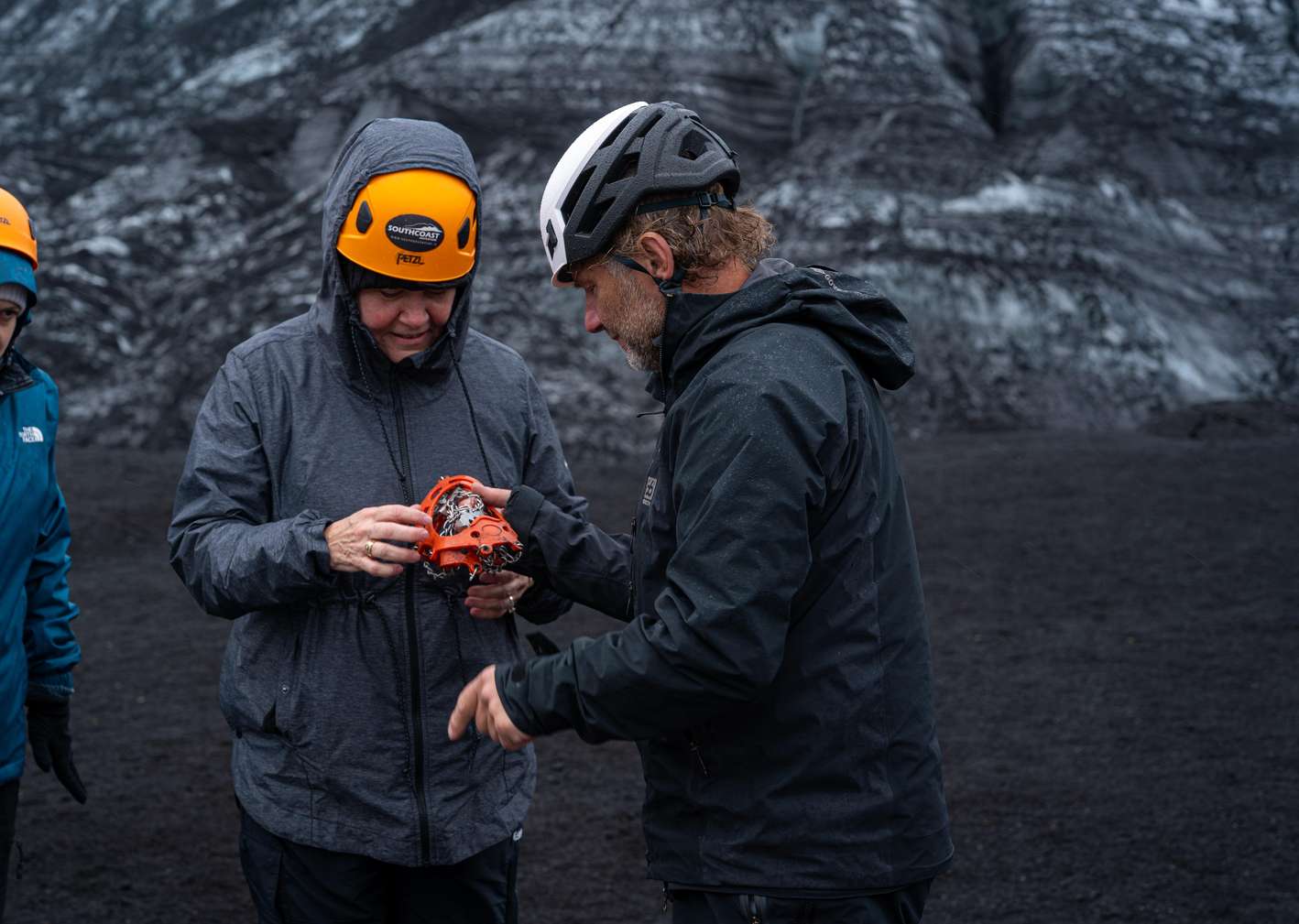
Whichever cave you choose, entry is guided only. You cannot visit Katla independently; access is by guided tour, led by certified glacier guides who carry helmets and glacier crampons, and some add a headlamp.
Their training covers route selection, risk management, crevasse rescue and group management, and each day starts with a route-specific risk assessment of terrain, weather and the group's abilities.
At the Crystal cave the same logic holds. Caves are entered only when conditions are safe, and the cave visited that day is selected for safety.
A 2024 safety framework calls for daily assessments of each cave and the overhanging ice above it, with unsafe sites avoided that day. Water, loose material, broken ice or ceiling cracks are the signs guides look for.
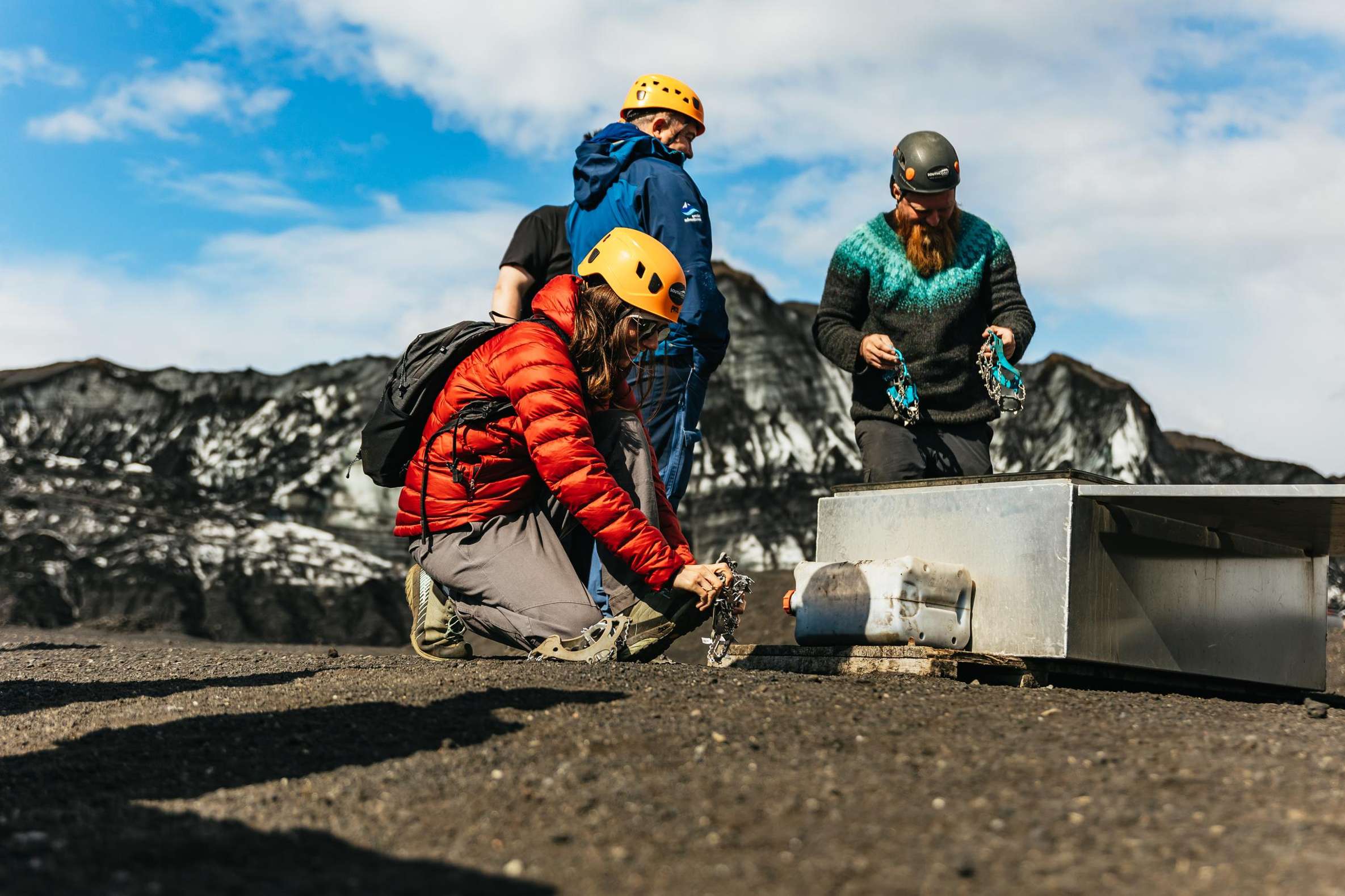
The rule that catches visitors unprepared is footwear. Crampons are supplied, but they need something to grip: sturdy hiking boots that cover and support the ankles.
Soft sneakers do not meet one tour operator's mandatory footwear rule, though that operator rents boots at the cave location. Arrive shod correctly and nobody gets turned away at the gear check.
Each cave has its own way of losing days.
Katla's risk is water and wind. Heavy rain or a warm spell can flood a cave or make access too dangerous; extreme winds above 20 m/s cancel tours; flooding or unsafe roads do the same.
Tours are also suspended if seismic activity or potential sub-glacial flooding becomes a concern, and they may be changed or canceled when signs suggest Katla is getting ready to erupt. Severe gales or blizzards can close the road to Vík entirely, which calls the tour off with it.
The Crystal cave's risk is winter. Storms close Ring Road sections, and if the road closes you cannot reach Jökulsárlón at all.
The good part: operators on both sides treat safety cancellations as exactly that. When an operator cancels for weather, safety or glacier conditions, you get a full refund or a free reschedule; if authorities close the road and you cannot reach the meeting point, one operator pays a full refund.
The if-then table below turns the operators' own cancellation terms into plain answers for a washed-out morning.
what your booking does Operator cancels for weather, safety or glacier conditions: full refund or free reschedule. Authorities close the road before you reach the meeting point: full refund per one operator's terms.
Katla flood or melt risk, or a wind warning: tour changed or canceled, refund or reschedule offered. Red wind warning on the South Coast: expect a disrupted driving day and possible cancellation.
Read the table before you book, not after: the terms mean a lost cave day costs you a reschedule, never the whole trip.
The caves sit inside different itineraries, and that shapes the choice as much as the ice does.
The Crystal cave pairs naturally with its surroundings on winter days. After the tour, travelers walk the shore of Jökulsárlón glacier lagoon for more views of the icebergs, wander north along the water, or cross the bridge over the Jökulsá River to watch icebergs pass beneath.
Diamond Beach sits a short drive from the lagoon, and icebergs washed up on black sand make it worth the extra minutes. On clear winter nights with a good aurora forecast, people return to the lagoon to look for the Northern Lights.
Before boarding, the site has public toilets, a café with sandwiches, soup, pastries and hot drinks, and a food truck. Boat tours on the lagoon run from roughly May through October, so in winter the ice cave replaces them.
Katla plugs into the classic South Coast route. Tours from Reykjavík bundle the cave day with Seljalandsfoss, Skógafoss, black sand beaches and Reynisfjara, in 10 to 12 hours with pickup. If your trip is built around the South Coast, Katla is the cave that fits the drive.
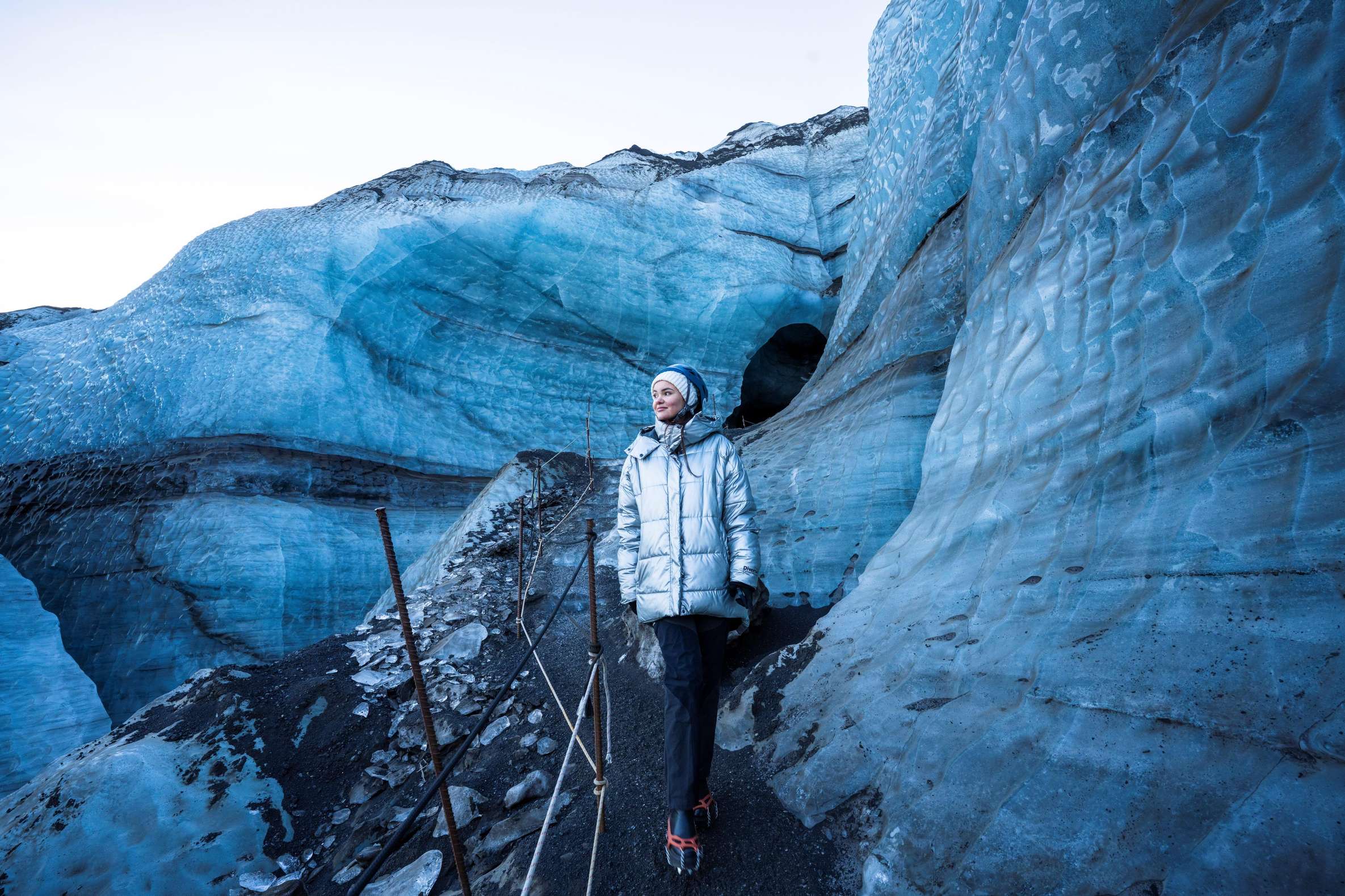
One packing list covers both caves, and it starts with the feet. Wear sturdy, stiff, waterproof hiking boots that cover and support your ankles; crampons are fitted to your boots, and soft sneakers get turned away at some gear checks. Boots can be rented on site if yours do not qualify.
Then the layers. Warm layers underneath, with a waterproof jacket and waterproof trousers on top. This holds even on a sunny day, because meltwater drips from the cave roof and puddles form on the approach, so bring gloves, a warm hat and spare dry socks.
Conditions on the glacier are wet and windy, and the waterproof shell is what keeps the walk pleasant.
Inside, the cave holds around 0°C year-round. In winter it can be warmer than the air outside, which surprises people.
The camera settings below are worth saving before you go; the blue reads badly on auto settings.
With these settings saved, the photos you bring home will match what your eyes saw, which is more than most cave visitors manage.
The fine print separates the tours more than the ice does.
Ages first. Katla tours vary: some take children from 6, others set the minimum at 8 or 12, and some are not suitable for people with limited mobility; one excludes people with heart problems and wheelchair users.
At Jökulsárlón the Crystal Ice Cave Super Jeep Tour and the Crystal Blue Ice Cave Super Jeep Tour set the minimum at 6, the Original Ice Cave Tour at 10, the glacier exploration tour at 13, and the Blue Ice Cave Tour and Glacier Walk at 14.
Meeting points. Katla tours from Vík meet at Vík Inn, Víkurbraut 26, or in the bus parking lot behind the Icewear Magasin building facing the sea at Austurvegur 20; arrive 20 minutes before departure to park and check in.
At Jökulsárlón, tours meet in the main parking lot, on the east side farther from the lagoon, 15 minutes before departure.
If your pickup vehicle shows a different logo than the one you booked, that can be a partner operator running the tour; it is not automatically cause for alarm, but ask.
Book Katla at least a few days ahead in summer, and further ahead for the July peak.
The checklist below runs the three checks that matter before you pay, scored against the three-hour tour from Vík.
what to check, and how the Vík tour scores Dates: Katla runs all year; the Crystal cave closes May through September. The 3-hour tour from Vík fits any season.
Age and mobility: the Vík tour takes children from 8 and rules out heart problems and wheelchair use. Meeting point: Vík Inn, 20 minutes early, with time to park.
Score all three checks and the Vík tour comes out well for most trips: it runs every month, takes children from 8, and the meeting point is easy to find.
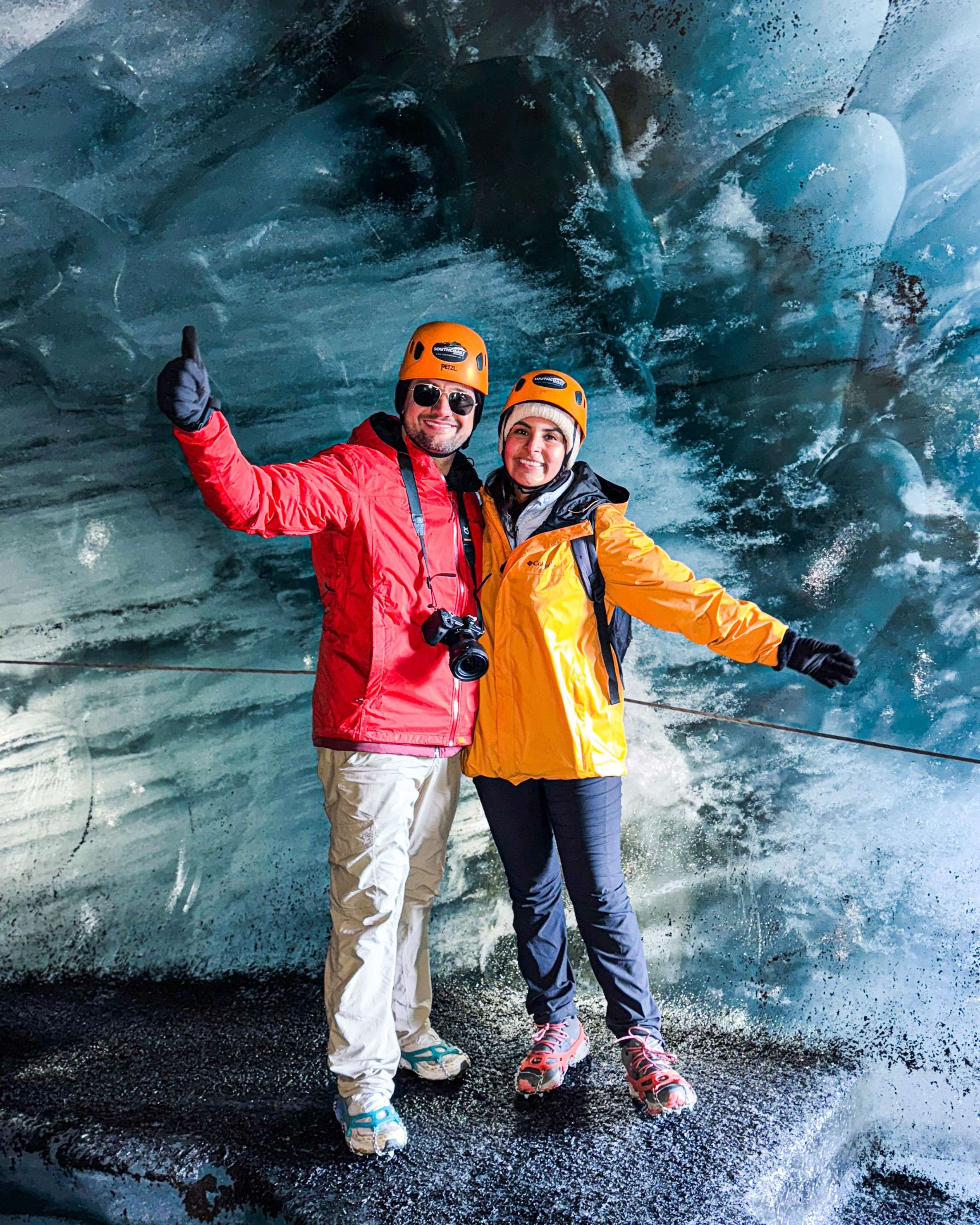
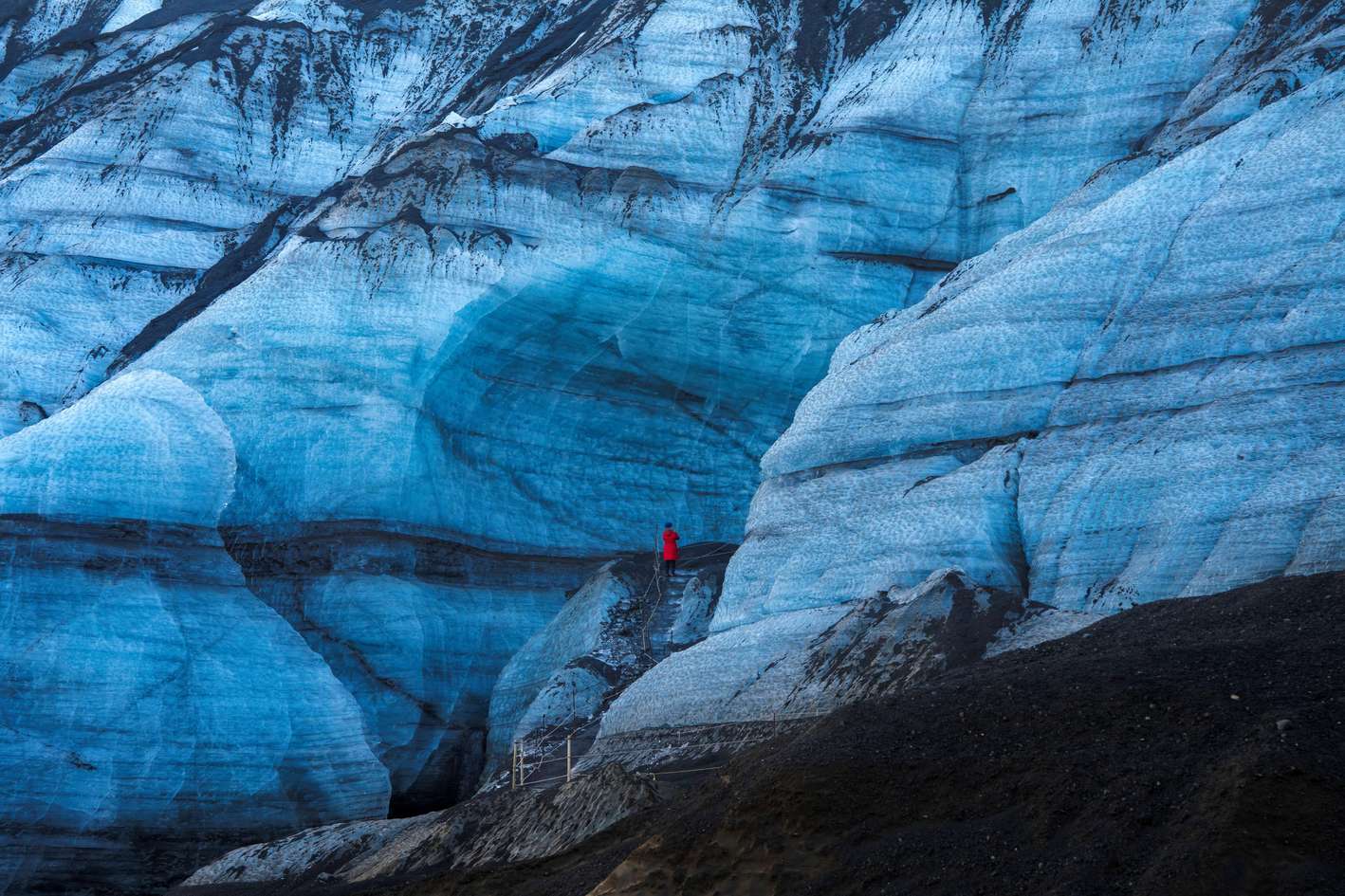
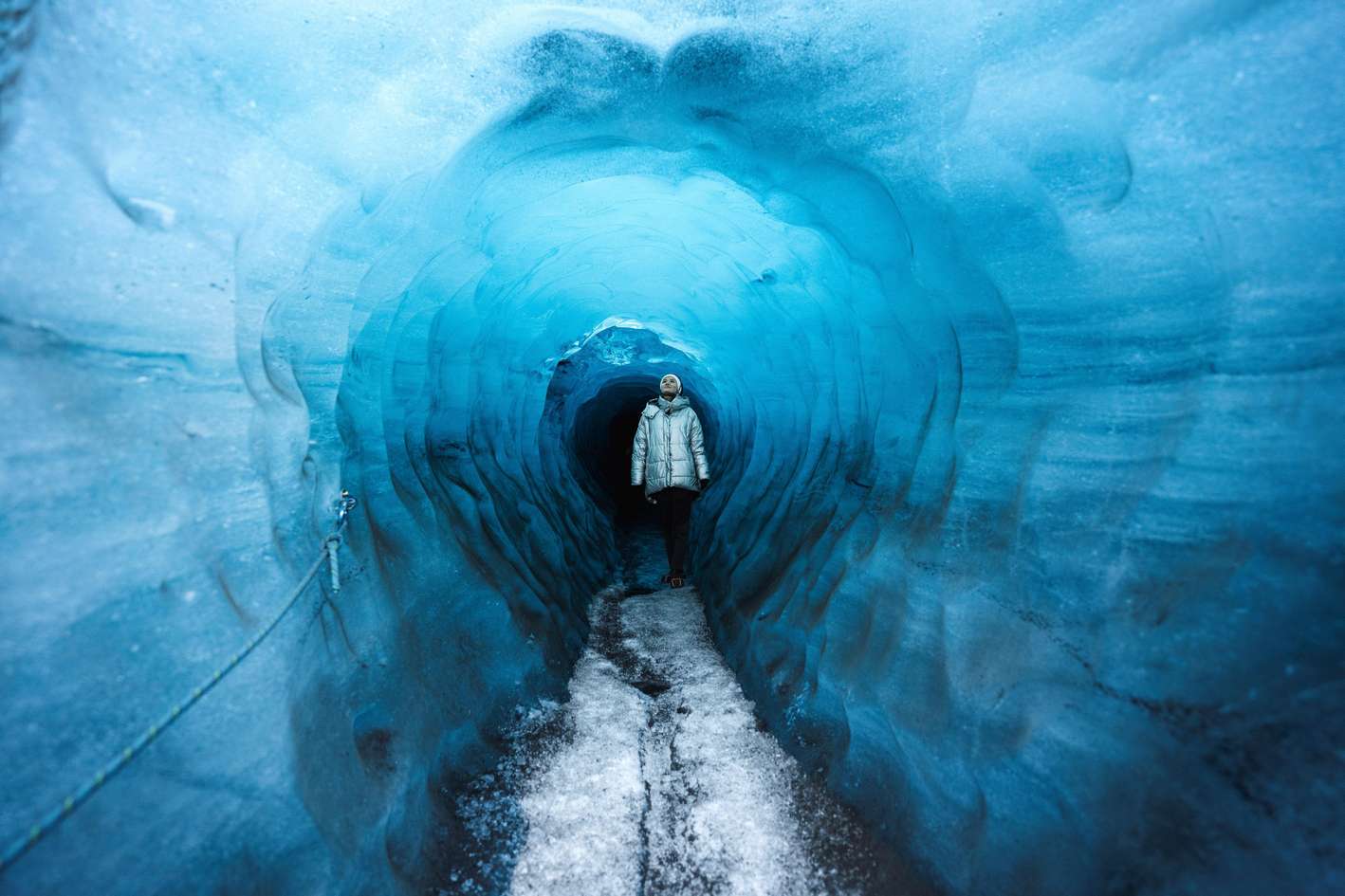
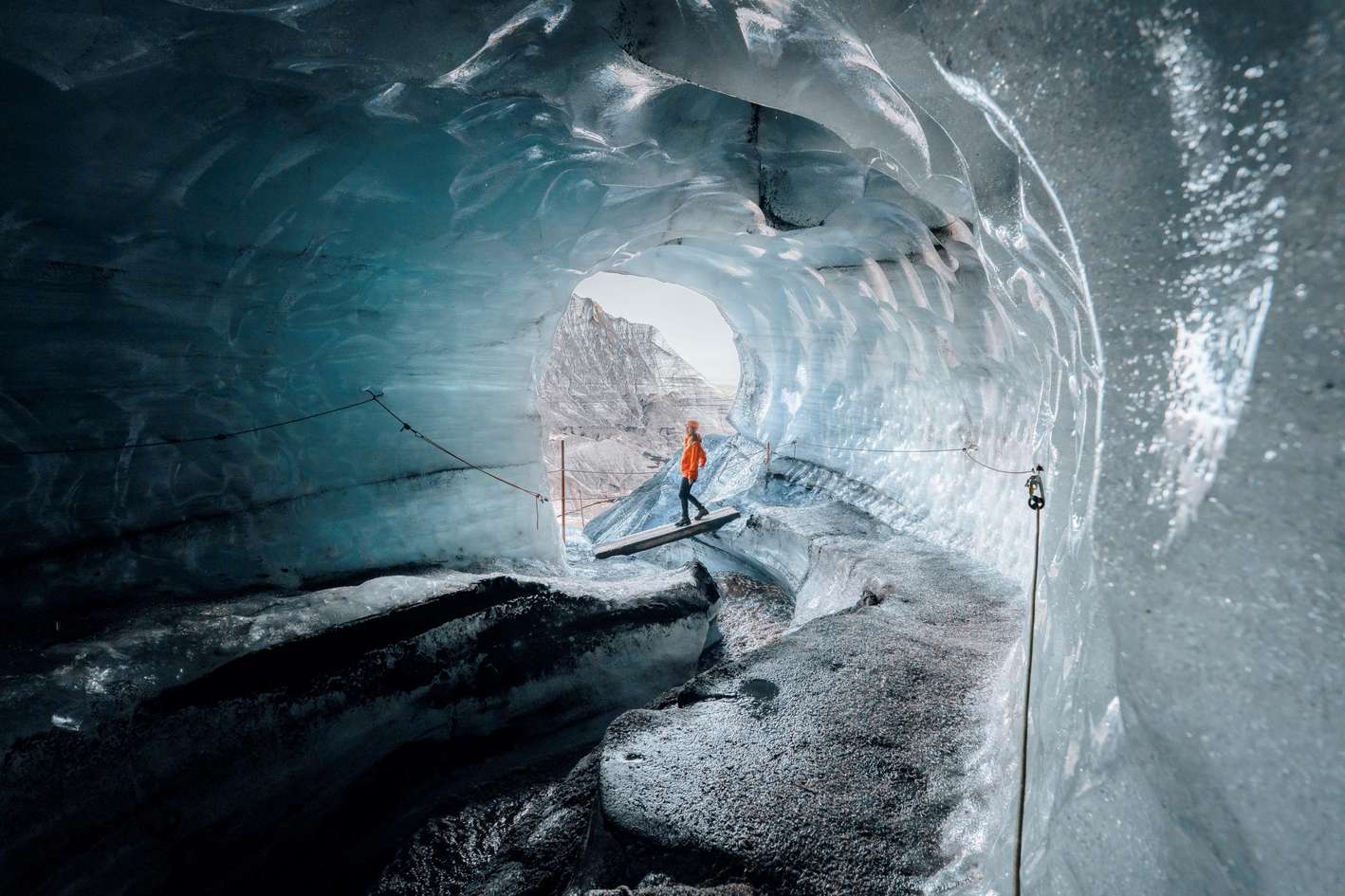
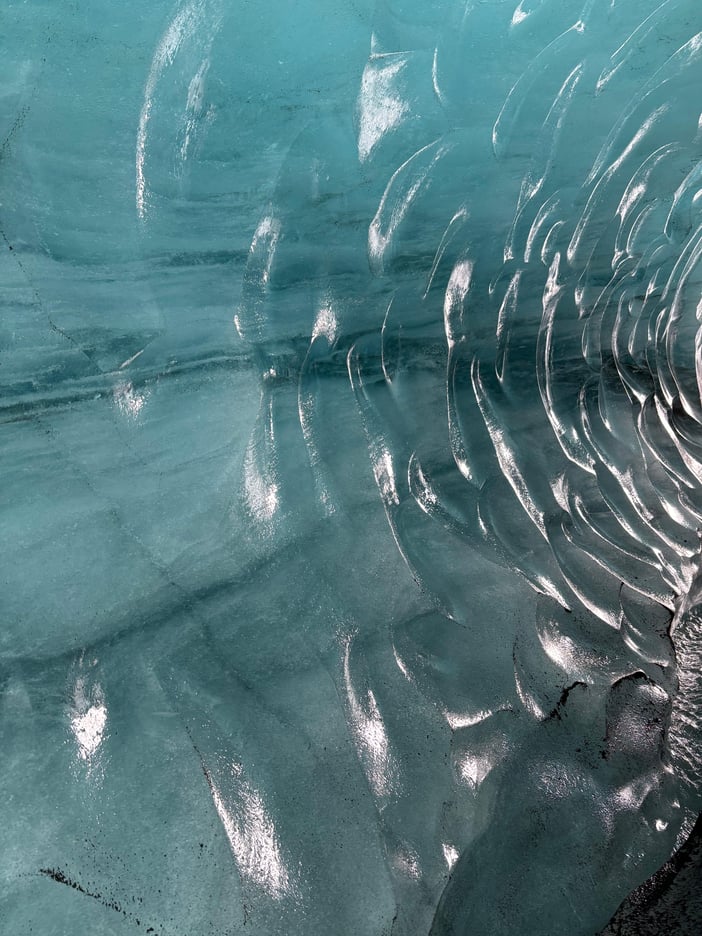
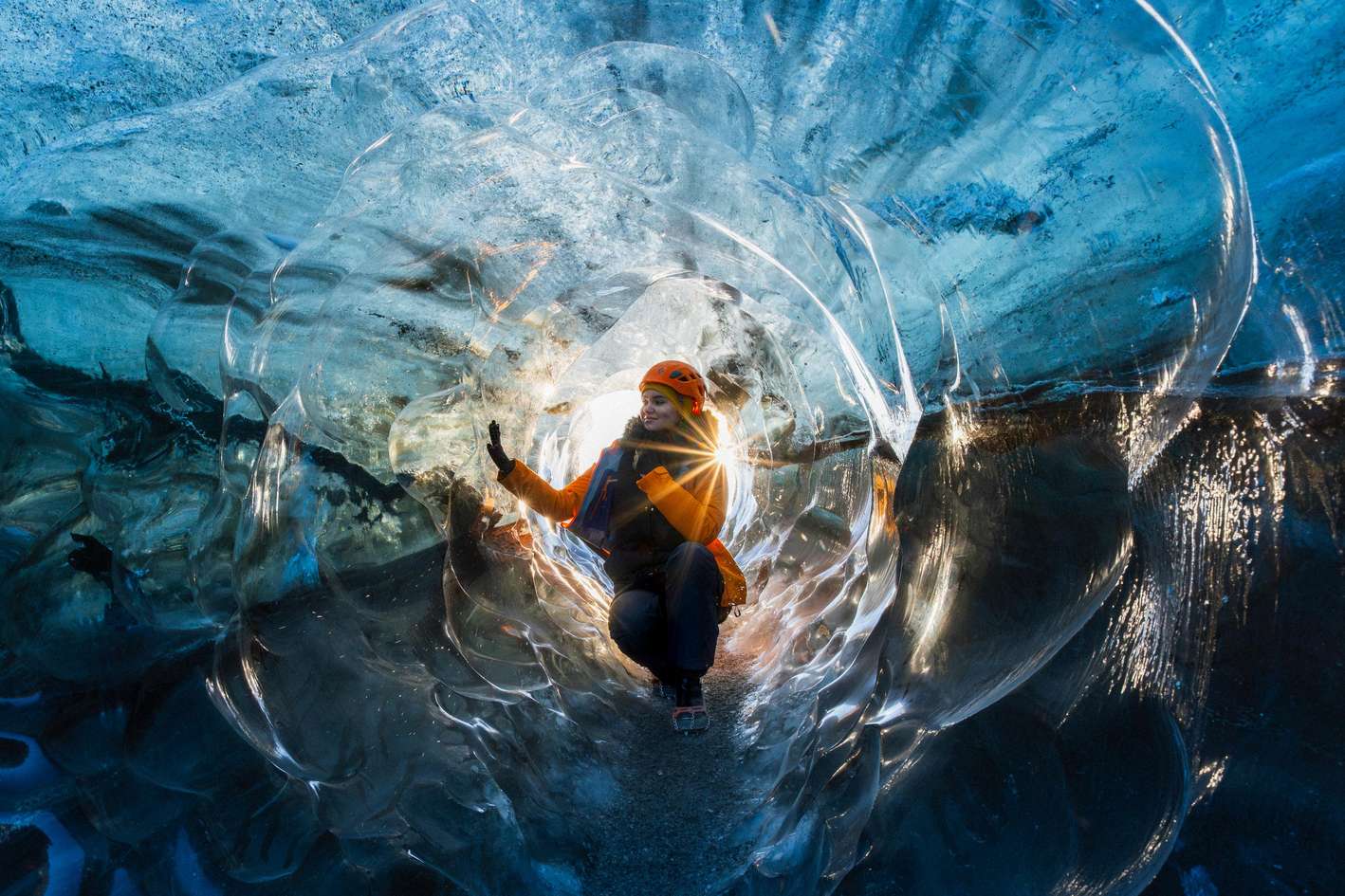
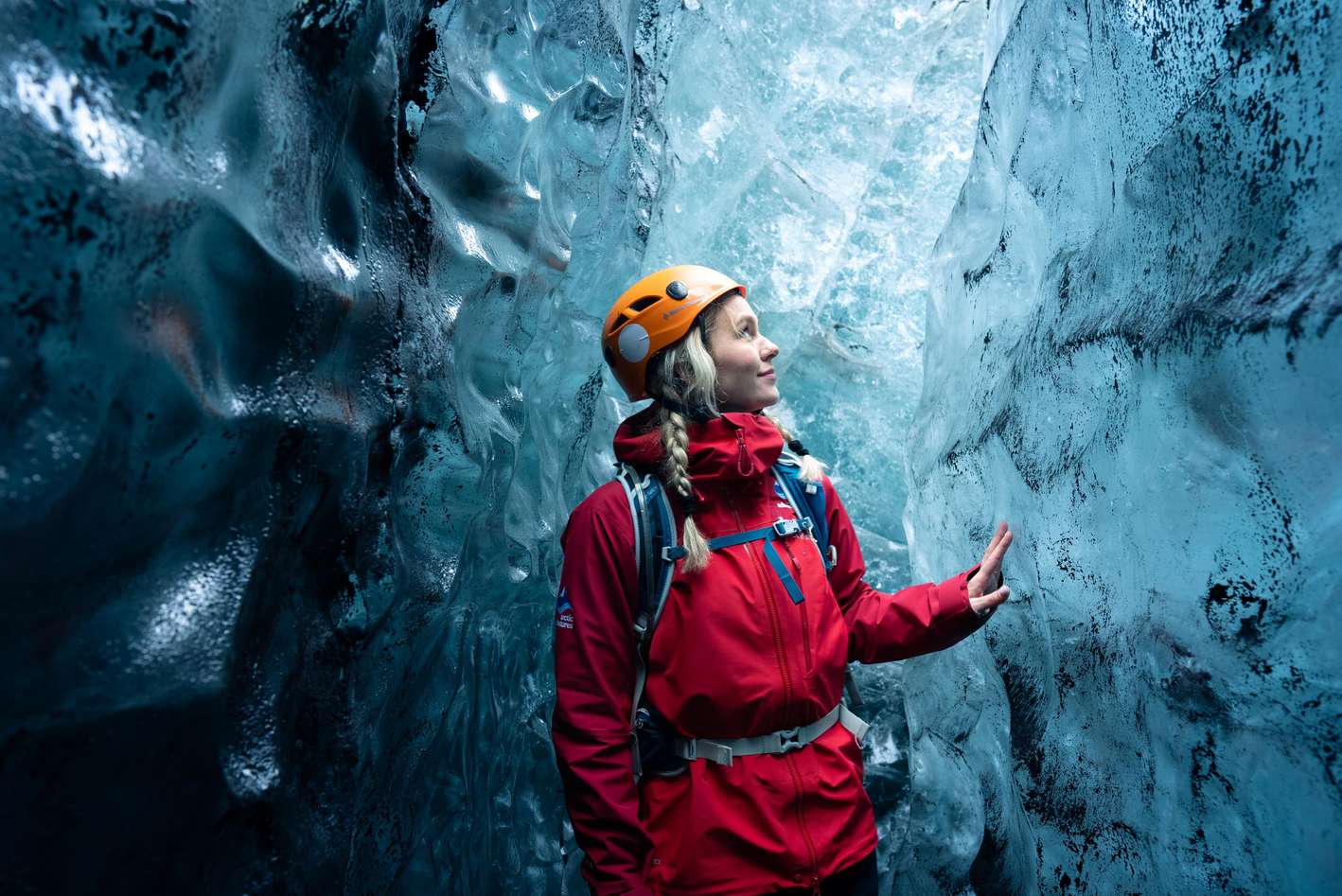
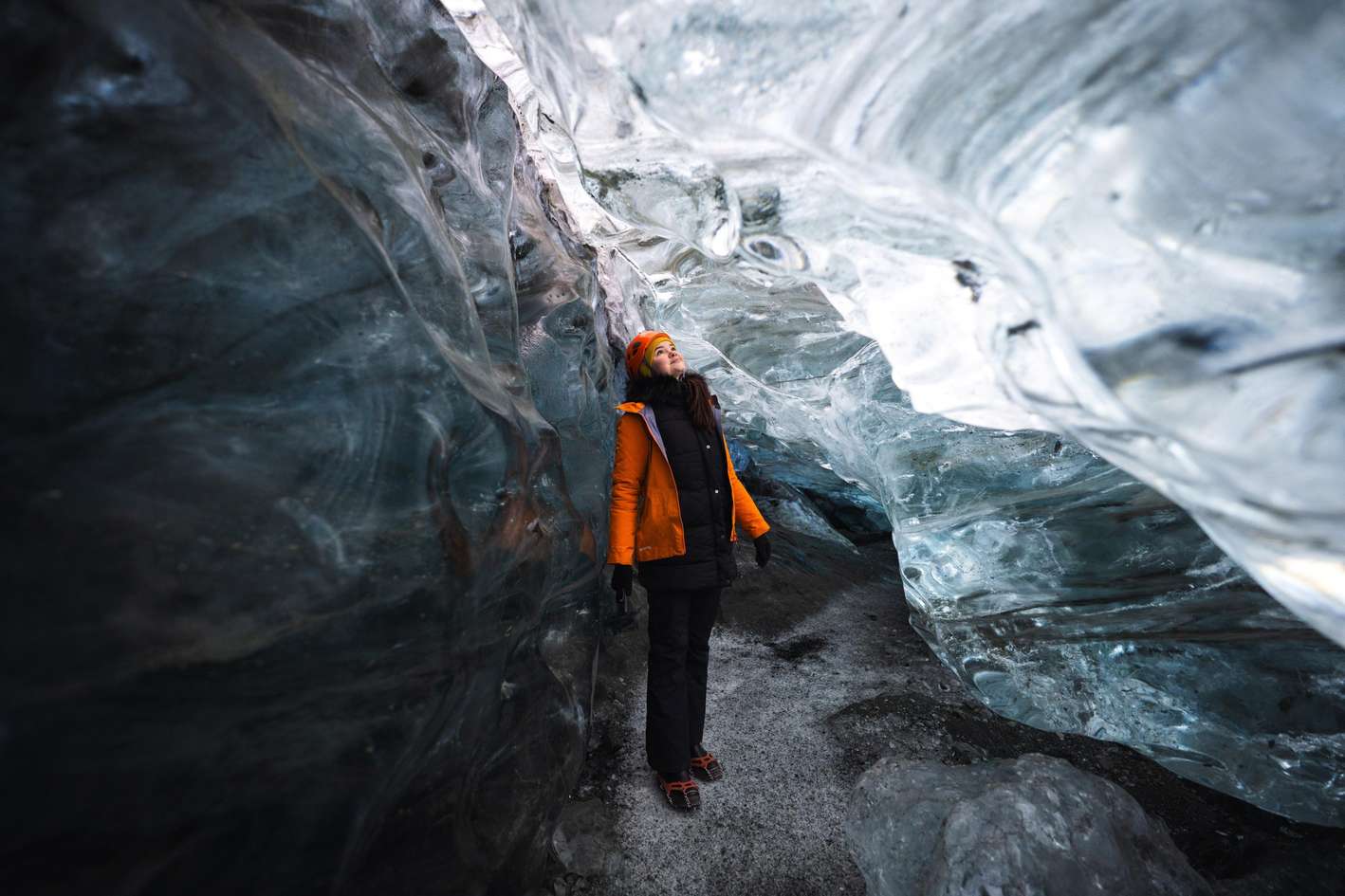
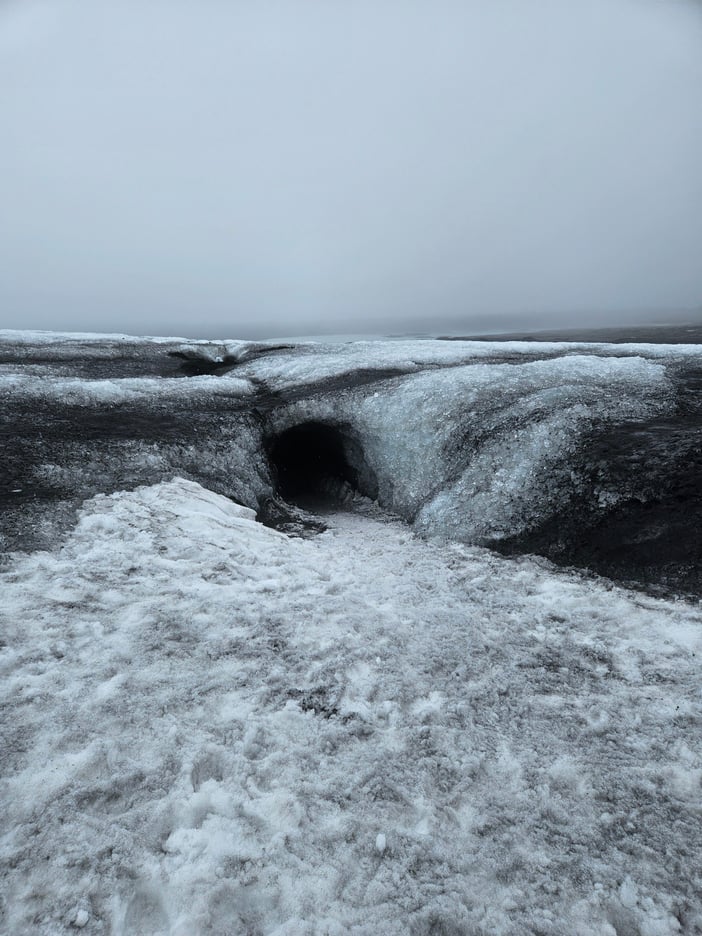
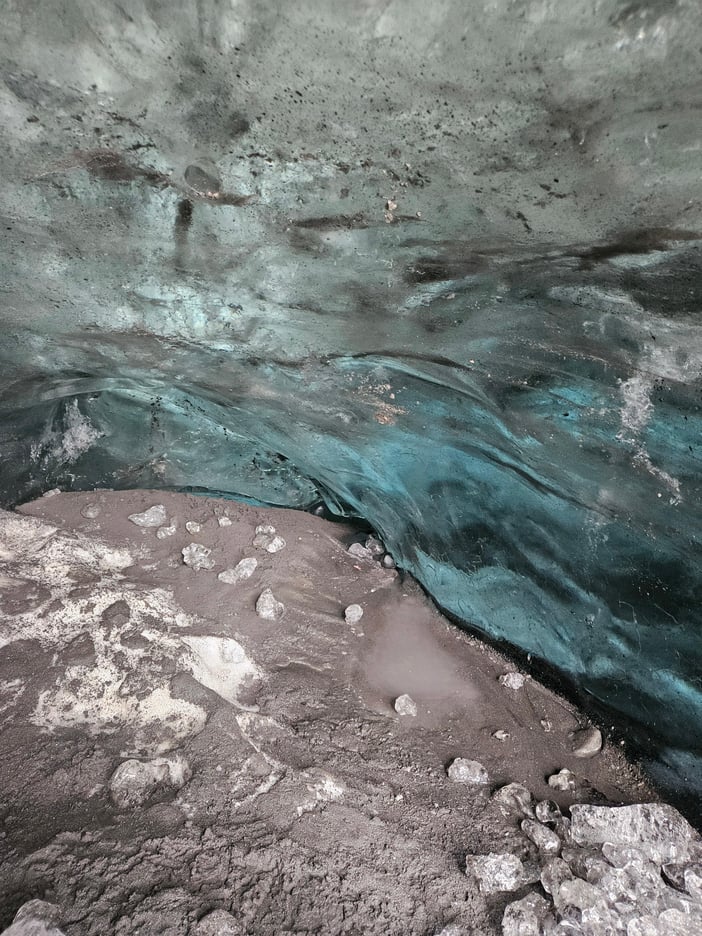
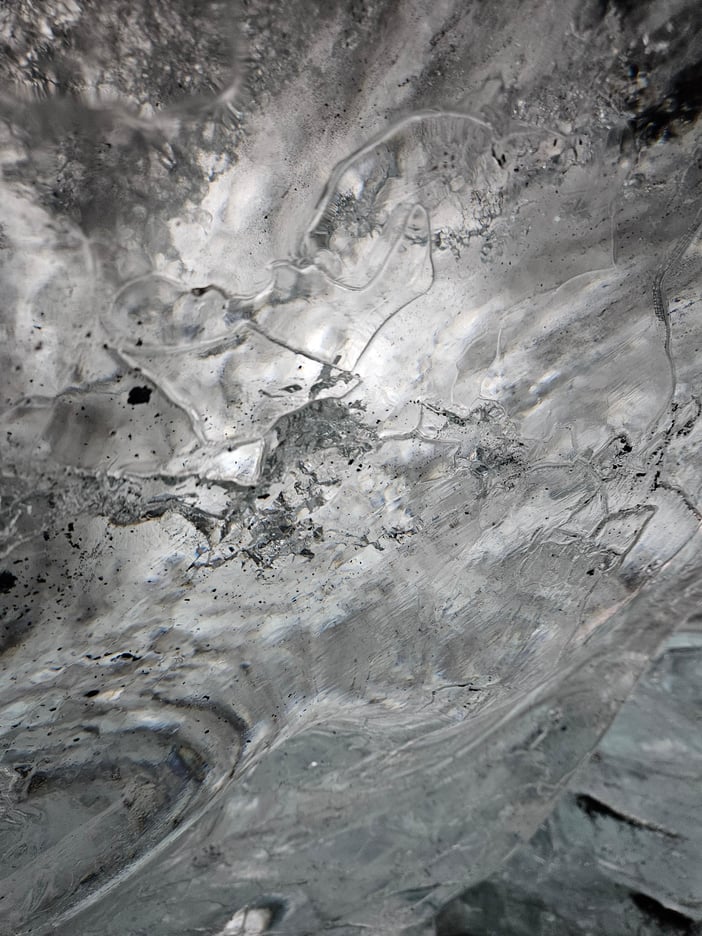
The Crystal Blue Ice Cave glows in clear, luminous blue. Katla mixes blue ice with dark bands of volcanic ash, so the two look genuinely different rather than better and worse.
Pick by the look you want and the drive you can manage.
Jökulsárlón sits about five hours from Reykjavík in good conditions, while Vík is roughly two and a half. The Crystal Blue tour itself is shorter, about three hours, but the drive to reach it is the big difference.
No. Katla tours run year-round, and the cave stays accessible even in summer. Vatnajökull's natural caves only open from mid-November through March or April, when meltwater stops tearing them apart.
It does. Travelers regularly describe Katla as blue ice streaked with black and grey volcanic bands. The ash comes from eruptions beneath Mýrdalsjökull, which is why the ice looks so different from the Vatnajökull caves.
Both tours provide the safety gear. Katla tours include helmets and glacier crampons, and the Jökulsárlón Crystal Blue tours include crampons, a helmet and a headlamp. Wear sturdy hiking boots with good ankle support so the crampons fit.
Yes, with limits. Most Katla tours from Vík take children from age 6 or 8 depending on the operator, and the Jökulsárlón Crystal Blue tours set the minimum at 6. Check the age rule on the tour you book before you commit.
Both rides cross rough ground and can jolt. Katla's jeep crosses black sand and old lava for roughly 40 minutes, while the Crystal Blue ride over moraine lasts about 20 to 30 minutes each way. Travelers prone to motion sickness should plan for it.
Less than people expect. Visitors usually spend about 20 to 45 minutes inside, with the rest of the tour going to the jeep ride and the walk to the entrance. The short walk is part of the experience, so bring a camera anyway.
Both involve short walks over uneven ground, and Katla's approach is a light one to two kilometres with minor elevation. Neither suits wheelchair users, and some operators exclude travelers with mobility limitations. Read the restrictions on the specific tour.
Guides check conditions daily and pick a safe cave on the day, so the cave you visit can vary. If an operator cancels for weather, safety or glacier conditions, you typically get a reschedule or a full refund.
It can be. Travelers say the Crystal Cave draws heavy group traffic, so you may share the cave and wait to enter. Booking the earliest departure or the last afternoon slot is one way people avoid the largest crowds.
A cave visit takes you inside the glacier; a hike like the Falljökull walk from Skaftafell takes you across its surface and demands more walking. If you want both, some Katla tours combine a short glacier walk with the cave visit.
crystal cave season runs november to march
If you like weighing Vík against the drive to JökulsárlónHow to Get ThereThe directions page maps the exact route and driving times, useful if Vík is your next glacier stop and you are driving yourself.If you like the blue ice that deepens in midwinterBest Time to VisitThe best time page explains how the seasons shape the caves, since Katla runs year round while many Vatnajökull caves close in summer.vík to glacier: about 30 min jeep ride
See current cave conditions and ticket options, then choose a date and book your Katla visit ahead.
Check driving directions and maps, plus why a super jeep is the only vehicle that reaches the glacier tracks.
Compare seasons and daylight, from winter-only caves to Katla's year-round access.
Read the safety rules, difficulty and age limits before you commit to either cave.
Get a clothing list that keeps dripping meltwater out on both glaciers.
Add a Mýrdalsjökull glacier hike to your Katla cave visit from Vík.
Browse every natural ice cave in Iceland, not just these two.
See why a certified guide is required and what safety gear each tour includes.
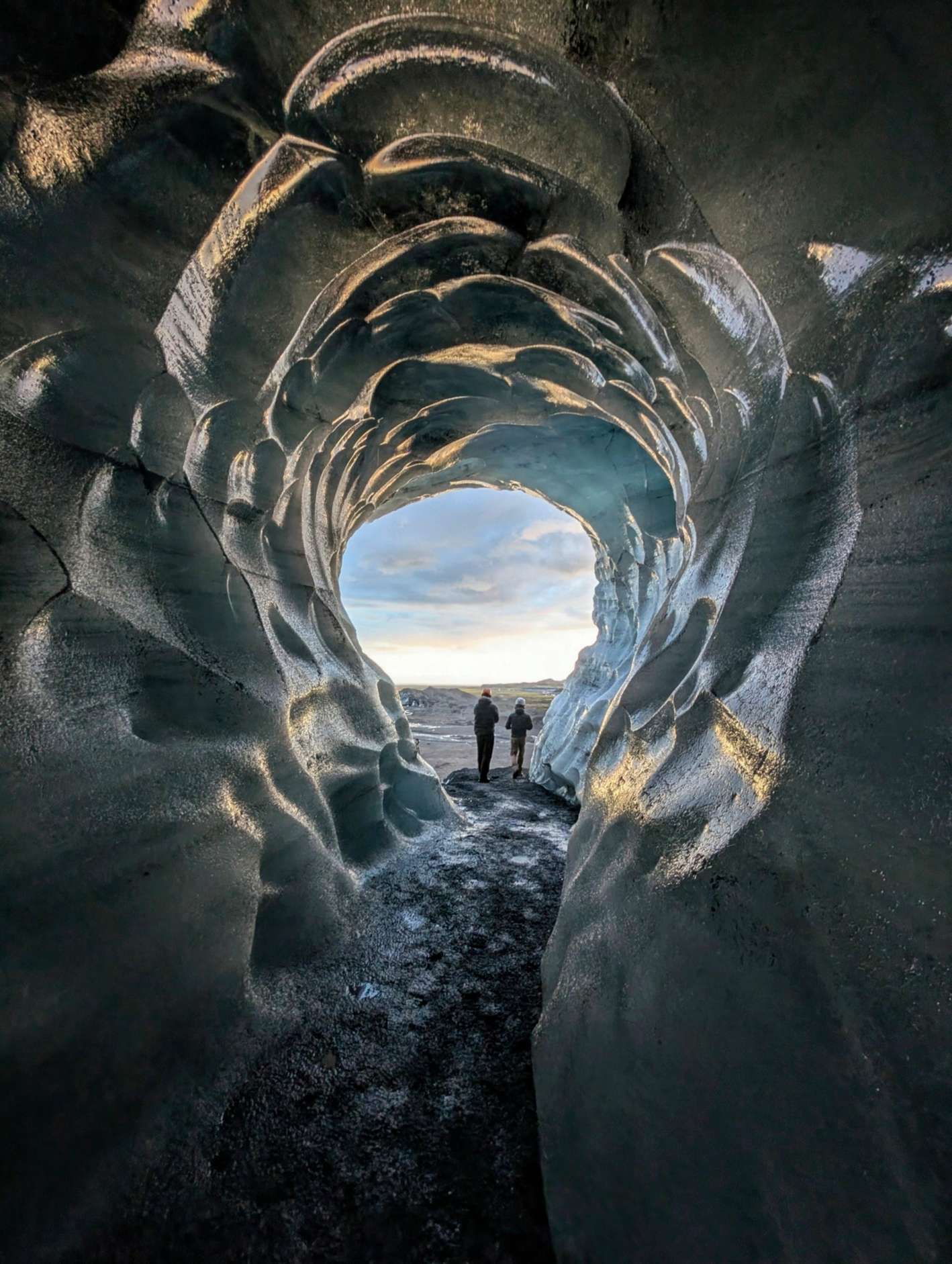
Compare private departures if you want the cave to your own group.
Find small-group trips that keep the crowds off the ice.
Choose a tour that pairs a crampon hike across the ice with a cave visit.

See how a glacier flight with landings compares to the long drive east.
Line up waterfalls and black-sand stops around your cave day on the South Coast.
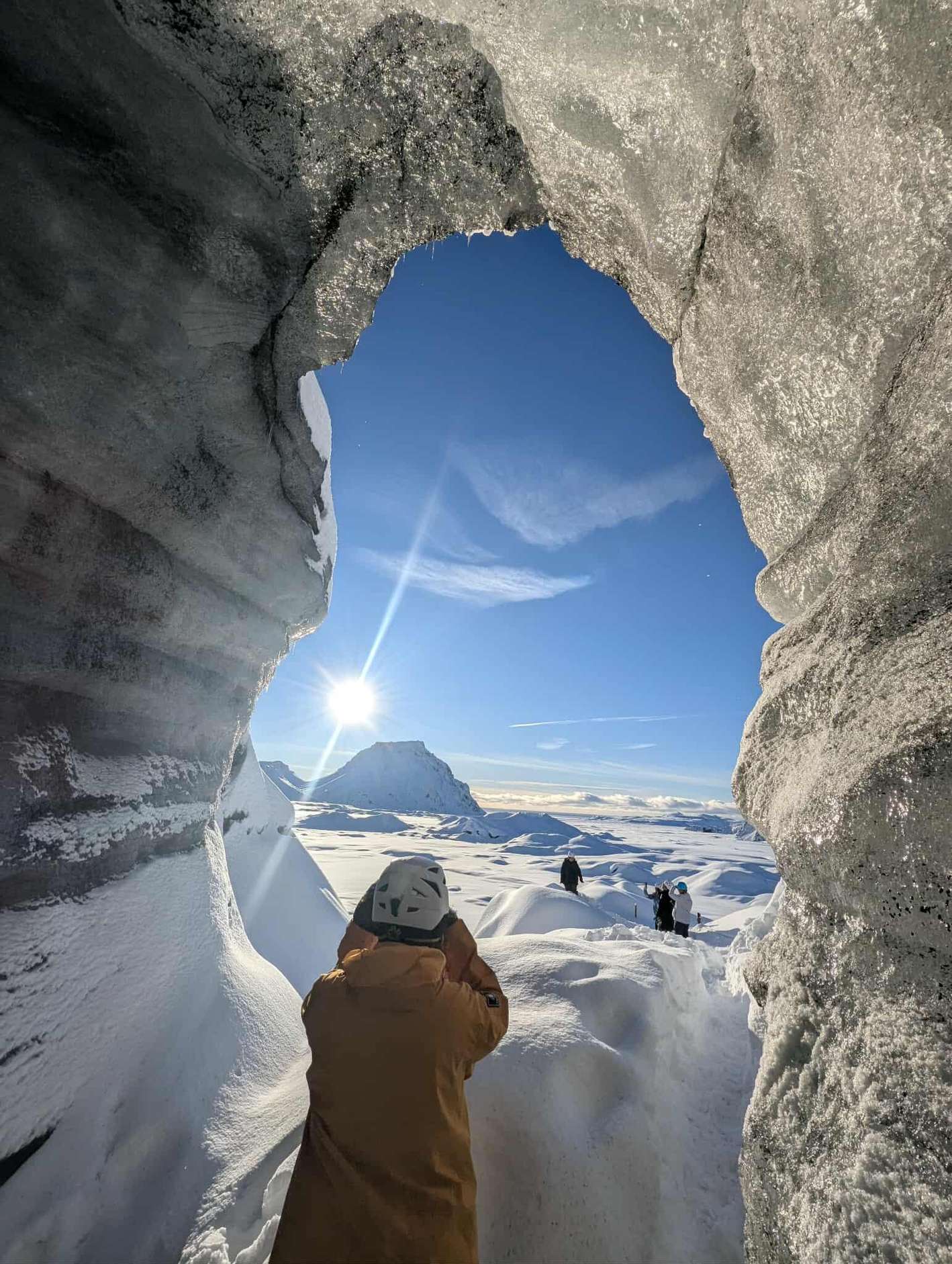
Find small-group South Coast day trips from Reykjavík with pickup included.
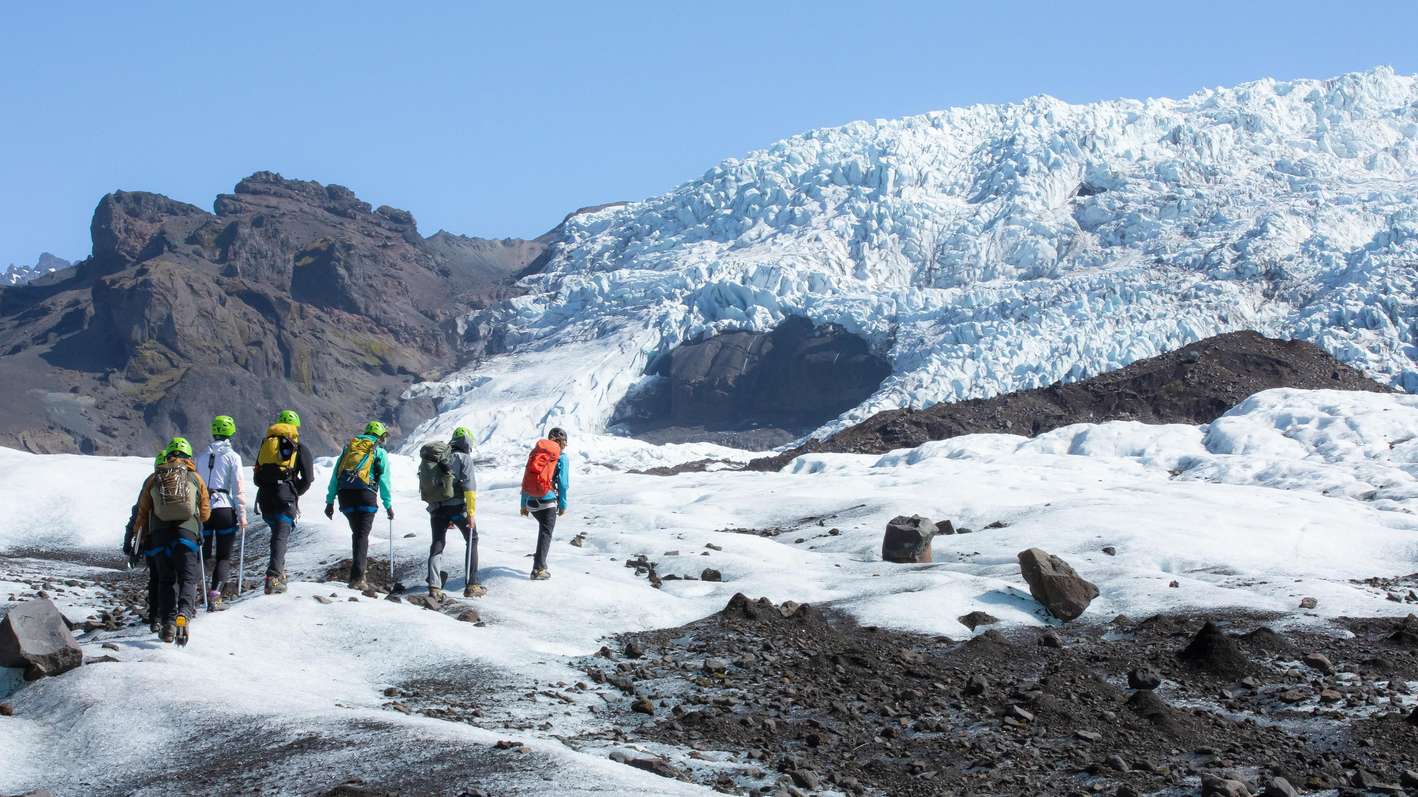
Read what a real glacier hike demands, from boots to crampons.
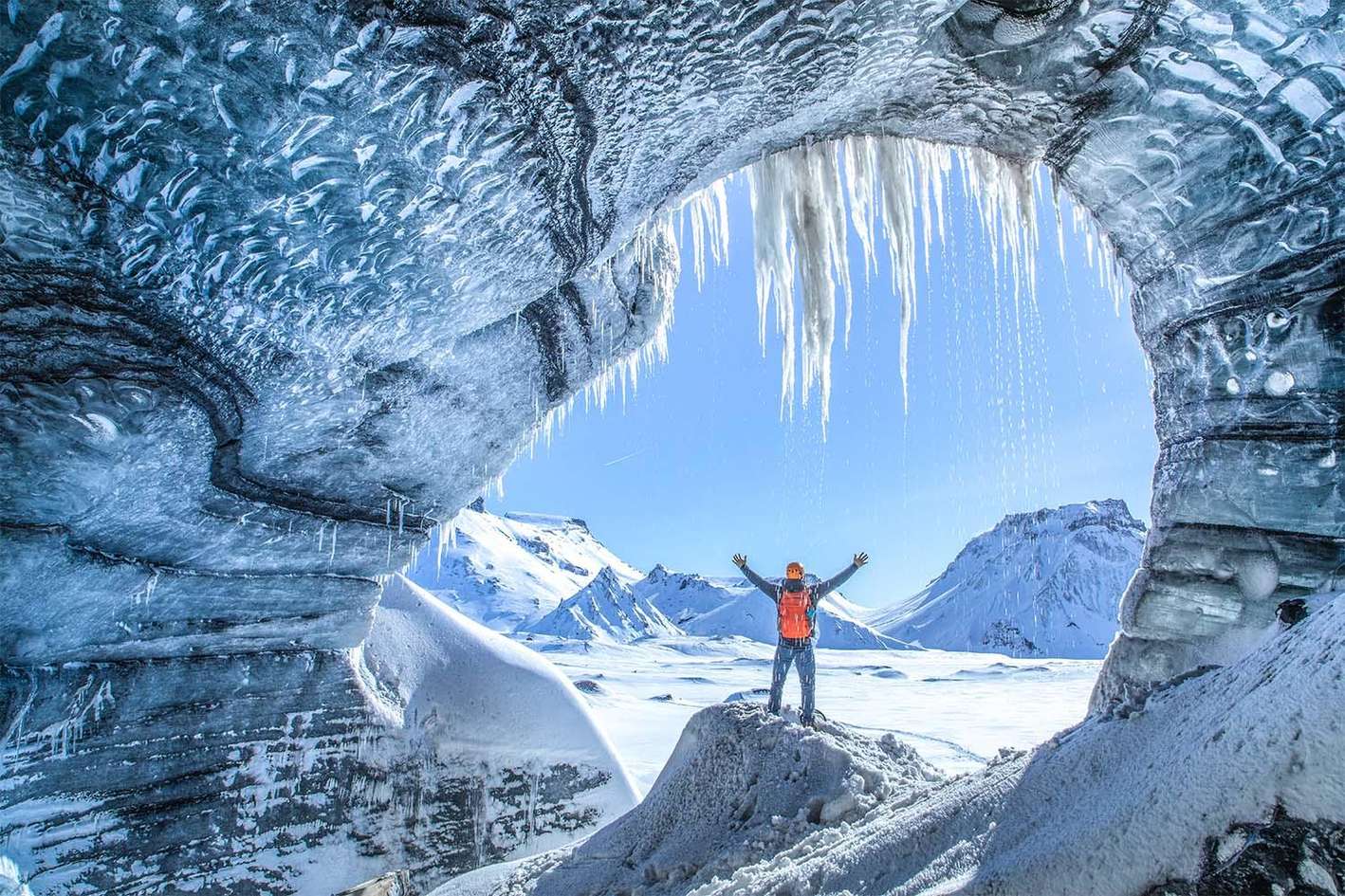
Map the Ring Road route and plan overnight stops to shorten winter driving.
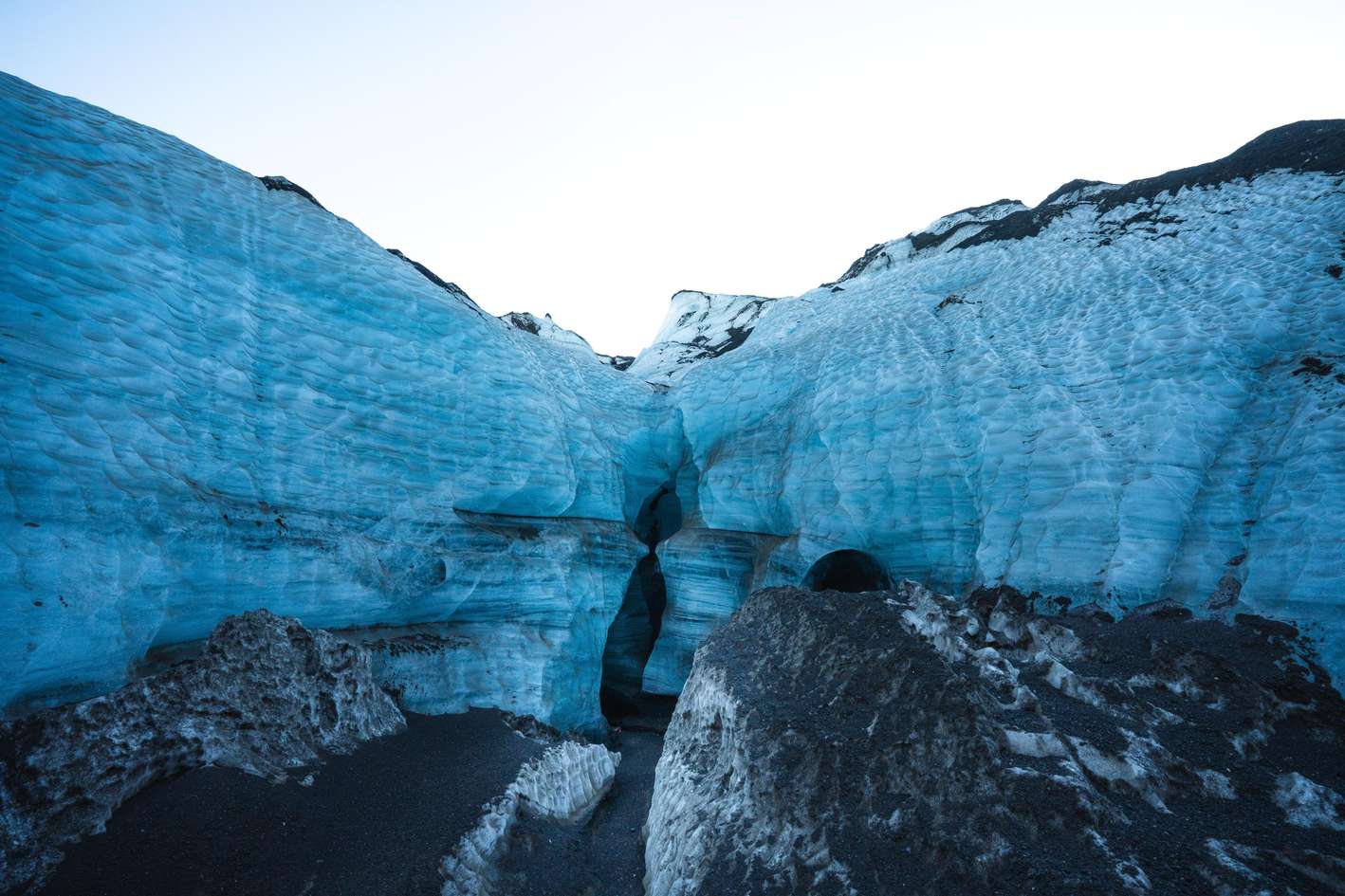
Check temperatures, wind and road-closure risks by season.

Use 3-day itineraries that fit both caves without rushed drives.
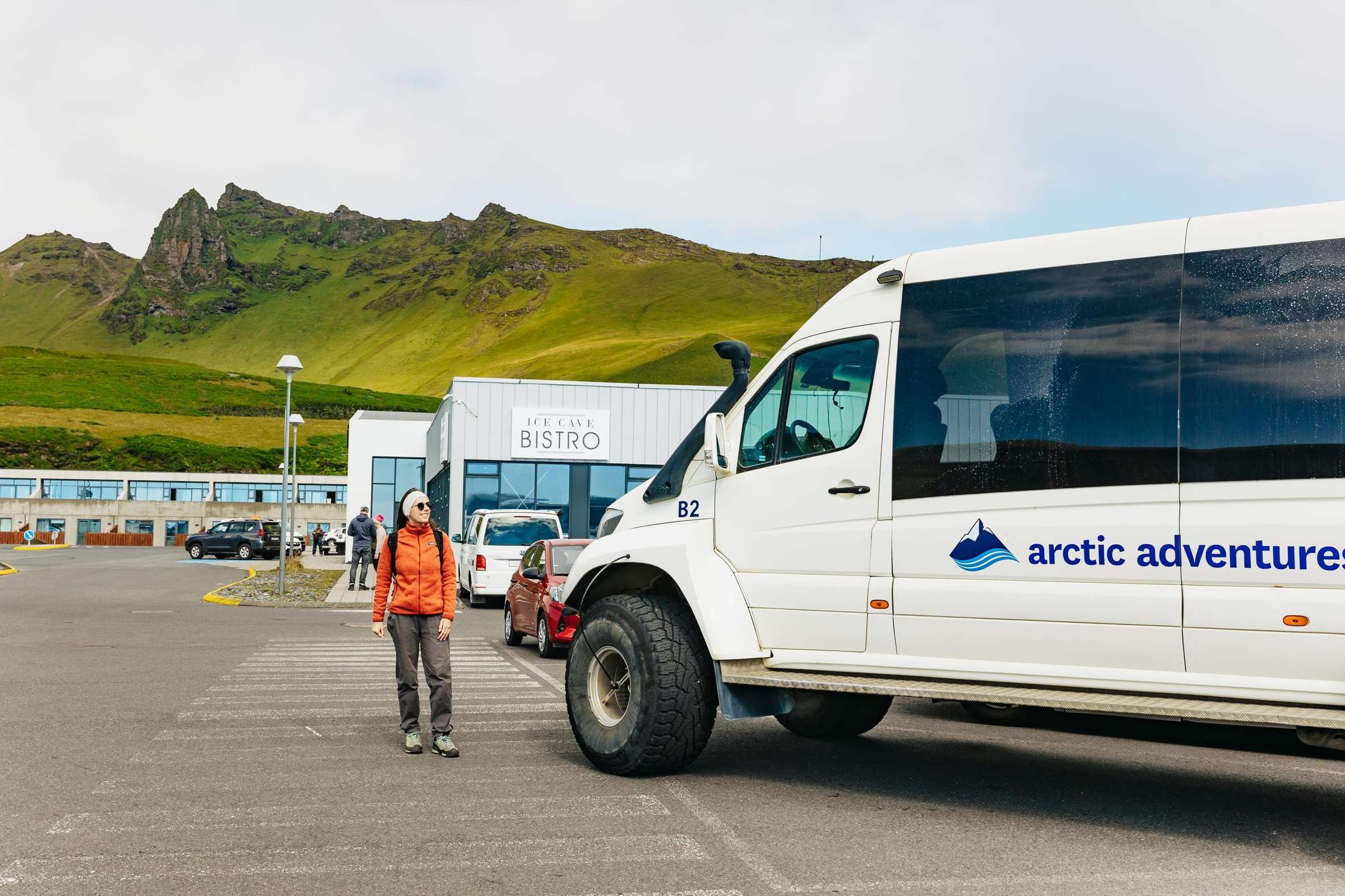
meet at vík inn 20 minutes early
Book a three-hour Super Jeep tour from Vík into the Katla Ice Cave, with free cancellation up to 24 hours in advance.