
3 - 12 hours·English
4.6(2,597)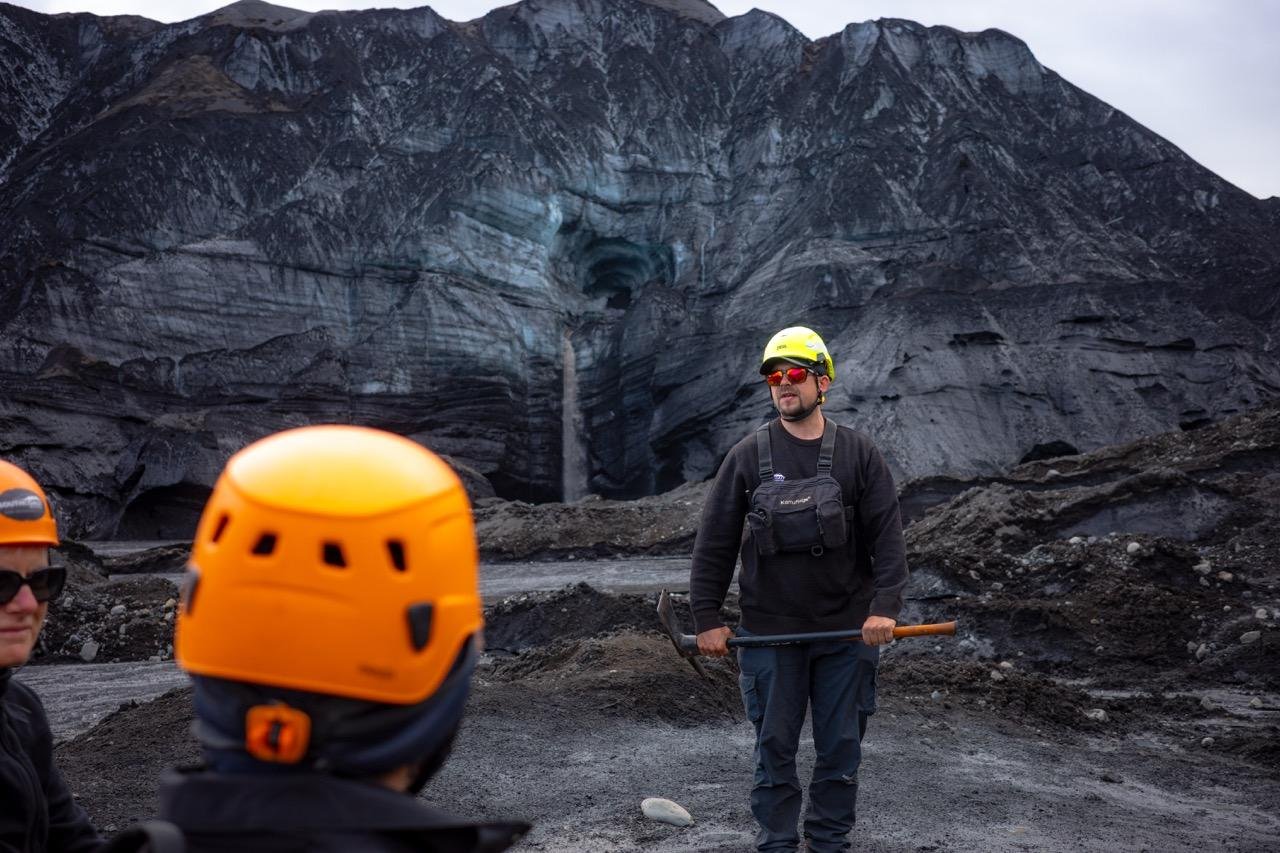
From Vik: Katla Ice Cave and Super Jeep Tour
Free cancellationHotel pickup includedRoundtrip Super Jeep transportation from Vík
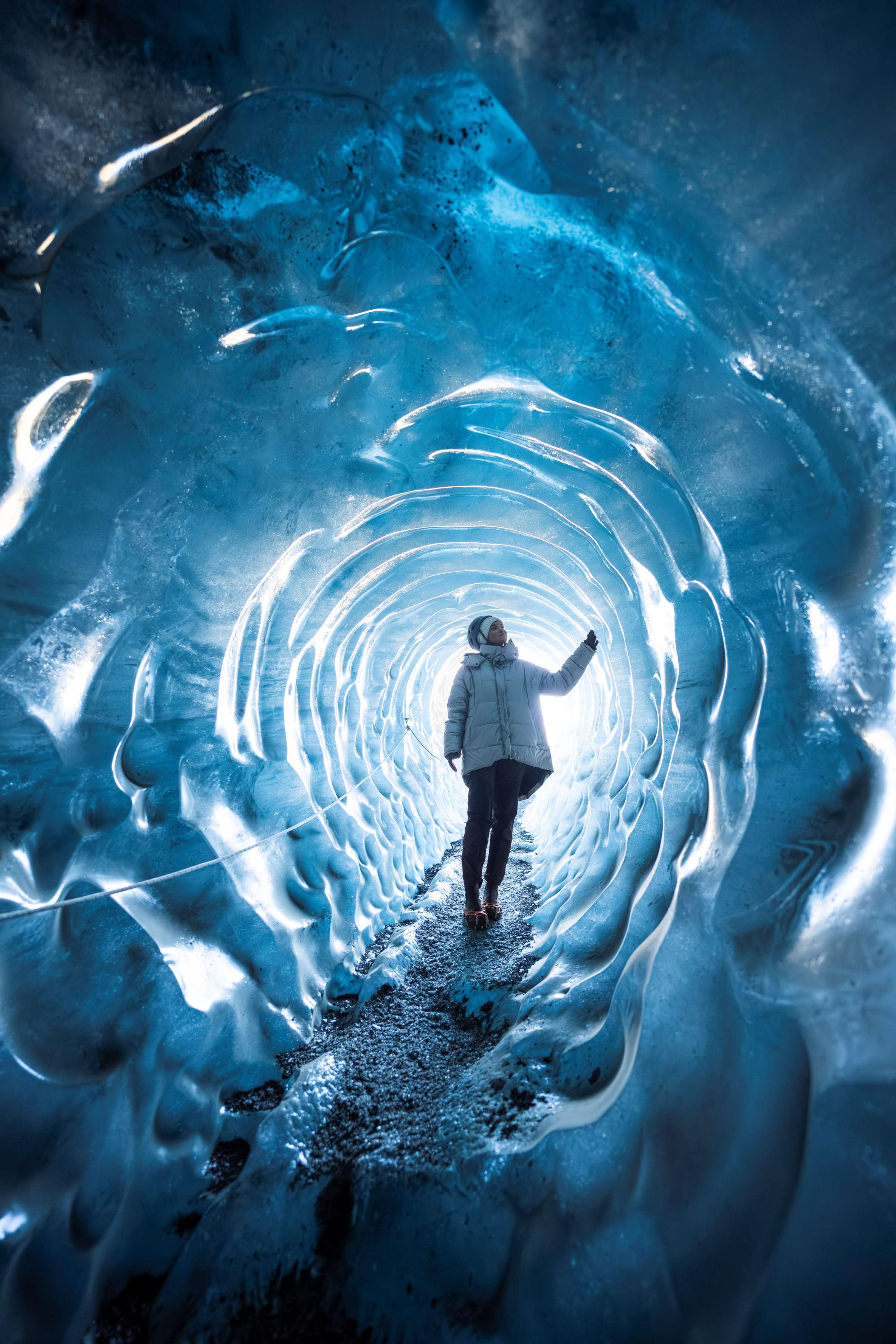
Most ice caves in Iceland close for summer. Katla stays open all year, and the right departure slot puts you inside before the crowds. Pick your month and your time of day, then book a guided Super Jeep tour from Vík or Reykjavík and step into blue ice streaked with volcanic ash.
"Very well organized tour. The glacier drive was an experience itself, and guide Martin kept stopping to explain the landscape. The climb was exciting, but the ice caves were the real highlight. Highly recommend."
earliest slot catches sunrise light
Katla runs all twelve months of the year, which almost no other natural ice cave in Iceland can claim. What your month and your departure hour change is the shapes, the crowds and the light.
Katla Ice Cave runs year-round, including summer, when most natural caves in Iceland close.
The black ash bands and blue ice stay all year, but the chamber itself shifts from an enclosed spring tunnel to an open autumn dome.
Outside roughly November to March, Katla is essentially your only natural-cave option on the South Coast.
The earliest morning departure or the final afternoon slot keeps the narrow chambers quiet.
Extreme winds are what cancel tours; rain almost never does, and a canceled tour brings a reschedule or a full refund.
Check the Icelandic Met Office forecast and road conditions the morning of your tour, keep your plans flexible by booking a slot you can cancel up to 24 hours ahead, and know that operators offer a reschedule or a full refund when they cancel for weather.
The assumption trips up most visitors before they check anything: ice caves are a winter thing, so a July trip means no cave. Katla breaks that rule.
Guided tours run under the Kötlujökull glacier in every month, and travelers report it stays accessible in late summer, when the Vatnajökull caves near Jökulsárlón are still closed and unstable.
The month changes demand and weather. Winter months draw the biggest crowds and carry the most wind and snow days, while the deep summer stretch from May to August is the quietest on the calendar.
Rain shows up on roughly one day in two at any time of year, so there is no dry month to wait for.
January is a very busy tour month, averaging 10.8 snowy days, 17.4 rainy days and 5 windy days.
Tap a month to read it.
December is a very busy tour month, averaging 11.8 snowy days, 15 rainy days and 4.6 windy days.
Tap a month to read it.
May is a quiet tour month, averaging 1.6 snowy days, 19 rainy days and 1.4 windy days.
Tap a month to read it.
February is a very busy tour month, averaging 11.4 snowy days, 18 rainy days and 6 windy days.
Tap a month to read it.
Summer heat does close most Icelandic caves, because thaw thins their roofs and floods their passages. Katla's thick glacier roof holds through it, and guides check the structure every day before anyone steps in. Whatever month you pick, a tour is running, and the shapes inside are what shift.
Long-range forecasts two weeks out mean little in Iceland. Rain usually comes as passing showers, and an all-day soak is rare, so a grey forecast is no reason to move your date.
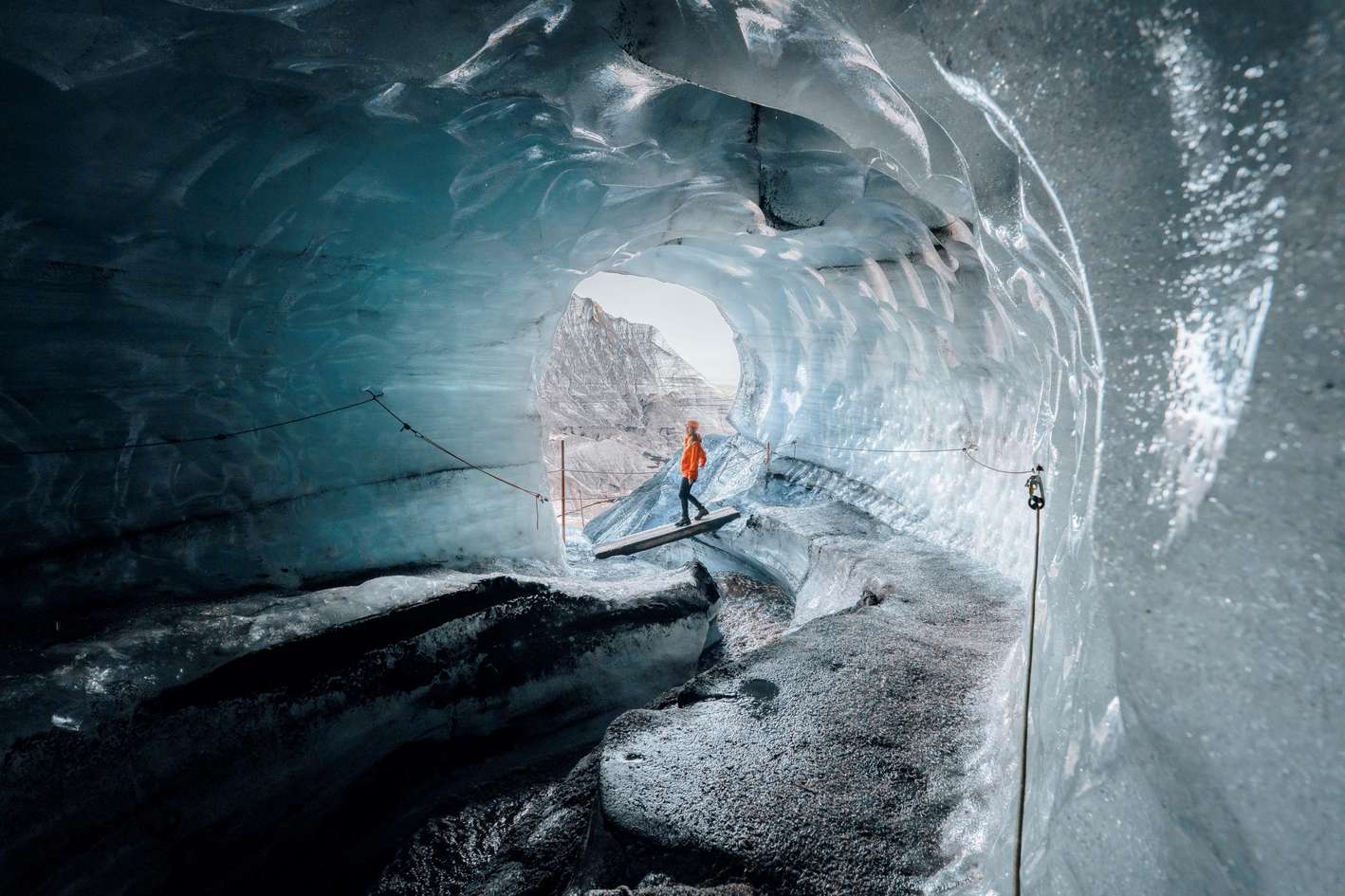
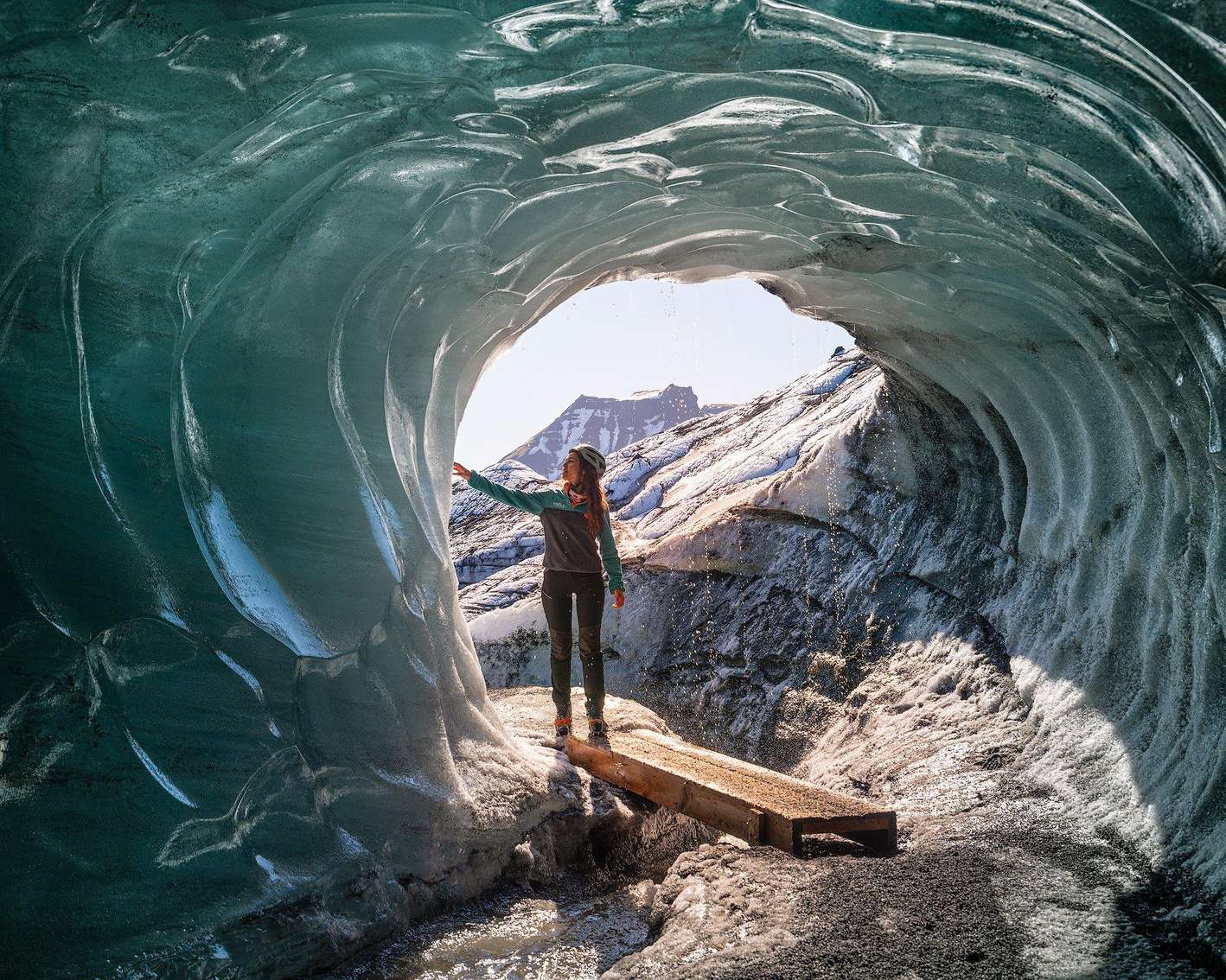
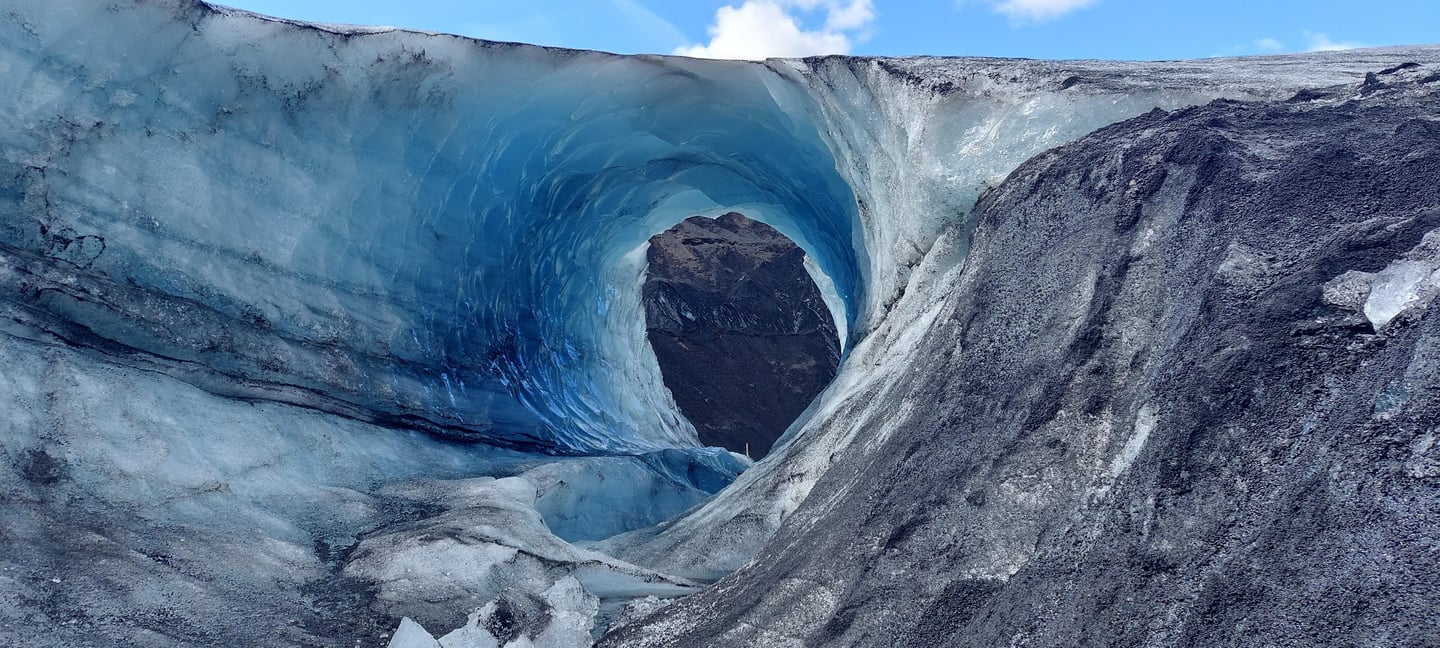
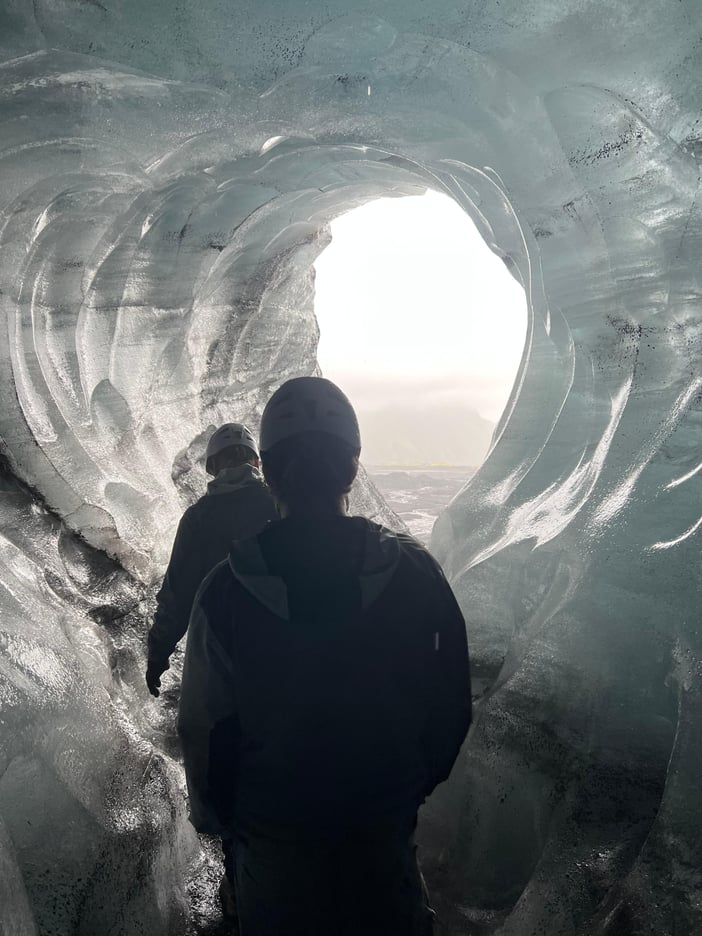
Stand at the same glacier mouth in March and in September and you are looking at two different chambers. Meltwater carves the ice through summer, widening passages and opening new ones while other entrances close.
One visitor watched Katla change from an enclosed tunnel in spring to an open dome by autumn. Kötlujökull itself retreats about 25 metres a year, so the approaches shift with it.
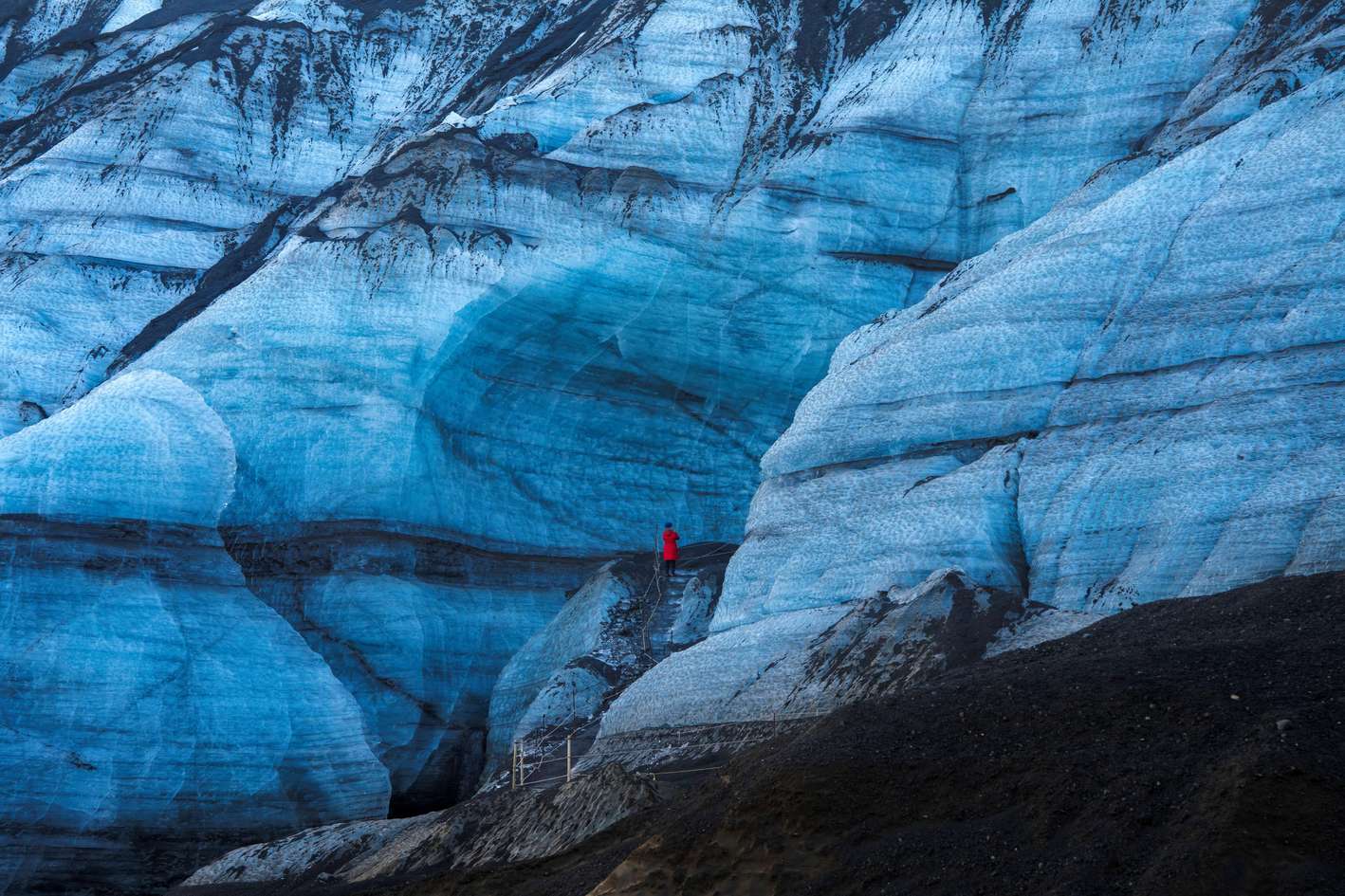
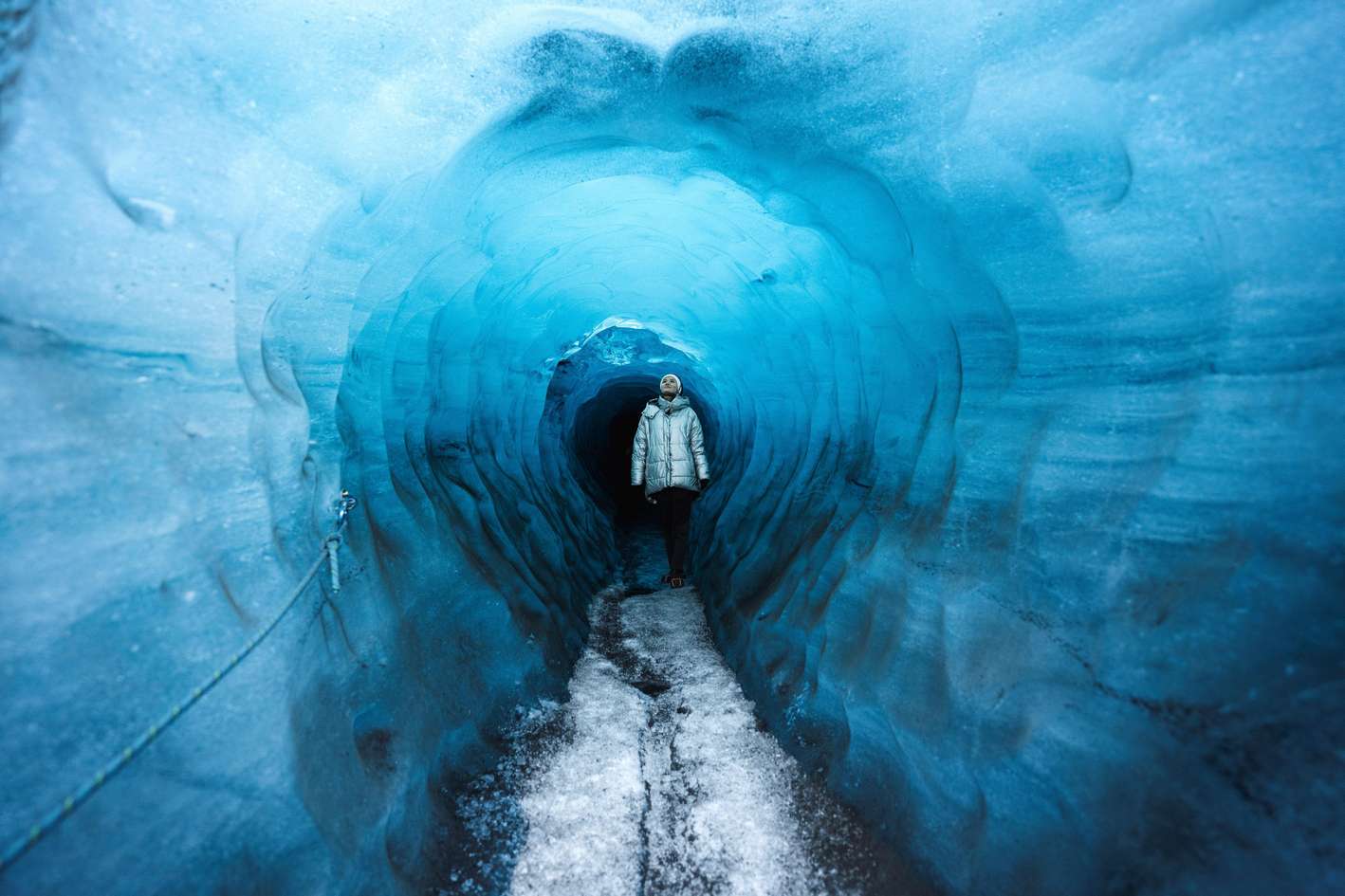
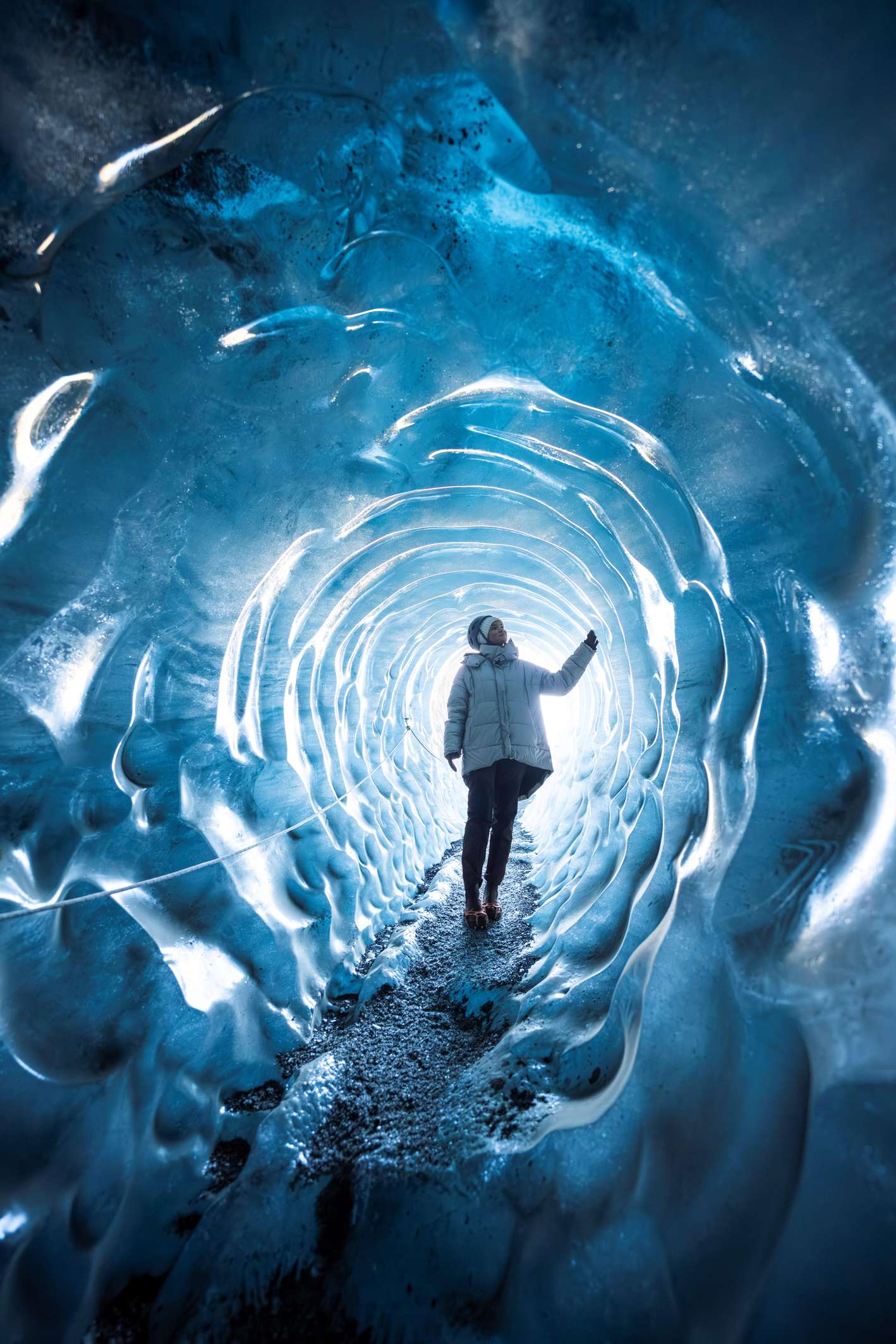
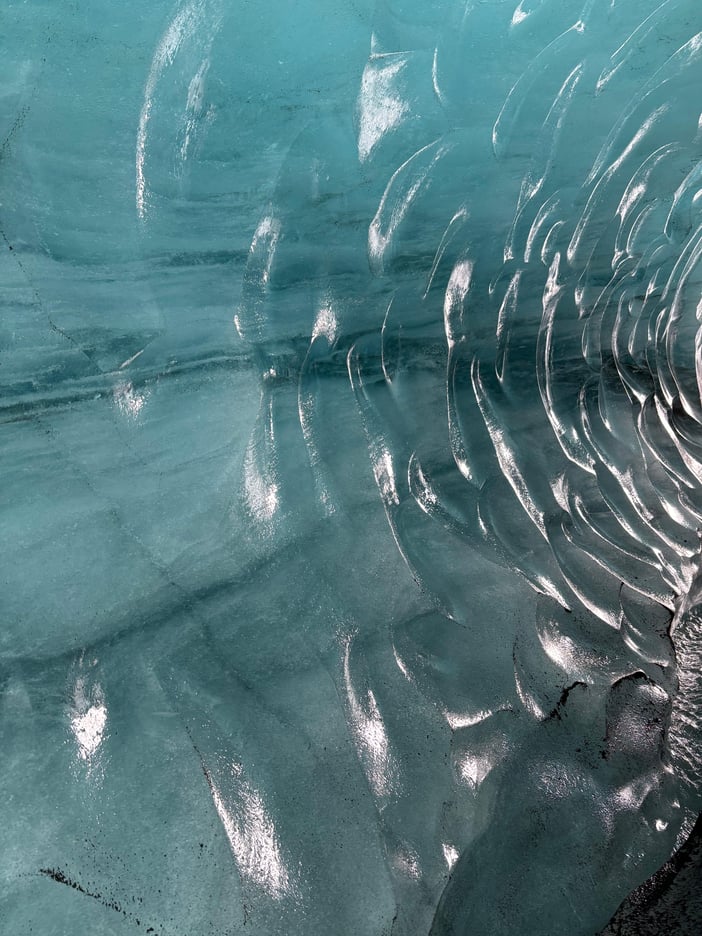
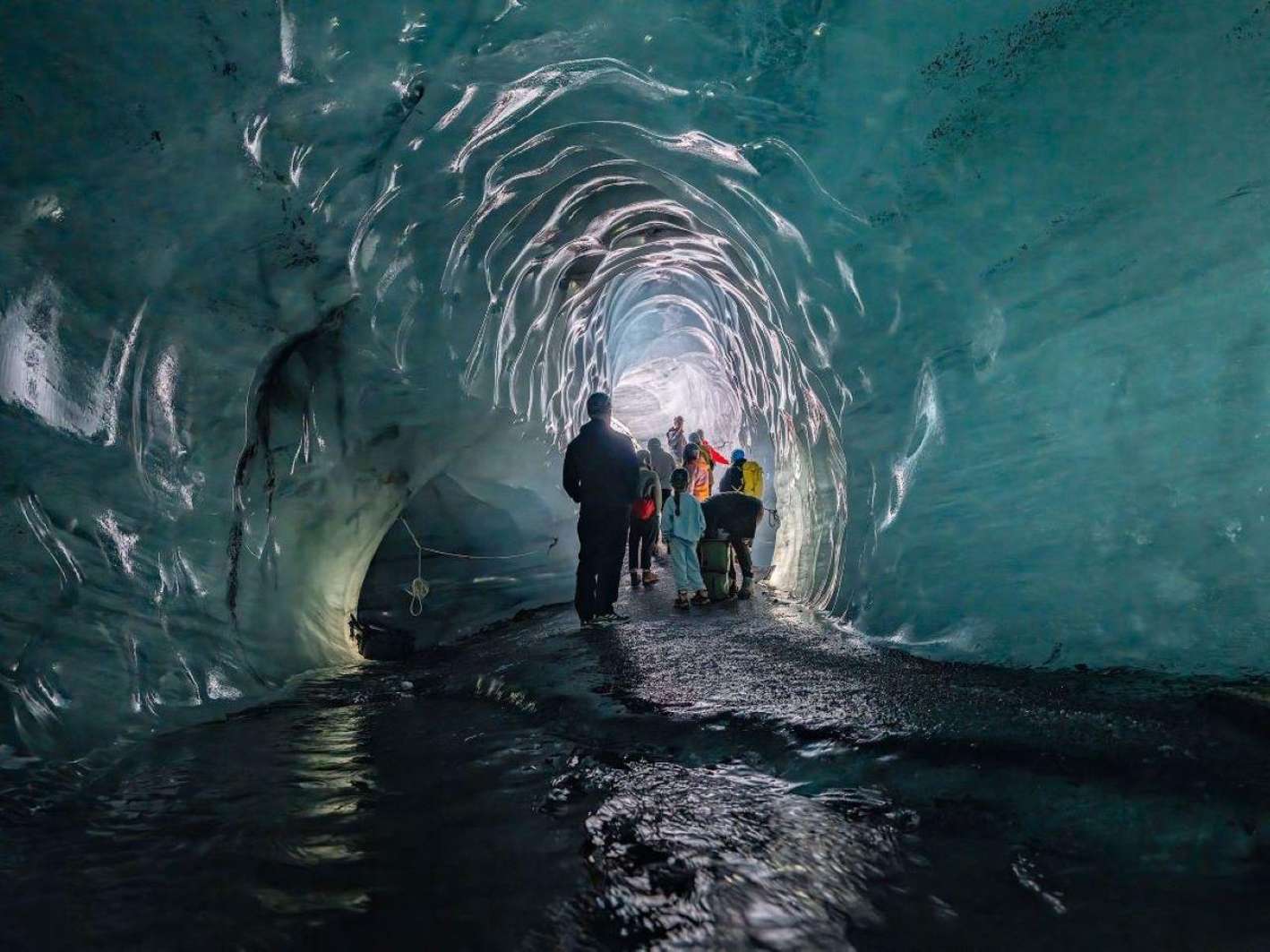
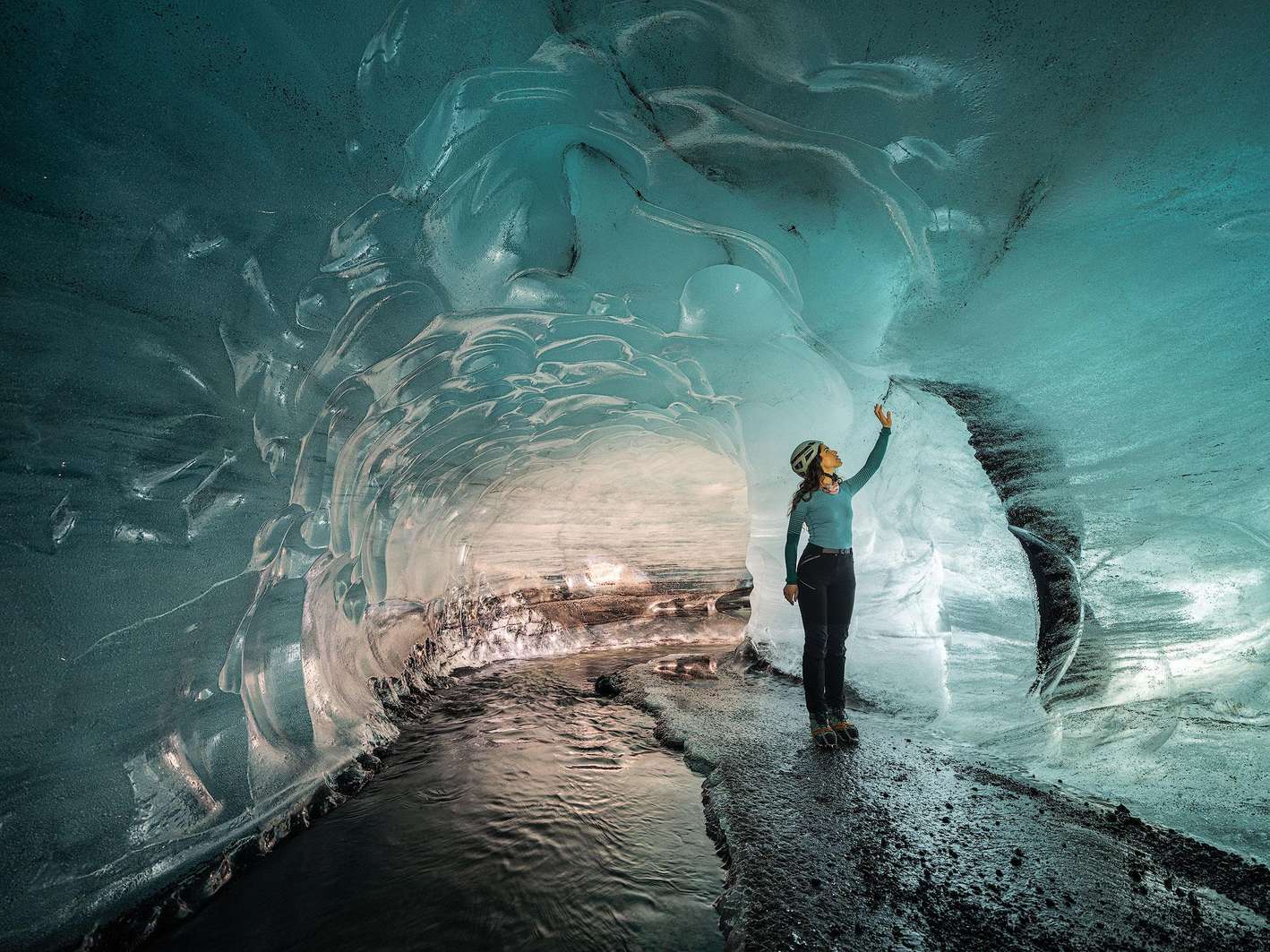
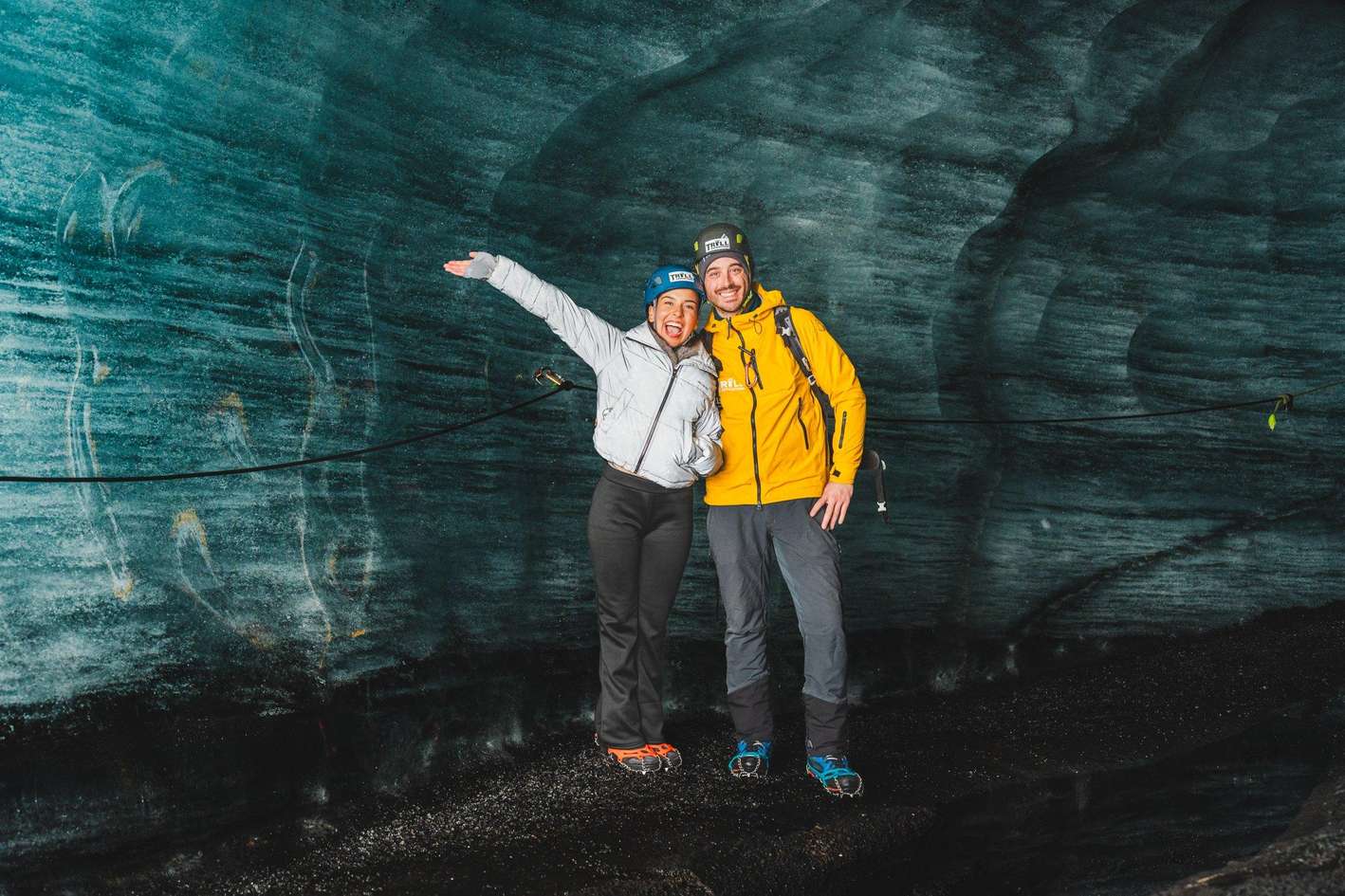
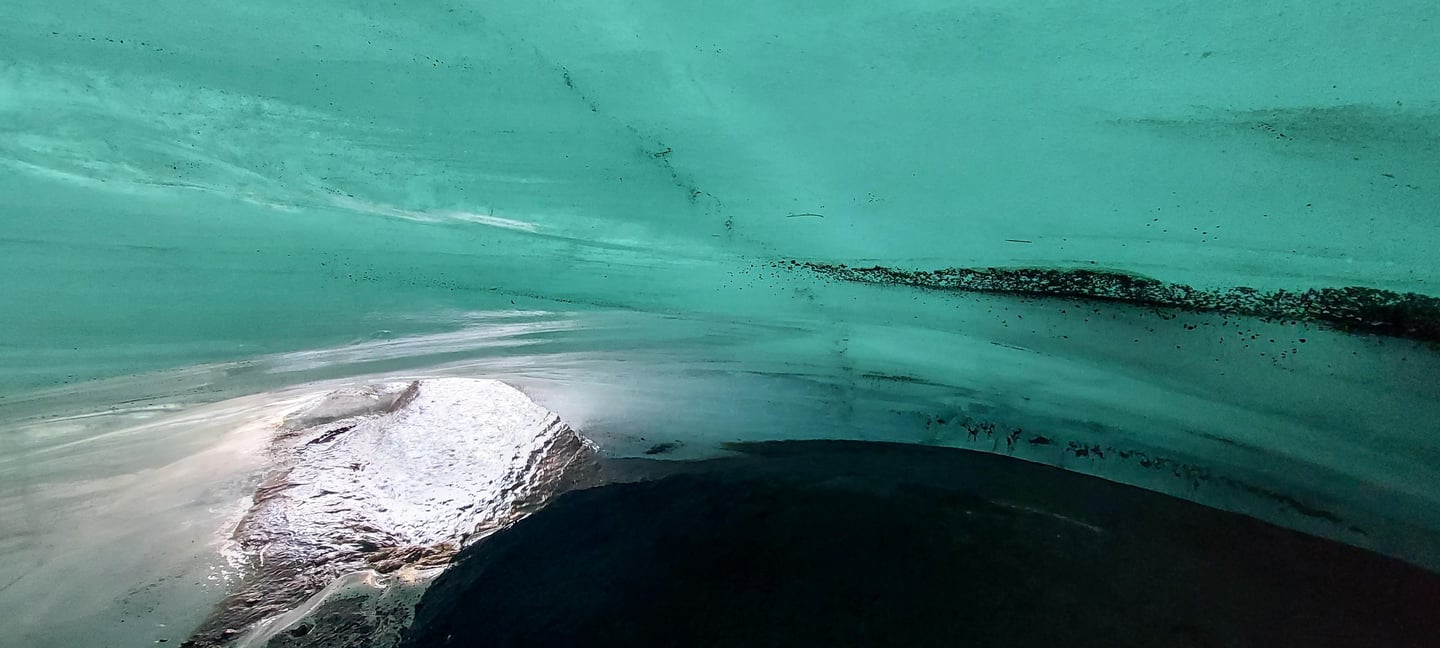
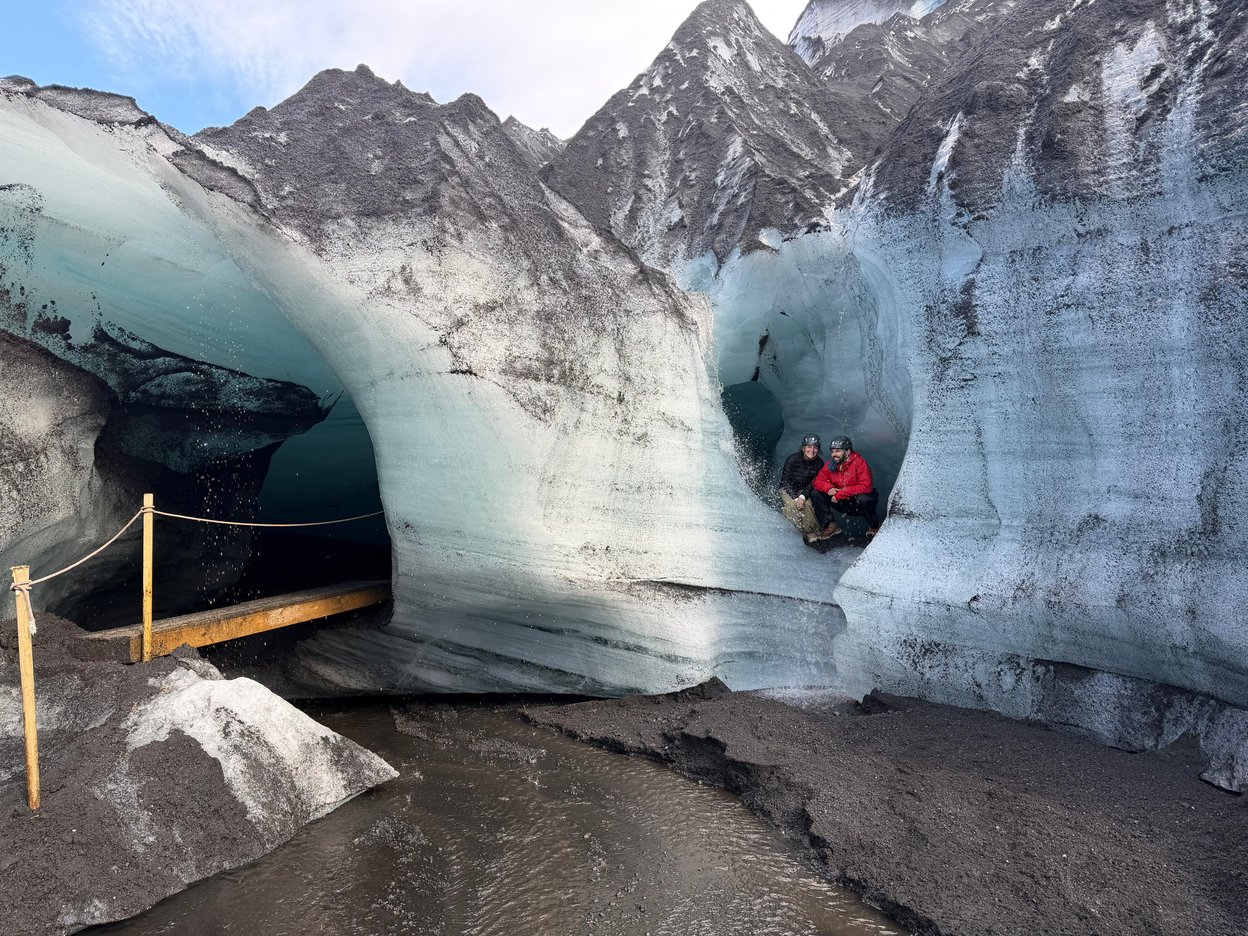
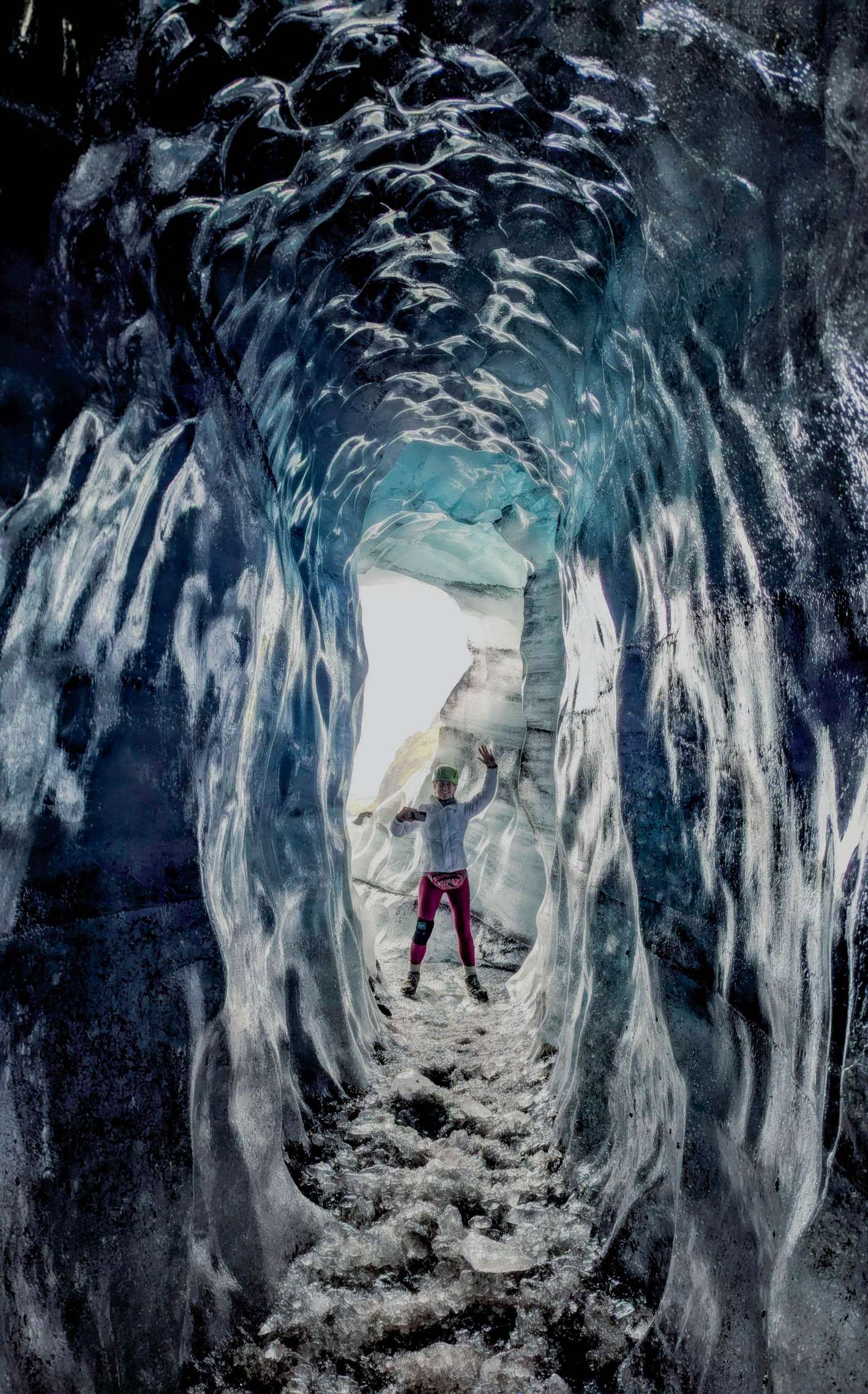
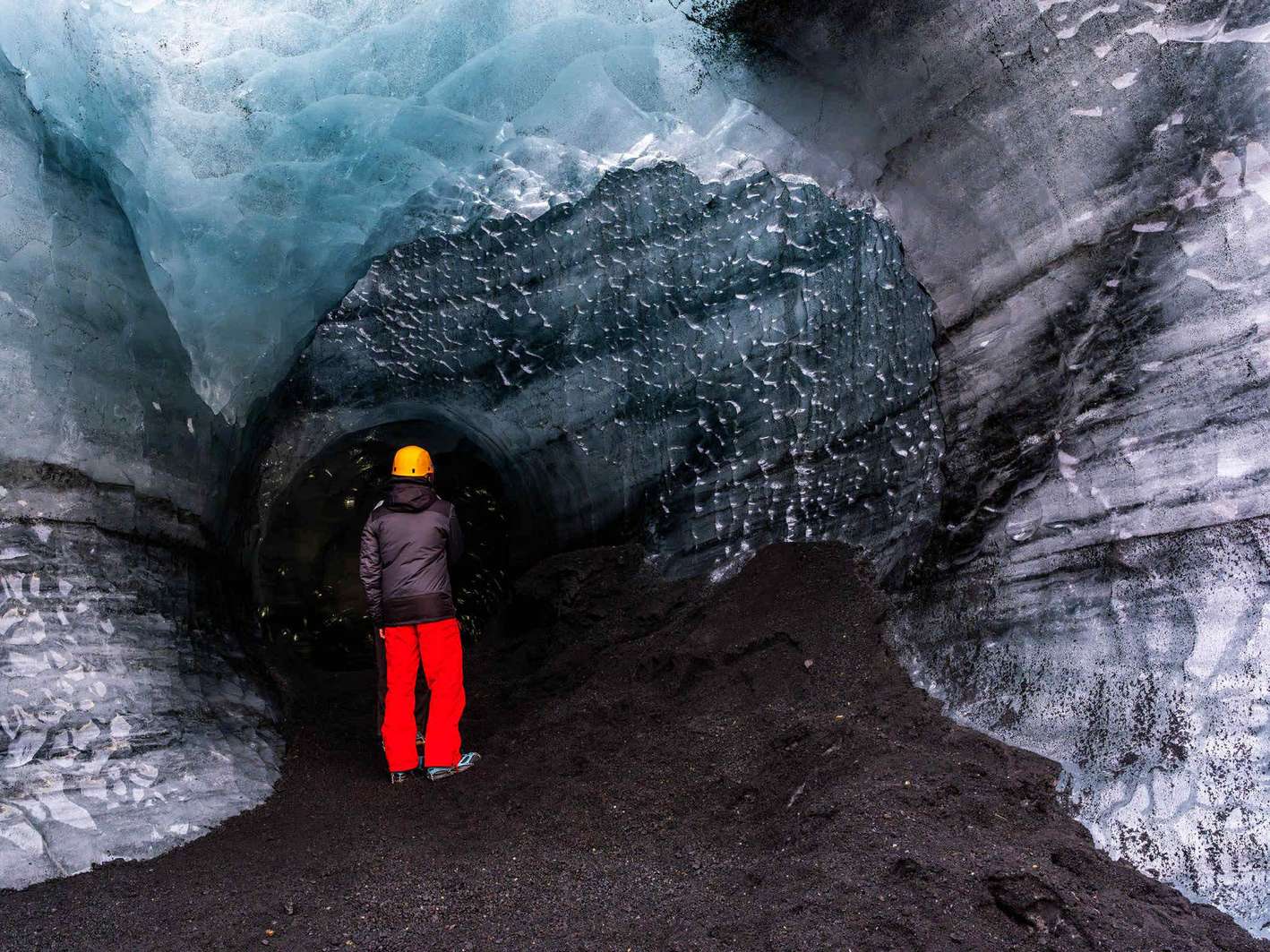
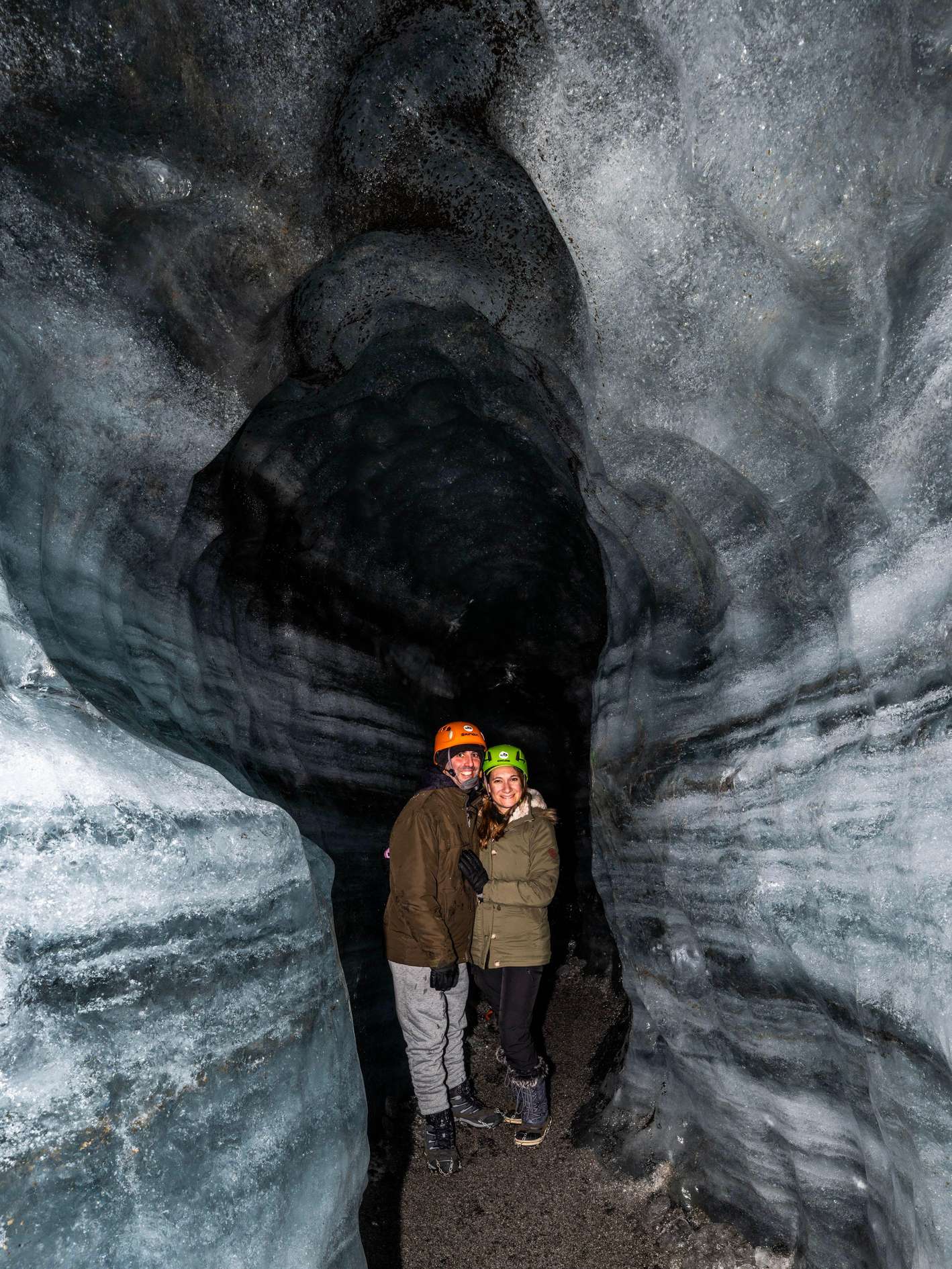
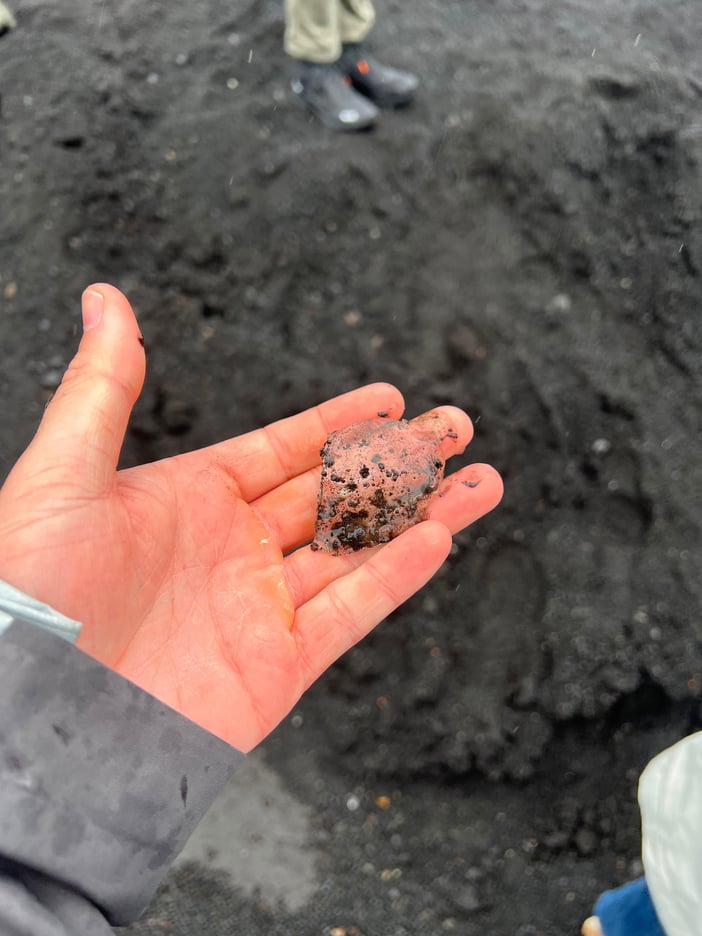
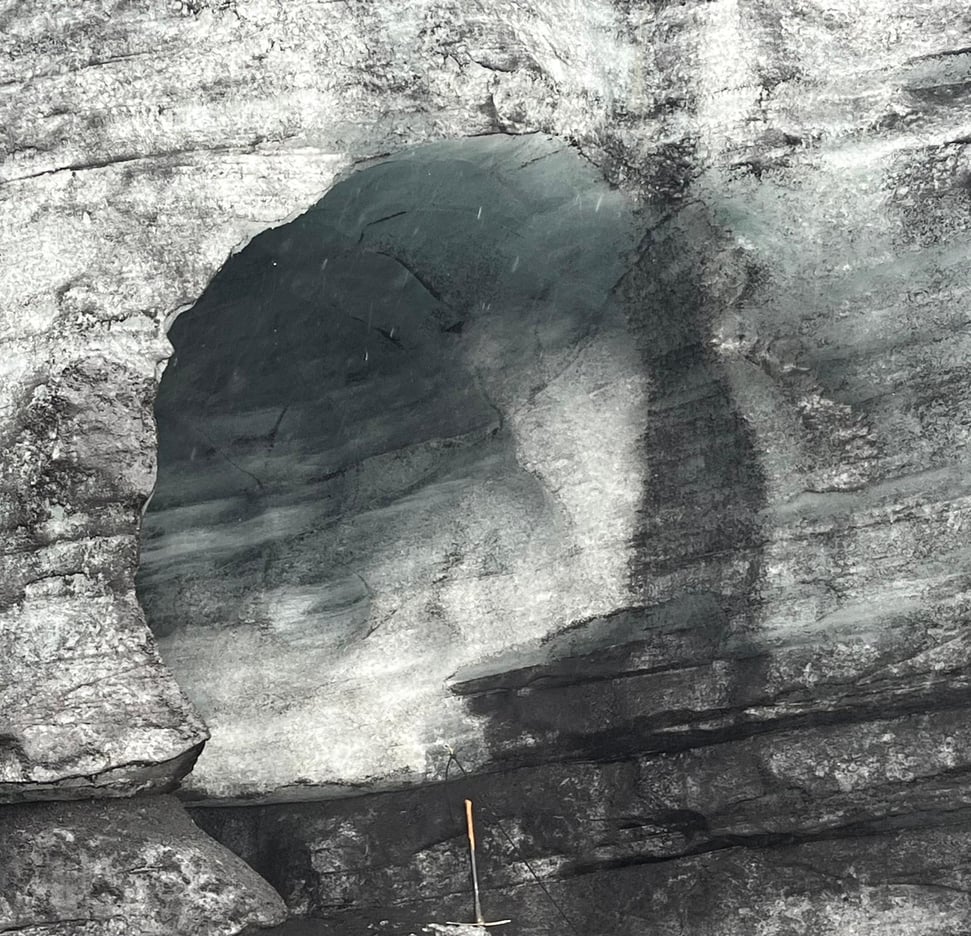
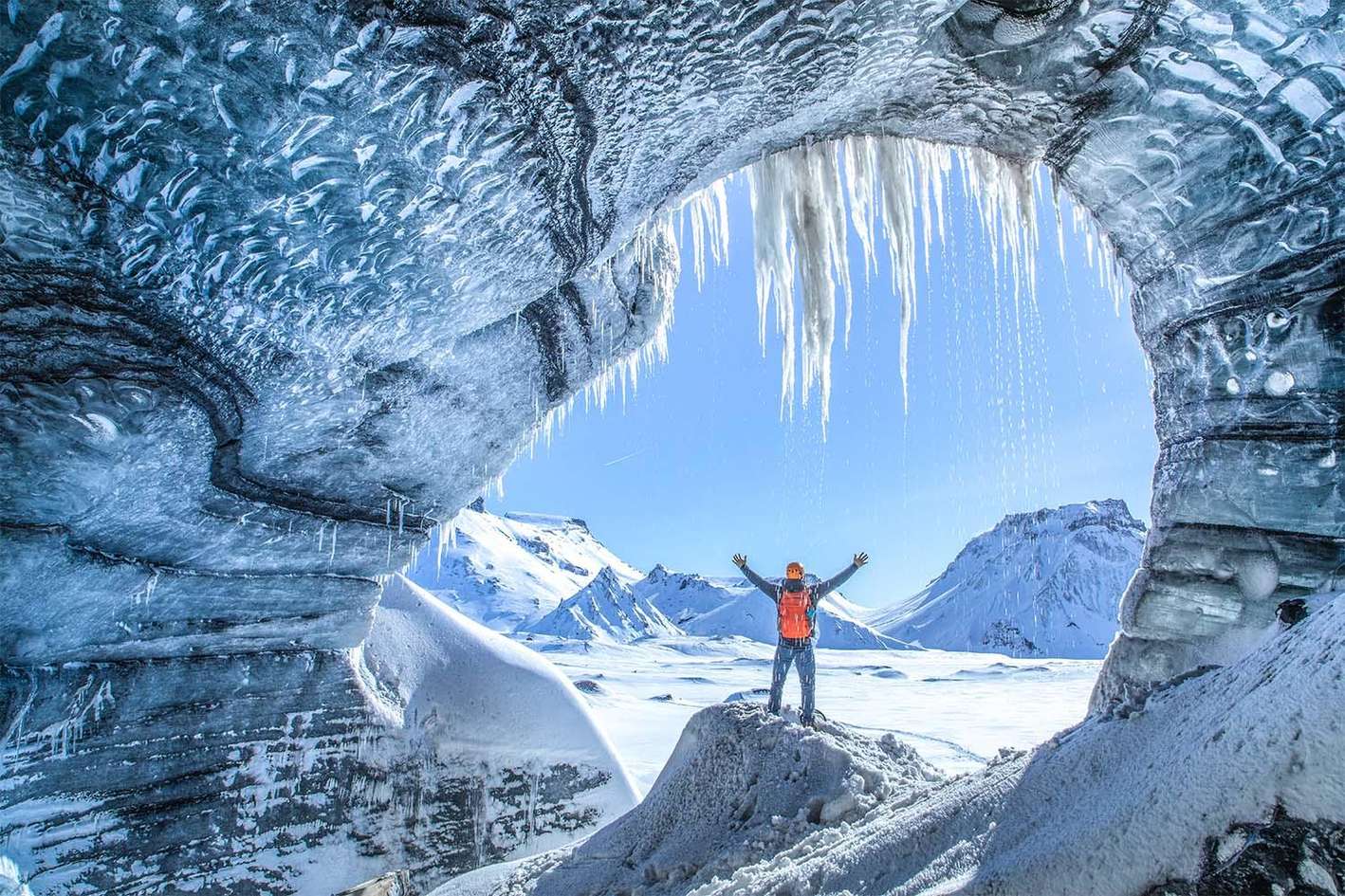
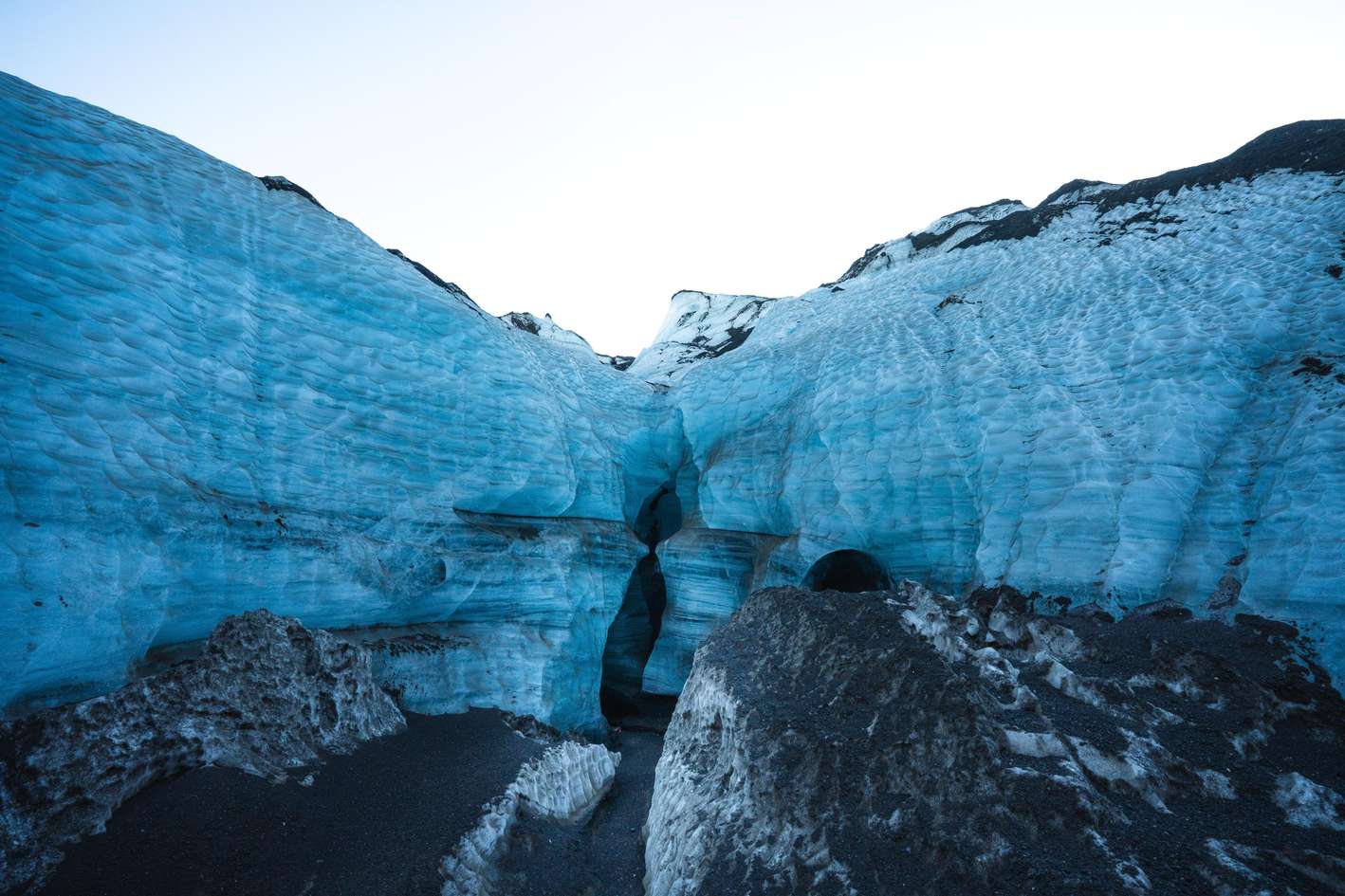
Two things stay constant. The first is the ice itself: black bands of volcanic ash from past Katla eruptions run through compressed blue ice, the blue coming from snow squeezed so hard the oxygen is pressed out.
The second is the temperature, near freezing inside the cave in any season. In deep winter that can make the cave warmer than the air outside.
Summer brings interior melting and puddles on the floor; winter brings snow days, averaging over a dozen a month from December to February, and the strongest ice. Guides adapt continually, carving new paths and, in the mid-autumn transition, sometimes limiting access while fresh chambers are secured.
Your month changes the shapes you meet. A visitor who went in the first week of September said the experience exceeded expectations, while another cautioned the cave may still be forming that month. Both are right; the cave does as it likes.
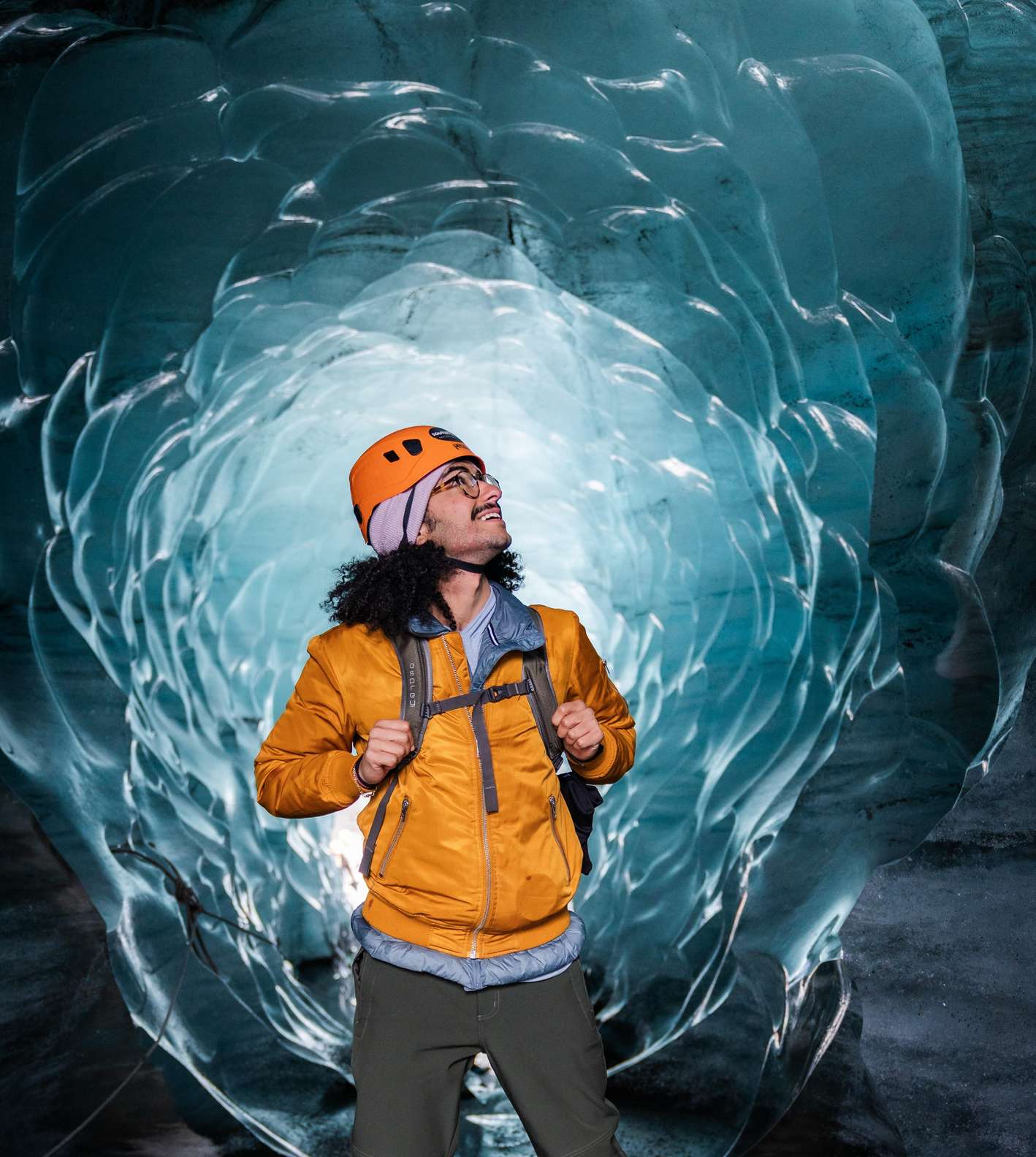
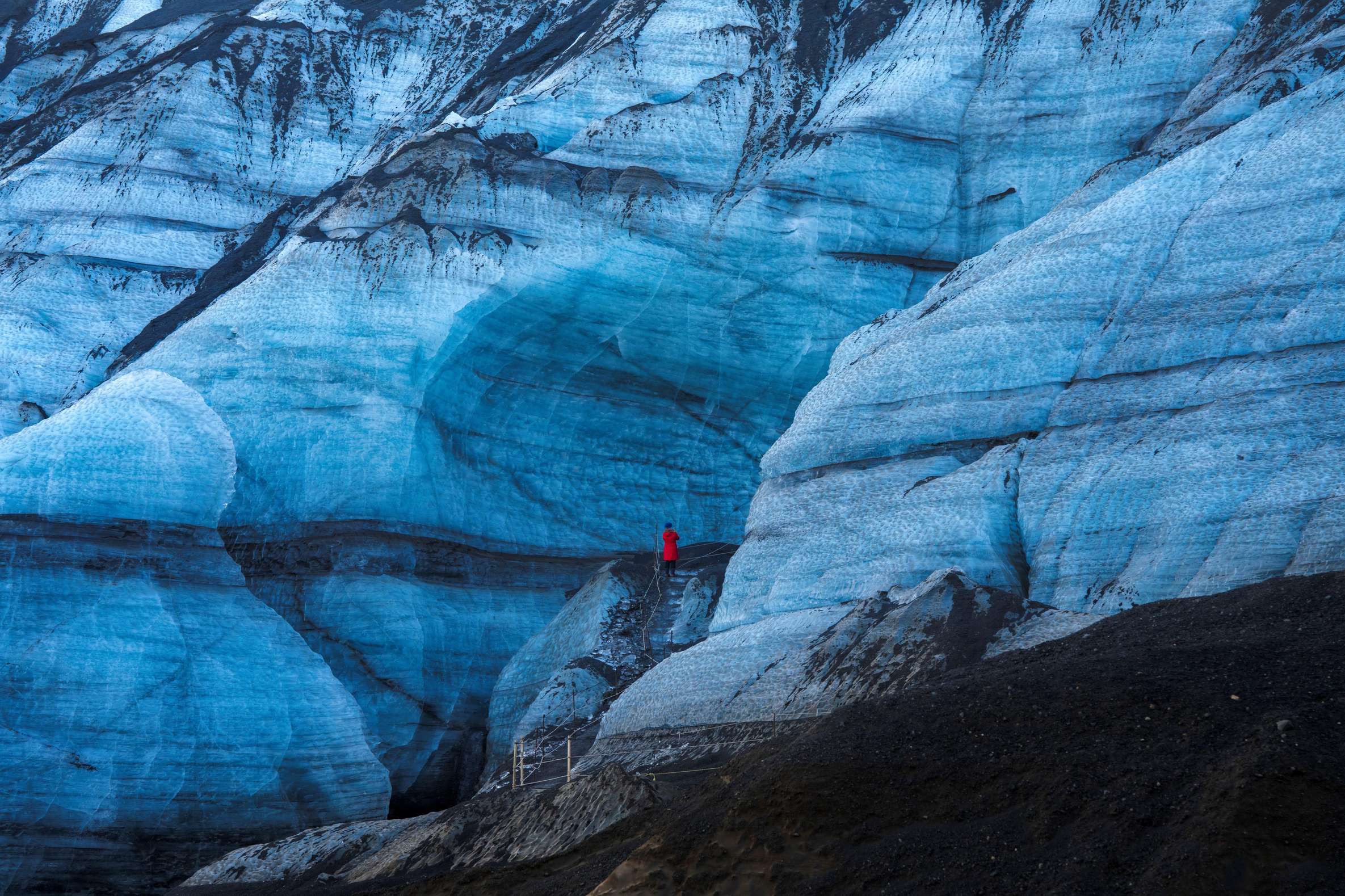
The choice most travelers wrestle with is Katla against the Crystal Ice Cave on Breiðamerkurjökull, near Jökulsárlón. The Crystal Ice Cave glows in shades of sapphire, dense and luminous blue, and involves a short, easy walk to the entrance.
It is also strictly a winter excursion: tours run from the start of November through March and shut down by April 1, because summer melt makes the chambers unsafe.
Katla's ice looks different. Dark volcanic-ash layers run through blue-white ice, a marbled black-and-grey look beside the Vatnajökull glow. Its natural light is brighter, which makes moving around and taking photos easier, and the Crystal Ice Cave can draw heavy crowds with waiting at the entrance while Katla's visit spreads out.
That leaves a simple rule. Travel between roughly November and March and you can have either. Travel from April through October and Katla is essentially your only natural-cave option.
If the translucent blue look is the whole point of your trip, plan a winter date for the Vatnajökull cave. The full side-by-side, including how each one walks and drives, lives on the Katla vs Crystal Blue Ice Cave comparison.
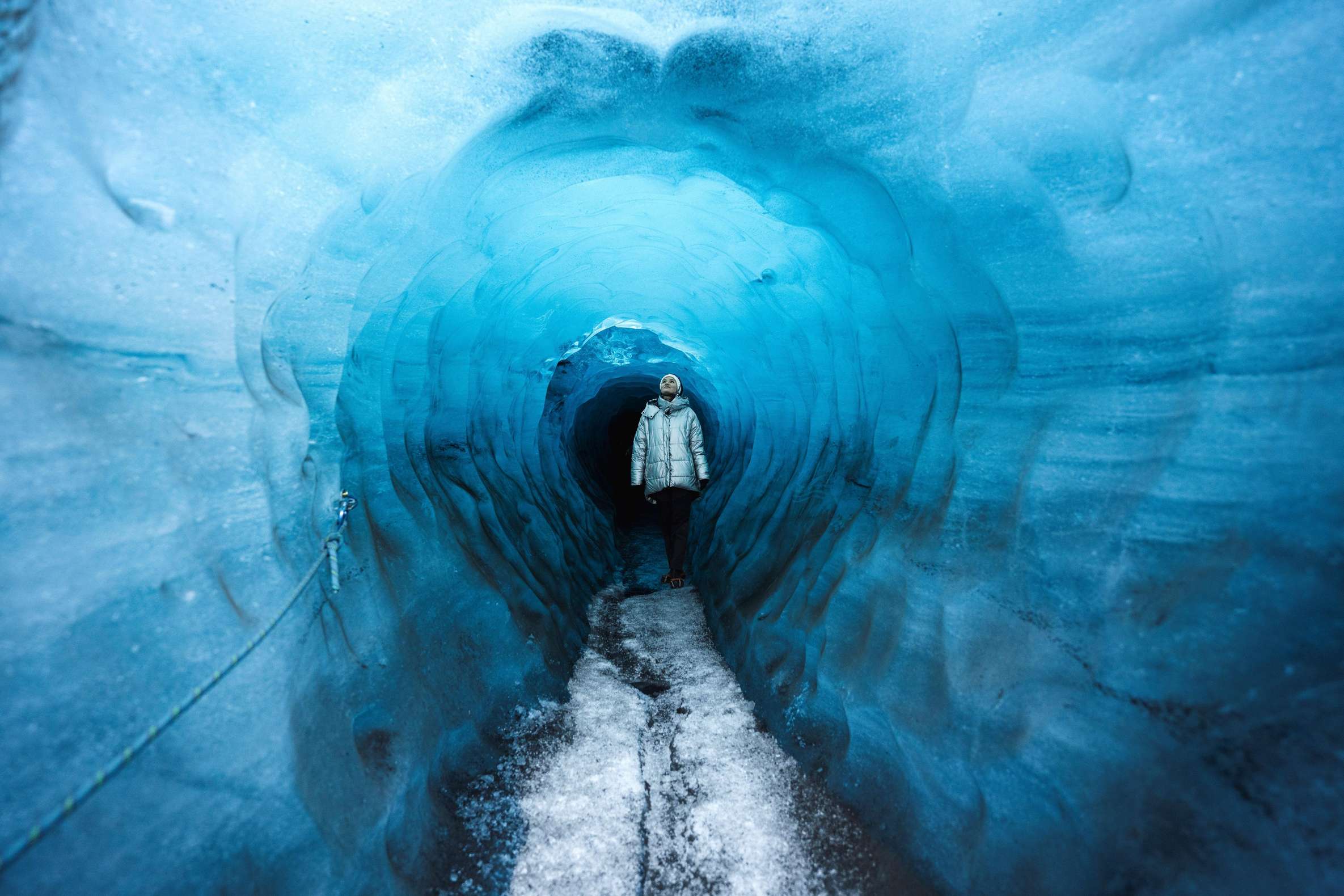
December in Vík gives you 4 hours 43 minutes of daylight, with the sun up near 10:50 am and gone by 3:33 pm. A day trip from Reykjavík takes around 10 to 12 hours door to door, and the drive alone runs about 2 hours 38 minutes each way without traffic.
Do that arithmetic and the problem shows itself: most of the journey happens before sunrise or after 4 pm, in full dark on unlit rural roads.
Travelers who have done it put it plainly: winter daylight is extremely compressed, and full-day tours travel substantial stretches in darkness. The tour still works, and the day trip is a real option, but you should not expect to see the South Coast scenery on the way.
Two fixes exist. Stay overnight in Vík and join a short 3-hour local departure, which puts the cave inside daylight hours. Or hand the driving to someone else and let the schedule work around the light.
The Reykjavik: South Coast and Katla Ice Cave Small Group Tour is a 10-hour outing with pickup included, stopping at the waterfalls and the black sand beach before the cave.
By February the light widens to over 8 hours a day, and the math eases considerably. In December, choose the tour that does the driving.
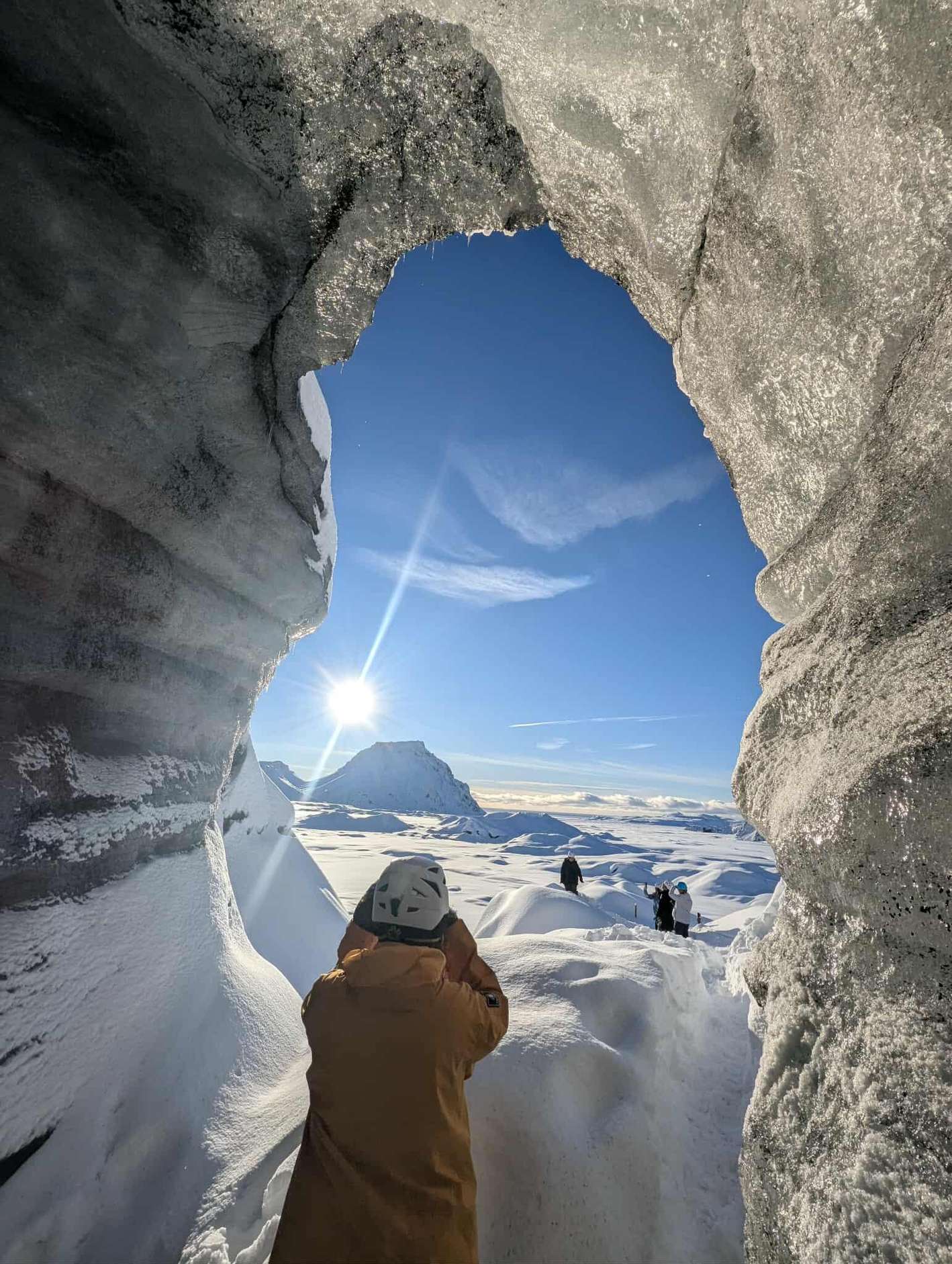
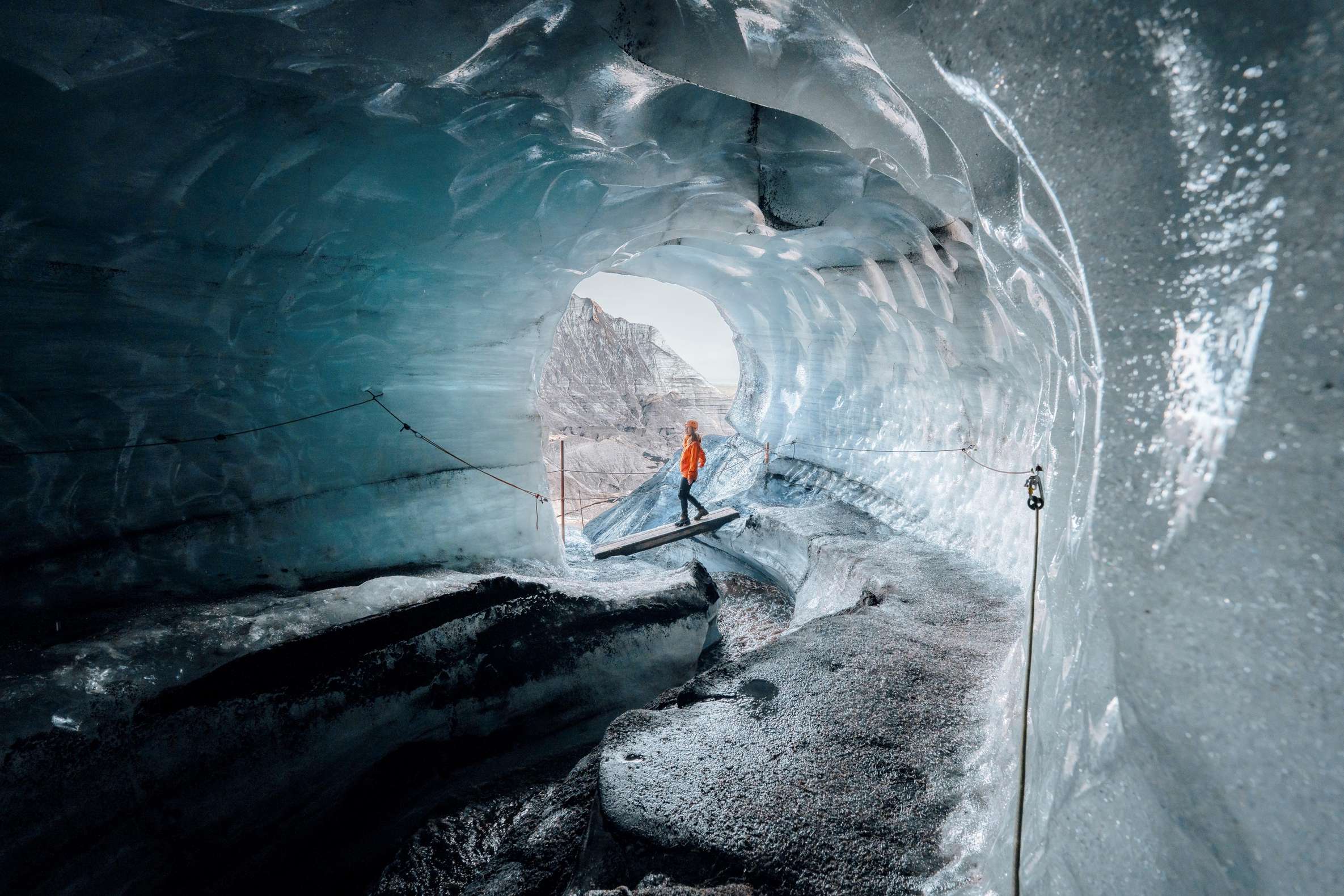
The convoys have a rhythm. Day-tripper groups arrive at the cave in the middle of the day, so midday slots carry the biggest crowds through the narrow chambers. The quiet slots sit at the edges: the earliest morning departure, before the day trips land, and the final afternoon run, after they have gone.
The early slot has a second advantage. A 9 am tour has been reported catching beautiful sunrise light with a small group, low sun raking across the glacier and into the cave entrance.
One visitor said having the earliest tour made the experience extra wonderful. Late autumn especially rewards the first departure, when every minute of natural light counts.
From Vík, departures typically run at 9 am, 11 am, 1 pm and 3 pm, and the tours on this page offer slots from 8:30 am through 4:30 pm, so you can place your visit at either edge of the day.
Public buses will not get you there in time: Route 52 reaches Vík at 5 pm, well after the last departure.
One practical trick from travelers: if you hold an afternoon booking, check in at the operator's meeting point in the morning, since open slots on an earlier run can sometimes be taken on the spot.
| Low sunrise light, smallest groups | Suits photographers and anyone wanting quiet | |
|---|---|---|
| Midday | Brightest overhead light, busiest chambers | Suits day-trippers with fixed schedules |
| Late afternoon | Quieter again, softer light | Suits travelers staying overnight in Vík |
If you want the cave inside daylight without driving, the From Vik: Katla Ice Cave & Super Jeep Tour runs 3 hours from Vík with several departures a day and a guided visit with crampons and helmets included.
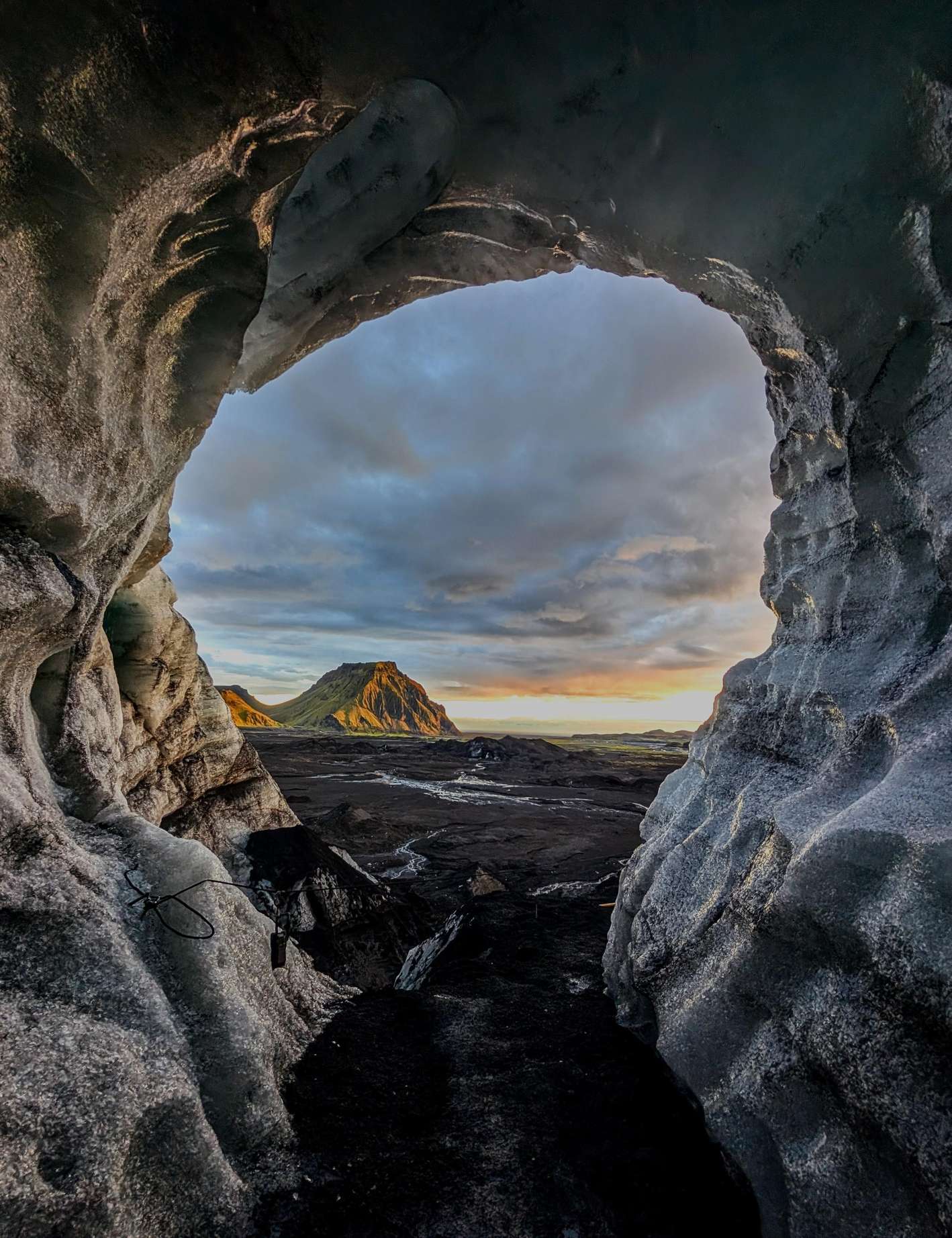
A South Coast storm announces itself in the forecast before it arrives. Icelandic authorities grade it: an orange alert, with sustained winds of 18 to 35 m/s or gusts above 40 m/s, can close Route 1, and a red alert means full closures and widespread tour cancellations.
Road updates will mark a road as impassable or driving prohibited, and a closed road means no driving.
Wind is what cancels a Katla tour. Rain falls on about half the days of the year here and tours proceed through it. Extreme winds above 20 m/s can call off the excursion, and so can flooding from heavy rain, unsafe roads, or signs that Katla volcano is stirring.
Route 1 closes during individual storms, usually for a few hours and occasionally for a day; the Vík area is rarely blocked by snow, though it takes the wind regularly. December 2022 closed south coast roads for days.
If the operator cancels, you reschedule or get a full refund. That holds when extreme weather closes the road, when authorities shut Route 1, or when the cave itself is flooded or judged unsafe.
If a closure stops you from reaching Vík, contact the operator as soon as you see it, before departure time, and they will look for a solution.
| If this happens | What happens then |
|---|---|
| Extreme weather closes the road the tour needs | You can reschedule or take a full refund |
| The operator cancels for safety or glacier conditions | Full refund or a new date |
| Authorities close Route 1 and you cannot reach the meeting point | You receive a full refund |
| The cave floods or is closed for safety | Alternative arrangements may be offered |
The risk is priced into the system, so book the date you want and let the weather argue with itself.
The drive from Reykjavík to Vík runs 187.4 km and about 2 hours 38 minutes without traffic, down Route 1 through some of the most exposed country in the country.
Two stretches deserve respect: Hellisheiði, between Reykjavík and Selfoss, ices over frequently, and the open ground beneath Eyjafjallajökull regularly takes gusts above 25 m/s. Around Vík itself, sudden violent gusts are a known feature.
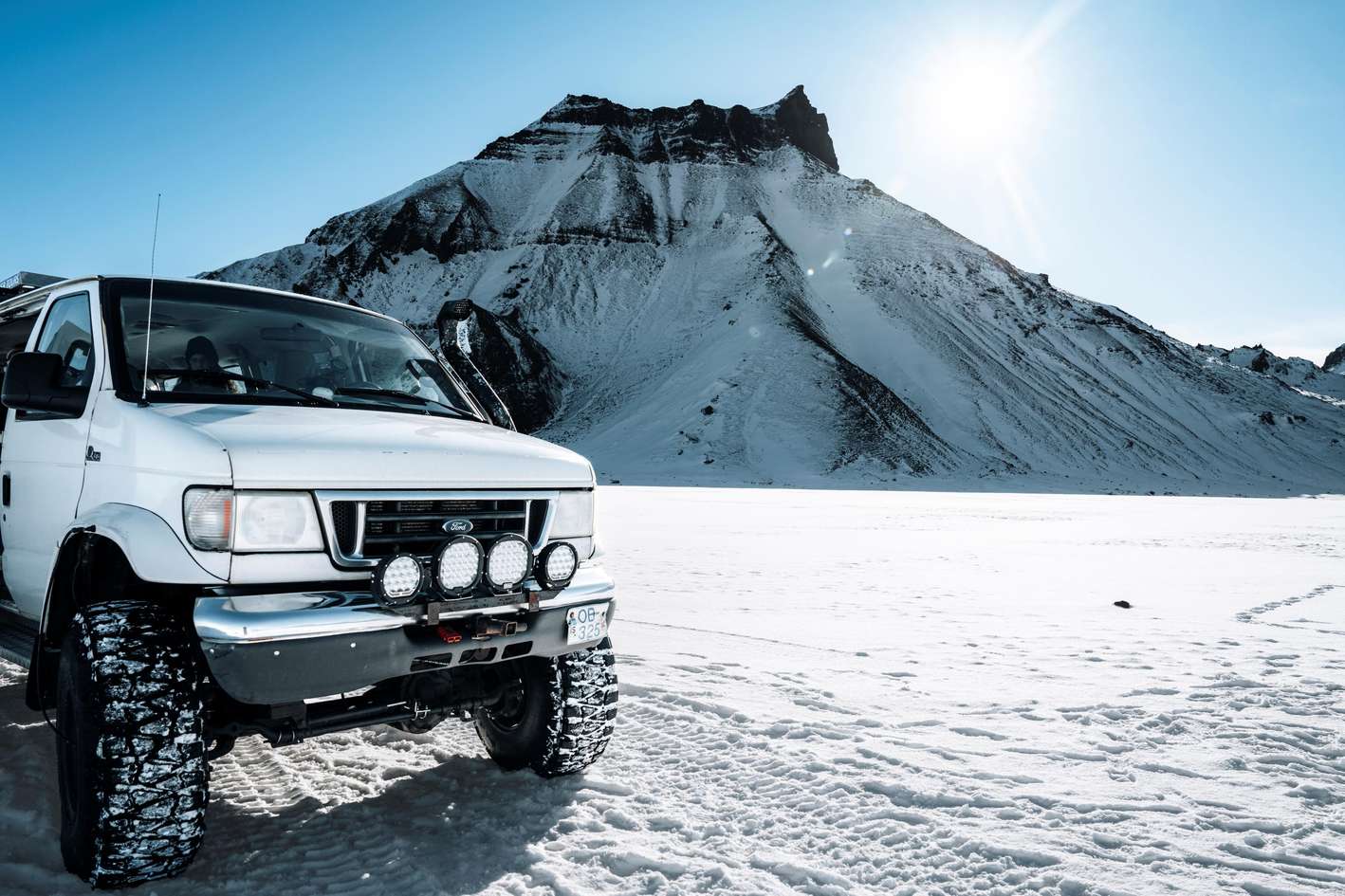
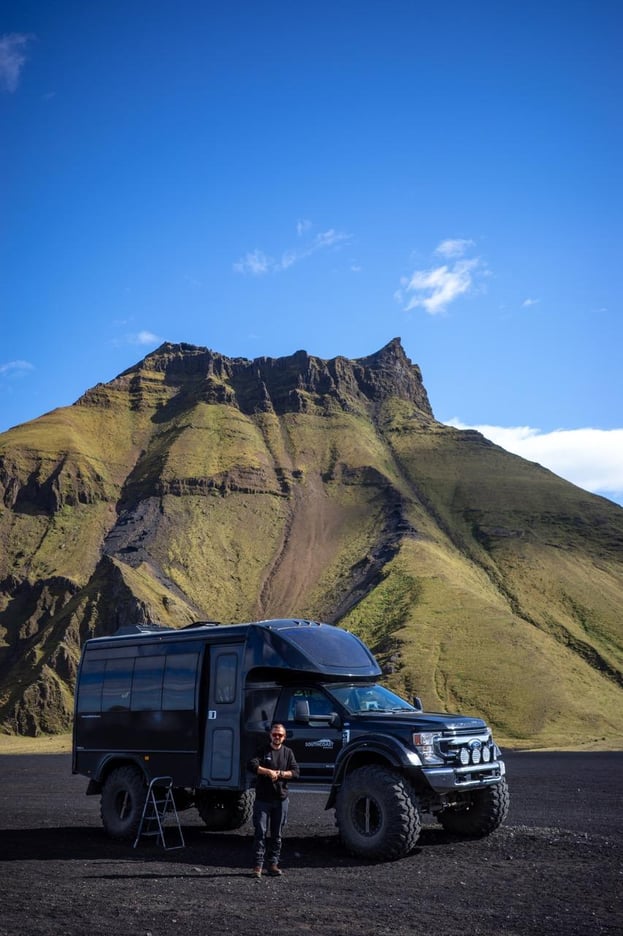
Then comes the part no rental car solves. No public road reaches the cave, and standard rental SUVs cannot handle the rough glacial mountain tracks to the trailhead. A specialized Super Jeep is required, and those vehicles run only with the tours. Your car's job ends in Vík.
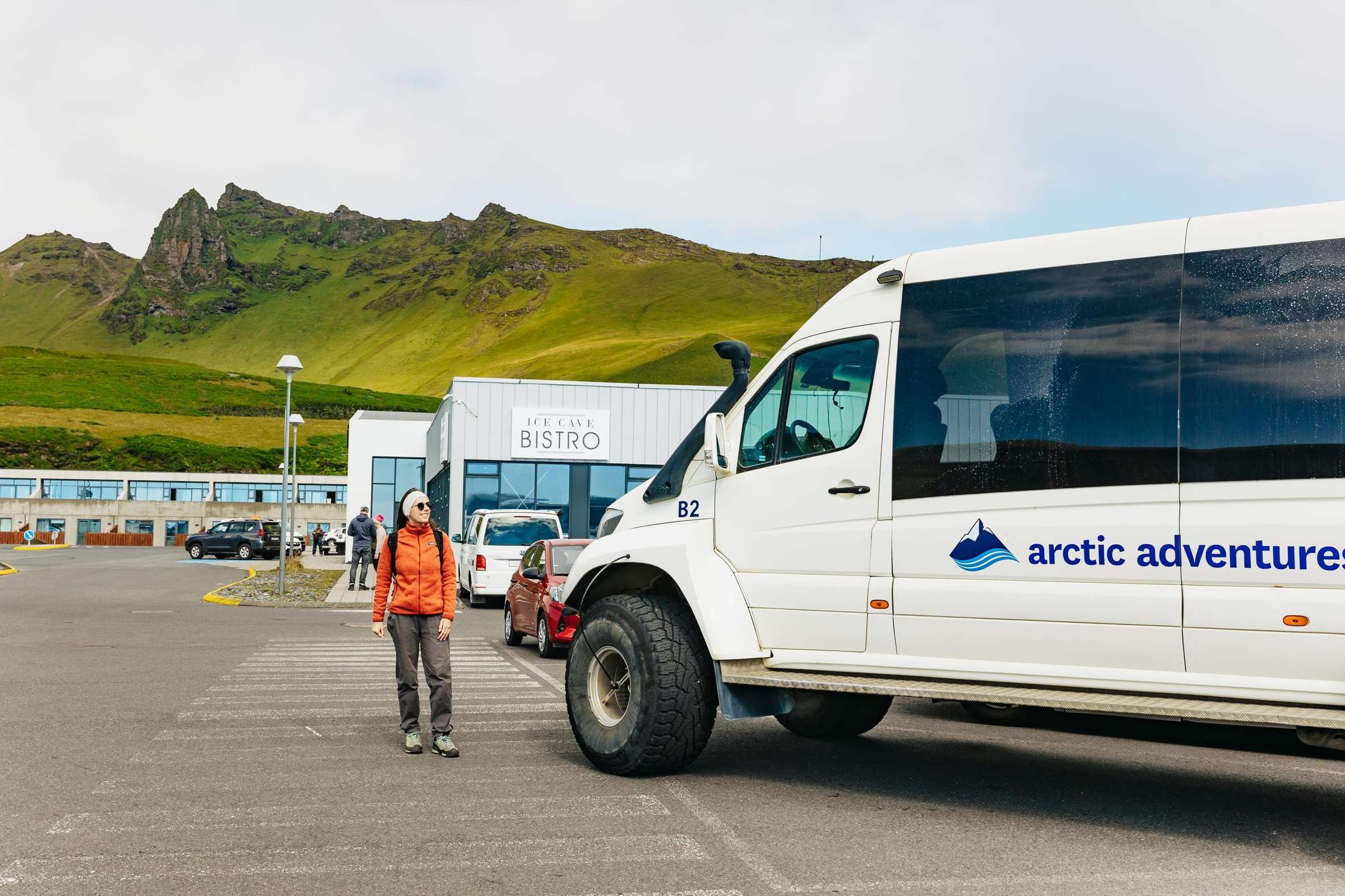
Plan the parking. The Vík Inn on Víkurbraut hosts one operator's meeting in its lobby, another meets in the bus parking lot behind the Icewear building at Austurvegur 20, facing the sea.
Either way, arrive 20 minutes before departure to find parking and check in. The driving directions and location guide maps all of this out.
Before you leave, check three things: umferdin.is for road conditions and webcams, the Icelandic Met Office for the forecast, and SafeTravel for alerts.
By law 4WD is only mandatory on Highland F-roads, so any regular car will do for Vík itself, but leave margin. Severe winds can slow the drive enough to put you past check-in.
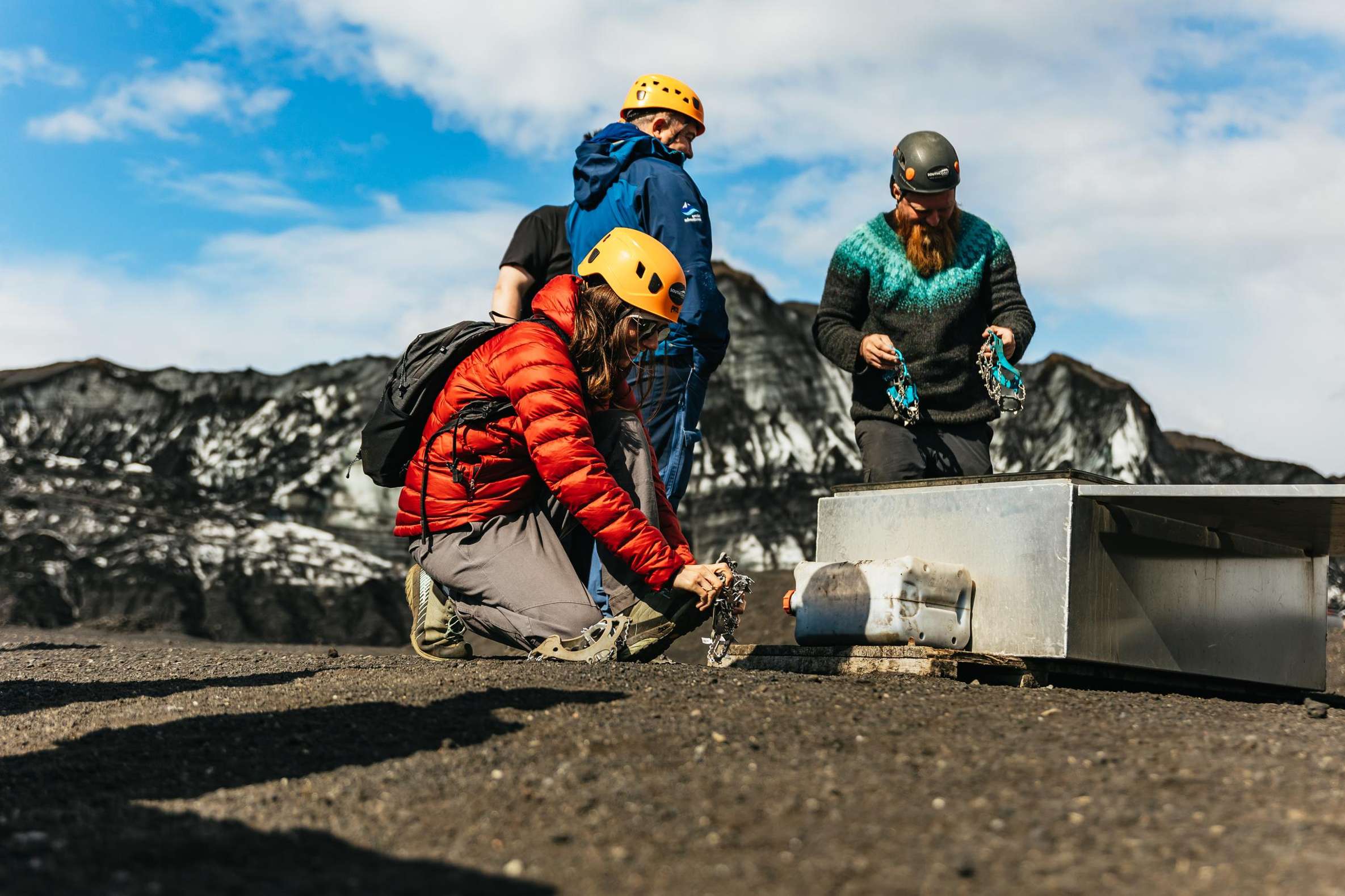
Nobody walks onto Kötlujökull alone. Access to Katla Ice Cave is by guided tour only, led by certified glacier guides carrying proper safety gear, and that is both the safe way and the legal one.
Guides assess the cave and its overhanging ice every day, and they move the visit to a different safe spot, or cancel, when conditions say so.
Now the honest qualification part. Minimum ages vary by tour: some Katla tours take children from 6, others set the bar at 8, and a winter private tour allows 6 in summer but 8 in winter.
A Reykjavík small-group option excludes children under 8, people with heart problems and wheelchair users. One reviewer advised against the visit for small children and people with bad knees, ankles or backs, and one tour operator says its tour does not suit people with mobility limitations.
The walk itself is a light 1 to 2 km over uneven ground, described as easy on one tour's itinerary, with about 20 minutes on a sandy path and 10 on the glacier; route notes for another operator give 20 to 25 minutes for the moraine crossing.
The two figures count slightly different parts of the same approach, so figure on roughly half an hour all told. Rugged terrain is the honest limit, and someone whose knees limit their walking should weigh it.
Whether the risks, ages and difficulty fit your family is worked through in detail on the safety and kids guide.
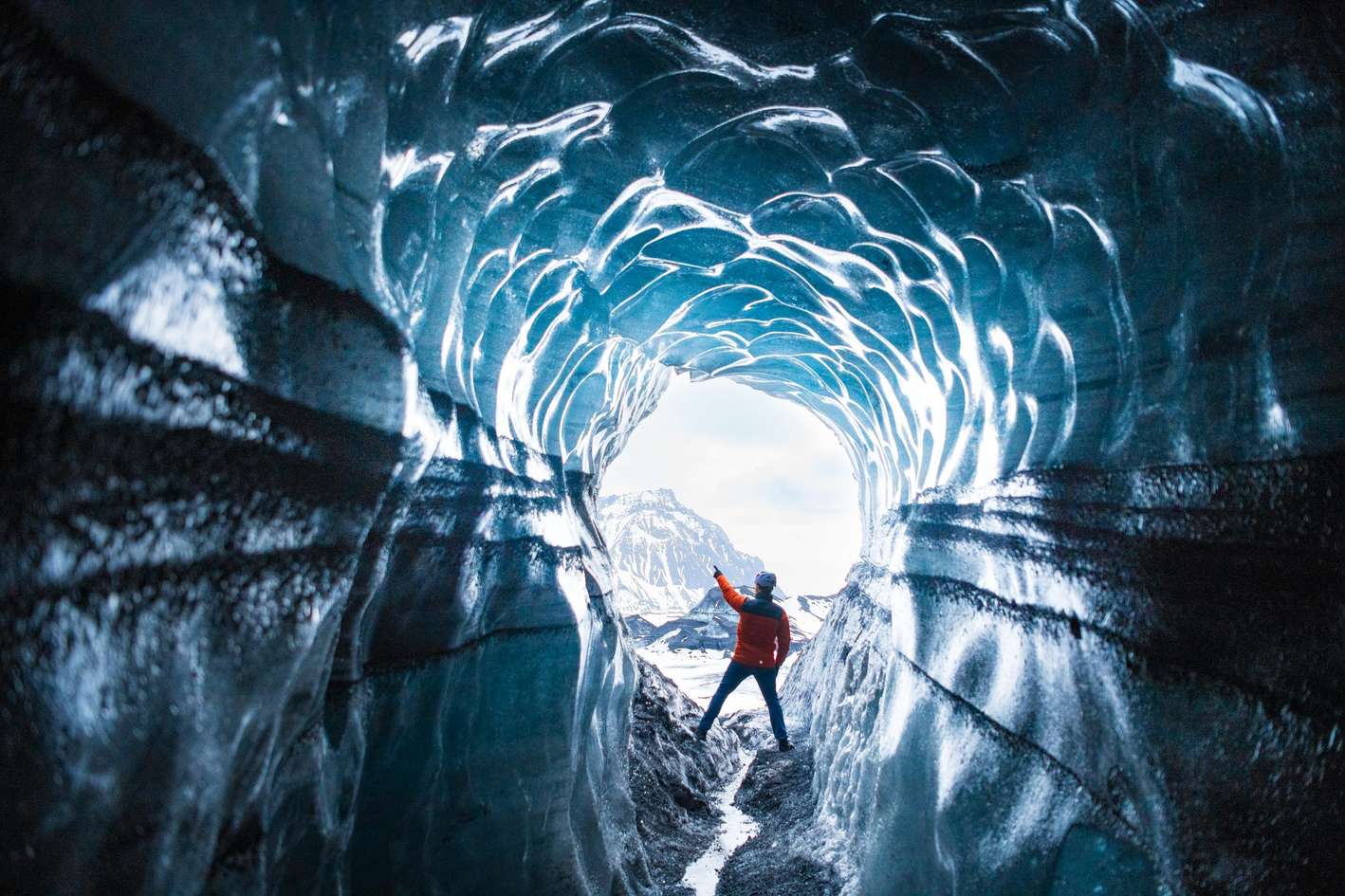
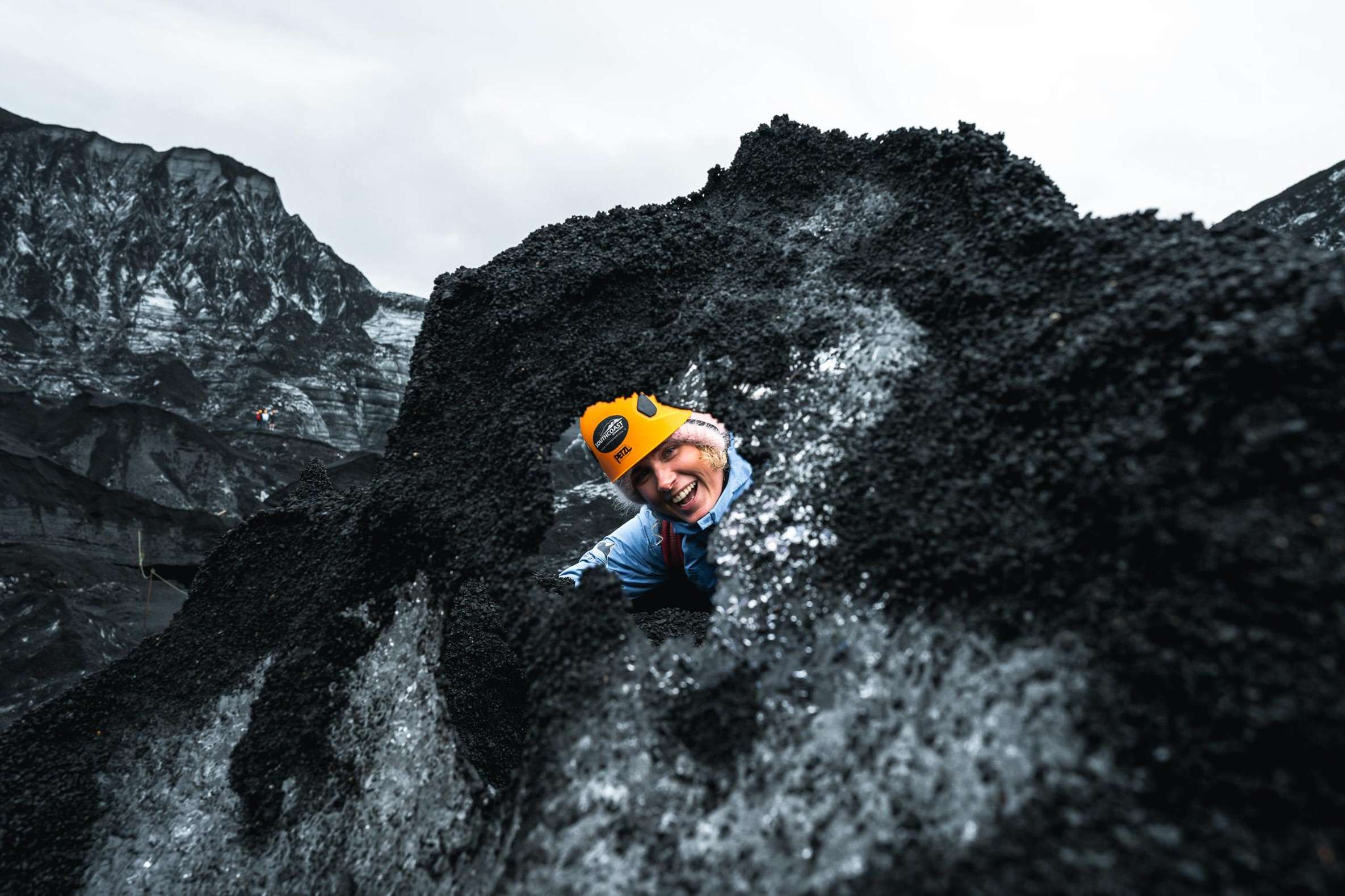
Inside the cave it sits around freezing all year, and the roof drips constantly. Meltwater is the thing that catches visitors out: the ice above you is always moving water somewhere, and a passage can flood quickly after a burst of rain.
Staying dry is what the kit list is built around; the cave keeps its own temperature. A waterproof, wind-resistant outer layer, jacket and trousers both, goes over thermal base layers and an insulating mid-layer such as fleece.
Skip jeans, which turn cold and heavy when wet, and go easy on cotton underneath. Sturdy waterproof hiking boots with good ankle support and grip carry you over uneven, often muddy ground, and waterproof here means fully waterproof, because water-resistant shells let the drip through.
Add gloves, a warm hat and spare dry socks, because melting ice and puddles can soak your footwear before the tour is half done.
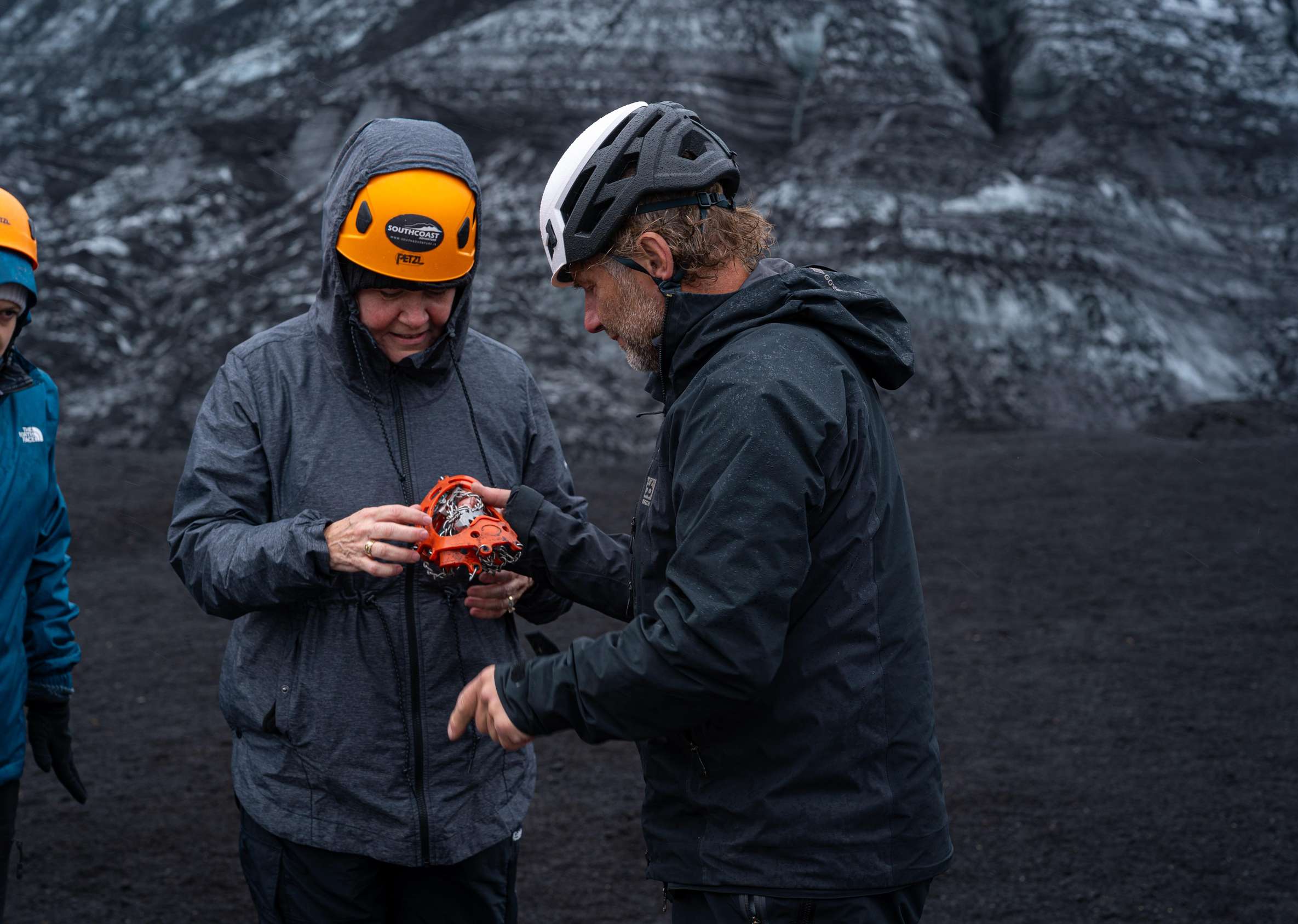
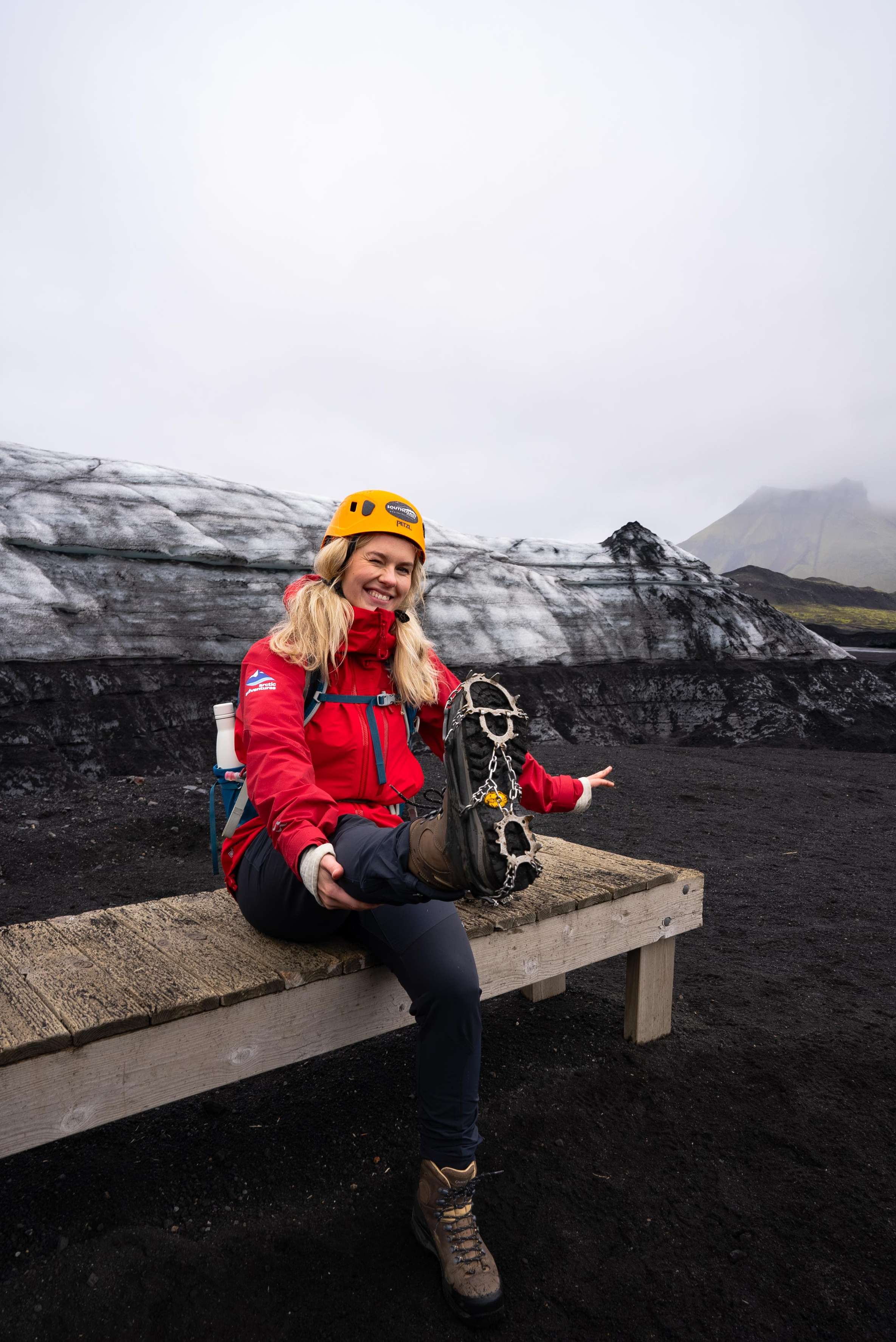
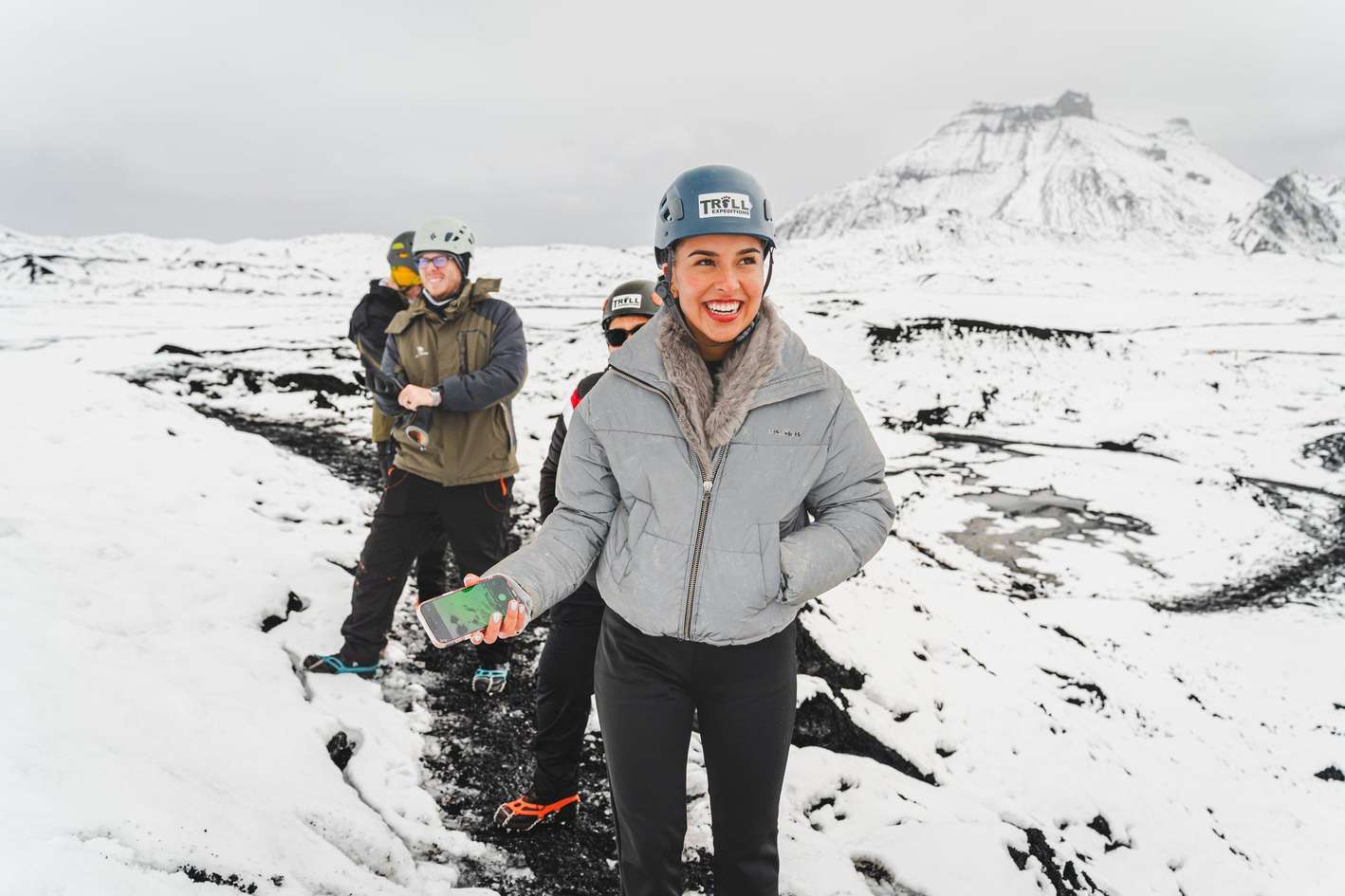
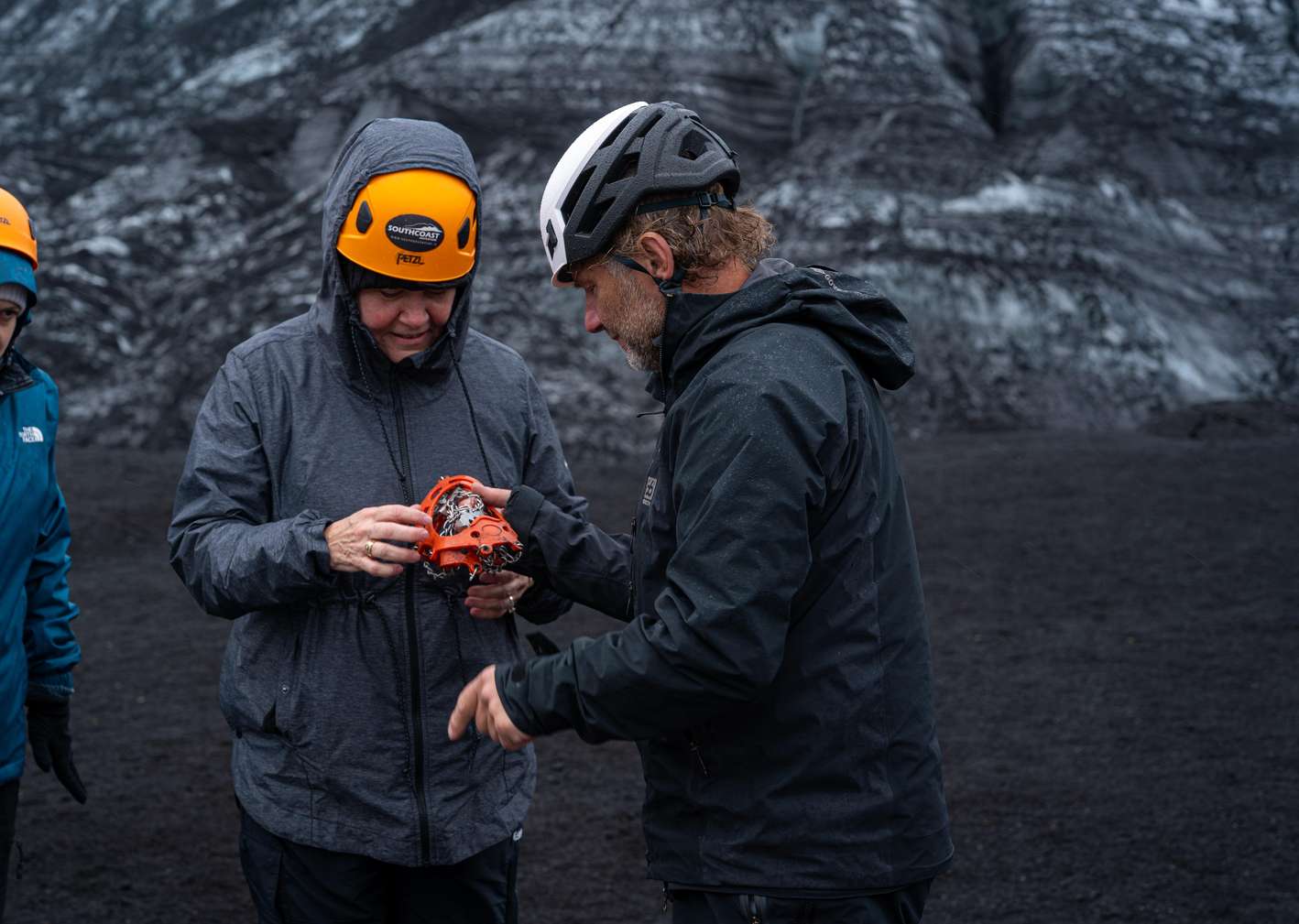
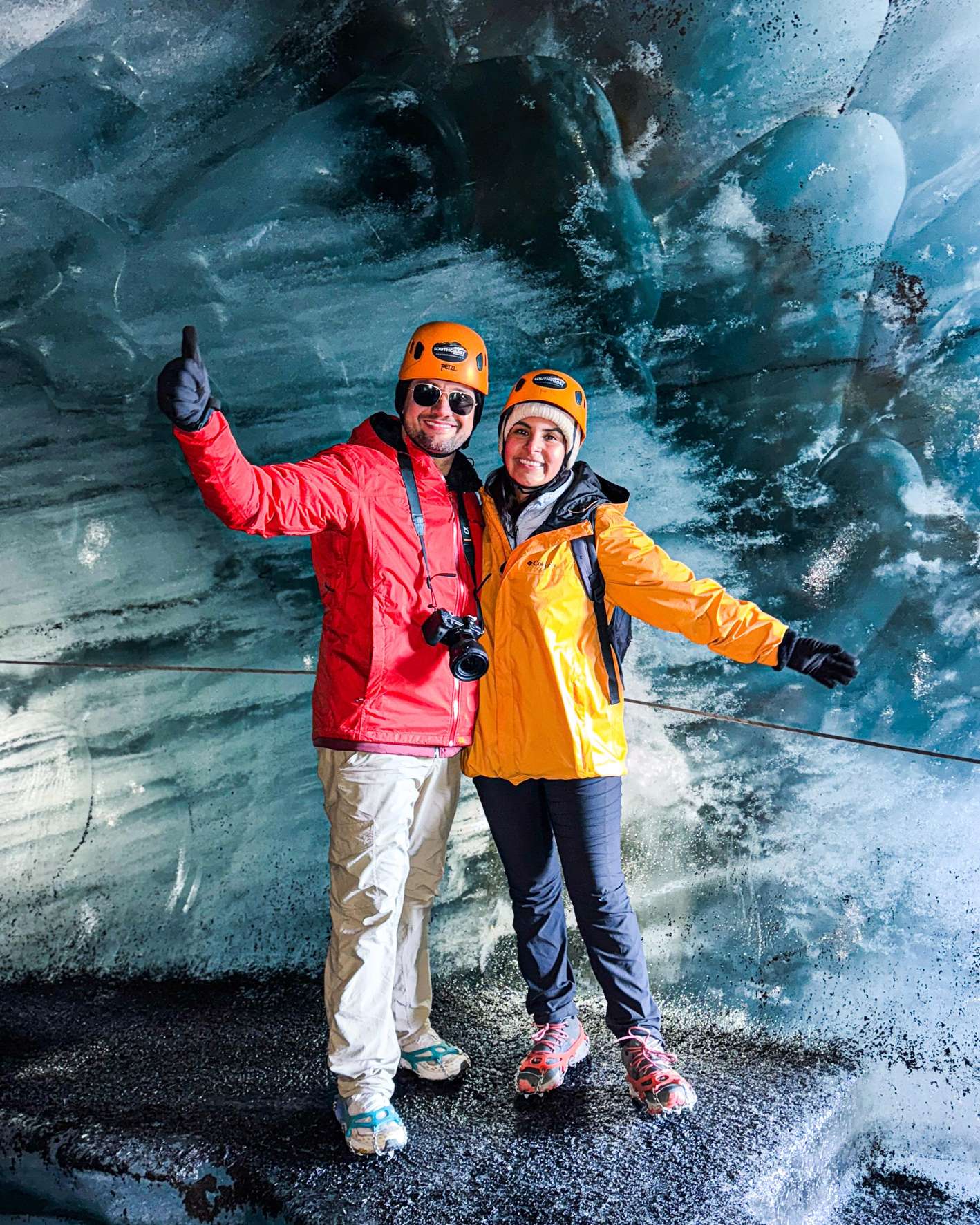
The tours hand you the technical side: crampons and a helmet, with headlamps on some departures. Your job is the clothing. The full what-to-wear guide covers layers season by season.
One small trick from the walk outside: turning your head slightly away from the wind keeps driving rain off your face. And gusts up on the glacier are strong enough to knock you off balance, so keep steady footing and both hands free where you can.

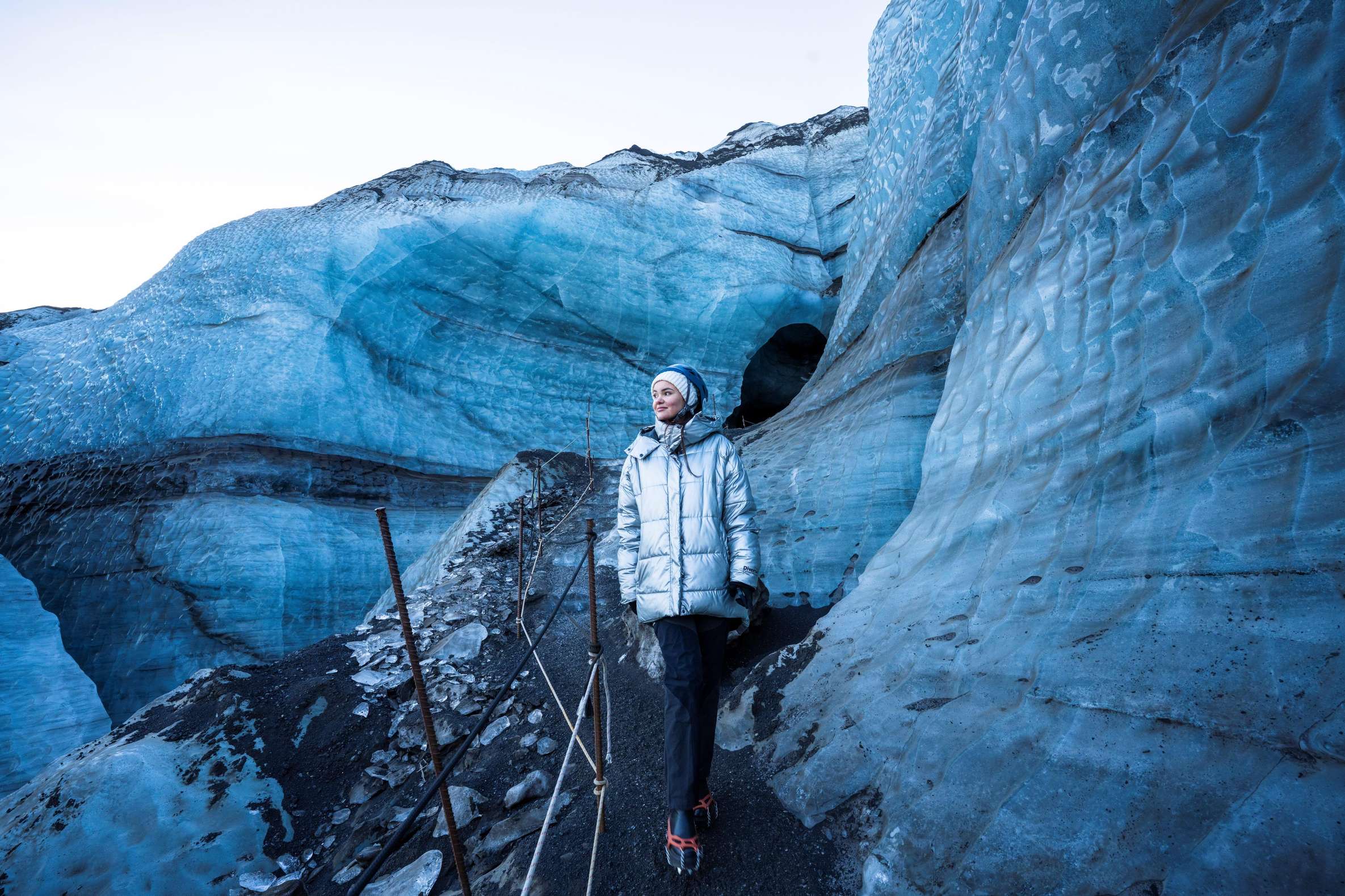
The 3-hour tour from Vík breaks down in a way that surprises first-timers: roughly one-sixth of it happens inside the cave. The rest is the journey, and the journey earns its keep.
It starts at the meeting point in Vík, then the Super Jeep leaves the pavement for the volcanic floodplains of Mýrdalssandur.
Expect about 40 minutes each way across black sand, old lava and shallow streams, vigorous and bumpy enough that the tours list motion sickness as a reason to skip it. Travelers describe the ride as part of the experience in its own right, mountains and dark sands rolling past.
At the glacier edge you gear up, crampons and helmets fitted, and set off on the approach: 1 to 2 km over uneven moraine with minor elevation.
One tour itinerary counts about 30 minutes for the walk, 20 on sandy path and 10 on the glacier, while another route's notes give 20 to 25 minutes for the moraine crossing; the totals differ because each counts slightly different sections.
Visitors describe it variously as an easy climb that still takes stamina and as steep going in crampons. Then the cave, and about 20 to 30 minutes inside, standing among ash bands and blue ice while the guide explains how centuries of volcanic and glacial activity shaped it.
Guides often know the photo spots and will take the picture for you. Hot soup back in Vík afterwards tastes better than it has any right to.
Vík Inn lobby or the Icewear bus parking lot
Bumpy off-road driving to the glacier edge
Uneven terrain, crampons fitted first
Black ash bands and blue ice, photo stops
Hot soup in town afterwards
The short time inside does not shorten the wonder. Visitors consistently call it the otherworldly highlight of the day, and the landscape around it carries the rest.
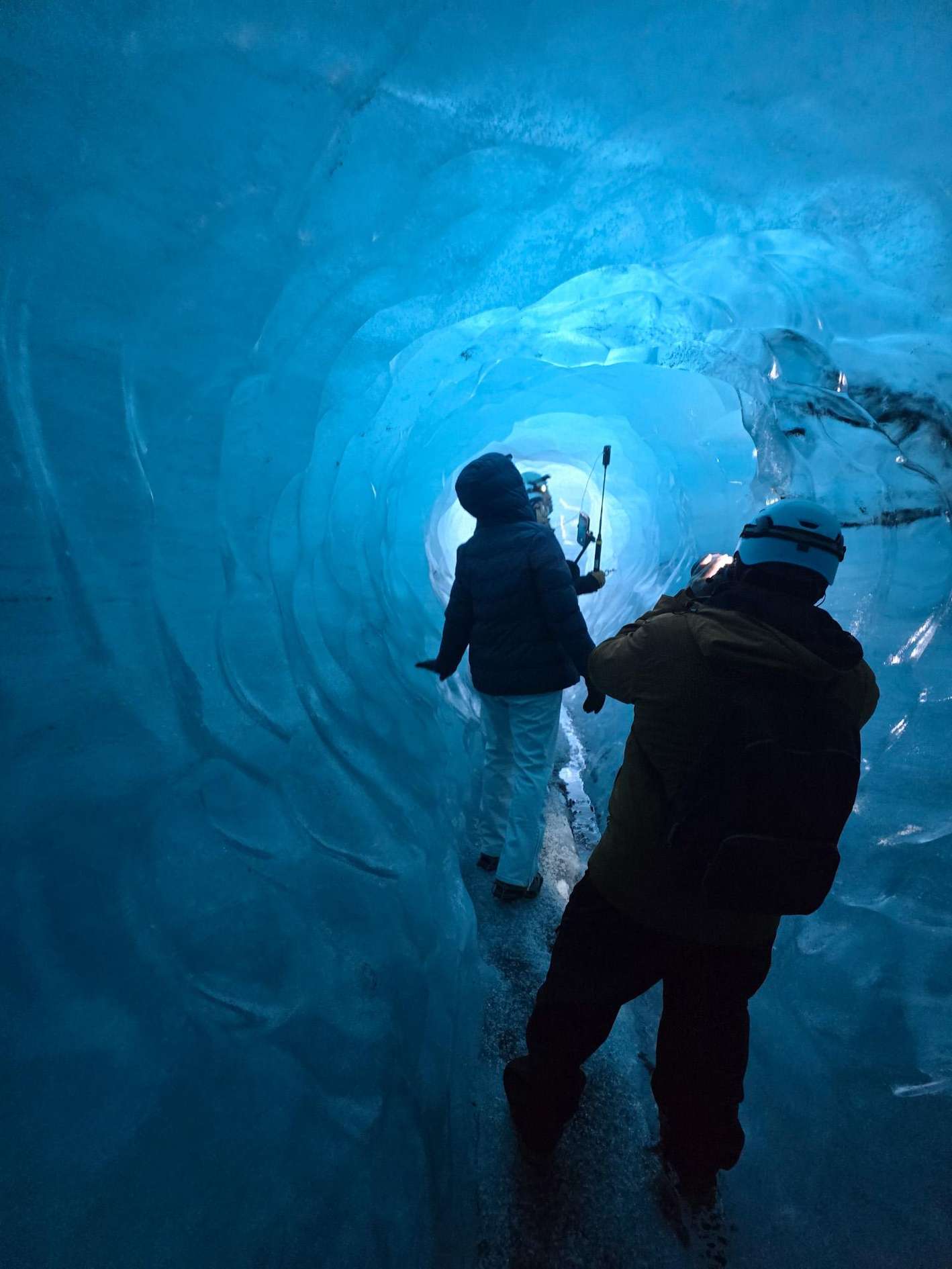
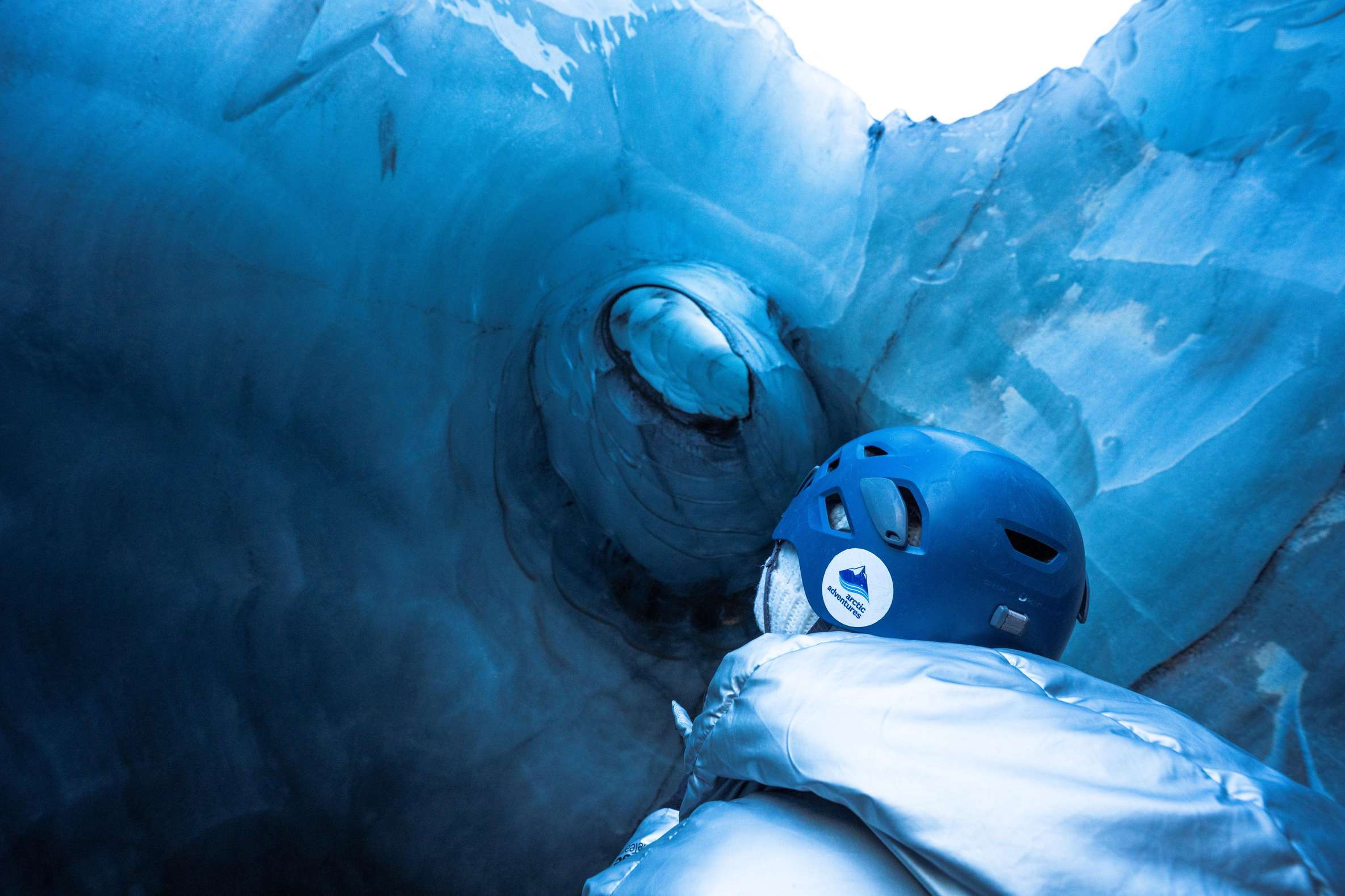
Some visitors step out of the cave and immediately ask for more. The standard visit gives you 20 to 30 minutes inside, mostly a contemplative look rather than an athletic one, with no climbing or scrambling. A longer format exists for exactly this feeling.
The Katla Ice Cave Extended Guided Tour with Super Jeep stretches the outing to 4 hours, adding an extended hike around the glacier, secret glacier canyons and hidden waterfalls that the shorter run never reaches.
Still a walk rather than technical climbing, still led by expert glacier guides, but with more time actually out on the ice and fewer people around.
It helps to know where the effort goes. A standard glacier hike involves sustained walking and climbing across the ice and is the more active challenge; a Katla cave visit asks for a light 1 to 2 km over uneven ground.
The extended version sits between them, more time moving across glacial terrain without ever needing rope work. Book it when the cave alone feels like an appetizer.
Anyone weighing a full glacier hike against the cave should read the Katla Ice Cave and Glacier Tour guide, which covers the longer formats properly.
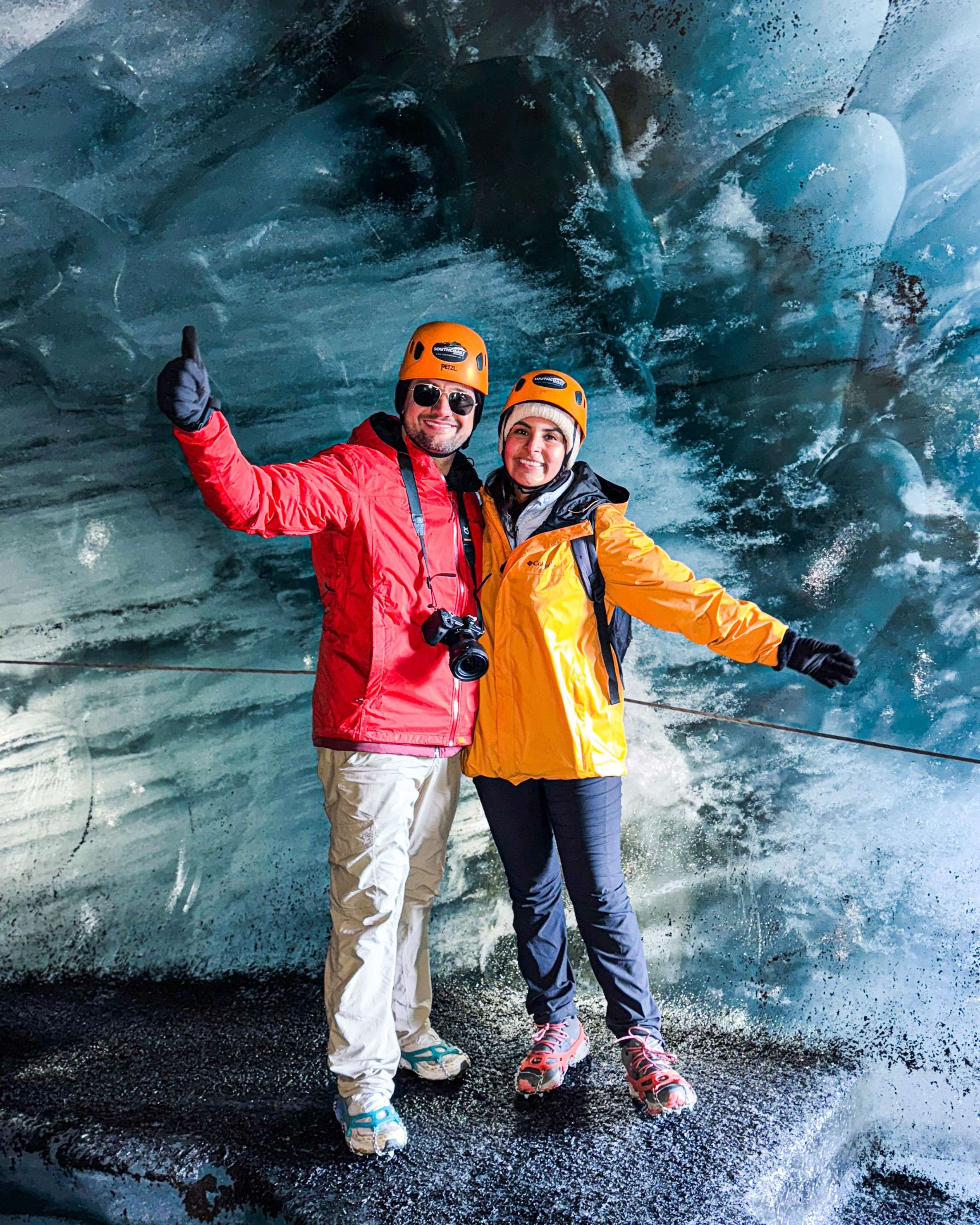
A Katla departure leaves most of a South Coast day unspent, and the classic combination writes itself: Seljalandsfoss, where you can walk behind the falls when weather allows, Skógafoss with its viewing points at top and bottom, and Reynisfjara's black sand and basalt columns near Vík.
The 10-hour Reykjavík small-group tour and the 12-hour day tours fold these stops around the cave, and the combination is rated easy to moderate.
Reynisfjara deserves one paragraph of respect before you go.
The beach runs a traffic-light system for the sea: when the yellow light shows, stay out of the yellow zone; when it shows red, stay on the upper beach and view the waves from a distance, and at orange alert keep at least 25 metres from the water.
Sneaker waves arrive without warning, children stay with an adult at all times, and local safety officers can close the beach at short notice.
A last piece of advice from travelers weighing their options: if you have never walked on an Icelandic glacier, put the ice cave first on the list.
Waterfalls and black beaches exist elsewhere; a cave inside a volcano's glacier does not. The full waterfalls day, with the stops in a workable order, is laid out on the South Coast combination tour guide.
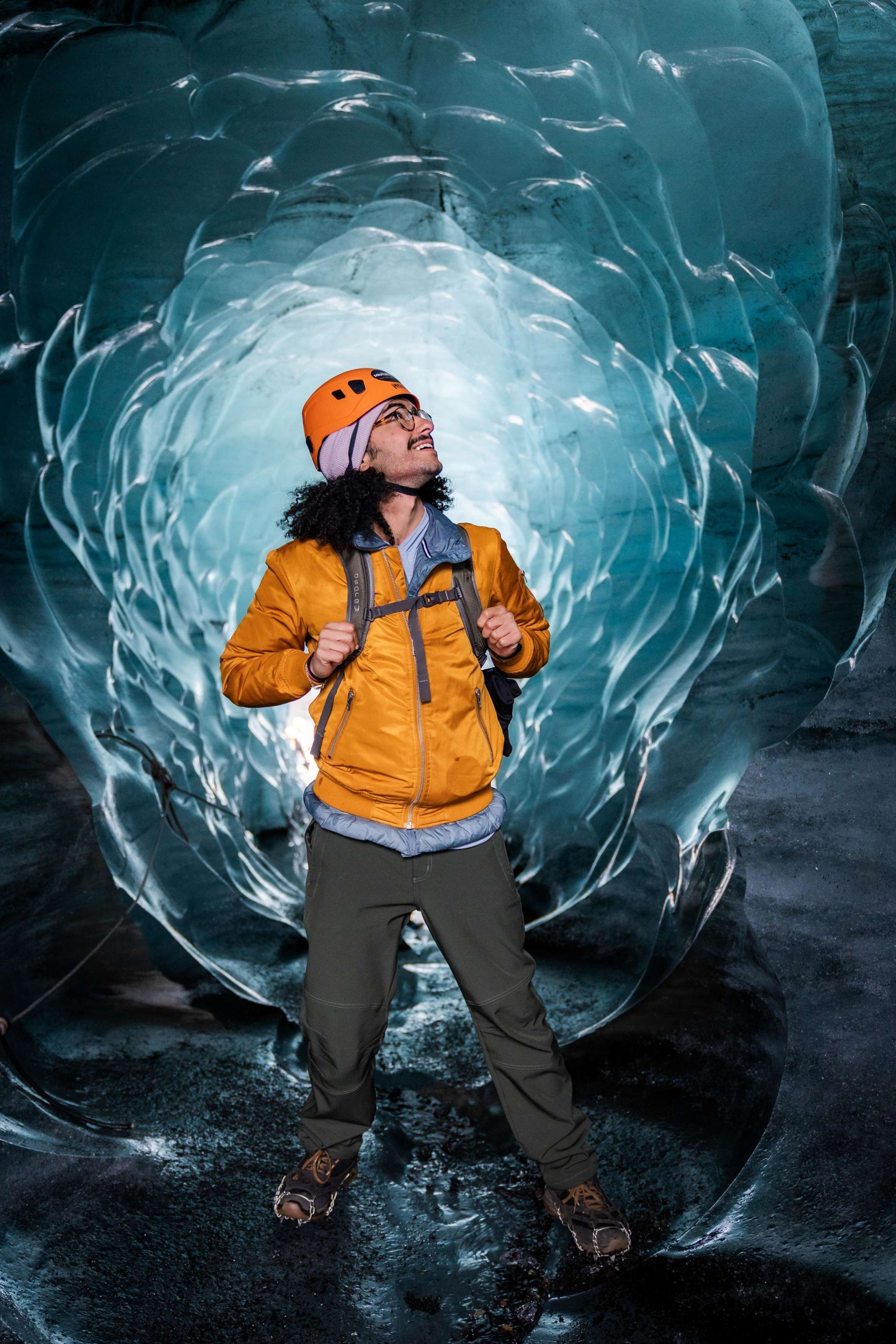
Katla rewards visitors in any month, which is its quiet superpower among Icelandic ice caves.
Pick the earliest morning or final afternoon departure for quiet and light, book a few days ahead in summer and further ahead in July, and treat wind warnings as the only real threat to the plan. Do that, and the timing question is answered before you pack.
earliest slots catch sunrise light on the ice

book july slots a few days ahead
Check what the cave looks like right now and sort your tickets before you lock in a date.
Work out the drive to Vík so your route and your chosen departure slot line up.
See how age limits and fitness needs change the timing options for your group.
Match your layers to the month you travel, from winter cold to summer meltwater.
Compare Katla's year-round season with the winter-only blue caves near Jökulsárlón.
Turn your cave visit into a longer day on Mýrdalsjökull by adding a glacier walk.
Find out which ice caves across Iceland are open in your travel month.
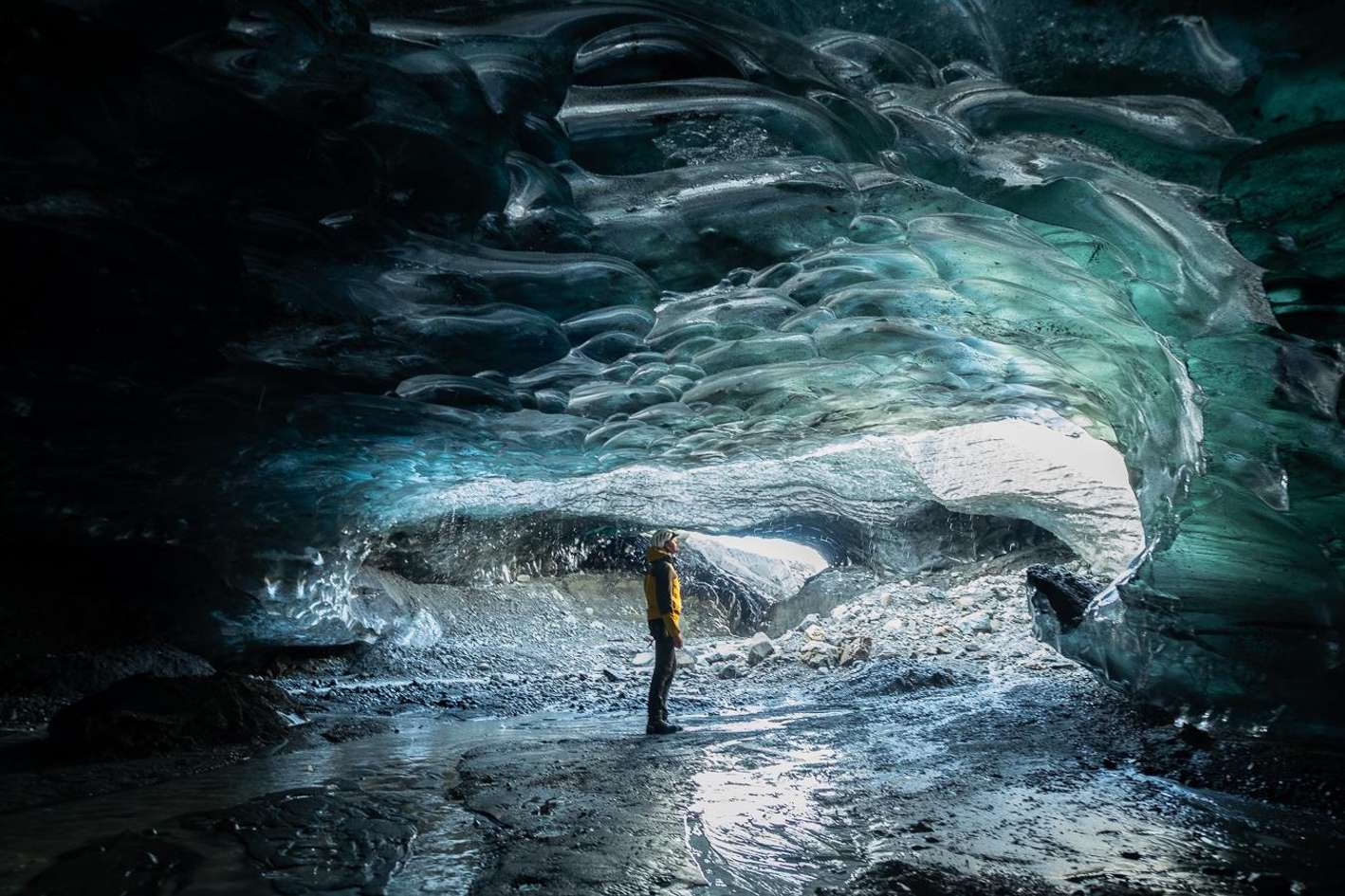
See what a certified glacier guide checks every day, in every season.
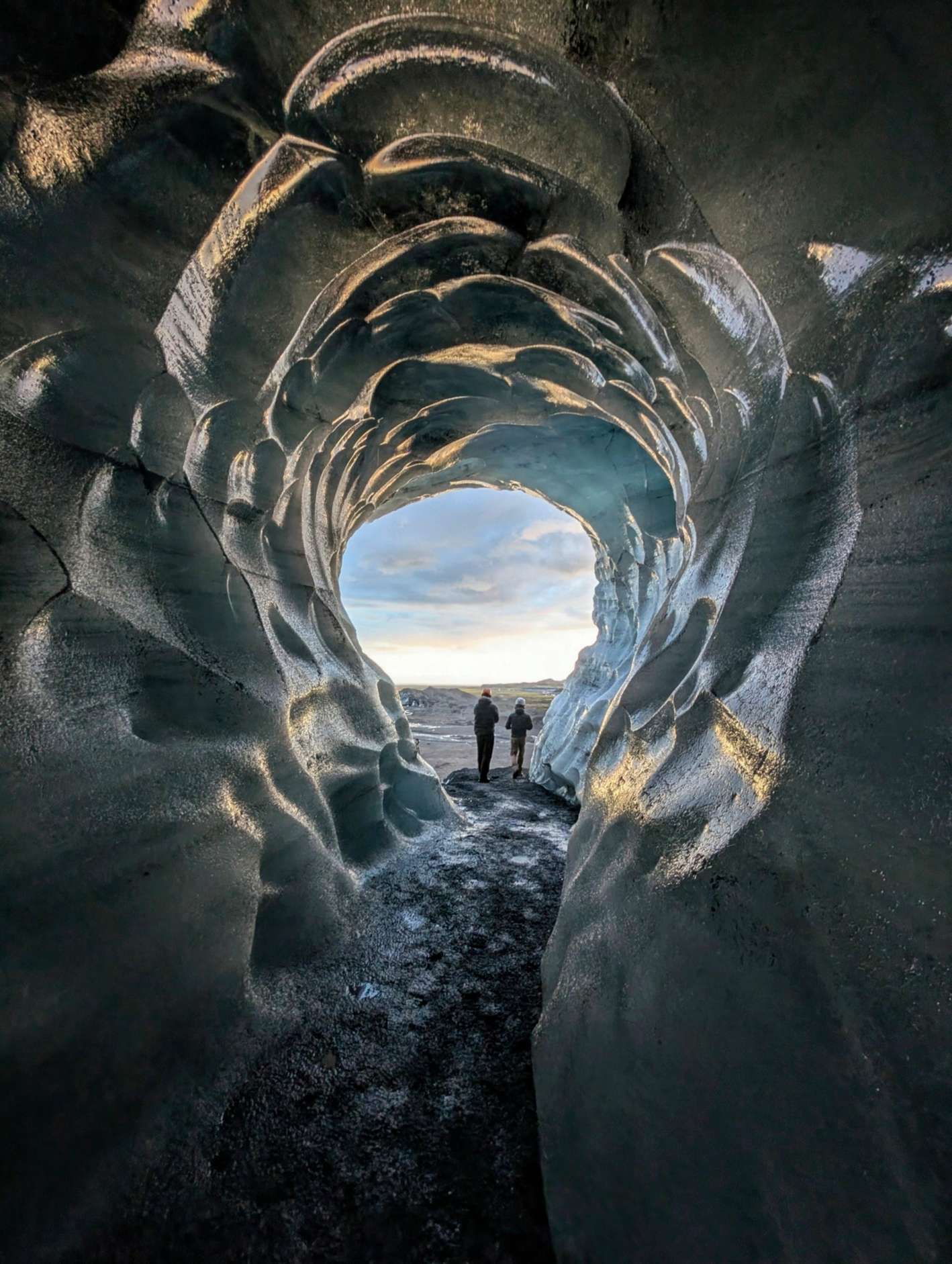
Book a private departure and set your own time on the glacier.
Choose a small group and pair it with an early or late slot for a quieter cave.
Pair your cave timing with a glacier hike and see how the two differ in effort.

Add a glacier flight with two landings to a summer or winter South Coast day.
Fill the rest of your travel month with waterfalls, beaches and other South Coast stops.
Find full-day departures from Reykjavík that fit the daylight your month allows.
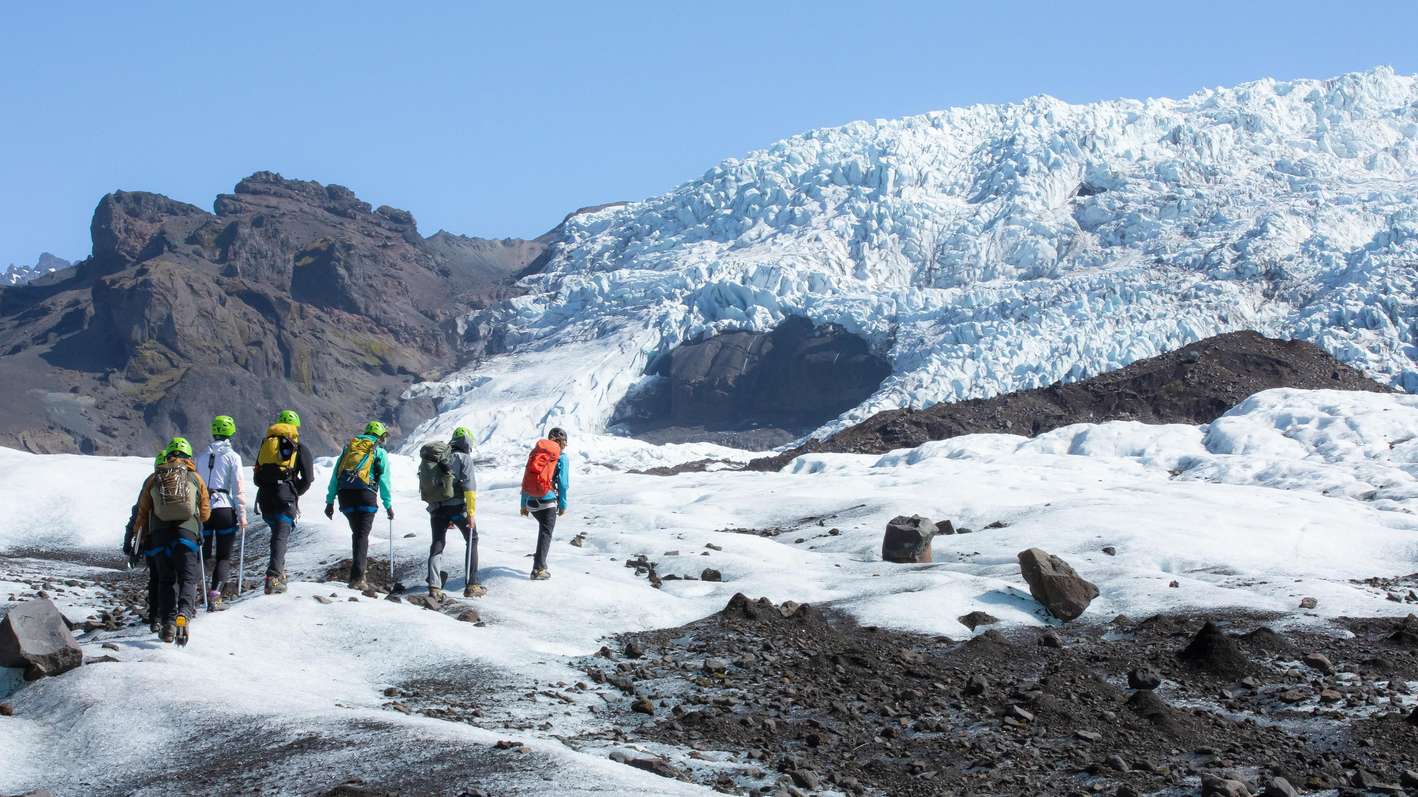
See how a glacier hike compares with a cave visit in season and physical demand.
Plan your driving route so a winter departure from Vík stays reachable.
Check temperatures, rain and wind for the month you plan to be on the South Coast.
Stretch your dates into a three-day South Coast plan built around your cave tour.
earliest slot means quietest cave
Month by month, morning against afternoon, and what changes your tour.
 Hvolsvöllur2026
Yes. Guided tours run all year, and in summer Katla is often the main natural ice cave open in Iceland. Guides check the cave each day and choose the safe spots, so what you see inside can differ from one visit to the next.
The roof above the cave is thick and holds through the summer melt, and guides assess and reinforce the ice where needed. Many caves near Jökulsárlón stay shut from spring until late autumn, while Katla keeps running.
Travelers who want a quiet cave pick the earliest morning departure or the final afternoon slot, when the big day-trip groups have yet to arrive or have already gone. An early tour in late autumn also catches more natural light on the glacier and inside the cave.
Expect roughly half an hour inside the cave itself. The super jeep ride from Vík takes about 40 to 60 minutes each way across the volcanic sands, which fills most of the rest of the three hours.
A visitor who went in the first week of September said the trip exceeded expectations and praised the scenery and colors. The cave keeps changing, so it may look different from older photos, and one traveler notes it can still be forming that month.
Winter brings snow-covered terrain and short days, around five hours of daylight in December around Vík. Tours still run, and the compressed light means a full-day tour from Reykjavík travels some stretches in darkness, while a departure from Vík fits the daylight better.
Yes, tours run in both months. Late autumn is a good season for natural light inside the cave on an early departure, and Katla keeps its year-round schedule while winter-only caves elsewhere are still opening.
Severe gales and blizzards can close the road between Reykjavík and Vík for a few hours or, occasionally, a whole day.
If a closure stops you from reaching the meeting point, contact the tour operator as soon as you see it. When they cancel because of the road, you can reschedule or get a full refund.
No. There is no public road to the cave, and reaching it takes a specialized super jeep run by tour operators. A guided visit with a certified glacier guide and safety gear is the only way in, in any month.
There is no closed season, so the choice comes down to what you want: summer gives open roads and long daylight, while winter adds snow around the glacier. Either way, the ice carries black volcanic-ash bands from past Katla eruptions through the blue, and the cave can change from week to week.
the 8:30 slot beats the midday crowds
Slots run all day from Vík, with Reykjavík pickup on the full-day option, and you can cancel up to 24 hours ahead for a full refund.