

Our pickLikely to sell out
2 hours·English
4.8(169)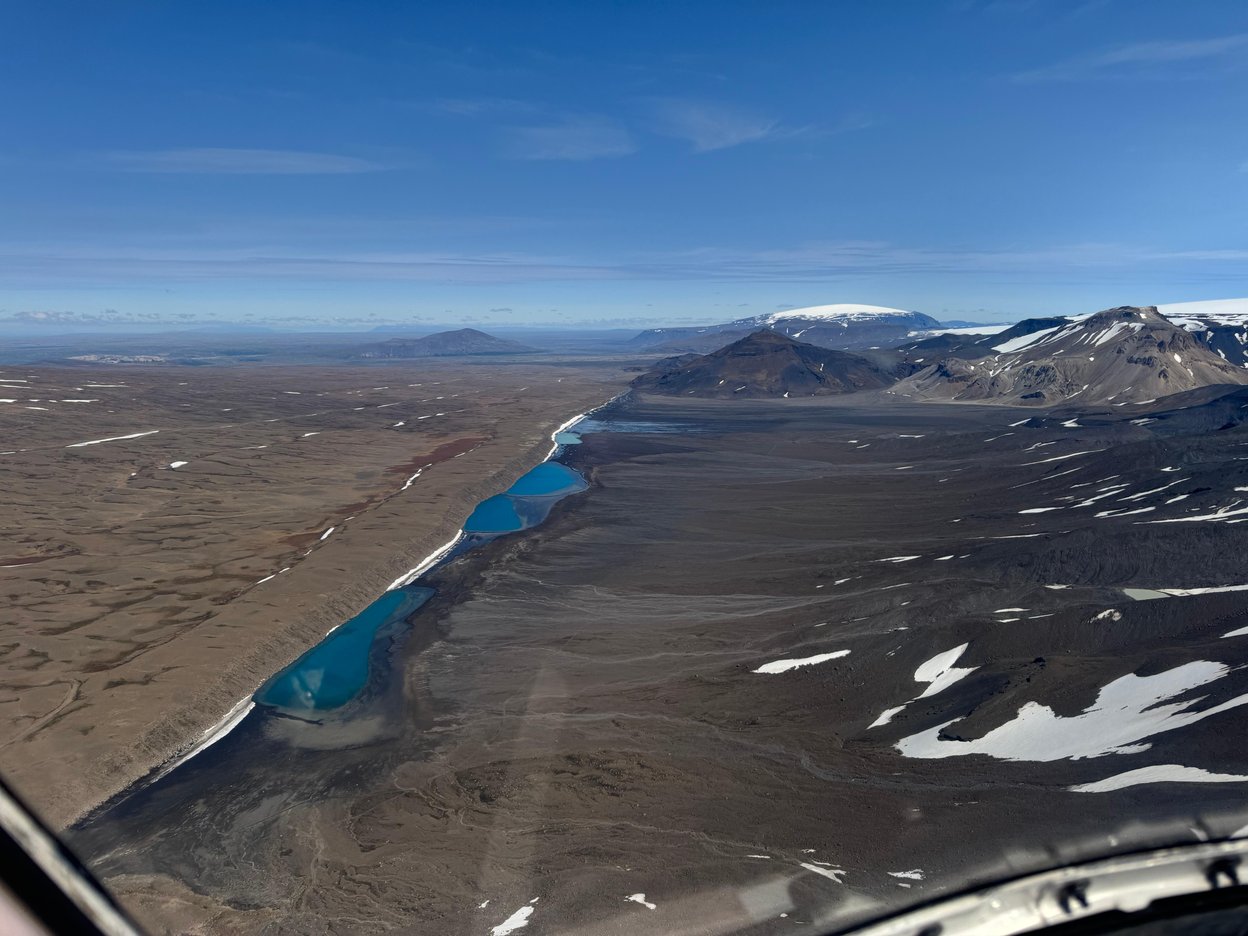
From Reykjavik: Fire And Ice Helicopter Tour with 2 Landings
Free cancellationHelicopter rideIn English

Trade the long South Coast drive for a rotor and a landing pad. Fly from Reykjavik Domestic Airport, touch down on Þórisjökull glacier and Mount Hengill volcano, and walk on snow far from any tour bus. Two landings in two hours - pick your date and lift off.
Helicopter ice cave tours, in the sense of flying straight into a cavern, are not on sale here. What this site sells is close: a helicopter glacier landing flight from Reykjavík, and ice cave tours that reach blue ice tunnels overland, by truck or Super Jeep.
The From Reykjavik: Fire And Ice Helicopter Tour with 2 Landings departs Reykjavik Domestic Airport and gets you onto glacier ice in about 75 to 90 minutes of flying, against 5 to 6 hours of driving to Vík. You land on Þórisjökull Glacier and at Mount Hengill, with roughly 15 minutes on the ice. No cave on this flight: for that, the ice tunnel trips from this page take over by road.
No tour on this site pairs a helicopter with an ice cave, because Icelandic helicopters land on open glacier summits while cave entrances sit under the ice.
The closest match on sale here is the From Reykjavik: Fire and Ice Helicopter Tour with 2 Landings, and it covers what draws people to that search: no long drives, aerial views, and a landing on glacier ice.
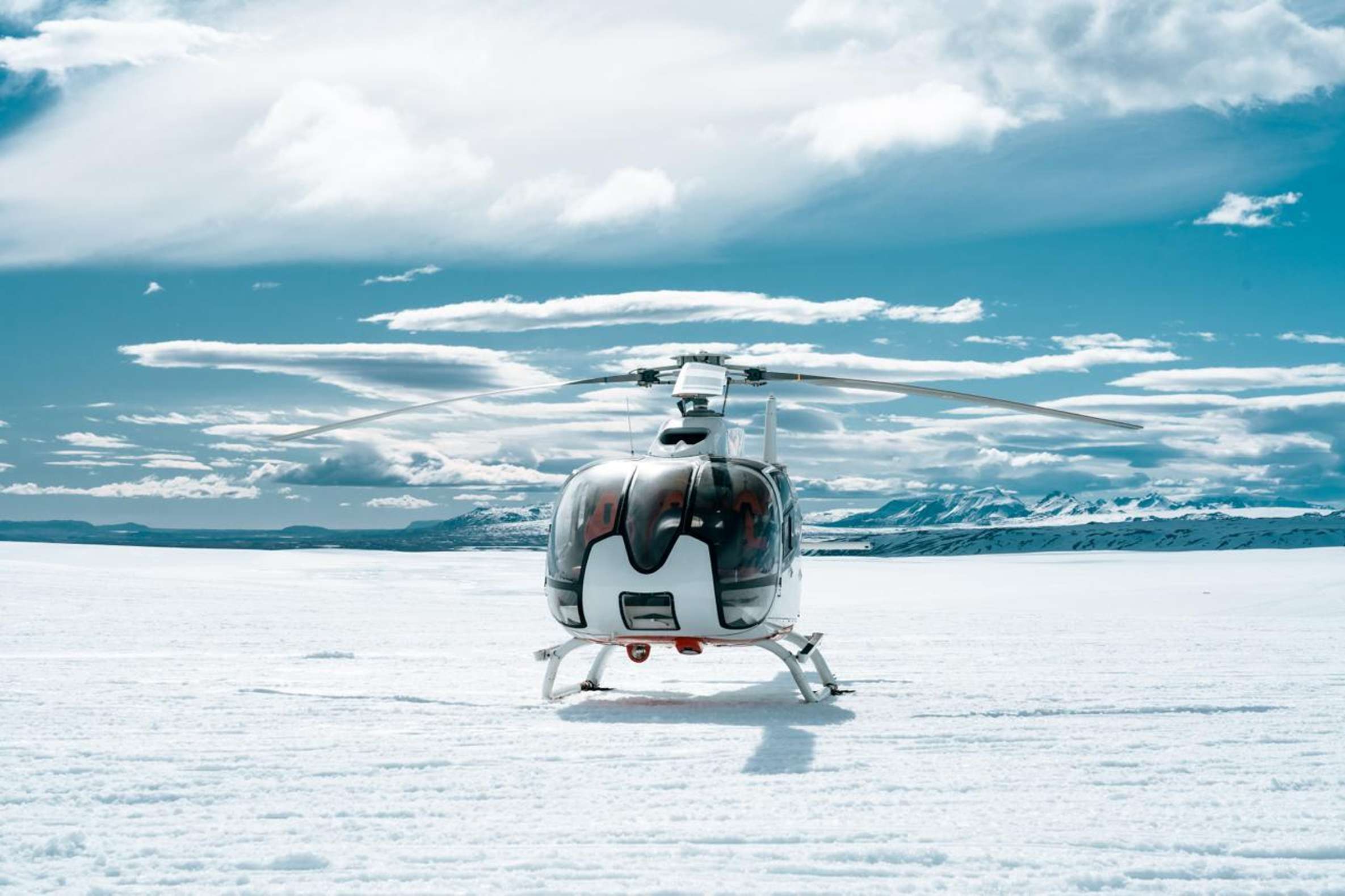
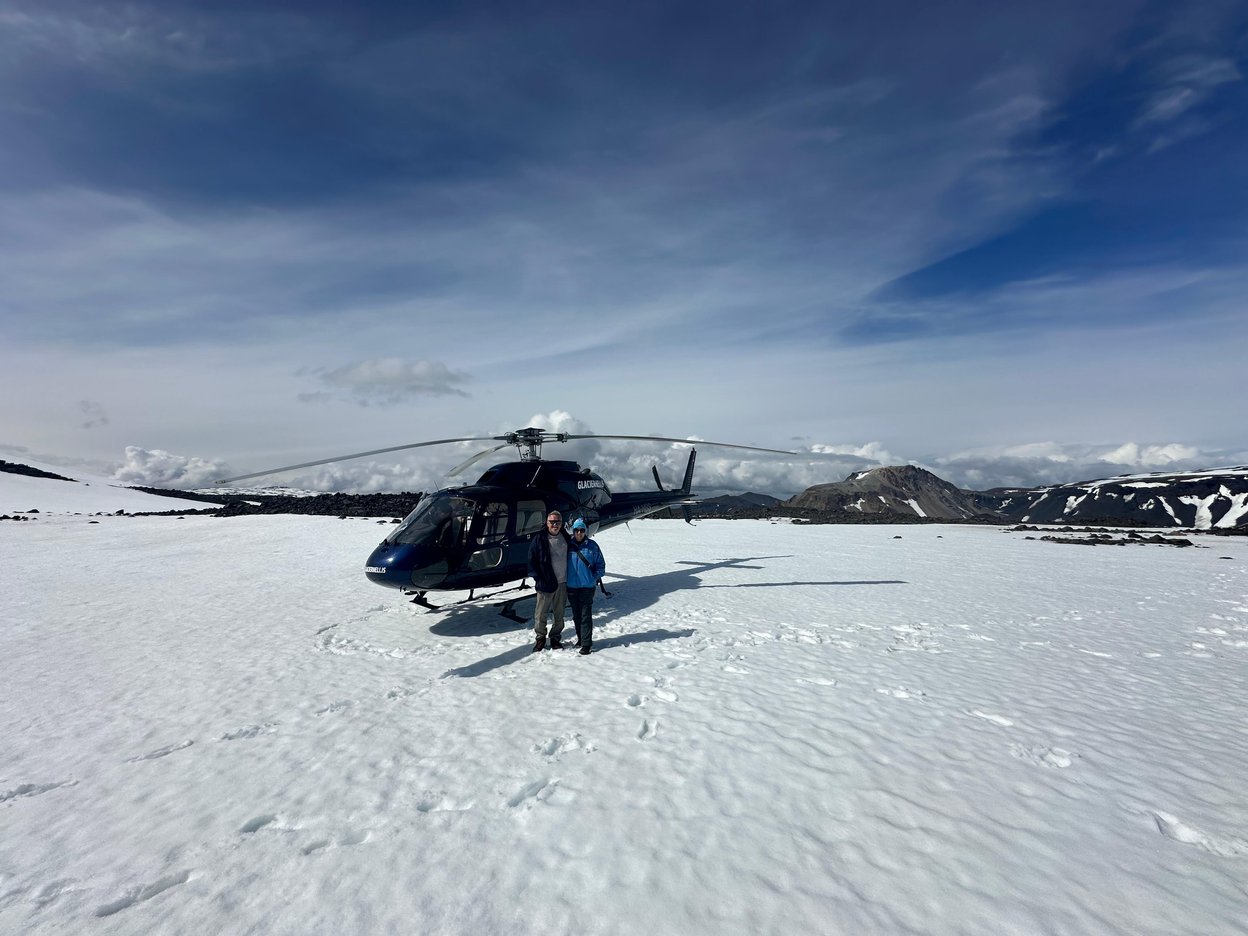
The flight leaves Reykjavik Domestic Airport and takes about two hours door to door. You cross Glymur waterfall, then set down on Þórisjökull glacier for roughly 15 minutes on snow no road reaches.
A second landing sits by Hengill's steam vents. The whole round trip runs 75 to 90 minutes in the air, against 5 to 6 hours of driving to cave meeting points near Vík.
The flight never enters a cave. For blue ice walls overhead, the Into the Glacier trip from Reykjavík, also sold here, covers the ground route.
Pick this flight when time is short or the view from above matters most. It needs at least four passengers to run, and weather cancellations come with a full refund.
flights need at least four passengers
Green marks the lowest price. Prices per person.
first flight out gets the calmest wind
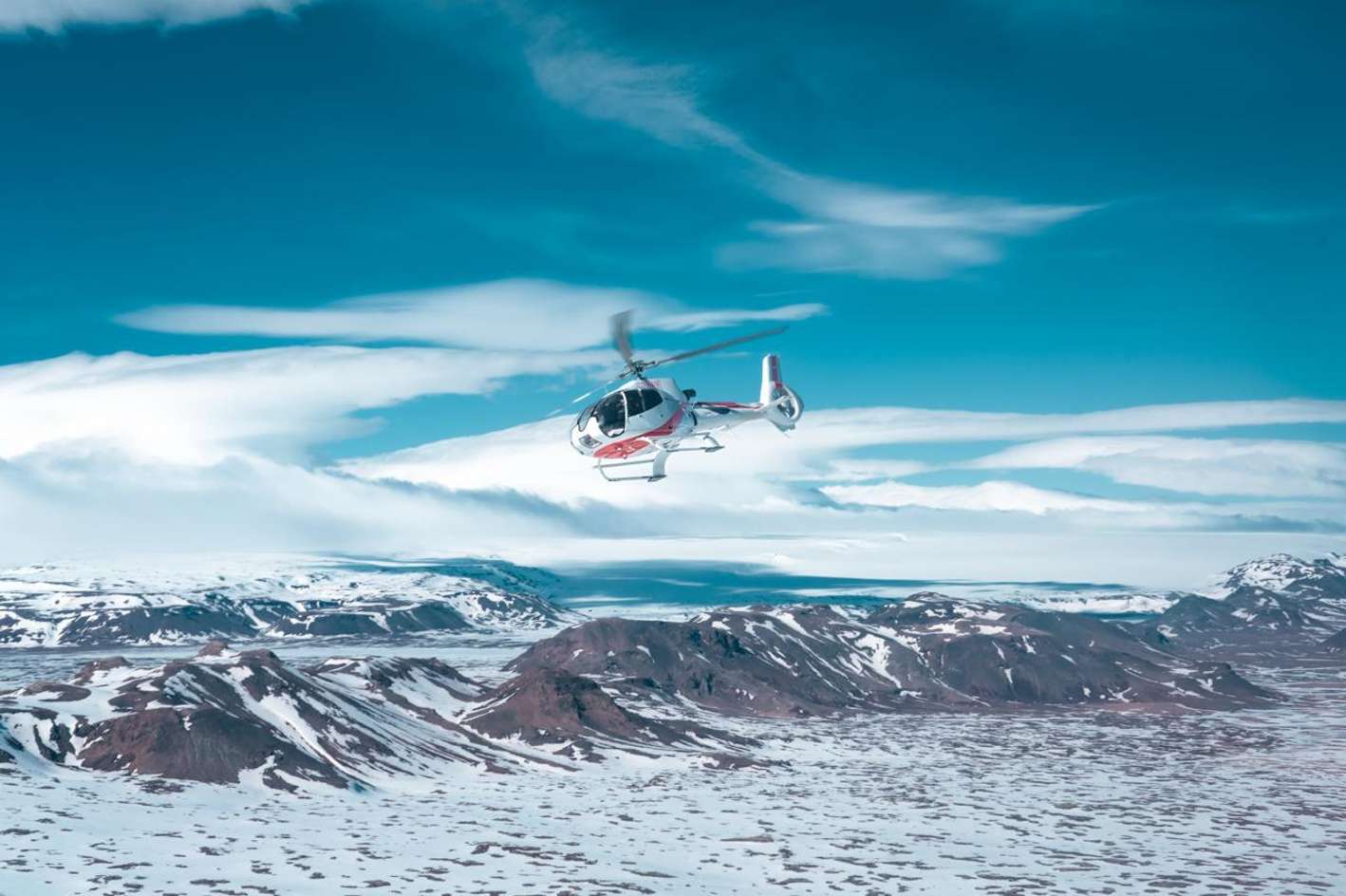
Steam rises from the geothermal fields around Mount Hengill, visible from a long way off, as the Fire and Ice helicopter crosses Iceland's volcanic ridges.
The flight from Reykjavik makes two landings: one on the Langjökull ice cap, where you step out onto snow that no road reaches, and one in the geothermal area, where boiling mud pools and steam vents dot the ground.
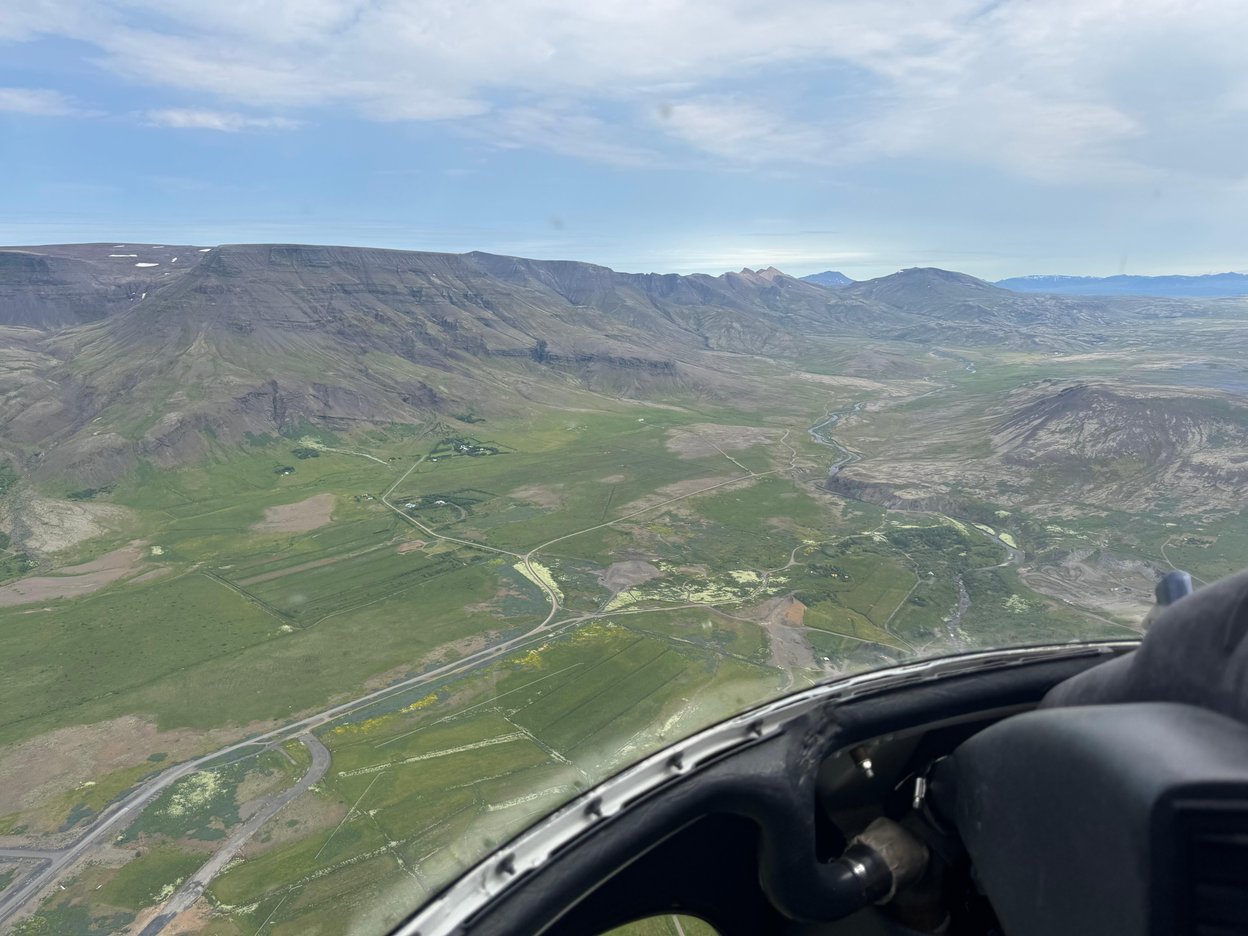
Between them you fly the ridges of Mount Esja, cross Glymur waterfall and pass over Thingvellir National Park.
The helicopter ride and both landings are included; food and drinks are not. Pilots fly these routes daily, and several travelers say theirs put nervous flyers at ease. The whole outing takes about two hours.
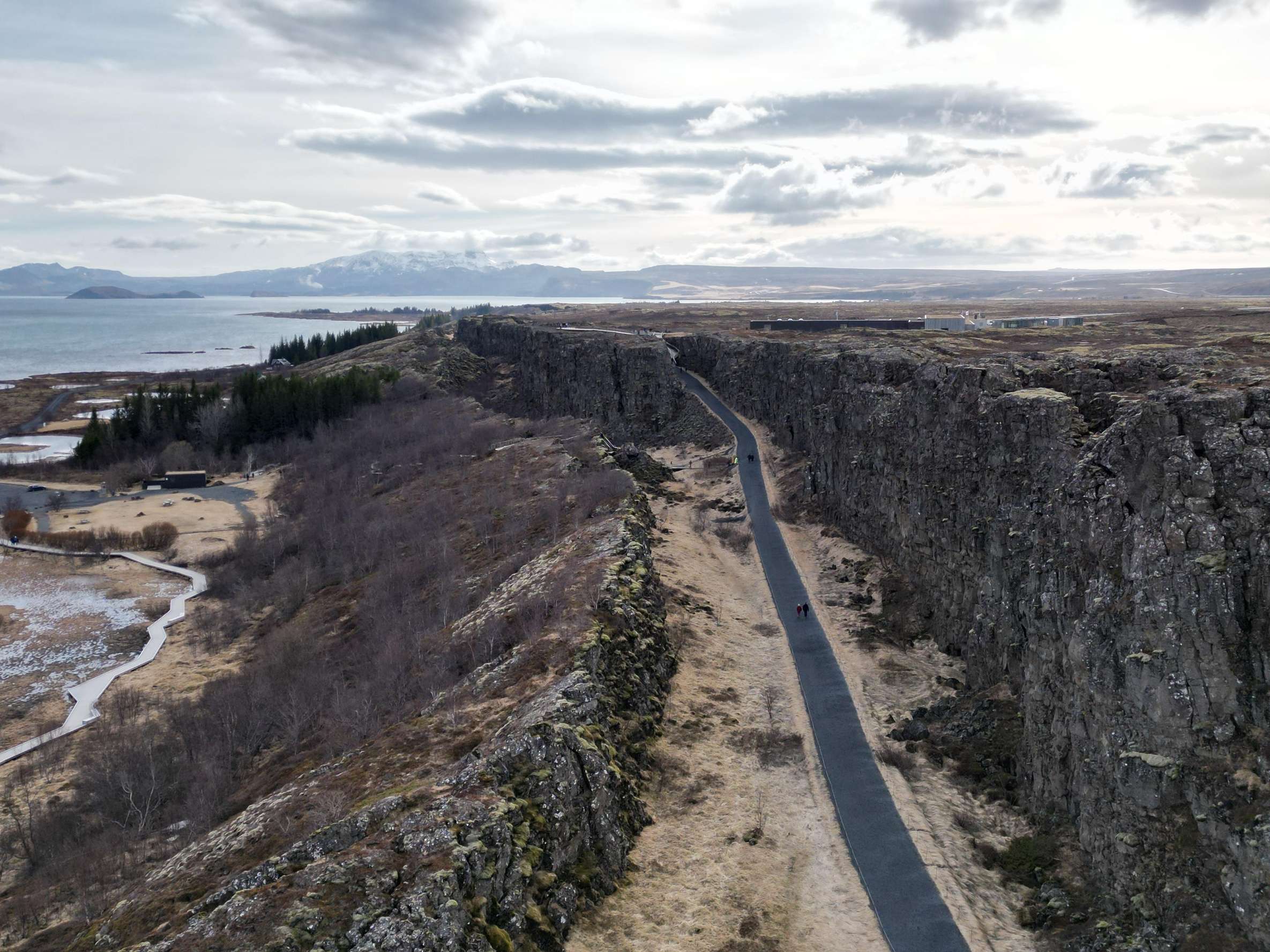
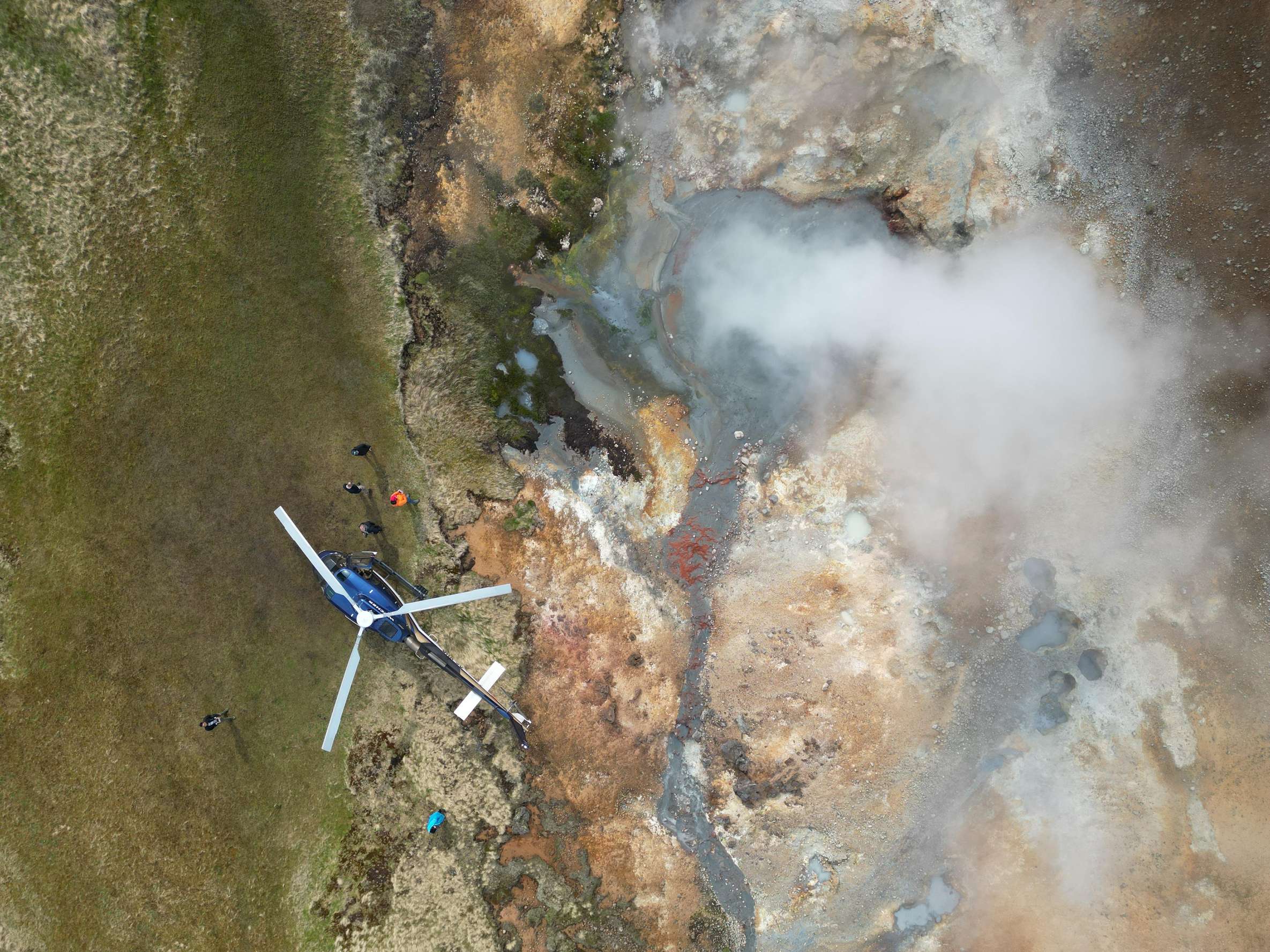
flights need at least four passengers
Helicopter from Reykjavik domestic airport was excellent. Relaxed in the HeliGlacier lounge first.
Absolutely unbelievable, better than imagined! Laura our pilot was amazing. Smooth flight, incredible weather, unreal landing spots. Best experience of my life, you have to do this in Iceland.
Landing on a glacier and a volcano, with breathtaking views over Reykjavik, like living a dream. Smooth flight, great pilot, lovely ground crew. Highly recommend, 10/10.
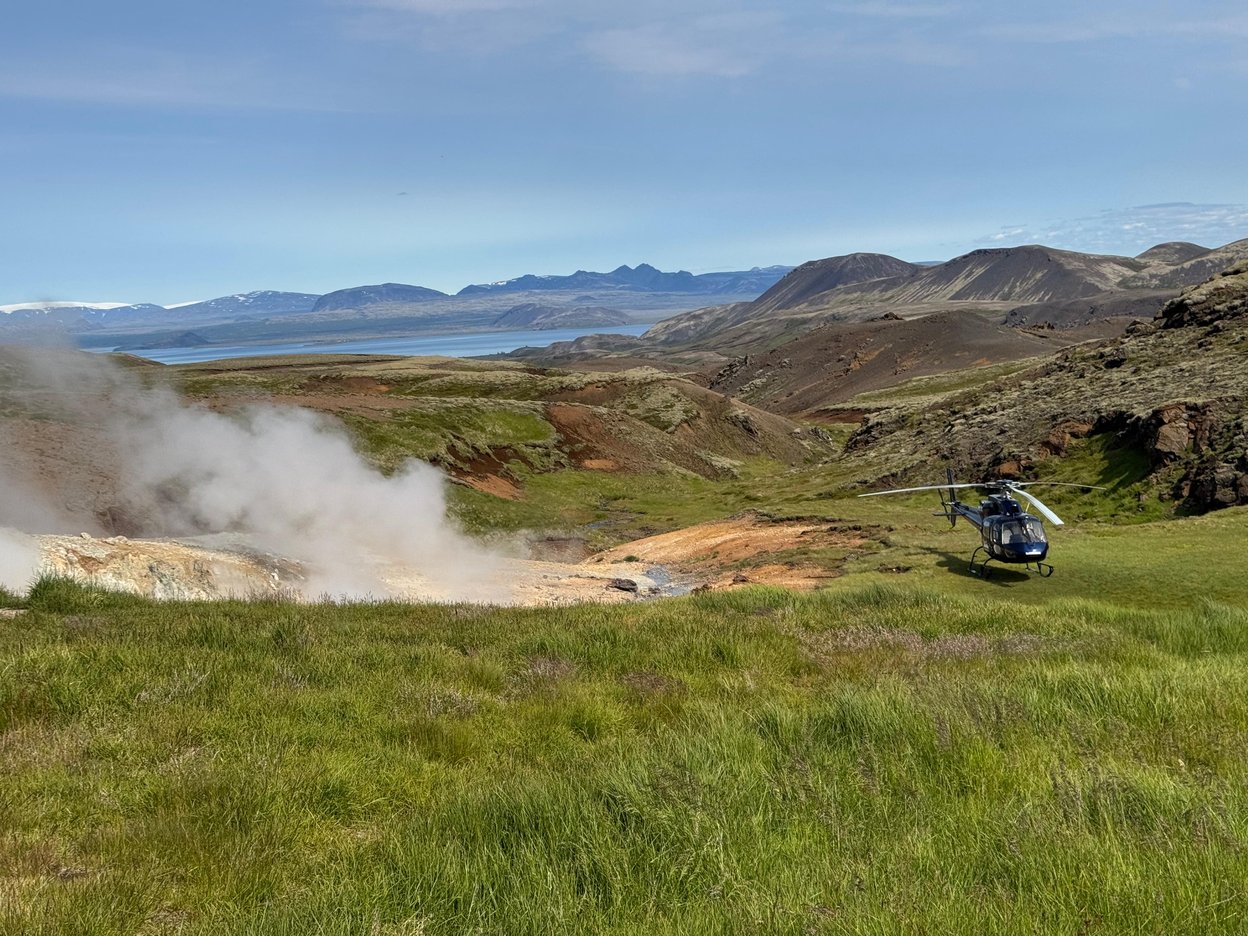
Our Fire & Ice tour went a day later, but both landings happened as planned and we four had the helicopter to ourselves. Flying in Iceland is just great, highly recommend this two-hour tour!
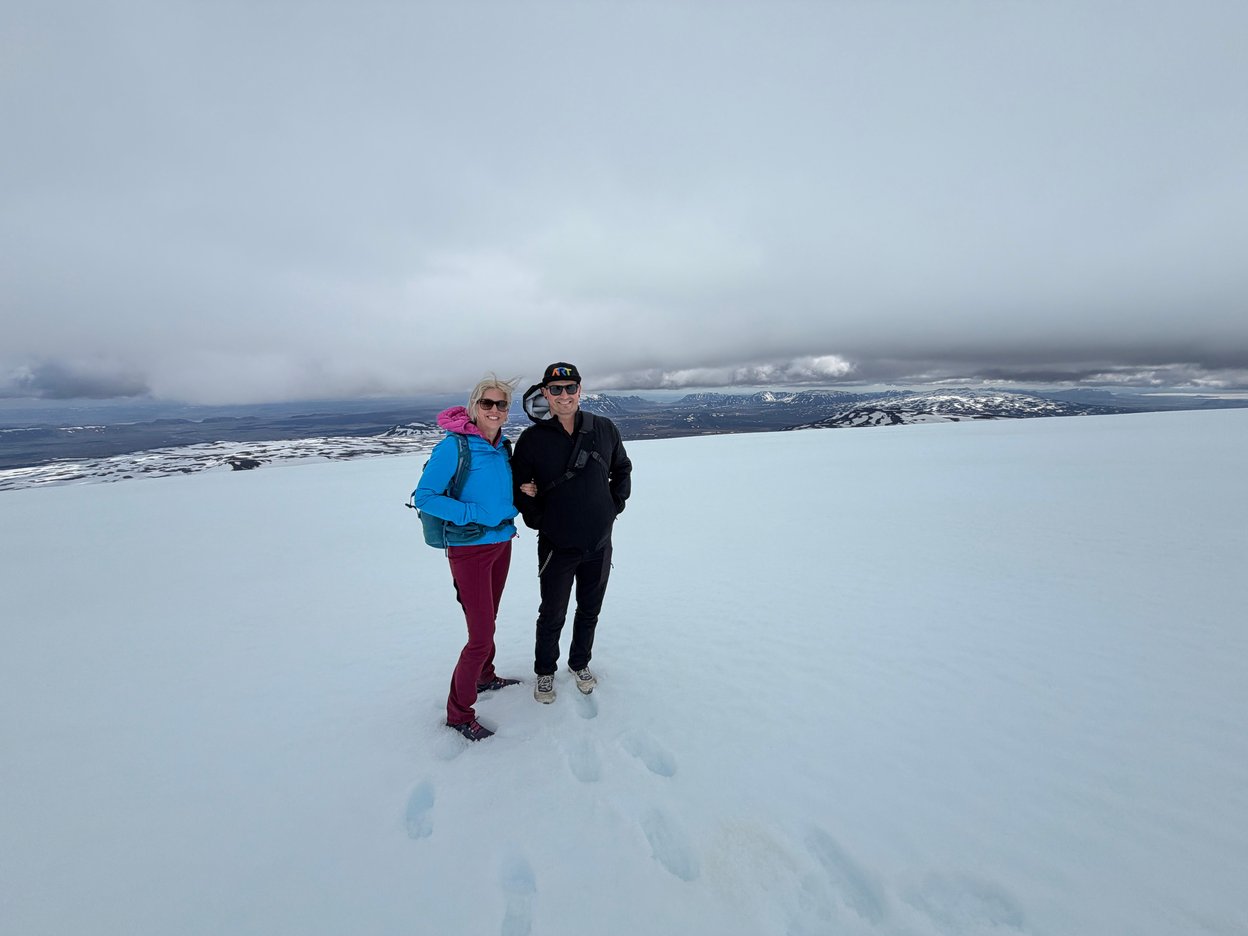
What a treat! We had little time in Iceland, and this helicopter ride was perfect for seeing the country on.
Incredible experience, well worth the money, excellent guides. I was very anxious about the helicopter but had nothing to worry about, fantastic time, I'd book again.
Wonderful experience, a competent, friendly pilot, felt safe throughout, no stress at either stop with plenty of time for photos. Highly recommend!
Most reviewers praise the pilot's smooth flying and commentary, calling the glacier landing worth the high price.
Several travelers were surprised by extra stops like a horse farm and a waterfall that made the drive feel special.
A few wished they had more time inside the ice cave, since the guided walk goes by quickly.
first flight out has the calmest wind
Choose your date on the tour card. Flights run year-round, daily weather permitting, and you can cancel up to 24 hours ahead for a full refund.
The Fire and Ice flight has a single booking option: a two-hour trip with landings on Þórisjökull Glacier and at the Hengill geothermal area.
Pay through the marketplace and your voucher arrives with the meeting details. The flight needs at least four passengers to operate.
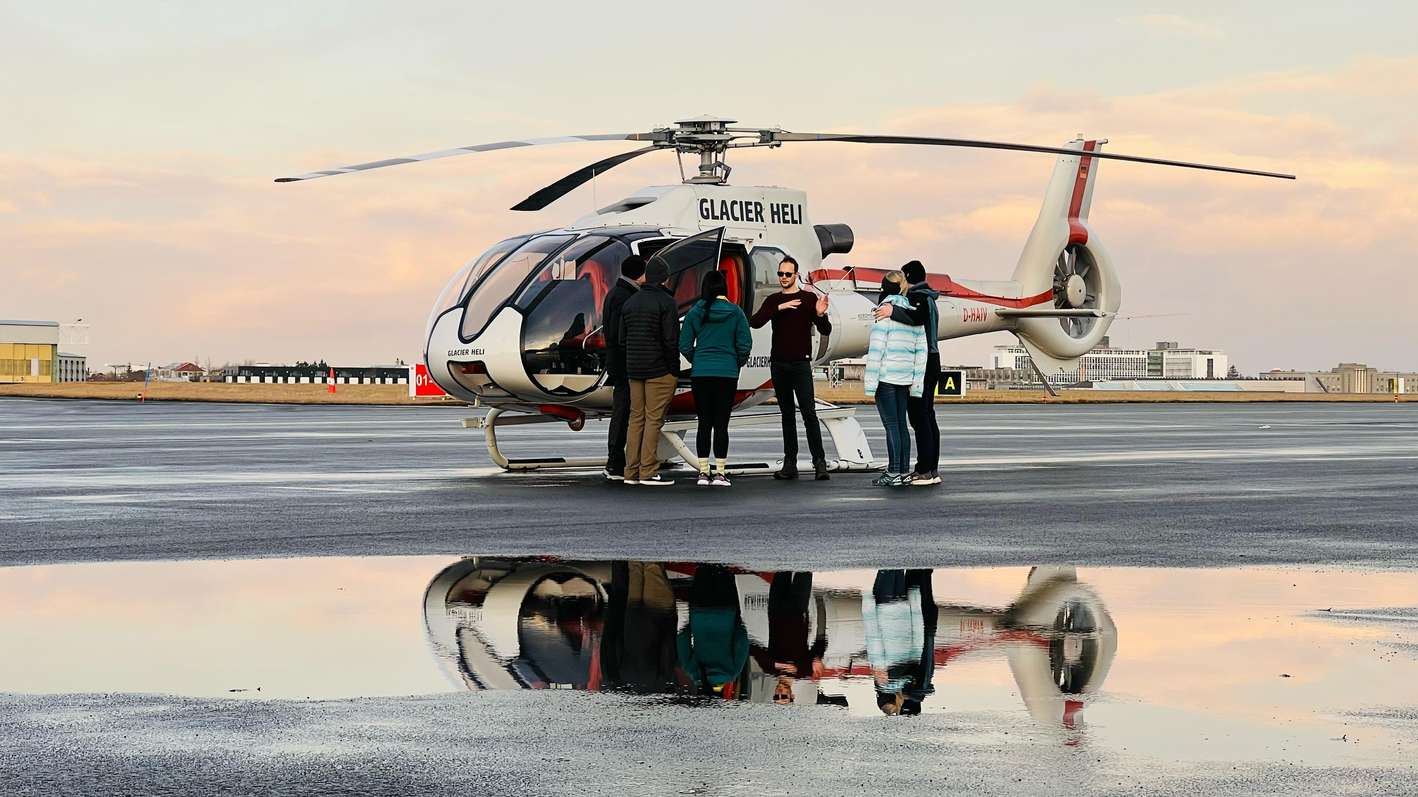
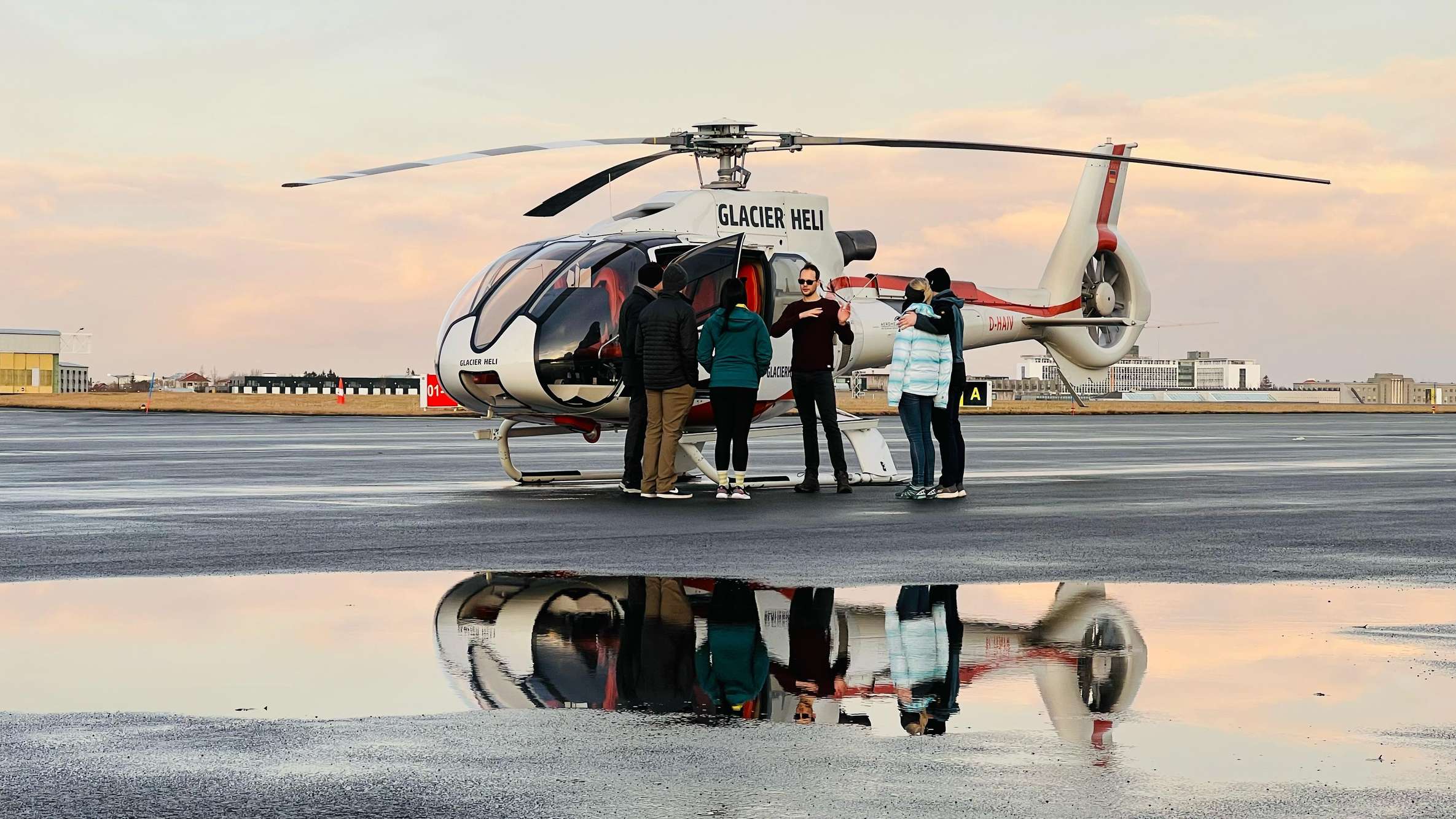
Head for Ace FBO Reykjavík at Nauthólsvegur 52, behind Hotel Natura. The helicopter leaves from a separate operator facility, so give yourself a moment to find it.
Arrive a little early and meet your pilot at the terminal. If strong winds keep the helicopter on the ground, the operator rebooks you or refunds you in full.
the tunnel sits under 25 metres of ice
The Fire and Ice flight leaves from Reykjavik Domestic Airport, so you make your own way there. The 11-hour Langjökull tunnel tour includes Reykjavík pickup and drop-off; the Húsafell departure does not include the transfer from Reykjavík.
The flight makes two landings, one on Þórisjökull Glacier and one at Hengill. The Langjökull trips use a modified 8x8 glacier truck that drives right up to the tunnel entrance, and the Húsafell departure lets you pick a morning or a 3 pm slot.
Gear and guiding come included: Food and drinks are extra; the Húsafell trip excludes the Reykjavík transfer.
The whole helicopter trip runs about two hours door to door, with roughly 75 to 90 minutes of flying and about 15 minutes on foot at the glacier landing. The first morning departure gives you the calmest wind and clearest visibility.
The helicopter needs at least four passengers to operate. If too few people book, the flight is cancelled and you receive a full refund, so keep some flexibility around your travel dates.
You can cancel up to 24 hours ahead for a full refund. If the operator grounds the flight for weather, safety or too few passengers, you get your money back in full.
Flights run year-round, weather permitting. Summer brings the most stable conditions, while January averages 11 windy days and 20 snowy days, so a winter booking carries more risk of a cancellation or a changed route.
Wait for the helicopter to shut down before you board or step off on snow or ice, and use the downslope side on sloping ground for greater rotor clearance. Leave loose hats and lightweight scarves behind, since downwash can send them flying near the landing zone.
Keep the lens close to the window without touching it, and shoot at 1/1000s or faster to beat the vibration. A polarizing filter tames the glare off snow and ice, and dark clothing cuts reflections in the glass.
Dress for time on the ice: thermal base layer, fleece, windproof jacket, hat and gloves. Waterproof boots with grip and sunglasses handle the glare off the snow, and even summer landings call for the same winter kit.
Children of all ages can ride the Langjökull glacier truck, with sleds for the little ones and free places for kids 12 and under. Neither glacier tunnel tour suits people with mobility impairments, since both involve walking on uneven ice.
the first flight out flies calmest
None of the tours here lands inside a cave; helicopters set down on open glacier ice. The wish survives in pieces: time saved, ice from the air, a quiet summit. Which tour you pick depends on which mattered most.
None of the tours here lands at a cave entrance; the closest is the two-hour Fire and Ice flight with a glacier and a volcano landing.
Flying from Reykjavík to a glacier and back takes 75 to 90 minutes, against 5 to 6 hours of round-trip driving to Vík.
The first morning departure gives the best odds of calm wind and clear visibility.
Straight answer first: none of the tours here flies you into an ice cave.
Helicopters set down on open glacier caps, where the ice is wide and the ground is flat, and caves sit far below in the outlet glaciers, reached by road and on foot. No helicopter lands at a cave mouth, and terrain is the reason.
What the search was really after survives in pieces: skipping the long drive, seeing the ice from above, landing away from the buses, touching glacier ice without a hike.
The From Reykjavik: Fire And Ice Helicopter Tour with 2 Landings leads the field: two hours, two stops, one on the Þórisjökull glacier and one at Hengill volcano, straight from Reykjavik's domestic airport.
The Into the Glacier tour from Reykjavík takes a full day by road and walks you deep inside Langjökull. The Húsafell adventure covers the same tunnel in four hours for anyone already in the west.
Side by side, the differences come down to where you start and what you actually touch:
| Fire and Ice helicopter | Into the Glacier from Reykjavík | Into the Glacier from Húsafell | |
|---|---|---|---|
| Start point | Reykjavik Domestic Airport | Pickup in Reykjavík | Húsafell, drive yourself |
| Time to the ice | About 45 minutes of flying | A full day by road | A truck ride up the glacier |
| What you touch | Glacier summit and volcano ground, open sky | An ice tunnel inside the glacier | The same ice tunnel |
| Duration | 2 hours | 11 hours | 4 hours |
| Suits | Short stays and aerial views | Ice walls without a hike | Travelers already in the west |
The flight wins on time and the view. The tunnel wins on ice you can walk inside. Pick by which you would regret missing more.
The honest frame: a flight pays for itself when it reaches scenery no road touches, and Þórisjökull qualifies. Roads and hiking trails end long before that summit. If the fare would force sacrifices elsewhere in the trip, the Into the Glacier day delivers ice walls for far less, and you should spend there instead.
Nervous about the bumps? Travelers mention turbulence near ridges, mostly on the downwind side of mountains, and evening winds that pour off the glaciers in summer. Pilots fly these routes every day, and four reviewers said the professional pilots helped them feel at ease during the flight.
A few things first-timers wish they had known:
Strong downdrafts build on the downwind side of mountains, and pilots expect them
Katabatic winds pour down glacier surfaces on summer evenings and nights
The highland mountains see high winds that make flying challenging; the pilot chooses the line
Read the bumps that way and the flight stays a pleasure: the ship steadies, the ridge passes, the glacier opens out below.
Reykjavik Domestic Airport is barely a strip of tarmac by the bay, and the rotor is turning before the coffee cools in your hand. The Fire and Ice flight lifts off, crosses Glymur waterfall and has you standing on Þórisjökull inside the first hour. Door to door, the whole excursion runs about two hours.
The road version is a different animal. Driving to the Katla ice cave meeting points near Vík takes 2.5 to 3 hours each way, and an overland super jeep day to Katla and back spans about ten to eleven hours.
Flying saves 3.5 to 4.5 hours of transit on the same wish: a glacier under your boots.
The helicopter row is the only one with no highway in it. Everything else costs you a working day before the ice.
Same departure city, same glacier country, and the gap between the two numbers is the rest of your day, given back.
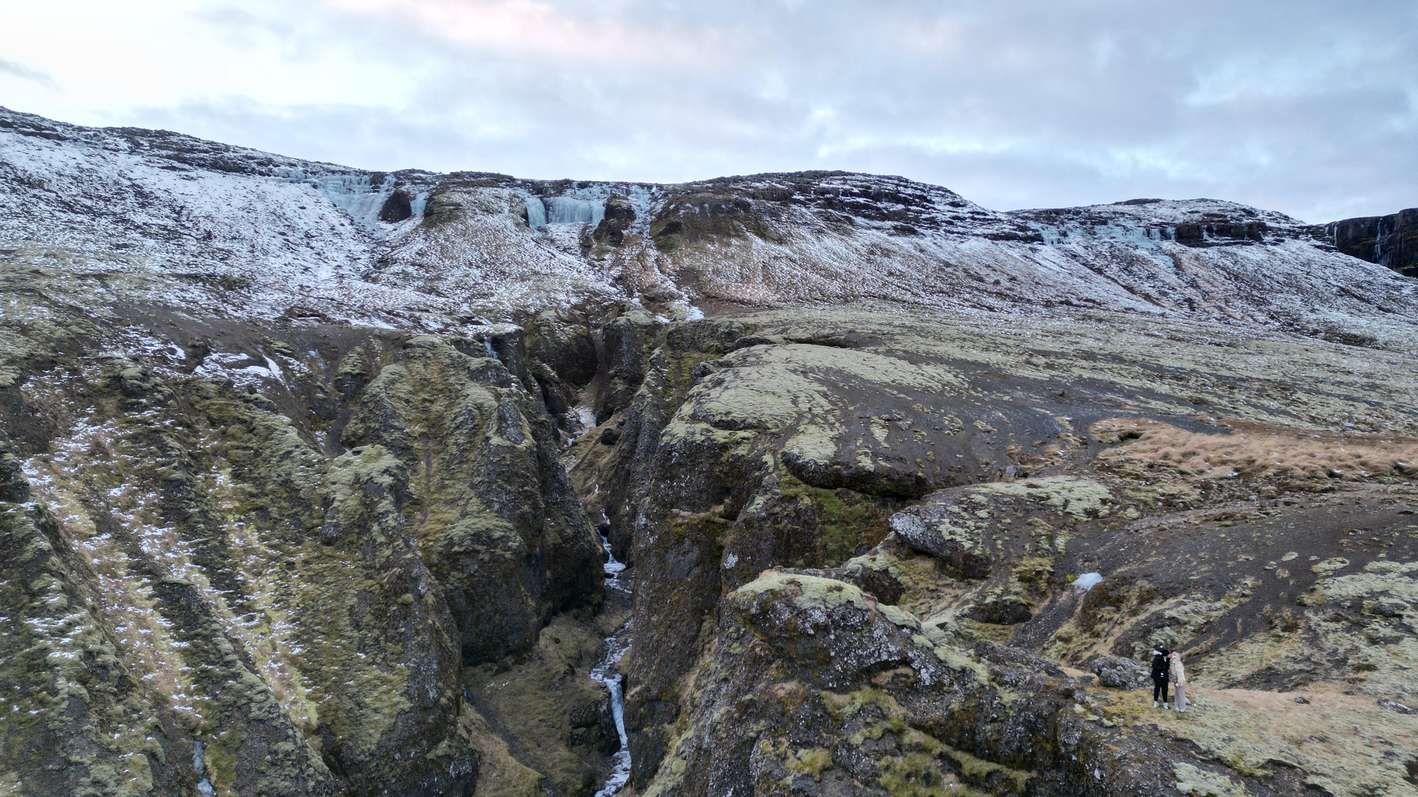
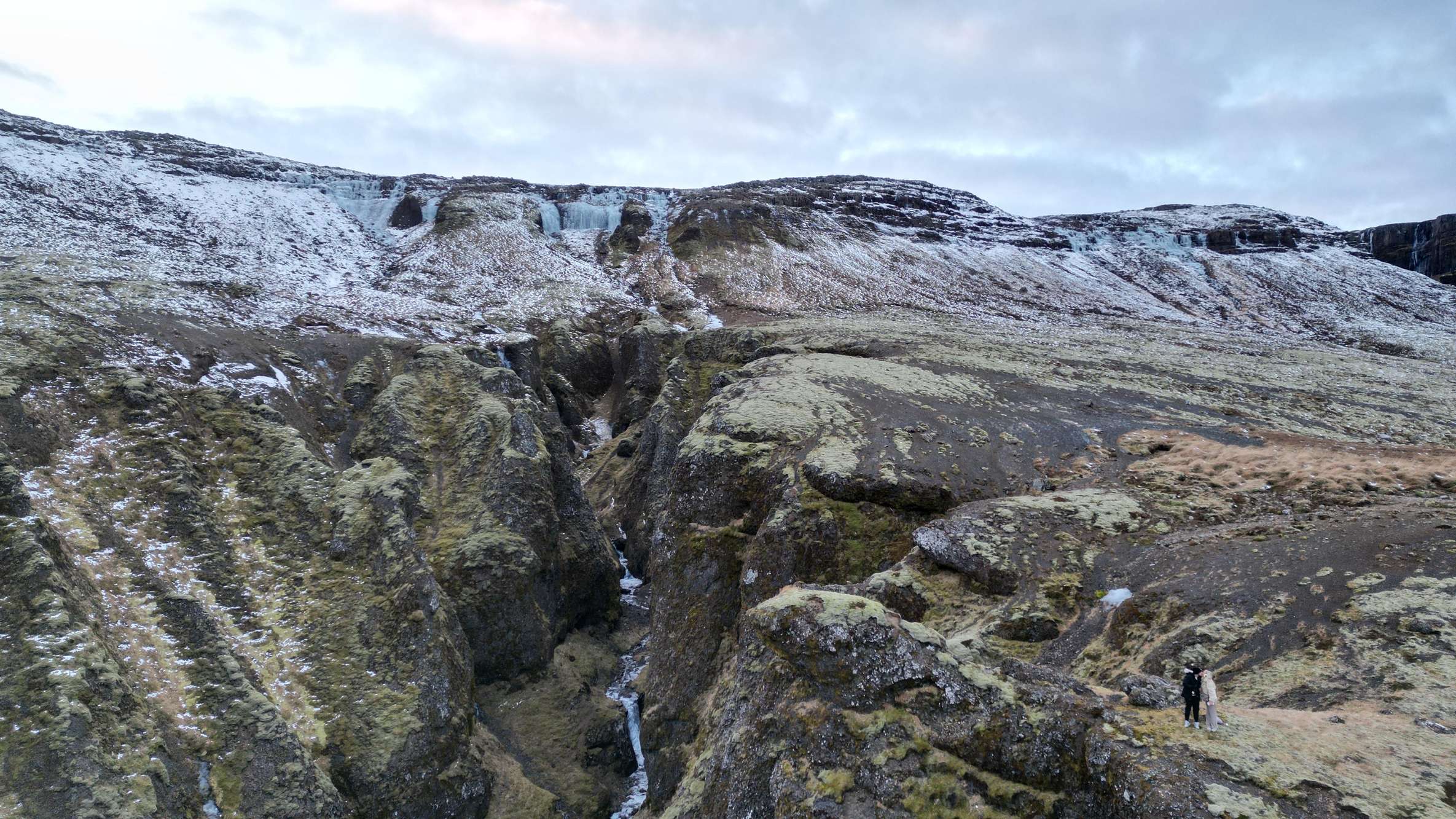
The view starts early. Hengill's steam vents show from afar, white columns rising off the geothermal fields, and the first landing puts you beside boiling mud pools. On the run toward Þórisjökull the flight crosses Glymur, Iceland's tallest waterfall, before the glacier fills the window.
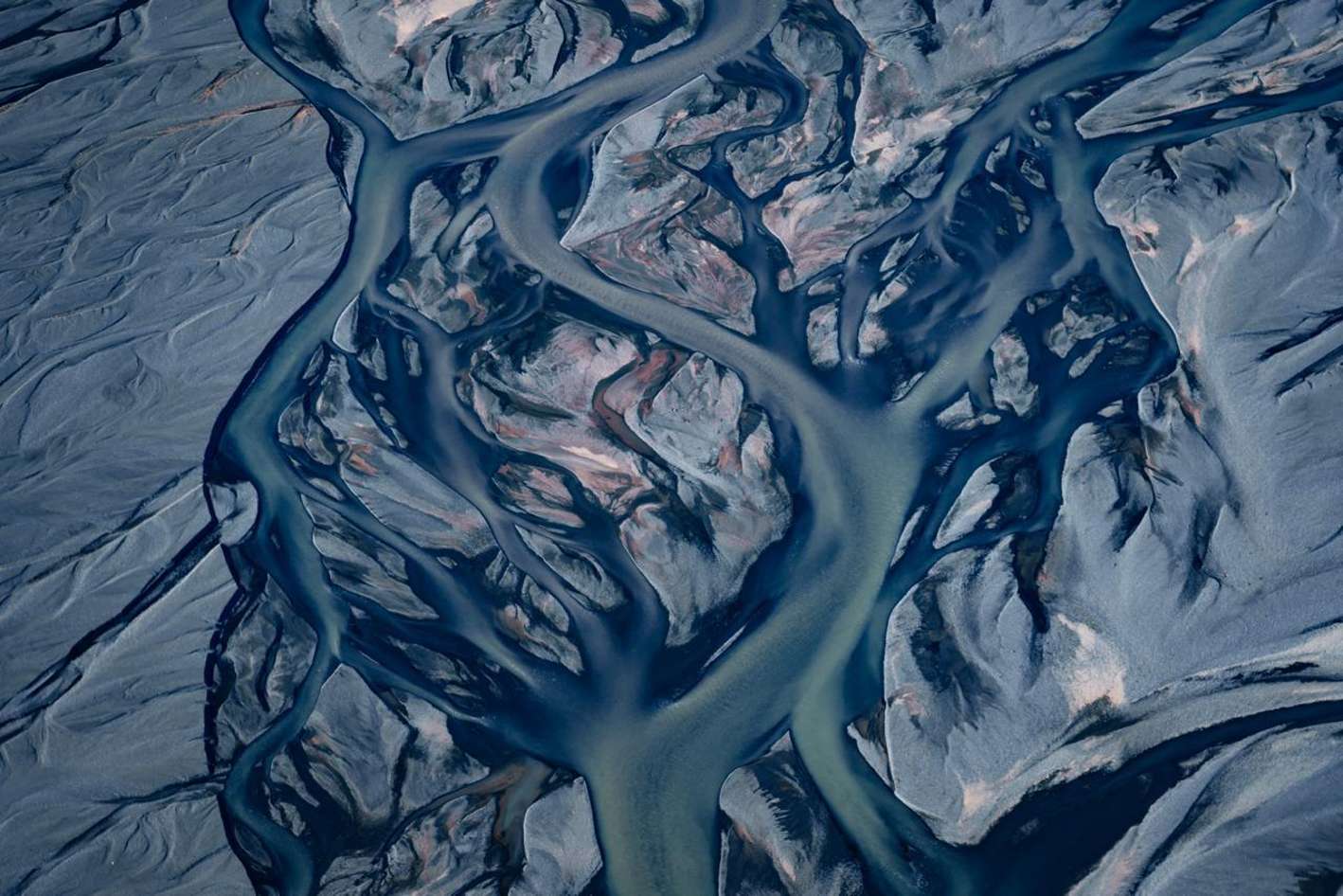
South of the ice, the outwash plains read like marbled paper. Meltwater carries glacier sediment onto the flats, and as the water slows it drops that sediment, so the shallow channels braid and shift with every change in flow.
From the ground it is gravel; from the air it is the clearest picture of how a glacier builds a country.
One tip for the camera before the glacier fills the window:
Then put the camera down and watch the ice come up to meet you.
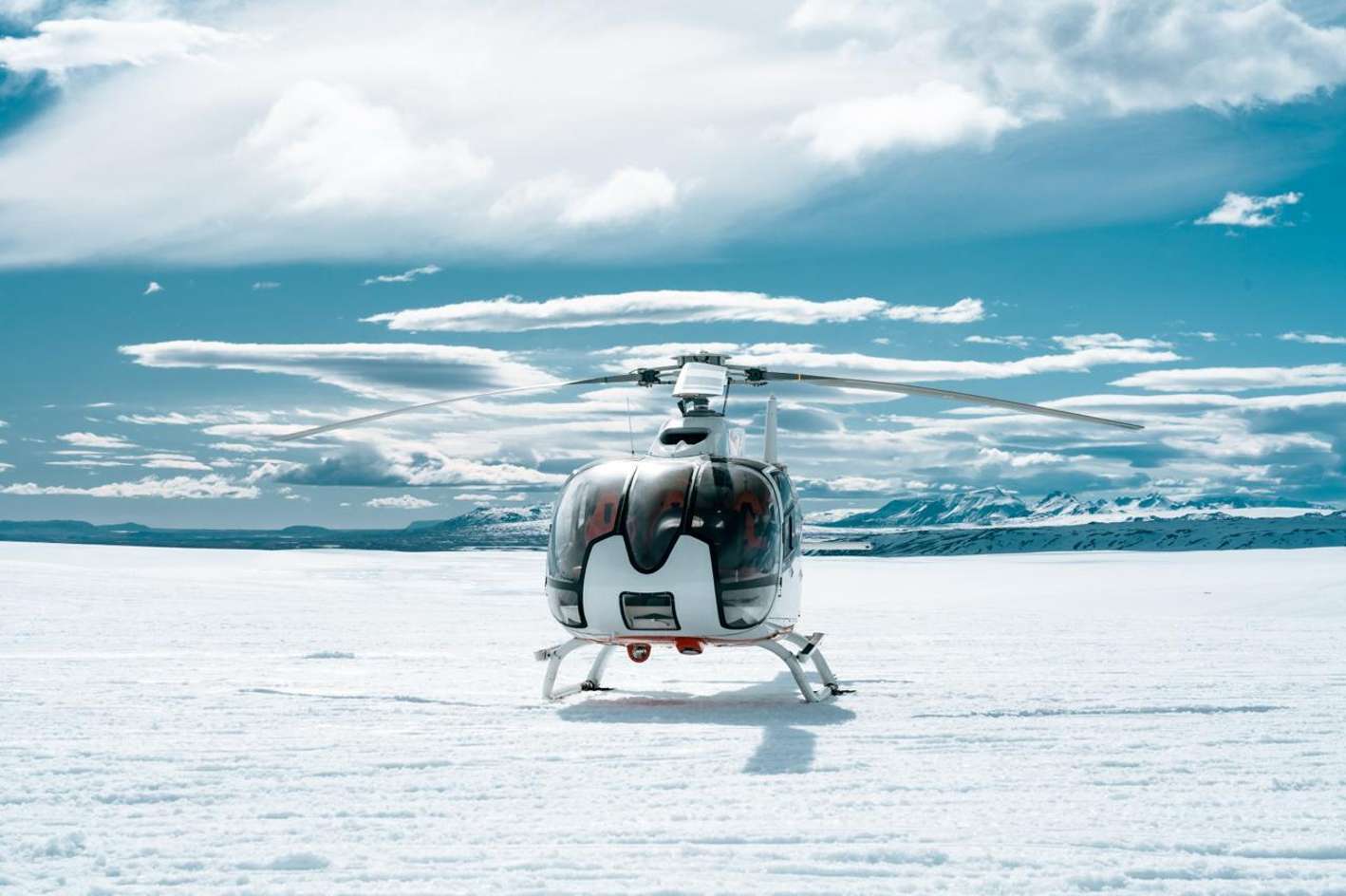
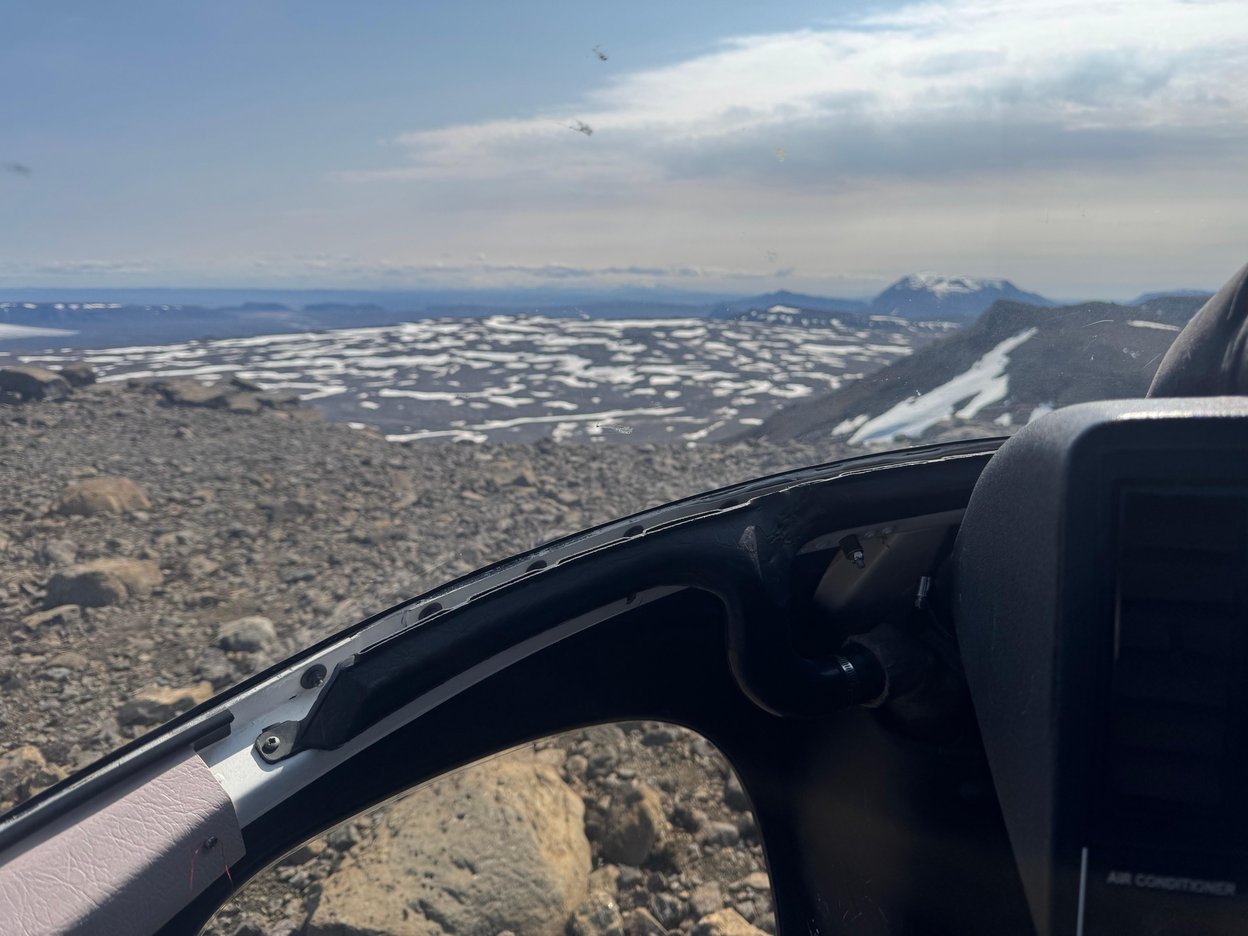
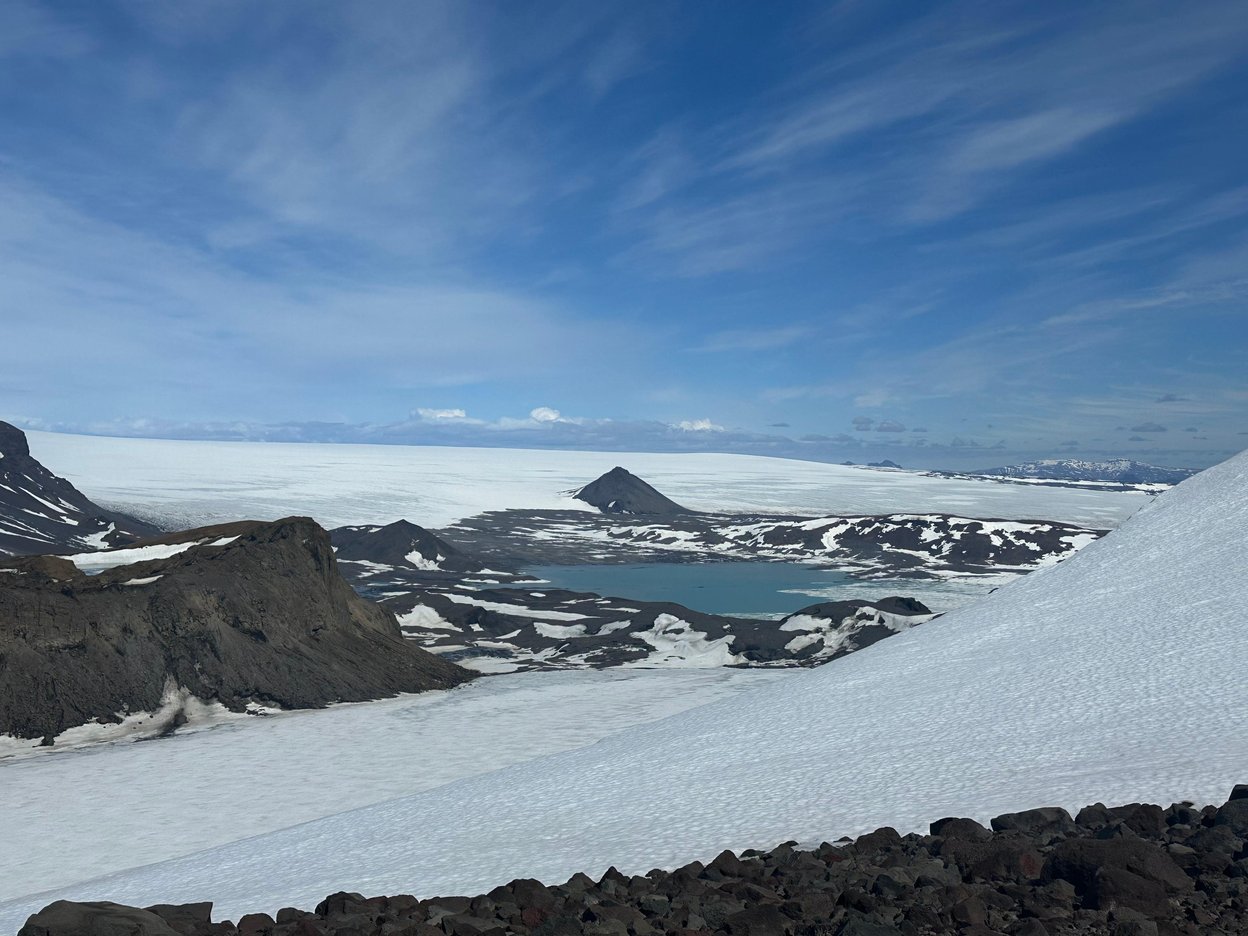
The landing is the part people remember. The pilot sets down on Þórisjökull's summit, the rotor shuts down, and you step onto snow that no road or trail reaches. You get about fifteen minutes on foot: photos, a slow walk across untouched ice, a snowball fight if the mood takes you, then back aboard.
The ship keeps the seclusion. A standard sightseeing helicopter carries five or six passengers, so the summit holds your small group and nobody else. Ground-level cave entrances work differently; they draw crowds precisely because tour vehicles can park at the door.
The trade-off is the cave itself. The summit is open ice and sky, magnificent and empty, and no blue walls close around you. If walls are the point, the tunnel tour later in this guide is the one that delivers them.
The wish deserves saying out loud: stepping off a helicopter straight into a cave. None of the tours here grants it, and the closest substitute earns its place instead.
The From Reykjavik: Into the Glacier Ice Cave Tour picks you up in the capital, hands you to a guide at Húsafell and drives a modified glacier truck to the mouth of the world's largest man-made ice tunnel on Langjökull.
The listing gives the tour eleven hours, pickup to drop-off, and the drive to Húsafell takes most of that. Full-day glacier trips from the capital all run ten to eleven hours for the same reason: the glaciers sit far from the city. The number counts the road as much as the ice.
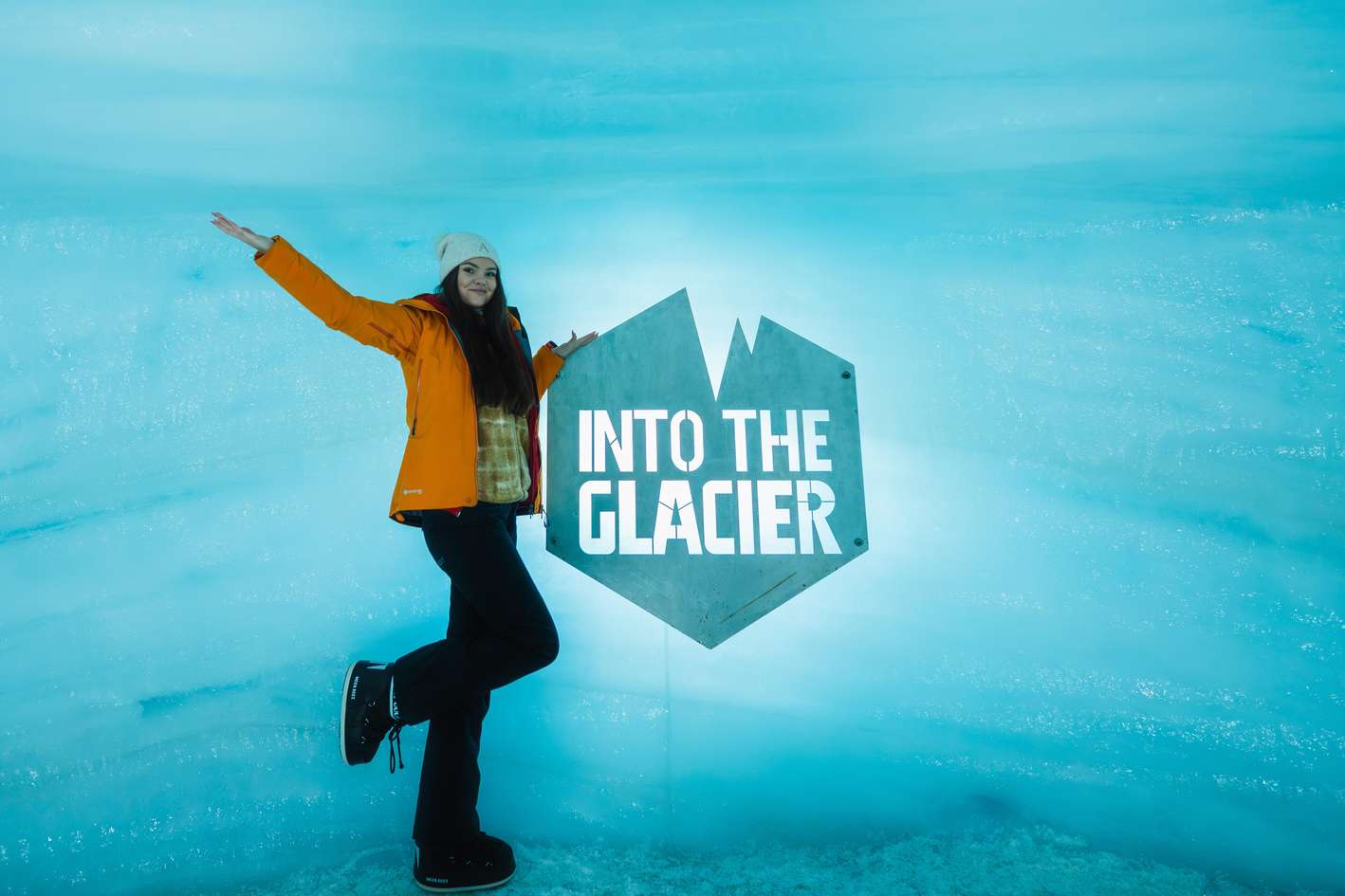
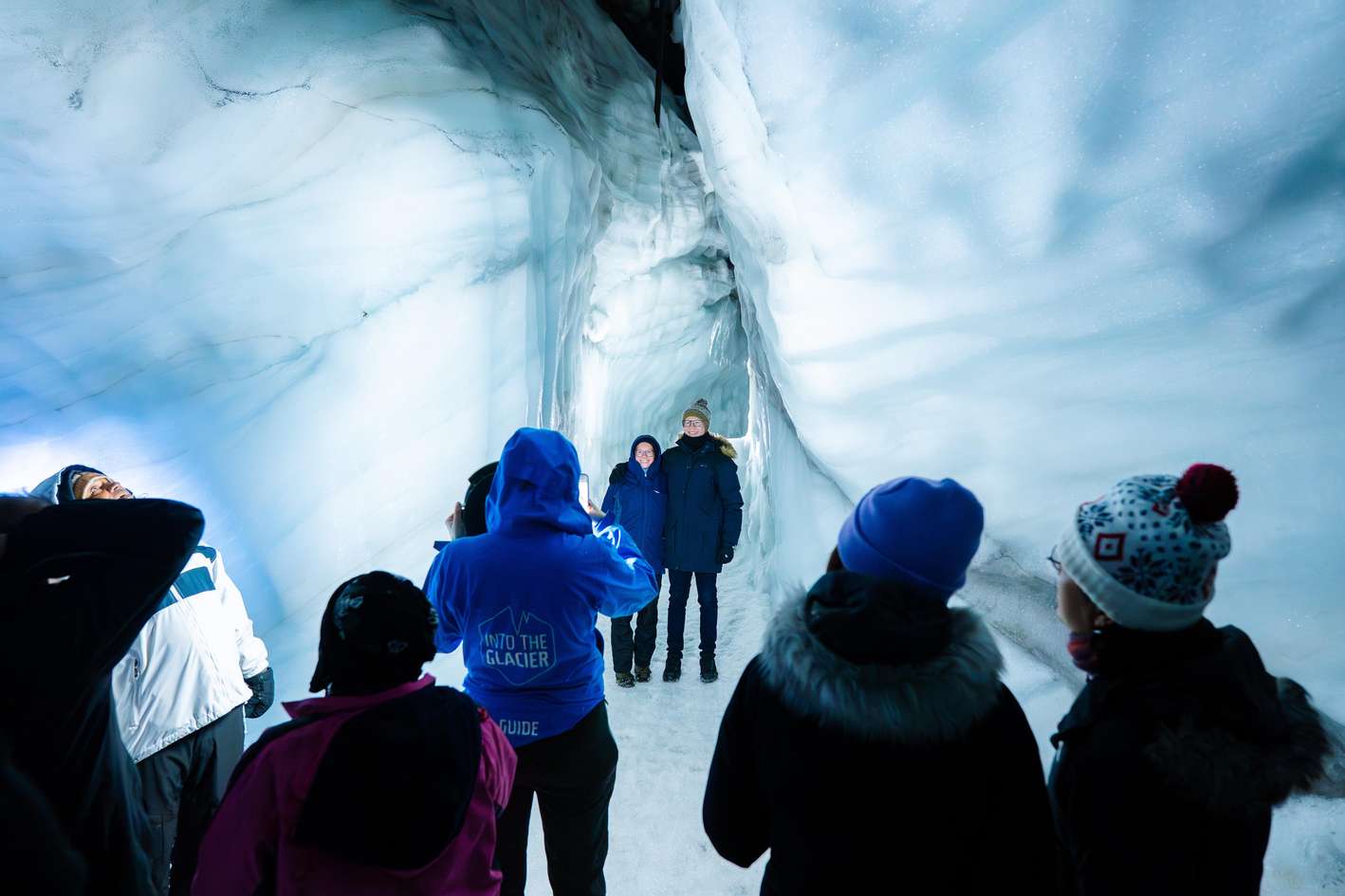
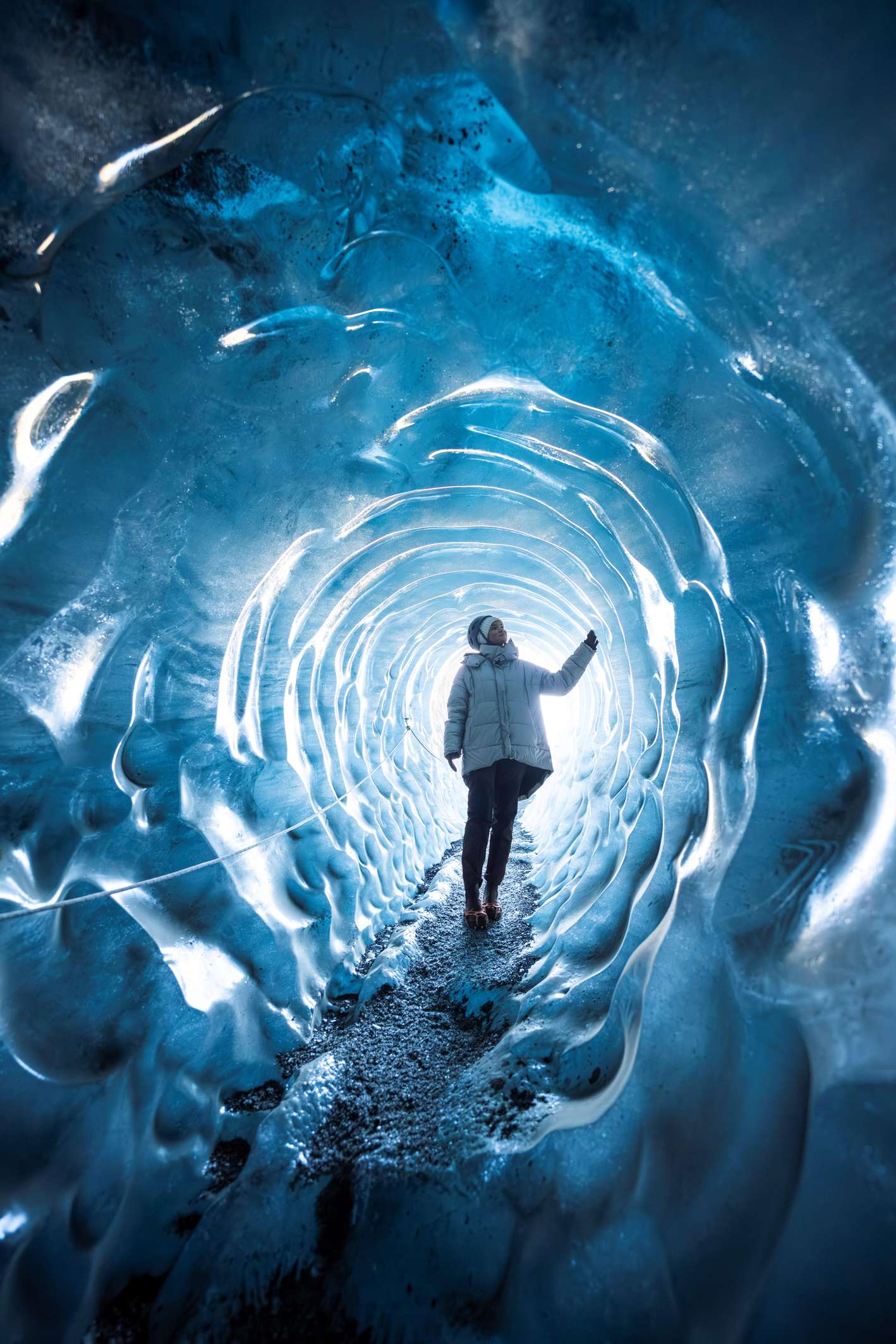
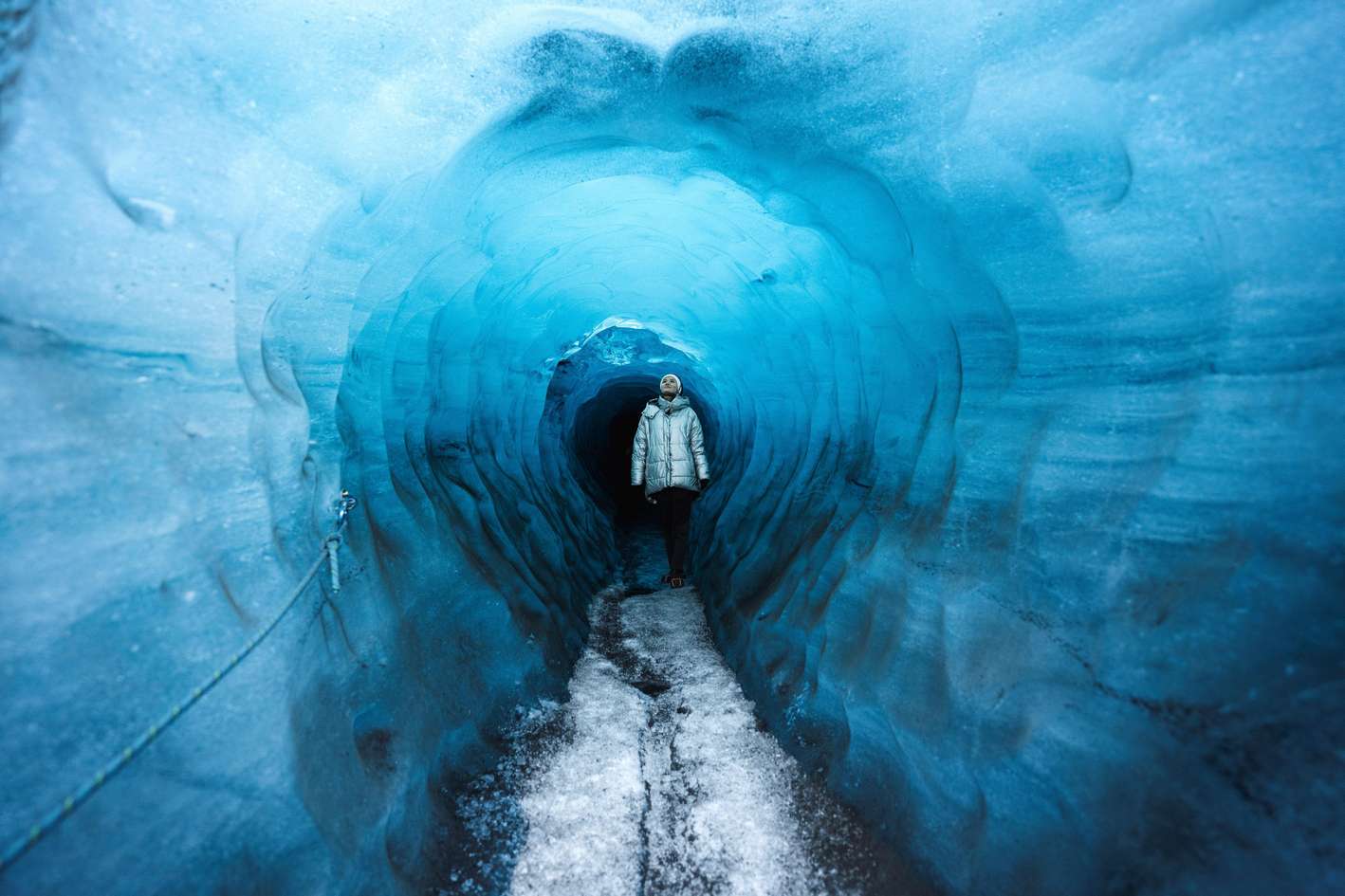
Inside, the ice is carved and lit: a guided route under LED lighting that runs deeper than any natural cave, with about 25 metres of ice overhead. Travelers who dread tight spaces call the tunnels spacious and easy to walk, and the route shows you how the glacier itself moves.
Some prefer it to a natural cave for exactly that consistency; a wild formation can melt, shift or flood between visits, while this one waits for you in every season.
Two beliefs are worth clearing up before you book.
Caves sit in the outlet glaciers below the caps; the tours reach them by road and on foot
It is carved and LED-lit, and travelers who dread tight spaces call it spacious and easy to walk
If the engineered part puts you off, weigh it the other way: wild caves close when melt floods them, and the tunnel keeps its promise in every season.
Helicopter glacier flights run year-round, weather permitting, and the seasons change both the flight and the ice. Summer brings the calmest conditions: July averages under one windy day, and melt strips the snow to bare blue ice.
Winter is the white version, snow-covered and colder, with January windy on roughly one day in three and a higher chance the route changes or the flight stands down.
The day matters as much as the month. The first morning departure gives the best odds of calm wind and clear visibility, before the afternoon builds the turbulence that ridges and glacier edges are known for. Wet weather stays common in both seasons, so treat any forecast as a probability, never a promise.
January is very cold, with frequent wind, snow and wet weather at the glacier.
Tap a month to read it.
July is the warmest month, with very few snowy or windy days but frequent wet days.
Tap a month to read it.
January is very cold, with frequent wind, snow and wet weather at the glacier.
Tap a month to read it.
September cools down, with snow and wet days becoming more frequent.
Tap a month to read it.
The pattern is simple: the windier the month, the likelier a cancelled day, and the morning slot is your insurance within whichever month you pick.
The flight does not leave from the main terminal. The meeting point is Ace FBO Reykjavík, Nauthólsvegur 52, behind Hotel Natura, a separate facility on the east side of Reykjavík Domestic Airport. From the city centre it is an easy walk: 2.3 kilometres, about 27 minutes along the water.
Plan the morning around it. A first-departure slot pairs well with the lake at Tjörnin or the Settlement Exhibition beforehand, and the walk back into town afterwards burns off the adrenaline. Give yourself time to find the hangar; it hides behind the hotel, out of sight of the terminal road.
Nearly all of these sit within a couple of minutes of the route in, so the terminal doubles as the start of a Reykjavík morning.
The cabin is heated, which fools first-timers every time. The story is the landing: minutes on snow at altitude, wind off the ice cap. Glacier tops in the interior sit high and exposed; Langjökull's top, higher than 1,300 metres, can see conditions of minus 30 with wind. Dress for the landing, layers first.
Boarding has its own etiquette on snow. Stay seated until the rotor shuts down, and when the ground slopes, use the downslope side, where rotor clearance is greatest. Grippy boots earn their keep on the uneven summit before you take your first photo.
Iceland gets the final word sometimes, and the terms are worth knowing before you book. On the Fire and Ice flight, if the supplier cancels for weather or safety, you get a full refund.
Your own side of the bargain: cancel up to 24 hours ahead for the same. The other number worth knowing is the group size, because the flight needs at least four passengers to run, so a solo booking can stand down even on a blue-sky day.
| If this happens | What happens then |
|---|---|
| The supplier cancels for weather or safety | Full refund |
| You cancel at least 24 hours ahead | Full refund |
| The booking stays under four passengers | The flight does not run until the minimum is met |
Winter carries the greater cancellation risk, so book early in your stay and keep a second day free to rebook if the wind wins.
Two hours door to door leaves half a day, and the terminal sits close to the good parts. Nauthólsvík Geothermal Beach, a short walk away, keeps two hot tubs for a thermal soak with airplane views.
The National Museum of Iceland is ten minutes on foot, the Einar Jónsson Museum sixteen, and EIRIKSDOTTIR Gróska and Satt Restaurant both serve a quick meal within the same quarter-hour walk.
Morning flight, lunch in town, afternoon soak: the excursion fits inside a Reykjavík day with hours to spare, which is the quiet advantage the helicopter holds over every ten-hour bus alternative.
Absolutely unbelievable, better than imagined! Laura our pilot was amazing. Smooth flight, incredible weather, unreal landing spots. Best experience of my life, you have to do this in Iceland.
The helicopter gets you a glacier summit, two landings and hours of your life back, and it never gets you inside a cave.
Book the Fire and Ice flight for the view and the time saved; add the Into the Glacier day from Reykjavík when blue walls around you matter more than the clock. Do both if the trip is long enough.
roughly 15 minutes on the ice
Straight answers about flying to Iceland's glaciers: what a helicopter can and cannot do, and what to expect when you book.
 Reykjavik2026
No, helicopters land on open glacier ice, not at a cave mouth, because of terrain and safety. The Fire and Ice tour puts you on top of Þórisjökull glacier, and the Into the Glacier tour takes you inside a carved ice tunnel by road.
About two hours door to door, with 75 to 90 minutes of flying for the whole round trip. You get roughly 15 to 20 minutes on the ice at the landing site.
If the supplier cancels the Fire and Ice flight for weather or safety reasons, you receive a full refund. You can also cancel yourself up to 24 hours ahead for a full refund.
Yes, they depart daily weather permitting. Summer brings the most stable conditions, while winter flights run too, with a higher chance of cancellation or route changes in storms.
A standard sightseeing helicopter in Iceland carries five to six passengers. The Fire and Ice flight needs a minimum of four to operate on a given departure.
Strong turbulence and downdrafts can occur near mountains and ridges, especially downwind. Katabatic winds near glaciers are not uncommon on summer evenings, which is one more reason to pick a morning flight.
It earns its cost when the scenery is hard to reach any other way, and ice that roads and trails cannot touch qualifies. Nervous flyers report the professional pilots helped them feel at ease during the flight.
morning flights meet calmer winds
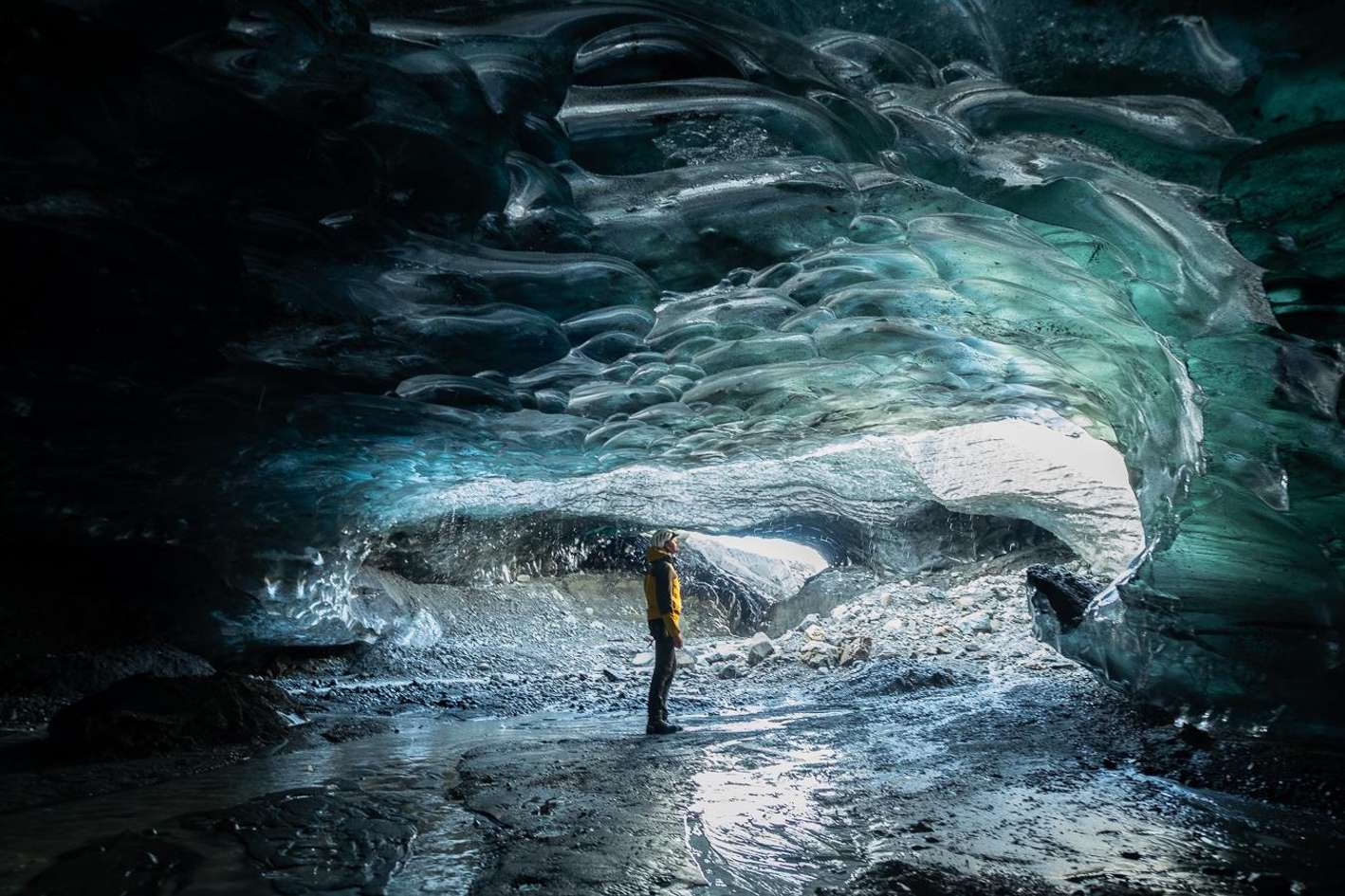
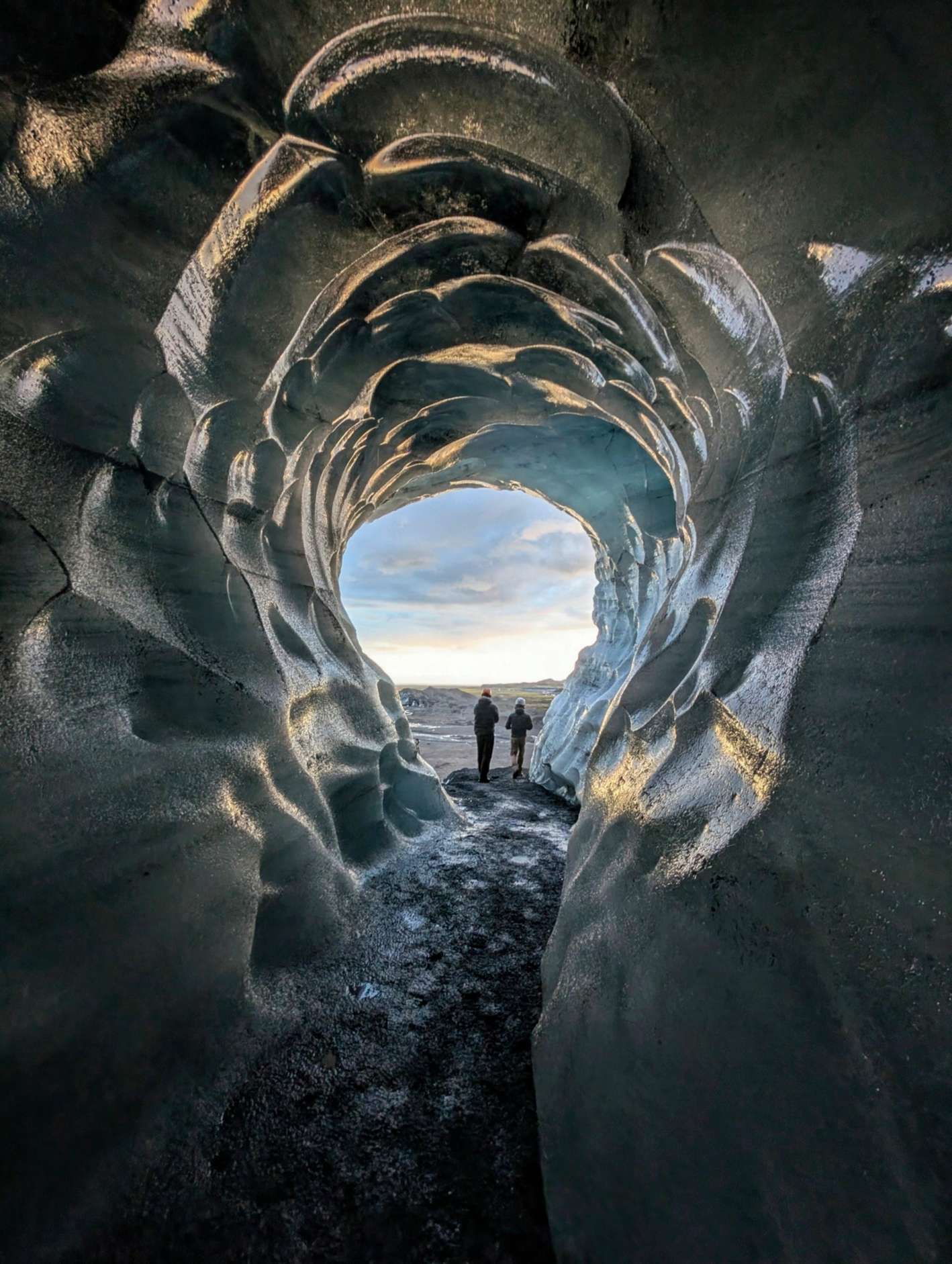
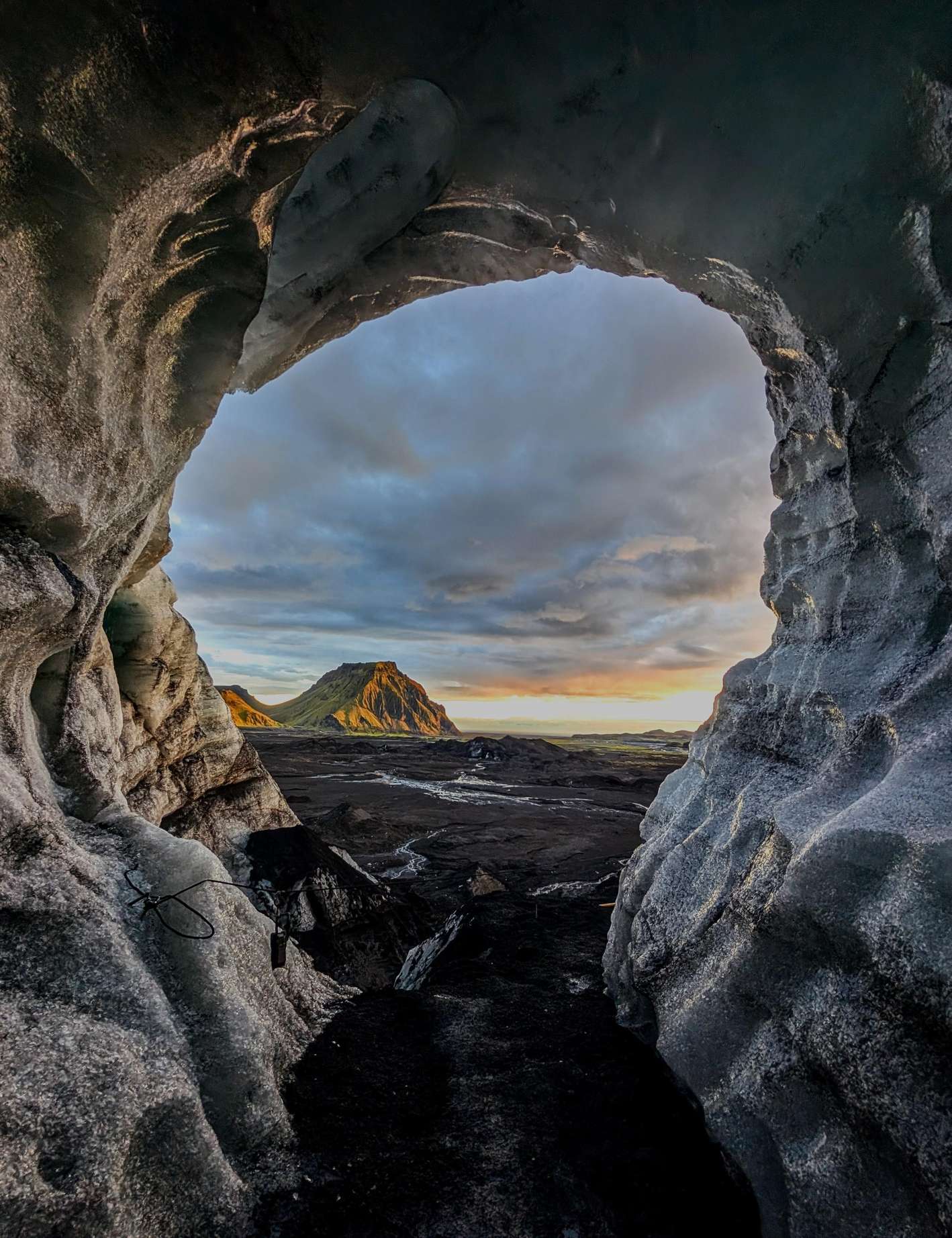
A guide to Iceland's natural ice caves, from Katla's ash-striped blue ice to Vatnajökull caverns.
Why every ice cave needs a certified glacier guide, and what the guide does on the day.
Private ice cave trips if you want the glacier to yourself, with your own vehicle and guide.
Small-group departures that keep the crowd away from the cave, with fewer jeeps on the ice.
Tours that pair an ice cave with a crampon hike across the glacier itself.

Day trips that add the Golden Circle's geysers and waterfalls to a glacier cave visit.
Current conditions at Katla, the year-round cave with black volcanic ash through the blue ice.
Driving directions and maps for Katla, and why a rental car cannot reach the cave.
When Katla's cave is at its most stable, from midwinter ice to the summer season.
Age limits, mobility and the bumpy jeep ride: what Katla asks of its visitors.
Layering and waterproof boots for Katla, where meltwater drips from the cave roof.
Katla's ash-striped ice against Vatnajökull's sapphire cave, side by side.
What else the South Coast holds, from waterfalls and black sand beaches to lagoon boat trips.
Full-day small-group tours from Reykjavik that pair the South Coast with an ice cave.
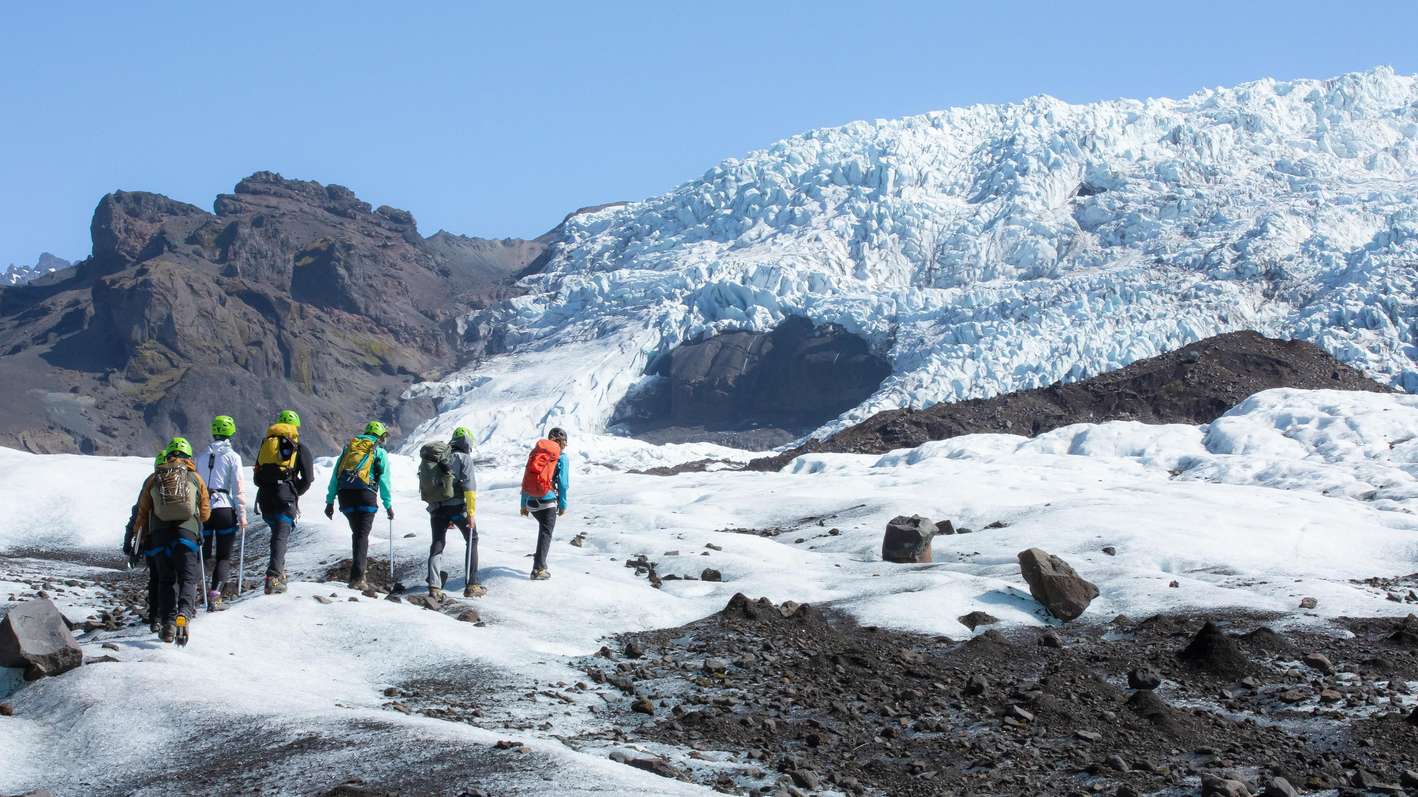
Guided glacier walks on the South Coast, gear included, no ice climbing needed.
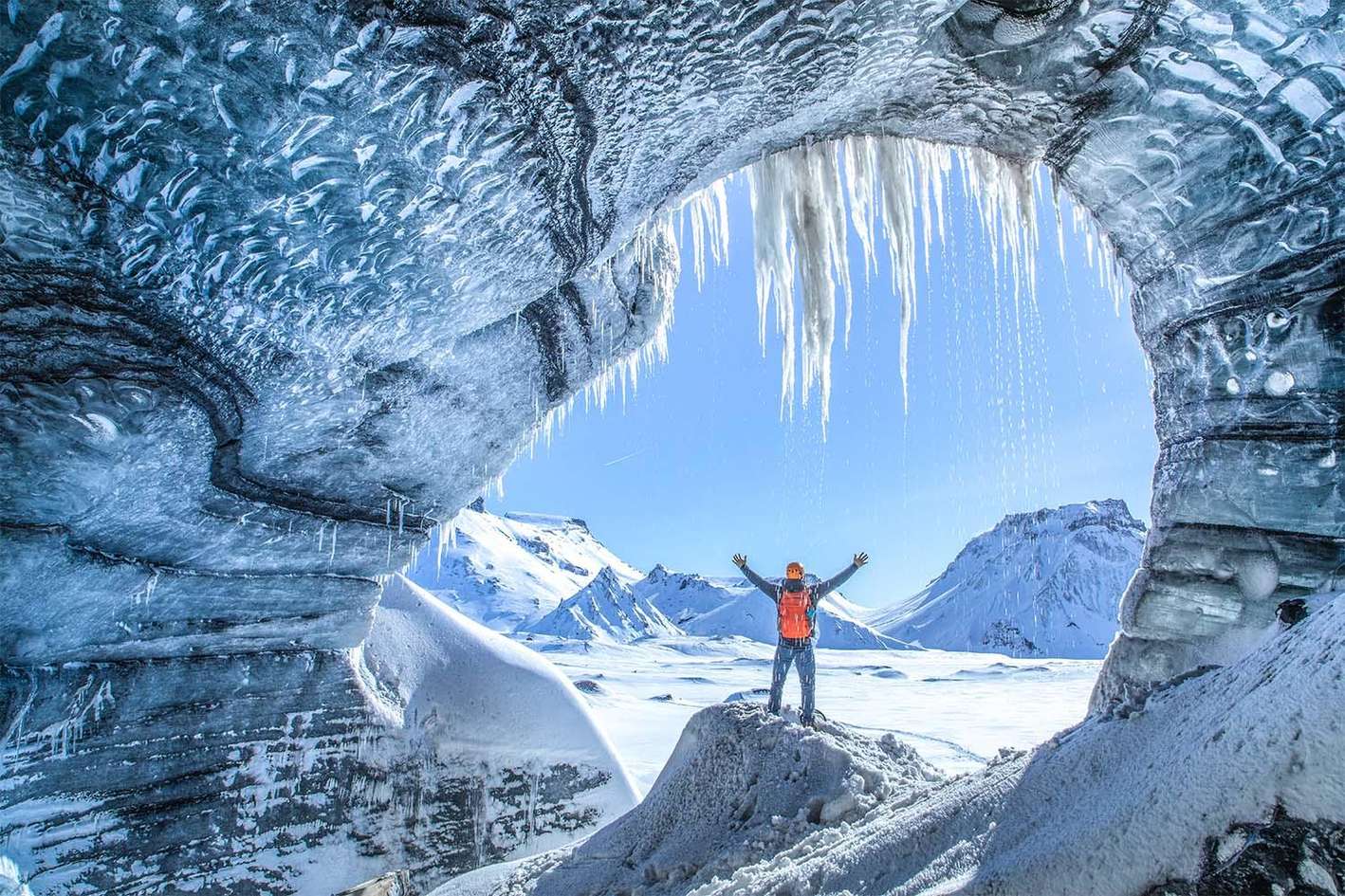
The South Coast driving route mapped out, stop by stop, with realistic driving times.
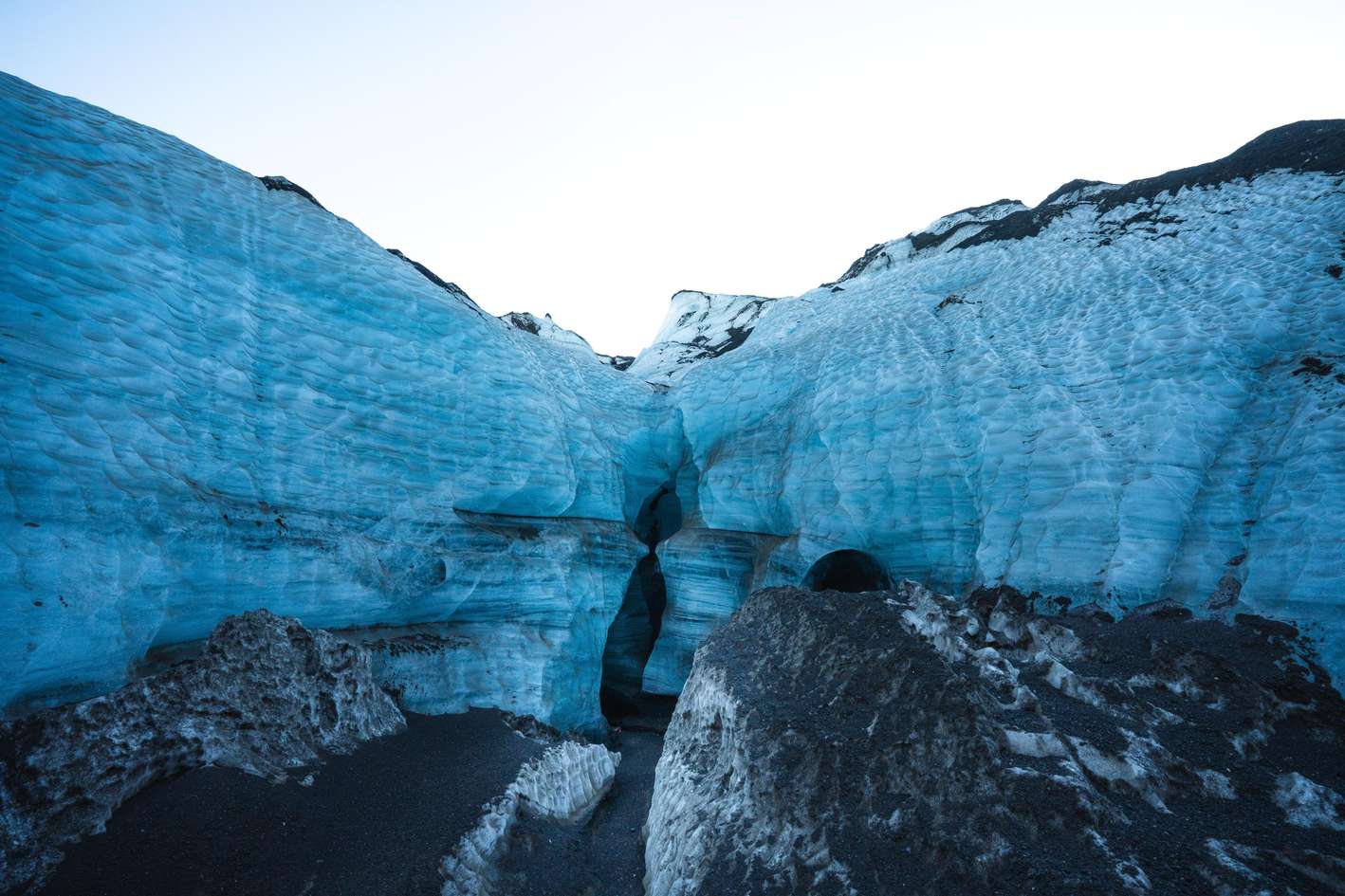
South Coast temperatures and storms by season, so you know what the day may hold.

Three-day South Coast itineraries that spread the driving over more than one day.
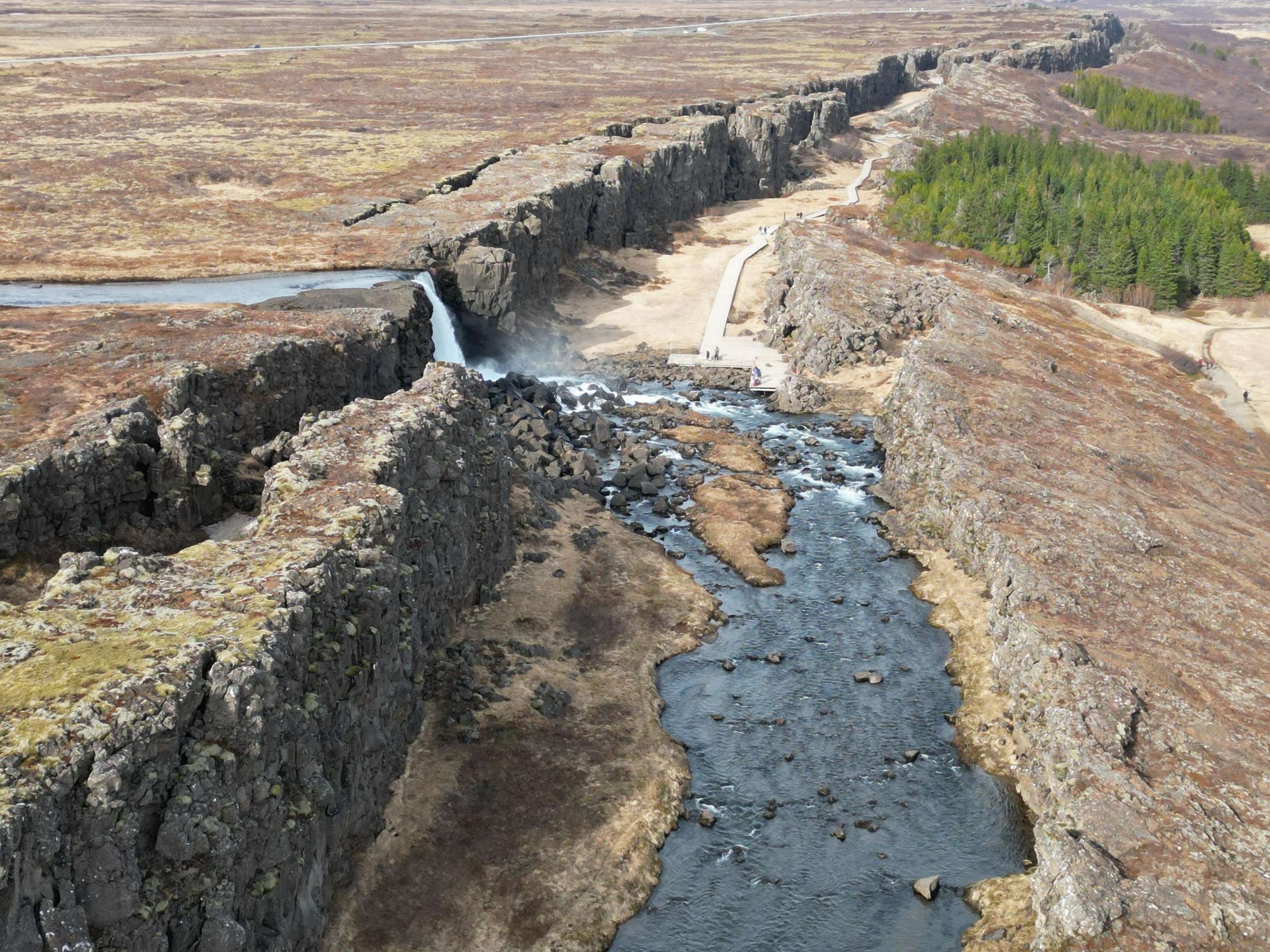
first flight out gets the calmest wind
Fly from Reykjavik, touch down on Þórisjökull glacier and Mount Hengill, and cancel up to 24 hours ahead for a full refund.