- 1
Enter only with a licensed glacier guide; unguided access is prohibited in Vatnajökull National Park.
- 2
Wear stiff, ankle-high hiking boots; soft shoes cannot take crampons and can get you turned away.
- 3
Trust only a forecast within 48 hours of your tour; Icelandic weather models change drastically further out.
Guides cancel ice cave visits when weather warnings, flooding, or a daily safety check find the cave unsafe, so a booked tour can be called off on the morning it is due to run. Check the Icelandic Met Office forecast and road conditions at umferdin.is before you set out, and book with a tour operator that offers free rescheduling or a full refund when it cancels for weather, safety, or glacier conditions.
Safe ice cave visits in Iceland - what the tours look like
How safe natural ice caves really are
guides check caves every morning
A collapse under an ice roof gives no warning. In the collapse that made headlines, one tourist was killed and another injured, and rescuers searched for people believed trapped before stopping when no one else could be found beneath the ice.
That is the honest starting point. Natural ice caves melt, crack and can collapse, and in summer the danger peaks: melting thins roofs, heavy rain floods passages, and park authorities prohibit entry to natural caves in Vatnajökull National Park from May onward.
What tours visit sits elsewhere on the risk scale. The caves guided groups enter are chosen for safety on the day, checked each morning, and dropped the moment water, loose ice or ceiling cracks appear.
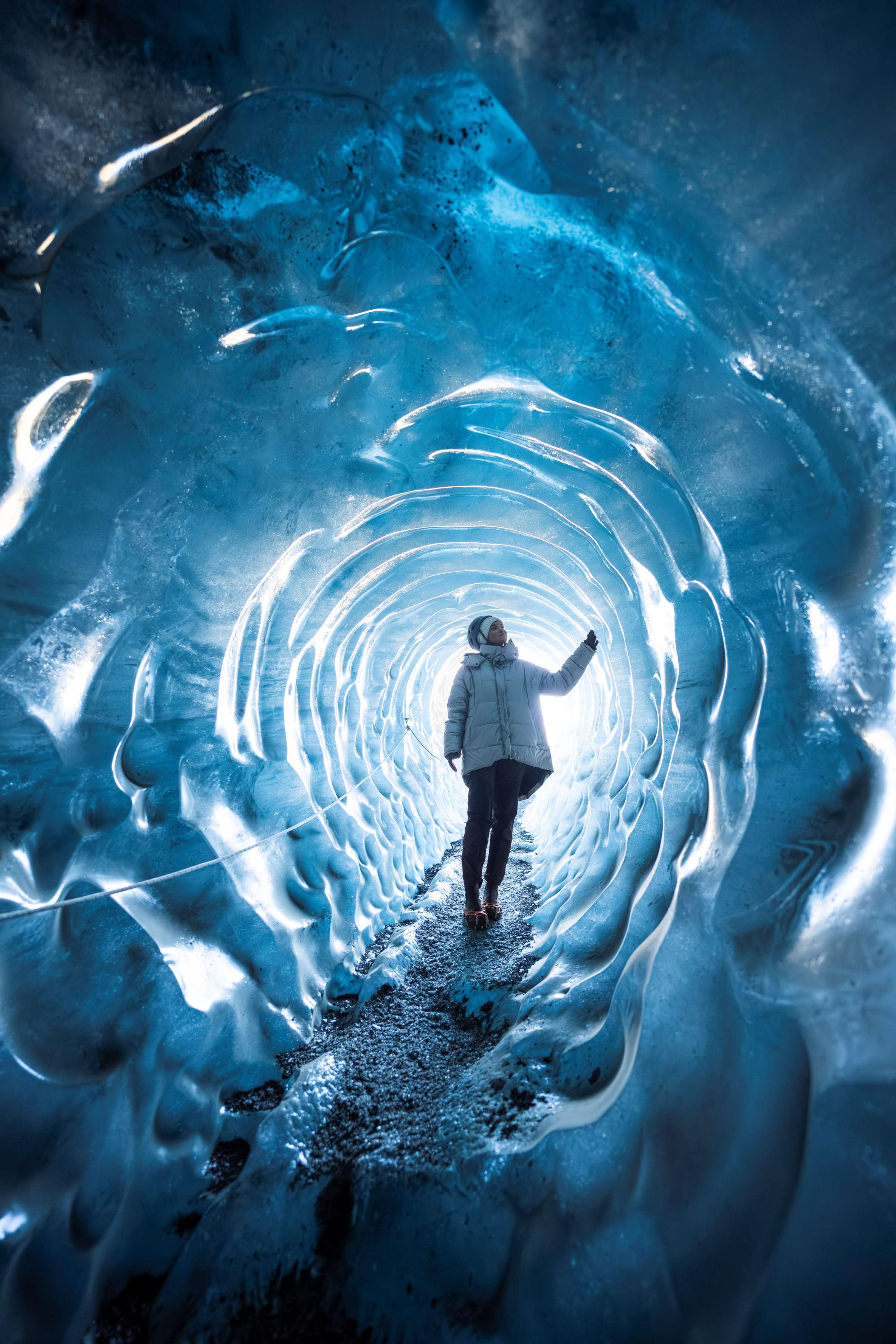
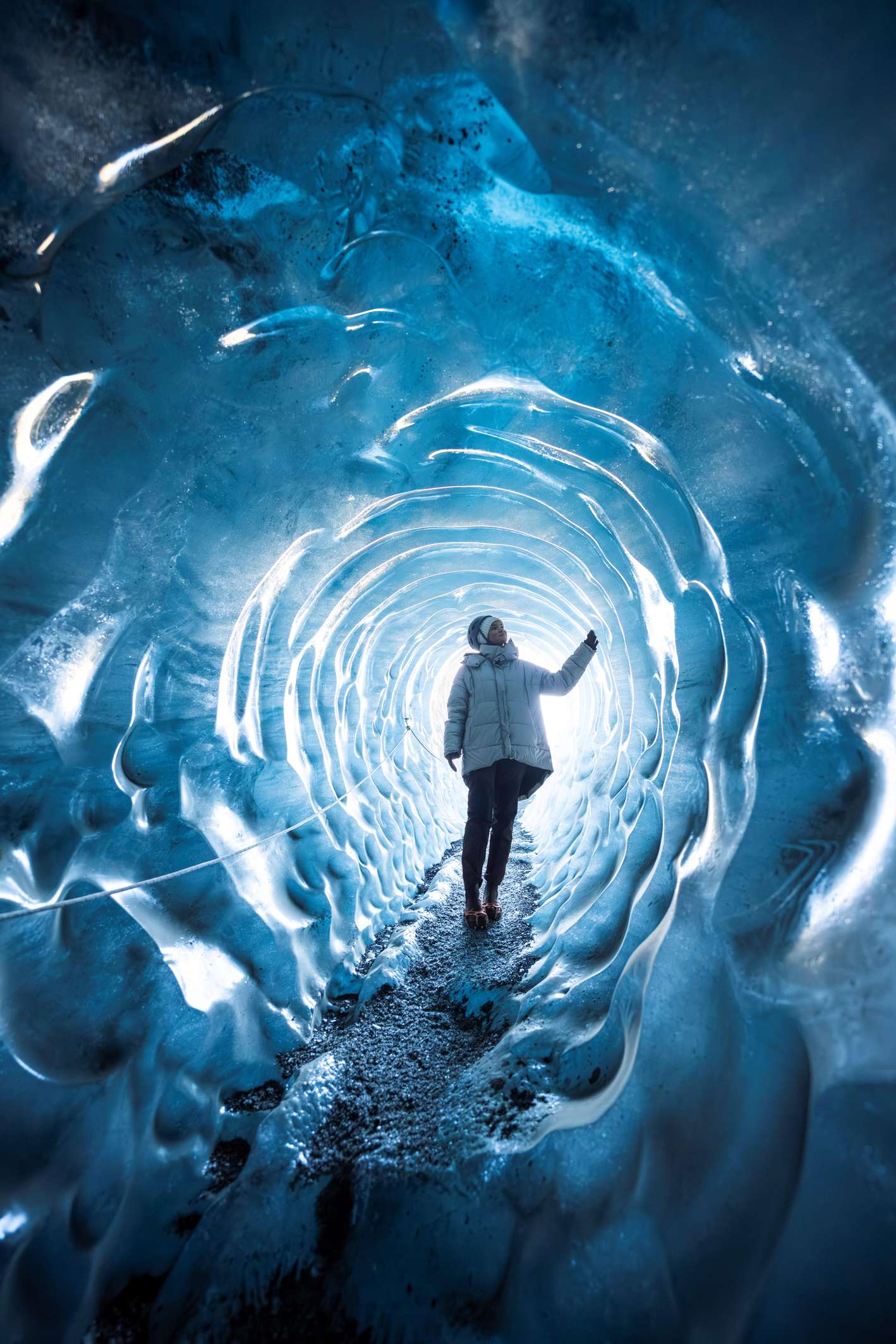
Visitors describe stepping inside the glacier as the memorable highlight of their trip, an otherworldly few minutes of blue light and black ash.
The fear is reasonable. The answer is that the danger is managed, not ignored.
Super nice experience!!! 🌋 Camil showed us the Katla Cave, explaining everything about the volcano and area's history. Friendly, knowledgeable, and we had plenty of time for photos without feeling rushed. Definitely recommend! ⭐⭐⭐⭐⭐
How glacier guides inspect ice caves before entry
Guides scout new caves every autumn, because glaciers move and last winter's cave may not exist this winter. Access to a formation is considered only after the operator and the national park have assessed it.
Each morning, the check runs the same way. Guides look for thin roof sections, hanging ice and wet spots, and listen for cracking sounds and running water. A cave that fails the check is dropped for that day, and the group goes to one that passed.
The people making these calls hold real qualifications. Lead guides on Vatnajökull glacier caves need at least AIMG Hard Ice 3, a certification covering advanced glacier travel and crevasse rescue, and guides keep monitoring the cave while you are inside it.
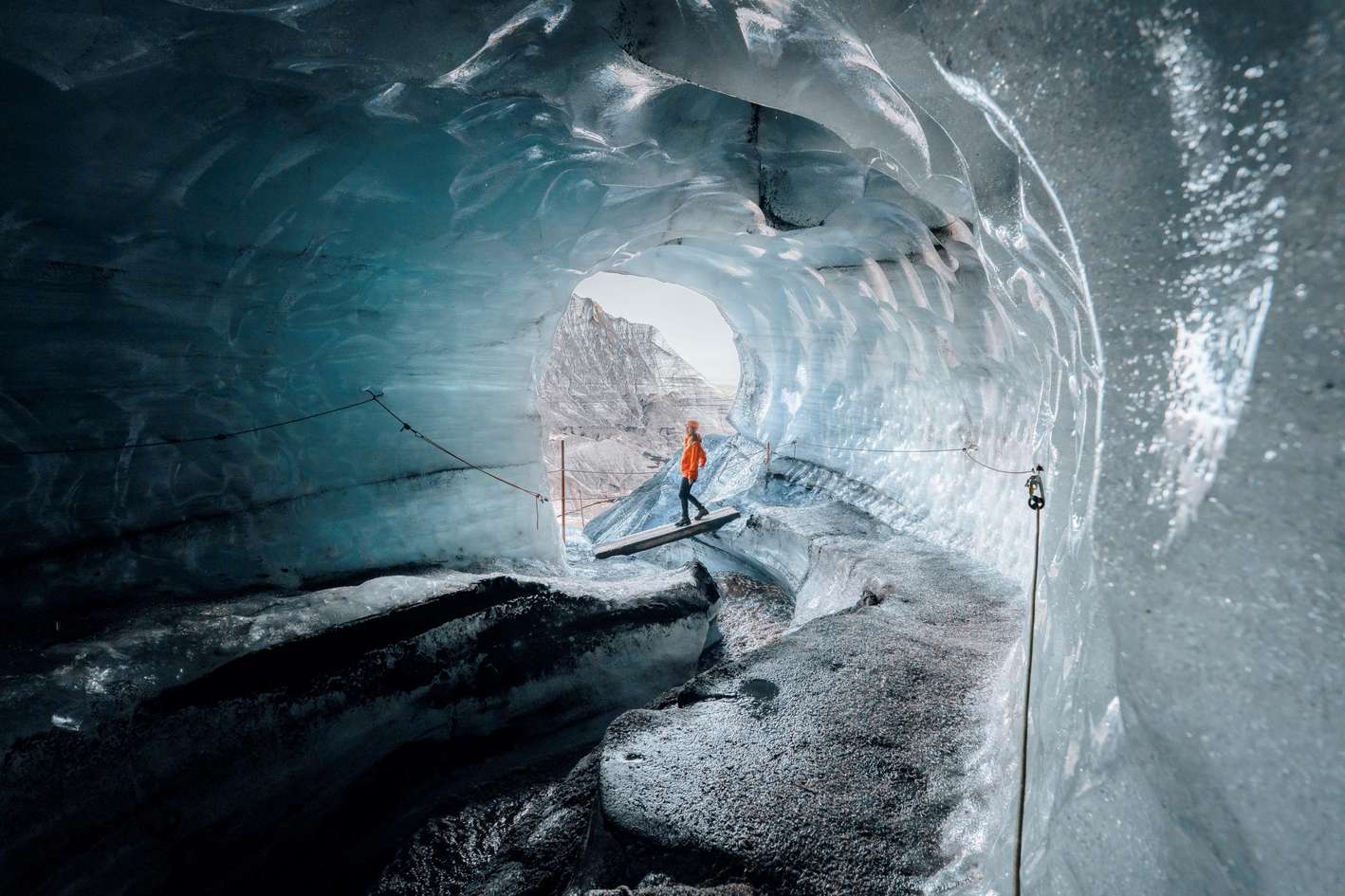
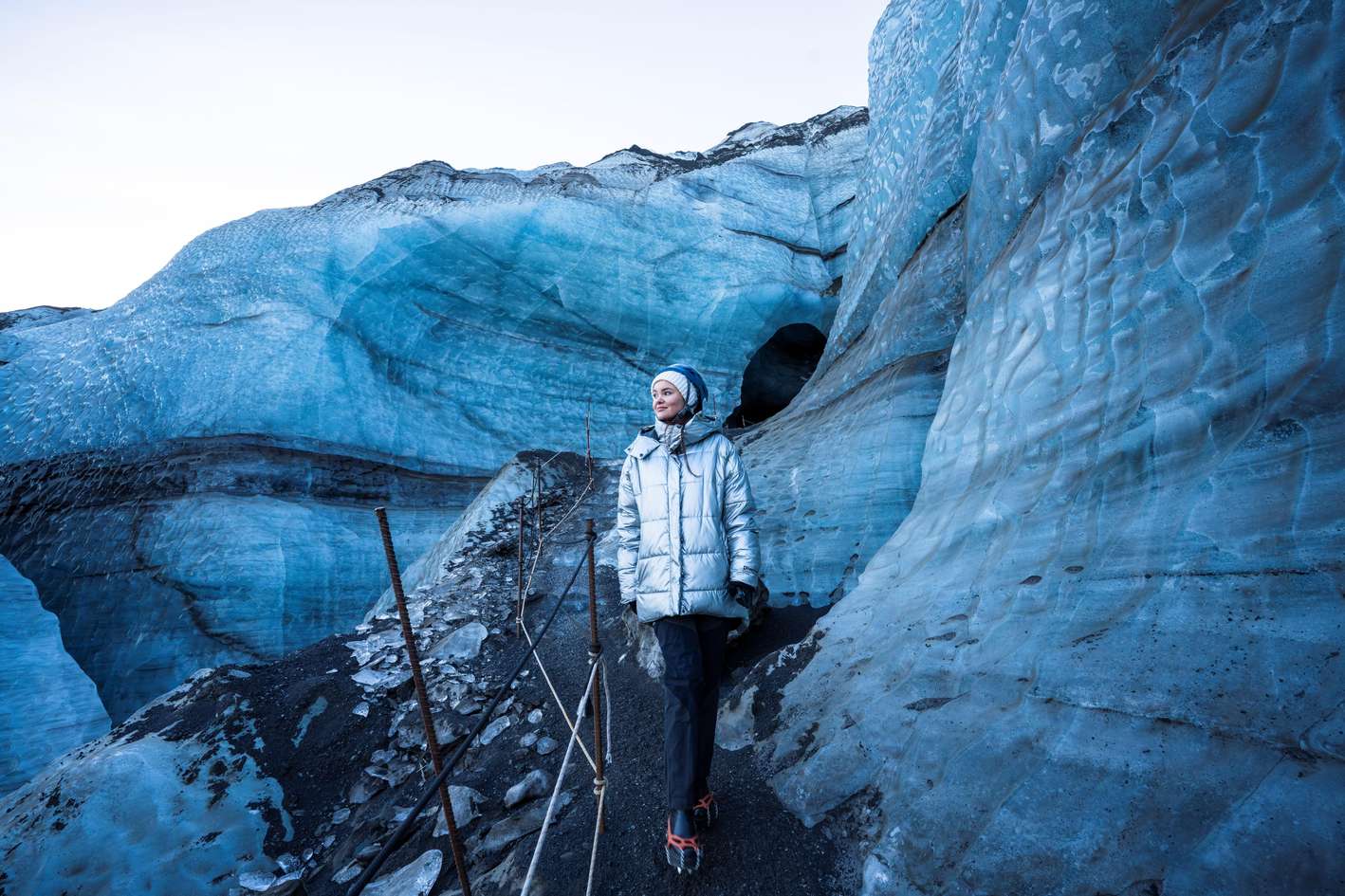
They also carry gear beginners never notice. Ropes mark the safe line across the ice and move when the cave changes, and ice axes are there to check terrain and stop a fall. The rope, the axe and the morning check are the safety system.
What nobody tells you
it moves when the cave changes, so follow it exactly
crevasses can hide under snow that looks solid
the one in the photos may not be the one you enter
water, debris or cracks end the visit on the spot
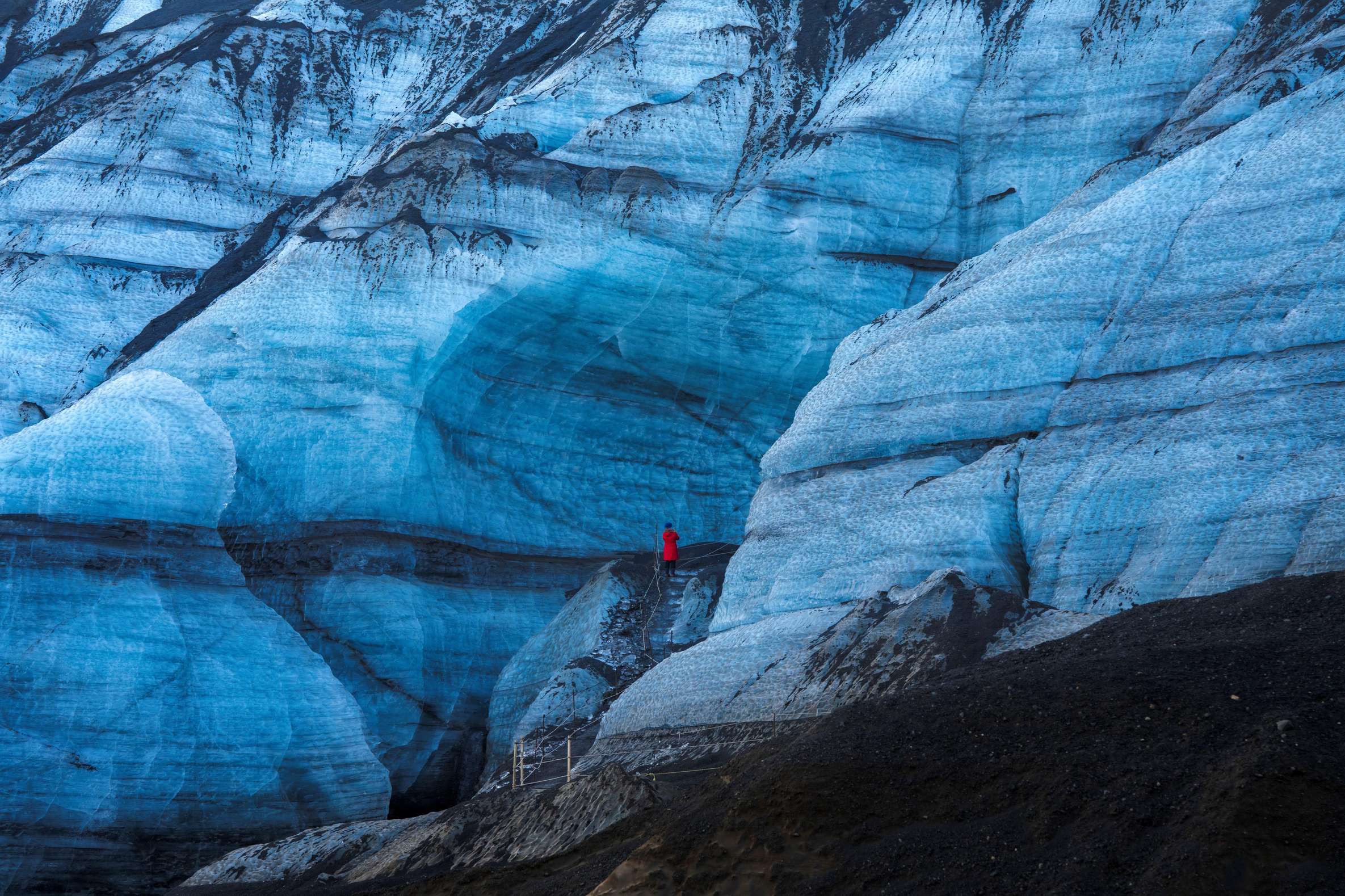
Can you visit an ice cave in Iceland without a tour
The money-saving idea dies quickly on the facts. Access to natural ice caves inside Vatnajökull National Park is guided and permitted only, and in 2024 the park prohibited all ice cave access for months at a stretch. Iceland's Civil Protection strongly advises people not to visit glaciers on their own at all.
The reasons are physical, not bureaucratic. Caves sit inside active glaciers, reached only across terrain where crevasses hide beneath snow bridges and meltwater carves channels and moulins that swallow the unwary. Entering melting caves independently has resulted in fatal collapses, and outburst floods can bring water and debris onto the glacier surface with little warning.
Katla is no exception. Travelers who have been say never to walk onto Kötlujökull or into its cave without an experienced glacier guide and proper safety gear.
If the Highlands call to you, the Katla small-group tour from Vík is the honest version of the adventure: a Super Jeep ride into the interior, a knowledgeable guide, and the gear included in the price.
Entering natural ice caves independently is prohibited in Vatnajökull National Park, and Civil Protection advises against going onto glaciers alone Book a guided tour; it is the only safe and legal way in
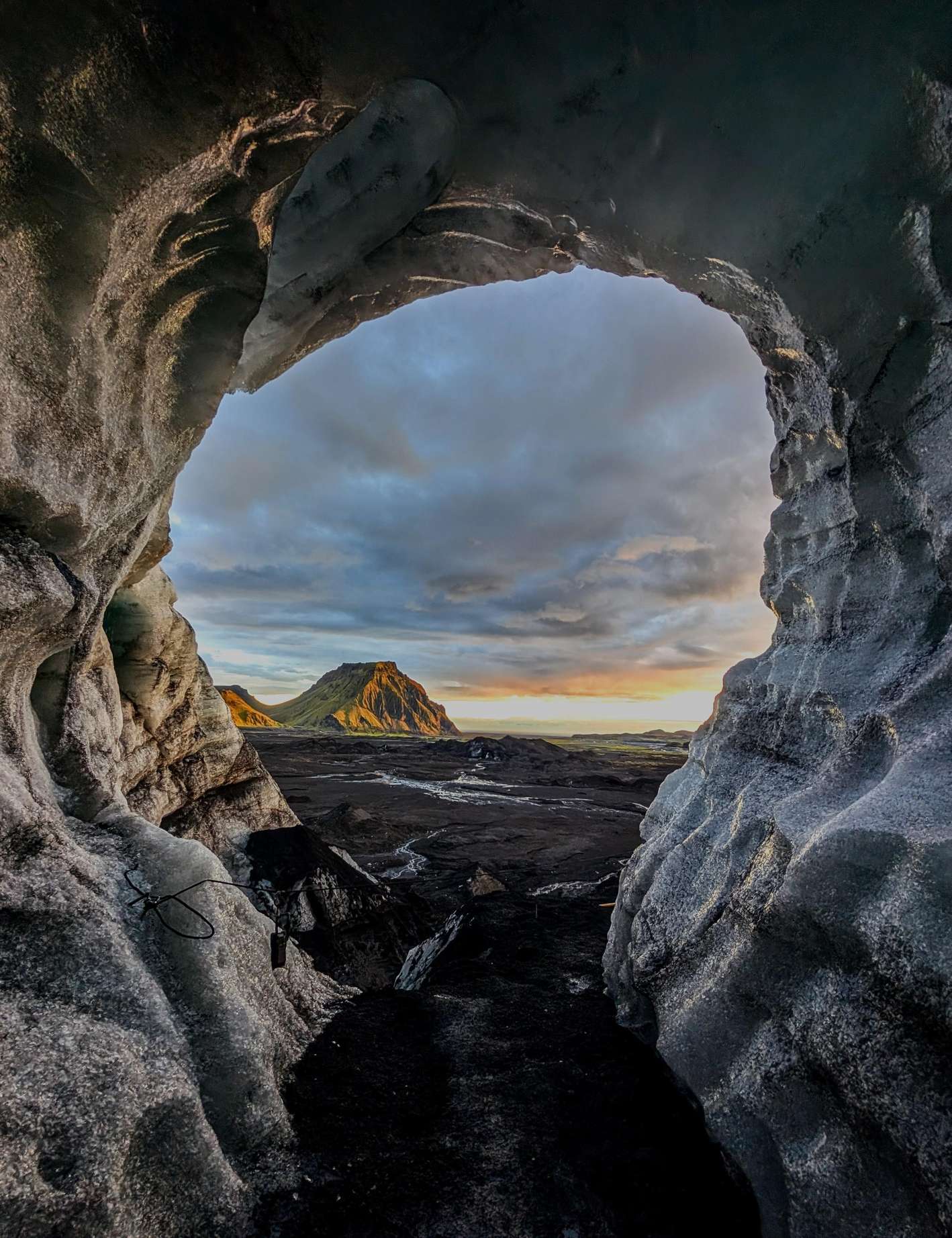
Safety gear and footwear for ice cave visits
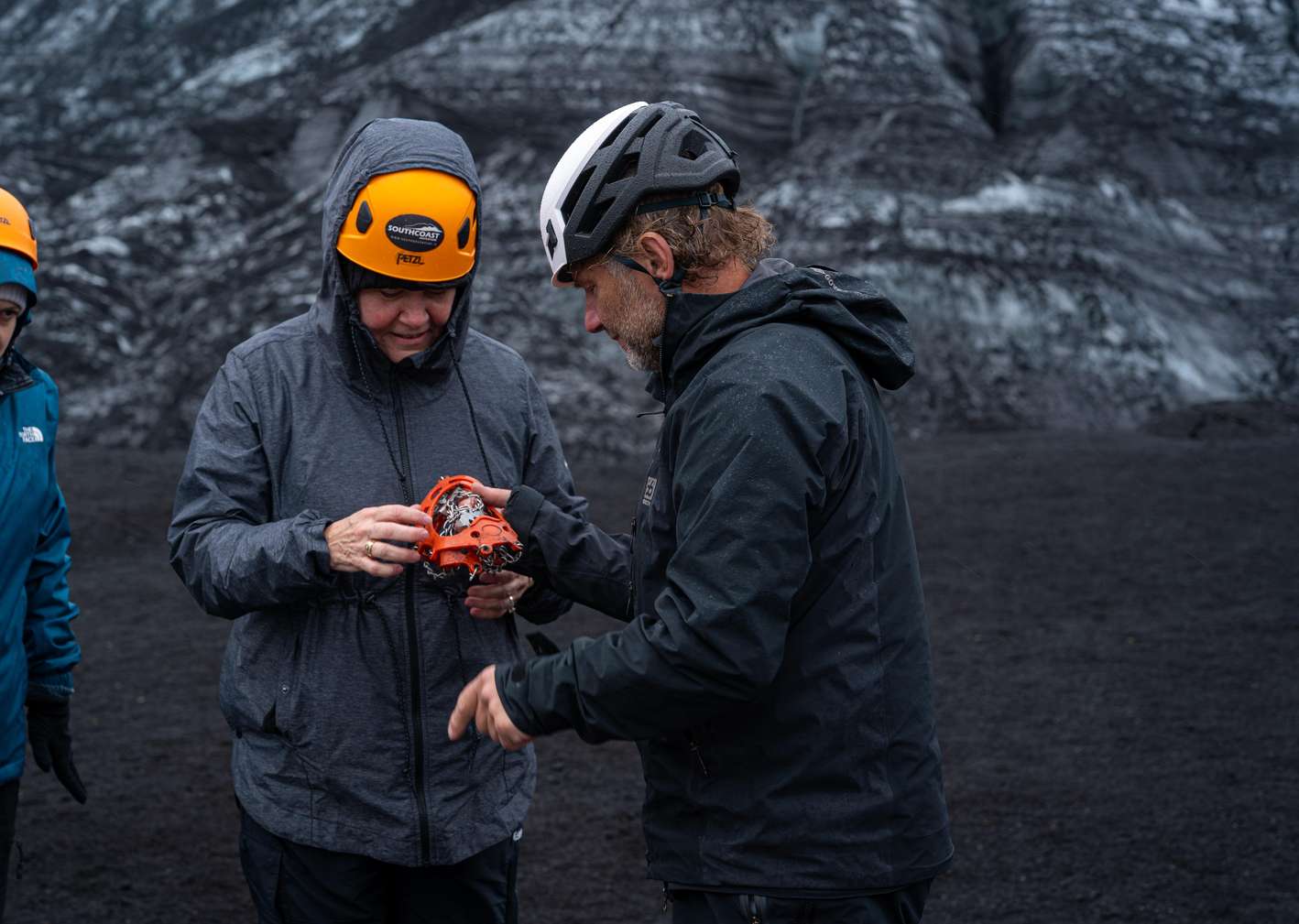
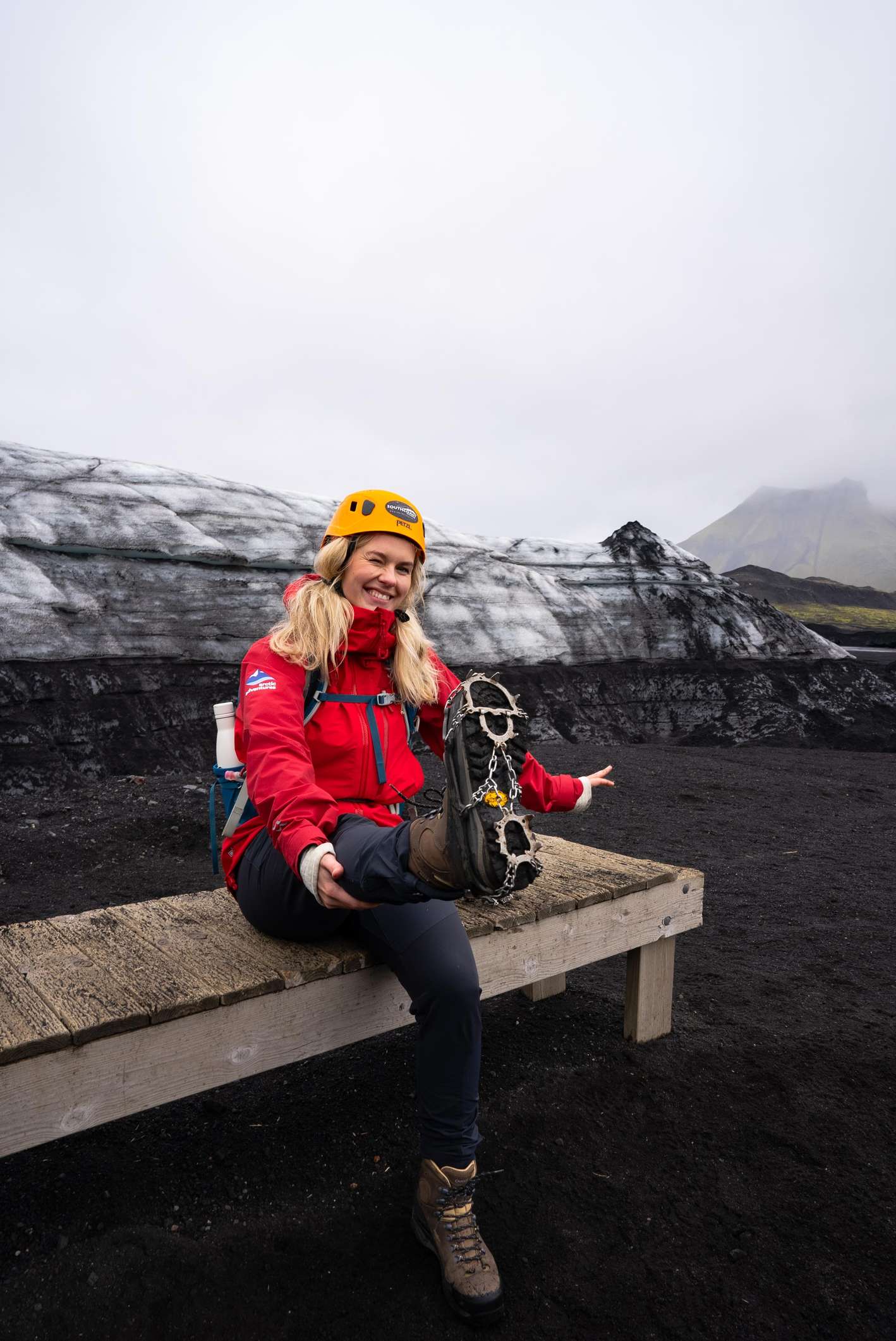
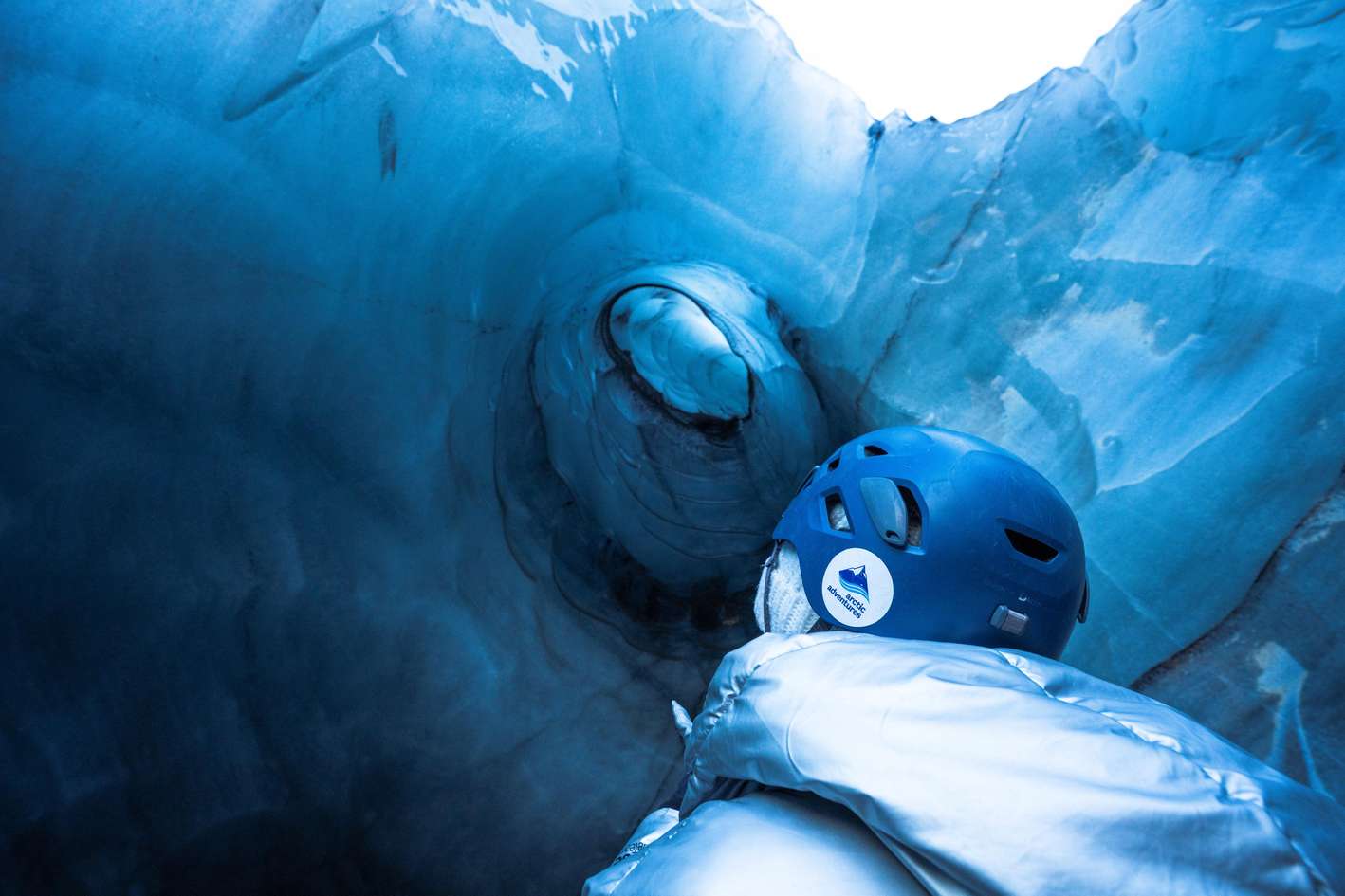
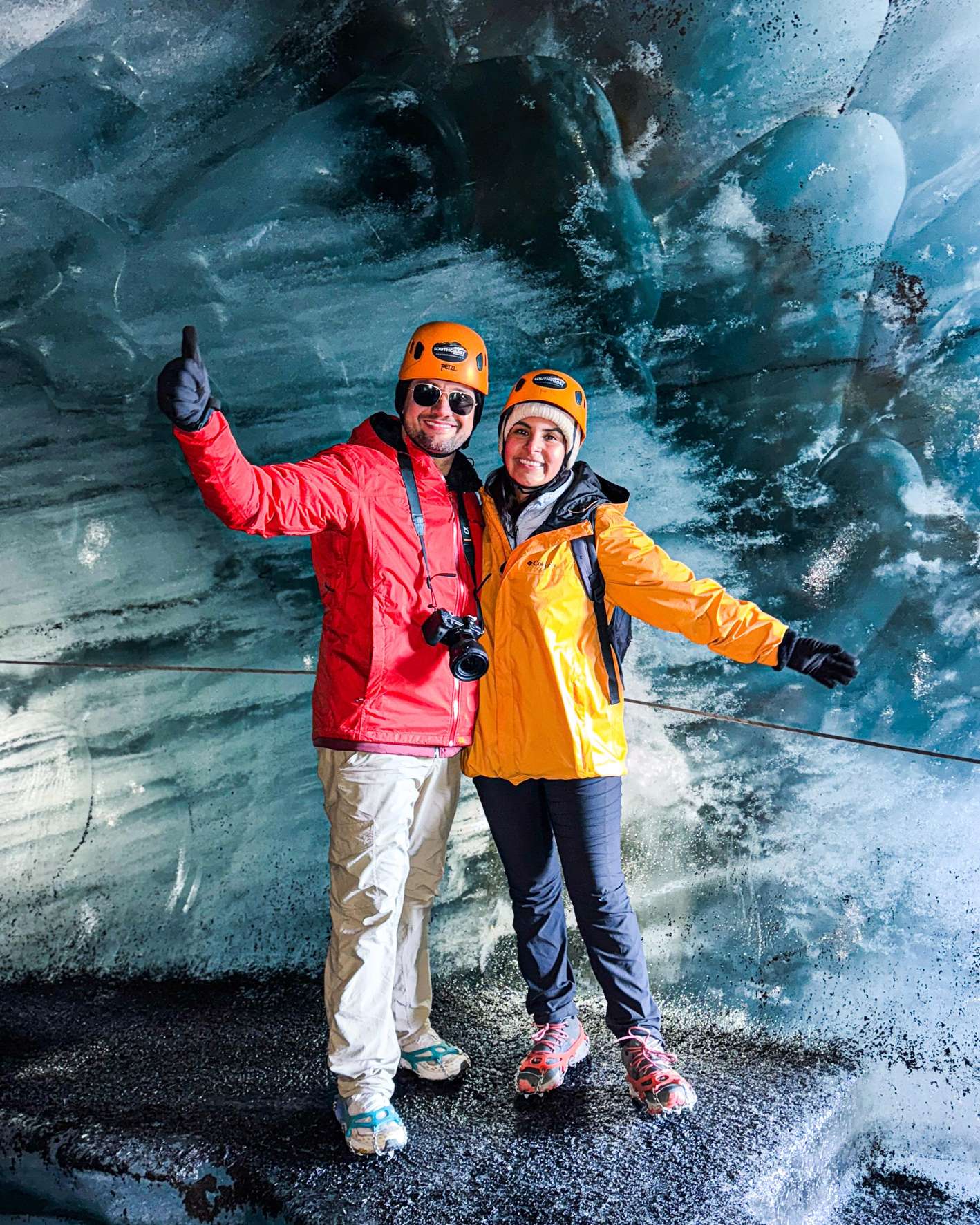
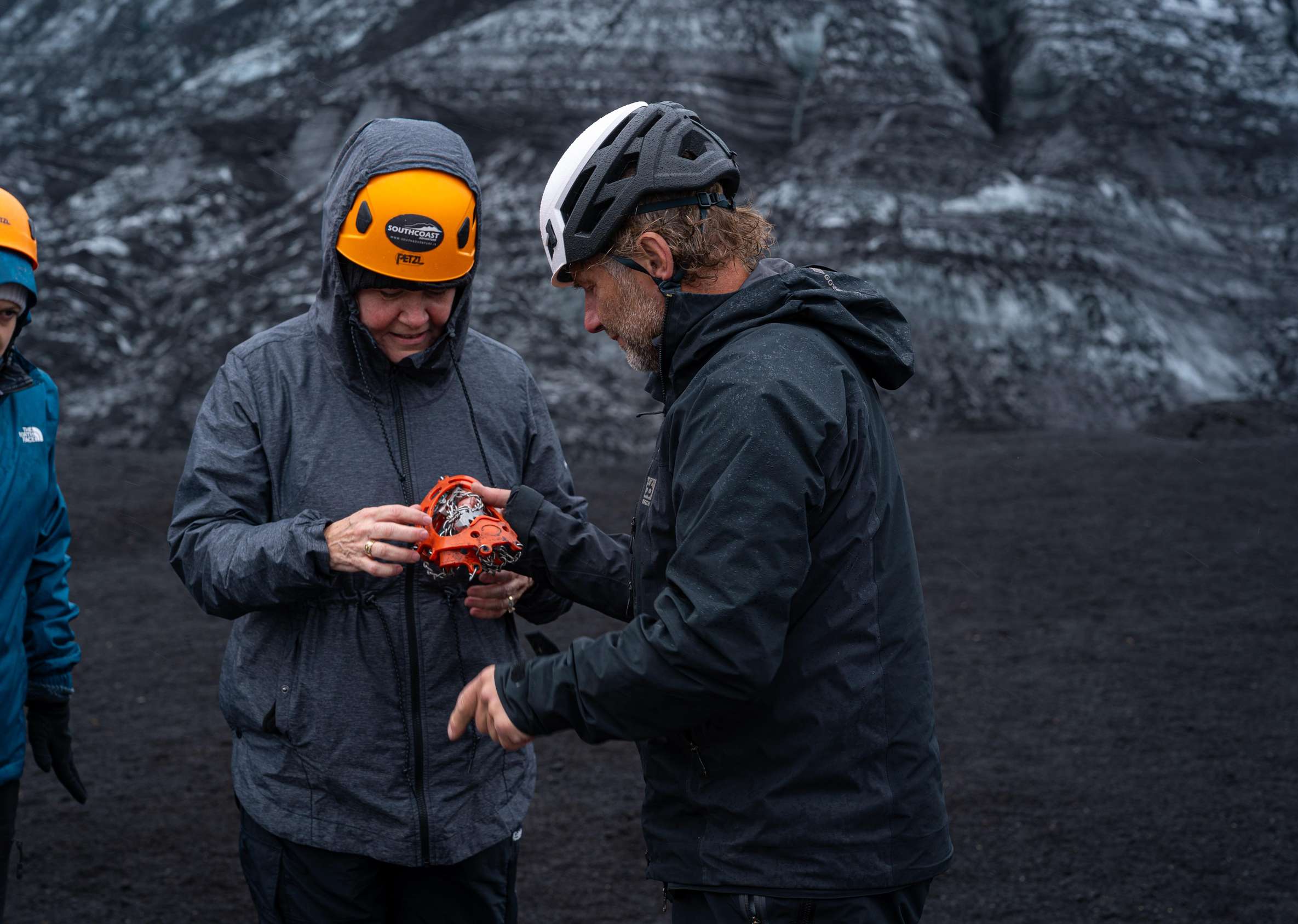
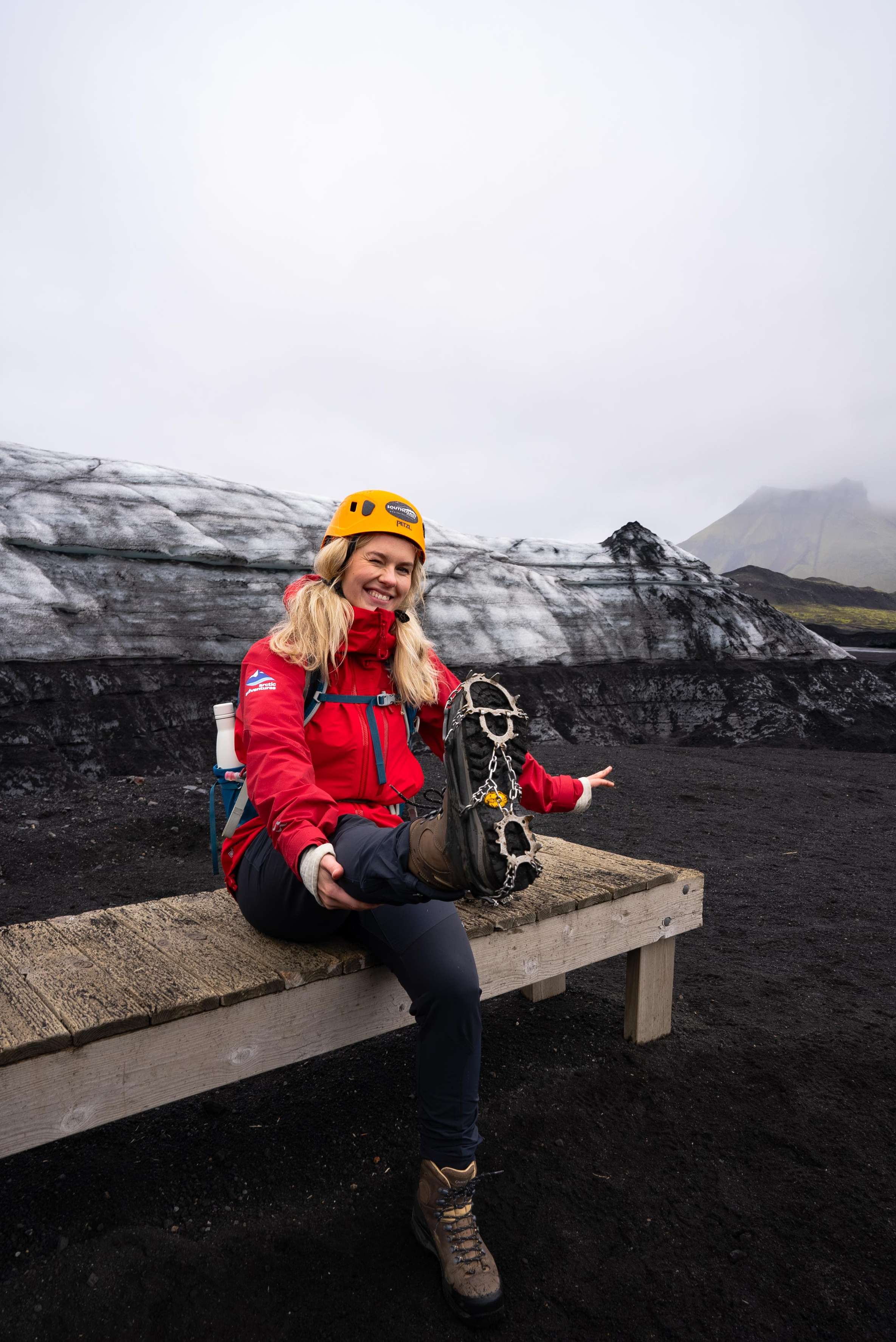
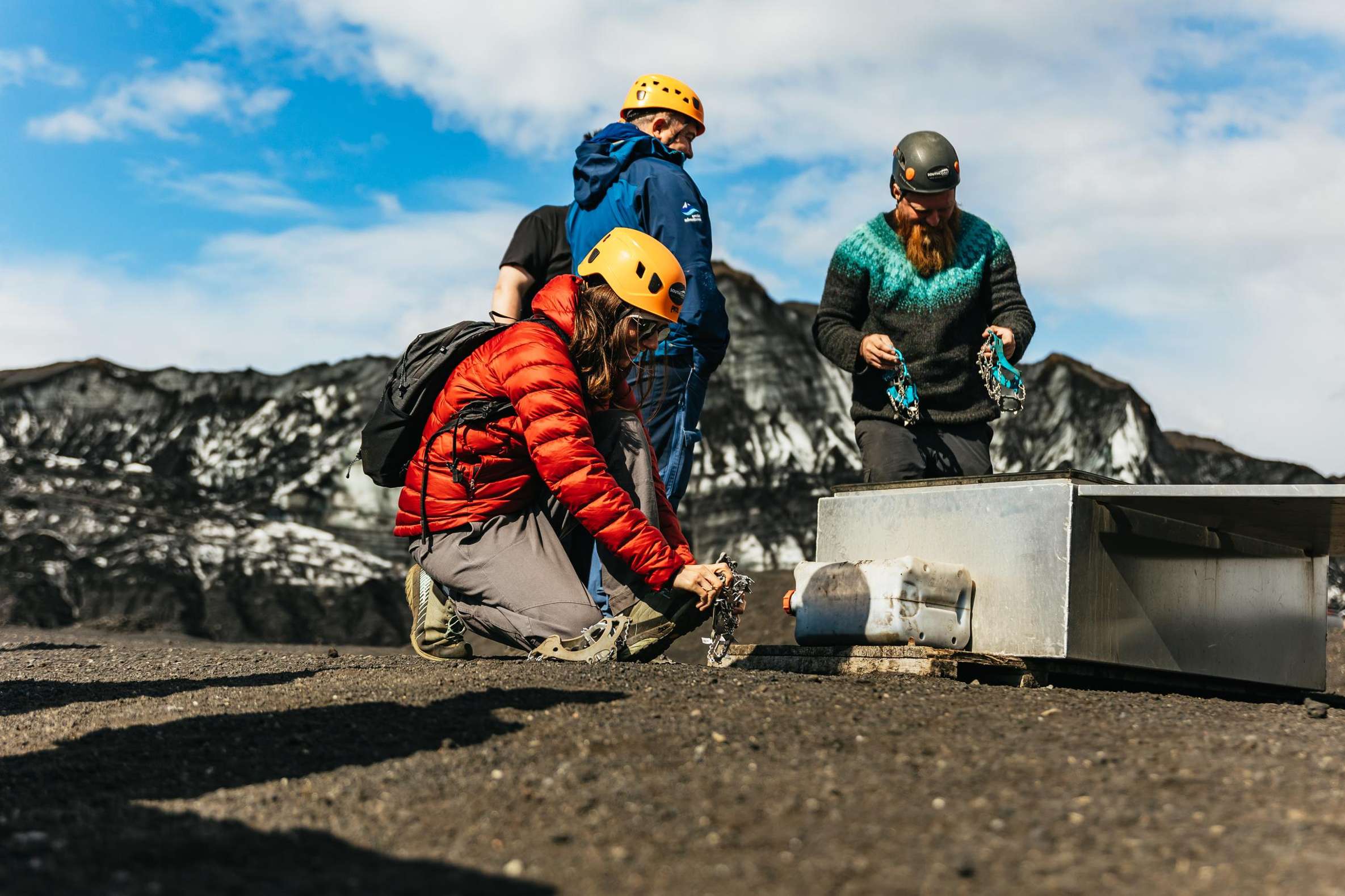
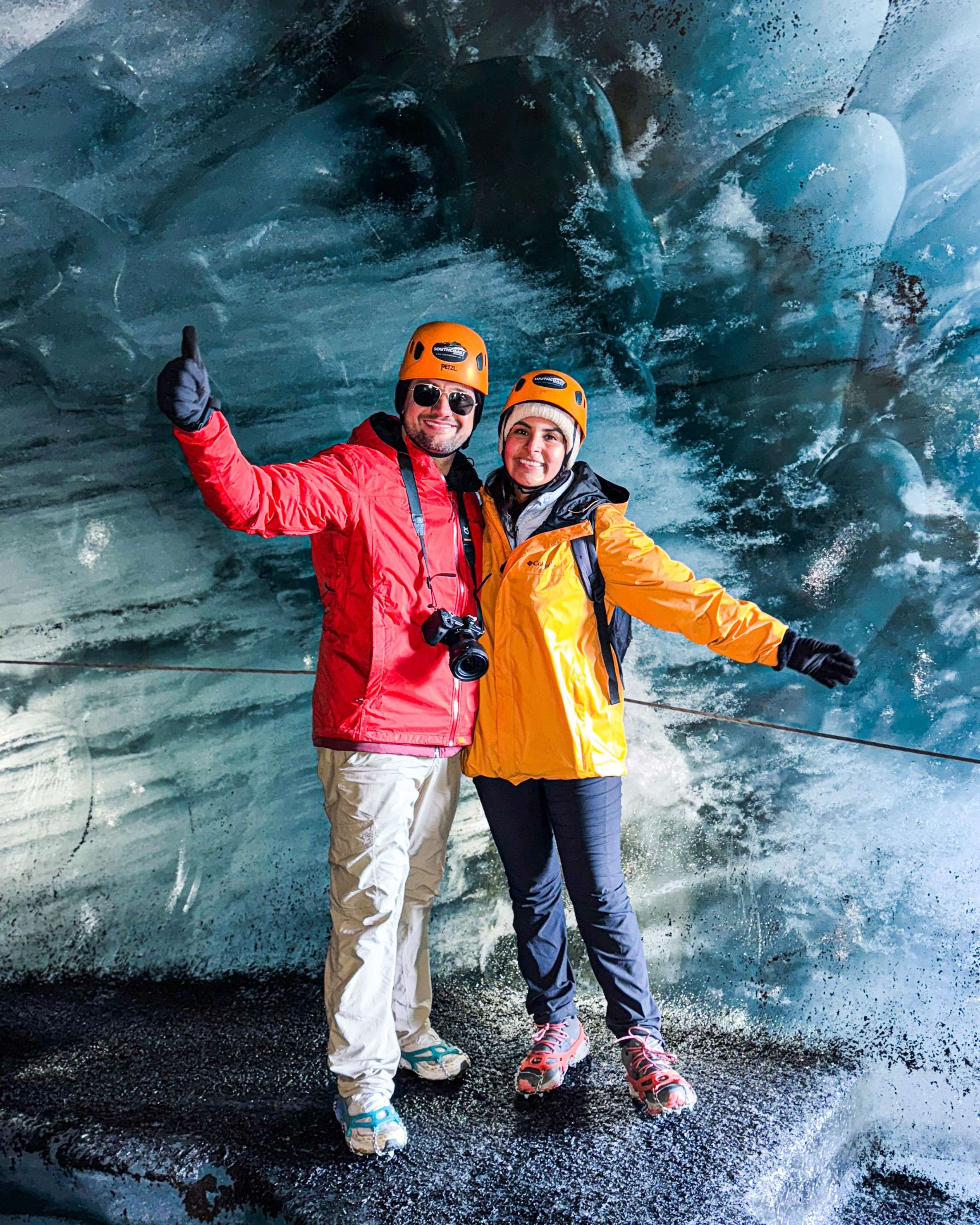
The helmet goes on before you leave the vehicle. It guards against falling ice fragments and rock loosened from cave roofs, and it is non-negotiable on every tour. Crampons or microspikes go over your boots, giving grip on hard glacier ice and slick cave floors.
Then the boots. Stiff, ankle-high hiking boots are the make-or-break item, because crampons cannot be mounted safely on sneakers or soft footwear. At Skaftafell, unsuitable shoes can get you turned away at the gear check itself. Where the approach crosses crevassed terrain or steep slopes, a harness and headlamp join the list.
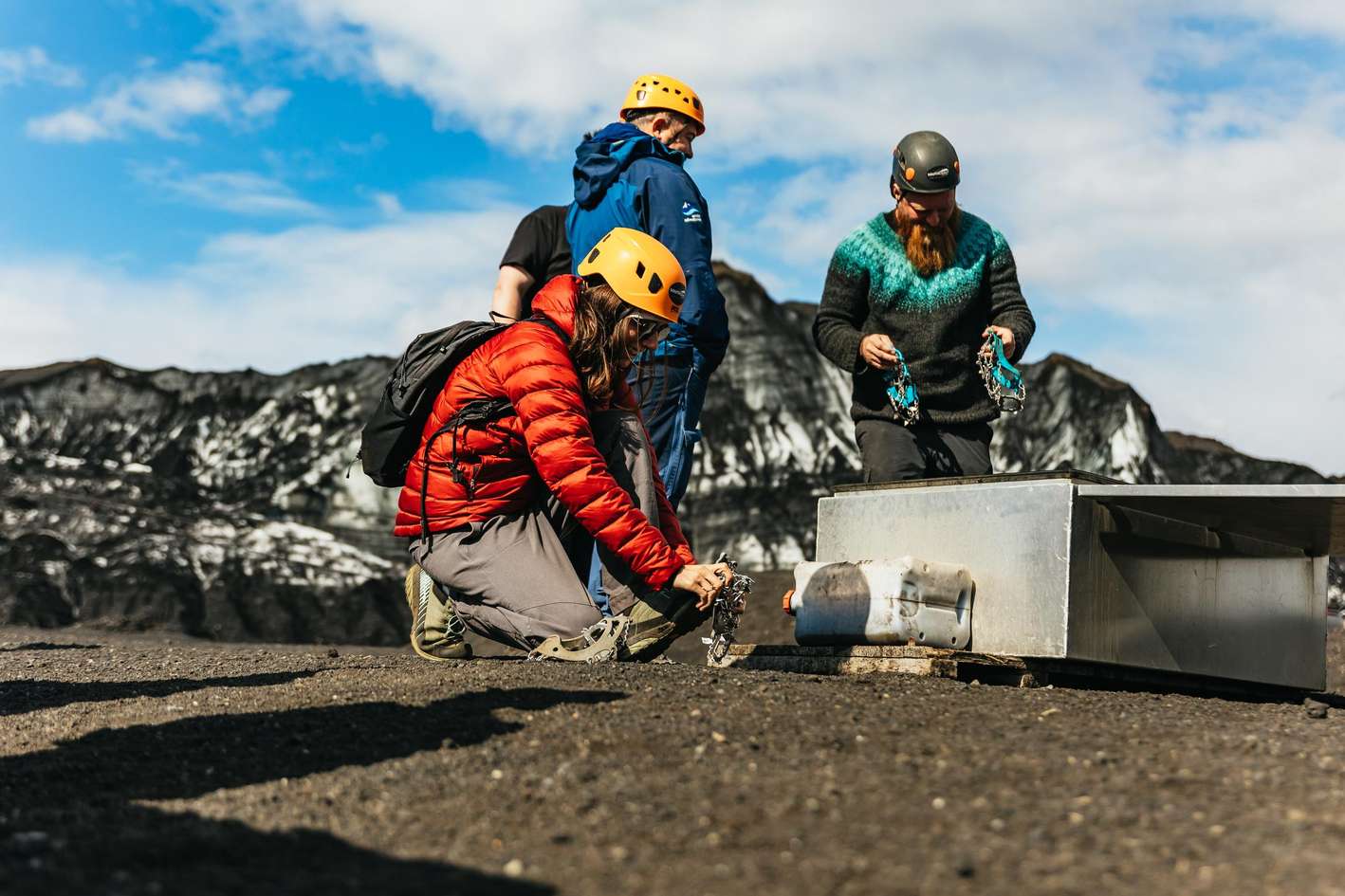
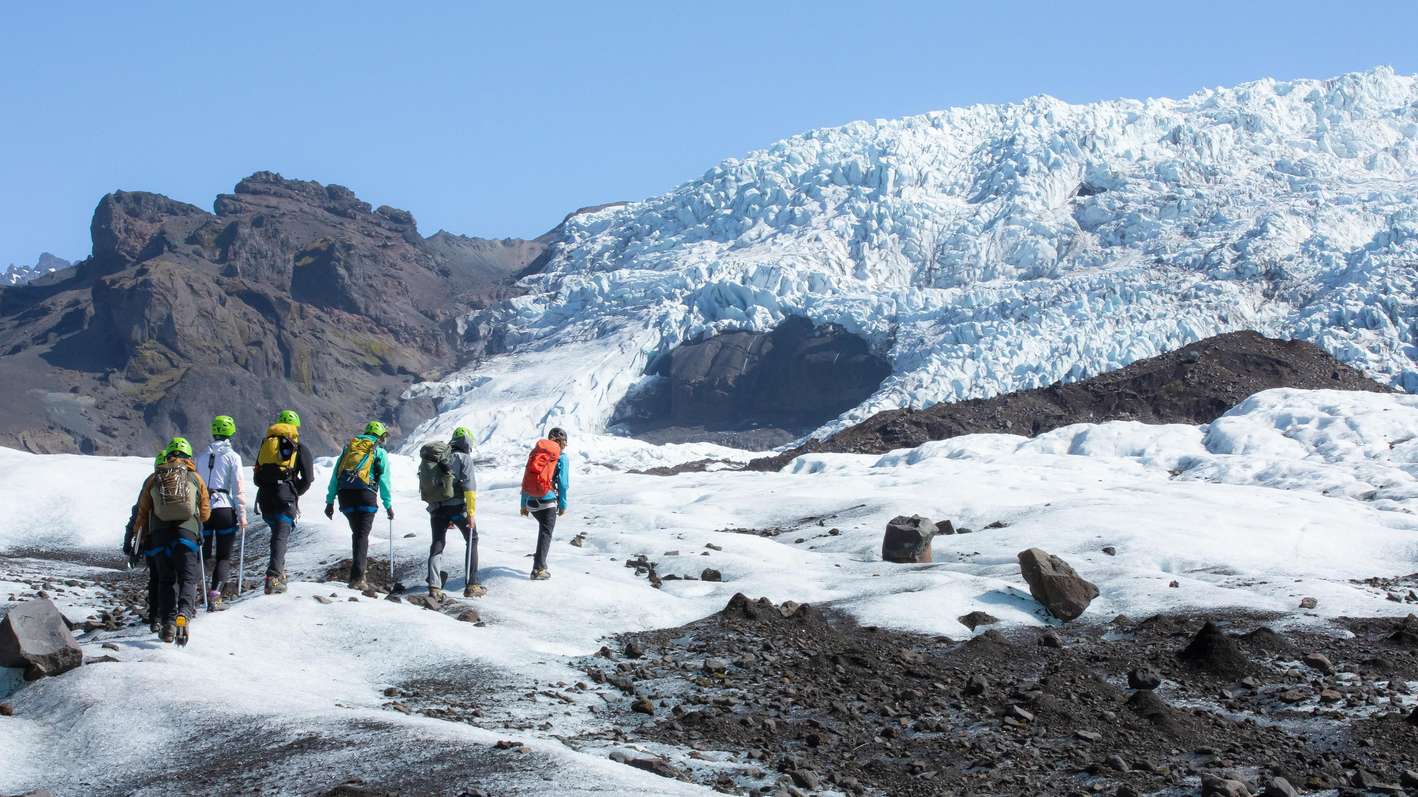
Most of this comes with the tour. Falljökull glacier hikes include crampons, helmet, harness and ice axe, and boots can be rented on site if yours will not pass. What you bring is the clothing around the gear, and the judgment to check the boot rule before you book rather than in the car park.
- Safety helmetMandatory on all tours to guard against falling roof ice, loose rock fragments, and head impacts on low ice ceilings.
- Crampons or microspikesEssential traction devices provided by operators to secure your footing on hard glacier ice, frozen slopes, and slick cave floors.
- Ankle-high hiking bootsMandatory rigid footwear with firm soles, required so tour crampons can be fastened securely and your ankles remain supported.
- Glacier safety harnessMandatory on tours that cross open glacier surfaces, crevassed approaches, or steep inclines to reach the cave entrance.
- HeadlampEssential for safely navigating unlit interior corridors, hidden drop-offs, and deep glacier ice tunnels.
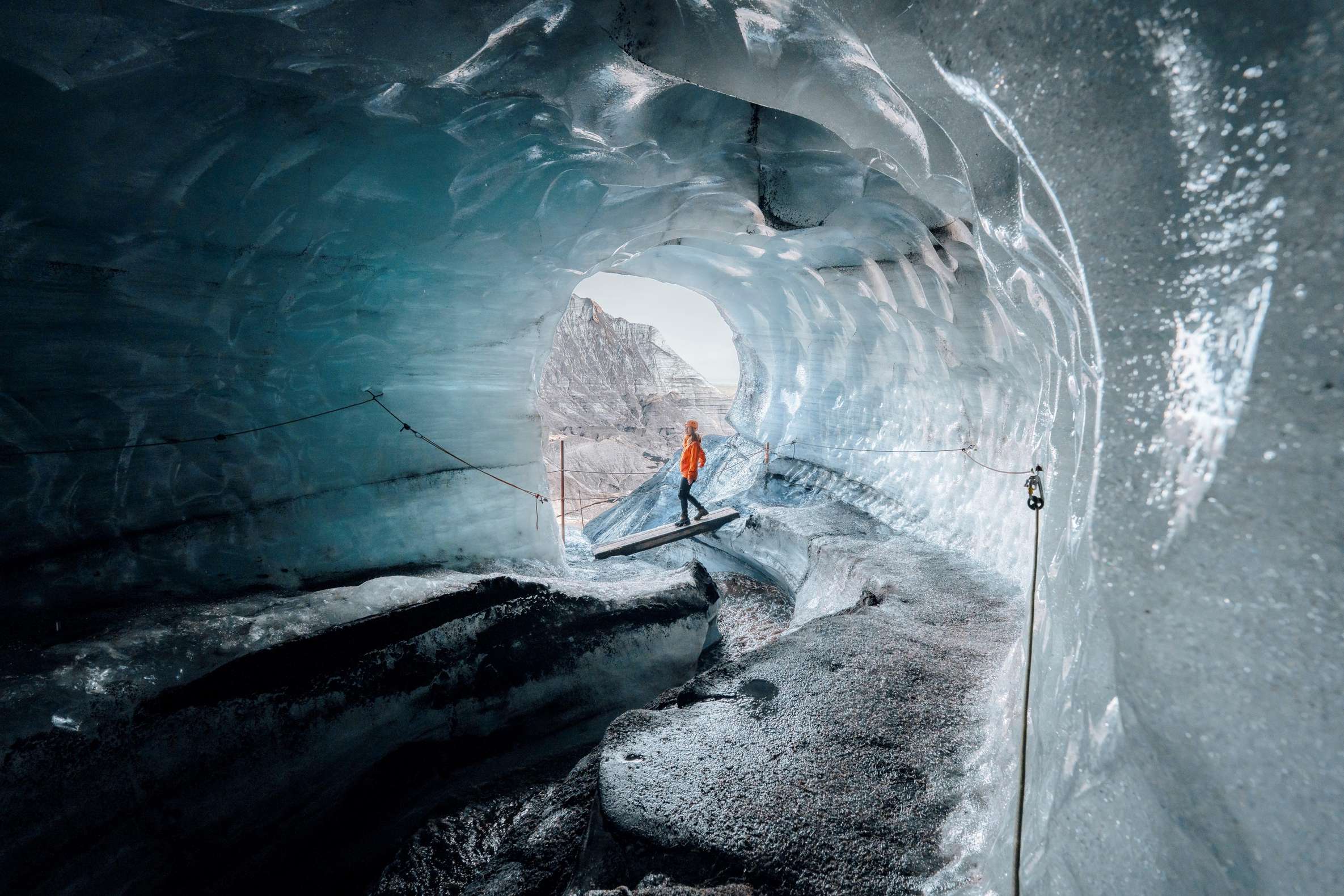
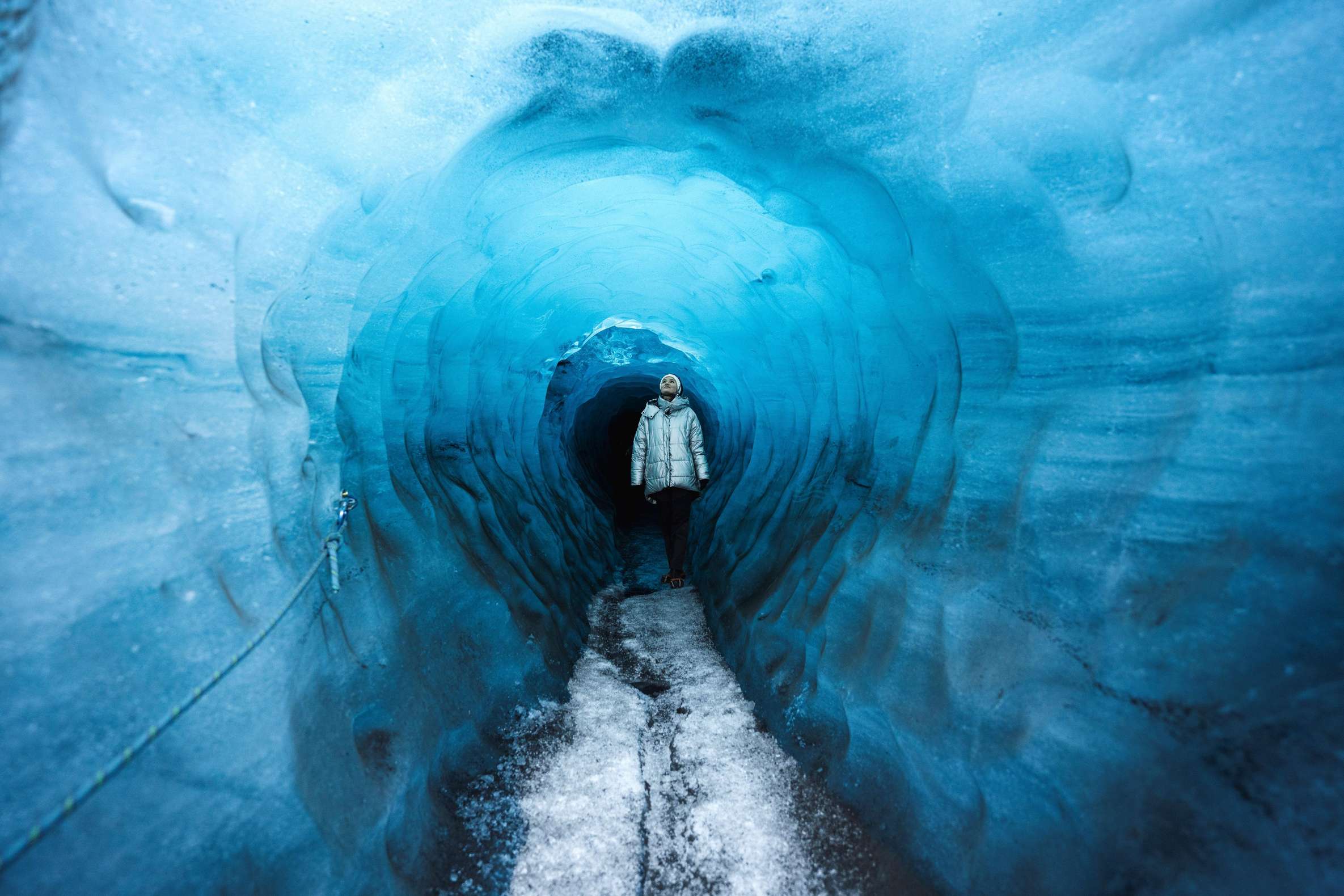
Inside the cave - cold, dark and tight spaces
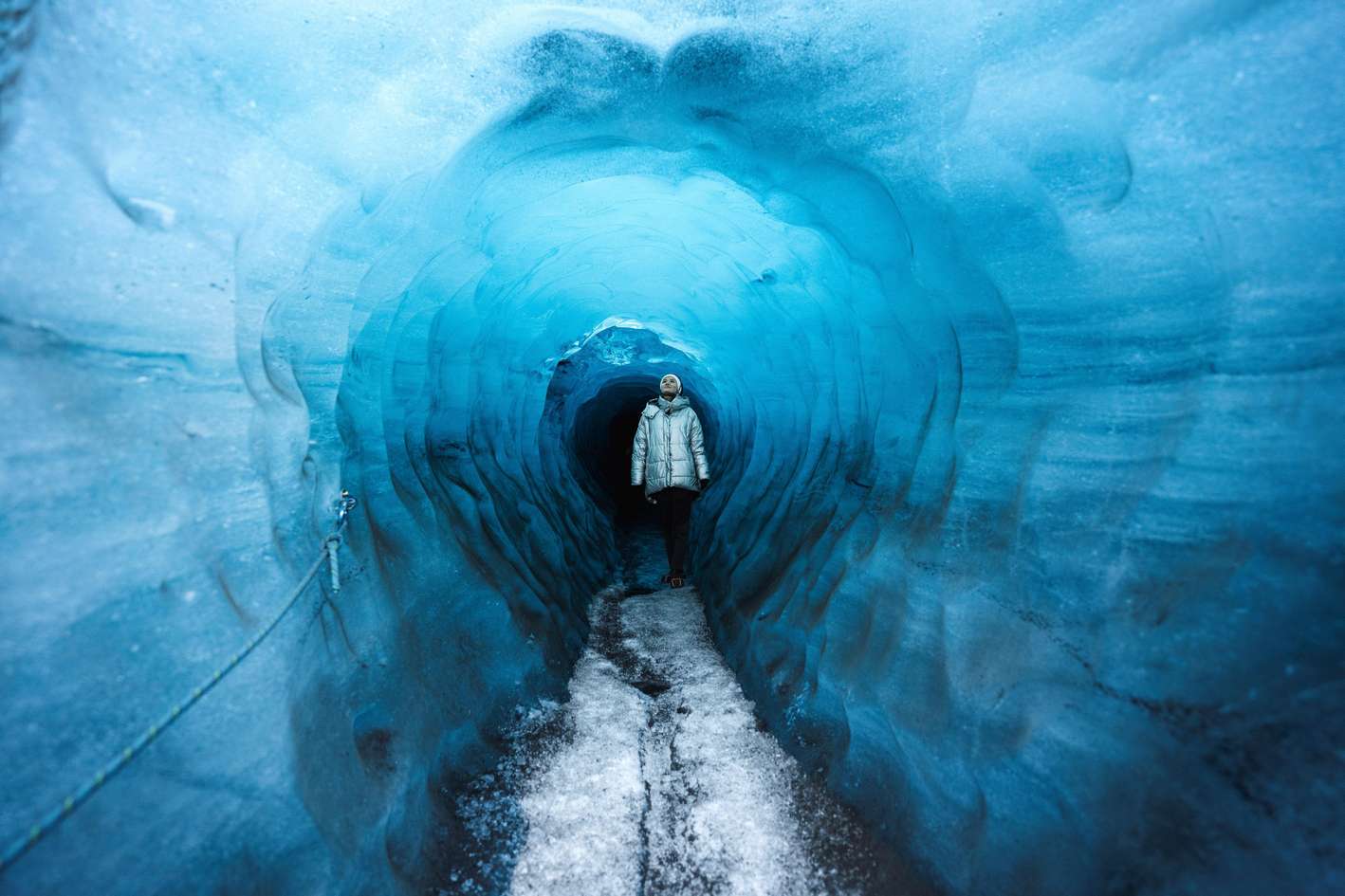
The cold surprises people in the wrong direction. An ice cave sits near 0°C year round, so on a January morning the inside can be warmer than the air outside. The cold you feel comes from standing still, not from the cave itself.
Space varies more. Most chambers tours describe are roomy, but some passages are narrow and low, and a few require a crawl.
One Katla tour states plainly that it does not suit people afraid of the dark or with claustrophobia; the engineered Langjökull tunnel, wide and consistent from visit to visit, is the friendlier option for tight-space nerves. At Jökulsárlón, expect to share the cave with other groups.
Dress for stillness. Thermal base layer, a fleece or light-down mid-layer, waterproof jacket and trousers, a thin hat that fits under the helmet, and gloves with a thin liner so camera fingers keep working. Bring an extra mid-layer if you run cold, because photo stops do not generate heat.
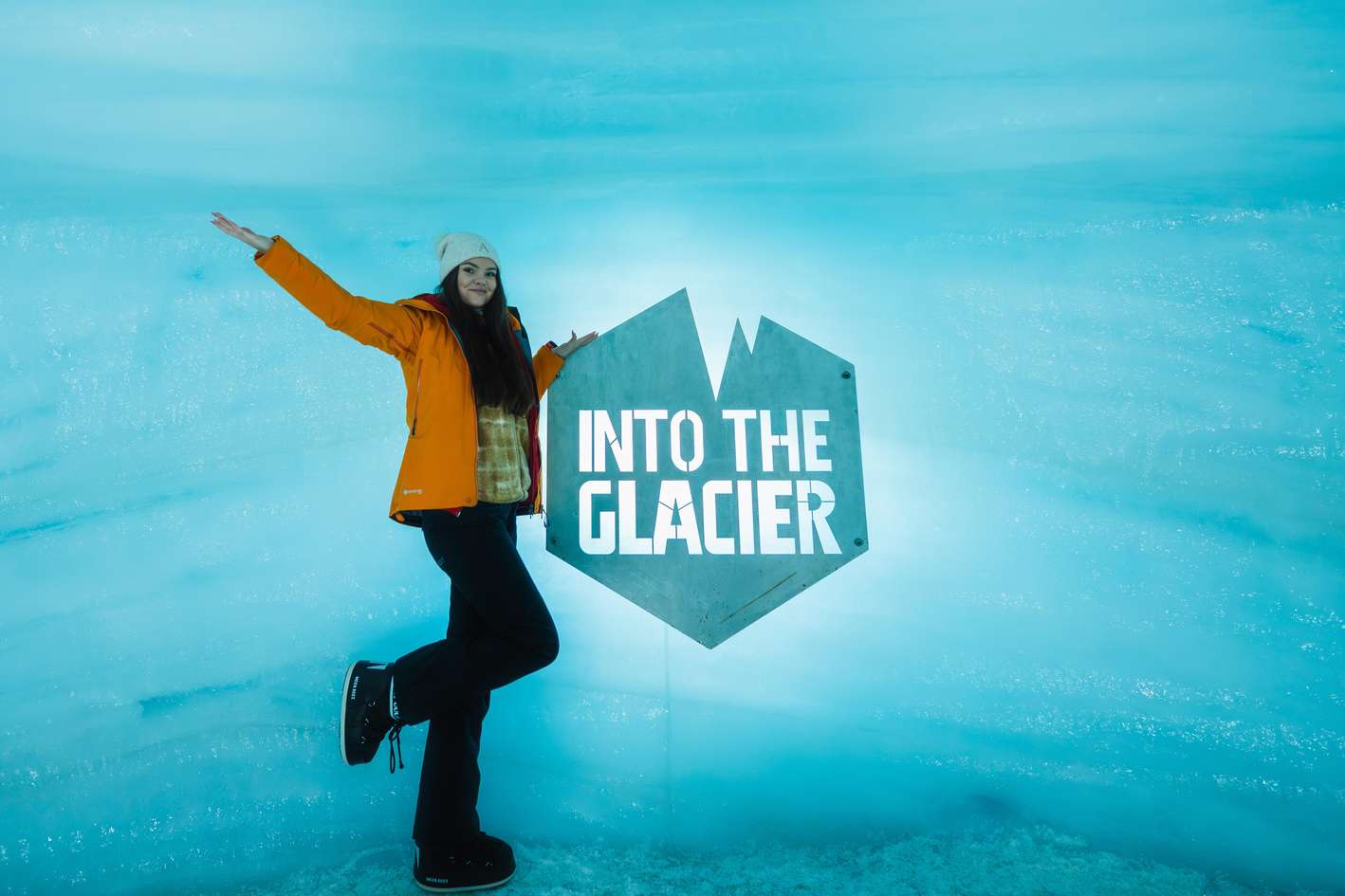
Weather, seasons and when ice caves close
Two calendars govern the ice. The Vatnajökull caves near Jökulsárlón run from autumn to spring and close from May through September, when melt thins their roofs and walls by up to 10 centimetres a day. Katla runs year round, including summer, which is why its black-and-blue ice fills the calendar gap the others leave.
Rain and warm spells are the cave's enemies. Meltwater floods passages, water reaching the roof reshapes the interior, and a cave can become unvisitable at short notice. A tour may be altered or cancelled when the daily check finds the conditions wrong.
Weather warnings close the rest. An orange alert means significant impacts and possible cancellations; a red alert means extreme weather, closed roads and cancelled tours. Gusts above 15 m/s call for caution, and Katla tours have been cancelled for winds above 20 m/s.
Rely only on a forecast within 48 hours of your excursion. Icelandic weather models change drastically further out, and the December-to-February freeze gives the deepest, most stable blue ice of the year.
Refunds and rescheduling when tours are cancelled
When the weather kills the day, the money comes back. Operators treat closed roads, storms and flooded caves as safety cancellations, and every cancellation for weather, safety or glacier conditions brings a full refund or a free reschedule.
The road version works the same way. If authorities close Route 1 and you cannot reach the meeting point, the operator treats it as a safety cancellation and offers a refund or a new date.
If you see a closure forming, call before departure time; operators can discuss options up to the moment the bus leaves.
On multi-day itineraries, a washed-out ice cave day usually becomes something else on the ice, such as a glacier hike, or a partial refund. Either way, the risk of a stormy week sits with the operator, not with your booking.
When the day changes
| If this happens | What happens then |
|---|---|
| The operator cancels for weather, safety or glacier conditions | A full refund or a free reschedule |
| Authorities close the road and you cannot reach the meeting point | Treated as a safety cancellation, with a refund or a new date |
| You spot a closure before departure | Call the operator straight away, before check-in time, to discuss your options |
| The ice cave portion drops off a multi-day trip | An alternative glacier activity or a partial refund |
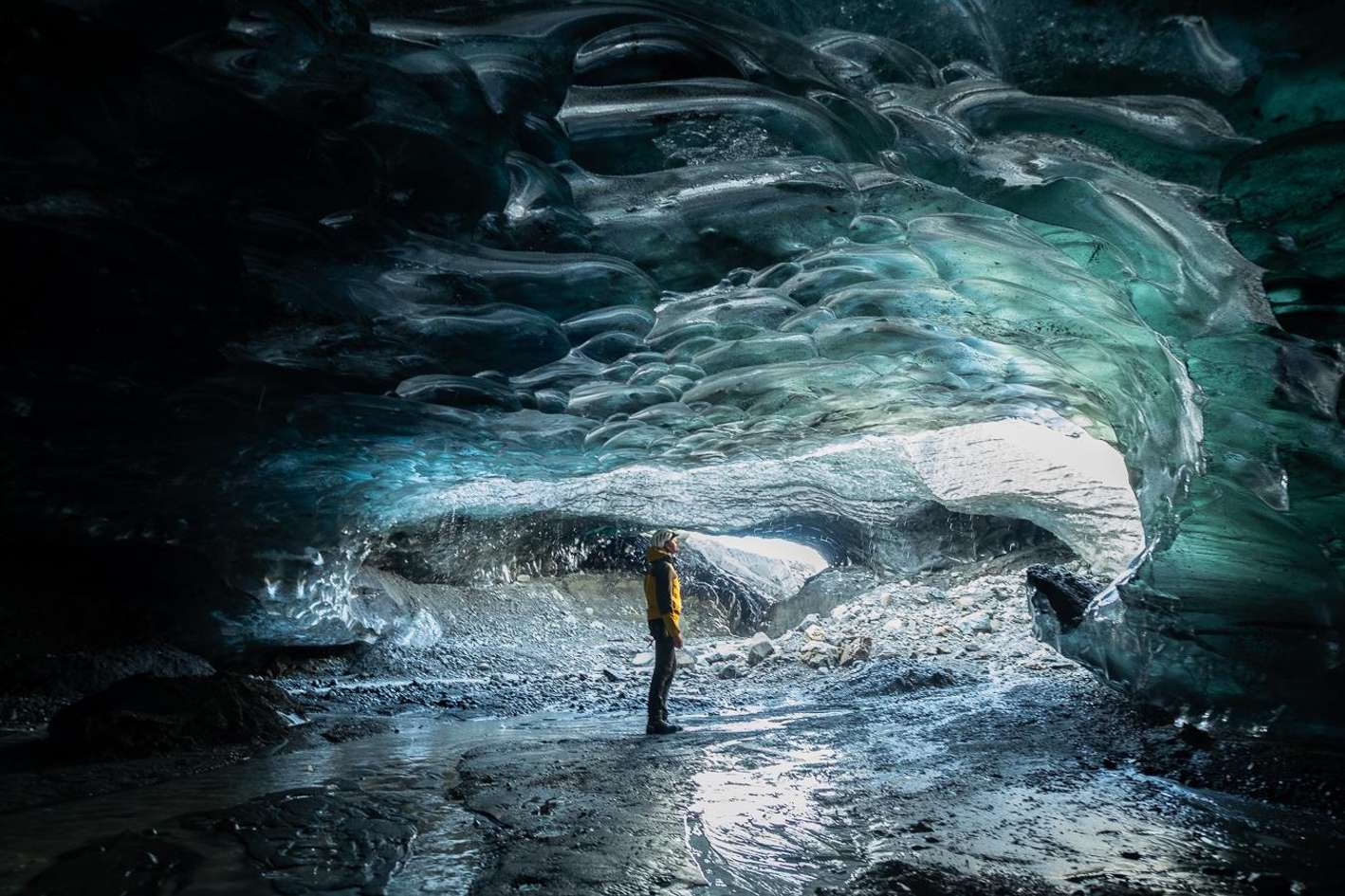
Katla ice cave vs Crystal Ice Cave in Vatnajökull
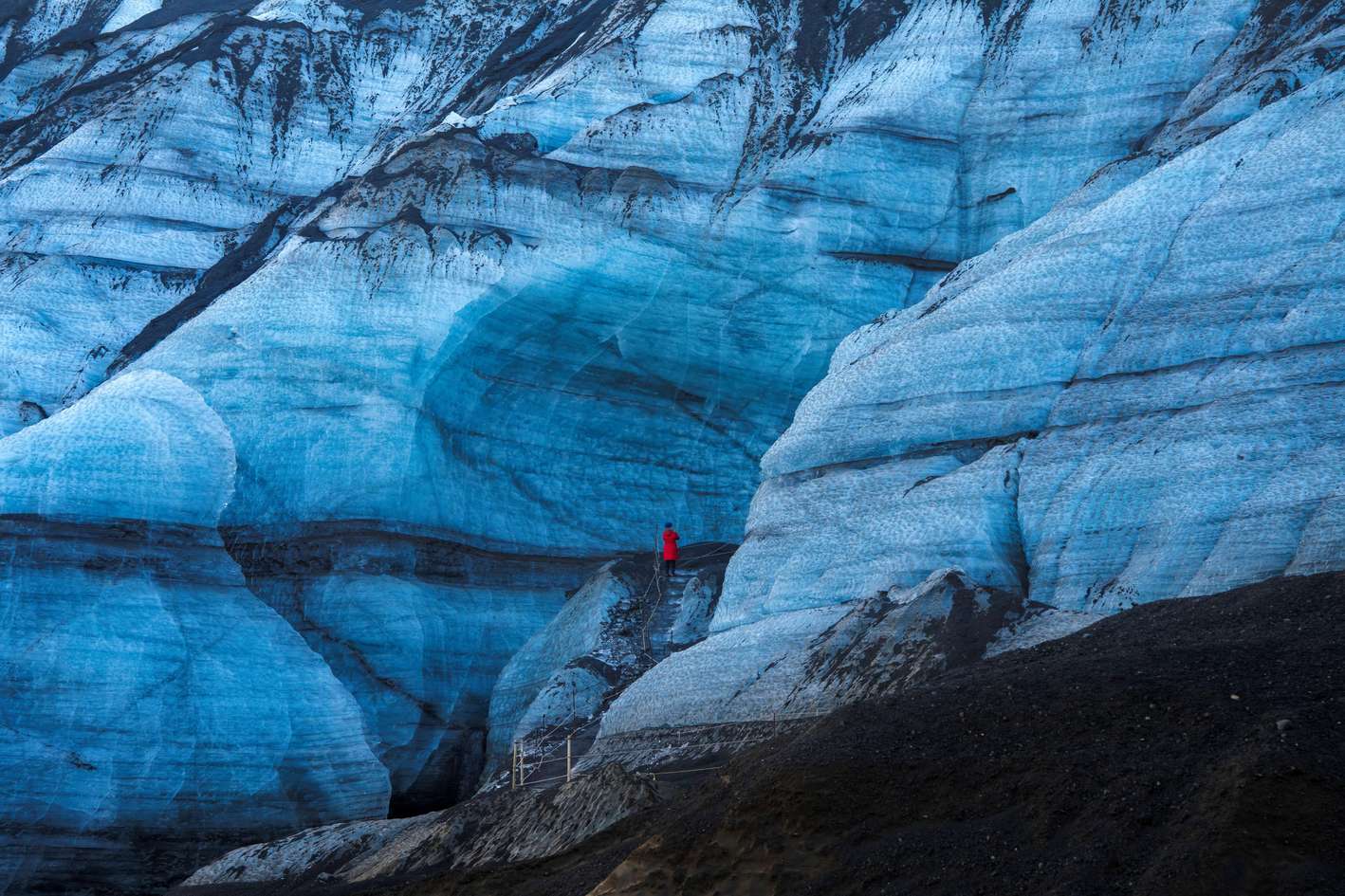
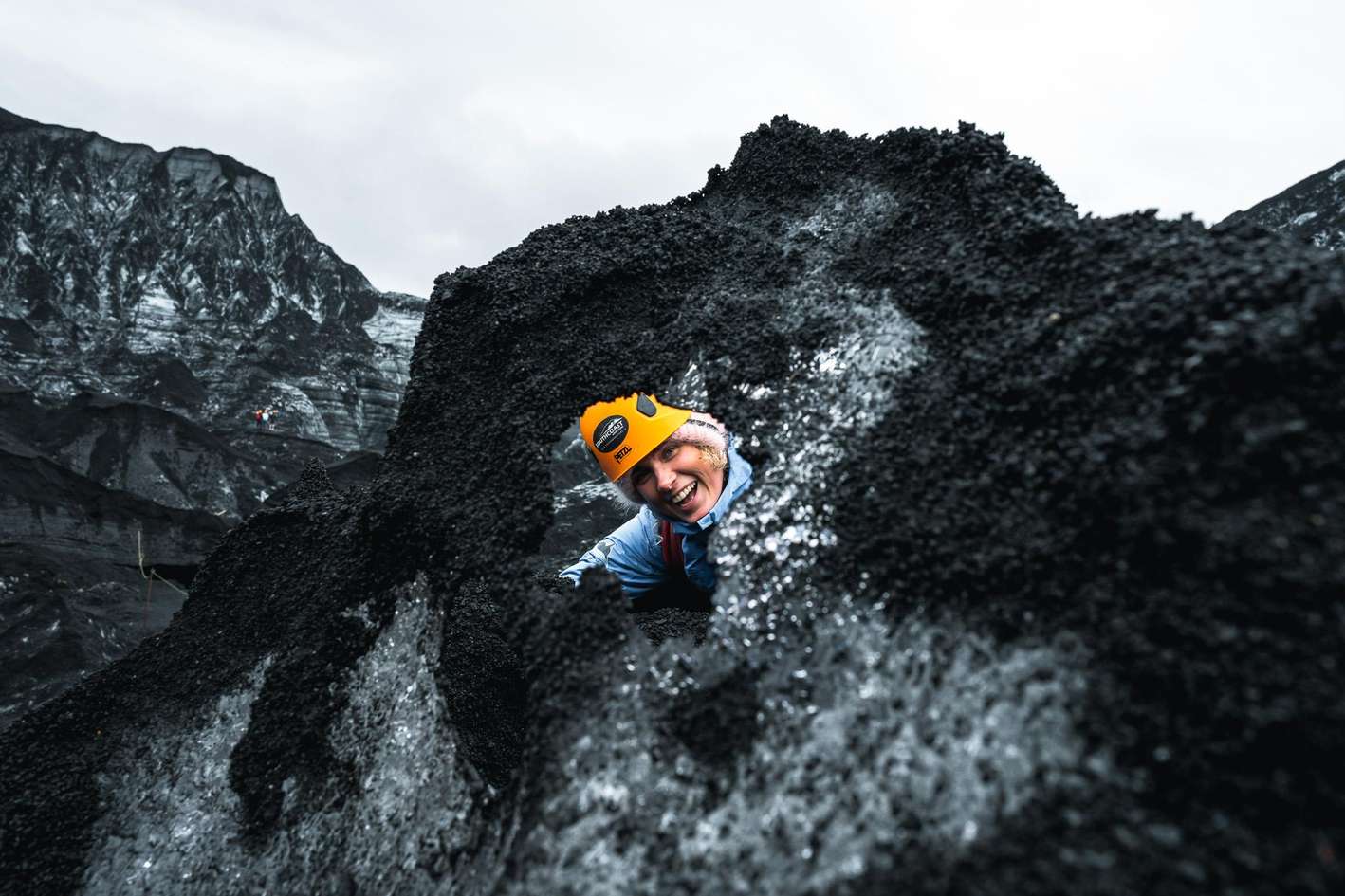
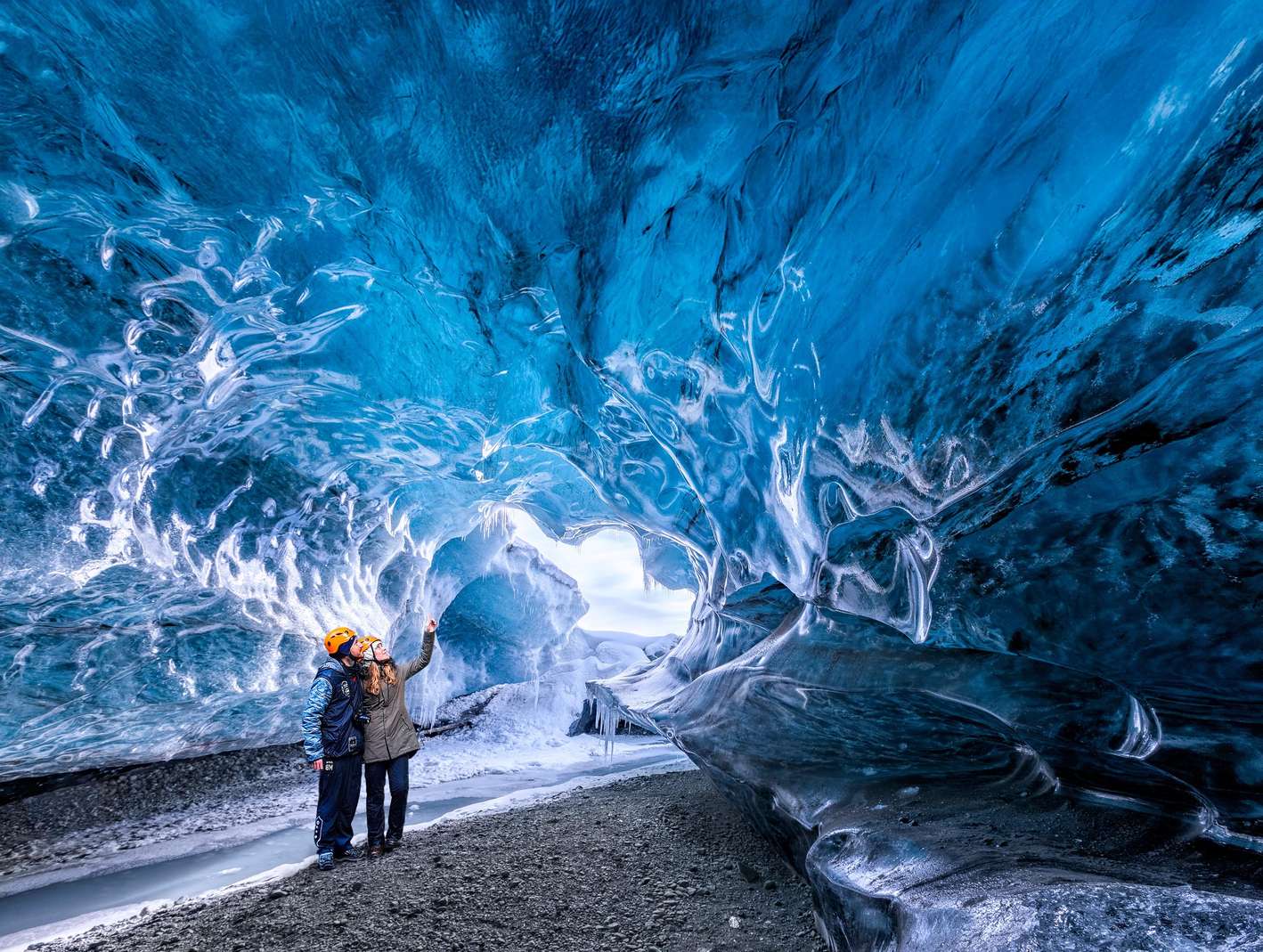
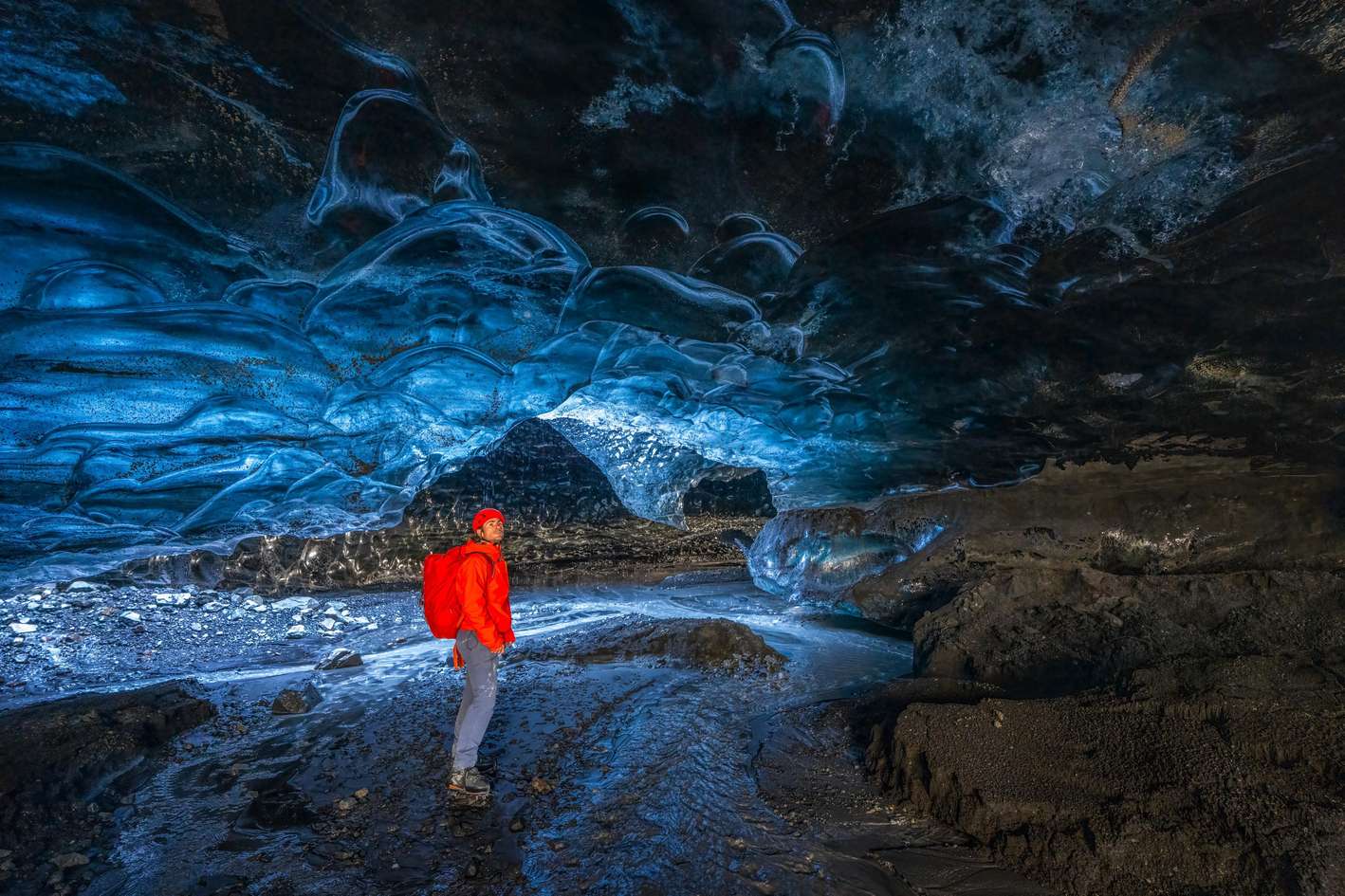
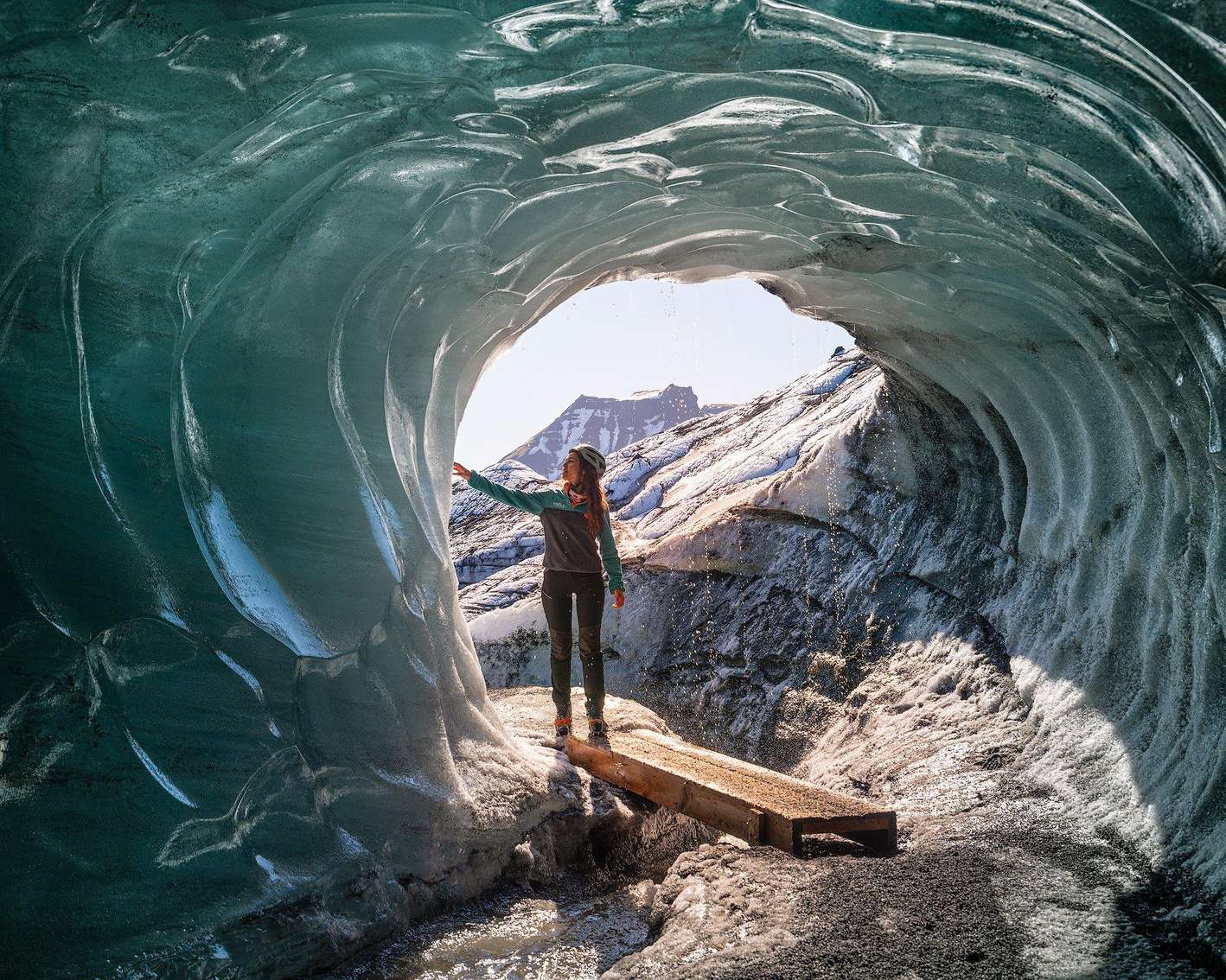
Two caves, two looks. Katla's ice runs black and grey, volcanic ash folded through blue, a record of eruptions under Mýrdalsjökull. The Crystal Cave on Breiðamerkurjökull glows a dense, luminous sapphire with no ash to darken it.
The practical differences matter more than the colour. Katla runs year round and meets in Vík, about two and a half hours from Reykjavík, with brighter natural light that makes moving and photographing easier.
The Crystal Cave runs from October to April, sits about five hours from Reykjavík, and can draw crowds that wait outside while earlier groups finish.
Both caves change shape between seasons, so the formations in the photos may not be the ones in front of you. One traveler who did both preferred Katla on the day, but the right answer is the one your dates allow.
Katla or the Crystal Ice Cave
| Katla Ice Cave | Crystal Ice Cave, Vatnajökull | |
|---|---|---|
| Ice colour | Black and grey ash bands through blue ice | Dense, luminous sapphire blue |
| Season | Year round | October to April |
| Access | Short, easy hike over uneven terrain | Short, easy walk to the entrance |
| Base | Vík, with Reykjavík pickup options | Jökulsárlón, farther east |
| Crowding | Bright light spreads visitors out | Can be crowded, with waiting to enter |
- Ice colour
- Black and grey ash bands through blue ice
- Season
- Year round
- Access
- Short, easy hike over uneven terrain
- Base
- Vík, with Reykjavík pickup options
- Crowding
- Bright light spreads visitors out
- Ice colour
- Dense, luminous sapphire blue
- Season
- October to April
- Access
- Short, easy walk to the entrance
- Base
- Jökulsárlón, farther east
- Crowding
- Can be crowded, with waiting to enter
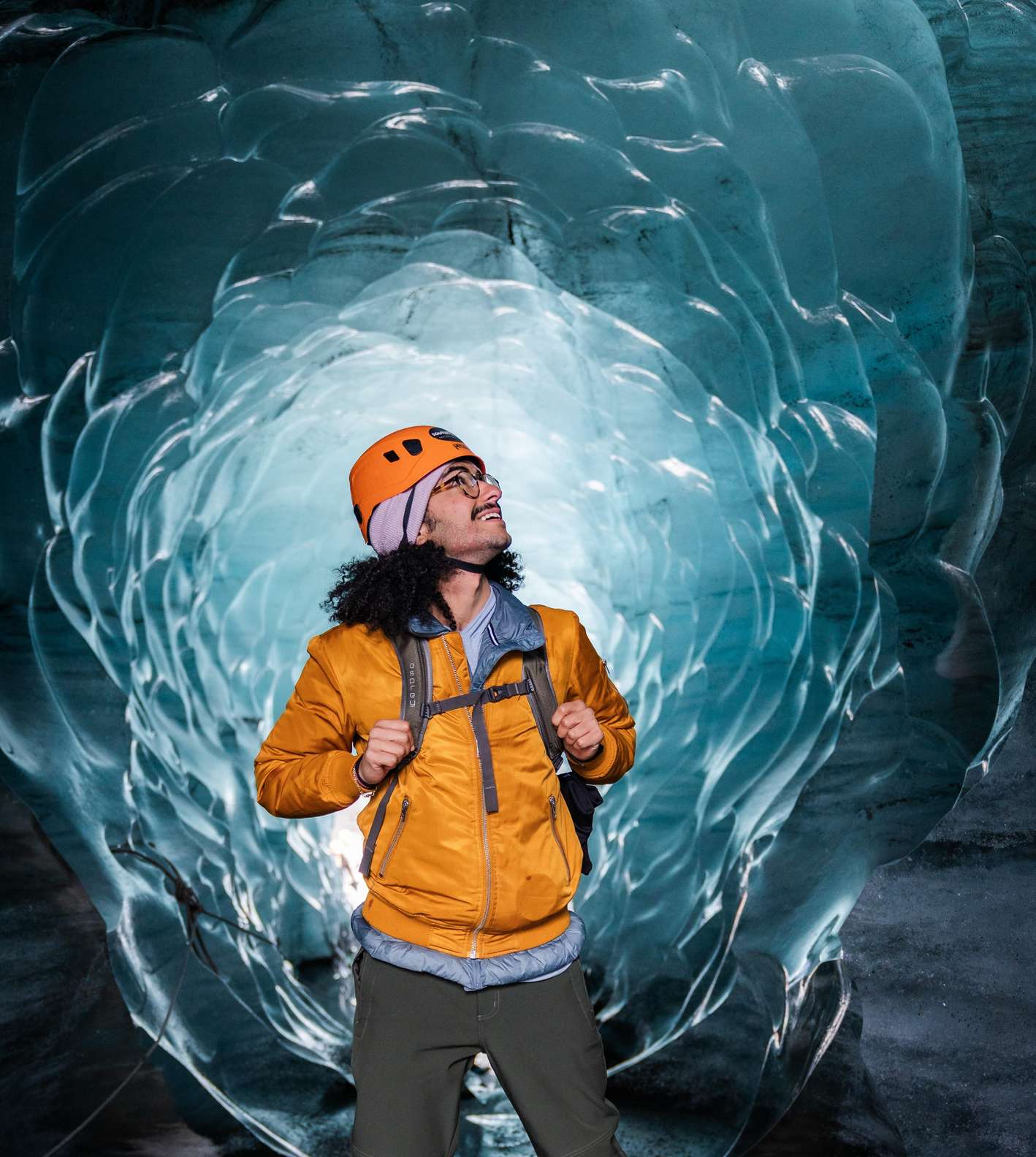
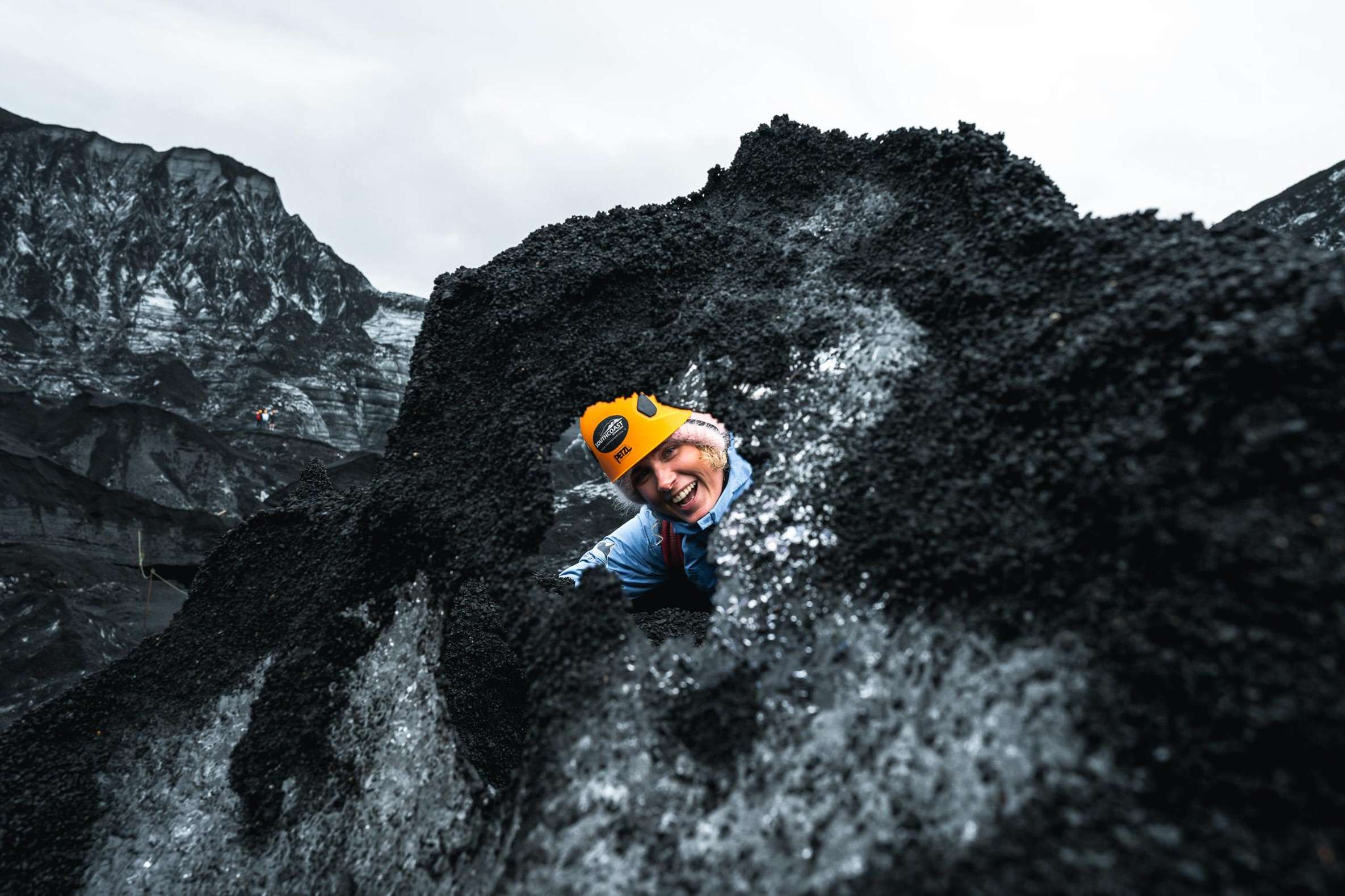
Age limits, fitness and health requirements
Minimum ages start at 6. The Katla tour from Vík accepts children from 6, several Reykjavík small-group tours set the limit at 8, and the Jökulsárlón exploration tour draws the line at 13. A reviewer advised against the Katla trip for small children and people with bad knees, ankles or backs.
Mobility matters more than age. The Crystal Ice Cave tour excludes people with mobility impairments and wheelchair users, and one Katla small-group tour excludes heart problems and wheelchairs along with them. The requirement is simple: walking independently over uneven terrain and gentle inclines, in some cases for an hour or two.
Pregnancy splits by tour and stage. One operator allows travelers up to 6 months pregnant on its Crystal Blue Ice Cave tour at their own discretion, but not from 7 months onward, and another does not recommend its tour to pregnant women because the Super Jeep ride is bumpy.
The Katla listings from Vík stay silent on pregnancy, so ask before booking rather than assume.
Driving the South Coast to your ice cave meeting point
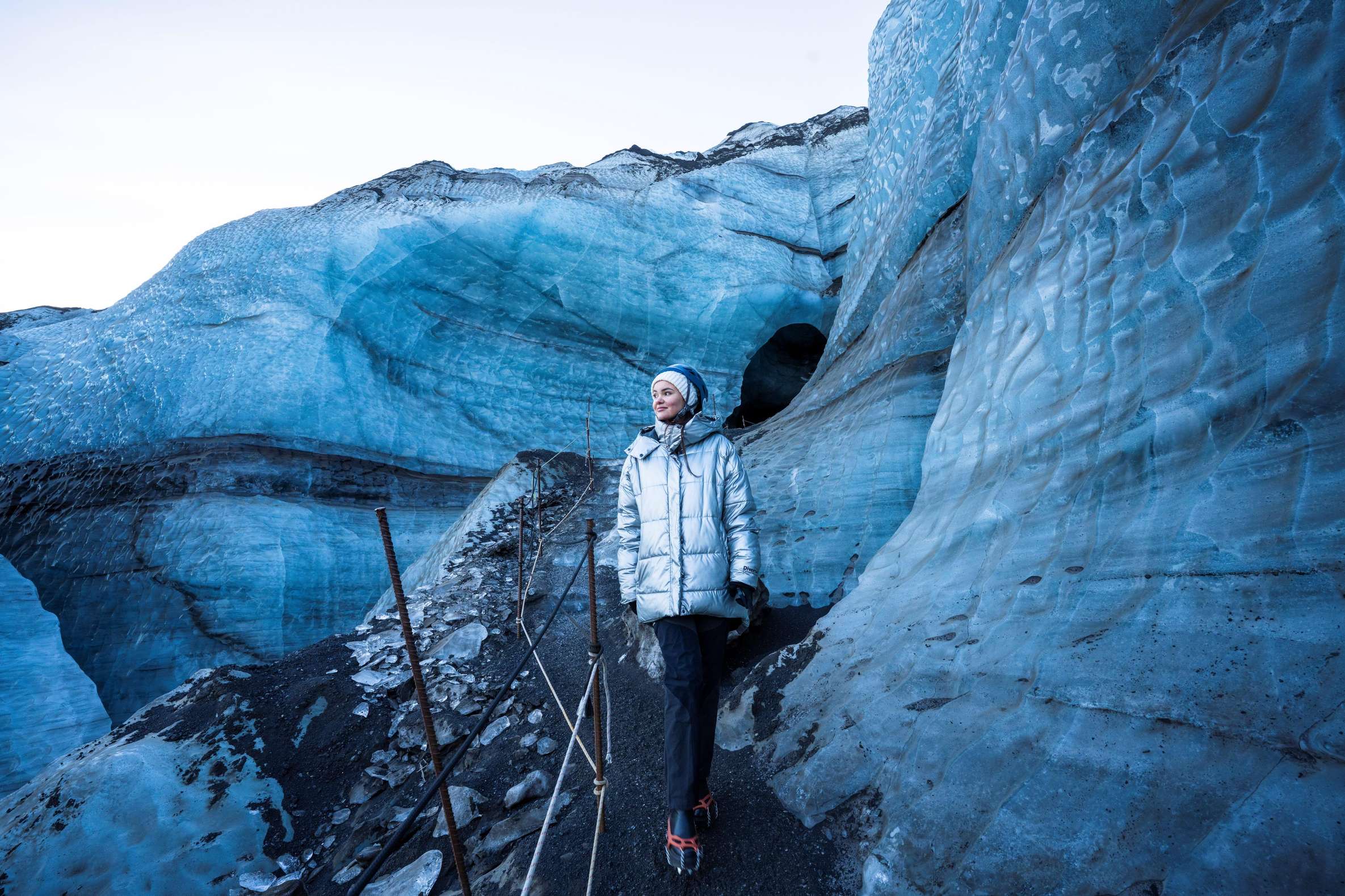
The drive is its own weather system. Hellisheiði, on Route 1 between Reykjavík and Selfoss, ices over frequently, and the stretch beneath Eyjafjallajökull regularly takes gusts above 25 m/s. Around Vík, sudden violent gusts are a known feature, not a rarity.
Closures are the rarer but bigger risk. Storms shut Route 1 for a few hours at a time, occasionally a day, and in December 2022 blizzards closed south coast roads for days. East of Vík, a closure can strand you from a meeting point farther along the coast.
Check umferdin.is for roads and webcams, the Met Office for weather, and SafeTravel for alerts before setting out. A 4WD rental is not required; the law only mandates it on Highland F-roads.
Self-drivers heading to Jökulsárlón in winter face roughly five hours each way in darkness and fog, and travelers advise overnighting in Vík or Kirkjubæjarklaustur instead of driving back the same night.
Your Katla ice cave tour day from Vík
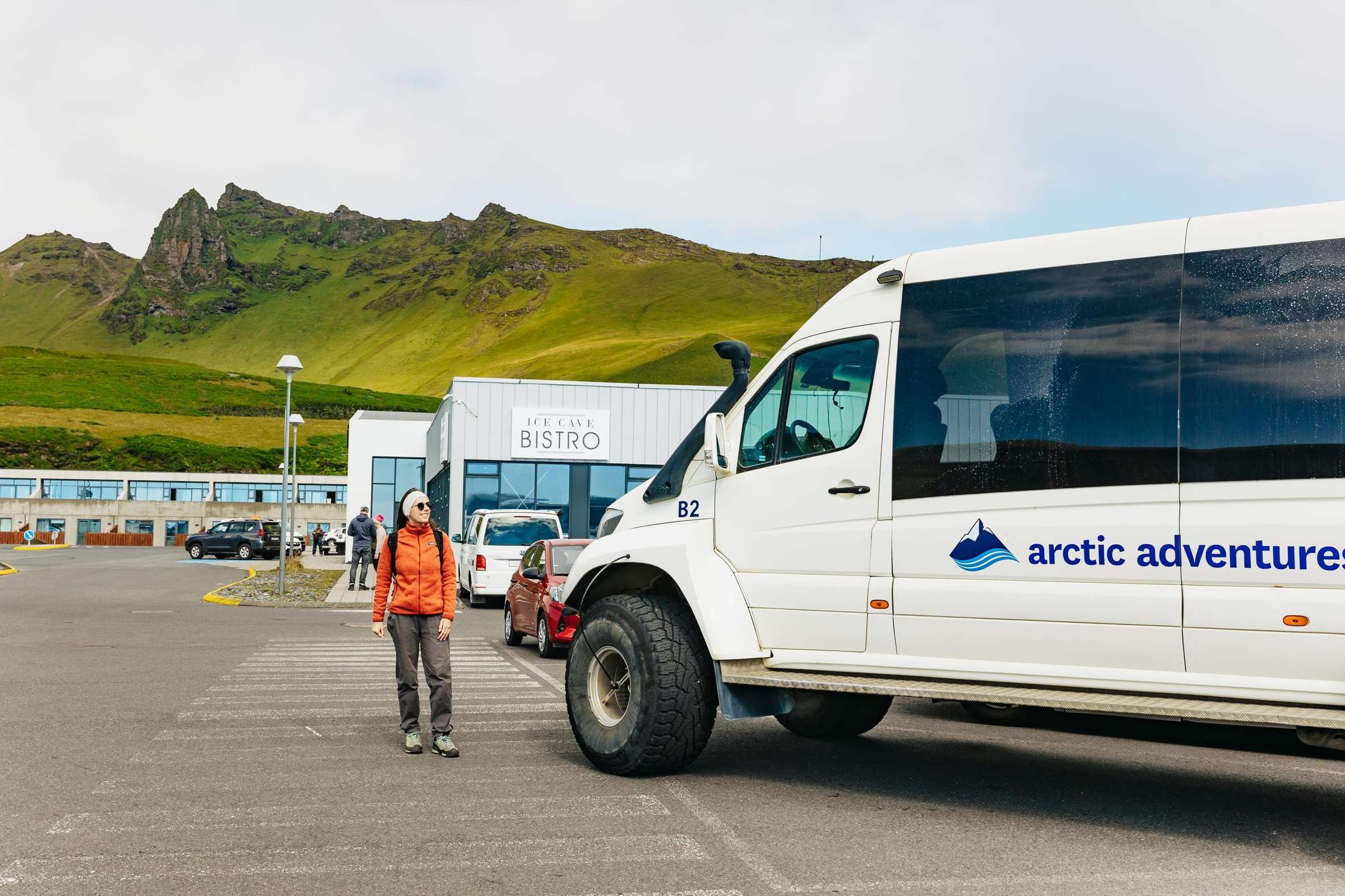
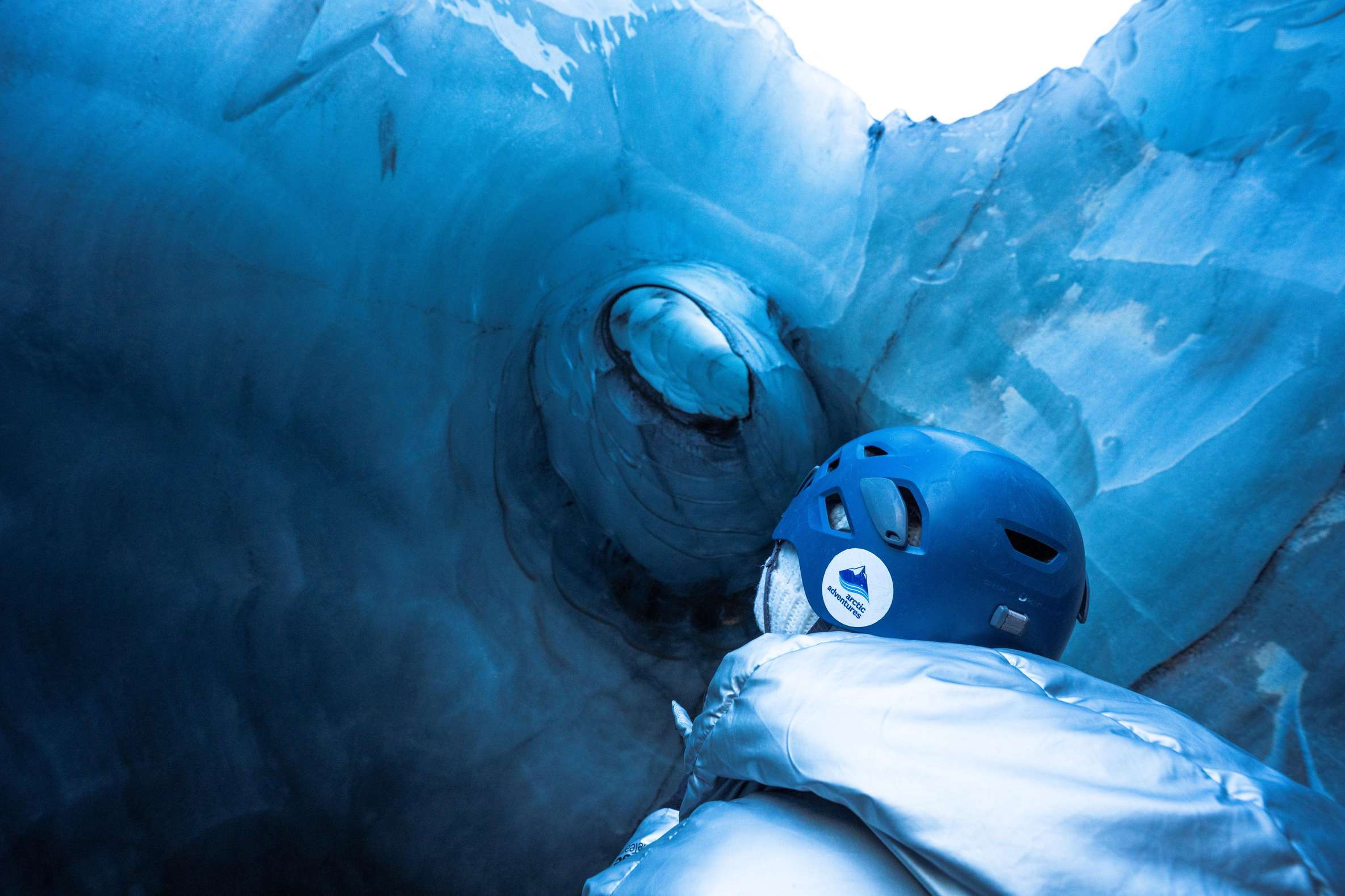
Check in at Vík Inn 20 minutes before departure, with parking to find, then the day starts properly. The Super Jeep ride across black sand and old lava takes about 40 minutes, bumpy enough that travelers mention motion sickness, scenic enough that they call it part of the experience.
At the glacier edge, the walk to the entrance covers 1 to 2 kilometres over uneven terrain with little elevation. Recent visitors disagree on how hard it feels: some call it an easy climb that still takes stamina, others found it steep in crampons. Plan for the slower version.
Inside, expect about 30 minutes on a 3-hour tour, roughly a sixth of the day. Groups may share the chamber, and visitors sometimes wait while another party clears a passage. Book the earliest morning slot or the last afternoon one for lighter crowds, and reserve a few days ahead in summer, further ahead in July.
- 1Arrive at the Vík meeting pointCheck in and meet your guide
20 minutes before departure, with parking to find
- 2Super Jeep across the sandurBumpy 40-minute ride over black sand, old lava and shallow streams
Motion sickness tablets if you are prone
- 3The approach walk1 to 2 km over uneven glacier terrain with the guide setting the line
Allow the slower estimate
- 4Inside the caveAbout 30 minutes in, often shared with other groups
Book the earliest or latest slot for space
- 5The ride backSuper Jeep returns to Vík
Tours run year round; book days ahead in summer
Other South Coast attractions and activities nearby
The ice cave rarely travels alone. The Reykjavík day tours stitch in Seljalandsfoss, where a path runs behind the falls, and Skógafoss, whose 527 steps reward the climb, along with Reynisfjara's black sand.
At Reynisfjara, obey the light system: yellow means stay out of the yellow zone, red means upper beach and a safe viewing distance, because sneaker waves there have been fatal and officers can close the beach at short notice.
Farther east, Jökulsárlón boats sail from early May through October. The amphibian tours take all ages; Zodiacs need passengers at least 10 years old or 130 cm tall.
And a distinction worth making: an ice cave tour takes you inside the glacier, a glacier hike takes you across its surface. The Falljökull walk from Skaftafell is more active, runs year round, and suits travelers who want the effort as well as the ice.
Safe with a guide, only with a guide
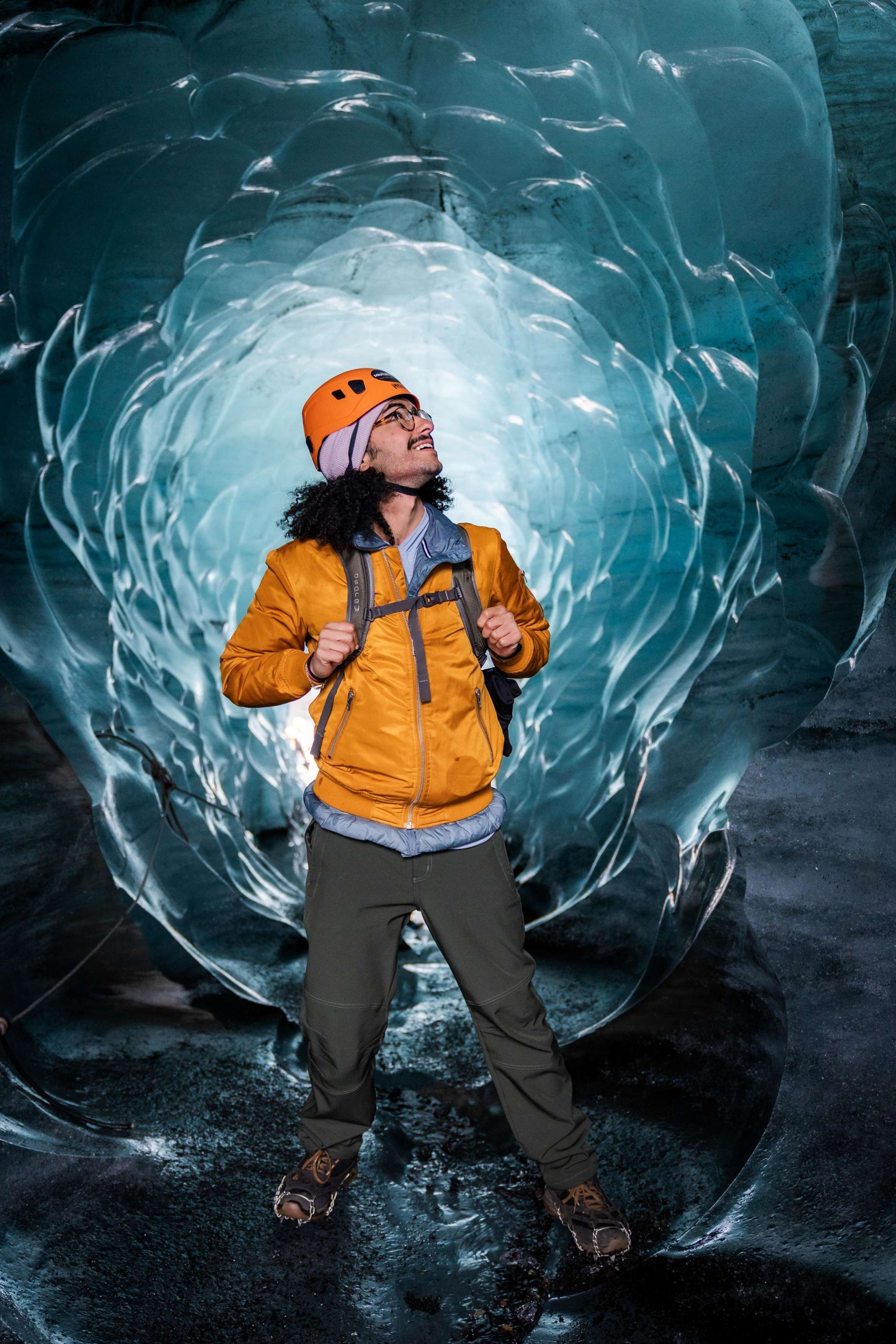
Yes, ice caves in Iceland are safe, on one condition: you go with a licensed guide. The caves tours visit are scouted and checked daily, and summer collapses happen where nobody trained is watching.
Going alone is prohibited in the national parks and has proven fatal, so the tour fee buys the only safe and legal way in. If claustrophobia or bad knees rule out narrow passages and bumpy jeep rides, read the tour's own limits before you book.
What to know before you book a safe ice cave tour
Most of these tours meet on location. Katla tours gather in Vík, and the Jökulsárlón tours meet at the glacier lagoon parking lot, where one operator asks guests to arrive 20 minutes early. The Reykjavík departures include hotel or bus-stop pickup.
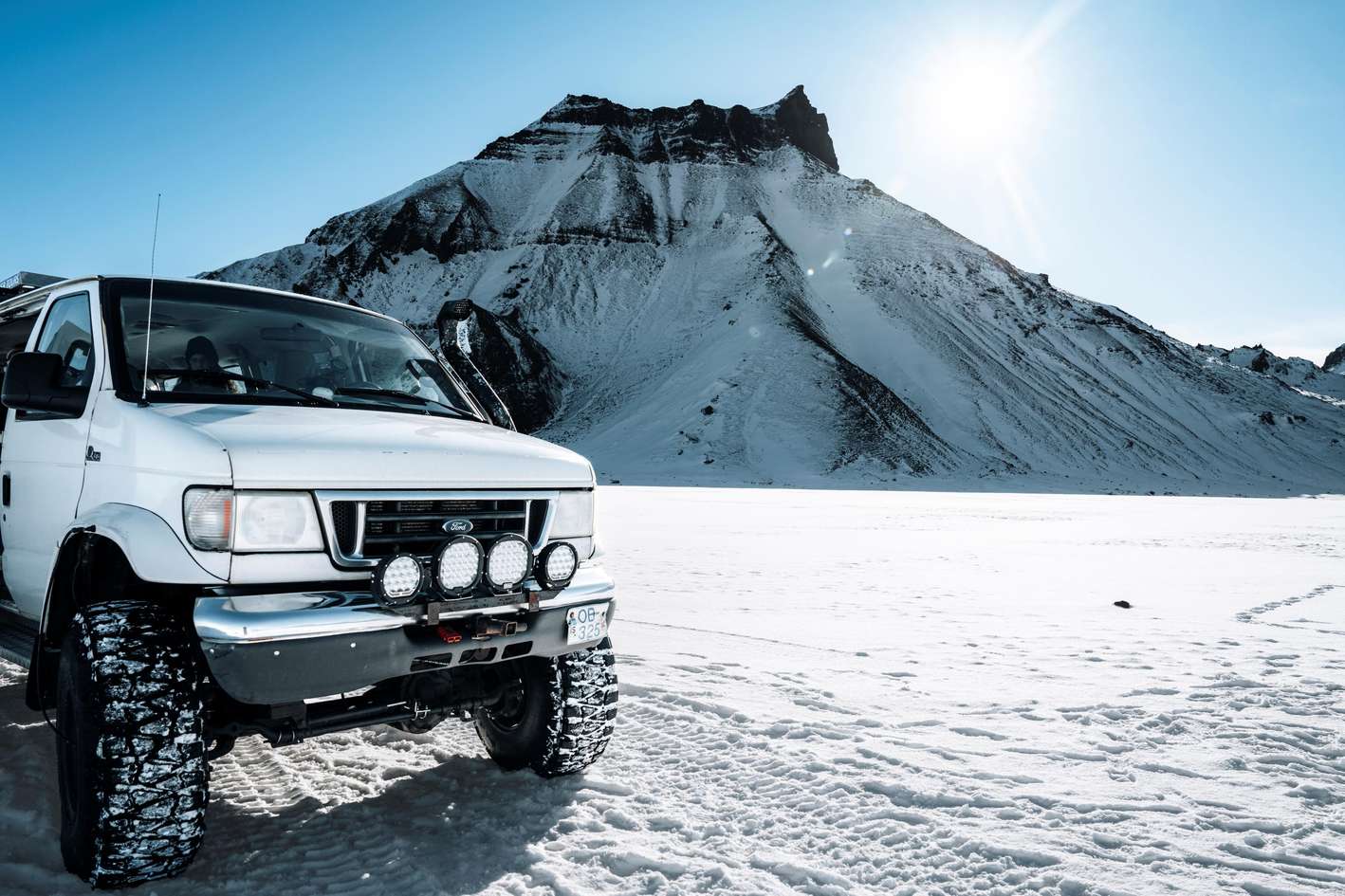
A specialized Super Jeep carries you from the meeting point to the glacier edge, about a 40-minute drive across black sand and shallow streams. The going is bumpy, and travelers prone to motion sickness should plan for it.
Groups stay small. One Crystal Ice Cave tour caps its groups at 14 guests per guide, and the Vík Katla tours run as small groups, so there is room to hear the guide and take photos without crowding.
Guided tours supply the safety gear: crampons, a helmet and, on the Jökulsárlón tours, a headlamp. Hiking boots and waterproof clothing are usually on you, though boots can be rented on site for the Falljökull glacier hike at Skaftafell.
Katla Ice Cave slots sell out quickly in summer. Book at least a few days ahead, and earlier still in July, when the peak season fills departures first.
You can cancel up to 24 hours in advance for a full refund on these tours. If the operator cancels because of weather, road closures or glacier conditions, you can reschedule or take a full refund.
Severe gales, blizzards and red weather warnings can close Route 1 and shut down access roads. Tours are called off in extreme weather, when the cave floods or when signs point to a risk of eruption or glacial flood.
Stiff hiking boots that cover the ankle are required, because crampons cannot be mounted on sneakers or soft shoes. Guides can turn a poorly equipped or poorly dressed participant away at check-in for safety reasons.
“Loved this exciting tour! Transport went smoothly, and driver Wendy shared so much about Iceland's.”
Ice caves in Iceland - are they safe?
Are ice caves in Iceland safe to visit?
On a guided tour, yes. Operators run daily site assessments before anyone enters, checking roof thickness, loose ice and wet spots, and a cave is skipped if it fails. The risk comes from going without that check.
Can you visit ice caves in Iceland on your own?
No. Natural ice caves require a licensed glacier guide to visit safely and legally, and Icelandic Civil Protection advises against going onto glaciers on your own. Access runs through guided tours only.
Can you go to Katla Ice Cave without a tour?
Not really. No public road reaches the cave, and a regular rental car cannot drive the rough glacial tracks. Guided Super Jeep tours from Vík handle the transport, the guide and the safety gear.
Are ice caves dangerous in summer?
Most natural caves are, because summer melt thins roofs and floods passages. That is why caves under Vatnajökull close from May through autumn. Katla near Vík is one of the few that stays accessible year-round under guided conditions.
What safety gear do you get on an ice cave tour?
Crampons over sturdy ankle-high boots and a helmet come with the tour, and a headlamp on the Jökulsárlón cave visits. Guides fit the gear at the glacier and brief you before you step onto the ice.
What happens if a cave or the weather turns unsafe?
The tour is altered or canceled. If the operator cancels for weather, closed roads or glacier conditions, you can reschedule or take a full refund. The cave you visit can also change with conditions, since guides pick the safest one each day.
Are ice caves safe for children and older travelers?
Children are welcome from age 6 on some tours, from age 8 or 10 on others, so check the minimum age before booking. Tours are not suitable for people with limited mobility, since the approach crosses uneven glacier terrain.
Is an ice cave claustrophobic?
Most rooms are roomy, though some passages narrow. One Katla tour does not recommend its visit for people afraid of the dark or with claustrophobia, so if tight spaces worry you, pick a tour that says so and ask before booking.
How cold is it inside an ice cave in Iceland?
Around zero degrees Celsius year-round, whatever the air outside does. In winter the cave can feel warmer than the open air, but you will still want warm layers under waterproofs.
Why is a guide needed if the ice looks solid?
Glacier conditions change fast, and a roof that looked solid last week can thin or crack. A trained guide reads water flow, cracks and overhanging ice on the spot, which is what keeps a visit safe.
Safe ice cave trips? What to try next
If you like how guides assess ice caves dailyGuided ToursA guided ice cave tour pairs you with a licensed local guide who checks each cave for thin roofs, wet spots and falling ice before anyone steps inside.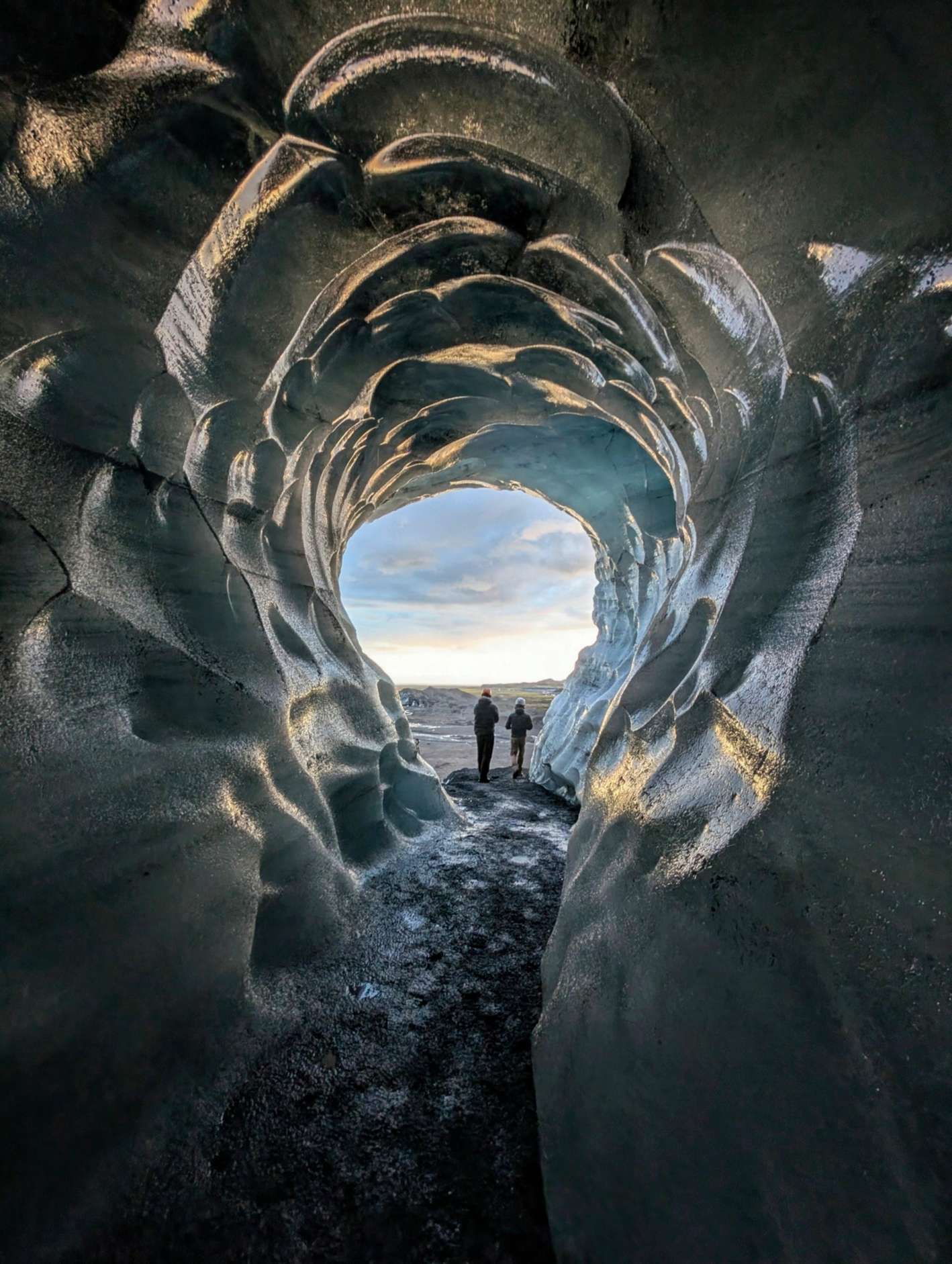 If you like reassurance with fewer people aroundPrivate ToursA private ice cave tour lets you and your group set the pace alone on the glacier, with the guide's full attention on your comfort and safety.If you like roomy caves and unhurried visitsSmall Group ToursA small group ice cave tour keeps numbers low, so you get space inside the cave and time to ask your guide about the ice formations.